


Search results
Search for "crystal structure" in Full Text gives 605 result(s) in Beilstein Journal of Organic Chemistry. Showing first 200.
NMR Spectroscopy of supramolecular chemistry on protein surfaces
Beilstein J. Org. Chem. 2020, 16, 2505–2522, doi:10.3762/bjoc.16.203
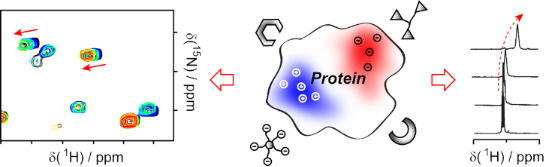
- the number of methyl groups [29][49]. On the protein surface, both ligands showed a clear preference for the sterically most accessible dimethyl-lysine residue K34Me2 which is located in a solvent-accessible loop. Binding of cucurbit[7]uril to this residue was confirmed by the co-crystal structure of
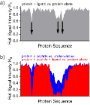
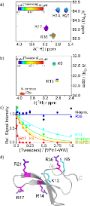
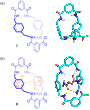
- isomerase hPin1 (original data) is shown as an example in Figure 3. On the regulatory N-domain of of the AAA+ ATPase p97 (p97-N), tweezers were found to bind only 6 patches even though this protein domain contains 30 Lys and Arg residues (26 of these are observable in the p97 crystal structure, pdb # 3CF3



Chan–Evans–Lam N1-(het)arylation and N1-alkеnylation of 4-fluoroalkylpyrimidin-2(1H)-ones
Beilstein J. Org. Chem. 2020, 16, 2304–2313, doi:10.3762/bjoc.16.191

- analogous enamides [57], the facile [2 + 2] photocycloaddition process likely occurred due to favorable orientation of the interacting molecules and close contacts between alkene carbon atoms in the crystal structure. Consequently, the synthesis of product 5c was performed in darkness. N1-Styryl-substituted


Tools for generating and analyzing glycan microarray data
Beilstein J. Org. Chem. 2020, 16, 2260–2271, doi:10.3762/bjoc.16.187
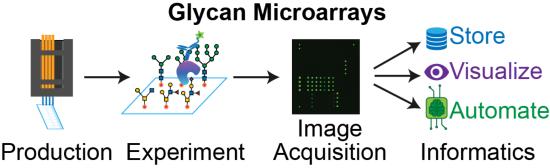
- this software a user uploads a glycan binding protein complexed to a carbohydrate fragment in PDB format. This need not be a co-crystal structure, and can be a modeled structure as well. The application then finds glycans that contain this fragment which are present on the CFG microarray data and


Synthetic approaches to bowl-shaped π-conjugated sumanene and its congeners
Beilstein J. Org. Chem. 2020, 16, 2212–2259, doi:10.3762/bjoc.16.186

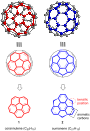
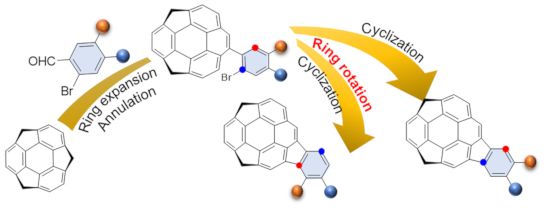
- twentieth century when for the first time corannulene was reported by Barth et al. [10] at the University of Michigan (USA) in 1966 (crystal structure 1971) [11]. On the other hand, since the discovery of fullerene (C60) in 1985 [12] by Sir Harry Kroto and the first synthesis of sumanene in 2003 by Sakurai
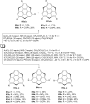
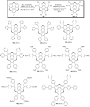
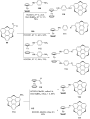
- not only confirmed by spectroscopic data but also identified by virtue of the single crystal structure. The reason for their unsuccessful results may be the generation of strain in the sumanene molecule from planar aromatic architecture under the experimental reaction conditions. In the quest for
- unable to isolate dioxosumanene 39 under similar reaction conditions in reasonable yield. The structures of these compounds were established by spectroscopy means and also in the case of monosumanene 38, they obtained the single crystal structure which was showing almost a similar bowl depth as for the









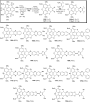


Access to highly substituted oxazoles by the reaction of α-azidochalcone with potassium thiocyanate
Beilstein J. Org. Chem. 2020, 16, 2108–2118, doi:10.3762/bjoc.16.178
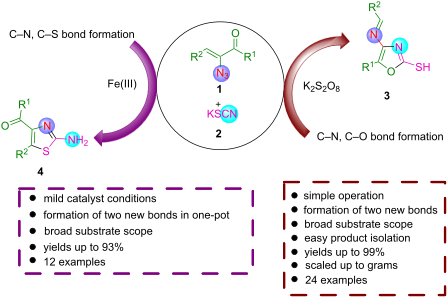
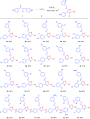
- ) using ethyl acetate/petroleum ether mixture to afford product 4. Examples of biologically active oxazole and aminothiazole scaffolds. Large-scale synthesis of 3i. a) At the start of the reaction, b) after the reaction. ORTEP diagram of compound 5. X-ray crystal structure of 4h. Strategies for the




Isolation and structure determination of a tetrameric sulfonyl dilithio methandiide in solution based on crystal structure analysis and 6Li/13C NMR spectroscopic data
Beilstein J. Org. Chem. 2020, 16, 2057–2063, doi:10.3762/bjoc.16.172
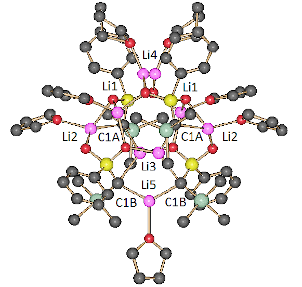
- up to now. Herein, we describe the isolation and determination of the structure of tetrameric dilithio (trimethylsilyl)(phenylsulfonyl) methandiide in solution and in the crystal. The elucidation of the structure of the tetramer is based on crystal structure analysis and 13C/6Li NMR spectroscopic
- in THF solution in fast equilibrium with a further aggregate, which is stable only at low temperatures. Keywords: crystal structure; dilithio sulfonyl methandiide; NMR; solution structure; X-ray analysis; Introduction Functionalized dilithio methandiides I–III (Figure 1) are a fascinating class of
- and sulfonyl-substituted dilithio methandiide 2a [14][15]. The use of n-BuLi, inadvertently containing Li2O, had yielded prismatic crystals of 2a. An X-ray crystal structure analysis had shown a Ci symmetric hexamer, (2a)6·Li2O·(THF)6, the dianionic C atoms of which are each coordinated by two Li


pH- and concentration-dependent supramolecular self-assembly of a naturally occurring octapeptide
Beilstein J. Org. Chem. 2020, 16, 2017–2025, doi:10.3762/bjoc.16.168
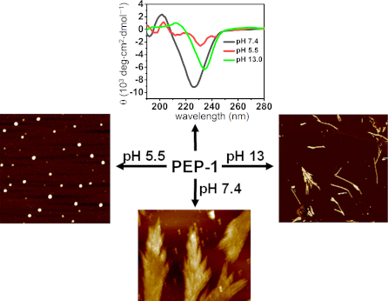
- Information File 1) of galectin-1, a β-sheet lectin protein that is available in bovine spleen [53] (for a detailed crystal structure see the Protein Data Bank; PDB ID 1SLT). Given the amphiphilic and pH-responsive nature of PEP-1, we investigated both the pH- and concentration-dependent formation of


Controlling the stereochemistry in 2-oxo-aldehyde-derived Ugi adducts through the cinchona alkaloid-promoted electrophilic fluorination
Beilstein J. Org. Chem. 2020, 16, 1963–1973, doi:10.3762/bjoc.16.163
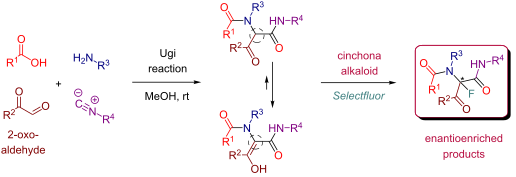
- asymmetric electrophilic fluorination for derivatizing the 2-oxo-aldehyde-derived Ugi adducts. This allowed us to obtain the post-Ugi products fluorinated at the peptidyl position with the enantiomeric excess values in several instances reaching more than 70%. Molecular representation of the X-ray crystal
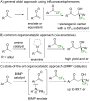
- structure of (S)-12e (slow enantiomer). Post-transformations of 2-oxo-aldehyde-derived Ugi adducts 8. Synthesis of 2-oxo-aldehyde-derived Ugi adducts. Asymmetric protocols for Passerini three-component reaction (P-3CR). Asymmetric protocols for Ugi four-component reaction (U-4CR) by Houk, Tan and co-workers


Synthesis, docking study and biological evaluation of ᴅ-fructofuranosyl and ᴅ-tagatofuranosyl sulfones as potential inhibitors of the mycobacterial galactan synthesis targeting the galactofuranosyltransferase GlfT2
Beilstein J. Org. Chem. 2020, 16, 1853–1862, doi:10.3762/bjoc.16.152
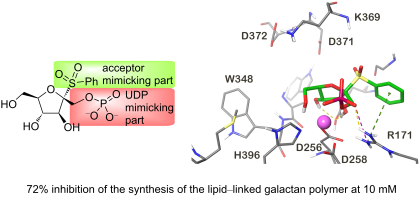
- are listed in Table 1. Firstly, the UDP-Galf native donor substrate was docked into the GlfT2 crystal structure to observe the reference docking score and to predict the Ki value for the native donor substrate. The predicted Ki value of the UDP-Galf is 0.333 µM, however, the experimentally observed Km


Microwave-assisted efficient one-pot synthesis of N2-(tetrazol-5-yl)-6-aryl/heteroaryl-5,6-dihydro-1,3,5-triazine-2,4-diamines
Beilstein J. Org. Chem. 2020, 16, 1706–1712, doi:10.3762/bjoc.16.142
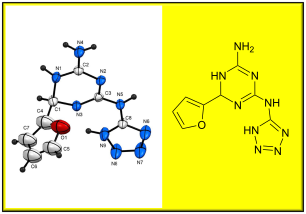
- and are uncorrected. X-ray crystallographic structure determinations were performed by using Rigaku Rapid II and Bruker X8 Prospector single crystal X-ray diffractometers. The X-ray crystal structure data can be obtained free of charge from the Cambridge Crystallographic Data Centre via http


Fluorohydration of alkynes via I(I)/I(III) catalysis
Beilstein J. Org. Chem. 2020, 16, 1627–1635, doi:10.3762/bjoc.16.135
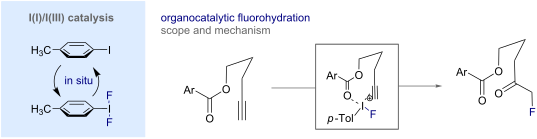
- Hammett analyses, have identified key determinants that are essential for reaction efficiency. X-ray crystal structure analysis of ketone 2 reveals a dihedral angle of φO=C-C-F = −3.7°. Although the origin of this specificity requires clarification, this fluorohydration reaction constitutes a rare case of


NHC-catalyzed enantioselective synthesis of β-trifluoromethyl-β-hydroxyamides
Beilstein J. Org. Chem. 2020, 16, 1572–1578, doi:10.3762/bjoc.16.129
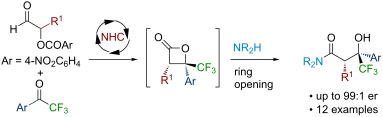
- support. dMolecular representation of the X-ray crystal structure of 12. The unit cell of 12 contained two molecules of 12, with only one shown for clarity. Proposed mechanism. Optimization of the NHC-catalyzed formal [2 + 2] cycoaddition.a Supporting Information Supporting Information File 335



Five-component, one-pot synthesis of an electroactive rotaxane comprising a bisferrocene macrocycle
Beilstein J. Org. Chem. 2020, 16, 1564–1571, doi:10.3762/bjoc.16.128
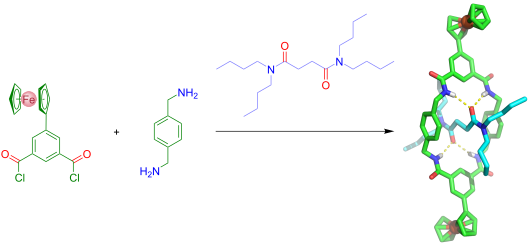
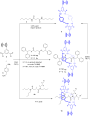
- ; found, 501.20295. Crystal structure determination Single crystals of rotaxane 1a (C36H42FeN3O3) were obtained by slow evaporation of a dichloromethane solution. A suitable crystal was mounted on a cryoloop with paratone®-N oil on an AFC11 partial Chi goniometer. The data were collected at 120 K on




One-step route to tricyclic fused 1,2,3,4-tetrahydroisoquinoline systems via the Castagnoli–Cushman protocol
Beilstein J. Org. Chem. 2020, 16, 1456–1464, doi:10.3762/bjoc.16.121
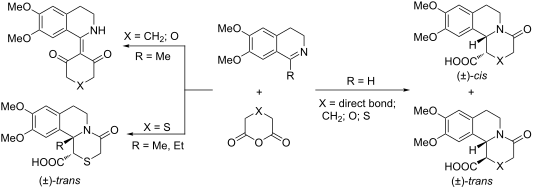
- recrystallization. Compounds comprising a benzo[a]quinolizidine ring system. Representative NOE interactions in cis and trans-21–24 (only one enantiomer is shown). X-ray crystal structure of products 25 and 26. Representative NOE interactions in 28 and 29. Reactions between enolizable anhydrides and imines


Ferrocenyl-substituted tetrahydrothiophenes via formal [3 + 2]-cycloaddition reactions of ferrocenyl thioketones with donor–acceptor cyclopropanes
Beilstein J. Org. Chem. 2020, 16, 1288–1295, doi:10.3762/bjoc.16.109
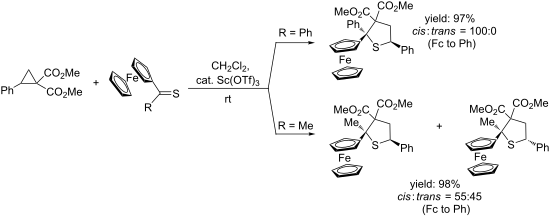
- obtained free of charge from the Cambridge Crystallographic Data Centre via http://www.ccdc.cam.ac.uk/structures. Supporting Information File 44: Experimental data for selected compounds 9, details of the crystal structure determination, and the original 1H and 13C NMR spectra for all products


The charge-assisted hydrogen-bonded organic framework (CAHOF) self-assembled from the conjugated acid of tetrakis(4-aminophenyl)methane and 2,6-naphthalenedisulfonate as a new class of recyclable Brønsted acid catalysts
Beilstein J. Org. Chem. 2020, 16, 1124–1134, doi:10.3762/bjoc.16.99
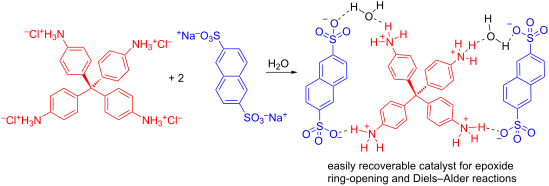
- atoms to engage the ammonium groups of TAPM (see the crystal structure of the F-1a phase). This structure was thermodynamically stable and hinted at a possible activation of water or methanol as nucleophiles by the sulfate anions during the ring opening of epoxides. When the coordinated water was
- frameworks could be tuned by varying the ratio of anion/cation multitopic components and the basicity of the cation component. View of the crystal structure of F-1 (F-1a phase), with representation of atoms by thermal ellipsoids at a 30% probability level. The hydrogen atoms, except for those in NH groups
- and solvate water molecules, were omitted for clarity. Only the labels of symmetry-independent heteroatoms are shown. View of the crystal structure of F-1 (F-1a’ phase), with representation of the atoms via thermal ellipsoids at a 30% probability level. The hydrogen atoms, except for those in NH




Synthesis of esters of diaminotruxillic bis-amino acids by Pd-mediated photocycloaddition of analogs of the Kaede protein chromophore
Beilstein J. Org. Chem. 2020, 16, 1111–1123, doi:10.3762/bjoc.16.98
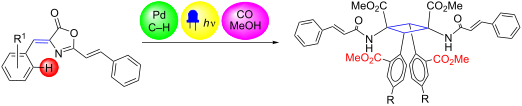
- constant of 16 Hz between the two olefinic protons of the styryl fragment. Further characterization of the new oxazolones was provided by the determination of the crystal structure of oxazolone 2c. A molecular drawing of 2c is shown in Figure 4, where the (Z)-configuration of the exocyclic C=C bond (C7–C8
- )=C bond disappeared and two new signals appeared at around 68–69 ppm (quaternary C) and 51–60 ppm (CH). These facts are consistent with the expected hybridization change from Csp2 to Csp3 after formation of the cyclobutane ring. Determination of the crystal structure of complex 4a, which is shown in
- shorter than the sum of the van der Waals radii (2.67 Å) [51]. This suggest a close interaction between these two atoms, as observed in the crystal structure of 2c (see above). The analysis of other internal bond distances and angles in the coordination sphere of the Pd atom shows that they are similar to


Efficient synthesis of piperazinyl amides of 18β-glycyrrhetinic acid
Beilstein J. Org. Chem. 2020, 16, 798–808, doi:10.3762/bjoc.16.73
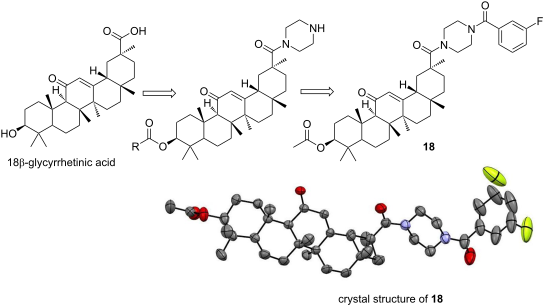
- -glycyrrhetinic acid derivative 18. The molecular structure of compound 18 in the crystalline state is shown in Figure 3. In this crystal structure, there is an orientational disorder of the m-fluorophenyl moiety due to the rotation of a single bond. Details for the crystal structure determinations are given in
- intermediate 6; b) Possible aminolysis process. Crystal structure of conpound 18. Synthesis of compound 4. Reagents and conditions: (a) Ac2O, NEt3, DMF (cat.), DCM, 25 °C, 1 day; (b) oxalyl chloride, NEt3, DMF (cat.), DCM, 25 °C, 5 h, then piperazine, DCM, NEt3, DMAP, 0/25 °C, 30 min. Synthesis of compound 4


One-pot synthesis of dicyclopenta-fused peropyrene via a fourfold alkyne annulation
Beilstein J. Org. Chem. 2020, 16, 791–797, doi:10.3762/bjoc.16.72
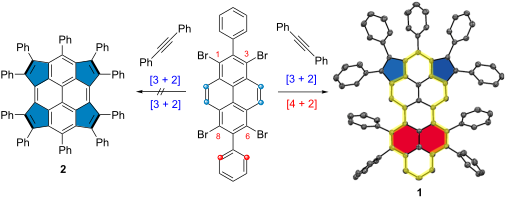
- 1 were obtained by slow evaporation from a carbon disulfide solution, allowing us to disclose the molecular structure by X-ray crystallography (Figure 2a). As shown in Figure 2a, the crystal structure of 1 clearly displayed a nonplanar conformation, resulting from steric repulsion between the phenyl
- . Hydrogen atoms and solvent molecules are omitted for clarity. (d) Selected bond lengths (from the crystal structure) and calculated NICS(1) values of rings A–I in 1. (e) Clar valence structure representation of 1 with three benzeneoid rings. (a) UV–vis absorption spectra of precursor 5 and 1 in CH2Cl2


Towards triptycene functionalization and triptycene-linked porphyrin arrays
Beilstein J. Org. Chem. 2020, 16, 763–777, doi:10.3762/bjoc.16.70
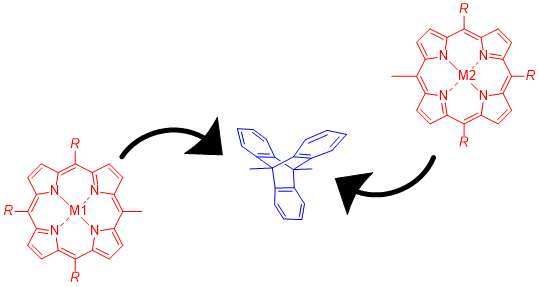
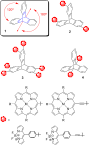
- molecule in the asymmetric unit with the bridgehead substituents being almost 180° to each other (Figure 2, for labelling see Figure S33 in Supporting Information File 1). Unlike the unsubstituted triptycene 1 crystal structure which exhibits a high degree of C–H···π interactions between the aromatic rings
- for C102H88N4O4Si2Zn, 1552.5636; found, 1552.5616. Crystal structure determinations Crystals were grown following the protocol developed by Hope by dissolving the compound in CH2Cl2 and layering with a MeOH for liquid–liquid diffusion [52]. Single crystal X-ray diffraction data for all compounds were
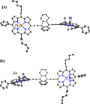
- (iii) of another triptycene molecule. Hydrogen atoms and minor disorder omitted for clarity (thermal displacement 50%). Single crystal X-ray structure of triptycene-linked zinc-nickel porphyrin dimer 16 showing the conformation within the crystal structure; (a) top-view of zinc porphyrin; (b) top-view





Synthesis of C70-fragment buckybowls bearing alkoxy substituents
Beilstein J. Org. Chem. 2020, 16, 681–690, doi:10.3762/bjoc.16.66
- vapour diffusion method using CHCl3/hexane conditions. Figure 2 shows the crystal structure of 5a. The crystal was obtained as a racemic compound containing a pair of two enantiomers defined by bowl chirality [26], as a result of the rapid bowl inversion under the crystallization conditions. 5a formed a
- crystal structure of 5c, two crystallographically independent units were observed (Figure 5a). 5c also contained both of the enantiomers and formed a columnar structure along the b axis with the slipped stack manner, which was composed of only one side of the enantiomer (Figure 5b,c). The columns with the
- succeeded in synthesizing three different alkoxy-substituted C70-fragment buckybowls 5a–c. In particular, 5c was not an intended molecule, but was formed unexpectedly through the rearrangement through the Pd-catalyzed C–H bond activation reaction. The X-ray crystal structure analysis of 5a–c clearly


Synthesis of organic liquid crystals containing selectively fluorinated cyclopropanes
Beilstein J. Org. Chem. 2020, 16, 674–680, doi:10.3762/bjoc.16.65
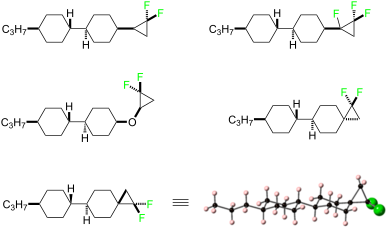
- an essentially isoenergetic conformer is that found in the X-ray crystal structure. The first conformers where the terminal bispirocyclohexane ring lies axial are significantly higher in energy (ΔG = +1.25 kcal/mol−1 and ΔG = +1.19 kcal/mol−1) than the equatorial conformers as illustrated in Figure 3


Design and synthesis of diazine-based panobinostat analogues for HDAC8 inhibition
Beilstein J. Org. Chem. 2020, 16, 628–637, doi:10.3762/bjoc.16.59
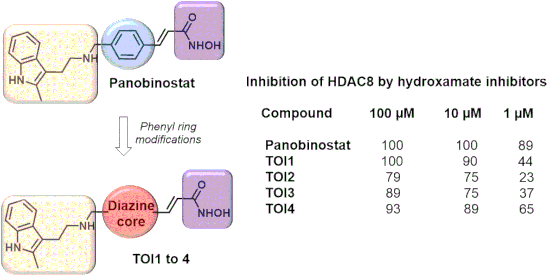
- possesses a −log(Kd) value of 8.36 suggesting that it too would be on a par with panobinostat (8.47). Our previous study showed that the hydroxamate tail of TOI1, TOI2, and TOI4 formed a bidentate interaction with the Zn2+ ion at the base of the HDAC8 receptor, which is consistent with the crystal structure
- Biotek Synergy HTX multimodal plate reader after incubation for 30 minutes. Preparation of the HDAC8 receptor for docking The HDAC8 crystal structure (protein database pdb: 1W22) [32] was utilized as the docking receptor for all compounds. This receptor is crystalized as a dimer thus only the A chain was




Six-fold C–H borylation of hexa-peri-hexabenzocoronene
Beilstein J. Org. Chem. 2020, 16, 391–397, doi:10.3762/bjoc.16.37
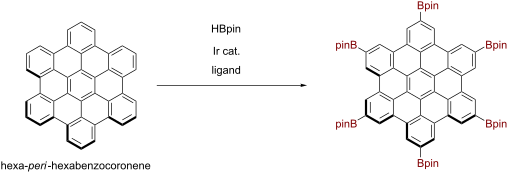
- -catalyzed six-fold C–H borylation of HBC was successfully achieved by screening solvents. The crystal structure of hexaborylated HBC was confirmed via X-ray crystallography. Optoelectronic properties of the thus-obtained hexaborylated HBC were analyzed with the support of density functional theory
- subjected to X-ray crystallographic analysis. Orange single crystals were formed by the diffusion of pentane vapor to a 1,1,1-trichloroethane solution of 1 synthesized by the C–H borylation method. The crystal structure confirmed that the C–H borylation proceeded regioselectively at the least hindered C–H


Synthesis and circularly polarized luminescence properties of BINOL-derived bisbenzofuro[2,3-b:3’,2’-e]pyridines (BBZFPys)
Beilstein J. Org. Chem. 2020, 16, 325–336, doi:10.3762/bjoc.16.32
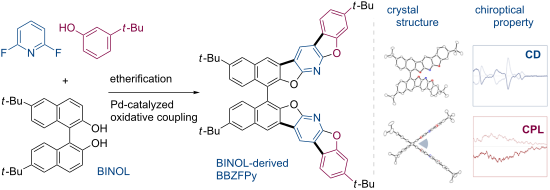
- stacking distance of around 3.45 Å. It is noteworthy that both 4b and 4c pile up while minimizing the steric repulsion between the tert-butyl groups which occupy “staggered” orientations in their crystal structures (Figure 5c and 5d). Unfortunately, the crystal structure of 4a was not determined after





