


Search results
Search for "inhibition" in Full Text gives 584 result(s) in Beilstein Journal of Organic Chemistry. Showing first 200.
β-Lactamase inhibition profile of new amidine-substituted diazabicyclooctanes
Beilstein J. Org. Chem. 2021, 17, 711–718, doi:10.3762/bjoc.17.60
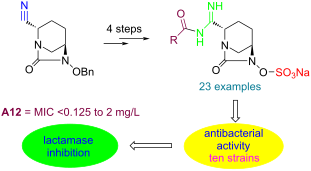
- vitro. All compounds did not show antibacterial activity when tested alone (MIC >64 mg/L), however, they exhibited a moderate inhibition activity in the presence of meropenem by lowering its MIC values. The compound A12 proved most potent among the other counterparts against all bacterial species with
- in Escherichia coli clinical isolates [14][15]. The diazabicyclooctane (DBO) [16] ring suggested as an alternative to the β-lactam ring [17] by the Hoechst researchers [16] could not prove its antibacterial strength in early experiments rather it showed β-lactamase inhibition activity. This discovery
- , indicating a racemization during the reaction process. The less polar isomer with R-configuration [31][32] at C2 showed a complete loss of β-lactamase inhibition activity as compared to the more polar isomer. Therefore, the less polar isomer was discarded while saving the more polar S-isomer, (relative ratio


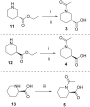


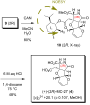
Designed whole-cell-catalysis-assisted synthesis of 9,11-secosterols
Beilstein J. Org. Chem. 2021, 17, 581–588, doi:10.3762/bjoc.17.52
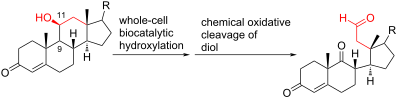
- Pseudopterogorgia americana in 1972 (Figure 1B) [7], several others from the family have been reported [8][9][10][11][12][13][14]. The 9,11-secosterols exhibit diverse biological activities, including antihistaminic, antiproliferative, anti-inflammatory, cytotoxic and protein kinase C (PKC) inhibition activities [8


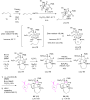
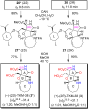
Menthyl esterification allows chiral resolution for the synthesis of artificial glutamate analogs
Beilstein J. Org. Chem. 2021, 17, 540–550, doi:10.3762/bjoc.17.48
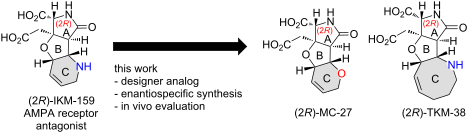
- subgram quantities of (rac)-MC-27 ((rac)-4), which was found to cause weak inhibition of the voluntary movement of mice upon intracerebroventricular injection [5]. On the basis of the racemate synthesis shown in Scheme 1, in the present study, we envisioned that both enantiomers of MC-27 could
- /mouse) of (2R)-MC-27 (4) caused a weak inhibition of the voluntary action of the mouse, which had been observed previously with (rac)-MC-27 with a nearly identical potency [5]. Therefore, it was concluded that the (2R)-enantiomer is responsible for the neuroactivity of (rac)-MC-27. On the other hand








Synthesis of (Z)-3-[amino(phenyl)methylidene]-1,3-dihydro-2H-indol-2-ones using an Eschenmoser coupling reaction
Beilstein J. Org. Chem. 2021, 17, 527–539, doi:10.3762/bjoc.17.47
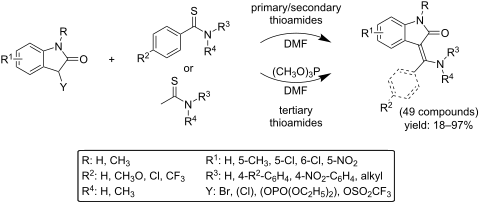
- R2 substituent tolerance. Moreover, in order to demonstrate the application potential of our method, a few more derivatives containing R2: I instead of Cl (5ac’, 5cc’, 5dc’) which display a significant kinase inhibition activity, have been prepared. It is worth noting that the existing literature


Biochemistry of fluoroprolines: the prospect of making fluorine a bioelement
Beilstein J. Org. Chem. 2021, 17, 439–460, doi:10.3762/bjoc.17.40
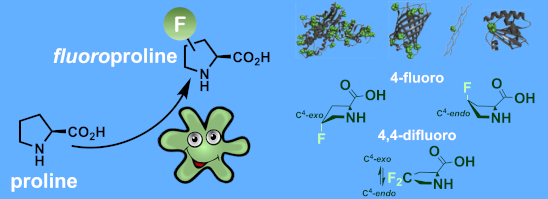
- catabolic degradation of proline plays an important role in the development of cancer cells, making the inhibition of the proline dehydrogenase a promising method in cancer therapy [69][70]. There is no information on a possible intracellular degradation of fluoroprolines, although, they are included in
- some therapeutic dehydrogenase inhibition schemes [71]. Conversely, there is strong evidence that other proline analogues, dehydroproline and thiaproline, are oxidatively degraded in E. coli by the action of the bifunctional enzyme putA and the reductase proC [72]. Future research should examine


19F NMR as a tool in chemical biology
Beilstein J. Org. Chem. 2021, 17, 293–318, doi:10.3762/bjoc.17.28
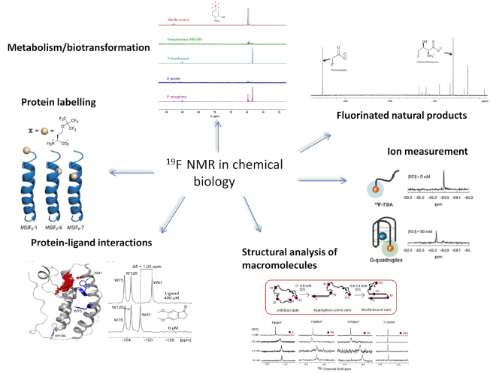
- estrogen receptor (ER) co-activator peptides and enabled the sensitive detection of their protein–peptide interaction inhibition by the ER antagonist tamoxifen [20]. Significantly, different secondary structure conformational preferences were also found among the diastereomers of perfluoro-tert
- biosynthesis through hBBOX-catalysed GBBNF hydroxylation, both in vitro and in cell lysates [43]. Moreover, by using a competitive substrate for the enzyme, inhibition experiments could be directly employed to determine the IC50 values in the basis of fluoride release, and the extent of GBBNF turnover


1,2,3-Triazoles as leaving groups in SNAr–Arbuzov reactions: synthesis of C6-phosphonated purine derivatives
Beilstein J. Org. Chem. 2021, 17, 193–202, doi:10.3762/bjoc.17.19
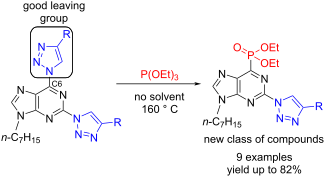
- (Scheme 1) [12]. In 2011, a single example of a C6-phosphonate, B (X = NH2; R1 = 2’-C-methylribose; R2 = Et), was synthesized among other compounds as a potential anti-hepatitis C virus agent and showed 19% inhibition at 10 μM in Huh7 cells (Scheme 1) [13]. Additionally, there are a few examples of C8


Insight into functionalized-macrocycles-guided supramolecular photocatalysis
Beilstein J. Org. Chem. 2021, 17, 139–155, doi:10.3762/bjoc.17.15
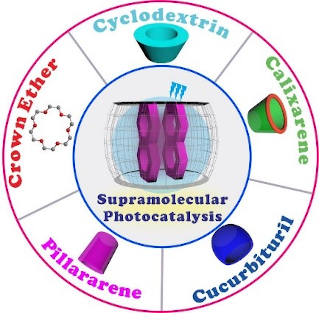
- , during the catalytic process, the reactive guest should have a greater binding affinity or the photoproducts should have the lowest binding affinity with the supramolecular host to avoid product inhibition, so as to produce a better catalytic turnover efficiency [14][15]. However, it is quite complicated






Direct synthesis of anomeric tetrazolyl iminosugars from sugar-derived lactams
Beilstein J. Org. Chem. 2021, 17, 115–123, doi:10.3762/bjoc.17.12
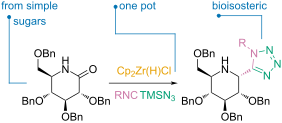
- ones in this work – fused iminosugar-tetrazoles – which have shown inhibition properties against bovine liver α-ᴅ-glucuronidase and human β-ʟ-iduronidase [29]. Moreover, there are numerous reports of the organocatalytic activity of chiral aminotriazoles and aminotetrazoles in number of reactions, such




Progress in the total synthesis of inthomycins
Beilstein J. Org. Chem. 2021, 17, 58–82, doi:10.3762/bjoc.17.7
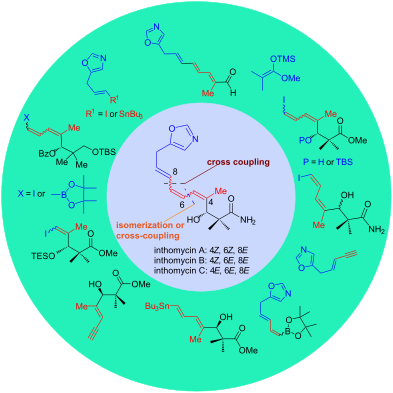
- Omura’s group in 1995 [3]. Inthomycin A ((+)-1) displays moderate antifungal activity against cellulose-containing Phytophthora parasitica and Phytophthora capsici [4]. Inthomycins were reported to possess many interesting biological properties, which include the specific inhibition of the cellular
- biosynthesis [1][4], in vitro antimicrobial activity [4][5], and anticancer activity against human prostate cancer cell lines [6][7]. A recent study suggested that the close analogue (+)-11 of inthomycin C was found to exhibit proteasome inhibition activity [8]. The skeletal structures of inthomycins A–C (1–3









Molecular basis for protein–protein interactions
Beilstein J. Org. Chem. 2021, 17, 1–10, doi:10.3762/bjoc.17.1
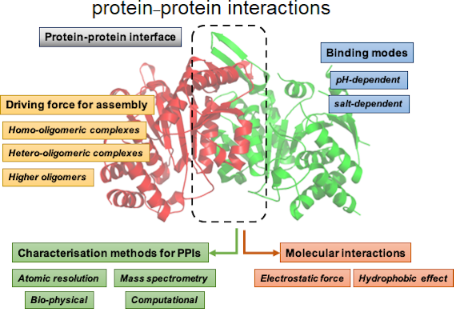
- functionality and the corresponding pathways. Important roles of PPIs include hormone reception [2], protease inhibition [3], antibody–antigen complexes [4], gene regulation [5], and large biomolecular assemblies [6]. PPI identification and prediction are important for targeting anticancer strategies [7


Secondary metabolites of Bacillus subtilis impact the assembly of soil-derived semisynthetic bacterial communities
Beilstein J. Org. Chem. 2020, 16, 2983–2998, doi:10.3762/bjoc.16.248
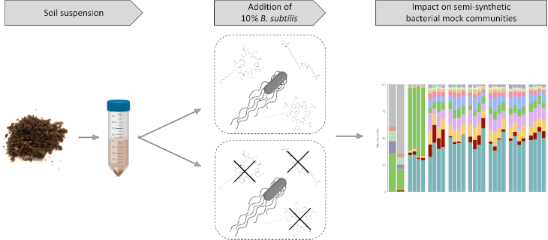
- , enzyme inhibition, or disruption of bacterial protein synthesis. This knowledge was primarily acquired in vitro when B. subtilis was competing with other microbial monocultures. However, our understanding of the true ecological role of these small molecules is limited. In this study, we have established
- indicated that the genus Lysinibacillus was negatively affected by the addition of B. subtilis P5_B1 WT and that NRPs enhance the suppression. To dissect the direct impact of a particular NRP in this inhibition, we monitored the growth of L. fusiformis M5, a previously isolated Lysinibacillus species [54
- in the exponential growth phase. Furthermore, the effect of spent WT medium seems to be reduced at this concentration, but the spent media of ∆ppsC and ∆pksL maintained their growth inhibition potential. The lowest concentration of a spent medium having an inhibitory effect was 10.02%. At this


Selected peptide-based fluorescent probes for biological applications
Beilstein J. Org. Chem. 2020, 16, 2971–2982, doi:10.3762/bjoc.16.247

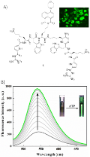
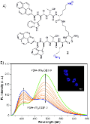
- ). The inhibition by peptide 9 is found to be in a reversible and noncompetitive way. Molecular modeling shows four cationic ammonium groups forming ion pairs and hydrogen bonds with negatively charged residues, such as Glu217, Asp60B, Asp147 and Glu217, respectively and completely block the central pore



Ultrasound-assisted Strecker synthesis of novel 2-(hetero)aryl-2-(arylamino)acetonitrile derivatives
Beilstein J. Org. Chem. 2020, 16, 2929–2936, doi:10.3762/bjoc.16.242
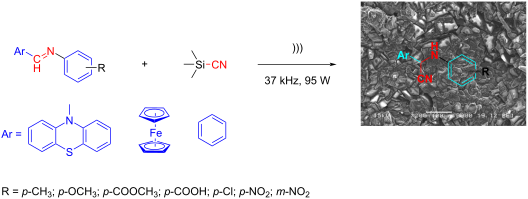
- ), or sodium azide (known mutagen for TA 100), was also examined using the plate incorporation procedure and the results are summarized in Table 2 and Table 3. This assay proved a strong antimutagenic activity of all tested α-(arylamino)acetonitrile derivatives, with a better inhibition exhibited in the
- case of the TA98 strain (44–95%), but nevertheless considerable for TA100 strain (46–79%). The results of the antimutagenicity assay indicate a lower inhibition exhibited in the presence of liver homogenate (S9), pointing out that metabolizing enzymes could interfere with the activation of the


One-pot multicomponent green Hantzsch synthesis of 1,2-dihydropyridine derivatives with antiproliferative activity
Beilstein J. Org. Chem. 2020, 16, 2862–2869, doi:10.3762/bjoc.16.235
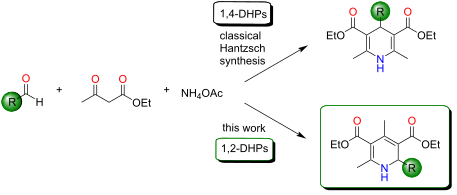
- the general procedure. Biological screening The 1,4-DHP scaffold displays an extensive range of biological activities, including reversing multidrug resistance (through the inhibition of the P-glycoprotein) [26] and antiproliferative effects on human cancer cell lines [27]. We wondered whether the



Synthesis and investigation of quadruplex-DNA-binding, 9-O-substituted berberine derivatives
Beilstein J. Org. Chem. 2020, 16, 2795–2806, doi:10.3762/bjoc.16.230
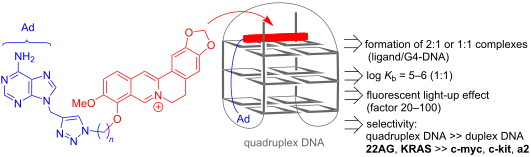
- -inflammatory [25], antibacterial [26][27], and anticancer reagents [28][29]. The latter property is mainly based on the binding interaction of berberine with nucleic acids and the resulting inhibition of topoisomerase and telomerase [2][30]. Most notably, berberine (1a) induces a strong growth inhibition in


Vicinal difluorination as a C=C surrogate: an analog of piperine with enhanced solubility, photostability, and acetylcholinesterase inhibitory activity
Beilstein J. Org. Chem. 2020, 16, 2663–2670, doi:10.3762/bjoc.16.216
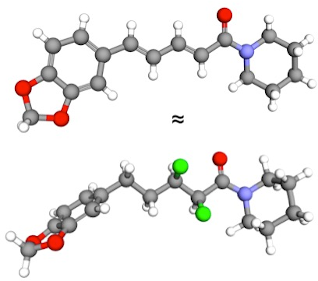
- described for 1 led to no detectable decomposition (Figure 3, Supporting Information File 1). Biological activity and solubility The biological activities of piperine (1) and the analog 2 were compared using two different assays, namely the inhibition of either acetylcholinesterase (AChE) or β-secretase
- (BACE-1). The inhibition of AChE was measured using a modification of a previously described colorimetric assay (Figure 4a) [33]. It quickly became apparent that the limited solubility of piperine (1) in 50 mM Tris-HCl buffer, even in the presence of methanol as a co-solvent, was a major problem in this
- assay. We observed cloudiness or the appearance of a precipitate at higher concentrations of 1, which affected the reproducibility of the assay, and prevented complete inhibition from being achieved (Figure 4a). The estimated IC50 of 1 was >1,000 μM. In contrast, analog 2 posed no solubility problems in


Synthesis of 4-substituted azopyridine-functionalized Ni(II)-porphyrins as molecular spin switches
Beilstein J. Org. Chem. 2020, 16, 2589–2597, doi:10.3762/bjoc.16.210
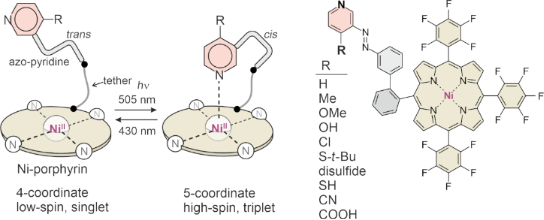
- porphyrin 22 and the disulfide 12, obviously because of catalyst poisoning by sulfur [32][33]. To circumvent these problems, protection groups were introduced. Protection with methyl 3-mercaptopropionate (15) [29] was successful, however, inhibition of the Suzuki reaction was observed. We assume an alkaline


NMR Spectroscopy of supramolecular chemistry on protein surfaces
Beilstein J. Org. Chem. 2020, 16, 2505–2522, doi:10.3762/bjoc.16.203
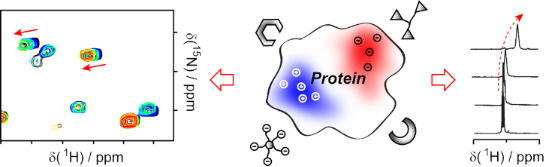
- recent years, the focus of biochemical research and drug development has shifted from the inhibition of single enzymes to targeting protein-protein interactions [1][2], which play key roles in cellular function and dysfunction [3][4]. Enzymes usually bind their substrates in deep pockets with specific
- [8][9][10][11][12], and inhibit enzyme function [13] in vitro, they also exhibit interesting effects in vivo like the reversal of Alzheimer plaques in mice [14], tumor inhibition [15], and reduction of HIV infectivity [16], all while showing almost no toxic side effects [14][17]. In calixarenes with
- inhibition of potassium ion transport [39]. Another guanidinium-calixarene variant was designed to hold together the four tetramer subunits of a p53-R337H tumor suppressor mutant and thus restore tetramer stability [40]. Further examples for ligands targeting negatively charged patches on proteins include



Muyocopronones A and B: azaphilones from the endophytic fungus Muyocopron laterale
Beilstein J. Org. Chem. 2020, 16, 2100–2107, doi:10.3762/bjoc.16.177
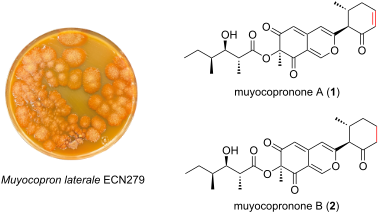
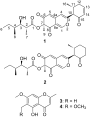
- fungus; modified Mosher’s method; Muyocopron laterale; polyketides; Introduction Azaphilones, which are a class of fungal polyketides with diverse structures, have received growing attention due to their various biological activities, such as the inhibition of some protein–protein interactions [1][2



Automated high-content imaging for cellular uptake, from the Schmuck cation to the latest cyclic oligochalcogenides
Beilstein J. Org. Chem. 2020, 16, 2007–2016, doi:10.3762/bjoc.16.167
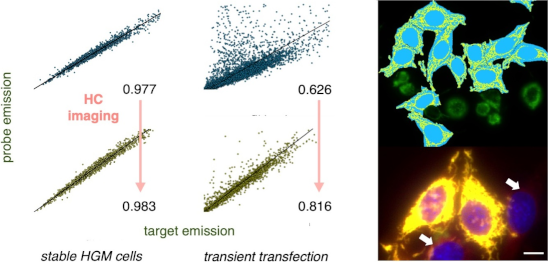
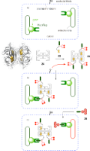
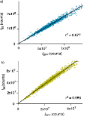
- an endosomal pathway. The low pKa value of the four GCP moieties could result in an improved buffering capacity, which could facilitate endosomal escape by the proton-sponge effect [28]. Significant inhibition of DNA transfection by bafilomycin (a macrolide antibiotic that can block the endosomal




Stereoselective Biginelli-like reaction catalyzed by a chiral phosphoric acid bearing two hydroxy groups
Beilstein J. Org. Chem. 2020, 16, 1875–1880, doi:10.3762/bjoc.16.155
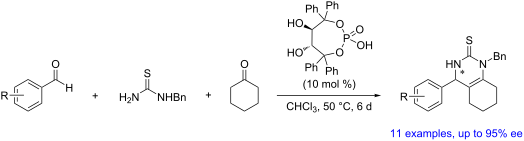
- activities [7][8]. For example, (S)-monastrol is 15-fold more effective in the inhibition of Eg 5 ATPase than its enantiomer, (R)-monastrol [9]. As more reports on the enantiospecific biological activity of DMPMs came to light, the development of an efficient and reliable asymmetric synthesis of enantiopure


Three new O-isocrotonyl-3-hydroxybutyric acid congeners produced by a sea anemone-derived marine bacterium of the genus Vibrio
Beilstein J. Org. Chem. 2020, 16, 1869–1874, doi:10.3762/bjoc.16.154
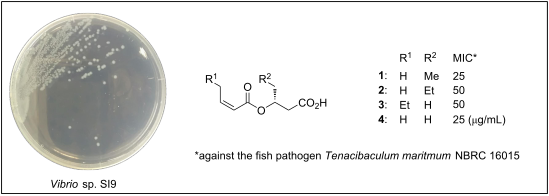
- DMSO. The respiration of live cells was quantified by the measurement of the absorption at 540 nm by a microplate reader. The experiment was run in a triplicate, and the rates of the cell-growth inhibition at each concentration were plotted on a single logarithmic chart to deduce the GI50 values of the


Synthesis, docking study and biological evaluation of ᴅ-fructofuranosyl and ᴅ-tagatofuranosyl sulfones as potential inhibitors of the mycobacterial galactan synthesis targeting the galactofuranosyltransferase GlfT2
Beilstein J. Org. Chem. 2020, 16, 1853–1862, doi:10.3762/bjoc.16.152
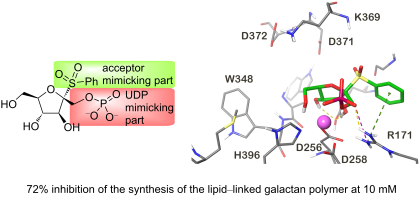
- substrate of mycobacterial galactofuranosyltransferase GlfT2 in the transition state, we evaluated these compounds by computational methods, as well as in an enzyme assay for the possible inhibition of the mycobacterial galactan biosynthesis. Our data show that despite favorable docking scores to the active
- , it does have some advantages compared to the spectrophotometric GlfT2 assay [19]. Firstly, in the crude assay GlfT2 uses its natural acceptor, GL4, which could affect its activity and thus the outcome of the inhibition studies. Secondly, it allows to evaluate inhibition of the enzymes involved in GL4
- production (WecA, WbbL, UGM, GlfT1; Supporting Information File 1, Figure S1) [6] by the tested compounds, which could indicate the unspecific effects. These cannot be precluded, especially if relatively high concentrations of the studied molecules are required for achieving substantial enzyme inhibition


Et3N/DMSO-supported one-pot synthesis of highly fluorescent β-carboline-linked benzothiophenones via sulfur insertion and estimation of the photophysical properties
Beilstein J. Org. Chem. 2020, 16, 1740–1753, doi:10.3762/bjoc.16.146
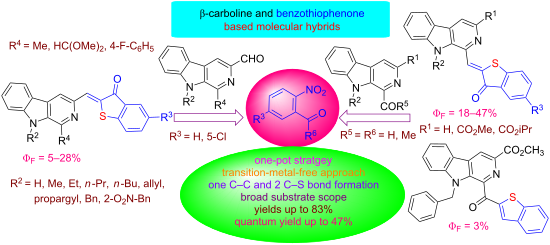
- a variety of biological activities such as anticancer [24], inhibition of tyrosine phosphatase 1B, antioxidant properties, etc. [25][26][27]. Due to their numerous applications, they have found diverse uses such as thioindigo-like dyes, photoresponsive devices, and photoswitchable biomolecules [28





