Search results
Search for "nitro" in Full Text gives 538 result(s) in Beilstein Journal of Organic Chemistry. Showing first 200.
Access to highly substituted oxazoles by the reaction of α-azidochalcone with potassium thiocyanate
Beilstein J. Org. Chem. 2020, 16, 2108–2118, doi:10.3762/bjoc.16.178
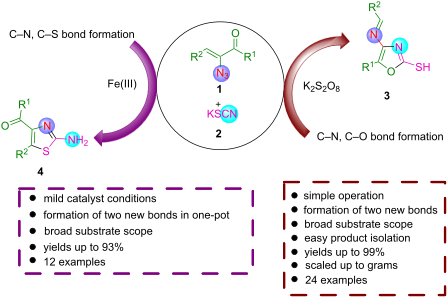
- electron-rich aryl substituents. Both nitro- and bromo-substituted systems can be further functionalized to get a new set of products. The tolerance of the reaction for a variety of aryl substituents illustrates the generality of this method for the preparation of a range of highly substituted oxazoles




Convenient access to pyrrolidin-3-ylphosphonic acids and tetrahydro-2H-pyran-3-ylphosphonates with multiple contiguous stereocenters from nonracemic adducts of a Ni(II)-catalyzed Michael reaction
Beilstein J. Org. Chem. 2020, 16, 2073–2079, doi:10.3762/bjoc.16.174
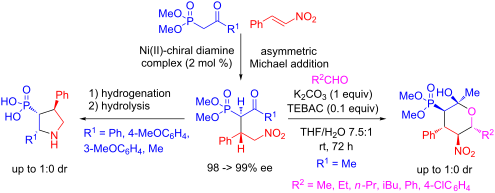
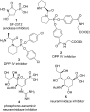
- conjugated nitroolefins in the presence of a chiral Ni(II) complex to give nitro keto phosphonates with two stereocenters with excellent enantioselectivity and moderate to high diastereoselectivity. These products were used for a reductive cyclization leading to pyrrolidin-3-ylphosphonic acid and for
- -ylphosphonic acids and tetrahydropyranylphosphonates, we assumed that the 4-nitro-2-oxophosphonates – the Michael adducts of β-keto phosphonates and nitroolefins – are suitable precursors, considering that the Ni(II)-catalyzed Michael addition was carried out not only enantioselectively, but also
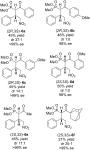
- diastereoselectively, such has been previously described [45]. These considerations prompted us to explore further applications of 4-nitro-2-oxophosphonates containing two contiguous stereocenters for the synthesis of the target compounds. Initially, 4-nitro-2-oxophosphonates 6a–f (Figure 2) were synthesized similar



Metal-free synthesis of phosphinoylchroman-4-ones via a radical phosphinoylation–cyclization cascade mediated by K2S2O8
Beilstein J. Org. Chem. 2020, 16, 1974–1982, doi:10.3762/bjoc.16.164

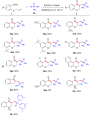
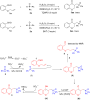
- structural motifs found in numerous natural products and pharmaceuticals with extraordinary biological and pharmaceutical activities [34][35]. However, no desired product (3ka) was obtained when there was a nitro group in the substrate (1k). Then, N-allyl-N-(2-formylphenyl)-4-methylbenzenesulfonamide (1l




Controlling the stereochemistry in 2-oxo-aldehyde-derived Ugi adducts through the cinchona alkaloid-promoted electrophilic fluorination
Beilstein J. Org. Chem. 2020, 16, 1963–1973, doi:10.3762/bjoc.16.163
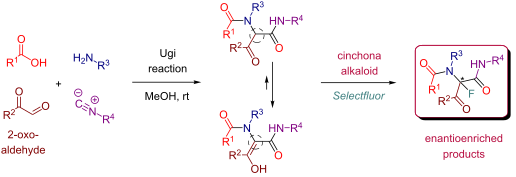
- bearing fluorine and nitrogen atoms involves the asymmetric addition of α-fluoro-β-ketoesters or α-fluoro-α-nitro esters to appropriate electrophiles [84][85][86][87][88][89]. Results and Discussion Initially, we prepared a series of Ugi adducts 8 by varying acid, 2-oxo-aldehyde, amine, and isocyanide


Natural dolomitic limestone-catalyzed synthesis of benzimidazoles, dihydropyrimidinones, and highly substituted pyridines under ultrasound irradiation
Beilstein J. Org. Chem. 2020, 16, 1881–1900, doi:10.3762/bjoc.16.156
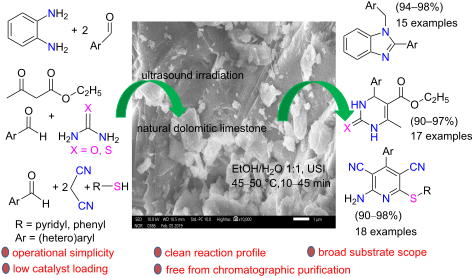
- -accepting nitro group (2l) at the para position on the ring showed a good reactivity with ethyl acetoacetate (4) and urea (5) to afford the product 7g in an excellent isolated yield (94%, Table 6, entry 7). Halogen atoms at different positions on the ring of benzaldehyde derivatives (4-F: 2m, 4-Cl; 2n, and


One-pot and metal-free synthesis of 3-arylated-4-nitrophenols via polyfunctionalized cyclohexanones from β-nitrostyrenes
Beilstein J. Org. Chem. 2020, 16, 1830–1836, doi:10.3762/bjoc.16.150
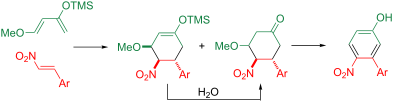
- ; polysubstituted cyclohexanone; Introduction The 4-nitrophenol framework is characterized by a biased electron density in the ring and an acidic hydroxy group, which can be attributed to the electron-donating hydroxy and the electron-withdrawing nitro groups. The derivatives of 4-nitrophenol are widely used in
- various applications. In particular, 3-arylated-4-nitrophenols have attracted much attention from a biological viewpoint [1][2][3][4][5][6][7][8][9][10][11]; however, they cannot be synthesized by the direct modification of 4-nitrophenol because the ortho-directing hydroxy and the meta-directing nitro
- reaction, a C2 unit possessing a nitro group and an aryl group at the vicinal position is incorporated into the products. This unique reactivity prompted us to probe the synthesis of the 3-arylated-4-nitrophenols 5 by the Diels–Alder reaction of nitrostyrenes 1 with Danishefsky’s diene (2, the


When metal-catalyzed C–H functionalization meets visible-light photocatalysis
Beilstein J. Org. Chem. 2020, 16, 1754–1804, doi:10.3762/bjoc.16.147

- , ethoxy, trifluoromethyl, nitro, and ester underwent efficiently the desired perfluoroalkylation. This coupling was sensitive to steric hindrance as ortho-substituted substrates were less efficiently converted into the desired products. Furthermore, various perfluoroalkyl iodides with different chain


Et3N/DMSO-supported one-pot synthesis of highly fluorescent β-carboline-linked benzothiophenones via sulfur insertion and estimation of the photophysical properties
Beilstein J. Org. Chem. 2020, 16, 1740–1753, doi:10.3762/bjoc.16.146
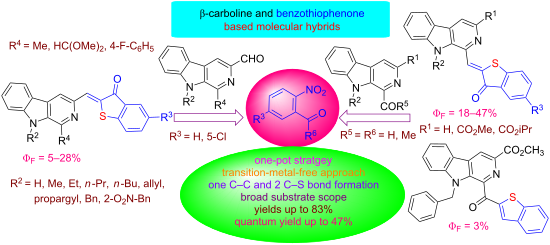
- ][29][30][31]. Moreover, these compounds were also used as synthetic intermediates for various sulfur-containing bioactive molecules (Figure 1) [32][33][34]. In organic synthesis, aromatic compounds having nitro groups play a vital role as building blocks for the synthesis of nitrogen-containing
- functional groups and aza-heterocyclic frameworks. However, organic transformations in which aromatic nitro groups act as leaving groups are less reported and require the use of transition-metal catalysts such as Cu, Rh, Pd, etc. [35][36][37]. Though, several elegant methods have been developed for the


Nonenzymatic synthesis of anomerically pure, mannosyl-based molecular probes for scramblase identification studies
Beilstein J. Org. Chem. 2020, 16, 1732–1739, doi:10.3762/bjoc.16.145
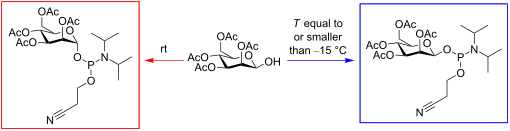
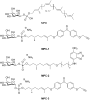
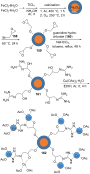
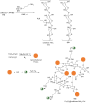
- ′-dihydroxybenzophenone (BZP), D-mannose (Man), and 1,12-dodecanediol (Dod, Figure 2). Both the mannose and the phosphodiester bond were introduced via phosphoramidite chemistry to yield the final compounds, as shown in Figure 3. As opposed to the photoclickable probe MPC-1, the 4-chloro-7-nitro-1,2,3-benzoxadiazole (NBD
- wherein the NBD can be detected with dithionite. The latter reduces the nitro group of the NBD rapidly into an amino group, rendering the fluorophore nonfluorescent [32][33][34]. While there are no noteworthy difficulties in the synthesis of the molecular probe MPC-1 to report, the same cannot be said for



Tuneable access to indole, indolone, and cinnoline derivatives from a common 1,4-diketone Michael acceptor
Beilstein J. Org. Chem. 2020, 16, 1722–1731, doi:10.3762/bjoc.16.144
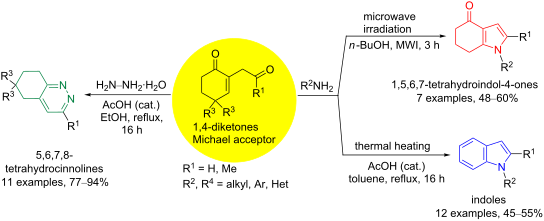
- -catalyzed acetylation of these alcohols, which gave the corresponding acetates 2a–d [59]. The nitrenones 3a–d were finally obtained in an acceptable yield by reacting the acetate derivatives with the appropriate nitroalkanes [60]. The next step was the transformation of the nitro group of 3a–d via the Nef
- route remains limited in terms of chemical diversity as it depends on the availability of the corresponding nitro derivative. It was thus decided to move on to the Wittig reaction [57], offering a much more straightforward and efficient route to a panel of new diketones, 5e–k, from 1,2-cyclohexanedione


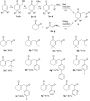


Fluorohydration of alkynes via I(I)/I(III) catalysis
Beilstein J. Org. Chem. 2020, 16, 1627–1635, doi:10.3762/bjoc.16.135
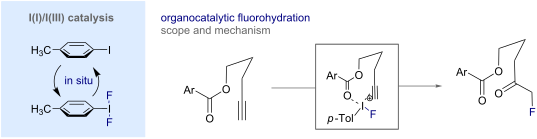
- (Scheme 1). Exposing the standard substrate 1 to the general reaction conditions furnished the desired product 2 in a synthetically useful isolated yield of 60%. Introduction of para-substituents was tolerated enabling formation of the chloro, methoxy, and nitro derivatives 3–5 with up to 54% yield. The


One-pot synthesis of 1,3,5-triazine-2,4-dithione derivatives via three-component reactions
Beilstein J. Org. Chem. 2020, 16, 1447–1455, doi:10.3762/bjoc.16.120
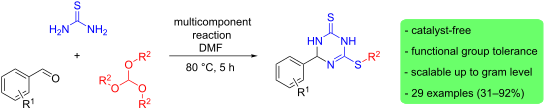
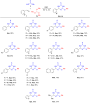
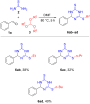
- reaction, and provided products 6ga and 6ha in still moderate yields. When an electron-deficient aromatic aldehyde such as 4-phenylbenzaldehyde (1i) was used, the reaction effectively afforded product 6ia in 45% yield. Similarly, benzaldehydes having other electron-withdrawing groups such as cyano, nitro




Photocatalytic trifluoromethoxylation of arenes and heteroarenes in continuous-flow
Beilstein J. Org. Chem. 2020, 16, 1305–1312, doi:10.3762/bjoc.16.111
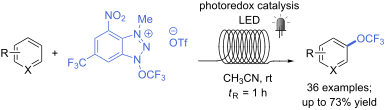
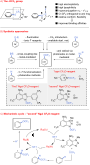
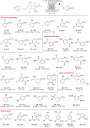
- poor yields. Other synthetically useful substituents, including cyano, nitro, phenylsulphonyl, (pinacolato)boron, and alkyl groups could be tolerated in the reaction (24–30), leading to a yield range between 26 and 65%. The trifluoromethoxylation of pyridine, pyrimidine, and thiophene derivatives also



Activated carbon as catalyst support: precursors, preparation, modification and characterization
Beilstein J. Org. Chem. 2020, 16, 1188–1202, doi:10.3762/bjoc.16.104
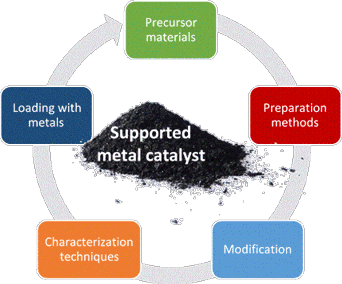
- olive stones-based activated carbon depending on the activation method. Chemical activation by H3PO4 form a higher amount of N-containing surface groups, mainly as nitro groups, compared to physical activation with CO2, whereby only less oxidized nitrogen species were formed. They concluded that the


Photocatalysis with organic dyes: facile access to reactive intermediates for synthesis
Beilstein J. Org. Chem. 2020, 16, 1163–1187, doi:10.3762/bjoc.16.103
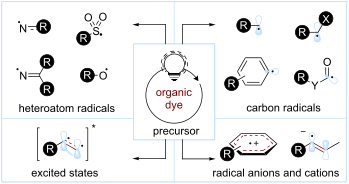
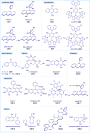
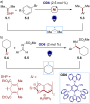
- -poor aromatic moiety on the oxime to give a radical anion, which then fragments. Electrochemical studies highlighted that O-aryl hydroxylamines bearing nitro groups were within the reduction range of excited eosin Y (Ered between −0.55 and −0.93 V vs SCE, OD13, E(PC•+/PC*) ≈ −1.1 V). Oxidative





Fluorinated phenylalanines: synthesis and pharmaceutical applications
Beilstein J. Org. Chem. 2020, 16, 1022–1050, doi:10.3762/bjoc.16.91
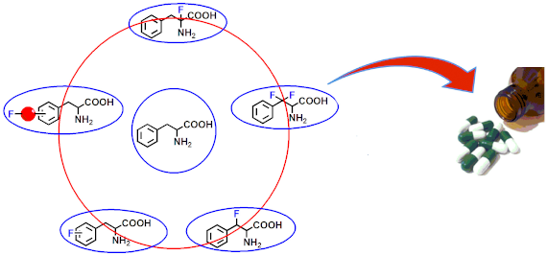
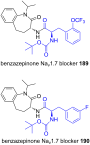
- , chloro, bromo, methoxy, acetyl, cyano, nitro, and trifluoromethyl, were well-tolerated and afforded the corresponding anti-β-fluoro-α-amino acids 163a–l in moderate to excellent yields [78] (Scheme 40). 3. Synthesis of β,β-difluorophenylalanine derivatives of type IV via 2-phenyl-2,2-difluoroacetaldehyde


Photocatalytic deaminative benzylation and alkylation of tetrahydroisoquinolines with N-alkylpyrydinium salts
Beilstein J. Org. Chem. 2020, 16, 809–817, doi:10.3762/bjoc.16.74
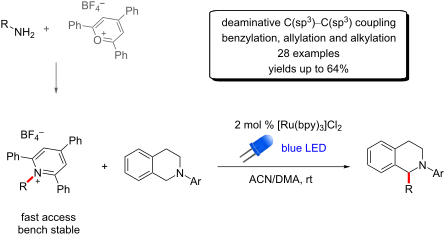
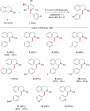
- substituents had a negative effect on the efficiency of the transformation, independently of their electronic effects (Scheme 3, 21–25). Still, halides, nitriles, and ester substituents were tolerated, giving a possible handle for further manipulation. However, the presence of a nitro group impeded the




Recent advances in Cu-catalyzed C(sp3)–Si and C(sp3)–B bond formation
Beilstein J. Org. Chem. 2020, 16, 691–737, doi:10.3762/bjoc.16.67
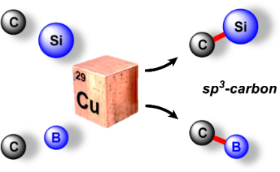
- PhMe2Si moiety in a 1,4-manner to unsaturated nitro and cyano derivatives leading to adducts 209–218, each being obtained in high chemical yield and good enantioselectivity (Scheme 37). 1.5 Miscellaneous reactions The Tsuji group developed a mild method for the regio-divergent silacarboxylation of allenes


Cascade trifluoromethylthiolation and cyclization of N-[(3-aryl)propioloyl]indoles
Beilstein J. Org. Chem. 2020, 16, 657–662, doi:10.3762/bjoc.16.62
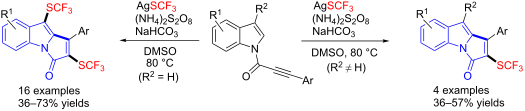
- effect of the substitution on the indole ring. Both electron-donating and withdrawing groups at different positions of the indole ring produced the bis(trifluoromethylthiolated) products 2a–o in moderate to good yields. A wide range of functionalities such as alkyl, alkoxy, nitro, nitrile, ester




A systematic review on silica-, carbon-, and magnetic materials-supported copper species as efficient heterogeneous nanocatalysts in “click” reactions
Beilstein J. Org. Chem. 2020, 16, 551–586, doi:10.3762/bjoc.16.52
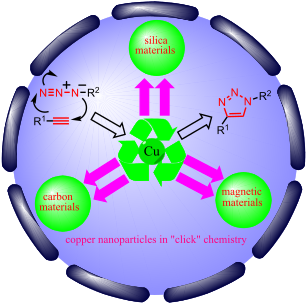
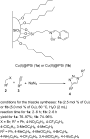
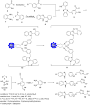
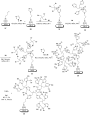
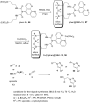
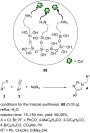
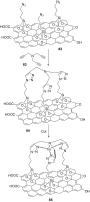
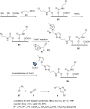
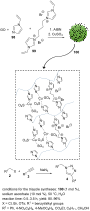
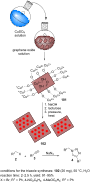
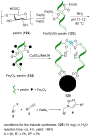
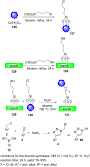
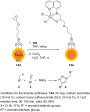
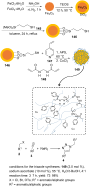
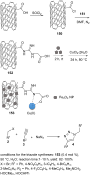
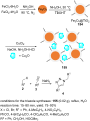
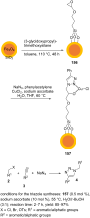
- 10 minutes at 120 °C and 15 psi, rGO/Cu2O (102) was obtained. The nanoparticles of Cu2O with an average size of 5 nm were homogeneously dispersed throughout the rGO sheets (Scheme 23). A mixture of phenylacetylene, benzyl bromides containing methoxy and nitro substitutions, and sodium azide was

















KOt-Bu-promoted selective ring-opening N-alkylation of 2-oxazolines to access 2-aminoethyl acetates and N-substituted thiazolidinones
Beilstein J. Org. Chem. 2020, 16, 492–501, doi:10.3762/bjoc.16.44
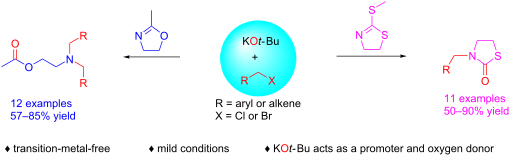
- synthesis of β-nitrate ester carboxamides using tert-butyl nitrite as the nitro source and oxygen as the oxidant through the ring opening of 2-oxazolines [9] (Scheme 1a). Kappe reported a two-step continuous-flow synthesis of N-(2-aminoethyl)acylamides through ring opening/hydrogenation of oxazolines with


p-Pyridinyl oxime carbamates: synthesis, DNA binding, DNA photocleaving activity and theoretical photodegradation studies
Beilstein J. Org. Chem. 2020, 16, 337–350, doi:10.3762/bjoc.16.33
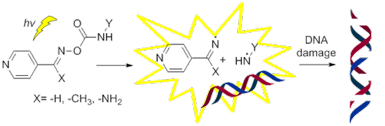
- during irradiation process. On the other hand, the nitro derivative 11 showed the formation of an intermediate with λmax at 385 nm which gradually increased for the first 3 min. This intermediate seems subsequently to act as a light filter absorbing the irradiation energy and to be converted to other
- selective compounds with DNA was good to excellent, as verified with extensive CT DNA-affinity studies. A deeper insight in the photochemical behaviour of the nitro (11) and the chloro (12) derivatives using UV spectroscopy in the absence of DNA was indicative of the disruption of 11 whereas 12 showed a
- activity seems to be located at the nitro group. The explanation of the activity seems to be the ability of 12 to obtain its triplet state and create active radicals able to abstract hydrogen atoms from DNA and cause its damage. This was experimentally verified using acetophenone, as a triplet state


Synthesis and herbicidal activities of aryloxyacetic acid derivatives as HPPD inhibitors
Beilstein J. Org. Chem. 2020, 16, 233–247, doi:10.3762/bjoc.16.25
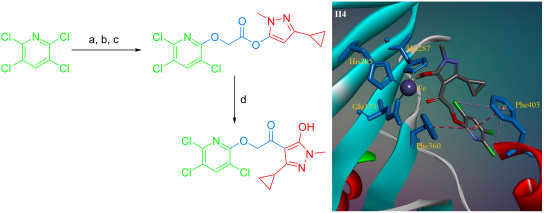
- to activity (I17 > I18, I26 > I27, II1 > II2), and that the introduction a nitro group led to more potent activity compared to that generated by a chlorine atom (except for I6 and I21), such that I15 > I3, I18 > I5, and I24 > I7 in terms of activity. Generally speaking, compounds with a pyrazole ring




Efficient method for propargylation of aldehydes promoted by allenylboron compounds under microwave irradiation
Beilstein J. Org. Chem. 2020, 16, 168–174, doi:10.3762/bjoc.16.19
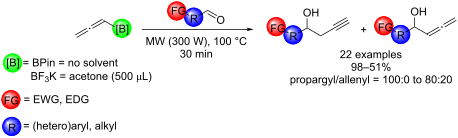
- products 2e–h were obtained in good yields and regioselectivities. In the same way, aldehydes containing electron-withdrawing groups such as the nitro group also reacted without influence of the substituent location to give the corresponding homopropargylic alcohols 2m and 2n in good yields. It is
- interesting to note that the nitro group remained intact under the reaction conditions. Usually, this group is sensitive to reduction when alternative methods involving zinc or tin are used [33]. In addition, aldehydes containing halogens also gave the corresponding products 2j–l in moderate yields. These


Reversible photoswitching of the DNA-binding properties of styrylquinolizinium derivatives through photochromic [2 + 2] cycloaddition and cycloreversion
Beilstein J. Org. Chem. 2020, 16, 111–124, doi:10.3762/bjoc.16.13
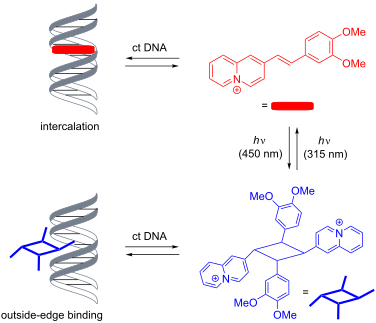
- emission intensity of 3d was too low to identify a maximum, as usually observed with nitro-substituted fluorophores. Unfortunately, the emission quantum yields of 3a–c could not be determined in water because of the compounds’ tendency to dimerize even at very low concentrations (see below). Overall, the
- × 105 M). The nitro-substituted derivative 3d had a slightly lower affinity with Kb = 8.2 ± 0.2 × 10⁴ M, and the methoxy-substituted derivatives had the lowest binding constants of Kb = 4.8 ± 0.1 × 10⁴ M (3b) and 4.1 ± 0.1 × 10⁴ M (3c). Overall, these binding affinities resembled the ones of known DNA
- Information File 1). However, it was observed that further irradiation of the nitro-substituted derivative 3d furnished the dimer in acetonitrile, as shown by the development of the characteristic cyclobutane protons at 4.85–4.95 ppm. In contrast, the NMR-spectroscopic analysis in D2O showed that the