Search results
Search for "toluene" in Full Text gives 1213 result(s) in Beilstein Journal of Organic Chemistry. Showing first 200.
Non-noble metal-catalyzed cross-dehydrogenation coupling (CDC) involving ether α-C(sp3)–H to construct C–C bonds
Beilstein J. Org. Chem. 2023, 19, 1259–1288, doi:10.3762/bjoc.19.94
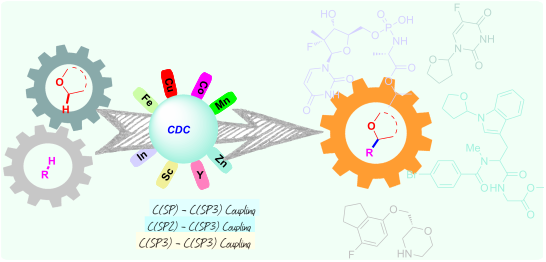
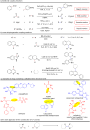
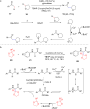
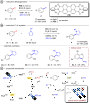
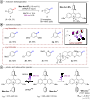
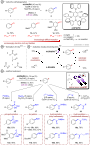
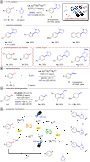
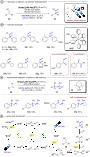
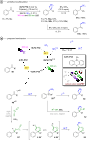
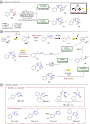
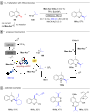
- have broad applications in synthesis. In 2019, Cai et al. developed a regioselective ligand-promoted CDC reaction between unactivated C(sp3)–H/C(sp3)–H bonds (Scheme 18) [79]. Different types of C(sp3)–H bond substrates, including cycloalkanes, cyclic ethers, and toluene derivatives without any








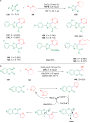


Metal catalyst-free N-allylation/alkylation of imidazole and benzimidazole with Morita–Baylis–Hillman (MBH) alcohols and acetates
Beilstein J. Org. Chem. 2023, 19, 1251–1258, doi:10.3762/bjoc.19.93
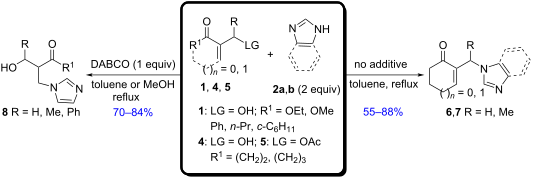
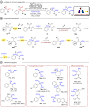
- Toulouse, France University of Tunis El Manar, Laboratory of Organic Chemistry, Faculty of Sciences, Campus, 2092 Tunis, Tunisia 10.3762/bjoc.19.93 Abstract A highly α-regioselective N-nucleophilic allylic substitution of cyclic MBH alcohols and acetates with imidazole or benzimidazole, in toluene at
- reflux with an azeotropic distillation, was successfully carried out with no catalysts or additives, affording the corresponding N-substituted imidazole derivatives in good yields. On the other hand, in refluxing toluene or methanol, the aza-Michael addition of imidazole onto acyclic MBH alcohols was
- in the presence of imidazole (2a), as a powerful nucleophilic additive, affording, via competitive allylic nucleophilic substitution in toluene at reflux, a mixture of the corresponding N-substituted morpholine and N-substituted imidazole derivatives 6 [23]. In addition, a literature survey showed


Acetaldehyde in the Enders triple cascade reaction via acetaldehyde dimethyl acetal
Beilstein J. Org. Chem. 2023, 19, 1243–1250, doi:10.3762/bjoc.19.92
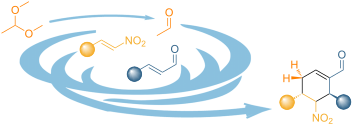
- alternative to toluene. The use of chloroform (Table 2, entry 2), as in our previous report [17], showed an improvement on selectivity, however, toluene was chosen as a more benign solvent. After further optimization of the acidic resin, stoichiometry, concentration, temperature, and reaction time (see


Selective construction of dispiro[indoline-3,2'-quinoline-3',3''-indoline] and dispiro[indoline-3,2'-pyrrole-3',3''-indoline] via three-component reaction
Beilstein J. Org. Chem. 2023, 19, 1234–1242, doi:10.3762/bjoc.19.91
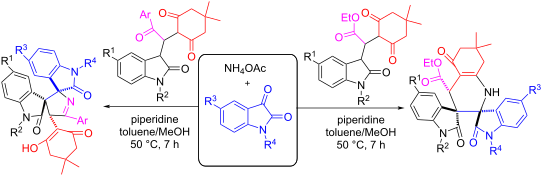
- -oxoindolin-3-ylidene)acetate in toluene according to the published method [52]. Then, the reaction conditions of the three-component reaction of isatyl adduct 1a (0.20 mmol), isatin 2a (0.20 mmol) and ammonium acetate (0.5 mmol) were examined according to Zhang and co-workers reported reaction (reaction 1 in
- reaction in other solvents such as acetonitrile, toluene and ethyl acetate at 50 °C gave the desired product 3a in very low yields (Table 1, entries 4–6). When the reaction was carried out in a mixture of toluene and methanol (v/v = 2:1) in the presence of piperidine, the yield of 3a increased to 60
- ). Prolonging the reaction time did not increase the yield of product 3a (Table 1, entry 12). Therefore, the optimized reaction conditions found for this three-component reaction are the use of a mixture of methanol and toluene at 50 °C for seven hours in the presence of piperidine. With the optimized reaction

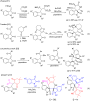


Unravelling a trichloroacetic acid-catalyzed cascade access to benzo[f]chromeno[2,3-h]quinoxalinoporphyrins
Beilstein J. Org. Chem. 2023, 19, 1216–1224, doi:10.3762/bjoc.19.89
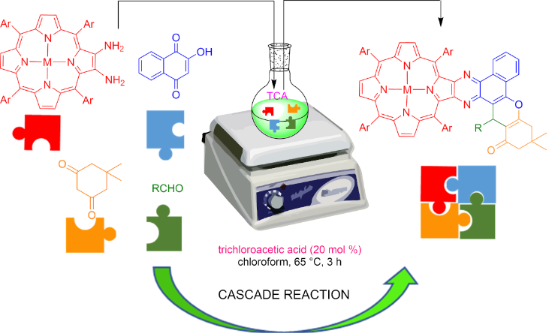
- /toluene 1:10 mixture under inert atmosphere to afford 2-amino-3-nitro-meso-tetraarylporphyrins which on reduction through sodium borohydride in the presence of 10% Pd/C in CH2Cl2/MeOH provided the desired porphyrins 1 in good yields as key starting materials for the synthesis of newly designed benzo[f
- yield. Furthermore, various organic solvents such as 1,2-dichloroethane, toluene, 1,4-dioxane and THF were also screened for the synthesis of porphyrin 3 by using 20 mol % of TCA at 65 °C (Table 1, entries 7–10). When the reaction was carried out in 1,2-dichloroethane and toluene at 65 °C, the desired
- experiments at 80 °C in 1,2-dichloroethane and 50 °C in chloroform under the same reaction conditions which produced the desired porphyrin 3 in lower yields (56% and 34%, respectively; Table 1, entries 13 and 14). In contrast, the reaction neither proceeded in chloroform nor in toluene at reflux temperature


Enabling artificial photosynthesis systems with molecular recycling: A review of photo- and electrochemical methods for regenerating organic sacrificial electron donors
Beilstein J. Org. Chem. 2023, 19, 1198–1215, doi:10.3762/bjoc.19.88
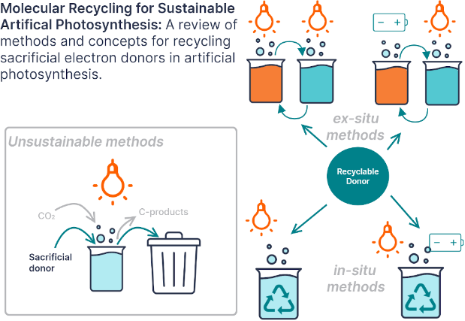
- shifted potential in aqueous media [26]. As a demonstrative example concerning quenching, Schulz and co-workers only detected the 2-electron-reduced product of the Cu(I) 4H-imidazolate complex when it was irradiated in aprotic media in the presence of the sacrificial donor p-(dimethylamino)toluene (DMT
- -Dimethylamino)toluene (DMT), has been used as a sacrificial electron donor in artificial photosynthesis [3]. The radical species that forms after oxidation can dimerize by forming a carbon–carbon bond which cannot be broken by re-reduction [3][73]. Voltammetric studies to identify the byproducts of DMT


Selective and scalable oxygenation of heteroatoms using the elements of nature: air, water, and light
Beilstein J. Org. Chem. 2023, 19, 1146–1154, doi:10.3762/bjoc.19.82
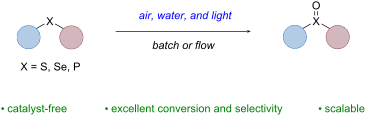
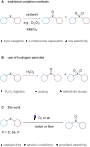
- equiv toluene led to 5-fold increase in reaction rate (Table 2, entries 1 and 2). The further study of the impact of electron density on the aromatic ring showed that electron-rich aromatics (such as anisole (Table 2, entry 3)) turned out to be more effective than electron-poor aromatics (e.g
- of CH3CN/H2O 8:2 (v:v). b2 equiv toluene as an additive. c1 equiv LiCl as an additive. dProduct not isolated, GC-FID conversion. Setup used in the flow experiment for the triphenylphosphine oxidation. Proposed extra alternative pathway. Optimization experiments of thioanisole oxidation.a Effect of





Photoredox catalysis harvesting multiple photon or electrochemical energies
Beilstein J. Org. Chem. 2023, 19, 1055–1145, doi:10.3762/bjoc.19.81







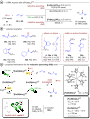
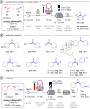
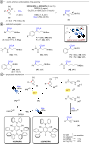
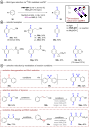


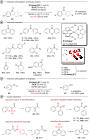

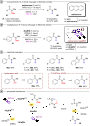











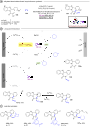


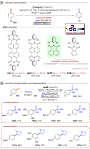


The effect of dark states on the intersystem crossing and thermally activated delayed fluorescence of naphthalimide-phenothiazine dyads
Beilstein J. Org. Chem. 2023, 19, 1028–1046, doi:10.3762/bjoc.19.79
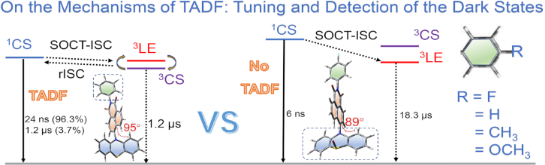
- ), phenothiazine (130 mg, 0.650 mmol), Pd(OAc)2 (22 mg, 0.098 mmol), and sodium tert-butoxide (70 mg, 0.732 mmol) were dissolved in dry toluene (8 mL). Then, tri-tert-butylphosphine tetrafluoroborate (19 mg, 0.065 mmol) was added. The mixture was refluxed and stirred for 8 h under N2. After cooling, water (20 mL
- -PTZ-OCH3, (e) NI-PTZ-F-O, and (f) NI-PTZ-Ph-O in different solvents. The solvents used were: CHX, HEX, toluene (TOL) and acetonitrile (ACN). Optically-matched solutions were used, A = 0.107, λex = 310 nm, 20 °C. Fluorescence spectra of the dyads. (a) NI-PTZ-F, (b) NI-PTZ-Ph, (c) NI-PTZ-CH3, (d) NI-PTZ


Copper-catalyzed N-arylation of amines with aryliodonium ylides in water
Beilstein J. Org. Chem. 2023, 19, 1008–1014, doi:10.3762/bjoc.19.76
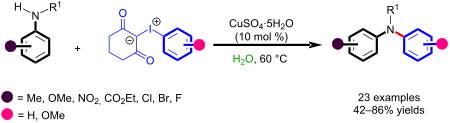
- iodonium ylide 2a in the presence of 10 mol % of CuSO4·5H2O as a catalyst in solvents such as tetrahydrofuran, 1,4-dioxane, methanol, water, acetonitrile, N,N-dimethylformamide and toluene at 60 °C (Table 1, entries 9–14). The detailed investigation reveals that the arylation of aniline (1a) with iodonium


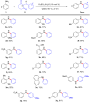

Synthesis of tetrahydrofuro[3,2-c]pyridines via Pictet–Spengler reaction
Beilstein J. Org. Chem. 2023, 19, 991–997, doi:10.3762/bjoc.19.74
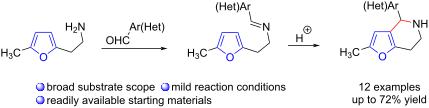
- , increasing the reaction temperature leads to the formation of the desired product 4a with moderate yield (Table 1, entries 3 and 4). Next, we found that TsOH as a catalyst and several studied solvents (toluene, 1,4-dioxane, AcOH) are inefficient (Table 1, entries 5–10). Finally, we settled on the mixture of


Clauson–Kaas pyrrole synthesis using diverse catalysts: a transition from conventional to greener approach
Beilstein J. Org. Chem. 2023, 19, 928–955, doi:10.3762/bjoc.19.71
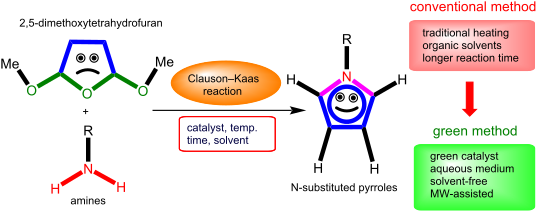
- P2O5 under toluene at 110 °C. Since phosphorus pentoxide gives phosphoric acid esters upon reaction with alcohols and also has less acidic character, the authors hypothesized that it might be a good choice for the conversion of amines 10 into their corresponding pyrroles. The results were according to
- , toluene, n-hexane, acetonitrile) and reaction conditions (room temperature, 60 °C, reflux, and MW (power 5, 8 or 10), were studied. Among these, the optimized reaction conditions for method 1 are 2.5 mol % HPA/SiO2 as catalyst in refluxing petroleum ether, whereas the optimized conditions for method 2 are
- acids/sulfonates from various primary sulfonamides via sulfonylpyrroles. First, various sulfonylpyrroles 69 were prepared from primary sulfonamides 68 by reaction with 2,5-DMTHF (2) using two methods as shown in Scheme 33. In method 1, amides 68 and 2 were heated in toluene at 100 °C for 30–60 min in


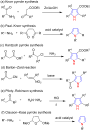


First synthesis of acylated nitrocyclopropanes
Beilstein J. Org. Chem. 2023, 19, 892–900, doi:10.3762/bjoc.19.67
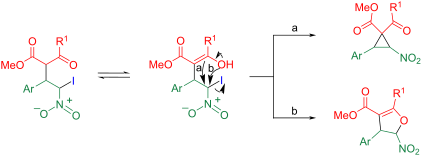
- ), was subjected to cyclopropanation according to a method described in the literature [13]. To a solution of adduct 4b in toluene, (diacetoxyiodo)benzene and tetrabutylammonium iodide were added, and the resulting mixture was stirred at room temperature for 14 h. Unexpectedly, from the reaction mixture
- conducted in the same way. Cyclization of adduct 4 Cyclization was conducted according to the literature [13]. To a solution of adduct 4f (593 mg, 1.67 mmol) in toluene (7 mL), were added (diacetoxyiodo)benzene (539 mg, 2.5 mmol) and tetrabutylammonium iodide (618 mg, 2.5 mmol), and the resultant mixture


Asymmetric tandem conjugate addition and reaction with carbocations on acylimidazole Michael acceptors
Beilstein J. Org. Chem. 2023, 19, 881–888, doi:10.3762/bjoc.19.65

- min. Subsequently, 1.2 M dimethylzinc reagent in toluene (0.31 mL, 0.38 mmol, 1.5 equiv) was added dropwise to the solution and the resulting mixture was also stirred for 10 min. The acylimidazole (0.25 mmol, 1.0 equiv) dissolved in anhydrous THF (0.5 mL) was added dropwise to the mixture. The




Pyridine C(sp2)–H bond functionalization under transition-metal and rare earth metal catalysis
Beilstein J. Org. Chem. 2023, 19, 820–863, doi:10.3762/bjoc.19.62
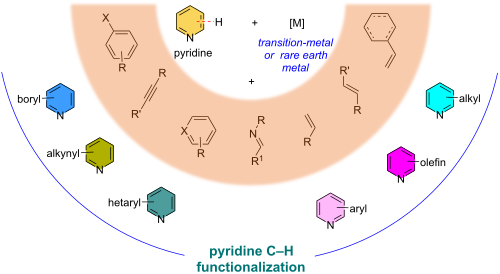
- pyridine N-oxides 9 with nonactivated secondary (2°) alkyl bromides 10 required 5 mol % of the Pd(OAc)2dppf catalyst, Cs2CO3 (2.0 equiv) as base in toluene at 100 °C as shown in Scheme 3. Under these conditions, the reaction provided diverse 2-alkylpyridine derivatives 11 in moderate to good yields
- ). In 2015, a palladium-catalyzed cross dehydrogenative coupling of pyridine N-oxides with toluene for the regioselective arylation and benzylation of pyridine N-oxide was reported by Khan and co-workers [92] (Scheme 23). The authors have shown toluene 117 when used as benzyl and aryl source remained
- toluene 117 by sulfate radical anion. Coordination of intermediate 120 and 121 leads to complex 122 which undergoes reductive elimination to provide product 119. 2-Ethyl-substituted pyridine N-oxides may undergo a dual C–H activation due to the buttressing effect of the ethyl group to produce azafluorene












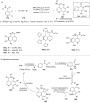
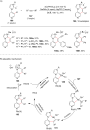


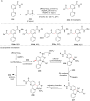


Eschenmoser coupling reactions starting from primary thioamides. When do they work and when not?
Beilstein J. Org. Chem. 2023, 19, 808–819, doi:10.3762/bjoc.19.61
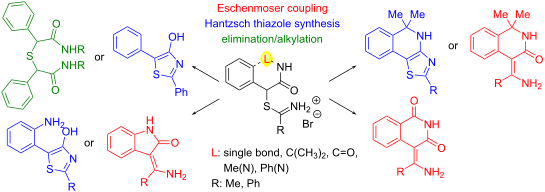
- 70–95%). The presence of a base and the type of solvent seems to be an important factor for the reaction course. In toluene, ionic liquid or in refluxing ethanol without a base [16][19][20] or in the presence of weakly basic pyridine [17][18][21] (pKa = 5.23 in water, 3.4 in DMSO, 3.3 in DMF, and
- ). α-Bromophenylacetic acid amides (4a,b) were prepared from 2-bromo-2-phenylacetyl chloride [38] and the corresponding amine in DCM or toluene at reduced temperature (see Supporting Information File 1). Thiobenzamides and thiobenzanilides were prepared by magnesium chloride-catalyzed thiolysis of


Synthesis of substituted 8H-benzo[h]pyrano[2,3-f]quinazolin-8-ones via photochemical 6π-electrocyclization of pyrimidines containing an allomaltol fragment
Beilstein J. Org. Chem. 2023, 19, 778–788, doi:10.3762/bjoc.19.58
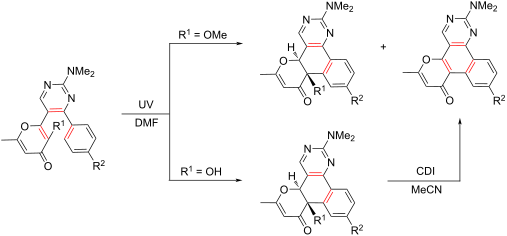
- of the photoproducts (Table 2). Based on the structure of compound 11a we assumed that it could be converted into a polyaromatic product using conventional synthetic methods. However, the use of different systems (TsOH/toluene, HCl/EtOH, DBU/EtOH, MeONa/MeOH) resulted only in the decomposition of the
- could be achieved by using suitable dehydrating agents (TsOH/toluene, Ac2O/MeCN, SOCl2/toluene, CDI/MeCN, POCl3/toluene). Gratifyingly, it was shown that the application of 1,1-carbonyldiimidazole (CDI) in acetonitrile allows to convert compound 11g into the polyaromatic product 12a in 94% yield (see


Honeycomb reactor: a promising device for streamlining aerobic oxidation under continuous-flow conditions
Beilstein J. Org. Chem. 2023, 19, 752–763, doi:10.3762/bjoc.19.55
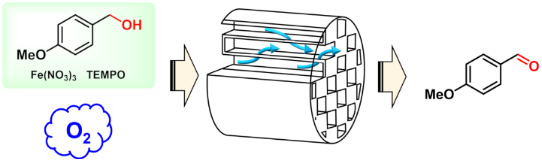
- Pd(OAc)2 did not dissolve in toluene even with pyridine. As a substitute for TEMPO, 2,3-dichloro-5,6-dicyano-p-benzoquinone (DDQ) was tried (Table 1, entries 9 and 10) [45]. Although the reactivity was improved compared with the TEMPO catalytic system in Table 1, entries 3–5, the DDQ catalytic system


Construction of hexabenzocoronene-based chiral nanographenes
Beilstein J. Org. Chem. 2023, 19, 736–751, doi:10.3762/bjoc.19.54
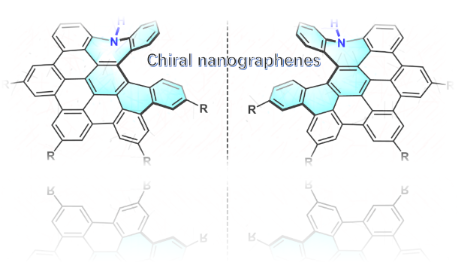
- benzo[b]naphtho[2,3-f]oxepine 66 with tetrabromothiophene-S,S-dioxide in toluene followed by oxidative aromatization in the presence of DDQ afforded tetrabrominated aromatics 67 in an 81% yield. Subsequently, fourfold Suzuki–Miyaura cross-coupling of polybrominated compound 67 was performed, affording


Strategies in the synthesis of dibenzo[b,f]heteropines
Beilstein J. Org. Chem. 2023, 19, 700–718, doi:10.3762/bjoc.19.51

- the synthesis of intermediate stilbenes 61 by Wittig coupling. The authors elected to use a Pd2dba3/DPEphos (L4)/Cs2CO3 system (dba = dibenzylideneacetone; DPEphos = bis[(2-diphenylphosphino)phenyl] ether) in toluene after catalyst and ligand screening. Cyclisation of several substituted 2,2


Synthesis of medium and large phostams, phostones, and phostines
Beilstein J. Org. Chem. 2023, 19, 687–699, doi:10.3762/bjoc.19.50
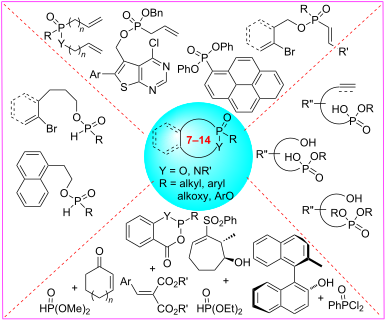
- refluxing toluene under argon atmosphere (Scheme 9) [21]. In addition, the intramolecular coupling reaction of diphenyl pyren-1-ylphosphonate (47) accomplished the synthesis of 3-phenoxybenzo[f]pyreno[1,10-cd][1,2]oxaphosphepine 3-oxide (48) in 35% yield in the presence of largely excessive amounts of AlCl3
- palladium-catalyzed intramolecular arylation of 3-(2-bromophenyl)propyl alkylphosphinates 61 approached the synthesis of 3,4,5-trihydrobenzo[c][1,2]oxaphosphepine 1-oxides 62 in moderate 39–45% yields in the presence of triethylamine in dry toluene at 100 °C [33]. When the substrates were extended to 5


Nucleophile-induced ring contraction in pyrrolo[2,1-c][1,4]benzothiazines: access to pyrrolo[2,1-b][1,3]benzothiazoles
Beilstein J. Org. Chem. 2023, 19, 646–657, doi:10.3762/bjoc.19.46
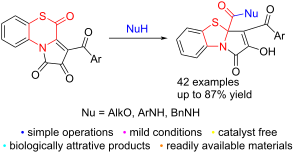
- (toluene, acetonitrile, DMSO-d6) at room temperature, or when these solutions were slightly heated, the compounds 5a,b,e dissociated to form APBTTs 1 (the solutions got violet color, characteristic of compounds 1) (Scheme 10). In the presence of water (including the atmospheric moisture), hydration
- conditions (Table 2) of the model reaction of APBTT 1a and benzylamine were optimized. The best yield of PBTA 7a was observed when acetonitrile was used as the solvent and heated at 85 °C for 3 h (entry 2, Table 2). Since the product 7a isolation procedure proceeded more conveniently in toluene (the product
- the proposed approach to PBTAs were not successful. In the reaction of APBTT 1a with diethylamine (1a/diethylamine ratio of 1:1; stirring in toluene at 90 °С for 2 h; at 113 °С for 2 h; at room temperature for 24 h) and cyclohexylamine (1a/cyclohexylamine ratio of 1:1 or 1:5; stirring in toluene at




C3-Alkylation of furfural derivatives by continuous flow homogeneous catalysis
Beilstein J. Org. Chem. 2023, 19, 582–592, doi:10.3762/bjoc.19.43
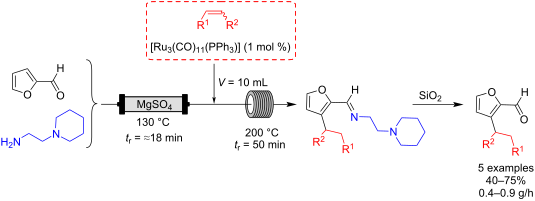
- starting material had proved to be the most reactive imine in batch, leading, in the presence of 5 mol % of [Ru3(CO)12] and 3 equivalents of triethoxyvinylsilane in toluene at 150 °C after 5 h, to the alkylated aldehyde 2a with 62% yield, after purification on silica gel (Scheme 2) [21][39]. The flow
- controlled by a back-pressure regulator (BPR) to keep a pressure of about 130 bar, i.e., at a pressure much higher than that which causes the solvent (toluene) to boil in the reaction temperature range (150–200 °C). This homemade, pulsed-flow setup was used for optimizing the protocol while saving on
- . Unfortunately, with this catalyst, repeatability problems were detected (yield fluctuation of approximately 20%) which could be assigned to the low solubility of this catalyst in toluene. In order to overcome these problems, we synthesized triruthenium carbonyl complexes with phosphine ligand(s), namely


Access to cyclopropanes with geminal trifluoromethyl and difluoromethylphosphonate groups
Beilstein J. Org. Chem. 2023, 19, 541–549, doi:10.3762/bjoc.19.39
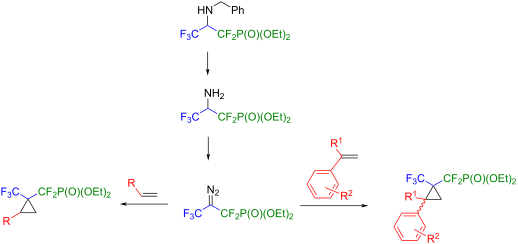
- surprise, the application of Rh2(OAc)4 did not lead to the desired product neither in dichloromethane nor in toluene (Table 1, entries 1 and 2). Switching the catalyst to copper(I) iodide in refluxing DCM, did not result in the formation of product 6a, as well (Table 1, entry 3). However, when CuI was used
- in boiling toluene, 42% of the diazo reagent 5 was converted to 6a after only 1 hour of stirring. Thus, to increase the conversion rate, the reaction time was prolonged up to 3.5 h. Indeed, after this time, complete conversion of the diazo reagent 5 was observed and cyclopropane 6a was isolated in 74
- cyclopropanation. Reaction conditions: alkene (0.15 mmol), diazo compound 5 (0.1 mmol), CuI (1 mol %), dry toluene, 111 °C, Ar atmosphere. aYields refer to isolated products; bdr ratio determined by 19F NMR spectroscopy. Scope of the cyclopropanation. Reaction conditions: alkene (0.15 mmol), diazo compound 5 (0.1



Computational studies of Brønsted acid-catalyzed transannular cycloadditions of cycloalkenone hydrazones
Beilstein J. Org. Chem. 2023, 19, 477–486, doi:10.3762/bjoc.19.37
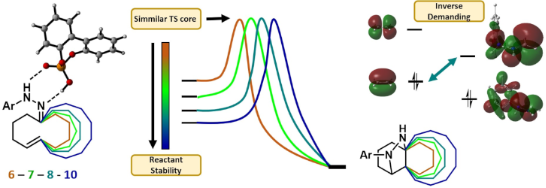
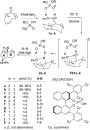
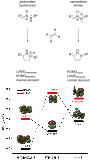
- hydrazone. Energy (eV) of molecular orbitals has been calculated at the m062x/6-311+G(d,p)/SMD=toluene level of theory. Global electron density transfer (GEDT). Dashed black line indicates both TS. ELF analysis for the reaction of series b leading to a system 6-6. Black trace corresponds to IRC. Colored