Search results
Search for "dipolarophiles" in Full Text gives 71 result(s) in Beilstein Journal of Organic Chemistry.
Synthesis of unnatural α-amino esters using ethyl nitroacetate and condensation or cycloaddition reactions
Beilstein J. Org. Chem. 2018, 14, 2846–2852, doi:10.3762/bjoc.14.263
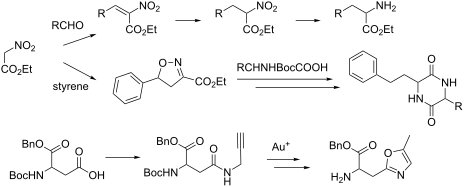
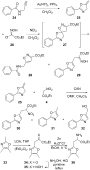
- another approach involving an oxidative addition of ethyl nitroacetate (4) on the methylene-bearing dipolarophiles 25 mediated by cerium(IV) ammonium nitrate (CAN). This was inspired by reports describing CAN-mediated carbon–carbon bond formation reactions between ethyl nitroacetate (4) and tri-O



Catalyst-free synthesis of 4-acyl-NH-1,2,3-triazoles by water-mediated cycloaddition reactions of enaminones and tosyl azide
Beilstein J. Org. Chem. 2018, 14, 2348–2353, doi:10.3762/bjoc.14.210
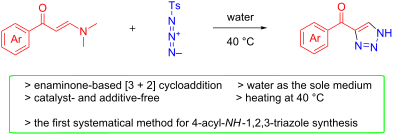
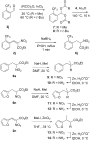
- with activated dipolarophiles. As synthetic tools being able to provide 1,2,3-triazoles using an organocatalyst or other non-metal catalysts, this method shows distinctive advantages in enabling the production of 1,2,3-triazoles free of any heavy metal contamination [36][37][38]. Generally, the
- cycloaddition of azides with activated dipolarophiles such as strained cyclic alkynes, enamines, enolates, electron-deficient olefins, ylides, iminium cations and alkyne anions, etc., have been identified as reliable approaches to access 1,2,3-triazole scaffolds with multiple substitution patterns [39][40][41


First thia-Diels–Alder reactions of thiochalcones with 1,4-quinones
Beilstein J. Org. Chem. 2018, 14, 1834–1839, doi:10.3762/bjoc.14.156
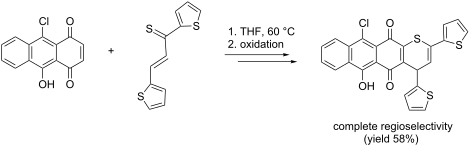
- regioselective manner [16][20]. In cycloaddition chemistry, 1,4-quinones are applied widely both as dipolarophiles and dienophiles. In the case of [3 + 2] cycloadditions, reactions can occur chemoselectively with either the C=O or the C=C unit [21][22][23]. On the other hand, reactions with diverse 1,3-dienes


[3 + 2]-Cycloaddition reaction of sydnones with alkynes
Beilstein J. Org. Chem. 2018, 14, 1317–1348, doi:10.3762/bjoc.14.113
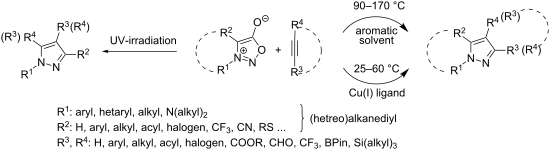
- = COOEt); di-tert-butyl, R3 = COOt-Bu etc.) act as the most common dipolarophiles because of their high reactivity. Moreover, one or both carboxylate groups in position 3 and 4 in the final pyrazole are easily removable using a hydrolysis/decarboxylation protocol [5][16] thus giving pyrazole-4-carboxylic
- acids – potent xanthine oxidoreductase inhibitors [40] or even 3,4-unsubstituted pyrazoles [16]. Both pyrazole carboxylic groups can be also modified to hydrazides and oxazole rings [26] or a new condensed pyridazine ring [27]. Less reactive dipolarophiles such as dibenzoylacetylenes (1,4-diphenylbut-2
- examples found for [3 + 2]-cycloadditions between sydnones and symmetrical non-cyclic alkynes including conditions used for the synthesis, are presented in Table 1. Extraordinarily good dipolarophiles – e.g., cycloalkynes – containing a very reactive “bent” triple bond such as in bicyclo[6.1.0]non-4-yne-9


Dialkyl dicyanofumarates and dicyanomaleates as versatile building blocks for synthetic organic chemistry and mechanistic studies
Beilstein J. Org. Chem. 2017, 13, 2235–2251, doi:10.3762/bjoc.13.221
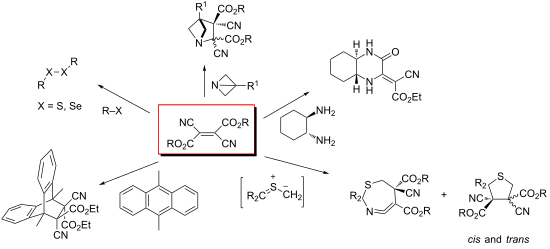
- dicyanofumarates and maleates as highly functionalized electron-deficient dipolarophiles, dienophiles and Michael acceptors is summarized. The importance for the studies on reaction mechanisms of cycloadditions is demonstrated. Multistep reactions with 1,2-diamines and β-aminoalcohols leading to diverse five- and
- isomeric homo-Diels–Alder adducts were found in the mixture. [3 + 2]-Cycloadditions (1,3-dipolar cycloadditions) Electron-rich 1,3-dipoles such as thiocarbonyl S-methanides and azomethine ylides react with dipolarophiles E-1 and Z-1 to give five-membered cycloadducts through stepwise zwitterionic reaction
- mixture of products was obtained starting from trans-33b. The formation of these isomeric products suggests that in the course of the reaction, isomerizations of both the intermediate azomethine ylide of type 32 as well as of the electron-deficient dipolarophiles E- and Z-1b, occur. The observed


A novel application of 2-silylated 1,3-dithiolanes for the synthesis of aryl/hetaryl-substituted ethenes and dibenzofulvenes
Beilstein J. Org. Chem. 2017, 13, 1900–1906, doi:10.3762/bjoc.13.185
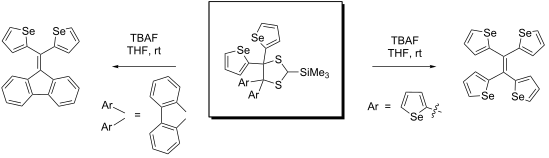
- on [3 + 2]-cycloadditions with thioketones and diazo compounds, we turned our attention to hetaryl thioketones [18]. It turned out that the presence of the hetaryl groups strongly influences the reactivity of these dipolarophiles in reactions with diazomethane (CH2N2, Schönberg reaction) [19][20][21


Ultrasound-promoted organocatalytic enamine–azide [3 + 2] cycloaddition reactions for the synthesis of ((arylselanyl)phenyl-1H-1,2,3-triazol-4-yl)ketones
Beilstein J. Org. Chem. 2017, 13, 694–702, doi:10.3762/bjoc.13.68
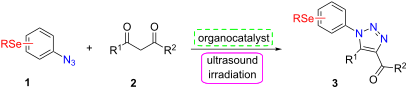
- carbonyl compounds could successfully generate an enamine or an enolate, and these species react as dipolarophiles with organic azides in organocatalyzed 1,3-dipolar cycloadditions. Our research group has demonstrated β-enamine–azide cycloaddition reactions for the synthesis of selenium-functionalized


Isoxazole derivatives as new nitric oxide elicitors in plants
Beilstein J. Org. Chem. 2017, 13, 659–664, doi:10.3762/bjoc.13.65
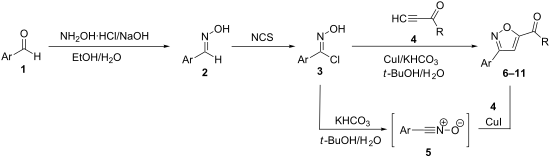
- known as reactive 1,3-dipoles involved in 1,3-dipolar cycloaddition reactions with various dipolarophiles generating five-membered heterocyclic compounds, such as isoxazoles, isoxazolines, oxadiazoles, oxadiazolines, dioxazolidines etc. [23][24][25]. Intermediate nitrile oxides are usually generated in


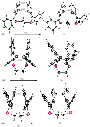
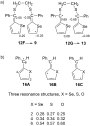
Dimerization reactions of aryl selenophen-2-yl-substituted thiocarbonyl S-methanides as diradical processes: a computational study
Beilstein J. Org. Chem. 2017, 13, 410–416, doi:10.3762/bjoc.13.44

- decomposition, 2,2-diaryl-substituted derivatives can be generated only at low temperature, typically at −60 °C in THF solution. The in situ generated thiocarbonyl S-methanides 1 are considered as electron-rich 1,3-dipoles, which easily react with electron-deficient dipolarophiles, yielding a plethora of five


Multicomponent synthesis of spiropyrrolidine analogues derived from vinylindole/indazole by a 1,3-dipolar cycloaddition reaction
Beilstein J. Org. Chem. 2016, 12, 2893–2897, doi:10.3762/bjoc.12.288
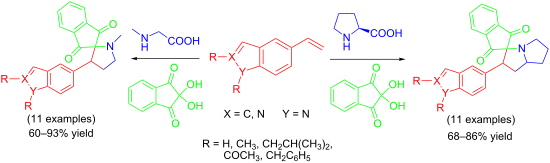
- stereospecific cyclic adducts. Keywords: L-proline; ninhydrin; sarcosine; spiropyrrolidine; 5-vinylindazole; 5-vinylindole; Introduction The [3 + 2] cycloaddition between azomethine ylides and olefins/acetylene as dipolarophiles is an important reaction to access a number of novel heterocyclic spiro scaffolds
- , antitubercular, anticonvulsant and cardiovascular activities [11][12][13][14][15][16]. As part of our interest in the exploration of 1,3-dipolar cycloaddition reactions [17] for the synthesis of polycyclic molecules, N-alkylated vinylindoles are applied as dipolarophiles in view of the challenges that still pose
- favored with dipoles and highly reactive dipolarophiles (vinylindole and -indazole). The increase in the reactivity could be attributed to the presence of electron-donating groups on the dipolarophile. Encouraged by the success with the acyclic amino acid sarcosine (5), the reaction was extended to the


Synthesis of spiro[isoindole-1,5’-isoxazolidin]-3(2H)-ones as potential inhibitors of the MDM2-p53 interaction
Beilstein J. Org. Chem. 2016, 12, 2793–2807, doi:10.3762/bjoc.12.278
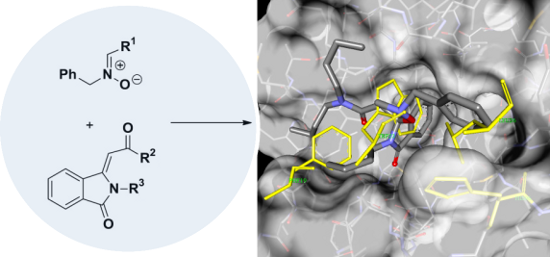
- ,S)-10 adducts were modeled. Figure 5 shows the TSs (named endo, N or exo, X) for reaction of the two isomeric dipolarophiles (Z)-8 and (E)-8 with nitrone 4, respectively. All the possible degrees of conformational freedom were considered, in particular the different orientations of the benzylic
- 10–90% acetonitrile in water). Materials: Nitrones 4, 5 and dipolarophiles 2a–g have been prepared according to known procedures [35][57][58][59]. General 1,3-dipolar cycloaddition procedure. A solution of 2a (0.287 mmol) and nitrone 4 (0.287 mmol) in toluene (5 mL) was put in a sealed tube and
- of dipolarophiles (Z)-8 and (E)-8 with nitrone 4. The labels endo N and exo E refer to the location of the nitrone N-benzyl in the formed five-membered ring on the same or opposite side of the phenyl ring of dipolarophiles. Distances between atoms involved in the forming bonds (Å) are reported in the


Sydnone C-4 heteroarylation with an indolizine ring via Chichibabin indolizine synthesis
Beilstein J. Org. Chem. 2016, 12, 2503–2510, doi:10.3762/bjoc.12.245
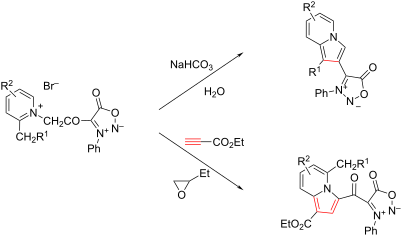
- interesting chemical reactions of sydnones are their electrophilic substitution at C-4 and their participation in 1,3-dipolar cycloaddition reactions with olefinic and acetylenic dipolarophiles to form pyrazoles and functional transformation at C-4 [20][21][22][23][24][25][26]. Herein we present the synthesis
- than 30 different types of biological activity and they are highly fluorescent compounds the synthesis of new compounds with an indolizine framework is of great interest. The Chichibabin method and 1,3-dipolar cycloaddition reactions of pyridinium N-ylides with acetylenic dipolarophiles are two of the
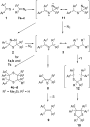
- bihetaryls 9 can also serve as starting materials for the generation of sydnone-pyridinium N-ylides 10 (Scheme 2) in the presence of acetylenic dipolarophiles, to form sydnone-indolizine hybrids 12. In the new compounds 12 (Scheme 2) the indolizine moiety is connected by a keto group to C-4 of the sydnone


An effective one-pot access to polynuclear dispiroheterocyclic structures comprising pyrrolidinyloxindole and imidazothiazolotriazine moieties via a 1,3-dipolar cycloaddition strategy
Beilstein J. Org. Chem. 2016, 12, 2240–2249, doi:10.3762/bjoc.12.216

- constructing complex N-heterocyclic systems in a regio and stereocontrolled fashion is the 1,3-dipolar cycloaddition of azomethine ylides to electron-deficient alkenes as dipolarophiles [2][3][4][5][6][7][8]. The in situ preparation of azomethine ylides from different carbonyl and amino components makes the
- -diones. Results and Discussion The required dipolarophiles 1a–c were prepared by the three-component condensation of imidazotriazinethione 2, bromoacetic acid, and aromatic aldehydes (Scheme 2), as was described earlier by us [41]. The starting compound 2 is readily accessible and can be synthesized from
- atoms are omitted for clarity. Modes of approach of azomethine ylide (R = H, Ph). Earlier studied cycloaddition reaction. Synthesis of dipolarophiles 1a–c. Synthesis of dispirocompounds 4a–o. Synthesis of dipolarophiles 1d–f. Optimization of the 1,3-dipolar cycloaddition reaction conditions.a


Synthesis of ferrocenyl-substituted 1,3-dithiolanes via [3 + 2]-cycloadditions of ferrocenyl hetaryl thioketones with thiocarbonyl S-methanides
Beilstein J. Org. Chem. 2016, 12, 1421–1427, doi:10.3762/bjoc.12.136
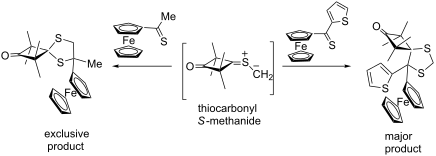
- results in the preferred concerted [3 + 2]-cycloaddition. It is well known that this mechanism, controlled by frontier-orbital (FMO) interactions, is strongly influenced by steric effects in the case of C=S dipolarophiles [8][17]. Conclusion The presented study indicated that ferrocenyl thioketones show
- ferrocenyl thioketones may also be used as prone dipolarophiles in reactions with other dipoles. Similarly, they are expected to display a high dienophilicity. The results obtained with thiocarbonyl S-methanides, i.e., the preferred formation of the sterically more crowded 4,4,5,5-tetrasubstituted 1,3


Synergistic chiral iminium and palladium catalysis: Highly regio- and enantioselective [3 + 2] annulation reaction of 2-vinylcyclopropanes with enals
Beilstein J. Org. Chem. 2016, 12, 1340–1347, doi:10.3762/bjoc.12.127
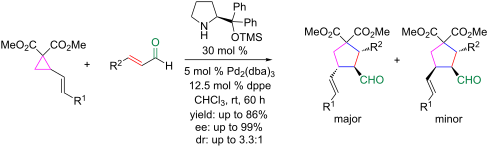
- the reaction with highly active dipolarophiles, such as electrophilic C=O [35], e.g., aldehydes [36][37][38], ketones [38][39], and imines [40], and nucleophilic enol ethers [38][41], enamides [42], and indoles [43]. Nonetheless, the reactions with the α,β-unsaturated aldehydes and ketones face


Multicomponent reactions: A simple and efficient route to heterocyclic phosphonates
Beilstein J. Org. Chem. 2016, 12, 1269–1301, doi:10.3762/bjoc.12.121
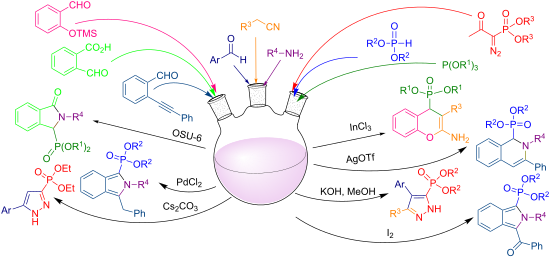
- . 6 1,3-Dipolar cycloaddition-based multicomponent reactions 1,3-Dipolar cycloaddition-based multicomponent reactions usually involve the cycloaddition of in situ generated 1,3-dipoles and dipolarophiles to give five-membered heterocycles. In recent years, many heterocyclic phosphonates have been


Diradical reaction mechanisms in [3 + 2]-cycloadditions of hetaryl thioketones with alkyl- or trimethylsilyl-substituted diazomethanes
Beilstein J. Org. Chem. 2016, 12, 716–724, doi:10.3762/bjoc.12.71
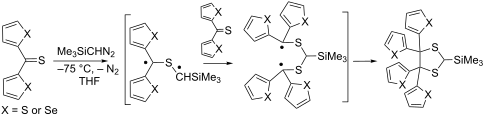
- -thiadiazolines of type 2 can be obtained at low temperature and subsequently used as precursors of new thiocarbonyl ylides. The latter may be potentially useful for the [3 + 2]-cycloaddition reactions with diverse dipolarophiles leading to five-membered S-heterocycles, such as di- and tetrahydrothiophenes, 1,3


Indolizines and pyrrolo[1,2-c]pyrimidines decorated with a pyrimidine and a pyridine unit respectively
Beilstein J. Org. Chem. 2015, 11, 1079–1088, doi:10.3762/bjoc.11.121
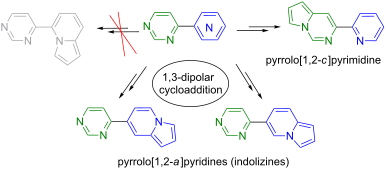
- ]pyrimidines or pyrimidinyl-substituted indolizines. The synthetic strategy was the 1,3-dipolar cycloaddition reaction of the corresponding N-ylides [21][22][23][24][25]. The structural variety of the compounds was determined by the series of dipolarophiles employed. The new final compounds were structurally
- acetylenic dipolarophiles 10 (3.5 mmol) were stirred under reflux in 20 mL 1,2-epoxybutane for 24 h. The products were precipitated with ethanol and removed by filtration. Further purification was made by crystallization from ethanol or by column chromatography on Al2O3 using methylene chloride as eluent. 3
- , 156.9 (C-3, C-4’, C-1”), 134.7 (C-4”), 143.9 (C-4), 145.4 (C-2), 147.6 (C-6), 159.0 (C-2’), 159.4 (C-6’), 190.6 (COAr). General procedure for obtaining indolizines 14a–f 4-(3-Pyridyl)pyrimidine (7, 3 mmol), bromoacetophenones 9 (3 mmol) and different acetylenic dipolarophiles 10 (3.5 mmol) were stirred


On the strong difference in reactivity of acyclic and cyclic diazodiketones with thioketones: experimental results and quantum-chemical interpretation
Beilstein J. Org. Chem. 2015, 11, 504–513, doi:10.3762/bjoc.11.57
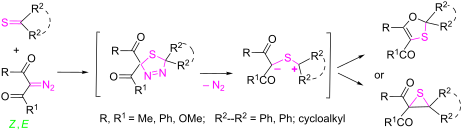
- -thioxocyclobutanone (2b) as dipolarophiles (Figure 1). The calculations were performed at the density functional theory (DFT) level using the 6-31G(d) basis set. For reactions of diazo compounds 1a–f with thiobenzophenone (2a), the solvent was simulated using the polarizable continuum model (PCM) [22], and for the


C-5’-Triazolyl-2’-oxa-3’-aza-4’a-carbanucleosides: Synthesis and biological evaluation
Beilstein J. Org. Chem. 2015, 11, 328–334, doi:10.3762/bjoc.11.38

- Sharpless [46] (Scheme 1 and Table 1). The click chemistry process, carried out with equimolar amounts of the respective dipolarophiles, afforded in all the cases the corresponding C-5’-triazolyl-2’-oxa-3’-aza-4’a-carbanucleosides 13 and 14 in good yields (79–89%). According to other copper-catalyzed azide


New highlights of the syntheses of pyrrolo[1,2-a]quinoxalin-4-ones
Beilstein J. Org. Chem. 2014, 10, 2377–2387, doi:10.3762/bjoc.10.248
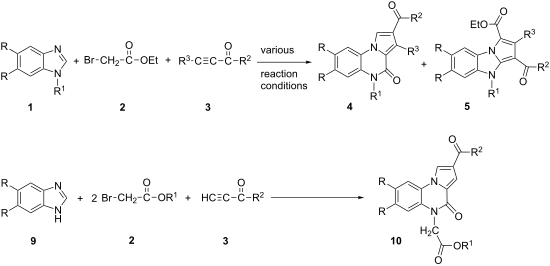
- various dipolarophiles under the same reaction conditions, aiming to explore the generality of the reaction. The previously reported data on 1,3-cycloaddition reactions of 1-substituted 3-(alkoxycarbonylmethyl)benzimidazolium ylides with various dipolarophiles are rather contradictory. Thus, 1-alkyl-3



Multicomponent reactions in nucleoside chemistry
Beilstein J. Org. Chem. 2014, 10, 1706–1732, doi:10.3762/bjoc.10.179
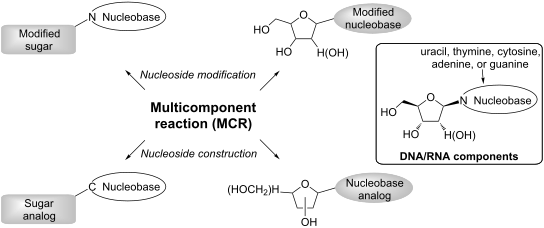
- , readily act in subsequent reactions as Michael acceptors, Diels–Alder (hetero)dienes or dienophiles, or dipolarophiles. Multicomponent domino reactions initiated by the Knoevenagel condensation are a valuable tool for the construction of many compounds with complex molecular structures [90]. The syntheses


Visible-light photoredox catalyzed synthesis of pyrroloisoquinolines via organocatalytic oxidation/[3 + 2] cycloaddition/oxidative aromatization reaction cascade with Rose Bengal
Beilstein J. Org. Chem. 2014, 10, 1233–1238, doi:10.3762/bjoc.10.122
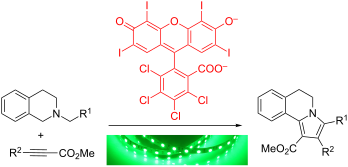
- . Incorporation of methoxy groups at C-6 and C-7 in the dihydroisoquinoline core was well tolerated, affording the corresponding product 3fa in 68% yield. To demonstrate the synthetic utility of the oxidation/[3 + 2] cycloaddition/aromatization cascade we examined other dipolarophiles such as activated alkynes 5


Copper–phenanthroline catalysts for regioselective synthesis of pyrrolo[3′,4′:3,4]pyrrolo[1,2-a]furoquinolines/phenanthrolines and of pyrrolo[1,2-a]phenanthrolines under mild conditions
Beilstein J. Org. Chem. 2014, 10, 692–700, doi:10.3762/bjoc.10.62
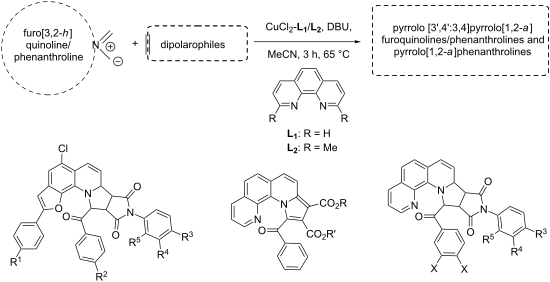
- etc., some of which have been evaluated as potential antibacterial and antifungal agents [16][17][18][19]. In order to explore the possibility of using structurally more complex dipoles and dipolarophiles to construct more interesting structural networks, we replaced simple alkenes/alkynes with
- /antifungal/spermicidal/lifespan altering agents, where furo[3,2-h]quinoliniums were employed as dipole precursors and maleimide derivatives as dipolarophiles. We initially employed the protocols from our recently developed green methodologies [21][22][23][24][25], which however failed to give any promising
- form the cycloadduct 10a, releasing the Cu(II) complex to enter another cycle. In order to establish the general applicability of this protocol, we reacted different furo[3,2-h]quinoliniums 9a–d and maleimide dipolarophiles 4a–c under the standardized reaction conditions. As obvious from the results


Additive-assisted regioselective 1,3-dipolar cycloaddition of azomethine ylides with benzylideneacetone
Beilstein J. Org. Chem. 2014, 10, 352–360, doi:10.3762/bjoc.10.33
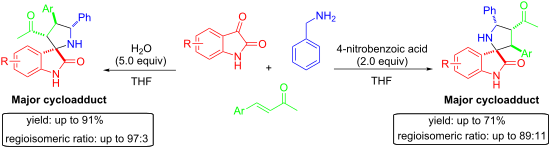
- with various dipolarophiles, such as α,β-unsaturated esters [21][22][23][24][25], dienones [26][27], α,β-unsaturated ketones [28][29][30], unsaturated aryl ketones [31][32][33] and electron-poor alkenes [34][35][36][37][38][39]. Among the studied α,β-unsaturated enones for 1,3-dipolar cycloaddition
- , chalcone derivatives are the most widely used dipolarophiles. Sarrafi and co-workers reported a 1,3-dipolar cycloaddition reaction of isatin, benzylamine and chalcone derivatives [31], and only one single regioisomer was obtained in high yield, in which the benzoyl group was connected to C-3 of the newly
- -constructed pyrrolidine. However, unsaturated ketones with α-hydrogens such as benzylideneacetone, which have attracted great interest due to their synthetic potential [40][41][42], have not been exhaustively studied as suitable dipolarophiles for 1,3-dipolar cycloadditions of azomethine ylides to prepare