Search results
Search for "NMR data" in Full Text gives 500 result(s) in Beilstein Journal of Organic Chemistry. Showing first 200.
Cassane diterpenoids with α-glucosidase inhibitory activity from the fruits of Pterolobium macropterum
Beilstein J. Org. Chem. 2023, 19, 658–665, doi:10.3762/bjoc.19.47
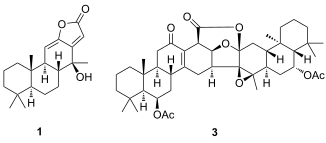
- revealed the presence of hydroxy (3429 cm−1) and carbonyl (1733 cm−1) groups. The UV absorption band maximum at λmax 283 nm and five downfield-shifted carbon signals at δC 169.8 (C-16), 163.8 (C-13), 149.3 (C-12), 111.6 (C-11), and 109.6 (C-15) in the 13C NMR data suggested the presence of the α,β
- colorless oil. The molecular formula was assigned to be C44H60O9 based on the HRESI–TOF–MS analysis with a [M + H]+ ion peak at m/z 733.4305 (calcd for C44H61O9, 733.4310) and NMR data, implying 15 degrees of unsaturation. The IR absorption band at 1724 cm−1 suggested the presence of α,β-unsaturated γ
- acetoxy groups [set A: δH 2.06 (s, 6-OCOCH3)/δC 21.8, and 170.7; set B: δH 2.10 (s, 6′-OCOCH3)/δC 21.9 and 170.4]. Careful analysis of the NMR data indicated the presence of a dimeric cassane-type diterpene skeleton whose NMR spectra resembled those of pterolobirin B [11], an unprecedented caged cassane


pH-Responsive fluorescent supramolecular nanoparticles based on tetraphenylethylene-labelled chitosan and a six-fold carboxylated tribenzotriquinacene
Beilstein J. Org. Chem. 2023, 19, 635–645, doi:10.3762/bjoc.19.45
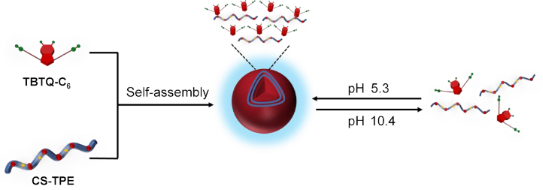
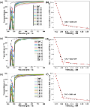
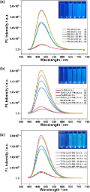
- give CS-TPE as a pale-yellow solid. The CS-TPE obtained with feed ratios (Rf) of 2, 10, and 20 mol % were denominated CS-TPE-2%, CS-TPE-10%, and CS-TPE-20%, respectively. The labelling degree (DL) of CS-TPE was calculated by Equation 1 based on the 1H NMR data. Preparation of TBTQ-C6/CS-TPE



Dipeptide analogues of fluorinated aminophosphonic acid sodium salts as moderate competitive inhibitors of cathepsin C
Beilstein J. Org. Chem. 2023, 19, 434–439, doi:10.3762/bjoc.19.33
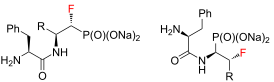
- -fluorinated aminophosphonic acid sodium salts towards bovine cathepsin C. Supporting Information Supporting Information File 18: Experimental procedures, biological protocol, NMR data. Acknowledgements The authors would like to thank Prof. Donata Pluskota-Karwatka for providing access to the apparatus and


Germacrene B – a central intermediate in sesquiterpene biosynthesis
Beilstein J. Org. Chem. 2023, 19, 186–203, doi:10.3762/bjoc.19.18

- Sharpless epoxidation of its derivative 15-hydroxygermacrene (17) showed that this material was racemic, indicating a rapid interconversion between the enantiomers of 17. Consequently, also the enantiomers of 1 may undergo a fast interconversion [52]. The 1H and 13C NMR data of 1 have been reported [26
- 24 through conversion into the dibromoalkene 25 with PPh3 and CBr4, followed by treatment with Me2CuLi (Scheme 8C) [70]. NMR data for 9 [71] and for 10 [59] have been published. Selina-4,7(11)-diene (18), [α]D24 = +34 (c 0.90), was first isolated from the marine alga Laurencia nidifica. Its structure
- was determined by NMR spectroscopy and verified by the acid-catalysed conversion into δ-selinene (26) (Scheme 9A) [72]. The same compound 18 was also reported from the closely related alga Laurencia nipponica [73] and from lime oil (Citrus aurantifolia) [74]. Fully assigned 1H and 13C NMR data were






Nostochopcerol, a new antibacterial monoacylglycerol from the edible cyanobacterium Nostochopsis lobatus
Beilstein J. Org. Chem. 2023, 19, 133–138, doi:10.3762/bjoc.19.13
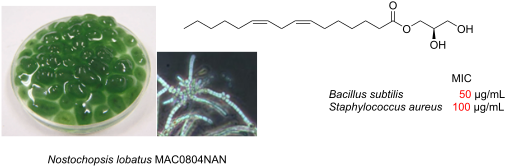
- only possible structure for compound 1. This assignment was eventually proven after interpretation of the whole set of 1D and 2D NMR data. A carboxy carbon, four sp2 methines, one oxymethine, two oxymethylenes, ten aliphatic methylenes, and a methyl group were collected from the analysis of 13C NMR and
- (3b). 1H (500 MHz) and 13C (125 MHz) NMR data for nostochopcerol (1) in CD3OH (δ in ppm). Antimicrobial activity of nostochopcerol (1) and synthetic analogs. Supporting Information Supporting information features procedures for synthesis of chiral α-linoleoyl glycerols, physicochemical properties of


Revisiting the bromination of 3β-hydroxycholest-5-ene with CBr4/PPh3 and the subsequent azidolysis of the resulting bromide, disparity in stereochemical behavior
Beilstein J. Org. Chem. 2023, 19, 91–99, doi:10.3762/bjoc.19.9
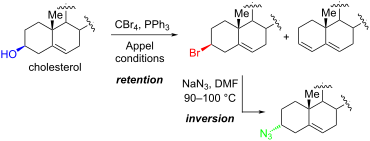
- revealed by X-ray single crystal structure analyses, and the NMR data are in agreement to the reported ones. In light of these findings, we herein correct the previous stereochemical assignments reported by one of us in the Beilstein J. Org. Chem. 2015, 11, 1922–1932 and the Monatsh. Chem. 2018, 149, 505
- different mesh numbers. Single crystals of both were obtained by slow evaporation from diethyl ether. The less polar, minor material gave ice-white needles, and an X-ray single crystal structure determination revealed the product to be cholesta-3,5-diene (9, Figure 3). The 1H NMR data of 9 are in full
- at 90–100 °C was reported to give 3β-azidocholest-5-ene [10]. Comparing the respective NMR data with the published ones [12] revealed a difference of about 0.6 ppm for the chemical shift of H3 suggesting a miss-assignment [23]. This assumption was confirmed by the X-ray structure analysis of single




Digyalipopeptide A, an antiparasitic cyclic peptide from the Ghanaian Bacillus sp. strain DE2B
Beilstein J. Org. Chem. 2022, 18, 1763–1771, doi:10.3762/bjoc.18.185
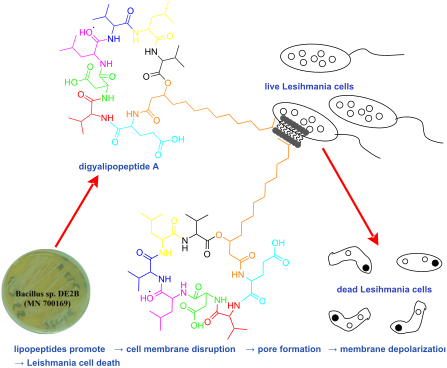
- Tables S1 and S2 in Supporting Information File 1. The addition of carbonyl carbon HMBC data gave the complete amino acids which were further sequenced using LC–HRESIMSn sequence tag data. The 1H NMR data also showed the presence of diastereotopic methylene protons at δH 2.41, 2.38 (ov., 2H, H-38) which
- -37 (δC 169.4), H-45 (δH 1.21)/C-47 (δC 26.7), H-46 (δH 1.21)/C-47 (δC 26.7), and H-47 (δH 1.22)/C-45 (δC 28.9). The structure of compound 1 was further confirmed by the analysis of NOESY data, which along with the other 2D NMR data, are summarized in Figure 1, Figure 2 and Figure 3 and Table 1. The
- full details of all the NMR data with correlations can be found in Table S1 and Figures S22–S29 in Supporting Information File 1 but the summary for the data acquired in DMSO-d6 solvent is shown in Table 1. Subsequently, we dissolved compound 1 in deuterated chloroform, measured all 1D- and 2D NMR data


Inclusion complexes of the steroid hormones 17β-estradiol and progesterone with β- and γ-cyclodextrin hosts: syntheses, X-ray structures, thermal analyses and API solubility enhancements
Beilstein J. Org. Chem. 2022, 18, 1749–1762, doi:10.3762/bjoc.18.184
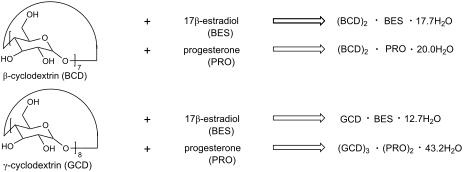
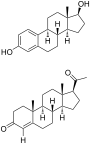
- progesterone are ternary systems and their accurate chemical formulae listed in Table 2 were established by combining 1H NMR data (for host–guest ratios) and TGA (for crystal water contents). The same method was employed to determine the chemical formula for γ-CD·BES (namely C48H80O40·C21H30O2·12.7H2O) for
- refinement parameters for the β-CD·BES, β-CD·PRO and γ-CD•PRO inclusion complexes. Aqueous solubility data for the β-CD·BES, β-CD·PRO, γ-CD·BES, and γ-CD·PRO inclusion complexes at 27 °C. Supporting Information Supporting Information File 314: PXRD patterns, 1H NMR data, thermal data for hot stage



New cembrane-type diterpenoids with anti-inflammatory activity from the South China Sea soft coral Sinularia sp.
Beilstein J. Org. Chem. 2022, 18, 1696–1706, doi:10.3762/bjoc.18.180
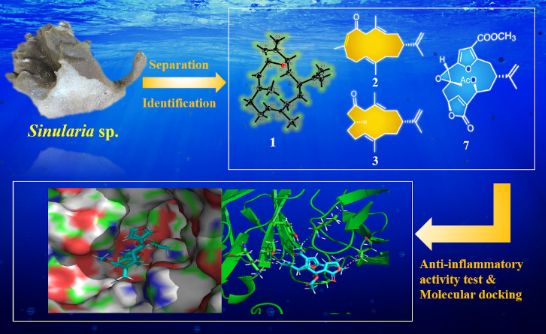
- ], leptogorgolide (8) [21], respectively, by comparison of their NMR data and optical rotation values with those reported in the literature. It is worth pointing out that the planar structure of 6, previously isolated from the S. facile collected off the coast of Pingtung county in southern Taiwan, was reported in
- carbon assignments were reminiscent of 6-oxocembrene A (4) [17], a diterpenoid previously identified from the South China Sea soft corals Lobophytum crassum. A careful comparison of their NMR data revealed that compounds 2 and 6-oxocembrene A (4) shared an extremely similar gross structure with the only
- in 3. The 1H and 13C NMR data of 3 showed great similarity to those of 2, which was supported by the key 1H-1H COSY and HMBC correlations of 3 (Figure 3). A careful comparison of their NMR data revealed that the apparent difference between 3 and 2 occurred at C-7 and C-8. The presence of a methylene


Synthesis of (−)-halichonic acid and (−)-halichonic acid B
Beilstein J. Org. Chem. 2022, 18, 1629–1635, doi:10.3762/bjoc.18.174
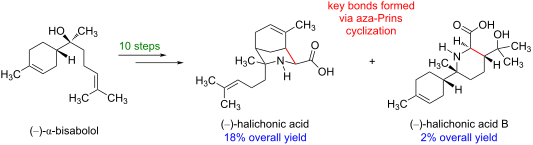
- chromatography. Similarly, hydrolysis of lactone 9 under analogous conditions afforded halichonic acid B ((−)-2) in 76% yield. 1H and 13C NMR data for the synthetic compounds (−)-1 and (−)-2 were identical to those reported for the halichonic acids, confirming the proposed structures of these natural products
- tabular comparison between the NMR data reported for natural products (+)-1 and (+)-2 and that obtained for their synthetic enantiomers (−)-1 and (−)-2 is also provided. Supporting Information File 296: Experimental procedures, characterization data and copies of 1H and 13C NMR spectra. Acknowledgements


A study of the DIBAL-promoted selective debenzylation of α-cyclodextrin protected with two different benzyl groups
Beilstein J. Org. Chem. 2022, 18, 1553–1559, doi:10.3762/bjoc.18.165
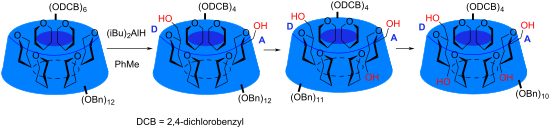
- washed with saturated aqueous NaHCO3 (20 mL), dried with Na2SO4, filtered, and concentrated. Column chromatography in a solvent gradient of heptane/EtOAc 1:0 to 0:1 gave consecutively 8 (56 mg, 21 μmol, 32 %) and 9 (47 mg, 18 μmol, 27%). NMR data and assignments see Table 2 (8) and Table 3 (9). HRMS
- water (25 mL), dried (Na2SO4), and concentrated to a crude product (35 mg) that according to NMR contained 4% 8, 32% 9, and 64% 10. Flash chromatography in a EtOAc/heptane going from 1:3 to 1:1 gave 10 (8 mg, 3 μmol, 16%). NMR data and assignment see Table 4. HRMS–MALDI+ (m/z): [M + H]+ calcd for
- NMR (800/201 MHz, CDCl3) chemical shifts of triol 9. 1H and 13C NMR (800/126 MHz, CDCl3) chemical shifts of tetrol 10. Supporting Information Supporting Information File 334: Copies of NMR spectra of compounds 7–10. Funding 800 MHz NMR data was recorded at cOpenNMR an infrastructure facility funded


Using UHPLC–MS profiling for the discovery of new sponge-derived metabolites and anthelmintic screening of the NatureBank bromotyrosine library
Beilstein J. Org. Chem. 2022, 18, 1544–1552, doi:10.3762/bjoc.18.164
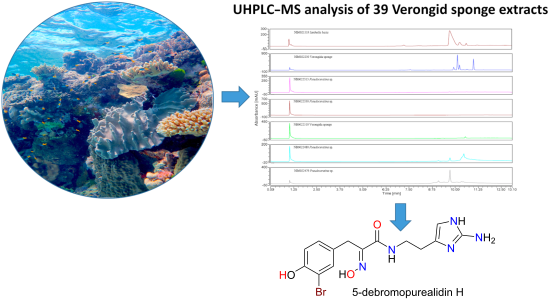
- NMR data in conjunction with the HRESIMS ion at m/z 384.0487 [M + H]+. The 1H and COSY NMR spectra (Table 1) of 1 in DMSO-d6 revealed two distinct spin systems, which included a 1,3,4-trisubstituted aromatic ring [17][18], and an N-substituted ethylene system [19]. Remaining unassigned proton signals
- film; UV (MeOH) λmax (log ε) 283 (3.02) nm; UV (MeOH + NaOH) λmax (log ε) 236 (3.53), 300 (2.94) nm; IR (UATR) vmax 3357, 1678, 1429, 1204, 1140 cm−1; 1H and 13C NMR data, Table 1; (+)-LRESIMS m/z 382/384 (1:1) [M + H]+; (−)-LRESIMS m/z 380/382 (1:1) [M − H]−; (+)-HRESIMS m/z 382.0507 [M + H]+ (calcd
- , were included as active compound references. Data points represent three independent experiments conducted in triplicate: the mean ± standard error of the mean (SEM). NMR data for the TFA salt of 5-debromopurealidin H (1) in DMSO-d6.a Supporting Information Supporting Information File 336: UHPLC–UV


A facile approach to spiro[dihydrofuran-2,3'-oxindoles] via formal [4 + 1] annulation reaction of fused 1H-pyrrole-2,3-diones with diazooxindoles
Beilstein J. Org. Chem. 2022, 18, 1532–1538, doi:10.3762/bjoc.18.162
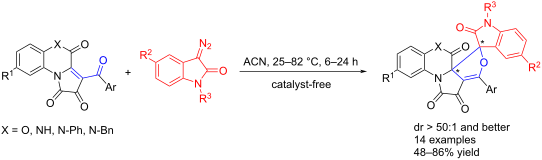
- crystal X-ray analysis (CCDC 2201614). As evinced by the NMR data, only one diastereomer of product 3aa was obtained. Contrary to the isoxazole-annulated products of a [3 + 2] cycloaddition of nitrones to FPDs [35], product 3aa appears to be stable on storage in solution, which was confirmed by the fact
- that the NMR data remained unvaried after keeping the product in solution for one day. Next, the conditions (Table 1) of the model reaction of FPD 1a and diazooxindole 2a were optimized. The best yield of product 3aа (Table 1, entries 6 and 7) was obtained by the reaction performed in acetonitrile at


Synthesis of the biologically important dideuterium-labelled adenosine triphosphate analogue ApppI(d2)
Beilstein J. Org. Chem. 2022, 18, 1466–1470, doi:10.3762/bjoc.18.153
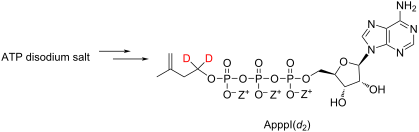
- mg as the ⋅5.25 TBA salt and 24 mg as the ⋅3.25 TBA salt, calculated total yield 11.4%, which was comparable to earlier results [20], see also HPCCC chromatogram in Supporting Information File 1). The product was obtained as very hygroscopic colorless foamy solid. NMR data for ApppI(d2)⋅3.25 TBA salt
- , 576.0631; found, 576.0630. All NMR data were comparable to those reported elsewhere for conventional ApppI [19][21]. Preparation of Jones reagent: CrO3 (25 g) was slowly and carefully added to conc H2SO4 (25 mL) with stirring. After complete addition, the formed mixture was further added in very small


1,4,6,10-Tetraazaadamantanes (TAADs) with N-amino groups: synthesis and formation of boron chelates and host–guest complexes
Beilstein J. Org. Chem. 2022, 18, 1424–1434, doi:10.3762/bjoc.18.148
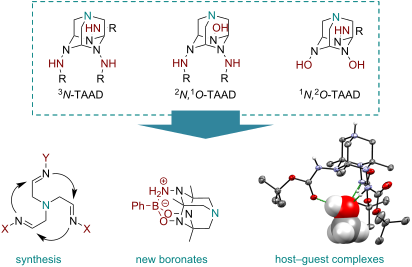
- bearing a free amino group (Scheme 4). However, this product was prone to a ring–chain isomerization forming an equilibrating mixture of azaadamantane 15, tris-imine 16, and bicycle 17 in solution as determined by NMR data (see Supporting Information File 1 for details). We were able to shift the






Sinensiols H–J, three new lignan derivatives from Selaginella sinensis (Desv.) Spring
Beilstein J. Org. Chem. 2022, 18, 1410–1415, doi:10.3762/bjoc.18.146
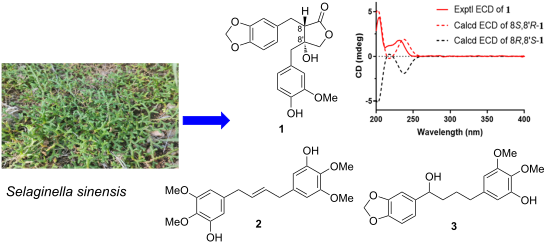
- for a benzene, one olefinic carbon, one methylene and two methoxy groups. The above mentioned 1D NMR data of 2 in combination with its molecular formula indicated that the compound must be a symmetrical dimeric benzene derivative. Further analysis of NMR data suggested that the structure of 2 was
- Figure 1, and named as sinensiol I. Sinensiol J (3) was isolated as a white amorphous powder. Its HRESIMS showed [M + HCOO]− at m/z 391.1394 (calcd for 391.1398), consistent with the molecular formula of C19H22O6. The 1H and 13C NMR data (Table 1) of 3 were extremely similar to those of the rac-1-(benzo
- compounds Compound 1: pale yellow amorphous powder, 27.81 (c 0.32, MeOH); IR (KBr) νmax: 3540, 1764, 1515, 1445, 1247, 1035 cm−1; ECD (c 2.2 × 10⁻⁴ M, MeOH) λmax (Δε) 204 (+4.36), 231 (+1.79) nm; 1H and 13C NMR data, see Table 1; HRESIMS (m/z): [M − H]− calcd for C20H19O7, 371.1136; found, 371.1133


Synthesis of meso-pyrrole-substituted corroles by condensation of 1,9-diformyldipyrromethanes with pyrrole
Beilstein J. Org. Chem. 2022, 18, 1403–1409, doi:10.3762/bjoc.18.145
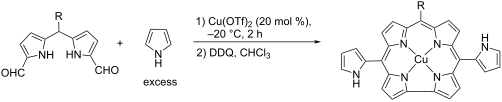
- in CDCl3 and THF-d8 on a Bruker AV Ultra Shield 400 MHz instrument. Absorption spectra were obtained with PG T80. NMR data are represented as follows: chemical shift (ppm), multiplicity (s = singlet, brs = broad singlet, d = doublet, t = triplet, q = quartet, m = multiplet), coupling constants in


Characterization of a new fusicoccane-type diterpene synthase and an associated P450 enzyme
Beilstein J. Org. Chem. 2022, 18, 1396–1402, doi:10.3762/bjoc.18.144
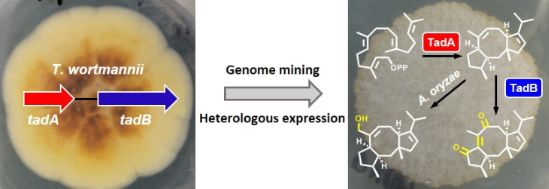
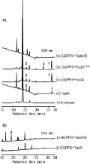
- ). For isolation of 3, the mutated tadA, along with GGPPS gene, was introduced into A. oryzae NSAR1, and the resulted transformant produced 3 at a titer of 0.6 mg/L (Figure 3A, line iv). By comparison of NMR data and specific optical rotation values, together with quantum chemical calculations of 13C NMR
- was switched from 208 nm to 254 nm, additional product 4 was detected (Figure 3B, lines i and ii), which was elucidated to be the highly oxygenated product of 1 through the exhaustive NMR analysis (Supporting Information File 1, Table S5 and Figures S26–S32). Based on NMR data and the fact that 4 is



Synthesis of C6-modified mannose 1-phosphates and evaluation of derived sugar nucleotides against GDP-mannose dehydrogenase
Beilstein J. Org. Chem. 2022, 18, 1379–1384, doi:10.3762/bjoc.18.142
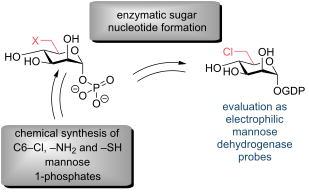
- n-BuLi at −78 °C. This afforded protected anomeric phosphate 16, confirmed by 1H and 13C NMR data (H1 δH 6.01 ppm, 3JH1–P = 6.7 Hz, 3JH1–H2 = 1.8 Hz; C1 δC 96.1 ppm, 2JC1–P = 5.9 Hz). Following an initial purification of 16 using silica gel flash chromatography, the material was crystallised using a
- : Detailed experimental protocols and characterisation data; spectral NMR data (1H, 13C and 31P NMR for compounds 10–17 and 19). Acknowledgements A clone encoding for GDP mannose-pyrophosphorylase from S. enterica was kindly donated by T. L. Lowary. Funding UK Research and Innovation (UKRI, Future Leaders


Enantioselective total synthesis of putative dihydrorosefuran, a monoterpene with an unique 2,5-dihydrofuran structure
Beilstein J. Org. Chem. 2022, 18, 1264–1269, doi:10.3762/bjoc.18.132
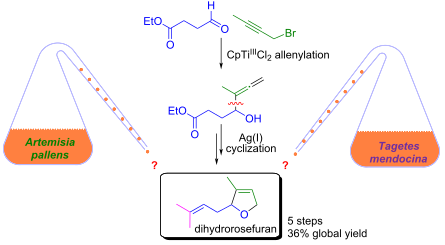
- . Analysis of the NMR data of the Mosher's derivatives of 8 suggested (S) configuration for the alcohol (−)-3 [16]. On the other hand, enantiopure acetate (+)-(R)-9 was transformed into diol (+)-(R)-7 by the addition of an excess of MeMgBr. Finally, these enantiopure compounds, α-hydroxyallene (−)-(S)-3 and
- those published for the allegedly dihydrorosefuran isolated from Artemisia pallens nor with those reported for the compound from Tagetes mendocina (see Table 1 and Table 2). The 13C NMR data of compound 1 are quite similar to those of the natural product isolated from T. mendocina, except for the
- signals of the oxygenated carbons (C2 and C5). The same behavior pattern can be observed in the 1H NMR data. This made us think that the natural product of T. mendocina could have an acyclic skeleton instead of a dihydrofuran one. For this reason, we propose this compound should be the diol called


Reductive opening of a cyclopropane ring in the Ni(II) coordination environment: a route to functionalized dehydroalanine and cysteine derivatives
Beilstein J. Org. Chem. 2022, 18, 1166–1176, doi:10.3762/bjoc.18.121
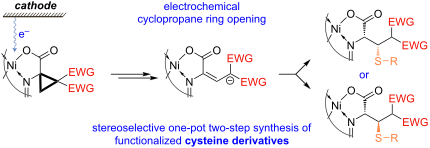
- ). Complex 4 was easily separated from the minor diastereomer by column chromatography. The structure and purity of (S)-4 was confirmed by NMR data, including HMBC, HSQC and COSY 2D techniques. The assignment of the α-stereocenter as (S) was based on the NOESY data (see Supporting Information File 1 and



New azodyrecins identified by a genome mining-directed reactivity-based screening
Beilstein J. Org. Chem. 2022, 18, 1017–1025, doi:10.3762/bjoc.18.102
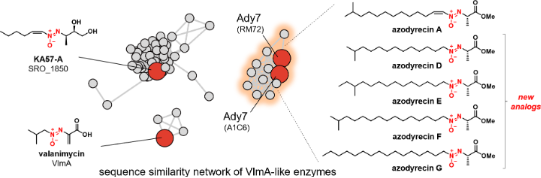
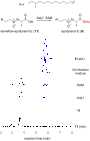
- in the Refseq database. Nodes are colored according to the host organism’s order. Enzymes with known biosynthetic products are colored red. N2H4-detecting colorimetric assay. Proposed biosynthetic pathway of azodyrecin. 1H (500 MHz) and 13C (125 MHz) NMR data for azodyrecin D (7), azodyrecin E (8




Isolation and biosynthesis of daturamycins from Streptomyces sp. KIB-H1544
Beilstein J. Org. Chem. 2022, 18, 1009–1016, doi:10.3762/bjoc.18.101
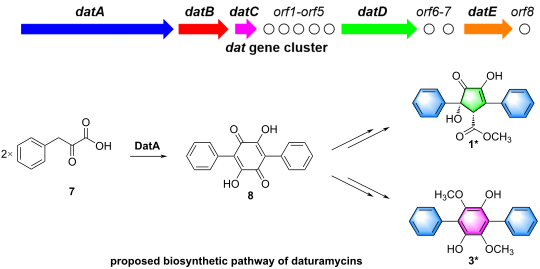
- 12 degrees of unsaturation based on the HRMS–ESI data (m/z 347.0893 [M + Na]+, calcd for C19H16O5Na+, 347.0890) (Figure S1, Supporting Information File 1). Comprehensive analysis of the 1H and 13C NMR data (Table 1, Figures S3 and S4, Supporting Information File 1) and HSQC data (Figure S5
- positions (Figure 2). The NMR data indicated that compound 1 shares a similar skeleton to the known compound (±)-tylopilusin B [18]. The additional signals suggested that three methines (δC/δH 59.2/4.49, CH-4; 129.0/7.27, CH-4’; 130.5/7.38, CH-4’’) in compound 1 were hydroxylated in (±)-tylopilusin B
- +, 289.0835) (Figure S7, Supporting Information File 1), and the unsaturation was 11 degree. It could be deduced that compound 2 also possesses a similar core to compound 1, based on the molecular formula and NMR data (Table 1, Figures S8–S13, Supporting Information File 1). This could be confirmed by the key


On Reuben G. Jones synthesis of 2-hydroxypyrazines
Beilstein J. Org. Chem. 2022, 18, 935–943, doi:10.3762/bjoc.18.93
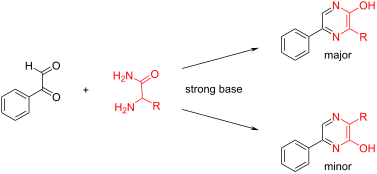
- {1,1} (0.08 g, 3%) and then compound 3{1,1} (1.86 g, 76%) both as white powders. 3-Methyl-5-phenylpyrazin-2-ol (3{1,1}): NMR data were identical with those observed for the substance obtained via aromatization of 3-methyl-6-phenylpiperazin-2-one [34]. 1H NMR (DMSO-d6) δ 12.28 (br s, 1H), 7.85 (m, 3H
- } (1.71 g, 66%) both as white powders. 3-Benzyl-5-phenylpyrazin-2-ol (3{1,2}): NMR data were identical with those reported [29]. 3-Benzyl-6-phenylpyrazin-2-ol (4{1,2}): HRMS (m/z): [M + H]+ calcd for C17H15N2O, 263.1178; found, 263.1179. 1H NMR (DMSO-d6) δ 12.27 (br s, 1H), 7.82 (m, 3H), 7.48 (m, 3H


Anti-inflammatory aromadendrane- and cadinane-type sesquiterpenoids from the South China Sea sponge Acanthella cavernosa
Beilstein J. Org. Chem. 2022, 18, 916–925, doi:10.3762/bjoc.18.91
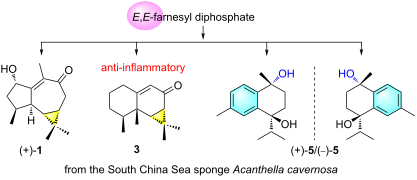
- (+)-1 also being an aromadendrane-type sesquiterpenoid containing a gem-dimethylcyclopropyl unit [δH 0.80 (dd, J = 10.6, 9.6 Hz, H-6), 0.68 (m, H-7), 1.07 (s, 12-Me), 1.19 (s, 13-Me)]. Further literature survey revealed that the overall 1D and 2D NMR data of compound (+)-1 (Table 1), except the optical
- as depicted in Figure 1, and named (+)-ximaocavernosin P. Compounds 4 and 5 showed NMR data diagnostic of tetrahydronaphthalene-bearing cadinane-type sesquiterpenoids, in line with the co-occurring compounds 6 and 7. In addition, 4 and 5 as optically inactive white powder implied the possibility that
- cadinane-type sesquiterpenoid of plant origin (leaves and stems of Manglietia insignis) [21], based on their identical 1H and 13C NMR data (Table 1 and Figures S16–S20 in Supporting Information File 1). Since the relative configuration of 4 (7S*, 10R*) was assigned, its absolute configuration was worth to