


Search results
Search for "ethanol" in Full Text gives 781 result(s) in Beilstein Journal of Organic Chemistry. Showing first 200.
Cyanothioacetamides as a synthetic platform for the synthesis of aminopyrazole derivatives
Beilstein J. Org. Chem. 2023, 19, 1191–1197, doi:10.3762/bjoc.19.87
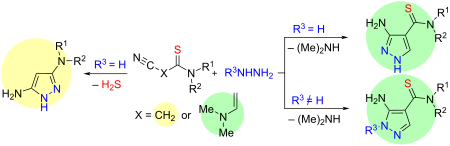
- molecule cyano- and thioamide groups, as well as a fragment of enamine, each in principle being capable of interaction with hydrazine (3a) (Figure 2). First, we have studied the reaction of thioamides 1a–c with hydrazine (3a). It was found that the reaction proceeds smoothly in ethanol at 80 °C to form 3,5
- elimination of hydrogen sulfide (Scheme 2). Thus, we have shown that when 2-cyanothioacetamides 1a–c react with hydrazine hydrate (3a) in ethanol, both groups (thioamide and cyano) interact with hydrazine with the elimination of hydrogen sulfide and the formation of 3,5-diaminopyrazoles 4a–c (Scheme 2). It
- -aryl-5-amino-4-thiocarbamoyl pyrazoles 6a–f with yields of 63–86% (Scheme 3). However, we have found that when replacing hydrazine hydrate with arylhydrazines and arylsulfonylhydrazines, the reaction in ethanol was not detected, neither at room temperature nor at reflux. The progress was achieved only




Selective and scalable oxygenation of heteroatoms using the elements of nature: air, water, and light
Beilstein J. Org. Chem. 2023, 19, 1146–1154, doi:10.3762/bjoc.19.82
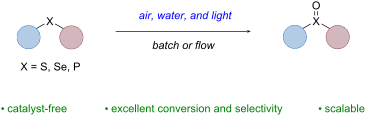
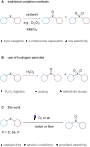
- resulted in a significant reduction in kinetics and selectivity (Table 1, entry 3). Other more green and biobased solvent alternatives, such as ethanol [36], can effectively replace the acetonitrile (for the complete scope of solvents, please consult Supporting Information File 1, Table S2), but reaction





The unique reactivity of 5,6-unsubstituted 1,4-dihydropyridine in the Huisgen 1,4-diploar cycloaddition and formal [2 + 2] cycloaddition
Beilstein J. Org. Chem. 2023, 19, 982–990, doi:10.3762/bjoc.19.73
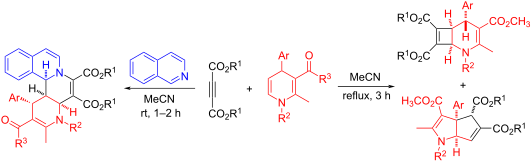
- reaction was carried out in common solvents such as ethanol, methanol, dichloromethane, and chloroform at room temperature for two hours. The expected isoquinolino[1,2-f][1,6]naphthyridine derivative 4a was successfully obtained in 35%, 40% 70% and 65% yields, respectively (Table 1, entries 1–4). The


First synthesis of acylated nitrocyclopropanes
Beilstein J. Org. Chem. 2023, 19, 892–900, doi:10.3762/bjoc.19.67
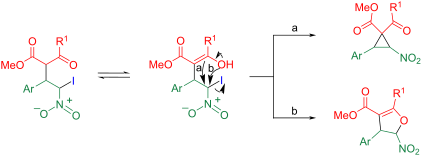
- substrates, almost equal amounts of diastereomers were formed. Whereas 4b was isolated by recrystallization of the reaction mixture from ethanol, the other adducts 4c–g were easily isolated by column chromatography. For comparison with previously reported results, adduct 4b, derived from acetylacetone (3b


Eschenmoser coupling reactions starting from primary thioamides. When do they work and when not?
Beilstein J. Org. Chem. 2023, 19, 808–819, doi:10.3762/bjoc.19.61
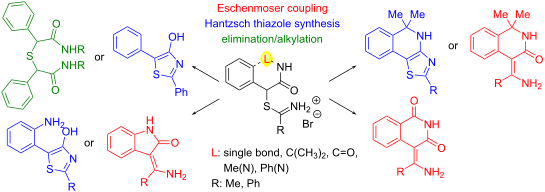
- 70–95%). The presence of a base and the type of solvent seems to be an important factor for the reaction course. In toluene, ionic liquid or in refluxing ethanol without a base [16][19][20] or in the presence of weakly basic pyridine [17][18][21] (pKa = 5.23 in water, 3.4 in DMSO, 3.3 in DMF, and


Synthesis of substituted 8H-benzo[h]pyrano[2,3-f]quinazolin-8-ones via photochemical 6π-electrocyclization of pyrimidines containing an allomaltol fragment
Beilstein J. Org. Chem. 2023, 19, 778–788, doi:10.3762/bjoc.19.58
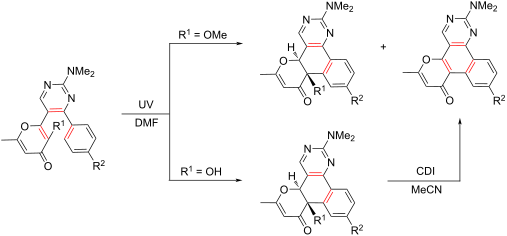
- ppm are present. In addition to the aforementioned characterization methods, the crystal structure of 11g·0.5EtOH was determined by single-crystal X-ray diffraction analysis. Its asymmetric unit contains 12 crystallographically unique molecules of 11g (Z' = 12, Z = 24) and 6 independent ethanol


Synthesis of imidazo[1,2-a]pyridine-containing peptidomimetics by tandem of Groebke–Blackburn–Bienaymé and Ugi reactions
Beilstein J. Org. Chem. 2023, 19, 727–735, doi:10.3762/bjoc.19.53
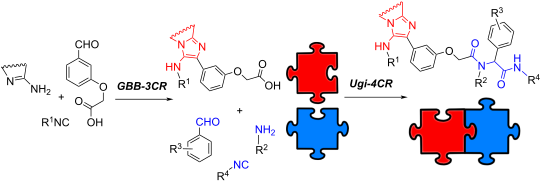
- -chlorobenzaldehyde (5b), 4-methoxyaniline (6a) and tert-butyl isocyanide (3a). It should be especially noted that the solubility of compound 8a is very low (soluble in DMSO and N-methyl-2-pyrrolidone (NMP), slightly soluble in methanol, 1- and 2-propanol, acetone, DMF and insoluble in water, ethanol, acetonitrile


Synthesis, structure, and properties of switchable cross-conjugated 1,4-diaryl-1,3-butadiynes based on 1,8-bis(dimethylamino)naphthalene
Beilstein J. Org. Chem. 2023, 19, 674–686, doi:10.3762/bjoc.19.49
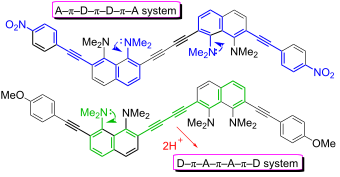
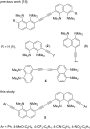
- recrystallization of the crude product from ethanol. Next, the oxidative dimerization of terminal alkynes 6a–e was carried out in an aerobic medium in the CuI/TMEDA/iPr2NH system at room temperature, which proved to be effective in the synthesis of butadiynes 1–4 [15] (Scheme 3). The desired diarylbutadiynes 5a–e



C3-Alkylation of furfural derivatives by continuous flow homogeneous catalysis
Beilstein J. Org. Chem. 2023, 19, 582–592, doi:10.3762/bjoc.19.43
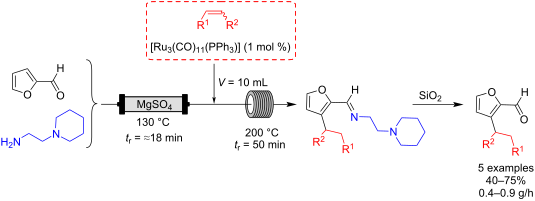
- reaction with formation of ruthenium aggregates and mononuclear Ru(0) catalyst. A) Isolation test of a reaction intermediate; B) XPS and TEM (in ethanol) of the recovered solid phase: showing the presence of Ru aggregates. Ruthenium aggregate-catalyzed alkylation reaction. Scope of continuous flow furfural


Combretastatins D series and analogues: from isolation, synthetic challenges and biological activities
Beilstein J. Org. Chem. 2023, 19, 399–427, doi:10.3762/bjoc.19.31
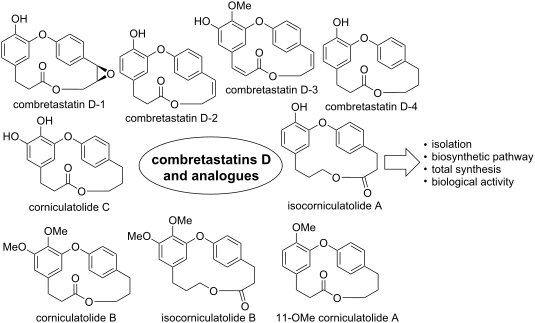
- proved to be important for the selectivity of the reaction, where significant cleavage of the benzyl group resulted when ethanol was the solvent of choice. Subsequent ester hydrolysis gave compound 112 (Scheme 22) [55]. In parallel, a Still–Gennari olefination using aldehyde 52 lead to the cis-alkene 113




Discrimination of β-cyclodextrin/hazelnut (Corylus avellana L.) oil/flavonoid glycoside and flavonolignan ternary complexes by Fourier-transform infrared spectroscopy coupled with principal component analysis
Beilstein J. Org. Chem. 2023, 19, 380–398, doi:10.3762/bjoc.19.30
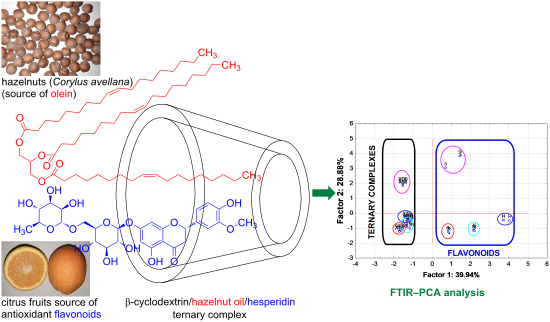
- flavonolignans as impurities) and were purchased from Sigma-Aldrich, St. Louis, MO, USA. Ethanol used for complex synthesis was of 96% concentration (v/v) and was purchased from ChimReactiv (Bucharest, Romania). The analysis of the FA profile of the hazelnut oil required the derivatization (transesterification
- to 1:1:1 or 3:1:1 were mixed in a preheated mortar at 60 °C. Then, 4 mL water and 1 mL ethanol for 1:1:1 complexes or 6 mL water and 1.5 mL ethanol for 3:1:1 complexes were added. The mixture was kneaded for at least 30 min, until a viscous paste is obtained. The mortar temperature decreases to the



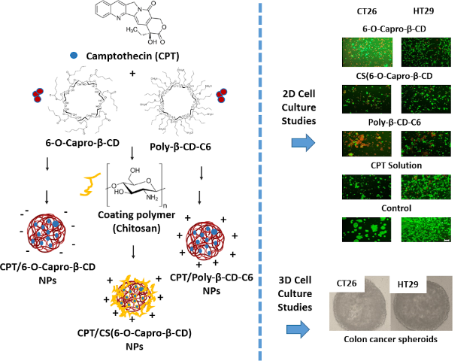
Insight into oral amphiphilic cyclodextrin nanoparticles for colorectal cancer: comprehensive mathematical model of drug release kinetic studies and antitumoral efficacy in 3D spheroid colon tumors
Beilstein J. Org. Chem. 2023, 19, 139–157, doi:10.3762/bjoc.19.14


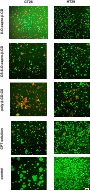

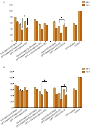

Synthesis and characterisation of new antimalarial fluorinated triazolopyrazine compounds
Beilstein J. Org. Chem. 2023, 19, 107–114, doi:10.3762/bjoc.19.11
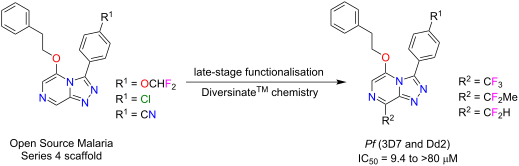
- ethanol using the standard nucleophilic displacement method as previously described (Scheme 1) [14][16]. Structures of synthesised compounds 4–9 were determined using 1D/2D NMR and HRMS (Supporting Information File 1, S6–S23). Crystals of compounds 5 and 6 were also analysed by X-ray crystallography


Practical synthesis of isocoumarins via Rh(III)-catalyzed C–H activation/annulation cascade
Beilstein J. Org. Chem. 2023, 19, 100–106, doi:10.3762/bjoc.19.10
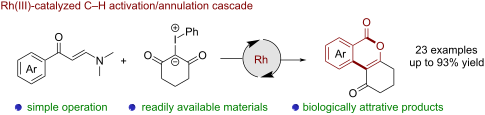
- to be the optimal solvent, while other commonly used solvents such as toluene, dioxane, and ethanol gave inferior yields (Table 1, entries 2–4, 14–39%). Further screening of bases did not improve the outcome of the product, whereas 63% yield of 3aa was obtained when acetic acid was added into the


Improving the accuracy of 31P NMR chemical shift calculations by use of scaling methods
Beilstein J. Org. Chem. 2023, 19, 36–56, doi:10.3762/bjoc.19.4
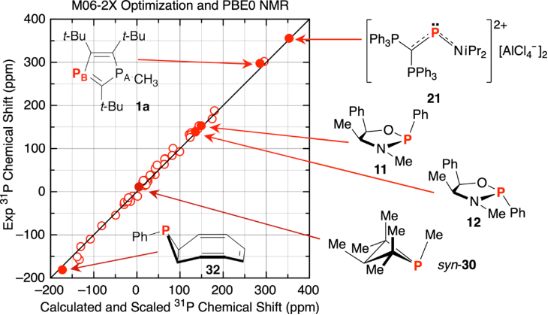
- reported here downfield of H3PO4). The early work of necessity included mostly pure liquid samples, that is, without any deuterated solvents, and one of the compilations noted that chemical shift changes upon dilution with CS2, CCl4, CHCl3, and ethanol were all small (<2 ppm) [43]. As much as possible, we




Redox-active molecules as organocatalysts for selective oxidative transformations – an unperceived organocatalysis field
Beilstein J. Org. Chem. 2022, 18, 1672–1695, doi:10.3762/bjoc.18.179
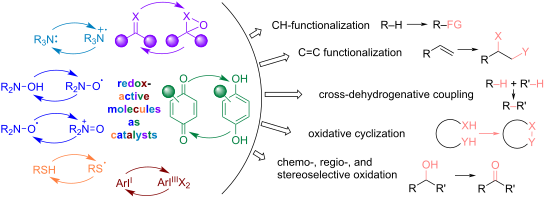
- ethanol). Brønsted acid catalysis by TsOH was also employed in a selective sulfoxidation employing PhI(OAc)2 as oxidant [69]. In this case another mode of catalysis was proposed, including the covalent bonding of the acid catalyst anion and the oxidant with the formation of PhI(OTs)OH as the catalytically











Synthesis of (−)-halichonic acid and (−)-halichonic acid B
Beilstein J. Org. Chem. 2022, 18, 1629–1635, doi:10.3762/bjoc.18.174
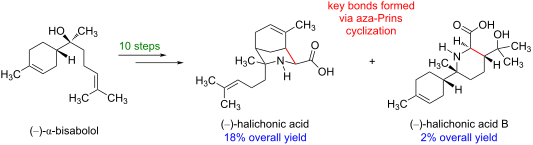
- oxocarbenium ion 16. Subsequent loss of the ethyl group (either as ethyl formate upon solvolysis with the formic acid co-solvent or as ethanol upon aqueous workup) gives lactone 9, which features a strained trans-fused 6/5 ring system. Although this lactone survives aqueous workup at neutral pH, it is rapidly


Preparation of β-cyclodextrin-based dimers with selectively methylated rims and their use for solubilization of tetracene
Beilstein J. Org. Chem. 2022, 18, 1596–1606, doi:10.3762/bjoc.18.170
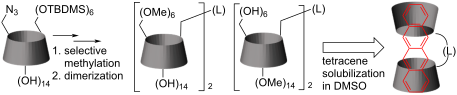
- , which can be easily done by shaking the reaction mixture with NaI ethanol/water solution in a separation funnel. The click reaction of compound 8 proceeds at a different rate than 3 under the same conditions. The coupling of 3 can be finished overnight with high yields, whereas the coupling of 8 is much


Cyclometalated iridium complexes-catalyzed acceptorless dehydrogenative coupling reaction: construction of quinoline derivatives and evaluation of their antimicrobial activities
Beilstein J. Org. Chem. 2022, 18, 1507–1517, doi:10.3762/bjoc.18.159
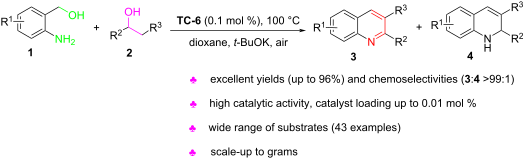
- [10] synthesized a series of carbohydrazide derivatives through reaction of 2-methylbenzofuran-2-quinoline-4-carboxylate with hydrazine hydrate in refluxing ethanol (Figure 1b). All compounds showed higher activity against Staphylococcus aureus than ampicillin and the optimal MIC value was 0.064 mg/mL


Oxa-Michael-initiated cascade reactions of levoglucosenone
Beilstein J. Org. Chem. 2022, 18, 1457–1462, doi:10.3762/bjoc.18.151
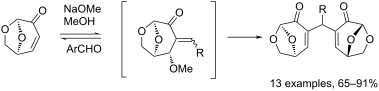
- /benzaldehyde led to the bridged species 5a as the major product (Table 1, entries 1 and 2), however, excess aldehyde slowed the formation of 5a (Table 1, entry 3). The use of hydroxide in ethanol failed to yield any 5a indicating the sensitivity of the reaction to conditions (Table 1, entry 4). The most


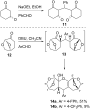
1,4,6,10-Tetraazaadamantanes (TAADs) with N-amino groups: synthesis and formation of boron chelates and host–guest complexes
Beilstein J. Org. Chem. 2022, 18, 1424–1434, doi:10.3762/bjoc.18.148
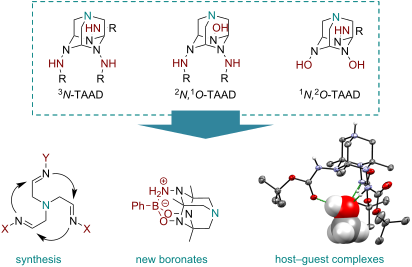
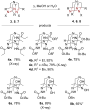
- ). Alternatively, removal of Boc groups could be performed by treatment with aqueous HCl to give the corresponding hydrochloride salts, which could be converted into free hydrazines by treatment with excess NaHCO3 in ethanol (as demonstrated for product 19c). Note that TAADs 19–21 with free amino groups are more

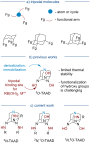





Mechanochemical synthesis of unsymmetrical salens for the preparation of Co–salen complexes and their evaluation as catalysts for the synthesis of α-aryloxy alcohols via asymmetric phenolic kinetic resolution of terminal epoxides
Beilstein J. Org. Chem. 2022, 18, 1416–1423, doi:10.3762/bjoc.18.147
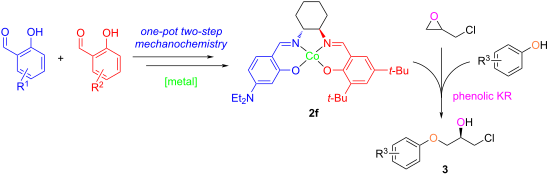
- outlined in Scheme 3. Reaction conditions were described previously [17][46]. For reactions using Zn and Cu, Zn(OAc)2·2H2O or Cu(OAc)2·H2O in methanol was dropwise added to 1a, b, or d in ethanol under nitrogen gas. The reaction mixture was refluxed for 4 hours and a light yellow or dark green solid was


Sinensiols H–J, three new lignan derivatives from Selaginella sinensis (Desv.) Spring
Beilstein J. Org. Chem. 2022, 18, 1410–1415, doi:10.3762/bjoc.18.146
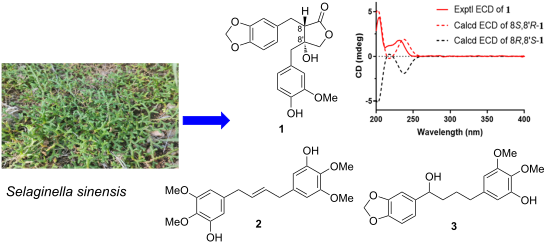
- Medical University. Extraction and isolation The air-dried powder of the whole plants of S. sinensis (5.2 kg) was extracted three times with 95% ethanol at room temperature. The combined extracts were concentrated and yielded 423 g of a crude extract which was subjected to reversed-phase MPLC (MCI; MeOH


Mechanochemical bottom-up synthesis of phosphorus-linked, heptazine-based carbon nitrides using sodium phosphide
Beilstein J. Org. Chem. 2022, 18, 1203–1209, doi:10.3762/bjoc.18.125
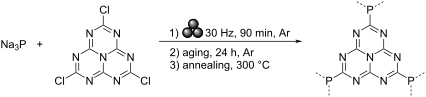
- powder was then allowed to age under an argon atmosphere for 24 hours, prior to washing via centrifugation in a 3:1 by volume mixture of ethanol and deionized (DI) water. This afforded a material referred to below as g-h-PCN. Alternatively, the sample was annealed for 1 hour at 300 °C under a flow of
- quenching in water and ethanol at the end of the aging step. g-h-PCN300 featured the same three major carbon 1s peaks at 284.8, 286.2 and 288.2 eV for C=N/C=C, C=O and C–OH species, respectively, as well as the charging peak seen in g-h-PCN. In g-h-PCN300, a reduction of the C=N ratio to 37%, reduction of C


Derivatives of benzo-1,4-thiazine-3-carboxylic acid and the corresponding amino acid conjugates
Beilstein J. Org. Chem. 2022, 18, 1195–1202, doi:10.3762/bjoc.18.124
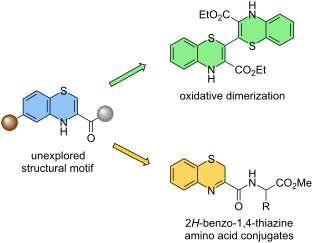
- diethyl ether at 0 °C for 1 h gave acid 10aa in 75% yield, while complete decomposition was observed at reflux temperature after only 10 min (Table 1, entries 1 and 2). Acid 10aa did not form when the reaction was performed in ethanol, CH2Cl2, THF, DMF, or ethyl acetate at different temperatures under
- classical conditions as well as under MWI. The acid 10aa could not be formed even when 2,2'-disulfanediyldianiline was used as the starting material in DMF or ethanol at room temperature or under reflux. Thiol 8a reacted with the keto ester 9c in ethanol to form the ester 10ac with a yield of 51% and 29
- %, respectively, under different conditions (Table 1, entries 3 and 4). Reactions in ethanol under MWI and in CH2Cl2 with classical stirring at room temperature only resulted in oxidative dimerization, forming derivative 11b in 15–28% yield (Table 1, entries 5–7). Neither did the reaction proceed in ethyl acetate



