


Search results
Search for "nucleophilicity" in Full Text gives 294 result(s) in Beilstein Journal of Organic Chemistry. Showing first 200.
Mesoionic tetrazolium-5-aminides: Synthesis, molecular and crystal structures, UV–vis spectra, and DFT calculations
Beilstein J. Org. Chem. 2021, 17, 385–395, doi:10.3762/bjoc.17.34
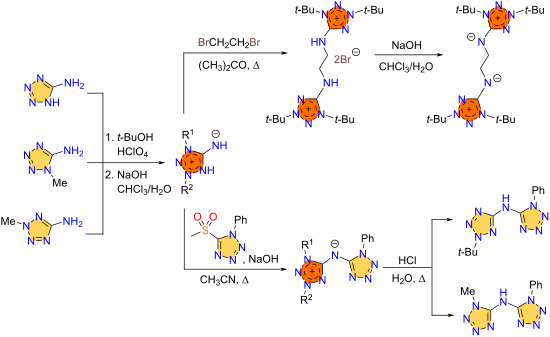
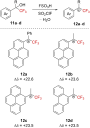
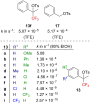
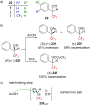
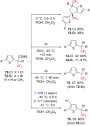
- thermal stability of the tetrazolium-5-aminides (see Supporting Information File 1 for more details). Some nucleophilic displacement reactions were carried out in order to show the higher reactivity of the aminides in comparison to the parent aminotetrazoles. The high nucleophilicity of the imine group in




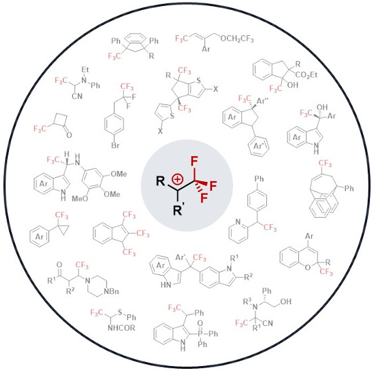
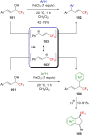
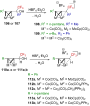
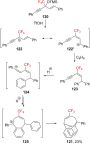
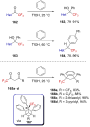
CF3-substituted carbocations: underexploited intermediates with great potential in modern synthetic chemistry
Beilstein J. Org. Chem. 2021, 17, 343–378, doi:10.3762/bjoc.17.32















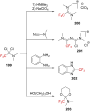


Hydrazides in the reaction with hydroxypyrrolines: less nucleophilicity – more diversity
Beilstein J. Org. Chem. 2021, 17, 319–324, doi:10.3762/bjoc.17.29
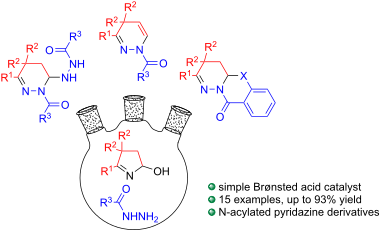
- nucleophilicity of the hydrazides diversifies the recyclization of 5-hydroxypyrrolines and results in the chemoselective formation of highly functionalized azaheterocyclic scaffolds. Such a short-cut to partially saturated azaheterocyclic scaffolds meets the interests of modern medicinal chemistry which today
- ring opening with formation of the linear intermediate C. In comparison with alkyl-, aryl-, and hetarylhydrazines [11] as well as semicarbazide and its derivatives [12], the nucleophilicity of the internal nitrogen atom of hydrazide 2 is significantly reduced. As a result, the interception of the
- formation of 1,4-dihydropyridazine 4. Conclusion In summary, an acid-catalyzed recyclization of hydroxypyrrolines (easily synthesized from ketoximes and acetylene) with hydrazides was studied. The reduced nucleophilicity of the hydrazides in comparison with other hydrazine derivatives constitutes the basis


Annulation of a 1,3-dithiole ring to a sterically hindered o-quinone core. Novel ditopic redox-active ligands
Beilstein J. Org. Chem. 2021, 17, 273–282, doi:10.3762/bjoc.17.26
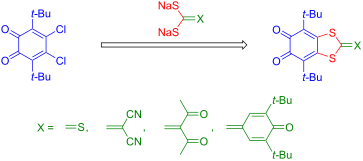
- . Moreover, the nucleophilicity of the hexafluoroacetylcetonate anion is also insufficient for the substitution of chlorine atoms at the o-quinone backbone. In the case of the reaction of 4 with acetylacetone gem-dithiolate 5d the tentative mechanism of the formation of thiete species 7 is depicted in Scheme
- 2. The high extent of enolization of 1,3-diketones results in lower nucleophilicity of the active methylene function. This fact enhances the reversibility of the dithiocarboxylation of sodium acetylacetonate. It is known that dithiocarboxylates and gem-dithiolates can lose CS2 resulting in active


Benzothiazolium salts as reagents for the deoxygenative perfluoroalkylthiolation of alcohols
Beilstein J. Org. Chem. 2021, 17, 83–88, doi:10.3762/bjoc.17.8

- avoids pre-functionalization of the substrate, has been hindered by the lack of suitable reagents. In recent years, however, a selection of mostly electrophilic and radical sources has been introduced [27]. Nucleophilic perfluoroalkylthiolation is especially challenging due to the low nucleophilicity of
- nucleophilicity of −SRF anions [39]. Herein, we report the successful synthesis of several BT-SRF reagents and provide insights into the reactivity of different perfluoroalkylthiolate anions in nucleophilic substitution reactions. This study led to the development of unprecedented deoxygenative pentafluoroethyl
- increased prevalence of the β-fluoride elimination pathway with longer perfluoroalkylthio chains likely reflects the lower nucleophilicity of the increasingly fluorinated thiolate anions. Moreover, (perfluoroisopropyl) thioether 11a was produced in only trace amounts in the reaction with BT-SCF(CF3)2, which


Synthesis of imidazo[1,5-a]pyridines via cyclocondensation of 2-(aminomethyl)pyridines with electrophilically activated nitroalkanes
Beilstein J. Org. Chem. 2020, 16, 2903–2910, doi:10.3762/bjoc.16.239
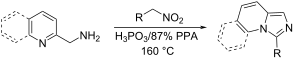
- group in 12 attenuates the nucleophilicity of the molecule, rendering the attack on the relatively bulky phosphorylated nitronate 2 inefficient. To prove this, we decided to moderate the basicity of the amine function by protection with a sulfonyl group. Gratifyingly, the N-tosylamine 17 [48] reacted


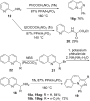
Fluorine effect in nucleophilic fluorination at C4 of 1,6-anhydro-2,3-dideoxy-2,3-difluoro-β-D-hexopyranose
Beilstein J. Org. Chem. 2020, 16, 2880–2887, doi:10.3762/bjoc.16.237
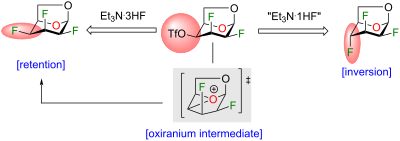
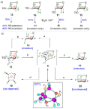
- triflate followed by exposure to a fluorine nucleophile [31]. We selected Et3N·3HF as a simple, stable, and versatile nucleophilic reagent since it would be possible to modulate the nucleophilicity/basicity with addition of Et3N [32]. Triflate 13 [19] was engaged as a good substrate model since the product



Bifurcated synthesis of methylene-lactone- and methylene-lactam-fused spirolactams via electrophilic amide allylation of γ-phenylthio-functionalized γ-lactams
Beilstein J. Org. Chem. 2020, 16, 2769–2775, doi:10.3762/bjoc.16.227
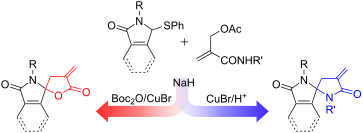
- show excellent nucleophilicity arising from the oxindole–hydroxyindole tautomerization [18][19], this synthetic approach is undoubtedly attractive because it could complement our previous one using nucleophilic amido-functionalized allyl boronates in terms of the structural diversity as well as
- sodium hydride, affording the corresponding adduct in 50% and 81% yields, respectively (Table 1, entries 6 and 7). Surprisingly, the desired allylation underwent even in the absence of palladium catalyst, probably due to high nucleophilicity of the deprotonated intermediate, to give 3b in 87% yield


Synthesis of purines and adenines containing the hexafluoroisopropyl group
Beilstein J. Org. Chem. 2020, 16, 2739–2748, doi:10.3762/bjoc.16.224
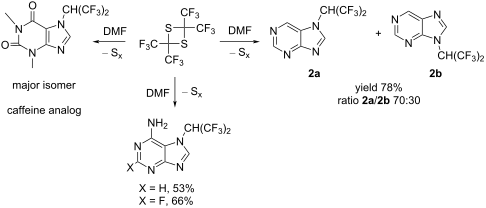
- reaction of adenines 5 and 6 may reflect a significantly higher nucleophilicity of the nitrogen atom of the imidazole ring versus that of the NH2 group. It should be pointed out that the mechanism depicted in Scheme 6 is highly speculative since the nature of the last step (the conversion of intermediate C



Synthesis of 1,4-benzothiazinones from acylpyruvic acids or furan-2,3-diones and o-aminothiophenol
Beilstein J. Org. Chem. 2020, 16, 2322–2331, doi:10.3762/bjoc.16.193
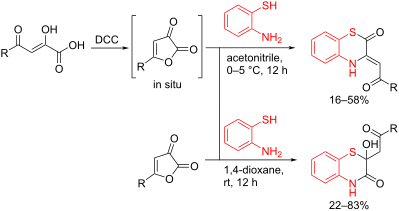
- acids or their esters IV with o-aminothiophenol (1a) to afford the target BTAs III can be explained both by the impossibility of thioesterification/thiotransesterification to proceed under additives-free conditions and by the high nucleophilicity of the o-aminothiophenol’s SH group that attacked the
- intermediate XI intramolecularly attacked at the amide carbonyl group (Scheme 8). Such a change in the intramolecular cyclization direction, possibly, was due to the electron-withdrawing effect of the chloro-substituent in the o-aminothiophenol moiety, which decreased the nucleophilicity of the SH group



Chan–Evans–Lam N1-(het)arylation and N1-alkеnylation of 4-fluoroalkylpyrimidin-2(1H)-ones
Beilstein J. Org. Chem. 2020, 16, 2304–2313, doi:10.3762/bjoc.16.191

- most N-alkylureas III (see Figure 1a, method A) [30], led to a complex mixture of products (unpublished data), which may be attributed to the decreased nucleophilicity of the nitrogen atom bound to the aryl group. On the other hand, a previously developed synthetic non-trivial method involving the


Azo-dimethylaminopyridine-functionalized Ni(II)-porphyrin as a photoswitchable nucleophilic catalyst
Beilstein J. Org. Chem. 2020, 16, 2119–2126, doi:10.3762/bjoc.16.179
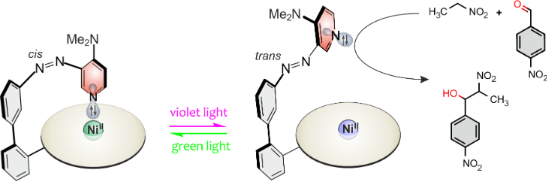
- basicity of the pyridine (Figure 1). In the trans configuration intramolecular coordination is prohibited and nucleophilicity and basicity are restored. Reversible switching between the two states is achieved by irradiation with green (trans→cis) and violet (cis→trans) light. The title compound of this
- photodissociable ligands. These ligands coordinate in their trans form and decoordinate in the cis configuration driven by steric hindrance [14][34][35]. Basicity and nucleophilicity switching of the 4-(N,N-dimethylamino)pyridine “record player” molecule 1. Composition of the different states of porphyrin 1 (1 mM


A complementary approach to conjugated N-acyliminium formation through photoredox-catalyzed intermolecular radical addition to allenamides and allencarbamates
Beilstein J. Org. Chem. 2020, 16, 1983–1990, doi:10.3762/bjoc.16.165
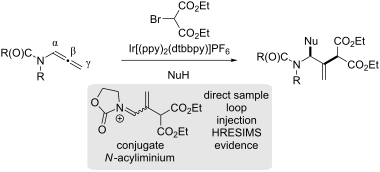
- electrophilic radical R• together with stoichiometric bromide ion; R• subsequently adds to the β-carbon of the allenamide 15, providing an α-aminoallyl radical 41. To support this hypothesis the calculated HOMO of allenamide 15 is shown in Scheme 5b, signifying the increased nucleophilicity at the β-carbon [54


Controlling the stereochemistry in 2-oxo-aldehyde-derived Ugi adducts through the cinchona alkaloid-promoted electrophilic fluorination
Beilstein J. Org. Chem. 2020, 16, 1963–1973, doi:10.3762/bjoc.16.163
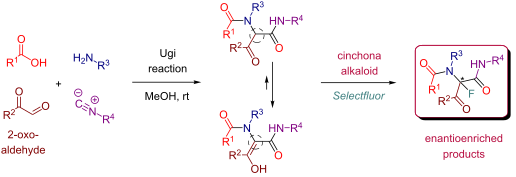
- center. This in turn led to their increased nucleophilicity as compared to the standard Ugi adducts. As such, the stereocenter at the peptidyl position could be installed and stereodefined through the reaction with a suitable electrophile. Towards this end, we were able to deploy an asymmetric cinchona
- research, we have been involved in the synthesis and utilization of 2-oxo-aldehyde-derived Ugi adducts 8 (Scheme 1). These products possess an increased nucleophilicity of the peptidyl position compared to the standard Ugi adducts owing to an additional electron-withdrawing group introduced with the 2-oxo


Synthesis of 3(2)-phosphonylated thiazolo[3,2-a]oxopyrimidines
Beilstein J. Org. Chem. 2020, 16, 1947–1954, doi:10.3762/bjoc.16.161
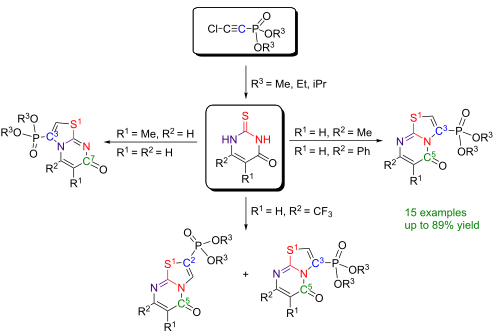
- -phosphonylated thiazolopyrimidine can be explained by the electron-withdrawing effect of the trifluoromethyl group in the starting 2-thiouracil. In contrast to 6-methyl- or 6-phenyl-2-thiouracil, where the nucleophilicity is localized on the sulfur atom, the presence of the electron-withdrawing CF3 group in 6


Microwave-assisted efficient one-pot synthesis of N2-(tetrazol-5-yl)-6-aryl/heteroaryl-5,6-dihydro-1,3,5-triazine-2,4-diamines
Beilstein J. Org. Chem. 2020, 16, 1706–1712, doi:10.3762/bjoc.16.142
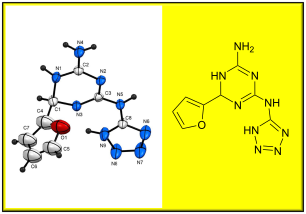
- favorable due to the high nucleophilicity of the exocyclic amino function attached to the electron-rich tetrazole ring [45]. In support of this assumption we stopped the reaction after 4 minutes of heating under microwave irradiation and inspected the prior formation of 9 via comparison with an authentic


Synthesis of Streptococcus pneumoniae serotype 9V oligosaccharide antigens
Beilstein J. Org. Chem. 2020, 16, 1693–1699, doi:10.3762/bjoc.16.140
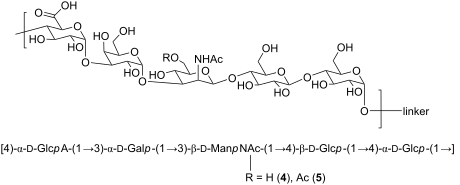
- the β-disaccharide 16 (Scheme 2). A ring-opening reaction followed by subsequent glycosylation of 19 with orthogonally protected thioglucoside 10 gave trisaccharide 21 in moderate yield. To improve the yield, the nucleophilicity of the disaccharide acceptor 19 (Scheme 2) was altered by replacing the


The McKenna reaction – avoiding side reactions in phosphonate deprotection
Beilstein J. Org. Chem. 2020, 16, 1436–1446, doi:10.3762/bjoc.16.119
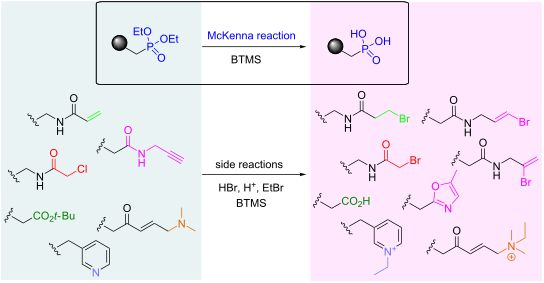
- allyldimethylamine (pKa 8.72), respectively [44]. This effect was reinforced by the higher nucleophilicity of the nitrogen atom in 12 compared with Et3N, as we deduced by comparison of model tertiary amines: Me3N (in MeCN: N 23.05, sN 0.45) and Et3N (in MeCN: N 17.10, sN 0.52) [45][46]. On the other hand, the lower
- nucleophilicity of pyridine compared with the tertiary alkylamine present in compound 12 [45][46] may be responsible for the lower vulnerability of 9 towards alkylation. Another approach to circumvent the formation of N-alkylation products was based on the use of the more sterically hindered diisopropyl


Recent synthesis of thietanes
Beilstein J. Org. Chem. 2020, 16, 1357–1410, doi:10.3762/bjoc.16.116
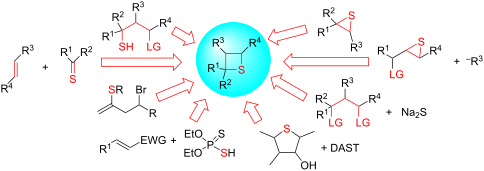
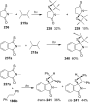
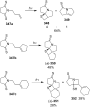
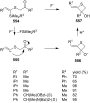
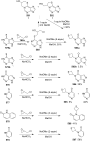
- functionalized thietanes, electron-deficient sulfur ylides were investigated in the ring expansion of thiiranes. However, the reactions failed due to the poor nucleophilicity of the electron-deficient sulfur ylides. However, in the presence of rhodium catalysts, the electron-deficient sulfur ylides were














Disposable cartridge concept for the on-demand synthesis of turbo Grignards, Knochel–Hauser amides, and magnesium alkoxides
Beilstein J. Org. Chem. 2020, 16, 1343–1356, doi:10.3762/bjoc.16.115
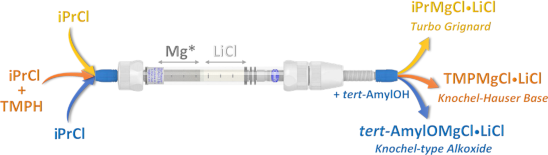
- Knochel–Hauser base (TMPMgCl⋅LiCl), are also useful reagents for selective deprotonations due to their strong basicity and low nucleophilicity [47][48]. Knochel-type alkoxides [49], e.g., the 2-methyl-2-propoxymagnesium chloride–lithium chloride complex (tert-AmylOMgCl⋅LiCl), are less common in synthesis


Palladium-catalyzed regio- and stereoselective synthesis of aryl and 3-indolyl-substituted 4-methylene-3,4-dihydroisoquinolin-1(2H)-ones
Beilstein J. Org. Chem. 2020, 16, 1084–1091, doi:10.3762/bjoc.16.95
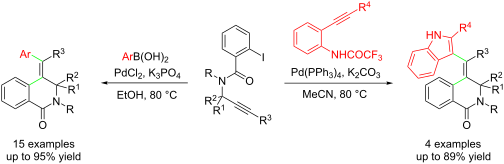
- containing electron-donating substituents; electron-poor arylboronic acids proved to be slightly less effective, probably because of their lower nucleophilicity that could have affected the transmetalation step. Moreover, we screened the reaction of a number of aromatic boronic acids 3a–j with a set of N



Photophysics and photochemistry of NIR absorbers derived from cyanines: key to new technologies based on chemistry 4.0
Beilstein J. Org. Chem. 2020, 16, 415–444, doi:10.3762/bjoc.16.40
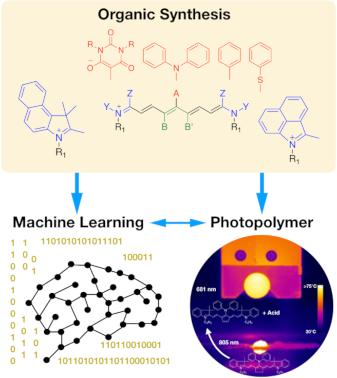
- photopolymerization of epoxides [65]. Though [Al(O-t-C4F9)4]− possesses the lowest nucleophilicity in this series, its high molecular weight requires a higher loading to obtain similar OD compared with sensitizers carrying anions with lower molecular weight. There exists still the issue regarding HF formation in the
- . The nitrogens in the cyanine chain still exhibit low nucleophilicity since electron density distributes over the entire methine chain. Thus, protonation of the nitrogen in the cyanine moiety occurs with less efficiency compared to amines [117]. This strategy helped to enable cationic


Microwave-assisted synthesis of 2-substituted 4,5,6,7-tetrahydro-1,3-thiazepines from 4-aminobutanol
Beilstein J. Org. Chem. 2020, 16, 32–38, doi:10.3762/bjoc.16.5
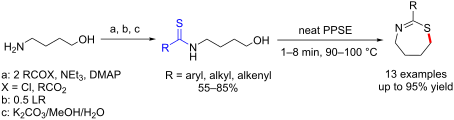
- of the corresponding tetrahydro-1,3-oxazepines. This unexpected reaction path is reasonable considering the relative ease of formation of five-membered rings as compared to the isomeric seven-membered heterocycles together with the relatively poor nucleophilicity of the carboxamide oxygen. An
- energy associated to the formation of a seven-membered heterocycle would favour the competitive ring closure leading to the five-membered ring (Scheme 2, reaction a), which would involve attack of the carboxamide nitrogen to the ω-carbon. On the other hand, the higher nucleophilicity of the sulfur in the


SnCl4-catalyzed solvent-free acetolysis of 2,7-anhydrosialic acid derivatives
Beilstein J. Org. Chem. 2019, 15, 2990–2999, doi:10.3762/bjoc.15.295
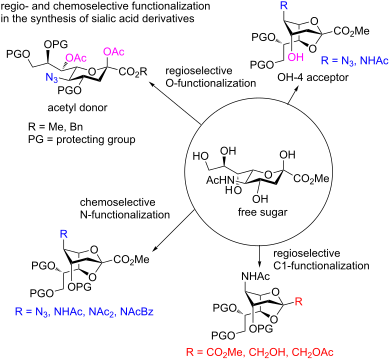
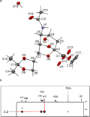
- clearly showed that the NHAc group in position C-5 and the OH-4 group were oriented in a trans-diaxial configuration (Figure 2a). This enhanced the nucleophilicity of the OH-4 group due to the absence of hydrogen bonding between these moieties. After confirming the structure of 4 by single crystal X-ray




Facile regiodivergent synthesis of spiro pyrrole-substituted pseudothiohydantoins and thiohydantoins via reaction of [e]-fused 1H-pyrrole-2,3-diones with thiourea
Beilstein J. Org. Chem. 2019, 15, 2864–2871, doi:10.3762/bjoc.15.280
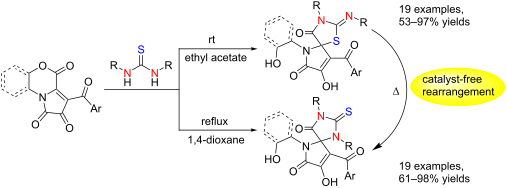
- upon heating at reflux for 2–4 h (Table 5). The facility of thiohydantoins 5 formation could be explained by the electron-donating effect of the butyl substituents, which increased the nucleophilicity of the butyl-substituted nitrogen atoms and promoted its attack on the electrophilic center C-3a of





