Search results
Search for "acidic conditions" in Full Text gives 400 result(s) in Beilstein Journal of Organic Chemistry. Showing first 200.
Synthetic approaches to bowl-shaped π-conjugated sumanene and its congeners
Beilstein J. Org. Chem. 2020, 16, 2212–2259, doi:10.3762/bjoc.16.186

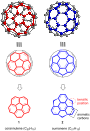
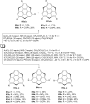
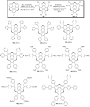
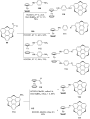
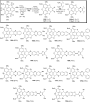
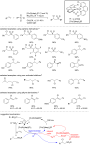
- , they obtained o-bromohydroxysumanene 72 instead of 71. More interestingly, it was also noticed that by treating 71 with trifluoroacetic acid (TFA), it instantly transformed into sumanene derivative 72, suggesting that 71 is unstable under acidic conditions. The acid-catalyzed aromatization can be











Naphthalene diimide bis-guanidinio-carbonyl-pyrrole as a pH-switchable threading DNA intercalator
Beilstein J. Org. Chem. 2020, 16, 2201–2211, doi:10.3762/bjoc.16.185
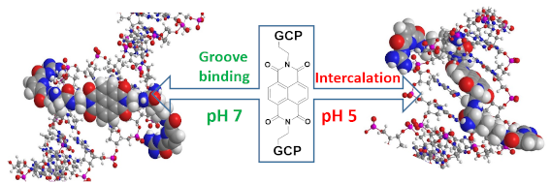
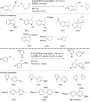
- (pH 7, amino groups close to the NDI unit, green) and two protonated only at weakly acidic conditions (pH 5; acyl guanidinium unit in the GCP moiety, red) positioned at the ends of the pendant arms. Thus, pH control of a number of positive charges can additionally and reversibly control interactions
- , and Figures S12–S15 in Supporting Information File 1). The latter efficient stabilisation could be attributed to the protonation of two GCP units at weakly acidic conditions [17] and subsequently additional interactions with the ds-polynucleotide. For all ds-polynucleotides the thermal stabilisation
- attributed to the positively charged GCP units at acidic conditions. A comparison of compound’s 4 binding constants at pH 5 revealed a one order of magnitude higher affinity of 4 toward GC-DNA in comparison to other AT(U)-containing ds-polynucleotides. Such selectivity is in line with the number of typical





Naphthalene diimide–amino acid conjugates as novel fluorimetric and CD probes for differentiation between ds-DNA and ds-RNA
Beilstein J. Org. Chem. 2020, 16, 2032–2045, doi:10.3762/bjoc.16.170
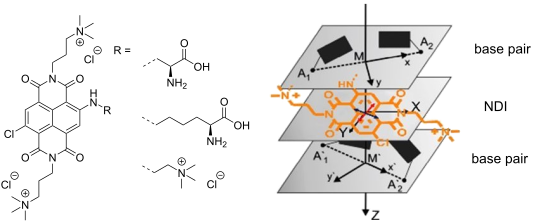
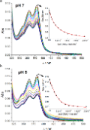
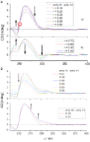
- -(trimethylammonium)ethylamine instead of an amino acid (Figure 1) was prepared. In our study of the interactions with DNA/RNA weakly acidic conditions (pH 5) were chosen to complement available pH-dependent AA-fluorophores used in our previous research (PHEN-AAs [12][26] and GCP-derivatives [15][27]), which allowed


pH- and concentration-dependent supramolecular self-assembly of a naturally occurring octapeptide
Beilstein J. Org. Chem. 2020, 16, 2017–2025, doi:10.3762/bjoc.16.168
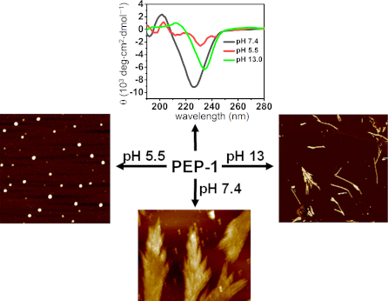
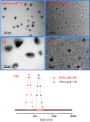
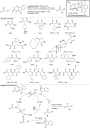
- changes due to the presence of charged amino acids. Fractal networks and the secondary structure can be dissociated under acidic conditions (pH 5.5) due to strong electrostatic repulsions. Under basic conditions (pH 13.0), the electrostatic repulsions are weakened compared to acidic conditions, but they


Syntheses of spliceostatins and thailanstatins: a review
Beilstein J. Org. Chem. 2020, 16, 1991–2006, doi:10.3762/bjoc.16.166

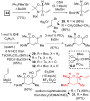
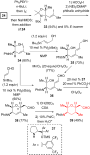
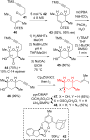
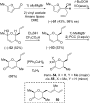
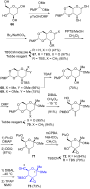
- generation of the mixed acetal 113 (Scheme 18) [33]. A ring-closing metathesis gave an inseparable mixture of the dihydropyranyl ethers 114a and 14b, which could be equilibrated under acidic conditions (114b/114a > 20:1). A standard functional group manipulation afforded the vinyldihydropyran-2-one (−)-115
- under acidic conditions. The yields for the cross-metathesis coupling were generally higher when using an excess of 85 or 115, as compared to the cross-metathesis of 102, which also used a relatively high catalyst loading (20 mol % for 46% yield). While these authors did not report on the hydrolysis of








Selective preparation of tetrasubstituted fluoroalkenes by fluorine-directed oxetane ring-opening reactions
Beilstein J. Org. Chem. 2020, 16, 1936–1946, doi:10.3762/bjoc.16.160
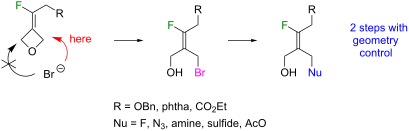
- would allow ready access to novel fluorinated ACN precursors. At the outset the opening of the oxetane ring of 1 by a range of nucleophiles was trialed under acidic conditions. Inspired by Yadav et al. [23], methanol (20 equiv) was used as nucleophile in the presence of camphorsulfonic acid (CSA, 1
- Smiles rearrangement occurred leading to fluoroethylene and benzothiazolone. Therefore, its benzylation was explored under acidic conditions with benzyl trichloroacetimidate (1.5 equiv) and a catalytic amount of trifluoromethanesulfonic acid. This gave benzyl ether 7 as a 2.5:1 mixture with N
- bromomethyllactone 15 was observed (Table 4, entry 4). It appeared obvious that Z-13 could cyclize under acidic conditions and during the purification gave β-bromomethyllactone 15. This was later confirmed when various ester/lactone mixtures obtained after the ring-opening reaction were treated with acid (PTSA) in


On the hydrolysis of diethyl 2-(perfluorophenyl)malonate
Beilstein J. Org. Chem. 2020, 16, 1863–1868, doi:10.3762/bjoc.16.153
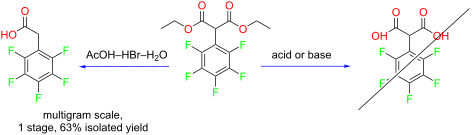
- resulting compound was considered as a starting material for synthesizing 2-(perfluorophenyl)malonic acid by hydrolysis. It was found that the desired 2-(perfluorophenyl)malonic acid could not be obtained from this ester by hydrolysis, neither under basic nor under acidic conditions. Nevertheless
- of diethyl 2-phenylmalonate (4). Synthesis of diethyl 2-(perfluorophenyl)malonate (3). Hydrolysis of diethyl 2-(perfluorophenyl)malonate (3). Formation of 2-(perfluorophenyl)acetic acid (12). Hydrolysis of 3 under basic conditions. Hydrolysis of 3 under acidic conditions. Supporting Information


Synthesis, docking study and biological evaluation of ᴅ-fructofuranosyl and ᴅ-tagatofuranosyl sulfones as potential inhibitors of the mycobacterial galactan synthesis targeting the galactofuranosyltransferase GlfT2
Beilstein J. Org. Chem. 2020, 16, 1853–1862, doi:10.3762/bjoc.16.152
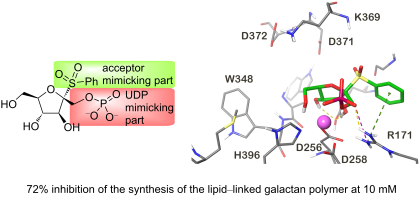
- diacetate 18 under acetolysis conditions (Ac2O/BF3∙OEt2) [22]. However, besides the expected diacetate 18, 1,2,6-tri-O-acetate 19 was observed and isolated as a byproduct (Scheme 4). The cleavage of the O-benzyl ethers followed by acetylation of the liberated hydroxy groups under acidic conditions was
- obtained by acetonide hydrolysis under acidic conditions followed by the final catalytic hydrogenation of the benzyl protecting groups in derivatives 22. Evaluation of the effects of the target compounds on the synthesis of lipid-linked galactan precursors The availability of a series of compounds with


Clickable azide-functionalized bromoarylaldehydes – synthesis and photophysical characterization
Beilstein J. Org. Chem. 2020, 16, 1683–1692, doi:10.3762/bjoc.16.139
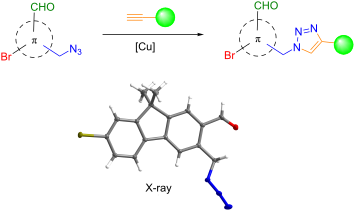
- acidic conditions, rapid aqueous work-up was conducted, followed by reduction with NaBH4, yielding the corresponding primary alcohol 8 in 81% yield over two steps. The transformation to azide 9 was accomplished by deprotonation using 1,8-diazabicyclo[5.4.0]undec-7-ene (DBU) and reaction with


Rearrangement of o-(pivaloylaminomethyl)benzaldehydes: an experimental and computational study
Beilstein J. Org. Chem. 2020, 16, 1636–1648, doi:10.3762/bjoc.16.136
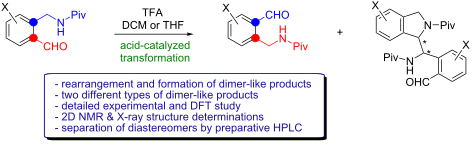
- )benzaldehydes under acidic conditions resulted in the formation of the regioisomeric aldehydes and/or dimer-like products. Detailed NMR studies and single-crystal X-ray measurements supported the structure elucidation of the compounds. DFT calculations were also carried out to clarify the reaction mechanism
- dimerization of indole under acidic conditions (Scheme 7) [8]. Electrophilic attack of indole protonated at position 3 toward the position 3 of another indole molecule, followed by deprotonation affords dimer-like derivative 20. The fundamental difference of this transformation from that we observed in the
- -like products 8a,b. Dimerization of indole under acidic conditions. Reaction of o-(pivaloylaminomethyl)benzaldehyde (1e) to give dimer-like products 23a and 23b. Yields of rearranged aldehydes 2 and dimer-like products 3 and 8 in two different solvents. Relative Gibbs free energy values corresponding


Synthesis and anticancer activity of bis(2-arylimidazo[1,2-a]pyridin-3-yl) selenides and diselenides: the copper-catalyzed tandem C–H selenation of 2-arylimidazo[1,2-a]pyridine with selenium
Beilstein J. Org. Chem. 2020, 16, 1075–1083, doi:10.3762/bjoc.16.94
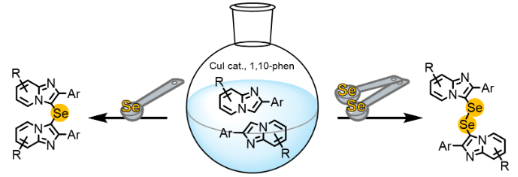
- oxidant) as the selenium source under acidic conditions, and the substrate scope and limitations have not been clarified. Moreover, the syntheses of bis(2-arylimidazo[1,5-a]pyridin-3-yl) selenides and diselenides have recently been investigated using Cu-catalyzed reactions involving imidazo[1,5-a


Fluorinated phenylalanines: synthesis and pharmaceutical applications
Beilstein J. Org. Chem. 2020, 16, 1022–1050, doi:10.3762/bjoc.16.91
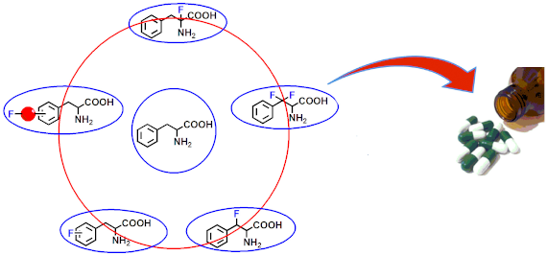
- , 101c, and 107 [60][61] (Scheme 23). Following the previous method, the chiral auxiliary 108 was readily cleaved under mild acidic conditions to afford the hydrochloride salt of 3,4,5-trifluoro-Phe 109 in 86% yield and 95% ee, indicating very low racemization [62] (Scheme 24). 1.10. PAM enzymatic


Preparation of 2-phospholene oxides by the isomerization of 3-phospholene oxides
Beilstein J. Org. Chem. 2020, 16, 818–832, doi:10.3762/bjoc.16.75
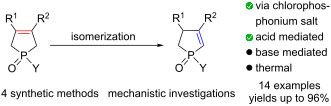
- 4 and 1 could be accomplished in a mixture of acetone and 2-PrOH. The 2-phospholene oxides 4 obtained were characterized by spectroscopic methods (see Supporting Information File 1 for details). Preparation of 3-methyl-2-phospholene oxides 4 under acidic conditions As the next step of this study, we
- towards the 2-phospholene isomer, when chlorophospholenium salts are involved, and it is the underlying reason why the 2-phospholene oxides 4 can be prepared effectively by this reaction. Under strong acidic conditions, the P=O moiety tends to be protonated, which may be responsible for the complete
- more and more dominant role as the catalysis of the 3-phospholene oxide (1) 2-phospholene oxide (4) rearrangement, which explains the change in the reaction rate in the kinetic experiments. Mechanistic studies of the isomerization of 3-phospholene oxides 1 under acidic conditions The isomerization of 3


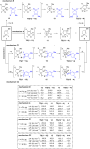


Asymmetric synthesis of CF2-functionalized aziridines by combined strong Brønsted acid catalysis
Beilstein J. Org. Chem. 2020, 16, 638–644, doi:10.3762/bjoc.16.60
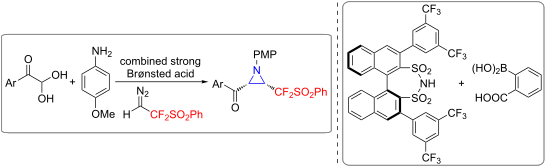
- free aziridine 5a in 81% yield while maintaining the ee value. The reduction of the carbonyl moiety with either NaBH4 or LiAlH4 produced hydroxy-substituted CF2-functionalized aziridine 5b in excellent yield with exclusive diastereoselectivity [47]. Furthermore, the ring-opening of 4a under acidic
- conditions underwent well and gave rise to CF2-functionalized α-chloro-β-amino ketone 5c in 89% yield with >99% ee and >50:1 dr (confirmed by X-ray spectroscopy) [46]. Conclusion In summary, an array of chiral CF2-functionalized aziridines was constructed from in situ-formed aldimines and difluorodiazoetyl


KOt-Bu-promoted selective ring-opening N-alkylation of 2-oxazolines to access 2-aminoethyl acetates and N-substituted thiazolidinones
Beilstein J. Org. Chem. 2020, 16, 492–501, doi:10.3762/bjoc.16.44
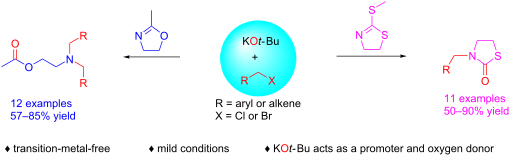
- epoxides as substrates via alternative synthetic procedures [6]. However, under acidic conditions, oxazolines transform into β-substituted carboxamides through nucleophilic ring opening with SN2 attack at the C5 position of the ring [7][8]. Recently, Guo’s group developed an efficient method for the


Recent advances in photocatalyzed reactions using well-defined copper(I) complexes
Beilstein J. Org. Chem. 2020, 16, 451–481, doi:10.3762/bjoc.16.42
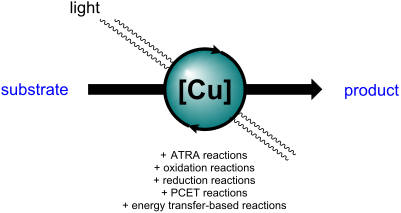
- -functionalization of alcohol using N-alkoxyphthalimide derivatives and glycine esters under basic or acidic conditions, respectively [42]. With regards to the α-functionalization, various N-arylated glycine esters were used as reaction partners with a broad range of N-alkoxyphthalimide derivatives, using [Cu(I)(dmp








Synthesis of 4-amino-5-fluoropyrimidines and 5-amino-4-fluoropyrazoles from a β-fluoroenolate salt
Beilstein J. Org. Chem. 2020, 16, 445–450, doi:10.3762/bjoc.16.41
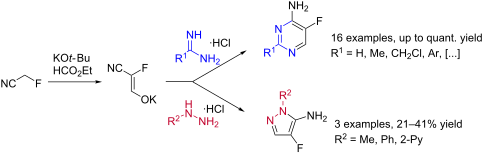
- 2). In the first reactions, only traces of the desired compound 13a were observed. Changing the temperature did not increase the yield. Acidic conditions were tested next but phenylhydrazine hydrochloride and acetic acid again gave only traces of 13a and polymerization of the enolate took place. To


Visible-light-induced addition of carboxymethanide to styrene from monochloroacetic acid
Beilstein J. Org. Chem. 2020, 16, 398–408, doi:10.3762/bjoc.16.38
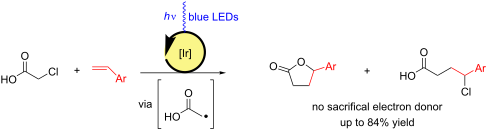
- photoredox catalyst such as fac-[Ir(ppy)3]. It is known that under acidic conditions TEMPO can disproportionate into [TEMPO]+ and TEMPO–H [54][55][56]. [TEMPO]+ (+0.25 V vs Fc/Fc+ [56]) is a strong enough oxidant to oxidatively quench [Ir(ppy)3]* (−0.30 V vs Fc/Fc+ [34]). However, the oxidizing power of [Ir


Combination of multicomponent KA2 and Pauson–Khand reactions: short synthesis of spirocyclic pyrrolocyclopentenones
Beilstein J. Org. Chem. 2020, 16, 200–211, doi:10.3762/bjoc.16.23
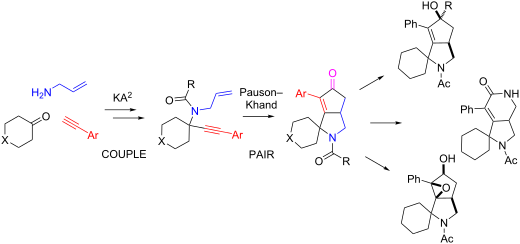
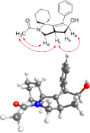
- and showing stability towards harsh acidic conditions. The structural assignment of compound 36 was assessed by detailed 1D and 2D NMR studies, and corroborated with molecular modeling calculations. NOESY-1D experiments carried out with a mixing time of 500 ms allowed to identify the unique rotamer




[1,3]/[1,4]-Sulfur atom migration in β-hydroxyalkylphosphine sulfides
Beilstein J. Org. Chem. 2020, 16, 88–105, doi:10.3762/bjoc.16.11
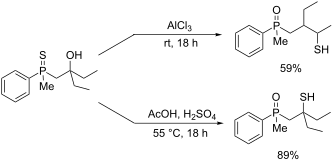
- . Unfortunately, the diastereomeric excess of the reaction was low in each case. In order to analyze the reactivity of β-hydroxyalkylphosphine sulfides under acidic conditions, the cyclization of 8 and 19 was attempted (Scheme 4). Unexpectedly, when the reaction was performed under conditions developed originally
- -carbon atom, which was quite straightforward under these acidic conditions. To understand the completely different selectivity in Lewis acid-catalyzed rearrangements, DFT was again applied to the reaction between 20 and AlCl3 (Scheme 10). Compound 20 underwent a complexation with an AlCl3 molecule
- 12 and 29. Arbusov, phospha-Fries, and phospha-Brook rearrangements. Cyclization of 1a and 1b under acidic conditions. The synthesis of P-stereogenic β-hydroxyalkylphosphine sulfides. Cyclization of 8 and 19 in the presence of H3PO4. Cyclization of (SP)-19 in the presence of H3PO4. Synthesis of the


Starazo triple switches – synthesis of unsymmetrical 1,3,5-tris(arylazo)benzenes
Beilstein J. Org. Chem. 2020, 16, 22–31, doi:10.3762/bjoc.16.4
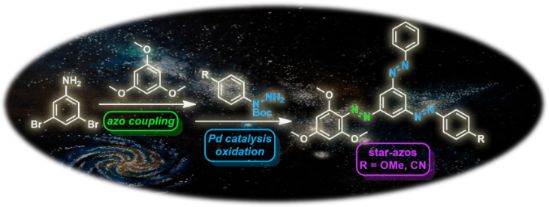
- /C-catalyzed reduction by H2 in different solvents, SnCl2, or iron under acidic conditions were not successful either. In all cases, the reactions produced complicated mixtures, and the target compound could neither be identified nor isolated. At this stage, the second strategy via Pd-catalyzed


Synthesis and characterization of bis(4-amino-2-bromo-6-methoxy)azobenzene derivatives
Beilstein J. Org. Chem. 2019, 15, 3000–3008, doi:10.3762/bjoc.15.296
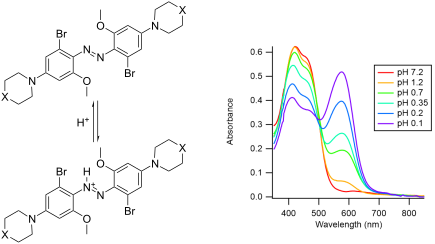
- values are shown in Figure 4c. As can be seen, the formation of the azonium ion of compound 5 required strongly acidic conditions. Even at pH ≈ 0.1, a substantial fraction of the neutral species was still present, implying that the pKa value of the azonium ion was below ca. 0.2. This pKa value was at
- in particular can form azonium ions under physiological conditions and exhibit red-light photoswitching. Here, we report the synthesis and characterization of two bis(4-amino-2-bromo-6-methoxy)azobenzene derivatives. These compounds form red-light-absorbing azonium ions, but only under very acidic
- conditions (pH < 1). While the low pKa makes the azonium form unsuitable, the neutral versions of these compounds undergo trans-to-cis photoisomerization with blue-green light and exhibit slow (τ1/2 ≈ 10 min) thermal reversion and so may find applications under physiological conditions. Keywords: azobenzene


Synthetic terpenoids in the world of fragrances: Iso E Super® is the showcase
Beilstein J. Org. Chem. 2019, 15, 2590–2602, doi:10.3762/bjoc.15.252
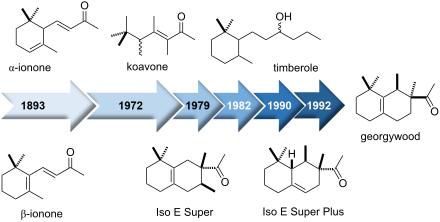
- ) (Scheme 3) [17][18][19][20][21]. To produce Ambrelux (32), myrcene (1) is reacted with dienophile (31) in a Diels–Alder cycloaddition promoted under Lewis-acidic conditions. In order to obtain Iso E Super® (33), Brønstedt acid-mediated cyclisation, similar to the one utilised for the first synthesis of


Characterization of two new degradation products of atorvastatin calcium formed upon treatment with strong acids
Beilstein J. Org. Chem. 2019, 15, 2085–2091, doi:10.3762/bjoc.15.206
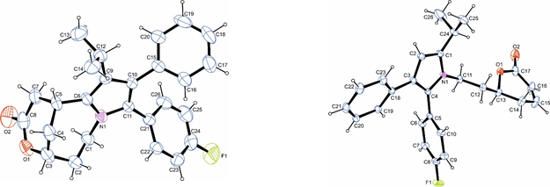
- structures of the degradation products. Here we report the identification of two novel degradation products of atorvastatin, which are formed only under drastic acidic conditions. While treatment with conc. sulfuric acid led to a loss of the carboxanilide residue (accompanied by an expectable lactonization
- -dihydroxyheptanoate side chain under moderately acidic conditions (0.1 M HCl) [11][12][13][14]. Shah et al. [15] identified six additional decomposition products upon treatment with 0.1 M HCl at 80 °C for 24 h, among which the dehydrated lactone 3 was dominating, accompanied by minor amounts of products arising from
- submitted to extremely strong acidic conditions by refluxing with concentrated (37%) aqueous hydrochloric acid (entry 6), a new product 6 was formed in almost quantitative yield. The 1H NMR analysis clearly indicated that the entire carboxanilide partial structure got lost under these conditions. However




Morphology-tunable and pH-responsive supramolecular self-assemblies based on AB2-type host–guest-conjugated amphiphilic molecules for controlled drug delivery
Beilstein J. Org. Chem. 2019, 15, 1925–1932, doi:10.3762/bjoc.15.188
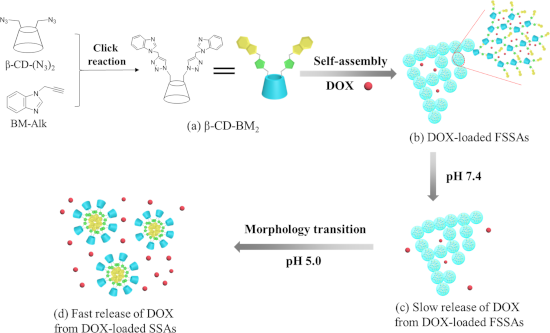
- spherical supramolecular self-assemblies with a size of 52 nm under acidic conditions. This morphology transition process was utilized to conduct a two-stage DOX delivery under neutral and acidic pH. Basic cell experiments demonstrated that the drug-loaded β-CD-BM2-based supramolecular self-assemblies with
- cytosol after incubation. Moreover, the intensity of DOX red fluorescence was increased when the incubation time was prolonged from 1 h to 4 h. This result indicated that DOX-loaded FSSAs were internalized into PC-3 cells and DOX could be released from the FSSAs under endosome acidic conditions. Thus, DOX
- acidic conditions into spherical supramolecular self-assemblies with smaller size. The morphology transitions can be utilized to realize a two-stage drug release. The uptake of the DOX-loaded supramolecular self-assemblies performed efficiently and the cellular toxicity through inhibiting cell