


Search results
Search for "cross coupling" in Full Text gives 616 result(s) in Beilstein Journal of Organic Chemistry. Showing first 200.
Synthesis and electrochemical properties of 3,4,5-tris(chlorophenyl)-1,2-diphosphaferrocenes
Beilstein J. Org. Chem. 2022, 18, 1338–1345, doi:10.3762/bjoc.18.139
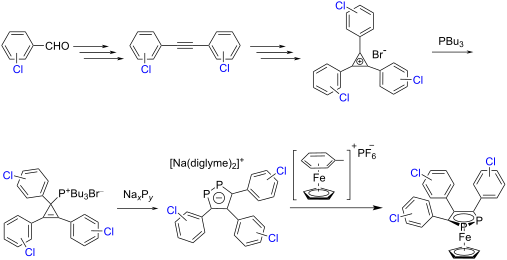
- transition metal-catalyzed cross-coupling reactions broadly used for the preparation of different diarylacetylenes and, rarely, bis(chlorophenyl)acetylenes. Next, starting substituted benzaldehydes were treated with an excess of SOCl2 for 24 h at 25 °C. Corresponding substituted benzal chlorides 4 were




Modular synthesis of 2-furyl carbinols from 3-benzyldimethylsilylfurfural platforms relying on oxygen-assisted C–Si bond functionalization
Beilstein J. Org. Chem. 2022, 18, 1256–1263, doi:10.3762/bjoc.18.131
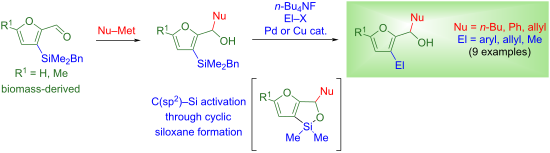
- -catalyzed cross-coupling reactions, such as arylation reactions catalyzed by Pd2(dba)3/CuI, as well as allylation and methylation reactions catalyzed by CuI⋅PPh3. C3-Benzyldimethylsilyl-appended furfurals are thus introduced as versatile platforms, providing a modular access to 3-substituted 2-furyl
- on the SiMe(OSiMe3)2 unit, which were readily converted through Pd- or Cu-catalyzed electrophilic substitution reactions into an array of furfurals decorated at C3 with carbon- or heteroatom-containing substituents (Scheme 1). Conversely, all of our subsequent efforts to achieve cross-coupling
- cross-coupling chemistry [30][31], could be accessed from 2-[(3-benzyldimethylsilyl)furyl] carbinols. C3–Si bond functionalization through siloxane formation In an attempt to isolate cyclic siloxane 16, we then considered a protocol reported by Anderson and co-workers to prepare cyclic siloxanes by


Heterogeneous metallaphotoredox catalysis in a continuous-flow packed-bed reactor
Beilstein J. Org. Chem. 2022, 18, 1123–1130, doi:10.3762/bjoc.18.115
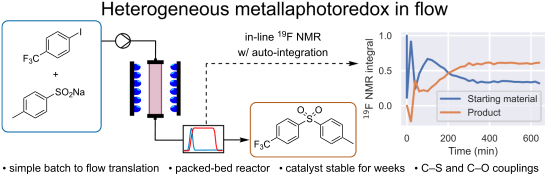
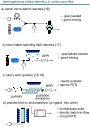
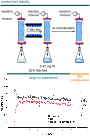
- (catalyst) separation in one step. The use of a packed bed simplifies the translation of optimized batch reaction conditions to continuous flow, as the only components present in the reaction mixture are the substrate and a base. The metallaphotoredox cross-coupling of sulfinates with aryl halides was used
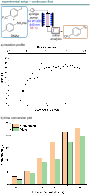
- systematically study the cross-coupling using the packed-bed reactor, we decided to equip the continuous-flow setup with a dedicated tool for in-line analysis. Such techniques enable rapid investigations of process-related parameters [34]. In particular, the presence of a trifluoromethyl group in the substrate





A Streptomyces P450 enzyme dimerizes isoflavones from plants
Beilstein J. Org. Chem. 2022, 18, 1107–1115, doi:10.3762/bjoc.18.113
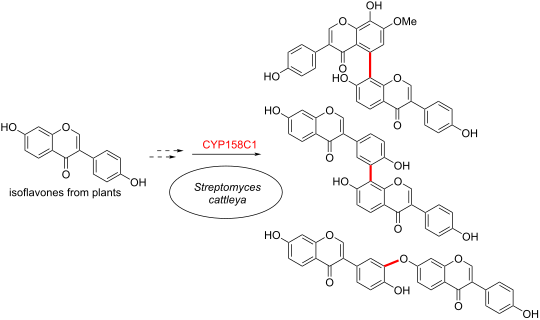
- dimers or cross-coupling products, starting from simple monomers [17][18][19]. Nevertheless, our knowledge of enzyme-mediated dimerization is still limited in contrast to the numerous reported dimeric natural products. Phenol coupling in plant polyphenol biosynthesis is one of the earliest documented


Electrochemical formal homocoupling of sec-alcohols
Beilstein J. Org. Chem. 2022, 18, 1062–1069, doi:10.3762/bjoc.18.108
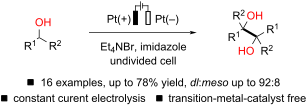
- -coupling reaction of two different benzyl alcohols (Scheme 3). Pleasingly, the reaction using a 1:1 mixture of 1a and 1f under the standard reaction conditions provided the cross-coupling product 2af (dr = 94:6) together with the homocoupling products 2a and 2f. To demonstrate the scalability of the
- /mol, 0 °C, under air. a100 mA cc. b6 F/mol, imidazole (0.075 equiv). c6 F/mol. d8 F/mol, imidazole (0.1 equiv) e8 F/mol, MeCN/MeOH (4:1, 5 mL) without H2O. Investigation of cross-coupling reaction. Large-scale experiment. Control experiments. aDetermined by 1H NMR using 1,3,5-trimethoxybenzene as an
- diastereoselectivity [47]. Benzhydrol derivatives (1n–p) were found to be good substrates for the present reaction, affording the corresponding benzopinacols (2n–p) in good yields after the passage of 8 F/mol in a mixed solvent of MeCN/MeOH. Next, we examined the possibility to extend the present process to the cross




Automated grindstone chemistry: a simple and facile way for PEG-assisted stoichiometry-controlled halogenation of phenols and anilines using N-halosuccinimides
Beilstein J. Org. Chem. 2022, 18, 999–1008, doi:10.3762/bjoc.18.100
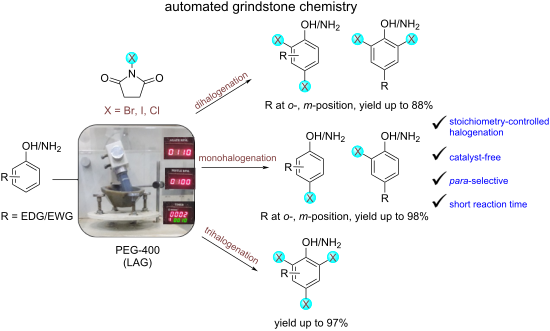
- halides are valuable compounds with potent bioactivities [1][2][3][4][5] (Figure 1) and are utilized as crucial precursors for various metal-catalyzed cross-coupling reactions [6][7][8][9]. They are frequently used as synthetic intermediates in several value-added syntheses of natural products
- of monoiodo derivatives was successfully prepared in high to excellent yields from phenols and anilines by adding 1.1 equiv of NIS with PEG-400 as the LAG agent (product 2aa–ag, Scheme 3). Notably, both Br- and I-substituents are mainly used as the substrates for cross-coupling reactions indicating




Introducing a new 7-ring fused diindenone-dithieno[3,2-b:2',3'-d]thiophene unit as a promising component for organic semiconductor materials
Beilstein J. Org. Chem. 2022, 18, 944–955, doi:10.3762/bjoc.18.94
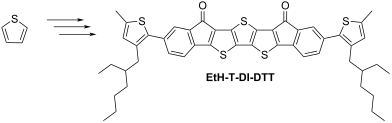
- [34], dibromodithienothiophene 24 is lithiated with n-butyllithium at −90 °C, and the resulting species is reacted in situ with triisopropyl borate. After aqueous workup, dithieno[3,2-b:2’,3’-d]thiophene-2,6-diylboronic acid (25) is obtained, enabling subsequent Suzuki–Miyaura cross-coupling [36
- ]. This palladium-catalysed cross coupling is preferred over a Stille cross-coupling due to the high toxicity of organotin reagents [37]. Moreover, purification of compound 25 is facile since it can be used for further reactions after re-precipitation in petroleum ether. In a manner similar to [35], it is
- possible to convert 25 into the corresponding pinacol ester, 2,6-bis(4,4,5,5-tetramethyl-1,3,2-dioxaborolan-2-yl)dithieno[3,2-b:2’,3’-d]thiophene (26) by stirring 25 with pinacol in refluxing toluene, but this has no beneficial impact on the subsequent cross-coupling. Compound 26 has been published


On Reuben G. Jones synthesis of 2-hydroxypyrazines
Beilstein J. Org. Chem. 2022, 18, 935–943, doi:10.3762/bjoc.18.93
- , respectively. Shifts (δ) are given in ppm with respect to the TMS signal and cross-coupling constants (J) are given in hertz. Column chromatography was performed either on Merck silica gel 60 (0.035–0.070 mm) or neutral alumina containing 1.5% of added water using a solvent pump and an automated collecting


Synthetic strategies for the preparation of γ-phostams: 1,2-azaphospholidine 2-oxides and 1,2-azaphospholine 2-oxides
Beilstein J. Org. Chem. 2022, 18, 889–915, doi:10.3762/bjoc.18.90
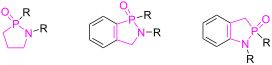
- -oxides 42 and 44 in moderate 54–63% yields via the intramolecular copper-catalyzed cross-coupling of ethyl/benzyl 2-bromobenzylphosphonamidates 41 or P-(2-bromobenzyl)-P-(methyl)phosphinamide (43) as a key step. They were prepared from 2-bromobenzyl bromide (38) via three and four steps, respectively






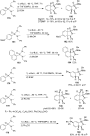


Synthesis of novel alkynyl imidazopyridinyl selenides: copper-catalyzed tandem selenation of selenium with 2-arylimidazo[1,2-a]pyridines and terminal alkynes
Beilstein J. Org. Chem. 2022, 18, 863–871, doi:10.3762/bjoc.18.87
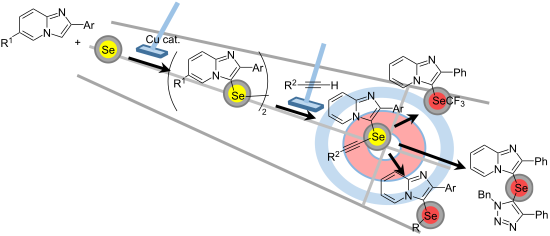
- selenides [25]. In this reaction, unlike the former, bis(imidazo[1,2-a]pyridin-3-yl) diselenides are generated through C–H selenation at the 3-position of 2-arylimidazopyridines with Se powder, followed by the cross-coupling reaction between diselenides and triarylbismuthines. These one-pot reactions are
- imidazopyridinyl selenides A Cu-catalyzed cross-coupling reaction using benzene ring substituted diaryl diselenides with terminal alkynes in the presence of bases is effective for synthesizing aryl alkynyl selenides [27][28][29][30][31]. We previously reported a simple method for the synthesis of bis(2-arylimidazo


Palladium-catalyzed solid-state borylation of aryl halides using mechanochemistry
Beilstein J. Org. Chem. 2022, 18, 855–862, doi:10.3762/bjoc.18.86
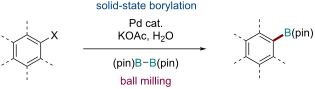
- , Japan 10.3762/bjoc.18.86 Abstract This study describes the solid-state palladium-catalyzed cross-coupling between aryl halides and bis(pinacolato)diboron using ball milling. The reactions were completed within 10 min for most aryl halides to afford a variety of synthetically useful arylboronates in
- mill; borylation; cross-coupling; mechanochemistry; solid-state reaction; Introduction Arylboronic acid and its derivatives are indispensable reagents in modern synthetic chemistry because they have been frequently used for the preparation of many bioactive molecules, natural products, and functional
- transformations. Thus far, mechanochemical palladium-catalyzed cross-coupling reactions such as Suzuki–Miyaura [34][35][36][37][38][39][40][41][42][43][44][45][46][47], Buchwald–Hartwig [48][49][50][51][52], Sonogashira [53][54][55][56], Negishi [57], Mizoroki–Heck [58][59][60], and C–S bond-forming [61


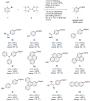


Inductive heating and flow chemistry – a perfect synergy of emerging enabling technologies
Beilstein J. Org. Chem. 2022, 18, 688–706, doi:10.3762/bjoc.18.70
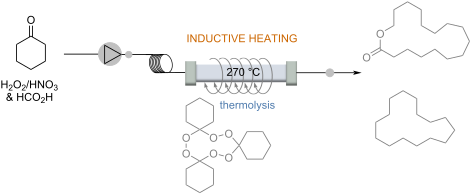
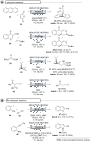
- decarboxylation of the malonic acid derivative 42 to give pent-4-enecarboxylic acid (43). In many cases, the flow protocol provided improved yields compared to the corresponding batch syntheses. Palladium-catalyzed cross-coupling reactions require higher temperatures and thus can be realized in an inductively
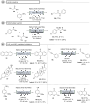
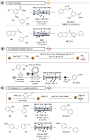
- catalysis can be generated directly by the functionalized nanostructured particles (Scheme 12, case C) [50]. This was achieved by reductive precipitation of Pd(0) nanoparticles from ammonium-bound tetrachloropalladate [84][85], which showed good catalytic activity in various cross-coupling reactions under




Mechanochemical halogenation of unsymmetrically substituted azobenzenes
Beilstein J. Org. Chem. 2022, 18, 680–687, doi:10.3762/bjoc.18.69
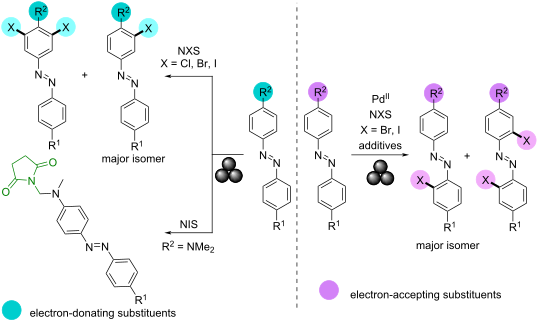
- ; N-halosuccinimide; palladium(II); Introduction Electrophilic aromatic substitution [1][2][3] and ligand-directed transition-metal-catalyzed reactions [4][5][6][7][8] are among the most widely used synthetic approaches for the preparation of halogenated arenes. They are important precursors in cross
- -coupling reactions [9][10][11][12][13][14][15][16][17][18][19] or components of pharmaceuticals and biologically active molecules [20][21]. The synthetic aspects of both approaches in solution are well established. The need for green and sustainable chemistry [22] has led to the development and synthetic





DDQ in mechanochemical C–N coupling reactions
Beilstein J. Org. Chem. 2022, 18, 639–646, doi:10.3762/bjoc.18.64
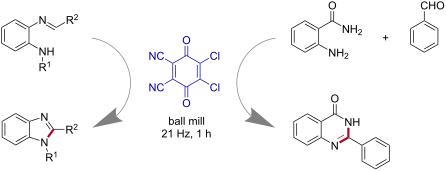
- as C–P [17], C–O [18][19][20], and C–S [21] were achieved using DDQ as an oxidant [22][23]. In addition, the utilization of DDQ as a photoredox catalyst [24] and co-catalyst [25][26] have also been documented in organic synthesis [27]. DDQ-mediated oxidative C–N cross-coupling reactions are well
- direct C–H amination is vital to provide many amine derivatives by sustainable methods [36][37]. The dehydrogenative C–N cross-coupling reactions from unreactive N–H and C–H bonds can lead to various nitrogen-containing heterocycles [32][38]. Herein, we disclose the DDQ-mediated oxidative C–N coupling
- , followed by hydride abstraction to generate the desired product 2a. On the other hand, the formation of quinazolin-4(3H)-ones starts with the formation of an imine intermediate and then it will follow the similar mechanistic pathway. To explore the synthetic utility of the oxidative C–N cross-coupling


Heteroleptic metallosupramolecular aggregates/complexation for supramolecular catalysis
Beilstein J. Org. Chem. 2022, 18, 597–630, doi:10.3762/bjoc.18.62
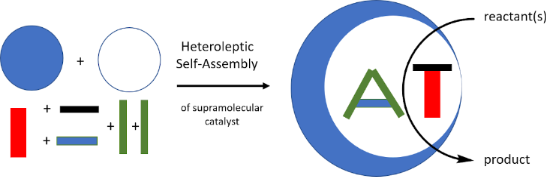
- + 26), respectively, were successfully employed as visible-light photocatalysts for a cross-coupling cyclization of N,N-dimethylaniline (27) and N-alkyl/aryl maleimides 28 (Figure 6). Notably, the systems showed much higher catalytic activity compared to similar reactions with the dye or cages alone


Substituent effect on TADF properties of 2-modified 4,6-bis(3,6-di-tert-butyl-9-carbazolyl)-5-methylpyrimidines
Beilstein J. Org. Chem. 2022, 18, 497–507, doi:10.3762/bjoc.18.52
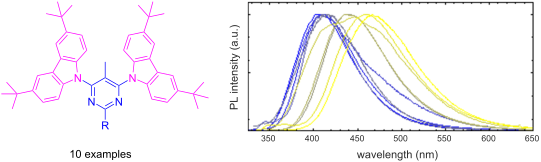
- of aryl moieties into methylthio-substituted nitrogen heterocycles such as tCBz-mPYR are a Ni(0)-catalyzed cross-coupling reaction with Grignard reagents [34][36] or the Liebeskind–Srogl reaction employing arylboronic acids [37][38][39]. Taking into account a large assortment of arylboronic acids and
- the simplicity of the method, we chose the Liebeskind–Srogl cross-coupling reaction for the synthesis of the target 2-arylpyrimidine derivatives. Thus, heating tCbz-mPYR with phenyl-, 4-cyanophenyl-, 3-cyanophenyl-, or 3-bromophenylboronic acid at 130 °C in dioxane in the presence of Pd(PPh3)4, copper
- pyrimidine–carbazole TADF emitters bearing different substituents in position 2 of the pyrimidine moiety were successfully prepared by using Liebeskind–Srogl cross-coupling, hydrogenolysis, oxidation reactions of 4,6-bis(3,6-di-tert-butyl-9-carbazolyl)-5-methyl-2-methylthiopyrimidine and following




Tosylhydrazine-promoted self-conjugate reduction–Michael/aldol reaction of 3-phenacylideneoxindoles towards dispirocyclopentanebisoxindole derivatives
Beilstein J. Org. Chem. 2022, 18, 469–478, doi:10.3762/bjoc.18.49
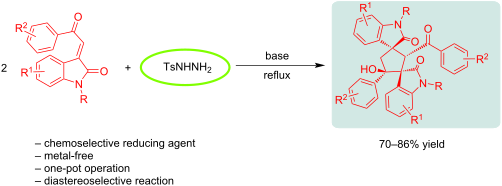
- , 3o, 3q, 3s, 3t and 3x) gave a good yield of the corresponding product, respectively. Here also, the halo-substituted aryl ring on 1 can be further used for transition-metal-catalyzed cross coupling reactions, thus providing a very good application. Then the effect of N-protecting groups on the


Cs2CO3-Promoted reaction of tertiary bromopropargylic alcohols and phenols in DMF: a novel approach to α-phenoxyketones
Beilstein J. Org. Chem. 2022, 18, 420–428, doi:10.3762/bjoc.18.44
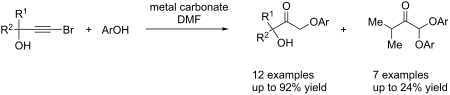
- involved in various transformations including homo- and cross-coupling [1][2][3][4][5][6][7], addition [1][8][9], cycloaddition [1][10][11] and other reactions. Of particular synthetic value is the addition to the triple bond of bromoacetylenes to provide vinyl adducts, which can undergo numerous


Borylated norbornadiene derivatives: Synthesis and application in Pd-catalyzed Suzuki–Miyaura coupling reactions
Beilstein J. Org. Chem. 2022, 18, 368–373, doi:10.3762/bjoc.18.41
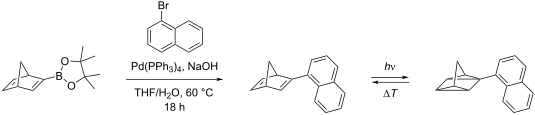
- (HRMS). To assess the suitability of the boronic esters 2a and 2b to be used as building blocks in Suzuki–Miyaura reactions, the Pd-catalyzed cross-coupling reaction of norbornadiene 2a and bromobenzene (4a) was examined under different conditions (Table 1, Scheme 2). First experiments were conducted


Unexpected chiral vicinal tetrasubstituted diamines via borylcopper-mediated homocoupling of isatin imines
Beilstein J. Org. Chem. 2022, 18, 303–308, doi:10.3762/bjoc.18.34
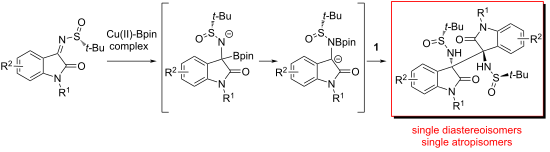
- intermediate spontaneously turns into the carbanion C, thus realizing the imine umpolung and allowing the cross-coupling reaction with the remaining electrophilic ketimine 1. The complete diastereoselectivity would arise from the mutual approach of the two oxindole nuclei from the less hindered side, that is


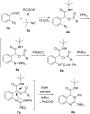
New efficient synthesis of polysubstituted 3,4-dihydroquinazolines and 4H-3,1-benzothiazines through a Passerini/Staudinger/aza-Wittig/addition/nucleophilic substitution sequence
Beilstein J. Org. Chem. 2022, 18, 286–292, doi:10.3762/bjoc.18.32
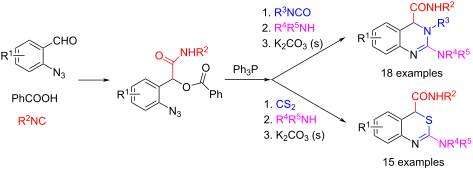
- –Spengler-like cyclization processes [12]. Some 4-substituted 3,4-dihydroquinazolines were prepared by copper-catalyzed oxidative cross coupling of hydroxy intermediates with various nucleophiles [13]. Other 3,4-dihydroquinazolines were also obtained efficiently by intramolecular aza-Wittig reactions [14




Recent developments and trends in the iron- and cobalt-catalyzed Sonogashira reactions
Beilstein J. Org. Chem. 2022, 18, 262–285, doi:10.3762/bjoc.18.31
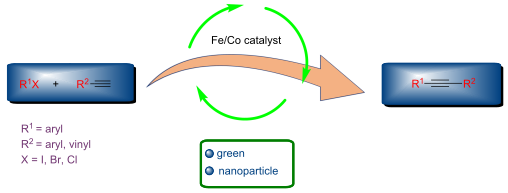
- emphasis given to green strategies. This is the first review on iron- and cobalt-catalyzed Sonogashira coupling reactions which comprehends literature up to 2020. Keywords: C–C bond formation; cobalt; green reaction; iron; nanoparticles; Sonogashira; Introduction The palladium-catalyzed cross-coupling
- exceptional versatility [13][14][15]. Therefore, the low cost first series transition metals such as iron and cobalt show higher significance than other transition metals. Naturally, Sonogashira cross-coupling reactions using cobalt or iron catalysts were reported as more cost-effective alternatives to the
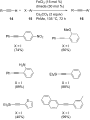
- cross-coupling reactions Homogeneous green protocols Tsai et al. discussed an efficient, simple and environmentally friendly method for the coupling of arylynols 3 with an aryl halide [21]. This strategy discloses a one pot reaction catalyzed by FeCl3 in an aqueous medium associated with the cationic




Iridium-catalyzed hydroacylation reactions of C1-substituted oxabenzonorbornadienes with salicylaldehyde: an experimental and computational study
Beilstein J. Org. Chem. 2022, 18, 251–261, doi:10.3762/bjoc.18.30
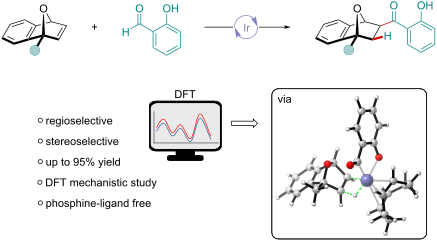
- the art and science of selective molecular engineering [1]. To date, organic synthesis has largely been governed by the interconversion of pre-existing functional groups through the use of more traditional transition-metal-catalyzed cross-coupling reactions [2][3][4][5]. Although these reactions have


Ready access to 7,8-dihydroindolo[2,3-d][1]benzazepine-6(5H)-one scaffold and analogues via early-stage Fischer ring-closure reaction
Beilstein J. Org. Chem. 2022, 18, 143–151, doi:10.3762/bjoc.18.15
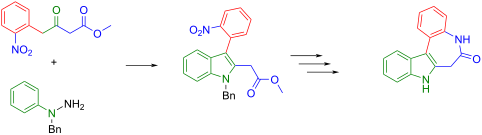
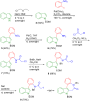
- delivered 3c in 53% yield (Scheme 6). In an alternative approach we tried to synthesize non-benzylated species 1a from methyl indol-2-ylacetate. Iodination at position 3 of the indole backbone in the presence of N-iodosuccinimide [45] followed by Ullmann cross-coupling with o-bromo-nitrobenzene [46] was
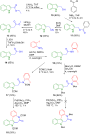
- labile CH2 protons. This afforded the iodinated compound 23 in 80% yield. However, Ullmann cross-coupling with o-bromo-nitrobenzene gave only trace amounts of the desired product, which we could not separate by chromatographic methods from the major homo-coupling species 24 of this reaction (Scheme 7
- N-(2-bromophenyl)-2-(1H-indol-2-yl)acetamide. Synthesis of scaffold C and analogues by route (c). Attempted Ullmann cross-coupling of 23 with o-bromo-nitrobenzene. Supporting Information CCDC 2072772−2072777 and 2103781 contain the supplementary crystallographic data for this paper. These data can






Earth-abundant 3d transition metals on the rise in catalysis
Beilstein J. Org. Chem. 2022, 18, 86–88, doi:10.3762/bjoc.18.8

- syntheses, crop protection or medicinal chemistry. Particularly, cross-coupling reactions [1], as well as alkene and alkyne metathesis [2][3], have considerably changed the art of molecular synthesis, with a major impact on neighboring disciplines, such as molecular biology or materials sciences. Despite of
- transformations to form C–C and C–heteroatom bonds, thereby providing a more sustainable future for, among others, drug development in generations to come. Particularly, Nobel prize-winning palladium-catalyzed cross-coupling reactions have been recognized by the practitioners in agrochemical and pharmaceutical



