


Search results
Search for "hydride" in Full Text gives 505 result(s) in Beilstein Journal of Organic Chemistry. Showing first 200.
Beyond ribose and phosphate: Selected nucleic acid modifications for structure–function investigations and therapeutic applications
Beilstein J. Org. Chem. 2021, 17, 908–931, doi:10.3762/bjoc.17.76
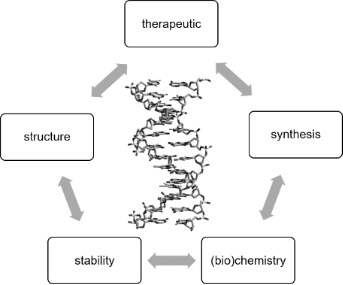
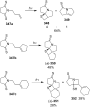
- product is then reacted with unprotected thymine which, in the presence of stoichiometric amounts of sodium hydride, results in the epoxide ring opening and the formation of the glycol backbone. The pre-amidite is then phosphitylated yielding the desired GNA-T amidite (Scheme 3). Recently, this simple




The preparation and properties of 1,1-difluorocyclopropane derivatives
Beilstein J. Org. Chem. 2021, 17, 245–272, doi:10.3762/bjoc.17.25
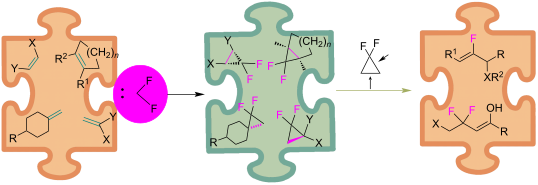
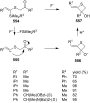
- enantioselective hydrocupration of difluorocyclopropenes in the presence of chiral diphosphine ligands using stoichiometric hydride sources that included polymethylhydrosiloxane (PMHS) and organoboranes (Scheme 35) [79]. Cossy and co-workers have achieved the catalytic asymmetric transfer hydrogenation with




Au(III) complexes with tetradentate-cyclam-based ligands
Beilstein J. Org. Chem. 2021, 17, 186–192, doi:10.3762/bjoc.17.18
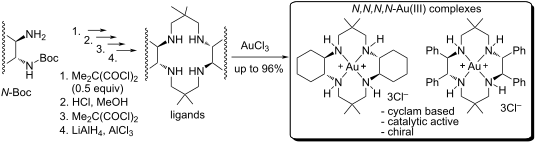
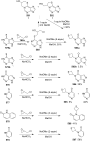
- –59%) by a final optimized hydride reduction. Both the open tetraamine intermediates and the cyclam derivatives successfully coordinated with AuCl3 to give moderate to excellent yields (50–96%) of the corresponding novel tetra-coordinated N,N,N,N-Au(III) complexes with alternating five- and six


Novel library synthesis of 3,4-disubstituted pyridin-2(1H)-ones via cleavage of pyridine-2-oxy-7-azabenzotriazole ethers under ionic hydrogenation conditions at room temperature
Beilstein J. Org. Chem. 2021, 17, 156–165, doi:10.3762/bjoc.17.16
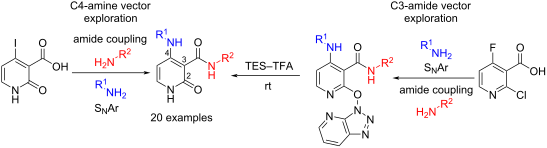
- hydrogenation [15], through addition of the hydride from triethylsilane to afford 1 after in situ hydrolysis of the triethylsilyloxy bond. HOAt alone does not degrade under these conditions and intermediate 21 has been identified and characterized from the reaction medium although we did not identify 2


Direct synthesis of anomeric tetrazolyl iminosugars from sugar-derived lactams
Beilstein J. Org. Chem. 2021, 17, 115–123, doi:10.3762/bjoc.17.12
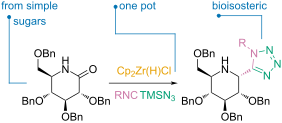
- hydride, known as Schwartz’s reagent [8]. This reduces the amide moiety, giving a complex that can be readily transformed into an imine or iminium cation [9]. It may perhaps be observed without straying too far afield from our primary focus that reduction of amides is actually not a leading use case of




Synthesis of aryl 2-bromo-2-chloro-1,1-difluoroethyl ethers through the base-mediated reaction between phenols and halothane
Beilstein J. Org. Chem. 2021, 17, 89–96, doi:10.3762/bjoc.17.9

- functionalized aryl 2-bromo-2-chloro-1,1-difluoroethyl ethers as well as several considerations of the reaction mechanism. Results and Discussion We began our study to optimize the reaction conditions (Table 1). When two equivalents of halothane and sodium hydride (NaH) were treated with phenol (1a) at room


Progress in the total synthesis of inthomycins
Beilstein J. Org. Chem. 2021, 17, 58–82, doi:10.3762/bjoc.17.7
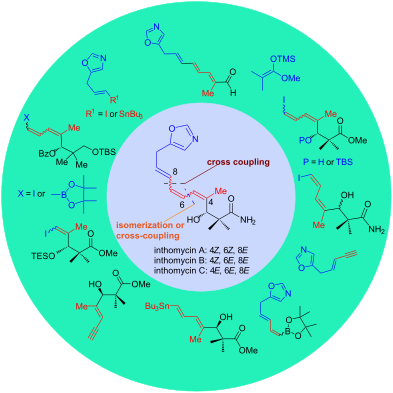
- elimination (Scheme 1) [35]. The oxazole vinylstannane 24 was prepared from commercially available butyne 21. The tri-n-butyltin hydride addition to 21, followed by Swern oxidation and direct oxazole formation with tosylmethyl isocyanide (TosMIC) gave the fragment 24, which was used immediately for the next
- bromine in acetic acid, and then triethyl phosphite. Next, compound 28 was treated with sodium hydride followed by aldehyde 29 [37] to give (E,E)-dienyl stannane 30 in 50% yield. The key Stille coupling between 30 and vinyl iodide 31, prepared by Takai reaction [38] of phenylacetaldehyde, in presence of









Pentannulation of N-heterocycles by a tandem gold-catalyzed [3,3]-rearrangement/Nazarov reaction of propargyl ester derivatives: a computational study on the crucial role of the nitrogen atom
Beilstein J. Org. Chem. 2020, 16, 3059–3068, doi:10.3762/bjoc.16.255
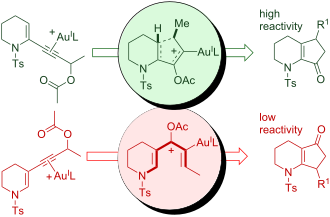
- hydrolysis. These steps can occur through different pathways; in particular, we considered a single-step intramolecular hydride shift with concomitant C–Au-bond breaking (Figure 5) or a base-mediated deprotonation, followed by Au–C-bond hydrolysis through protodeauration (Figure 6). In the former case, it
- emerged that the 1,2-hydrogen shift in TS7 is quite high in energy (ΔG‡ = 18.5 kcal⋅mol−1) relative to the previous barriers shown in Figure 2. This barrier is also much higher than the traditional 1,2-hydride shift in carbocations, which usually show barriers even under 10 kcal⋅mol−1. It has been


All-carbon [3 + 2] cycloaddition in natural product synthesis
Beilstein J. Org. Chem. 2020, 16, 3015–3031, doi:10.3762/bjoc.16.251
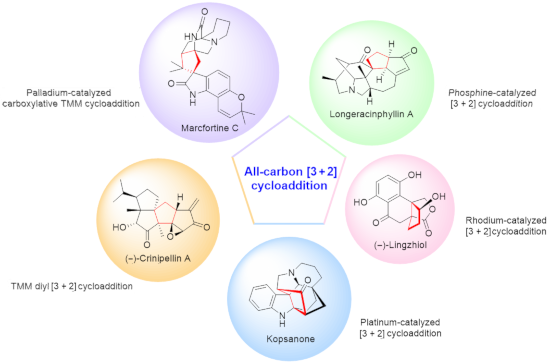
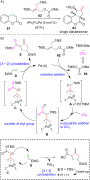
- triquinane (±)-hirsutene (14) [24] (Scheme 1D). In 2011, the same research group used allenyl diazo compound 38, which was generated from the reaction between aldehyde 37 and p-toluenesulfonehydrazide in the presence of sodium hydride upon heating, to produce diyl 40 [29] (Scheme 2A). The intramolecular
- 2014 and 2017, respectively (Scheme 2B and Scheme 2C). The synthesis of (−)-crinipellin A (15) began with the treatment of hydrazone 42 with sodium hydride under reflux to produce the tetraquinane 46 in 87% yield [30] (Scheme 2B). The authors suggested that the diazo compound 43 formed undergoes an
- upon refluxing in toluene and subsequent epoxidation afforded 51 [32], which was converted to (−)-crinipelline A (15) in two steps. The synthesis of waihoensene (16) commenced with the conversion of aldehyde 52a to the corresponding hydrazone 52b, which was treated with sodium hydride under reflux to







Fluorine effect in nucleophilic fluorination at C4 of 1,6-anhydro-2,3-dideoxy-2,3-difluoro-β-D-hexopyranose
Beilstein J. Org. Chem. 2020, 16, 2880–2887, doi:10.3762/bjoc.16.237
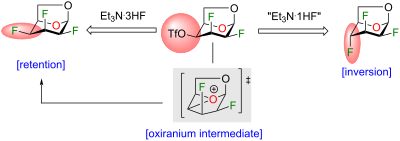
- evaluated reduction conditions on a simpler difluorinated hexopyranose analogue. Thus, difluoroglucose 21, easily accessible in 3 steps from levoglucosan (1) [21], was subjected to lithium aluminium hydride (LiAlH4) in THF (Scheme 1a) and difluoroglucitol 22 was isolated in 58% yield. The reaction was



On the mass spectrometric fragmentations of the bacterial sesterterpenes sestermobaraenes A–C
Beilstein J. Org. Chem. 2020, 16, 2807–2819, doi:10.3762/bjoc.16.231
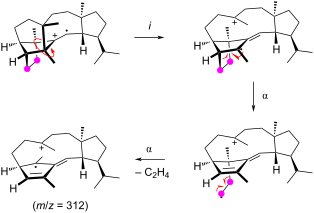
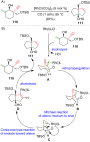
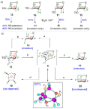
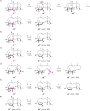
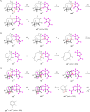
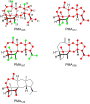
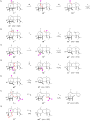
- w1•+ to x1•+ (Scheme 2B). The inductive cleavage with hydride migration leads to y1•+ representing the minor fragment ion at m/z = 122 that may efficiently lose two hydrogens to give the conjugated system in z1•+. Fragmentation mechanisms for sestermobaraene B (2) The position-specific mass shift
- rearrangement to a2•+ and a hydride shift to b2•+ (Scheme 3A). This hydride migration is in reverse order compared to a similar step along the cationic cyclisation cascade during the biosynthesis of 2 (Scheme S1 in Supporting Information File 1). The subsequent inductive ring opening to c2•+ and α-cleavage of
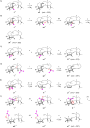
- cleavage of C22, C23, C24, or C25, as observed before for compounds 1 and 2. Especially noteworthy is the cleavage of the methylene carbon C25, which is explainable from 3•+ by a hydrogen rearrangement to a3•+, followed by a hydride shift to b3•+ and an α-fragmentation to c3+ (Scheme 5A). The alternative




Bifurcated synthesis of methylene-lactone- and methylene-lactam-fused spirolactams via electrophilic amide allylation of γ-phenylthio-functionalized γ-lactams
Beilstein J. Org. Chem. 2020, 16, 2769–2775, doi:10.3762/bjoc.16.227
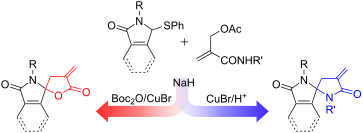
- such as potassium tert-butoxide or sodium hydride resulted in no formation of the desired product 3a because 2a was decomposed under the harsh reaction conditions (Table 1, entries 2 and 3). Thus we opted to employ another substrate 2b bearing a phenylthio group which polarizes the α-C–H bond to lead
- sodium hydride, affording the corresponding adduct in 50% and 81% yields, respectively (Table 1, entries 6 and 7). Surprisingly, the desired allylation underwent even in the absence of palladium catalyst, probably due to high nucleophilicity of the deprotonated intermediate, to give 3b in 87% yield
- (Table 1, entry 8). Optimization studies were conducted by screening solvents, reagent amount, and reaction temperature, showing that 3b was produced in the highest yield of 97% when the reaction was carried out with 2.5 equivalents of sodium hydride in THF at −10 °C (Table 1, entries 9–13) [22]. With


Selective recognition of ATP by multivalent nano-assemblies of bisimidazolium amphiphiles through “turn-on” fluorescence response
Beilstein J. Org. Chem. 2020, 16, 2728–2738, doi:10.3762/bjoc.16.223
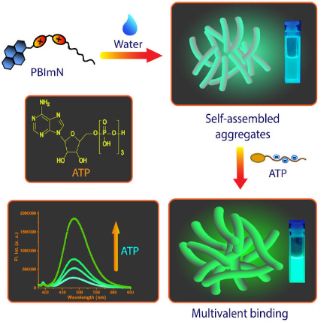
- the nucleotides, 1-pyrenecarboxaldehyde, sodium borohydride, sodium hydride, phosphorus tribromide and 1-bromobutane, 1-bromodecane, 1-bromododecane and 1-bromotetradecane were purchased from Sigma-Aldrich. Imidazole, dibromomethane and tris(hydroxymethyl)aminomethane were purchased from TCI chemicals


Activation of pentafluoropropane isomers at a nanoscopic aluminum chlorofluoride: hydrodefluorination versus dehydrofluorination
Beilstein J. Org. Chem. 2020, 16, 2623–2635, doi:10.3762/bjoc.16.213
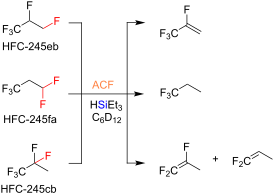
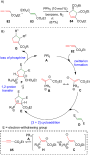
- bond activation at the primary carbon–fluorine bond in 10a, generating FSiEt3, the corresponding carbenium-like species, and a surface-bound hydride. At this stage, either the hydrodefluorination product 13 can be generated, or dehydrofluorination occurs to furnish the olefin 1 and H2, both in the
- presence of silane. Additionally, 1 can further react with any silylium ion species at the surface of ACF, resulting in a C–F bond cleavage at the CF3 group, yielding once again a surface hydride and the corresponding carbenium ion. Subsequently, the allylic hydrodefluorination product 2 is formed. Allylic


Access to highly substituted oxazoles by the reaction of α-azidochalcone with potassium thiocyanate
Beilstein J. Org. Chem. 2020, 16, 2108–2118, doi:10.3762/bjoc.16.178
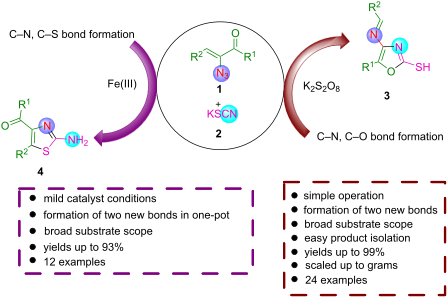
- in 3d proceeded smoothly with acetyl chloride in the presence of sodium hydride to afford 5 in good yield. The structure of the product and the site of acetylation was confirmed by X-ray crystallography of a single crystal of 5 [71] (Figure 3). The methylated and benzylated derivatives 6 and 7 were




Syntheses of spliceostatins and thailanstatins: a review
Beilstein J. Org. Chem. 2020, 16, 1991–2006, doi:10.3762/bjoc.16.166

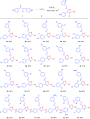
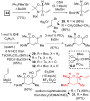
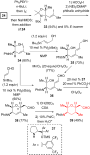
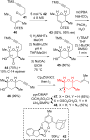
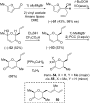
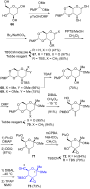
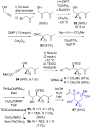
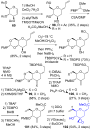
- -tert-butylsilylene protecting group and the selective arylsulfonylation of the primary alcohol was effected with the bulky 2,4,6-triisopropylsulfonyl chloride, which upon reduction with aluminum hydride, followed by the oxidation of the remaining alcohol group gave the dihydropyran-3-one 65. In a








Regiodivergent synthesis of functionalized pyrimidines and imidazoles through phenacyl azides in deep eutectic solvents
Beilstein J. Org. Chem. 2020, 16, 1915–1923, doi:10.3762/bjoc.16.158
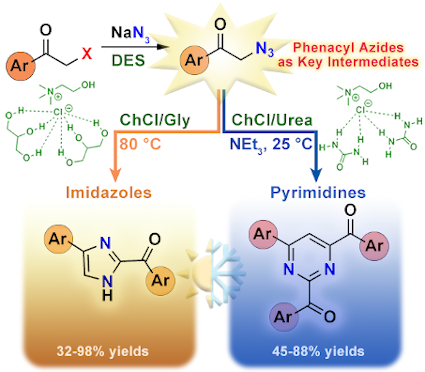
- reactions of α-azido ketones with tributyltin hydride [31], or (e) by a modified Radziszewski’s synthesis when using phenylglyoxals, benzaldeydes, and ammonium acetate as ammonia source in acetic acid or methylene chloride or N,N-dimethylformamide as the solvent [32], there are no adequate studies covering


Stereoselective Biginelli-like reaction catalyzed by a chiral phosphoric acid bearing two hydroxy groups
Beilstein J. Org. Chem. 2020, 16, 1875–1880, doi:10.3762/bjoc.16.155
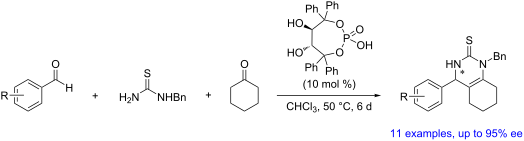
- ), sodium hydride (0.105 g, 4.2 mmol), and dried THF (16 mL). The mixture was stirred at rt for 2 h, and then methyl iodide (0.61 g, 4.3 mmol) was added and the mixture stirred at rt for 6 h. Then, distilled water (12 mL) and diethyl ether (15 mL) were added, the organic phase was separated, dried, and


When metal-catalyzed C–H functionalization meets visible-light photocatalysis
Beilstein J. Org. Chem. 2020, 16, 1754–1804, doi:10.3762/bjoc.16.147

- metal catalyst X2M into an aromatic C–H bond of a substrate (generally facilitated by the presence of a directing group (DG)), delivers a metal–aryl complex. Coordination and subsequent insertion of an alkene into the M–aryl bond then provides the desired coupling product after β-hydride elimination
- , together with a metal hydride or a low-valent metal complex. Hence, in order to reoxidize the metal catalyst, excess of an external oxidant, such as Cu(II) or Ag(I) salts, was frequently used. On the other hand, photoredox catalysis has been mainly employed for electron-transfer reactions and, remarkably
- towards various functional groups such as aldehydes, ketones, and esters. Of note is that in some cases, partial hydrogenation of the double bond was observed, resulting probably from the generation of a ruthenium–hydride complex. However, this consecutive reactivity and the ratio between the olefin and


Facile synthesis of 7-alkyl-1,2,3,4-tetrahydro-1,8-naphthyridines as arginine mimetics using a Horner–Wadsworth–Emmons-based approach
Beilstein J. Org. Chem. 2020, 16, 1617–1626, doi:10.3762/bjoc.16.134
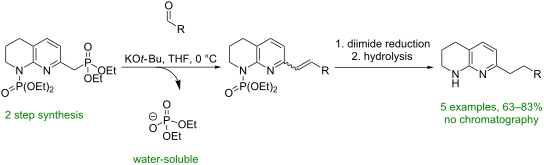
- (1.5–2.4 equiv) and proceeded in <1 h. Sodium hydride was investigated as a heterogeneous alternative to potassium tert-butoxide, although a lower isolated yield of the final amine was obtained. All amines were formed in high NMR and LC–MS purity without the need for purification by column

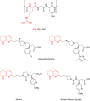


Synthesis of new dihydroberberine and tetrahydroberberine analogues and evaluation of their antiproliferative activity on NCI-H1975 cells
Beilstein J. Org. Chem. 2020, 16, 1606–1616, doi:10.3762/bjoc.16.133
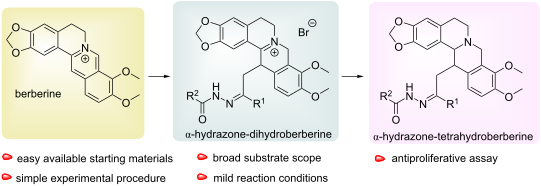
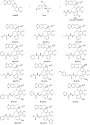
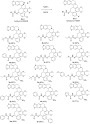
- interest, the hydrazono-DHBERs 2a–n were further treated with 2.0 equivalents of sodium boron hydride at room temperature in methanol. The reaction furnishes the corresponding hydrazono-THBERs 3a–n in good yields (77–96%, Scheme 3). It is noteworthy that in these conditions, only the iminium moiety is




Photoredox-catalyzed silyldifluoromethylation of silyl enol ethers
Beilstein J. Org. Chem. 2020, 16, 1550–1553, doi:10.3762/bjoc.16.126

- silane is very sensitive to Lewis bases and accordingly it was used as a precursor of difluorocarbene, which can react with enol ethers [19][20] (Scheme 1). We showed that this silane could be involved in the radical chain hydrofluoroalkylation of electron-deficient alkenes, using a boron hydride as a


Recent synthesis of thietanes
Beilstein J. Org. Chem. 2020, 16, 1357–1410, doi:10.3762/bjoc.16.116
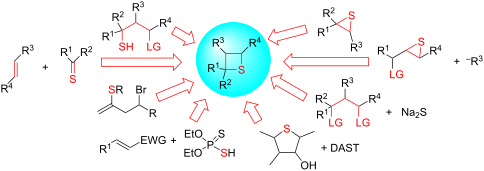
- [22] (Scheme 93). The reaction mechanism was proposed as following. The treatment of trimethyloxosulfonium iodide (424) with sodium hydride generated dimethyloxosulfonium methylide (426) as the one carbon-containing nucleophile with DMSO (379) as a good leaving group. The nucleophilic attack of 426 on














Synthesis of 3-substituted isoxazolidin-4-ols using hydroboration–oxidation reactions of 4,5-unsubstituted 2,3-dihydroisoxazoles
Beilstein J. Org. Chem. 2020, 16, 1313–1319, doi:10.3762/bjoc.16.112
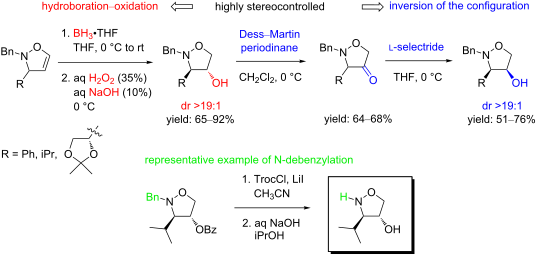
- readily obtained through the reductive cleavage of benzoylated isoxazolidines, employing the Lewis acid-catalyzed SN reaction with triethylsilane as the hydride source (Scheme 1). For this reason, the benzoates 6a and 6b were readily prepared from the corresponding 2,3-dihydroisoxazoles 5a and 5b


Synthesis of pyrrolidinedione-fused hexahydropyrrolo[2,1-a]isoquinolines via three-component [3 + 2] cycloaddition followed by one-pot N-allylation and intramolecular Heck reactions
Beilstein J. Org. Chem. 2020, 16, 1225–1233, doi:10.3762/bjoc.16.106
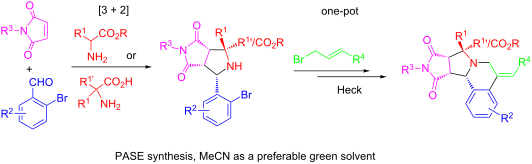
- oxidative addition of the Pd(0) species to alkene intermediate 8a leads to Pd-complex I. Intramolecular coordination of Pd-complex I with the C–C double bond forms complex II which is followed by the syn insertion of alkene to give complex III [50][51]. Subsequent β-hydride elimination of III gives complex





