


Search results
Search for "stereochemistry" in Full Text gives 614 result(s) in Beilstein Journal of Organic Chemistry. Showing first 200.
Synthesis and bioactivity of pyrrole-conjugated phosphopeptides
- Qiuxin Zhang,
- Weiyi Tan and
- Bing Xu
Beilstein J. Org. Chem. 2022, 18, 159–166, doi:10.3762/bjoc.18.17
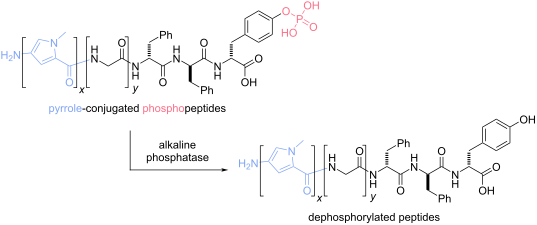
- spacer in the molecular structure. As the enantiomers of 2g and 2h, respectively, 3a and 3b offer an opportunity to assess the effects of stereochemistry of the pyrrole-capped phosphopeptides. Substituting the ᴅ-phosphotyrosine (py) in 2g and 2h, by ᴅ-phosphoserine (ps), affords 4a and 4b, respectively

Graphical Abstract

Scheme 1: Molecular structures of the parent phosphopeptide 1 and its pyrrole-conjugated analogs 2–14.

Figure 1: Cell viability of HeLa cells treated with 200 μM of each compound for 24 h.

Figure 2: Cell viability of HeLa cells treated with 20 μM, 50 μM, 100 μM, 200 μM and 400 μM of 1, 4a and 6b f...
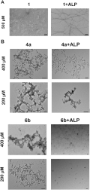
Figure 3: A) TEM images of 1 before and after addition of ALP (0.5 U/mL) in PBS buffer (pH 7.4). Scale bar is...
Chemical and chemoenzymatic routes to bridged homoarabinofuranosylpyrimidines: Bicyclic AZT analogues
- Sandeep Kumar,
- Jyotirmoy Maity,
- Banty Kumar,
- Sumit Kumar and
- Ashok K. Prasad
Beilstein J. Org. Chem. 2022, 18, 95–101, doi:10.3762/bjoc.18.10
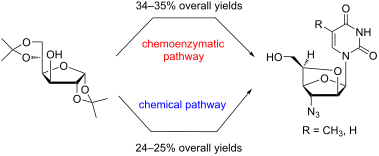
- % yields, respectively (Scheme 5). The overall yields of the synthesis of nucleosides 9a and 9b starting from diacetone ᴅ-glucofuranose following the classical chemical pathway were found to be 24.2 and 24.4%, respectively. The stereochemistry at the C5′ carbon in bicyclic homonucleosides 9a,b was
- ′ proton resonating at δ 4.15 with the C6 proton of the nucleobase resonating at δ 7.67 (see Supporting Information File 1). Based on this analysis of the spatial arrangement of the groups attached at the C5′ chiral centre, the stereochemistry of this carbon centre was assigned to be (R) for both of these
- nucleosides. The study of NOESY NMR spectral data of compound 9a enabled us to assign the stereochemistry at the C5′ chiral centre in the compound as (R). Following this trend, we assigned the same stereochemistry for the C5′ centre of nucleoside 9b. Interestingly, we noticed that the stereochemistry of the

Graphical Abstract

Figure 1: Structure of AZT and representative related bicyclic nucleosides.

Scheme 1: Retrosynthetic routes for the synthesis of (5′R)-3′-azido-3′-deoxy-2′-O,5′-C-bridged-β-ᴅ-homoarabin...

Scheme 2: Synthesis of 3′-azido-3′-deoxy-β-ᴅ-allofuranosylthymine (14a) and -uracil (14b).

Scheme 3: Biocatalytic acetylation of the primary hydroxy group of nucleosides 14a,b.

Scheme 4: Synthesis of (5'R)-3′-azido-3′-deoxy-2′-O,5′-C-bridged-β-ᴅ-homoarabinofuranosyl nucleosides 9a,b.

Scheme 5: Chemical synthesis of nucleosides 9a,b starting from diacetone ᴅ-glucofuranose.
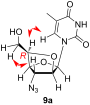
Figure 2: Structure elucidation of (5′R)-3′-azido-3′-deoxy-2′-O,5′-C-bridged-β-ᴅ-homoarabinofuranosylthymine (...

Scheme 6: a) Plausible mechanism for the synthesis of (5′R)-3′-azido-3′-deoxy-2′-O,5′-C-bridged-β-ᴅ-homoarabi...
Efficient and regioselective synthesis of dihydroxy-substituted 2-aminocyclooctane-1-carboxylic acid and its bicyclic derivatives
- İlknur Polat,
- Selçuk Eşsiz,
- Uğur Bozkaya and
- Emine Salamci
Beilstein J. Org. Chem. 2022, 18, 77–85, doi:10.3762/bjoc.18.7
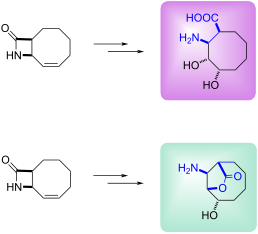
- -functional theory (DFT) computations were used to explain the reaction mechanism for the ring opening of the epoxide and the formation of five-membered lactones. The stereochemistry of the synthesized compounds was determined by 1D and 2D NMR spectroscopy. The configuration of methyl 6-hydroxy-9-oxo-8

Graphical Abstract

Figure 1: Examples of natural products containing β-amino acids.

Scheme 1: Synthesis of cyclic β-amino acid 6.

Scheme 2: Epoxidation of Boc-protected amino ester 4 and hydrolysis of epoxide 7 with HCl(g)–MeOH.

Scheme 3: Reaction of epoxide 7 with NaHSO4 in methylene chloride/MeOH.

Figure 2: The X-ray crystal structure of 10.

Scheme 4: Synthesis of cyclic β-amino acid derivative 8.

Scheme 5: Suggested mechanism for the reaction of epoxide 7 with NaHSO4.

Figure 3: Solvent-corrected relative free energy profile at 298.15 K for the reaction mechanism of 14 shown i...

Figure 4: Solvent-corrected relative free energy profile at 298.15 K for the reaction mechanism of 17 shown i...

Figure 5: The optimized geometries of the conformers 7a and 7b with selected interatomic distances at the B3L...
1,2-Naphthoquinone-4-sulfonic acid salts in organic synthesis
- Ruan Carlos B. Ribeiro,
- Patricia G. Ferreira,
- Amanda de A. Borges,
- Luana da S. M. Forezi,
- Fernando de Carvalho da Silva and
- Vitor F. Ferreira
Beilstein J. Org. Chem. 2022, 18, 53–69, doi:10.3762/bjoc.18.5
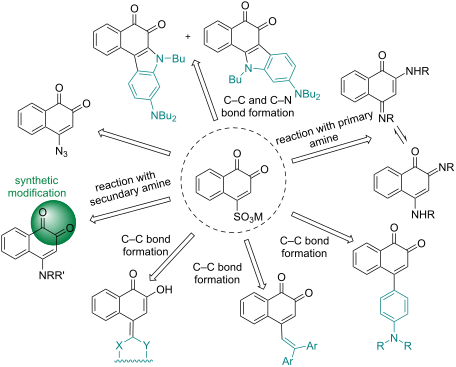
- -hydroxynaphthoquinomethanes [110]. These reactions were carried out by method A described above, and the stereochemistry was attributed to the E-isomer (Scheme 19). Conclusion Compounds containing the 1,2-naphthoquinone scaffold represent a class of natural and synthetic substances with important biological activities and

Graphical Abstract

Figure 1: Naphthoquinones are commonly used in organic synthesis.

Figure 2: Some important natural and synthetic naphthoquinones.

Scheme 1: Synthetic studies of BNQs and reactions with amines.

Scheme 2: Methods described for the synthesis of β-NQS.

Figure 3: Drugs detected using β-NQSNa.

Scheme 3: Reactions between β-NQS and amines.

Scheme 4: Isomerization of 4-arylamino-1,2-naphthoquinones.

Scheme 5: Synthesis of unsymmetrical 2-amino-4-imino compounds.

Scheme 6: Synthesis of bis(isoxazolyl)naphthoquinones from β-NQS.

Scheme 7: The reaction of β-NQS with 30 followed by cycle condensation.

Scheme 8: Synthesis of 4-(2-amino-5-selenothiazoles)-1,2-naphthoquinones.

Scheme 9: Synthesis of amino- and phenoxy-1,2-naphthoquinones.

Scheme 10: Synthesis of 4-semicarbazide-1,2-naphthoquinone.

Scheme 11: Reactions of 4-azido-1,2-naphthoquinone.

Figure 4: Modifications that can be easily carried out from the products of β-NQS 8.

Scheme 12: Derivatives of 1,2-naphthoquinones obtained from β-NQS.

Scheme 13: Oximes as well as 4-amino- and 4-phenoxy-1,2-naphthoquinone as potential anti-inflammatory agents.

Scheme 14: Synthesis of triazoles from β-NQS.

Scheme 15: Synthesis of naphtho[1,2-d]oxazoles from β-NQS.

Scheme 16: A) Arylation and vinylation of β-NQS catalyzed by Ni(II) salts. B) Transformation of the 1,2-dicarb...

Scheme 17: Benzo[a]carbazole and benzo[c]carbazoles fused with 1,2-naphthoquinone.

Scheme 18: Synthesis of 1,2-naphthoquinones having a C=C bond from β-NQS. Method A: NaOH, EtOH/H2O, 40 °C, 2 h...

Scheme 19: C=C bond formation from β-NQS and substituted acetonitriles.
Total synthesis of the O-antigen repeating unit of Providencia stuartii O49 serotype through linear and one-pot assemblies
- Tanmoy Halder and
- Somnath Yadav
Beilstein J. Org. Chem. 2021, 17, 2915–2921, doi:10.3762/bjoc.17.199
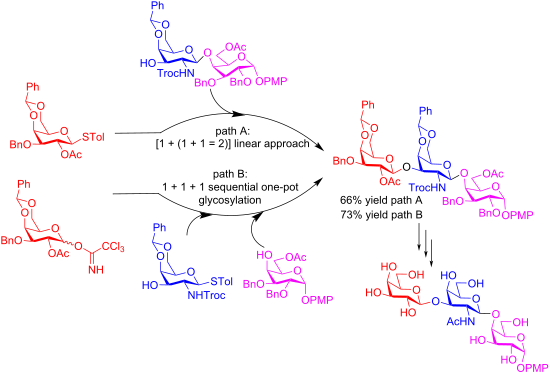
- -methoxyphenyl glycoside form 1 was synthesized through a linear [1 + (1 + 1 = 2)] strategy. The target trisaccharide was synthesized as its p-methoxyphenyl glycoside that offered the unaltered stereochemistry of the sugar at the reducing end to mimic the glycosidic linkage of the natural polysaccharide. The

Graphical Abstract

Figure 1: Structure of the repeating unit of the lipopolysaccharide of Providencia stuartii O49 serotype.

Scheme 1: Retrosynthetic analysis for the synthesis of the target trisaccharide 1.

Scheme 2: Synthesis of the monosaccharide building blocks 3, 6, and 7.

Scheme 3: Linear synthesis of trisaccharide derivative 2.

Scheme 4: Synthesis of ᴅ-galactose donor 12.

Scheme 5: One-pot synthesis of trisaccharide derivative 2.

Scheme 6: Synthesis of trisaccharide derivative 1.
Highly stereocontrolled total synthesis of racemic codonopsinol B through isoxazolidine-4,5-diol vinylation
- Lukáš Ďurina,
- Anna Ďurinová,
- František Trejtnar,
- Ľuboš Janotka,
- Lucia Messingerová,
- Jana Doháňošová,
- Ján Moncol and
- Róbert Fischer
Beilstein J. Org. Chem. 2021, 17, 2781–2786, doi:10.3762/bjoc.17.188
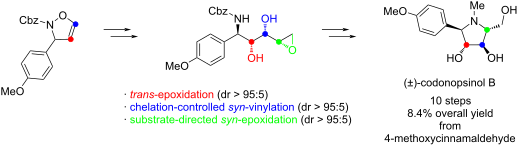
- desired epoxide 5 in an acceptable 70% yield with excellent stereoselectivity as the sole syn isomer (dr > 95:5). It is worth noting that a small quantity of pyridine was added to prevent unwanted acid-catalyzed epoxide hydrolysis [31]. The stereochemistry of 5 was assigned later after pyrrolidine ring

Graphical Abstract

Figure 1: (−)-Codonopsinol B (1) and its N-nor-methyl analogue 2; known inhibition activities against α-gluco...

Scheme 1: Synthetic approach towards (±)-codonopsinol B (1) and its N-nor-methyl analogue 2.

Scheme 2: Synthesis of isoxazolidine-4,5-diol (±)-3. Reagents and conditions: (a) ᴅʟ-proline, CHCl3, rt, 48 h...

Scheme 3: Synthesis of final pyrrolidines (±)-1 and (±)-2. Reagents and conditions: (a) vinyl-MgBr, CeCl3, TH...

Figure 2: Molecular structure of N-Cbz-protected pyrrolidine 12 confirmed by single-crystal X-ray crystallogr...
Synthetic strategies toward 1,3-oxathiolane nucleoside analogues
- Umesh P. Aher,
- Dhananjai Srivastava,
- Girij P. Singh and
- Jayashree B. S
Beilstein J. Org. Chem. 2021, 17, 2680–2715, doi:10.3762/bjoc.17.182
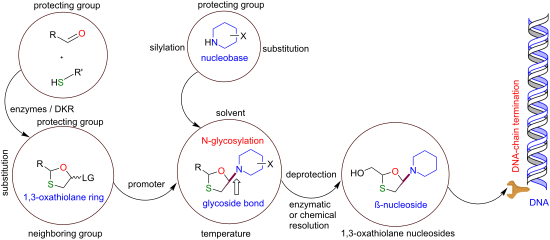
- nucleic acid components. Therefore, it was assumed until recently that effective inhibition of the metabolic enzyme is only possible by ᴅ-nucleoside analogues, which have the stereochemistry of natural nucleosides. This was proved to be untrue when the antiviral activity of 1,3-oxathiolane nucleosides
- nucleoside analogues. The enantiomerically pure 1,3-oxathiolane core has been an important building block in precursors that result in a defined stereochemistry of the resultant nucleoside product after N-glycosylation. Dynamic kinetic resolution (DKR) is a processes that interconverts a racemic mixture into
- in the presence of levamisole, which gave an improved overall yield of 52 of up to 67%. In this approach, the required stereochemistry of the thioacetal compound was created, so that the coupling with a nucleobase in a further step determines the stereochemistry of the attaching nucleobase at the

Graphical Abstract

Figure 1: Representative modified 1,3-oxathiolane nucleoside analogues.

Figure 2: Mechanism of antiviral action of 1,3-oxathiolane nucleosides, 3TC (1) and FTC (2), as chain termina...

Figure 3: Synthetic strategies for the construction of the 1,3-oxathiolane sugar ring.

Scheme 1: Synthesis of 4 from benzoyloxyacetaldehyde (3a) and 2-mercapto-substituted dimethyl acetal 3na.

Scheme 2: Synthesis of 8 from protected glycolic aldehyde 3b and 2-mercaptoacetic acid (3o).

Scheme 3: Synthesis of 20 from ᴅ-mannose (3c).

Scheme 4: Synthesis of 20 from 1,6-thioanhydro-ᴅ-galactose (3d).

Scheme 5: Synthesis of 8 from 2-(tert-butyldiphenylsilyloxy)methyl-5-oxo-1,2-oxathiolane (3m).

Scheme 6: Synthesis of 20a from ʟ-gulose derivative 3f.

Scheme 7: Synthesis of 31 from (+)-thiolactic acid 3p and 2-benzoyloxyacetaldehyde (3a).

Scheme 8: Synthesis of 35a from 1,4-dithiane-2,5-diol (3q) and glyoxylic acid (3g) hydrate.

Scheme 9: Synthetic routes toward 41 through Pummerer reaction from methyl 2-mercaptoacetate (3j) and bromoac...

Scheme 10: Strategy for the synthesis of 2,5-substituted 1,3-oxathiolane 41a using 4-nitrobenzyl glyoxylate an...

Scheme 11: Synthesis of 44 by a resolution method using Mucor miehei lipase.

Scheme 12: Synthesis of 45 from benzoyloxyacetaldehyde (3a) and 2-mercaptoacetaldehyde bis(2-methoxyethyl) ace...

Scheme 13: Synthesis of 46 from 2-mercaptoacetaldehyde bis(2-methoxyethyl) acetal (3nc) and diethyl 3-phosphon...

Scheme 14: Synthesis of 48 from 1,3-dihydroxyacetone dimer 3l.

Scheme 15: Approach toward 52 from protected alkene 3rb and lactic acid derivative 51 developed by Snead et al....

Scheme 16: Recent approach toward 56a developed by Kashinath et al.

Scheme 17: Synthesis of 56a from ʟ-menthyl glyoxylate (3h) hydrate by DKR.

Scheme 18: Possible mechanism with catalytic TEA for rapid interconversion of isomers.

Scheme 19: Synthesis of 35a by a classical resolution method through norephedrine salt 58 formation.

Scheme 20: Synthesis of 63 via [1,2]-Brook rearrangement from silyl glyoxylate 61 and thiol 3nb.

Scheme 21: Combined use of STS and CAL-B as catalysts to synthesize an enantiopure oxathiolane precursor 65.

Scheme 22: Synthesis of 1 and 1a from glycolaldehyde dimer 64 and 1,4-dithiane-2,5-diol (3q) using STS and CAL...

Scheme 23: Synthesis of 68 by using Klebsiella oxytoca.

Scheme 24: Synthesis of 71 and 72 using Trichosporon taibachii lipase and kinetic resolution.

Scheme 25: Synthesis of 1,3-oxathiolan-5-ones 77 and 78 via dynamic covalent kinetic resolution.

Figure 4: Pathway for glycosidic bond formation.

Scheme 26: First synthesis of (±)-BCH-189 (1c) by Belleau et al.

Scheme 27: Enantioselective synthesis of 3TC (1).

Scheme 28: Synthesis of cis-diastereomer 3TC (1) from oxathiolane propionate 44.

Scheme 29: Synthesis of (±)-BCH-189 (1c) via SnCl4-mediated N-glycosylation of 8.

Scheme 30: Synthesis of (+)-BCH-189 (1a) via TMSOTf-mediated N-glycosylation of 20.

Scheme 31: Synthesis of 3TC (1) from oxathiolane precursor 20a.

Scheme 32: Synthesis of 83 via N-glycosylation of 20 with pyrimidine bases.

Scheme 33: Synthesis of 85 via N-glycosylation of 20 with purine bases.

Scheme 34: Synthesis of 86 and 87 via N-glycosylation using TMSOTf and pyrimidines.

Scheme 35: Synthesis of 90 and 91 via N-glycosylation using TMSOTf and purines.

Scheme 36: Synthesis of 3TC (1) via TMSI-mediated N-glycosylation.

Scheme 37: Stereoselective N-glycosylation for the synthesis of 1 by anchimeric assistance of a chiral auxilia...

Scheme 38: Whitehead and co-workers’ approach for the synthesis of 1 via direct N-glycosylation without an act...

Scheme 39: ZrCl4-mediated stereoselective N-glycosylation.

Scheme 40: Plausible reaction mechanism for stereoselective N-glycosylation using ZrCl4.

Scheme 41: Synthesis of enantiomerically pure oxathiolane nucleosides 1 and 2.

Scheme 42: Synthesis of tetrazole analogues of 1,3-oxathiolane nucleosides 97.

Scheme 43: Synthetic approach toward 99 from 1,3-oxathiolane 45 by Camplo et al.

Scheme 44: Synthesis of 100 from oxathiolane phosphonate analogue 46.

Scheme 45: Synthetic approach toward 102 and the corresponding cyclic thianucleoside monophosphate 102a by Cha...

Scheme 46: Synthesis of emtricitabine (2) from 1,4-dithiane-2,5-diol (3q) and glyoxylic acid (3g).

Scheme 47: Synthesis of 1 and 2, respectively, from 56a–d using iodine-mediated N-glycosylation.

Scheme 48: Plausible mechanism for silane- and I2-mediated N-glycosylation.

Scheme 49: Pyridinium triflate-mediated N-glycosylation of 35a.

Scheme 50: Possible pathway for stereoselective N-glycosylation via in situ chelation with a metal ligand.

Scheme 51: Synthesis of novel 1,3-oxathiolane nucleoside 108 from oxathiolane precursor 8 and 3-benzyloxy-2-me...

Scheme 52: Synthesis of 110 using T-705 as a nucleobase and 1,3-oxathiolane derivative 8 via N-glycosylation.

Scheme 53: Synthesis of 1 using an asymmetric leaving group and N-glycosylation with bromine and mesitylene.

Scheme 54: Cytidine deaminase for enzymatic separation of 1c.

Scheme 55: Enzymatic resolution of the monophosphate derivative 116 for the synthesis of (−)-BCH-189 (1) and (...

Scheme 56: Enantioselective resolution by PLE-mediated hydrolysis to obtain FTC (2).

Scheme 57: (+)-Menthyl chloroformate as a resolving agent to separate a racemic mixture 120.

Scheme 58: Separation of racemic mixture 1c by cocrystal 123 formation with (S)-(−)-BINOL.
Ligand-dependent stereoselective Suzuki–Miyaura cross-coupling reactions of β-enamido triflates
- Tomáš Chvojka,
- Athanasios Markos,
- Svatava Voltrová,
- Radek Pohl and
- Petr Beier
Beilstein J. Org. Chem. 2021, 17, 2657–2662, doi:10.3762/bjoc.17.179
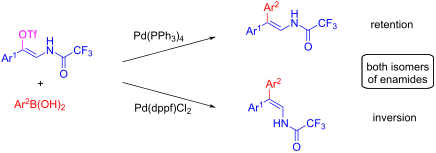
- gel. A moderate loss of stereochemistry was observed only in cases of bulky ortho-substitution of either arylboronic acid or vinyl triflate (2ad, 2da, and 2dd). Alkylboronic acids were found to be unreactive even after prolonged reaction time (1a with n-hexylboronic acid, 60 h, rt). Next, conditions
- -trifluoromethylphenyl group which gave enamides 3da (2da/3da, 20:80) and 3dd (2dd/3dd, <1:99). It is worth mentioning that the reaction of vinyl triflate 1c with 3-methoxyphenylboronic acid led to full decomposition of the starting material. The stereochemistry of the double bond in compounds 2 and 3 was determined by

Graphical Abstract

Scheme 1: A: Synthesis of (Z)-β-enamido triflates and subsequent stereoselective cross-coupling reactions. B:...
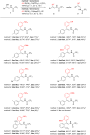
Scheme 2: Substrate scope of the Suzuki coupling leading to enamides 2 and 3. aRatio determined by 19F NMR; b...

Scheme 3: Proposed mechanisms for the formed Suzuki coupling retention products 2 and inversion products 3.
Solvent-free synthesis of enantioenriched β-silyl nitroalkanes under organocatalytic conditions
- Akhil K. Dubey and
- Raghunath Chowdhury
Beilstein J. Org. Chem. 2021, 17, 2642–2649, doi:10.3762/bjoc.17.177
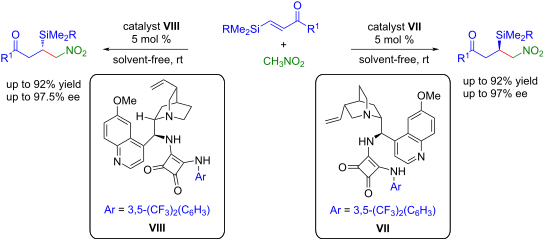
- catalyst VIII led to ent-4 in 25% yield and 95% ee (Scheme 4). This observation confirmed that the presence of the β-silyl group in the enones played a key role in the high reactivity under the optimized reaction conditions. The stereochemistry of the silicon-substituted chiral center in compound ent-3k

Graphical Abstract
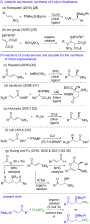
Scheme 1: Selected methods for the synthesis of enantioenriched β-silyl nitroalkanes, synthesis of chiral org...

Scheme 2: Scope of substrates. Reaction conditions: 1 (0.2 mmol), 2 (0.5 mmol), catalyst VII (0.01 mmol, 5 mo...

Scheme 3: Synthesis of ent-3. Reaction conditions: 1 (0.2 mmol), 2 (0.5 mmol), catalyst VIII (0.01 mmol, 5 mo...

Scheme 4: Organocatalytic 1,4-conjuagte addition of nitromethane (2) to enone 3o.

Figure 1: Single crystal X-ray structure of ent-3k (CCDC 2097263).

Scheme 5: Preparative scale synthesis of 3c and ent-3d.
Synthesis of new bile acid-fused tetrazoles using the Schmidt reaction
- Dušan Đ. Škorić,
- Olivera R. Klisurić,
- Dimitar S. Jakimov,
- Marija N. Sakač and
- János J. Csanádi
Beilstein J. Org. Chem. 2021, 17, 2611–2620, doi:10.3762/bjoc.17.174
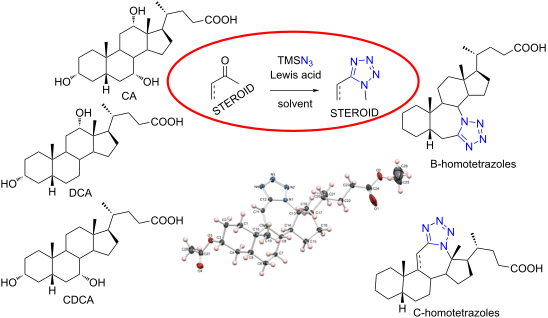
- , TMSOTf proved to be the most efficient. High yields of the desired tetrazole compounds with no lactam byproduct were obtained. The molecular structure and stereochemistry of newly synthesized tetrazoles was established by detailed NMR analysis. For compounds 13 and 14, the structure was established by

Graphical Abstract

Figure 1: Structures of the steroidal tetrazoles that showed anticancer potential in vitro.

Figure 2: Mechanism of the Schmidt reaction.

Scheme 1: Synthesis of 12-oxo intermediates. Reagents and conditions: a) EtOAc, pTsOH, reflux, 14 h (81%); b)...

Scheme 2: Synthesis of 7-oxo intermediate 11 from chenodeoxycholic acid (9). Reagents and conditions: a) EtOA...

Figure 3: Mercury [51] drawing of the molecular structures of compounds 13 and 14, with labelling of nonhydrogen ...

Figure 4: Dose dependence of the cytotoxicity of tested compounds on treated cell lines. All compounds were t...
α-Ketol and α-iminol rearrangements in synthetic organic and biosynthetic reactions
- Scott Benz and
- Andrew S. Murkin
Beilstein J. Org. Chem. 2021, 17, 2570–2584, doi:10.3762/bjoc.17.172
- example of the use of conjugation to drive an α-ketol rearrangement. This study elegantly illustrates the synthetic power of α-ketol rearrangements, whose suprafacial migration ensured that the α-ketol moiety present in the target product 31 was installed with correct stereochemistry. Taking inspiration

Graphical Abstract

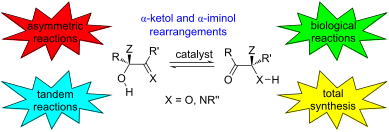
Figure 1: Generalized α-ketol or α-iminol rearrangement.

Figure 2: Nickel(II)-catalyzed enantioselective rearrangement of ketol 3 to form the ring-expanded and chiral...

Figure 3: Enantioselective ring expansion of β-hydroxy-α-dicarbonyl 6 catalyzed by a chiral copper-bisoxazoli...

Figure 4: Enantioselective rearrangement of ketols 9 and 12 and hydroxyaldimine 14 catalyzed by Al(III) or Sc...

Figure 5: Asymmetric rearrangement of α,α-dialkyl-α-siloxyaldehydes 16 to α-siloxyketones 17 catalyzed by chi...

Figure 6: BF3-promoted diastereospecific rearrangement of α-ketol 21 to difluoroalkoxyborane 22.

Figure 7: In the presence of a gold catalyst and water in 1,4-dioxane, 1-alkynylbutanol derivatives undergo t...

Figure 8: The diastereospecific α-ketol rearrangement of 32 to 33, part of the total synthesis of periconiano...

Figure 9: Two α-ketol rearrangements, one catalyzed by silica gel on 38 and the other by NaOMe on both 38 and ...

Figure 10: α-Ketol rearrangement of triumphalone (41) to isotriumphalone (42) via ring contraction.

Figure 11: Tandem reaction of strophasterol A synthetic intermediate 43 to 44 through a vinylogous α-ketol rea...

Figure 12: Tandem reaction consisting of a Diels–Alder cycloaddition followed by an α-ketol rearrangement, par...

Figure 13: Single-pot reaction consisting of Claisen and α-ketol rearrangements, part of the total synthesis o...

Figure 14: Enzyme-catalyzed α-ketol rearrangements. a) Ketol-acid reductoisomerase (KAR) catalyzes the rearran...

Figure 15: The conversion of asperfloroid (73) to asperflotone (72), featuring the ring-expanding α-ketol rear...
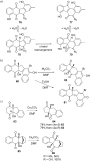
Figure 16: Hypothetical interconversion of natural products prekinamycin (76) and isoprekinamycin (77) and che...

Figure 17: Proposed biosynthetic pathway converting acylphloroglucinol (87) to isolated elodeoidins A–H 92–96....

Figure 18: α-Iminol rearrangements catalyzed by VANOL Zr (99). The rearrangement can be conducted with preform...

Figure 19: α-Iminol rearrangements catalyzed by silica gel and montmorillonite K 10. a) For 102a (102 with R =...

Figure 20: Synthesis of tryptamines 110 via a ring-contracting α‑iminol rearrangement. A mechanism for the fin...

Figure 21: Tandem synthesis of functionalized α-amino cyclopentanones 119 from heteroarenes 115 and cyclobutan...

Figure 22: Four eburnane-type alkaloid natural products 122–125 were synthesized from common intermediate 127,...
Synthesis of 5-arylacetylenyl-1,2,4-oxadiazoles and their transformations under superelectrophilic activation conditions
- Andrey I. Puzanov,
- Dmitry S. Ryabukhin,
- Anna S. Zalivatskaya,
- Dmitriy N. Zakusilo,
- Darya S. Mikson,
- Irina A. Boyarskaya and
- Aleksander V. Vasilyev
Beilstein J. Org. Chem. 2021, 17, 2417–2424, doi:10.3762/bjoc.17.158
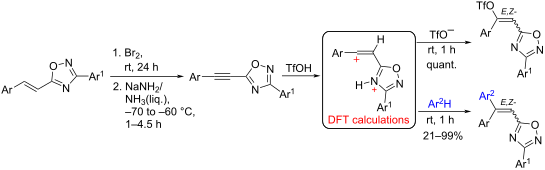
- vinyl triflates 4a–c with a predominant formation of Z-isomers as product of an anti-addition of TfOH to the acetylene bond (Scheme 3). E/Z-Stereochemistry of compounds 4a–c was determined by H,F-NOESY correlation between vinyl proton (>C=CH–) and the CF3 group from the TfO substituent (see Supporting

Graphical Abstract

Scheme 1: Synthesis of 5–arylethynyl-3-aryl-1,2,4-oxadiazoles 3a–e.

Scheme 2: Plausible reaction mechanism for transformations of 5-acetylenyl-1,2,4-oxadiazoles 3 in Brønsted su...

Scheme 3: Quantitative formation of E/Z-vinyl triflates 4a–c from 5-acetylenyl-1,2,4-oxadiazoles 3a–c in TfOH....

Scheme 4: Formation of compound 4d from 5-acetylenyl-1,2,4-oxadiazole 3a in H2SO4.
Scheme 5: Hydroarylation of 5-acetylenyl-1,2,4-oxadiazole 3a–d by arenes in TfOH leading to compounds E/Z-5a–g...
Strategies for the synthesis of brevipolides
- Yudhi D. Kurniawan and
- A'liyatur Rosyidah
Beilstein J. Org. Chem. 2021, 17, 2399–2416, doi:10.3762/bjoc.17.157
- the desired stereochemistry inversion at the C5’ carbon. Treatment with excess NaH furnished a terminal epoxide derivative which after the sequential treatment with benzyl bromide and reduction with LiAlH4 afforded alcohol 102 (81% yield from 95). The free secondary alcohol was then protected as TBS
- derivative in 80% yield. The TBS protecting group was removed under acidic conditions to give secondary alcohol 93 (85%). Afterwards, the 5,6-dihydro-α-pyrone functionality was constructed by applying a cross-metathesis protocol and the stereochemistry at C6’ was inverted with (E)-p-methoxycinnamic acid (17
- ) via a Mitsunobu esterification. The resulting product 106 contained all the correct stereochemistry, which after removal of the benzyl protection, provided the target molecule brevipolide M (13) as a colorless oil. Sabitha’s strategy to brevipolide M and N (13, 14) Following the previous success

Graphical Abstract

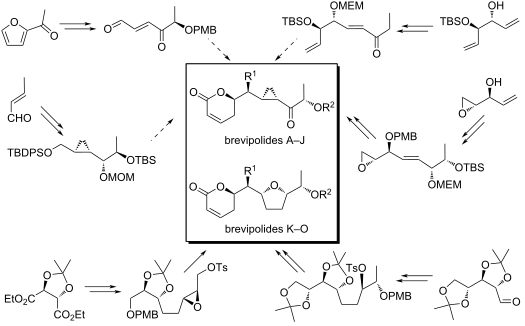
Figure 1: Structures of brevipolides A–O (1 – 15).

Scheme 1: Retrosynthetic analysis of brevipolide H (8) by Kumaraswamy.

Scheme 2: Attempt to synthesize brevipolide H (8) by Kumaraswamy. (R,R)-Noyori cat. = RuCl[N-(tosyl)-1,2-diph...

Scheme 3: Attempt to synthesize brevipolide H (8) by Kumaraswamy (continued).

Scheme 4: Retrosynthetic analysis of brevipolide H (8) by Hou.

Scheme 5: Synthesis ent-brevipolide H (ent-8) by Hou.

Scheme 6: Retrosynthetic analysis of brevipolide H (8) by Mohapatra.

Scheme 7: Attempt to synthesize brevipolide H (8) by Mohapatra.

Scheme 8: Attempt to synthesize brevipolide H (8) by Mohapatra (continued). (+)-(IPC)2-BCl = (+)-B-chloro-dii...

Scheme 9: Retrosynthetic analysis of brevipolide H (8) by Hou.

Scheme 10: Synthesis of brevipolide H (8) by Hou.

Scheme 11: Retrosynthetic analysis of brevipolide M (13) by Sabitha.

Scheme 12: Synthesis of brevipolide M (13) by Sabitha.

Scheme 13: Retrosynthetic analysis of brevipolides M (13) and N (14) by Sabitha.

Scheme 14: Synthesis of brevipolides M (13) and N (14) by Sabitha.
Advances in mercury(II)-salt-mediated cyclization reactions of unsaturated bonds
- Sumana Mandal,
- Raju D. Chaudhari and
- Goutam Biswas
Beilstein J. Org. Chem. 2021, 17, 2348–2376, doi:10.3762/bjoc.17.153
- selectivity of α-stereochemistry was primarily due to the strong directing effect of the neighboring benzyl ether group with the Hg(OAc)2. When cyclic mercuric halide 8 was treated with NaBH4 and oxygen (O2) in DMF oxidative demercuration takes place to give alcohol 10 in quantitative yield (Scheme 4). The
- (II)-salt-catalyzed rearrangement to produce 2,3-disubstituted-2,3-dihydropyranone derivatives 136. The stereochemistry of substituents at 2,3-positions of 2,3-dihydropyranone 136 was controlled by cis- and trans-configuration of the epoxide of starting materials (Scheme 40) [96]. Several unsaturated
- catalytic Hg(II)-salt-induced cyclization. Yamamoto and co-workers published the intermolecular cyclization of alkynyl-carboxylic acid 153 to produce 6-membered morpholine type ring compound 154 and compound 155 [103]. The stereochemistry of the chiral amino acid was not conserved in the cyclized product

Graphical Abstract

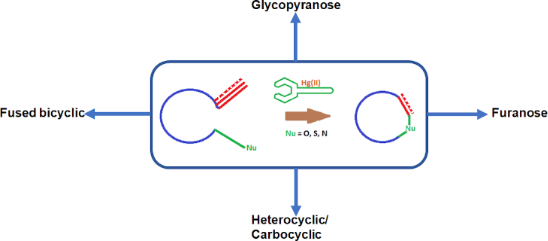
Scheme 1: Schematic representation of Hg(II)-mediated addition to an unsaturated bond.

Scheme 2: First report of Hg(II)-mediated synthesis of 2,5-dioxane derivatives from allyl alcohol.

Scheme 3: Stepwise synthesis of 2,6-distubstituted dioxane derivatives.

Scheme 4: Cyclization of carbohydrate alkene precursor.

Scheme 5: Hg(II)-mediated synthesis of C-glucopyranosyl derivatives.

Scheme 6: Synthesis of C-glycosyl amino acid derivative using Hg(TFA)2.

Scheme 7: Hg(OAc)2-mediated synthesis of α-ᴅ-ribose derivative.

Scheme 8: Synthesis of β-ᴅ-arabinose derivative 18.

Scheme 9: Hg(OAc)2-mediated synthesis of tetrahydrofuran derivatives.

Scheme 10: Synthesis of Hg(TFA)2-mediated bicyclic nucleoside derivative.

Scheme 11: Synthesis of pyrrolidine and piperidine derivatives.

Scheme 12: HgCl2-mediated synthesis of diastereomeric pyrrolidine derivatives.

Scheme 13: HgCl2-mediated cyclization of alkenyl α-aminophosphonates.

Scheme 14: Cyclization of 4-cycloocten-1-ol with Hg(OAc)2 forming fused bicyclic products.

Scheme 15: trans-Amino alcohol formation through Hg(II)-salt-mediated cyclization.

Scheme 16: Hg(OAc)2-mediated 2-aza- or 2-oxa-bicyclic ring formations.

Scheme 17: Hg(II)-salt-induced cyclic peroxide formation.

Scheme 18: Hg(OAc)2-mediated formation of 1,2,4-trioxanes.

Scheme 19: Endocyclic enol ether derivative formation through Hg(II) salts.

Scheme 20: Synthesis of optically active cyclic alanine derivatives.

Scheme 21: Hg(II)-salt-mediated formation of tetrahydropyrimidin-4(1H)-one derivatives.

Scheme 22: Cyclization of ether derivatives to form stereoselective oxazolidine derivatives.

Scheme 23: Cyclization of amide derivatives induced by Hg(OAc)2.

Scheme 24: Hg(OAc)2/Hg(TFA)2-promoted cyclization of salicylamide-derived amidal auxiliary derivatives.

Scheme 25: Hg(II)-salt-mediated cyclization to form dihydrobenzopyrans.

Scheme 26: HgCl2-induced cyclization of acetylenic silyl enol ether derivatives.

Scheme 27: Synthesis of exocyclic and endocyclic enol ether derivatives.

Scheme 28: Cyclization of trans-acetylenic alcohol by treatment with HgCl2.

Scheme 29: Synthesis of benzofuran derivatives in presence of HgCl2.

Scheme 30: a) Hg(II)-salt-mediated cyclization of 4-hydroxy-2-alkyn-1-ones to furan derivatives and b) its mec...
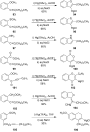
Scheme 31: Cyclization of arylacetylenes to synthesize carbocyclic and heterocyclic derivatives.

Scheme 32: Hg(II)-salt-promoted cyclization–rearrangement to form heterocyclic compounds.

Scheme 33: a) HgCl2-mediated cyclization reaction of tethered alkyne dithioacetals; and b) proposed mechanism.

Scheme 34: Cyclization of aryl allenic ethers on treatment with Hg(OTf)2.

Scheme 35: Hg(TFA)2-mediated cyclization of allene.

Scheme 36: Hg(II)-catalyzed intramolecular trans-etherification reaction of 2-hydroxy-1-(γ-methoxyallyl)tetrah...
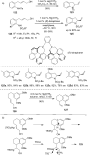
Scheme 37: a) Cyclization of alkene derivatives by catalytic Hg(OTf)2 salts and b) mechanism of cyclization.

Scheme 38: a) Synthesis of 1,4-dihydroquinoline derivatives by Hg(OTf)2 and b) plausible mechanism of formatio...

Scheme 39: Synthesis of Hg(II)-salt-catalyzed heteroaromatic derivatives.

Scheme 40: Hg(II)-salt-catalyzed synthesis of dihydropyranone derivatives.

Scheme 41: Hg(II)-salt-catalyzed cyclization of alkynoic acids.

Scheme 42: Hg(II)-salt-mediated cyclization of alkyne carboxylic acids and alcohol to furan, pyran, and spiroc...

Scheme 43: Hg(II)-salt-mediated cyclization of 1,4-dihydroxy-5-alkyne derivatives.

Scheme 44: Six-membered morpholine derivative formation by catalytic Hg(II)-salt-induced cyclization.

Scheme 45: Hg(OTf)2-catalyzed hydroxylative carbocyclization of 1,6-enyne.
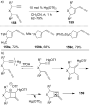
Scheme 46: a) Hg(OTf)2-catalyzed hydroxylative carbocyclization of 1,6-enyne. b) Proposed mechanism.

Scheme 47: a) Synthesis of carbocyclic derivatives using a catalytic amount of Hg(II) salt. b) Proposed mechan...

Scheme 48: Cyclization of 1-alkyn-5-ones to 2-methylfuran derivatives.

Scheme 49: Hg(NO3)2-catalyzed synthesis of 2-methylenepiperidine.

Scheme 50: a) Preparation of indole derivatives through cycloisomerization of 2-ethynylaniline and b) its mech...
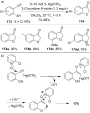
Scheme 51: a) Hg(OTf)2-catalyzed synthesis of 3-indolinones and 3-coumaranones and b) simplified mechanism.

Scheme 52: a) Hg(OTf)2-catalyzed one pot cyclization of nitroalkyne and b) its plausible mechanism.

Scheme 53: Synthesis of tricyclic heterocyclic scaffolds.

Scheme 54: HgCl2-mediated cyclization of 2-alkynylphenyl alkyl sulfoxide.

Scheme 55: a) Hg(OTf)2-catalyzed cyclization of allenes and alkynes. b) Proposed mechanism of cyclization.

Scheme 56: Stereoselective synthesis of tetrahydropyran derivatives.
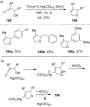
Scheme 57: a) Hg(ClO4)2-catalyzed cyclization of α-allenol derivatives. b) Simplified mechanism.

Scheme 58: Hg(TFA)2-promoted cyclization of a γ-hydroxy alkene derivative.

Scheme 59: Synthesis Hg(II)-salt-mediated cyclization of allyl alcohol for the construction of ventiloquinone ...

Scheme 60: Hg(OAc)2-mediated cyclization as a key step for the synthesis of hongconin.

Scheme 61: Examples of Hg(II)-salt-mediated cyclized ring formation in the syntheses of (±)-fastigilin C and (...

Scheme 62: Formal synthesis of (±)-thallusin.

Scheme 63: Total synthesis of hippuristanol and its analog.

Scheme 64: Total synthesis of solanoeclepin A.

Scheme 65: a) Synthesis of Hg(OTf)2-catalyzed azaspiro structure for the formation of natural products. b) Pro...
Phenolic constituents from twigs of Aleurites fordii and their biological activities
- Kyoung Jin Park,
- Won Se Suh,
- Da Hye Yoon,
- Chung Sub Kim,
- Sun Yeou Kim and
- Kang Ro Lee
Beilstein J. Org. Chem. 2021, 17, 2329–2339, doi:10.3762/bjoc.17.151
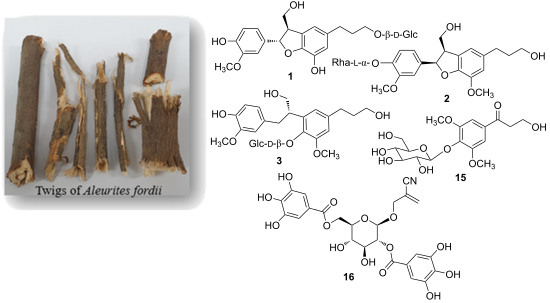
- absolute configuration. The planar structure of 3 was further confirmed by analysis of 2D NMR data, including COSY, HSQC, and HMBC (Figure 2). The determination of the stereochemistry for the sugar unit of 3 was conducted following the same method as for compound 2. The structure of the aglycone 3a
- stereochemistry, but they showed quite different inhibition effects on NO production (IC50 55.0 μM, 2; IC50 > 500 μM, 5). The MTT cell viability test suggested that all the compounds had no cytotoxic effect on BV-2 cell survival at a concentration of 20 μM. Compounds 1–19 were also tested for their

Graphical Abstract

Figure 1: Chemical structures of compounds 1–19.

Figure 2: Key COSY and HMBC correlations of compounds 1–3, 15, and 16 and key NOESY correlation of 2.
Enantioenriched α-substituted glutamates/pyroglutamates via enantioselective cyclopropenimine-catalyzed Michael addition of amino ester imines
- Zara M. Seibel,
- Jeffrey S. Bandar and
- Tristan H. Lambert
Beilstein J. Org. Chem. 2021, 17, 2077–2084, doi:10.3762/bjoc.17.134
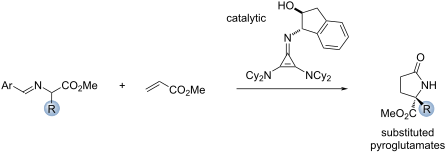
- ) improved the reactivity somewhat but was detrimental to enantioselectivity (Table 1, entry 4), while changing the relative stereochemistry of the hydroxy substituent resulted in an inactive catalyst (8, entry 5 in Table 1). Likewise, catalysts such as 9 lacking a hydrogen-bonding substituent were not

Graphical Abstract

Figure 1: Strategy for the synthesis of glutamate and pyroglutamate derivatives and several natural products ...

Figure 2: Effect of the aryl substituent on reaction efficiency and selectivity.

Figure 3: Proposed transition state model.
Development of N-F fluorinating agents and their fluorinations: Historical perspective
- Teruo Umemoto,
- Yuhao Yang and
- Gerald B. Hammond
Beilstein J. Org. Chem. 2021, 17, 1752–1813, doi:10.3762/bjoc.17.123
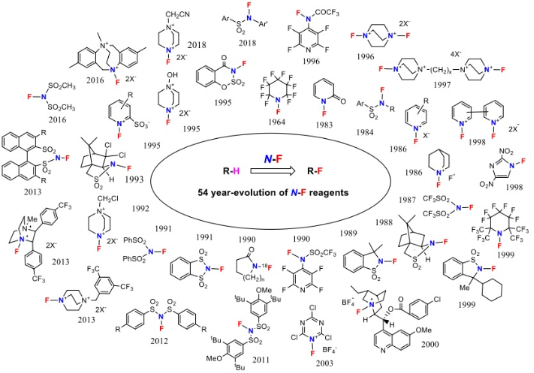
- . Deprotection followed by fluorination with FClO3 gave (R)- and (S)-28-3 in good yields. X-ray crystallography was used to determine the structure and confirm the absolute stereochemistry of (S)-28-3. The optically active reagents (R)- and (S)-28-3 were effective in the enantioselective fluorination of cyclic

Graphical Abstract

Scheme 1: Fluorination with N-F amine 1-1.

Scheme 2: Preparation of N-F amine 1-1.

Scheme 3: Reactions of N-F amine 1-1.

Scheme 4: Synthesis of N-F perfluoroimides 2-1 and 2-2.

Scheme 5: Synthesis of 1-fluoro-2-pyridone (3-1).

Scheme 6: Fluorination with 1-fluoro-2-pyridone (3-1).

Figure 1: Synthesis of N-F sulfonamides 4-1a–g.
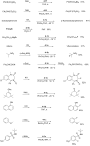
Scheme 7: Fluorination with N-F reagent 4-1b,c,f.

Scheme 8: Fluorination of alkenyllithiums with N-F 4-1h.

Scheme 9: Synthesis of N-fluoropyridinium triflate (5-4a).

Scheme 10: Synthetic methods for N-F-pyridinium salts.

Figure 2: Synthesis of various N-fluoropyridinium salts. Note: athis yield was the one by the improved method...

Scheme 11: Fluorination power order of N-fluoropyridinium salts.

Scheme 12: Fluorinations with N-F salts 5-4.

Scheme 13: Fluorination of Corey lactone 5-7 with N-F-bis(methoxymethyl) salt 5-4l.

Scheme 14: Fluorination with NFPy.

Scheme 15: Synthesis of the N-F reagent, N-fluoroquinuclidinium fluoride (6-1).

Scheme 16: Fluorinations achieved with N-F fluoride 6-1.

Scheme 17: Synthesis of N-F imides 7-1a–g.

Scheme 18: Fluorination with (CF3SO2)2NF, 7-1a.
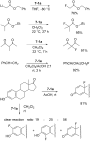
Scheme 19: Fluorination reactions of various substrates with 7-1a.

Scheme 20: Synthesis of N-F triflate 8-1.

Scheme 21: Synthesis of chiral N-fluoro sultams 9-1 and 9-2.
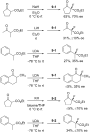
Scheme 22: Fluorination with chiral N-fluoro sultams 9-1 and 9-2.

Scheme 23: Synthesis of saccharin-derived N-fluorosultam 10-2.

Scheme 24: Fluorination with N-fluorosultam 10-2.

Scheme 25: Synthesis of N-F reagent 11-2.

Scheme 26: Fluorination with N-F reagent 11-2.

Scheme 27: Synthesis and reaction of N-fluorolactams 12-1.

Scheme 28: Synthesis of NFOBS 13-2.

Scheme 29: Fluorination with NFOBS 13-2.

Scheme 30: Synthesis of NFSI (14-2).
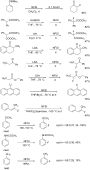
Scheme 31: Fluorination with NFSI 14-2.

Scheme 32: Synthesis of N-fluorosaccharin (15-1) and N-fluorophthalimide (15-2).

Scheme 33: Synthesis of N-F salts 16-3.
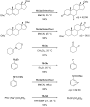
Scheme 34: Fluorination with N-F salts 16-3.

Figure 3: Monofluorination with Selectfluor (16-3a).

Figure 4: Difluorination with Selectfluor (16-3a).

Scheme 35: Transfer fluorination of Selectfluor (16-3a).
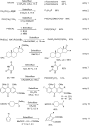
Scheme 36: Fluorination of substrates with Selectfluor (16-3a).

Scheme 37: Synthesis of chiral N-fluoro-sultam 17-2.

Scheme 38: Asymmetric fluorination with chiral 17-2.

Figure 5: Synthesis of Zwitterionic N-fluoropyridinium salts 18-2a–h.

Scheme 39: Fluorinating power order of zwitterionic N-fluoropyridinium salts.

Scheme 40: Fluorination with zwitterionic 18-2.

Scheme 41: Activation of salt 18-2h with TfOH.

Scheme 42: Synthesis of NFTh, 19-2.

Scheme 43: Fluorination with NFTh, 19-2.

Scheme 44: Synthesis of 3-fluorobenzo-1,2,3-oxathiazin-4-one 2,2-dioxide (20-2).

Scheme 45: Fluorination with 20-2.

Scheme 46: Synthesis of N-F amide 21-3.

Scheme 47: Fluorination with N-F amide 21-2.

Scheme 48: Synthesis of N,N’-difluorodiazoniabicyclo[2.2.2]octane salts 22-1.

Scheme 49: One-pot synthesis of N,N’-difluoro-1,4-diazoniabicyclo[2.2.2]octane bistetrafluoroborate salt (22-1d...

Figure 6: Fluorination of anisole with 22-1a, d, e.
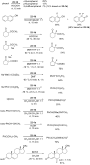
Scheme 50: Fluorination with N,N’-diF bisBF4 22-1d.

Scheme 51: Synthesis of bis-N-F reagents 23-1–5.
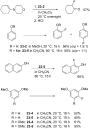
Scheme 52: Fluorination with 23-2, 4, 5.

Figure 7: Synthesis of N,N’-difluorobipyridinium salts 24-2.

Figure 8: Controlled fluorination of N,N’-diF 24-2.

Scheme 53: Fluorinating power of N,N’-diF salts 24-2 and N-F salt 5-4a.
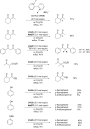
Scheme 54: Fluorination reactions with SynfluorTM (24-2b).

Scheme 55: Additional fluorination reactions with SynfluorTM (24-2b).

Scheme 56: Synthesis of N-F 25-1.

Scheme 57: Fluorination of polycyclic aromatics with 25-1.

Scheme 58: Synthesis of 26-1 and dimethyl analog 26-2.

Scheme 59: Fluorination with reagents 26-1, 26-2, 1-1, and 26-3.

Scheme 60: Synthesis of N-F reagent 27-2.

Scheme 61: Synthesis of chiral N-F reagents 27-6.

Scheme 62: Synthesis of chiral N-F 27-7–9.
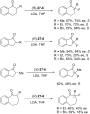
Scheme 63: Asymmetric fluorination with 27-6.

Scheme 64: Synthesis of chiral N-F reagents 28-3.

Scheme 65: Asymmetric fluorination with 28-3.

Scheme 66: Synthesis of chiral N-F reagents 28-7.

Figure 9: Asymmetric fluorination with 28-7.

Scheme 67: In situ formation of N-fluorinated cinchona alkaloids with SelectfluorTM.
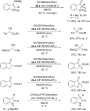
Scheme 68: Asymmetric fluorination with N-F alkaloids formed in situ.

Scheme 69: Synthesis of N-fluorocinchona alkaloids with Selectfluor.

Scheme 70: Asymmetric fluorination with 30-1–4.

Scheme 71: Transfer fluorination from various N-F reagents.

Figure 10: Asymmetric fluorination of silyl enol ethers.

Scheme 72: Synthesis of N-fluoro salt 32-2.

Scheme 73: Reactivity of N-fluorotriazinium salt 32-2.

Scheme 74: Synthesis of bulky N-fluorobenzenesulfonimide NFBSI 33-3.

Scheme 75: Comparison of NFSI and NFBSI.

Scheme 76: Synthesis of p-substituted N-fluorobenzenesulfonimides 34-3.

Figure 11: Asymmetric fluorination with 34-3 and a chiral catalyst 34-4.

Scheme 77: 1,4-Fluoroamination with Selecfluor and a chiral catalyst.

Figure 12: Asymmetric fluoroamination with 35-5a, b.

Scheme 78: Synthesis of Selectfluor analogs 35-5a, b.

Scheme 79: Synthesis of chiral dicationic DABCO-based N-F reagents 36-5.
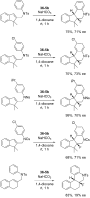
Scheme 80: Asymmetric fluorocyclization with chiral 36-5b.

Scheme 81: Synthesis of chiral 37-2a,b.

Scheme 82: Asymmetric fluorination with chiral 37-2a,b.

Scheme 83: Asymmetric fluorination with chiral 37-2b.

Scheme 84: Reaction of indene with chiral 37-2a,b.

Scheme 85: Synthesis of Me-NFSI, 38-2.

Scheme 86: Fluorination of active methine compounds with Me-NFSI.

Scheme 87: Fluorination of malonates with Me-NFSI.

Scheme 88: Fluorination of keto esters with Me-NFSI.

Scheme 89: Synthesis of N-F 39-3 derived from the ethylene-bridged Tröger’s base.

Scheme 90: Fluorine transfer from N-F 39-3.

Scheme 91: Fluorination with N-F 39-3.

Scheme 92: Synthesis of SelectfluorCN.

Scheme 93: Bistrifluoromethoxylation of alkenes using SelectfluorCN.

Figure 13: Synthesis of NFAS 41-2.

Scheme 94: Radical fluorination with different N-F reagents.

Scheme 95: Radical fluorination of alkenes with NFAS 41-2.

Scheme 96: Radical fluorination of alkenes with NFAS 41-2f.

Scheme 97: Decarboxylative fluorination with NFAS 41-2a,f.

Scheme 98: Fluorine plus detachment (FPD).

Figure 14: FPD values of representative N-F reagents in CH2Cl2 and CH3CN (in parentheses). Adapted with permis...

Scheme 99: N-F homolytic bond dissociation energy (BDE).

Figure 15: BDE values of representative N-F reagents in CH3CN. Adapted with permission from ref. [127]. Copyright 2...

Figure 16: Quantitative reactivity scale for popular N-F reagents. Adapted with permission from ref. [138], publish...

Scheme 100: SET and SN2 mechanisms.

Scheme 101: Radical clock reactions.

Scheme 102: Reaction of potassium enolate of citronellic ester with N-F reagents, 10-1, NFSI, and 8-1.

Scheme 103: Reaction of compound IV with Selectfluor (OTf) and NFSI.

Scheme 104: Reaction of TEMPO with Selecfluor.
Correction: Amine–borane complex-initiated SF5Cl radical addition on alkenes and alkynes
- Audrey Gilbert,
- Pauline Langowski,
- Marine Delgado,
- Laurent Chabaud,
- Mathieu Pucheault and
- Jean-François Paquin
Beilstein J. Org. Chem. 2021, 17, 1725–1726, doi:10.3762/bjoc.17.120
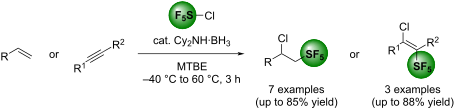
- , France 10.3762/bjoc.17.120 Keywords: amine–borane complex; pentafluorosulfanyl chloride; pentafluorosulfanyl substituent; radical addition; radical initiation; The stereochemistry of some alkene products (2i–k) in Scheme 4 of the original publication was misattributed. The corrected structures are

Graphical Abstract

Scheme 1: Corrected Scheme 4 of the original article. Scope of the Et3B and the DICAB-initiated SF5Cl additio...

Scheme 2: Corrected graphical abstract of the original publication.
Cascade intramolecular Prins/Friedel–Crafts cyclization for the synthesis of 4-aryltetralin-2-ols and 5-aryltetrahydro-5H-benzo[7]annulen-7-ols
- Jie Zheng,
- Shuyu Meng and
- Quanrui Wang
Beilstein J. Org. Chem. 2021, 17, 1481–1489, doi:10.3762/bjoc.17.104
- basicity, the long reaction time of 20 hours may lead to an ion-pair species with 21 and hence erode the stereochemistry. To prove this idea, we performed the reaction with CH2Cl2 as the solvent in the presence of 5.0 equivalents of pyridine and 2.0 equivalents of TsCl. Under these conditions, the tosylate
- 21 was obtained with full retention of the expected stereochemistry (cis/trans =1:99) (see Supporting Information File 1 for details). The conversion of tosylate 21 to product 22 proceeded in a typical SN2 manner resulting in the expected inversion of the configuration. To unequivocally support the

Graphical Abstract

Figure 1: Parent structure of 2,4-disubstituted tetralins (1) and selected medicinally useful derivatives 2–4....

Scheme 1: Reported strategies for the synthesis of tetralin-2-ol ring systems.

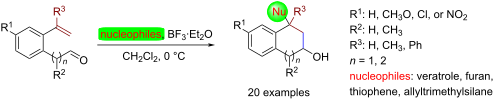
Scheme 2: Designed cascade reactions to 4-substituted tetralin-2-ols.

Scheme 3: The documented synthesis of 2-(2-vinylphenyl)acetaldehyde (13a).

Scheme 4: Modified synthesis of 2-(2-vinylphenyl)acetaldehydes 13a–g and 1-vinyl-2-naphthaldehyde (13h).

Scheme 5: Lewis acid-catalyzed Prins/Friedel–Crafts reaction of 13a with veratrole.
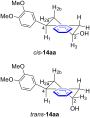
Figure 2: The speculated stereostructures of compound cis-14aa and trans-14aa.

Scheme 6: Use of different nucleophiles for the cascade reaction with 13a. Reaction conditions: a mixture of ...

Scheme 7: Reaction of aldehydes 13b–h with veratrole or furan. Reaction conditions: a mixture of 13b–h (1.40 ...

Scheme 8: Synthesis of 5-aryltetrahydro-5H-benzo[7]annulen-7-ols 20a, b.

Scheme 9: Conversion of 2-hydroxy-4-(2-furyl)tetralin (14af) into PAT analogue 22.

Figure 3: Crystal structure of the tosylate 21. The displacement ellipsoids are drawn at the 30% probability ...
Total synthesis of ent-pavettamine
- Memory Zimuwandeyi,
- Manuel A. Fernandes,
- Amanda L. Rousseau and
- Moira L. Bode
Beilstein J. Org. Chem. 2021, 17, 1440–1446, doi:10.3762/bjoc.17.99
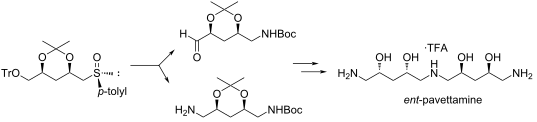
- the current study, which aimed to establish a method for the synthesis of ent-pavettamine (2) so as to contribute towards a comprehensive structure–activity relationship study of pavettamine. With the absolute stereochemistry of pavettamine having been established previously [1], this study focused on
- that the new route doubled the overall yield to 16% for a similar number of steps. The specific optical rotation for 4 of +28.1° in acetone was comparable to that obtained previously [1]. Single crystal X-ray analysis of compound 4 (Figure 3), further confirmed the identity and stereochemistry of the

Graphical Abstract

Figure 1: Structure of pavettamine 1 and its enantiomer 2.

Scheme 1: Established route for the synthesis of intermediate 4 [1].

Scheme 2: Alternative route. Reaction conditions: a) TrCl, pyridine, rt, overnight, 100%; b) DMAP, imidazole,...

Figure 2: Crystal structure of compound 9.

Scheme 3: Sequence showing the source of compound 9.

Scheme 4: Stereoselective reduction of intermediate 8 as key step towards intermediate 4. Reaction conditions...

Figure 3: Single crystal X-ray structure of compound 4.

Scheme 5: Synthesis of the C5 fragments from intermediate 4. Reaction conditions: a) i) TFAA, collidine, 0 °C...
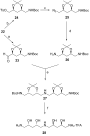
Scheme 6: Synthesis of ent-pavettamine as the TFA salt 28. Reaction conditions: a) IBX, DMSO, rt, overnight, ...
Analogs of the carotane antibiotic fulvoferruginin from submerged cultures of a Thai Marasmius sp.
- Birthe Sandargo,
- Leon Kaysan,
- Rémy B. Teponno,
- Christian Richter,
- Benjarong Thongbai,
- Frank Surup and
- Marc Stadler
Beilstein J. Org. Chem. 2021, 17, 1385–1391, doi:10.3762/bjoc.17.97
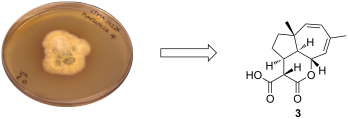
- (δH 4.95) and H3-13 (δH 0.99) indicating that they are on the same face of the molecule. These ROESY correlations are otherwise identical to those observed for fulvoferruginin (1). The relative stereochemistry at C-6 and C-10 was further confirmed through comparison with ROESY correlations of
- chirality method. Additionally, our recorded CD spectra (Figure S1 in Supporting Information File 1) of metabolites 3 and 4, are in close agreement with 1. As the metabolites 2–6 displayed analogous relative stereochemistry and optical rotations, we presume that the new compounds arise from the same

Graphical Abstract
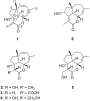
Figure 1: Structures of fulvoferruginin (1) and the newly isolated derivatives fulvoferruginins B–F (2–6).

Figure 2: KEY HMBC (arrows) and COSY (thick bonds) correlations of compounds 2 and 3.

Figure 3: Key ROESY correlations of metabolite 3.
A comprehensive review of flow chemistry techniques tailored to the flavours and fragrances industries
- Guido Gambacorta,
- James S. Sharley and
- Ian R. Baxendale
Beilstein J. Org. Chem. 2021, 17, 1181–1312, doi:10.3762/bjoc.17.90
- , the (S)-enantioselectivity could be reversed by inversion of stereochemistry at the terminal proline moiety of the supported peptide. Ötvös’ protocol highlights some of the key advantages of this immobilisation approach, i.e., improved reaction kinetics over batch (higher effective catalyst loading

Graphical Abstract

Figure 1: Representative shares of the global F&F market (2018) segmented on their applications [1].

Figure 2: General structure of an international fragrance company [2].

Figure 3: The Michael Edwards fragrance wheel.

Figure 4: Examples of oriental (1–3), woody (4–7), fresh (8–10), and floral (11 and 12) notes.

Figure 5: A basic depiction of batch vs flow.

Scheme 1: Examples of reactions for which flow processing outperforms batch.

Scheme 2: Some industrially important aldol-based transformations.

Scheme 3: Biphasic continuous aldol reactions of acetone and various aldehydes.

Scheme 4: Aldol synthesis of 43 in flow using LiHMDS as the base.

Scheme 5: A semi-continuous synthesis of doravirine (49) involving a key aldol reaction.

Scheme 6: Enantioselective aldol reaction using 5-(pyrrolidin-2-yl)tetrazole (51) as catalyst in a microreact...

Scheme 7: Gröger's example of asymmetric aldol reaction in aqueous media.

Figure 6: Immobilised reagent column reactor types.

Scheme 8: Photoinduced thiol–ene coupling preparation of silica-supported 5-(pyrrolidin-2-yl)tetrazole 63 and...

Scheme 9: Continuous-flow approach for enantioselective aldol reactions using the supported catalyst 67.

Scheme 10: Ötvös’ employment of a solid-supported peptide aldol catalyst in flow.

Scheme 11: The use of proline tetrazole packed in a column for aldol reaction between cyclohexanone (65) and 2...

Scheme 12: Schematic diagram of an aminosilane-grafted Si-Zr-Ti/PAI-HF reactor for continuous-flow aldol and n...

Scheme 13: Continuous-flow condensation for the synthesis of the intermediate 76 to nabumetone (77) and Microi...

Scheme 14: Synthesis of ψ-Ionone (80) in continuous-flow via aldol condensation between citral (79) and aceton...

Scheme 15: Synthesis of β-methyl-ionones (83) from citral (79) in flow. The steps are separately described, an...

Scheme 16: Continuous-flow synthesis of 85 from 84 described by Gavriilidis et al.

Scheme 17: Continuous-flow scCO2 apparatus for the synthesis of 2-methylpentanal (87) and the self-condensed u...

Scheme 18: Chen’s two-step flow synthesis of coumarin (90).

Scheme 19: Pechmann condensation for the synthesis of 7-hydroxyxcoumarin (93) in flow. The setup extended to c...

Scheme 20: Synthesis of the dihydrojasmonate 35 exploiting nitro derivative proposed by Ballini et al.

Scheme 21: Silica-supported amines as heterogeneous catalyst for nitroaldol condensation in flow.

Scheme 22: Flow apparatus for the nitroaldol condensation of p-hydroxybenzaldehyde (102) to nitrostyrene 103 a...

Scheme 23: Nitroaldol reaction of 64 to 105 employing a quaternary ammonium functionalised PANF.

Scheme 24: Enantioselective nitroaldol condensation for the synthesis of 108 under flow conditions.

Scheme 25: Enatioselective synthesis of 1,2-aminoalcohol 110 via a copper-catalysed nitroaldol condensation.

Scheme 26: Examples of Knoevenagel condensations applied for fragrance components.

Scheme 27: Flow apparatus for Knoevenagel condensation described in 1989 by Venturello et al.

Scheme 28: Knoevenagel reaction using a coated multichannel membrane microreactor.

Scheme 29: Continuous-flow apparatus for Knoevenagel condensation employing sugar cane bagasse as support deve...

Scheme 30: Knoevenagel reaction for the synthesis of 131–135 in flow using an amine-functionalised silica gel. ...

Scheme 31: Continuous-flow synthesis of compound 137, a key intermediate for the synthesis of pregabalin (138)...
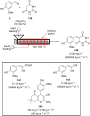
Scheme 32: Continuous solvent-free apparatus applied for the synthesis of compounds 140–143 using a TSE. Throu...

Scheme 33: Lewis et al. developed a spinning disc reactor for Darzens condensation of 144 and a ketone to furn...

Scheme 34: Some key industrial applications of conjugate additions in the F&F industry.

Scheme 35: Continuous-flow synthesis of 4-(2-hydroxyethyl)thiomorpholine 1,1-dioxide (156) via double conjugat...

Scheme 36: Continuous-flow system for Michael addition using CsF on alumina as the catalyst.

Scheme 37: Calcium chloride-catalysed asymmetric Michael addition using an immobilised chiral ligand.

Scheme 38: Continuous multistep synthesis for the preparation of (R)-rolipram (173). Si-NH2: primary amine-fun...

Scheme 39: Continuous-flow Michael addition using ion exchange resin Amberlyst® A26.

Scheme 40: Preparation of the heterogeneous catalyst 181 developed by Paixão et al. exploiting Ugi multicompon...

Scheme 41: Continuous-flow system developed by the Paixão’s group for the preparation of Michael asymmetric ad...

Scheme 42: Continuous-flow synthesis of nitroaldols catalysed by supported catalyst 184 developed by Wennemers...

Scheme 43: Heterogenous polystyrene-supported catalysts developed by Pericàs and co-workers.

Scheme 44: PANF-supported pyrrolidine catalyst for the conjugate addition of cyclohexanone (65) and trans-β-ni...

Scheme 45: Synthesis of (−)-paroxetine precursor 195 developed by Ötvös, Pericàs, and Kappe.

Scheme 46: Continuous-flow approach for the 5-step synthesis of (−)-oseltamivir (201) as devised by Hayashi an...

Scheme 47: Continuous-flow enzyme-catalysed Michael addition.

Scheme 48: Continuous-flow copper-catalysed 1,4 conjugate addition of Grignard reagents to enones. Reprinted w...

Scheme 49: A collection of commonly encountered hydrogenation reactions.

Figure 7: The ThalesNano H-Cube® continuous-flow hydrogenator.

Scheme 50: Chemoselective reduction of an α,β-unsaturated ketone using the H-Cube® reactor.

Scheme 51: Incorporation of Lindlar’s catalyst into the H-Cube® reactor for the reduction of an alkyne.

Scheme 52: Continuous-flow semi-hydrogenation of alkyne 208 to 209 using SACs with H-Cube® system.

Figure 8: The standard setups for tube-in-tube gas–liquid reactor units.

Scheme 53: Homogeneous hydrogenation of olefins using a tube-in-tube reactor setup.
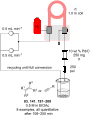
Scheme 54: Recyclable heterogeneous flow hydrogenation system.

Scheme 55: Leadbeater’s reverse tube-in-tube hydrogenation system for olefin reductions.

Scheme 56: a) Hydrogenation using a Pd-immobilised microchannel reactor (MCR) and b) a representation of the i...

Scheme 57: Hydrogenation of alkyne 238 exploiting segmented flow in a Pd-immobilised capillary reactor.

Scheme 58: Continuous hydrogenation system for the preparation of cyrene (241) from (−)-levoglucosenone (240).

Scheme 59: Continuous hydrogenation system based on CSMs developed by Hornung et al.

Scheme 60: Chemoselective reduction of carbonyls (ketones over aldehydes) in flow.

Scheme 61: Continuous system for the semi-hydrogenation of 256 and 258, developed by Galarneau et al.

Scheme 62: Continuous synthesis of biodiesel fuel 261 from lignin-derived furfural acetone (260).

Scheme 63: Continuous synthesis of γ-valerolacetone (263) via CTH developed by Pineda et al.

Scheme 64: Continuous hydrogenation of lignin-derived biomass (products 265, 266, and 267) using a sustainable...

Scheme 65: Ru/C or Rh/C-catalysed hydrogenation of arene in flow as developed by Sajiki et al.

Scheme 66: Polysilane-immobilized Rh–Pt-catalysed hydrogenation of arenes in flow by Kobayashi et al.

Scheme 67: High-pressure in-line mixing of H2 for the asymmetric reduction of 278 at pilot scale with a 73 L p...
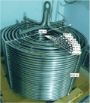
Figure 9: Picture of the PFR employed at Eli Lilly & Co. for the continuous hydrogenation of 278 [287]. Reprinted ...

Scheme 68: Continuous-flow asymmetric hydrogenation using Oppolzer's sultam 280 as chiral auxiliary.
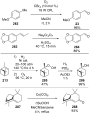
Scheme 69: Some examples of industrially important oxidation reactions in the F&F industry. CFL: compact fluor...

Scheme 70: Gold-catalysed heterogeneous oxidation of alcohols in flow.
Scheme 71: Uozumi’s ARP-Pt flow oxidation protocol.

Scheme 72: High-throughput screening of aldehyde oxidation in flow using an in-line GC.

Scheme 73: Permanganate-mediated Nef oxidation of nitroalkanes in flow with the use of in-line sonication to p...

Scheme 74: Continuous-flow aerobic anti-Markovnikov Wacker oxidation.

Scheme 75: Continuous-flow oxidation of 2-benzylpyridine (312) using air as the oxidant.

Scheme 76: Continuous-flow photo-oxygenation of monoterpenes.

Scheme 77: A tubular reactor design for flow photo-oxygenation.

Scheme 78: Glucose oxidase (GOx)-mediated continuous oxidation of glucose using compressed air and the FFMR re...

Scheme 79: Schematic continuous-flow sodium hypochlorite/TEMPO oxidation of alcohols.

Scheme 80: Oxidation using immobilised TEMPO (344) was developed by McQuade et al.

Scheme 81: General protocol for the bleach/catalytic TBAB oxidation of aldehydes and alcohols.

Scheme 82: Continuous-flow PTC-assisted oxidation using hydrogen peroxide. The process was easily scaled up by...

Scheme 83: Continuous-flow epoxidation of cyclohexene (348) and in situ preparation of m-CPBA.

Scheme 84: Continuous-flow epoxidation using DMDO as oxidant.

Scheme 85: Mukayama aerobic epoxidation optimised in flow mode by the Favre-Réguillon group.

Scheme 86: Continuous-flow asymmetric epoxidation of derivatives of 359 exploiting a biomimetic iron catalyst.

Scheme 87: Continuous-flow enzymatic epoxidation of alkenes developed by Watts et al.

Scheme 88: Engineered multichannel microreactor for continuous-flow ozonolysis of 366.

Scheme 89: Continuous-flow synthesis of the vitamin D precursor 368 using multichannel microreactors. MFC: mas...

Scheme 90: Continuous ozonolysis setup used by Kappe et al. for the synthesis of various substrates employing ...

Scheme 91: Continuous-flow apparatus for ozonolysis as developed by Ley et al.

Scheme 92: Continuous-flow ozonolysis for synthesis of vanillin (2) using a film-shear flow reactor.

Scheme 93: Examples of preparative methods for ajoene (386) and allicin (388).

Scheme 94: Continuous-flow oxidation of thioanisole (389) using styrene-based polymer-supported peroxytungstat...

Scheme 95: Continuous oxidation of thiosulfinates using Oxone®-packed reactor.

Scheme 96: Continuous-flow electrochemical oxidation of thioethers.

Scheme 97: Continuous-flow oxidation of 400 to cinnamophenone (235).

Scheme 98: Continuous-flow synthesis of dehydrated material 401 via oxidation of methyl dihydrojasmonate (33).

Scheme 99: Some industrially important transformations involving Grignard reagents.

Scheme 100: Grachev et al. apparatus for continuous preparation of Grignard reagents.

Scheme 101: Example of fluidized Mg bed reactor with NMR spectrometer as on-line monitoring system.

Scheme 102: Continuous-flow synthesis of Grignard reagents and subsequent quenching reaction.

Figure 10: Membrane-based, liquid–liquid separator with integrated pressure control [52]. Adapted with permission ...

Scheme 103: Continuous-flow synthesis of 458, an intermediate to fluconazole (459).

Scheme 104: Continuous-flow synthesis of ketones starting from benzoyl chlorides.

Scheme 105: A Grignard alkylation combining CSTR and PFR technologies with in-line infrared reaction monitoring....

Scheme 106: Continuous-flow preparation of 469 from Grignard addition of methylmagnesium bromide.

Scheme 107: Continuous-flow synthesis of Grignard reagents 471.

Scheme 108: Preparation of the Grignard reagent 471 using CSTR and the continuous process for synthesis of the ...

Scheme 109: Continuous process for carboxylation of Grignard reagents in flow using tube-in-tube technology.

Scheme 110: Continuous synthesis of propargylic alcohols via ethynyl-Grignard reagent.

Scheme 111: Silica-supported catalysed enantioselective arylation of aldehydes using Grignard reagents in flow ...

Scheme 112: Acid-catalysed rearrangement of citral and dehydrolinalool derivatives.

Scheme 113: Continuous stilbene isomerisation with continuous recycling of photoredox catalyst.

Scheme 114: Continuous-flow synthesis of compound 494 as developed by Ley et al.

Scheme 115: Selected industrial applications of DA reaction.

Scheme 116: Multistep flow synthesis of the spirocyclic structure 505 via employing DA cycloaddition.

Scheme 117: Continuous-flow DA reaction developed in a plater flow reactor for the preparation of the adduct 508...

Scheme 118: Continuous-flow DA reaction using a silica-supported imidazolidinone organocatalyst.

Scheme 119: Batch vs flow for the DA reaction of (cyclohexa-1,5-dien-1-yloxy)trimethylsilane (513) with acrylon...

Scheme 120: Continuous-flow DA reaction between 510 and 515 using a shell-core droplet system.

Scheme 121: Continuous-flow synthesis of bicyclic systems from benzyne precursors.

Scheme 122: Continuous-flow synthesis of bicyclic scaffolds 527 and 528 for further development of potential ph...

Scheme 123: Continuous-flow inverse-electron hetero-DA reaction to pyridine derivatives such as 531.

Scheme 124: Comparison between batch and flow for the synthesis of pyrimidinones 532–536 via retro-DA reaction ...

Scheme 125: Continuous-flow coupled with ultrasonic system for preparation of ʟ-ascorbic acid derivatives 539 d...

Scheme 126: Two-step continuous-flow synthesis of triazole 543.

Scheme 127: Continuous-flow preparation of triazoles via CuAAC employing 546-based heterogeneous catalyst.

Scheme 128: Continuous-flow synthesis of compounds 558 through A3-coupling and 560 via AgAAC both employing the...

Scheme 129: Continuous-flow photoinduced [2 + 2] cycloaddition for the preparation of bicyclic derivatives of 5...

Scheme 130: Continuous-flow [2 + 2] and [5 + 2] cycloaddition on large scale employing a flow reactor developed...

Scheme 131: Continuous-flow preparation of the tricyclic structures 573 and 574 starting from pyrrole 570 via [...

Scheme 132: Continuous-flow [2 + 2] photocyclization of cinnamates.

Scheme 133: Continuous-flow preparation of cyclobutane 580 on a 5-plates photoreactor.

Scheme 134: Continuous-flow [2 + 2] photocycloaddition under white LED lamp using heterogeneous PCN as photocat...

Figure 11: Picture of the parallel tube flow reactor (PTFR) "The Firefly" developed by Booker-Milburn et al. a...

Scheme 135: Continuous-flow acid-catalysed [2 + 2] cycloaddition between silyl enol ethers and acrylic esters.

Scheme 136: Continuous synthesis of lactam 602 using glass column reactors.

Scheme 137: In situ generation of ketenes for the Staudinger lactam synthesis developed by Ley and Hafner.

Scheme 138: Application of [2 + 2 + 2] cycloadditions in flow employed by Ley et al.

Scheme 139: Examples of FC reactions applied in F&F industry.

Scheme 140: Continuous-flow synthesis of ibuprofen developed by McQuade et al.

Scheme 141: The FC acylation step of Jamison’s three-step ibuprofen synthesis.

Scheme 142: Synthesis of naphthalene derivative 629 via FC acylation in microreactors.

Scheme 143: Flow system for rapid screening of catalysts and reaction conditions developed by Weber et al.

Scheme 144: Continuous-flow system developed by Buorne, Muller et al. for DSD optimisation of the FC acylation ...

Scheme 145: Continuous-flow FC acylation of alkynes to yield β-chlorovinyl ketones such as 638.

Scheme 146: Continuous-flow synthesis of tonalide (619) developed by Wang et al.

Scheme 147: Continuous-flow preparation of acylated arene such as 290 employing Zr4+-β-zeolite developed by Kob...

Scheme 148: Flow system applied on an Aza-FC reaction catalysed by the thiourea catalyst 648.

Scheme 149: Continuous hydroformylation in scCO2.

Scheme 150: Two-step flow synthesis of aldehyde 655 through a sequential Heck reaction and subsequent hydroform...

Scheme 151: Single-droplet (above) and continuous (below) flow reactors developed by Abolhasani et al. for the ...

Scheme 152: Continuous hydroformylation of 1-dodecene (655) using a PFR-CSTR system developed by Sundmacher et ...

Scheme 153: Continuous-flow synthesis of the aldehyde 660 developed by Eli Lilly & Co. [32]. Adapted with permissio...

Scheme 154: Continuous asymmetric hydroformylation employing heterogenous catalst supported on carbon-based sup...

Scheme 155: Examples of acetylation in F&F industry: synthesis of bornyl (S,R,S-664) and isobornyl (S,S,S-664) ...

Scheme 156: Continuous-flow preparation of bornyl acetate (S,R,S-664) employing the oscillating flow reactor.

Scheme 157: Continuous-flow synthesis of geranyl acetate (666) from acetylation of geraniol (343) developed by ...

Scheme 158: 12-Ttungstosilicic acid-supported silica monolith-catalysed acetylation in flow.

Scheme 159: Continuous-flow preparation of cyclopentenone 676.

Scheme 160: Two-stage synthesis of coumarin (90) via acetylation of salicylaldehyde (88).

Scheme 161: Intensification process for acetylation of 5-methoxytryptamine (677) to melatonin (678) developed b...

Scheme 162: Examples of macrocyclic musky odorants both natural (679–681) and synthetic (682 and 683).

Scheme 163: Flow setup combined with microwave for the synthesis of macrocycle 686 via RCM.

Scheme 164: Continuous synthesis of 2,5-dihydro-1H-pyrroles via ring-closing metathesis.

Scheme 165: Continuous-flow metathesis of 485 developed by Leadbeater et al.

Figure 12: Comparison between RCM performed using different routes for the preparation of 696. On the left the...

Scheme 166: Continuous-flow RCM of 697 employed the solid-supported catalyst 698 developed by Grela, Kirschning...

Scheme 167: Continuous-flow RORCM of cyclooctene employing the silica-absorbed catalyst 700.

Scheme 168: Continuous-flow self-metathesis of methyl oleate (703) employing SILP catalyst 704.

Scheme 169: Flow apparatus for the RCM of 697 using a nanofiltration membrane for the recovery and reuse of the...

Scheme 170: Comparison of loadings between RCMs performed with different routes for the synthesis of 709.
N-tert-Butanesulfinyl imines in the asymmetric synthesis of nitrogen-containing heterocycles
- Joseane A. Mendes,
- Paulo R. R. Costa,
- Miguel Yus,
- Francisco Foubelo and
- Camilla D. Buarque
Beilstein J. Org. Chem. 2021, 17, 1096–1140, doi:10.3762/bjoc.17.86

- allylic bromides in the presence of zinc or indium metals is a well-known reaction [66][67]. It is possible to control and predict the stereochemistry of the addition to get the corresponding homoallylamine derivative with a high level of stereocontrol. The reaction of chiral imine 14 with an excess of
- consequence of the E stereochemistry of both the imine 14 and the enolate derived from bromoester 26 (Scheme 9). A two-step protocol carried out in a single synthetic operation was developed by Chen and Zhang to synthesize 3-substituted 2-chloroaziridines with relative cis configuration [71]. The reaction of
- hexamethyldisilazide was the base of choice to perform the deprotonation, and it must be added very slowly to the reaction mixture in order to suppress self-dimerization of the butenolide [72]. The structures as well as the absolute and relative stereochemistry of reaction products 30 and 31 were also unambiguously

Graphical Abstract

Scheme 1: General strategy for the enantioselective synthesis of N-containing heterocycles from N-tert-butane...

Scheme 2: Methodologies for condensation of aldehydes and ketones with tert-butanesulfinamides (1).

Scheme 3: Transition models for cis-aziridines and trans-aziridines.

Scheme 4: Mechanism for the reduction of N-tert-butanesulfinyl imines.

Scheme 5: Transition models for the addition of organomagnesium and organolithium compounds to N-tert-butanes...

Scheme 6: Synthesis of 2,2-dibromoaziridines 15 from aldimines 14 and bromoform, and proposed non-chelation-c...

Scheme 7: Diastereoselective synthesis of aziridines from tert-butanesulfinyl imines.

Scheme 8: Synthesis of vinylaziridines 22 from aldimines 14 and 1,3-dibromopropene 23, and proposed chelation...

Scheme 9: Synthesis of vinylaziridines 27 from aldimines 14 and α-bromoesters 26, and proposed transition sta...

Scheme 10: Synthesis of 2-chloroaziridines 28 from aldimines 14 and dichloromethane, and proposed transition s...

Scheme 11: Synthesis of cis-vinylaziridines 30 and 31 from aldimines 14 and bromomethylbutenolide 29.

Scheme 12: Synthesis of 2-chloro-2-aroylaziridines 36 and 32 from aldimines 14, arylnitriles 34, and silyldich...

Scheme 13: Synthesis of trifluoromethylaziridines 39 and proposed transition state of the aziridination.

Scheme 14: Synthesis of aziridines 42 and proposed state transition.

Scheme 15: Synthesis of 1-substituted 2-azaspiro[3.3]heptanes, 1-phenyl-2-azaspiro[3.4]octane and 1-phenyl-2-a...

Scheme 16: Synthesis of 1-substituted 2,6-diazaspiro[3.3]heptanes 48 from chiral imines 14 and 1-Boc-azetidine...

Scheme 17: Synthesis of β-lactams 52 from chiral imines 14 and dimethyl malonate (49).

Scheme 18: Synthesis of spiro-β-lactam 57 from chiral (RS)-N-tert-butanesulfinyl isatin ketimine 53 and ethyl ...

Scheme 19: Synthesis of β-lactam 60, a precursor of (−)-batzelladine D (61) and (−)-13-epi-batzelladine D (62)...

Scheme 20: Rhodium-catalyzed asymmetric synthesis of 3-substituted pyrrolidines 66 from chiral imine (RS)-63 a...

Scheme 21: Asymmetric synthesis of 1,3-disubstituted isoindolines 69 and 70 from chiral imine 67.

Scheme 22: Asymmetric synthesis of cis-2,5-disubstituted pyrrolidines 73 from chiral imine (RS)-71.

Scheme 23: Asymmetric synthesis of 3-hydroxy-5-substituted pyrrolidin-2-ones 77 from chiral imine (RS)-74.

Scheme 24: Asymmetric synthesis of 4-hydroxy-5-substituted pyrrolidin-2-ones 80 from chiral imines 79.

Scheme 25: Asymmetric synthesis of 3-pyrrolines 82 from chiral imines 14 and ethyl 4-bromocrotonate (81).

Scheme 26: Asymmetric synthesis of γ-amino esters 84, and tetramic acid derivative 86 from chiral imines (RS)-...

Scheme 27: Asymmetric synthesis of α-methylene-γ-butyrolactams 90 from chiral imines (Z,SS)-87 and ethyl 2-bro...

Scheme 28: Asymmetric synthesis of methylenepyrrolidines 92 from chiral imines (RS)-14 and 2-(trimethysilylmet...

Scheme 29: Synthesis of dibenzoazaspirodecanes from cyclic N-tert-butanesulfinyl imines.

Scheme 30: Stereoselective synthesis of cyclopenta[c]proline derivatives 103 from β,γ-unsaturated α-amino acid...

Scheme 31: Stereoselective synthesis of alkaloids (−)-angustureine (107) and (−)-cuspareine (108).

Scheme 32: Stereoselective synthesis of alkaloids (−)-pelletierine (112) and (+)-coniine (117).

Scheme 33: Synthesis of piperidine alkaloids (+)-dihydropinidine (122a), (+)-isosolenopsin (122b) and (+)-isos...

Scheme 34: Stereoselective synthesis of the alkaloids(+)-sedamine (125) from chiral imine (SS)-119.

Scheme 35: Stereoselective synthesis of trans-5-hydroxy-6-substituted-2-piperidinones 127 and 129 from chiral ...

Scheme 36: Stereoselective synthesis of trans-5-hydroxy-6-substituted ethanone-2-piperidinones 132 from chiral...

Scheme 37: Stereoselective synthesis of trans-3-benzyl-5-hydroxy-6-substituted-2-piperidinones 136 from chiral...

Scheme 38: Stereoselective synthesis of trans-5-hydroxy-6-substituted 2-piperidinones 139 from chiral imine 138...

Scheme 39: Stereoselective synthesis of ʟ-hydroxypipecolic acid 145 from chiral imine 144.

Scheme 40: Synthesis of 1-substituted isoquinolones 147, 149 and 151.

Scheme 41: Stereoselective synthesis of 3-substituted dihydrobenzo[de]isoquinolinones 154.

Scheme 42: Enantioselective synthesis of alkaloids (S)-1-benzyl-6,7-dimethoxy-1,2,3,4-tetrahydroisoquinoline (...

Scheme 43: Enantioselective synthesis of alkaloids (−)-cermizine B (171) and (+)-serratezomine E (172) develop...

Scheme 44: Stereoselective synthesis of (+)-isosolepnosin (177) and (+)-solepnosin (178) from homoallylamine d...

Scheme 45: Stereoselective synthesis of tetrahydroquinoline derivatives 184, 185 and 187 from chiral imines (RS...

Scheme 46: Stereoselective synthesis of pyridobenzofuran and pyridoindole derivatives 193 from homopropargylam...

Scheme 47: Stereoselective synthesis of 2-substituted 1,2,5,6-tetrahydropyridines 196 from chiral imines (RS)-...

Scheme 48: Stereoselective synthesis of 2-substituted trans-2,6-disubstituted piperidine 199 from chiral imine...

Scheme 49: Stereoselective synthesis of cis-2,6-disubstituted piperidines 200, and alkaloid (+)-241D, from chi...

Scheme 50: Stereoselective synthesis of 6-substituted piperidines-2,5-diones 206 and 1,7-diazaspiro[4.5]decane...

Scheme 51: Stereoselective synthesis of spirocyclic oxindoles 210 from chiral imines (RS)-53.

Scheme 52: Stereoselective synthesis of azaspiro compound 213 from chiral imine 211.

Scheme 53: Stereoselective synthesis of tetrahydroisoquinoline derivatives from chiral imines (RS)-214.

Scheme 54: Stereoselective synthesis of (−)-crispine A 223 from chiral imine (RS)-214.

Scheme 55: Synthesis of (−)-harmicine (228) using tert-butanesulfinamide through haloamide cyclization.

Scheme 56: Stereoselective synthesis of tetraponerines T1–T8.

Scheme 57: Stereoselective synthesis of phenanthroindolizidines 246a and (−)-tylophorine (246b), and phenanthr...

Scheme 58: Stereoselective synthesis of indoline, tetrahydroquinoline and tetrahydrobenzazepine derivatives 253...

Scheme 59: Stereoselective synthesis of (+)-epohelmin A (258) and (+)-epohelmin B (260) from aldimine (RS)-79.

Scheme 60: Stereoselective synthesis of (−)-epiquinamide (266) from chiral aldimine (SS)-261.

Scheme 61: Synthesis synthesis of (–)-hippodamine (273) and (+)-epi-hippodamine (272) using chiral sulfinyl am...

Scheme 62: Stereoselective synthesis of (+)-grandisine D (279) and (+)-amabiline (283).

Scheme 63: Stereoselective synthesis of (−)-epiquinamide (266) and (+)-swaisonine (291) from aldimine (SS)-126....

Scheme 64: Stereoselective synthesis of (+)-C(9a)-epi-epiquinamide (294).

Scheme 65: Stereoselective synthesis of (+)-lasubine II (298) from chiral aldimine (SS)-109.

Scheme 66: Stereoselective synthesis of (−)-epimyrtine (300a) and (−)-lasubine II (ent-302) from β-amino keton...

Scheme 67: Stereoselective synthesis of (−)-tabersonine (310), (−)-vincadifformine (311), and (−)-aspidospermi...

Scheme 68: Stereoselective synthesis of (+)-epohelmin A (258) and (+)-epohelmin B (260) from aldehyde 313 and ...

Scheme 69: Total synthesis of (+)-lysergic acid (323) from N-tert-butanesulfinamide (RS)-1.
Recent advances in palladium-catalysed asymmetric 1,4–additions of arylboronic acids to conjugated enones and chromones
- Jan Bartáček,
- Jan Svoboda,
- Martin Kocúrik,
- Jaroslav Pochobradský,
- Alexander Čegan,
- Miloš Sedlák and
- Jiří Váňa
Beilstein J. Org. Chem. 2021, 17, 1048–1085, doi:10.3762/bjoc.17.84
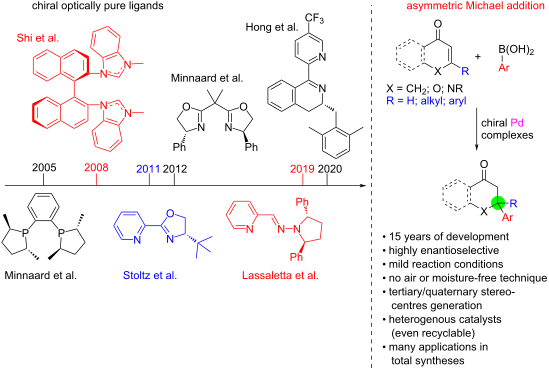
- migratory insertion via TS1 (Scheme 13). The stereochemistry is controlled mainly by the hydrogen repulsion of the methylene group neighbouring the keto group of the enone with the t-Bu group of the ligand L9. Another interesting example for the application of this reaction in the preparation of precursors

Graphical Abstract

Scheme 1: Synthesis of optically pure 4-phenylchroman-2-one [34].

Scheme 2: Synthesis of (R)-tolterodine [3].

Scheme 3: Catalytic cycle of the Pd(II)-catalysed 1,4-addition of organoboron reagents to enones [3,26,35].

Scheme 4: Enantioselective β-arylation of cyclohexanone [38].

Scheme 5: Application of L2/Pd(OAc)2 in the total synthesis of terpenes [8].
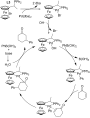
Scheme 6: Plausible catalytic cycle for the addition of phenylboronic acid to 2-cyclohexenone catalysed by L3...

Scheme 7: Microwave-assisted addition of phenylboronic acid to 2-cyclohexenone catalysed by L4/Pd2(dba)3·CHCl3...
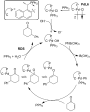
Scheme 8: Plausible catalytic cycle of the addition of phenylboronic acid to 2-cyclohexenone catalysed by pal...
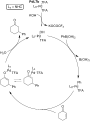
Scheme 9: Proposed catalytic cycle for the addition of phenylboronic acids to 2-cyclohexenone catalysed by Pd...

Scheme 10: Usage of addition reactions of boronic acids to various chromones in the syntheses of potentially a...

Scheme 11: Multigram-scale synthesis of ABBV-2222 [6].

Scheme 12: Application of the asymmetric addition of phenylboronic acid to a chromone derivative for the total...

Scheme 13: Plausible catalytic cycle for the addition of phenylboronic acid to 3-methyl-2-cyclohexenone cataly...

Scheme 14: Total syntheses of naturally occurring terpenoids [10,11].

Scheme 15: Use of the L9/Pd(TFA)2 catalytic system for the synthesis of intermediates of biologically active c...

Scheme 16: Usage of a Michael addition catalysed by L9/Pd(TFA)2 in the total synthesis of (–)-ar-tenuifolene [12].

Scheme 17: Synthesis of terpenoids by Michael addition to 3-methyl-2-cyclopentenone [13].

Scheme 18: Rh-catalysed isomerisation of 3-alkyl-3-arylcyclopentanones to 1-tetralones [53].

Scheme 19: Addition reaction of phenylboronic acid to 3-methyl-2-cyclohexenone catalysed by L9/Pd(TFA)2 in wat...

Scheme 20: Micellar nanoreactor PdL10c for the synthesis of flavanones [58].
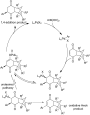
Scheme 21: Plausible catalytic cycle for the desymmetrisation of polycyclic cyclohexenediones by the addition ...

Scheme 22: Attempt to use the catalytic system L2/Pd(TFA)2 for the addition of phenylboronic acid to 3-methyl-...

Scheme 23: Ring opening of an enantioenriched tetrahydropyran-2-one derivative as alternative strategy to line...

Scheme 24: Synthesis of biologically active compounds from addition products [14-16].

Scheme 25: Chiral 1,10-phenantroline derivative L15 as ligand for the Pd-catalysed addition reactions of pheny...

Scheme 26: The Rh-catalysed addition reaction of phenylboronic acid to a 3-substituted enone [20].
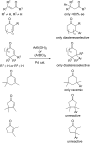
Scheme 27: Underdeveloped methodologies [14,15,65-67].
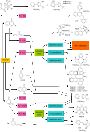
Scheme 28: Flowchart for the selection of the proper catalytic system.
Stereoselective synthesis and transformation of pinane-based 2-amino-1,3-diols
- Ákos Bajtel,
- Mounir Raji,
- Matti Haukka,
- Ferenc Fülöp and
- Zsolt Szakonyi
Beilstein J. Org. Chem. 2021, 17, 983–990, doi:10.3762/bjoc.17.80
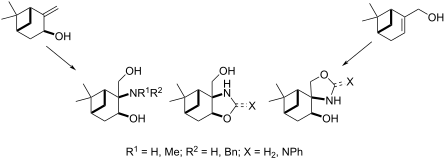
- , POB 35, 40351 Jyväskylä, Finland Stereochemistry Research Group of the Hungarian Academy of Sciences, H-6720 Szeged, Eötvös u. 6, Hungary, Interdisciplinary Centre of Natural Products, University of Szeged, Szeged, Hungary 10.3762/bjoc.17.80 Abstract A library of pinane-based 2-amino-1,3-diols was
- synthesised in a stereoselective manner. Isopinocarveol prepared from (−)-α-pinene was converted into condensed oxazolidin-2-one in two steps by carbamate formation followed by a stereoselective aminohydroxylation process. The relative stereochemistry of the pinane-fused oxazolidin-2-one was determined by 2D
- , two main synthetic strategies are used to prepare these analogues. One requires the insertion of the alcohol and amino groups in the α,β position with the correct stereochemistry [17][18][19][20]. The second strategy involves a bond formation between two chiral centers to produce the targeted 2-amino

Graphical Abstract

Figure 1: Biologically active 2-amino-1,3-diols.

Scheme 1: Stereoselective synthesis of the pinane-fused oxazolidin-2-one 9.

Figure 2: NOESY experiments and X-ray structure elucidation of oxazolidin-2-one 9.

Scheme 2: Stereoselective synthesis of the pinane spiro-fused oxazolidin-2-one 12.

Scheme 3: Parallel synthesis of 2-amino-1,3-diols.

Scheme 4: Synthesis of N-benzyl-2-amino-1,3-diol 16.

Scheme 5: Synthesis of 2-amino-1,3-diols.

Figure 3: NOESY experiments and X-ray structure proofment of the structure of oxazolidine 17.

Scheme 6: Synthesis of 2-phenyliminooxazolidines.

Figure 4: Proposed pathway for the ring–ring tautomerism.



