Search results
Search for "benzylic" in Full Text gives 405 result(s) in Beilstein Journal of Organic Chemistry. Showing first 200.
Visible-light-induced addition of carboxymethanide to styrene from monochloroacetic acid
Beilstein J. Org. Chem. 2020, 16, 398–408, doi:10.3762/bjoc.16.38
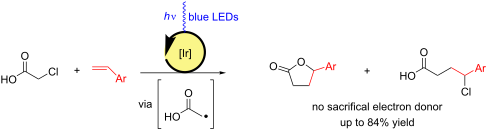
- -trifluoromethylated styrenes no lactone formation took place in these reactions, and only the Kharasch-addition product was observed. The benzylic radical resulting from radical addition to these styrene derivatives seems to be too electron poor for efficient oxidation induced cyclization, thus resulting in a


p-Pyridinyl oxime carbamates: synthesis, DNA binding, DNA photocleaving activity and theoretical photodegradation studies
Beilstein J. Org. Chem. 2020, 16, 337–350, doi:10.3762/bjoc.16.33
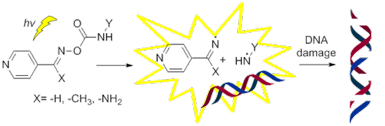
- carbamates [61][64][65] where 1H NMR spectroscopy has been used in order to distinguish between the two [61][65]. Thus, the imine benzylic proton of the E-stereoisomers shows a singlet in the area 8–8.7 ppm, whereas the ones belonging to a Z-conformation are upfield and appear between 7.3–7.6 ppm. Indeed


Copper-promoted/copper-catalyzed trifluoromethylselenolation reactions
Beilstein J. Org. Chem. 2020, 16, 305–316, doi:10.3762/bjoc.16.30

- high yields. Benzylic bromides and chlorides furnished the desired products in moderate to good yields. However, less activated substrates led to marginal amounts of the trifluoromethylselenylated compounds. Also, when secondary benzylic halides were used in the reaction, low yields were observed


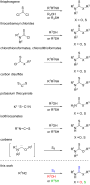
The reaction of arylmethyl isocyanides and arylmethylamines with xanthate esters: a facile and unexpected synthesis of carbamothioates
Beilstein J. Org. Chem. 2020, 16, 159–167, doi:10.3762/bjoc.16.18
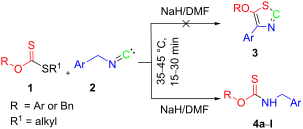
- been reported for other carbene hydrolyses [37][38][39]. As can be seen from Figure 5, the highest activation energy barrier is 42.2 kJ/mol. We had previously considered an alternative mechanism in which a benzylic proton is instead removed by the base [40]. For the previous mechanism, which we have
- now recalculated at the B3LYP/6-311++G(d,p) level of theory in DMF (using a PCM, see Scheme S1 and Figures S15 and S16, Supporting Information File 1), an activation energy barrier of 20.6 kJ/mol was obtained for the formation of the resulting benzylic α-carbanion and H2. This benzylic α-carbanion


Synthesis of C-glycosyl phosphonate derivatives of 4-amino-4-deoxy-α-ʟ-arabinose
Beilstein J. Org. Chem. 2020, 16, 9–14, doi:10.3762/bjoc.16.2
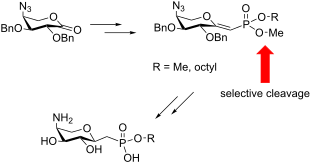
- of 10, the olefinic proton was absent, whereas the 13C NMR spectrum showed downfield shifts for the anomeric carbon atom (146.48 ppm) and the adjacent ring carbon atom (133.95 ppm). Evidence from an HMBC experiment additionally indicated a correlation between the benzylic protons and the latter


Palladium-catalyzed synthesis and nucleotide pyrophosphatase inhibition of benzo[4,5]furo[3,2-b]indoles
Beilstein J. Org. Chem. 2019, 15, 2830–2839, doi:10.3762/bjoc.15.276
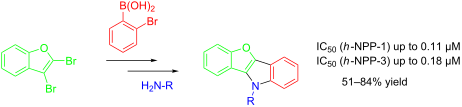
- of the reaction of 3 was studied using different amines. The reaction of 3 with various anilines afforded products 5a–g in good to excellent yields (Table 2). No impact of the functional groups of the anilines on the yield was observed. The reactions of 3 with aliphatic or benzylic amines under our


A review of asymmetric synthetic organic electrochemistry and electrocatalysis: concepts, applications, recent developments and future directions
Beilstein J. Org. Chem. 2019, 15, 2710–2746, doi:10.3762/bjoc.15.264
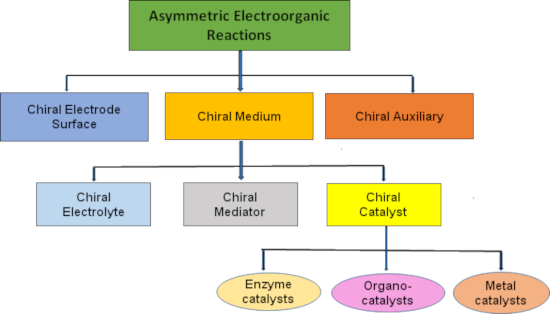
- asymmetric induction was proposed to be realized via a combination of chiral Lewis acid-bound radical (generated through a single-electron anodic oxidation) and benzylic radical, generated through the anodic oxidation of 95. As per the proposed catalytic cycle, initial coordination of the Lewis acid catalyst
- to 2-acylimidazole derivatives 94 generates the Lewis acid/enolate complex 100 upon deprotonation (Scheme 35). This is followed by the formation of intermediate 101 by electrolysis-induced SET oxidation. In a parallel electrochemical cycle, benzylic radical species 95 was delivered by the anodic






A toolbox of molecular photoswitches to modulate the CXCR3 chemokine receptor with light
Beilstein J. Org. Chem. 2019, 15, 2509–2523, doi:10.3762/bjoc.15.244
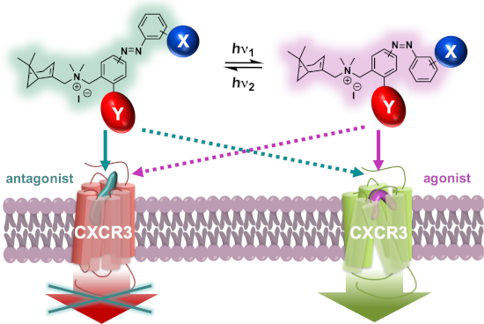
- of the inner ring with respect to the azo bond (i.e., the ortho-position with respect to the benzylic position) to afford subseries 4. This π-electron delocalization would increase the electron density of the azobenzene unit, and was also expected to have an effect on the trans–cis azobenzene



Recent advances in transition-metal-catalyzed incorporation of fluorine-containing groups
Beilstein J. Org. Chem. 2019, 15, 2213–2270, doi:10.3762/bjoc.15.218
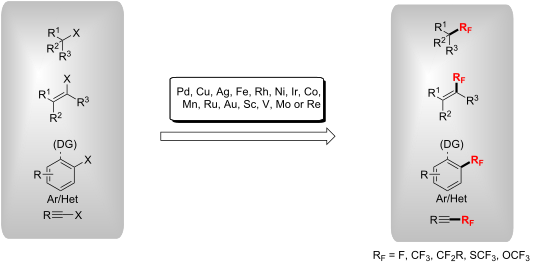
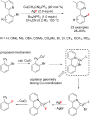
- fluoride source and PhI(OPiv)2 as a hypervalent iodine oxidant (Scheme 8). Very recently, they [44] optimized this transformation and achieved the benzylic C–H radiofluorination with no-carrier-added Ag[18F]F. This method was applied to the radiolabeling of diversely substituted 8-methylquinoline
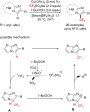
- derivatives (Scheme 11a). This process was carried out under the strongly binding bidentate 2-(pyridine-2-yl)isopropylamine (PIP) auxiliary. A range of substrates containing both aliphatic and benzylic C(sp3)–H bonds was finally converted to the corresponding fluorinated products with excellent
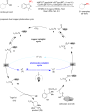
- inert C–H bonds, alkyl bromides and -triflates: In a 2012 study, Lectka’s group [67] disclosed the catalytic fluorination of a series of aliphatic, benzylic, and allylic substrates with moderate yields. In this case, the authors employed a multicomponent catalytic system, involving Selectfluor, the








Multiple threading of a triple-calix[6]arene host
Beilstein J. Org. Chem. 2019, 15, 2092–2104, doi:10.3762/bjoc.15.207
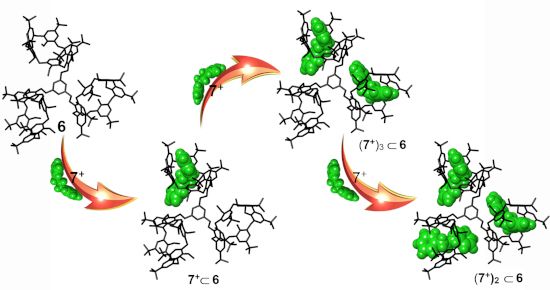
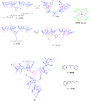
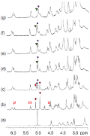
- 6 in CDCl3 at 298 K at 0.95 (27H), 1.05 (54H), and 1.22 ppm (81H = 54H + 27H; accidentally isochronous) attributable to tert-butyl groups, and three singlets at 2.56, 2.80, and 3.12 ppm in a 2:1:2 ratio, attributable to OMe groups were also found. The methylene benzylic resonance of 6 was revealed
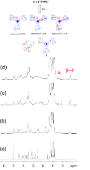
- present at 5.13 ppm and 4.96 ppm (1:2) attributable to the benzylic methylene groups of the central benzene core of 6 in 7+6 pseudo[2]rotaxane. A DOSY experiment (Figure 3, top) evidenced that the resonances in the 1H NMR spectrum of the 1:1 mixture of 6 and 7+·TFPB− in CDCl3 at 298 K all show the same
- -tetrachloroethane as internal standard, an apparent association constant of 1.01 ± 0.03 × 10⁴ M−1 was calculated for the 7+6 pseudo[2]rotaxane. When 1 equiv of 7+·TFPB− salt was added to the 1:1 mixture of 6 and 7+·TFPB− in CDCl3 (Figure 4c), then, in addition to the benzylic resonances of the 7+6 pseudo[2]rotaxane




![[Graphic 2]](/bjoc/content/inline/1860-5397-15-207-i6.svg?max-width=637&scale=1.18182) 6, (7+)2
6, (7+)2


A review of the total syntheses of triptolide
Beilstein J. Org. Chem. 2019, 15, 1984–1995, doi:10.3762/bjoc.15.194
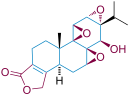
- was isomerized in the presence of base and dehydrated to give diene 45. Reduction of 45 with 10% Pd/C afforded 8 in good yield (60%) after recrystallization. Benzylic oxidation of 8 (CrO3/HOAc, 45%), followed by C-14 ether cleavage (BBr3) and subsequent sodium borohydride reduction afforded 46 with
- the desired stereochemistry of the C-7 benzylic hydroxy group. Compound 46 was converted to triptonide 2 by Alder periodate reaction (NaIO4, 74%), and a sequencing m-CPBA epoxidation and basic hydrogen peroxide oxidation (H2O2/OH−) procedure (two steps, 28%). Finally, sodium borohydride reduction of 2
- isomerization of olefin 43, the benzylic oxidation of 8, the use of m-CPBA to introduce the C-9,11 epoxide and the non-stereoselective reduction of the C-14 carbonyl group using sodium borohydride, caused an unacceptable overall yield (1.6%). This pioneering work undoubtedly established the basis for the future


Metal-free mechanochemical oxidations in Ertalyte® jars
Beilstein J. Org. Chem. 2019, 15, 1786–1794, doi:10.3762/bjoc.15.172
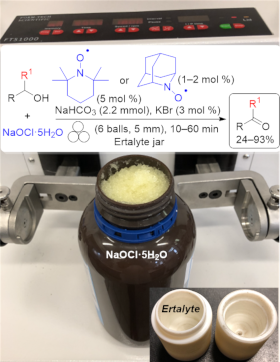
- carboxylic acid derivatives were observed in any sample. Similar results were obtained for alcohols containing an aliphatic carbon ring in their backbone, such as cyclohexylmethanol (5a). Interestingly, the oxidation reaction of benzylic alcohols proceeded smoothly to completeness in about 10 minutes even
- without need for TEMPO. The results changed significantly with benzylic alcohols decorated with an electron-withdrawing group in the aromatic ring such as 4-nitrobenzylalcohol (and 4-cyanobenzylalcohol), which required 5 mol % of TEMPO to be oxidized. Based on these experimental results, we hypothesize
- benzylic alcohols 6a or 7a to afford the corresponding intermediate benzyl hypobromites 6c or 7c (Scheme 5, reaction 3). In the final step, the base deprotonates the acidic benzylic proton leading to the corresponding benzaldehyde 6b or 7b (Scheme 5, reaction 4). The oxidation of furfuryl alcohol gave


N-(1-Phenylethyl)aziridine-2-carboxylate esters in the synthesis of biologically relevant compounds
Beilstein J. Org. Chem. 2019, 15, 1722–1757, doi:10.3762/bjoc.15.168

- NaBH4/ZnCl2 mixture (chelation controlled) gave the aziridine alcohol 20 as a major product. Reductive opening of the aziridine ring produced the amino alcohol 21 which was transformed into the substituted oxazolidin-2-one 22. Its catalytic hydrogenation effected deoxygenation at the benzylic position
- cleavage of the aziridine ring occurred regiospecifically at the N–C3 bond (benzylic position) to provide N-Boc-ᴅ-phenylalaninol ((R)-118) after saponification. When mesylation of (2S,1'R/S,1''R)-28 was followed by LiAlH4 reduction the aziridine (2R,1'R)-119 was produced from which the acetate (2R,1'R)-120
- these conditions the acetate function was also hydrolyzed the carboxy group was formed by oxidation of the hydroxymethyl residue. To complete the synthesis N- and O-benzylic protecting groups were removed during the Birch reaction. A polyoxamic structural framework was found in polyoxins, natural


A novel three-component reaction between isocyanides, alcohols or thiols and elemental sulfur: a mild, catalyst-free approach towards O-thiocarbamates and dithiocarbamates
Beilstein J. Org. Chem. 2019, 15, 1523–1533, doi:10.3762/bjoc.15.155
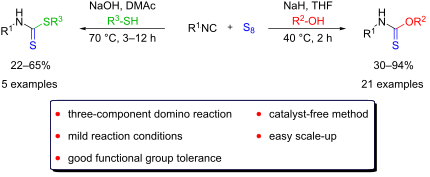
- , we have turned our attention to different benzylic alcohols that could be utilized to further examine the functional group tolerance of the reaction. Notably, chlorine, bromine and iodine substituents were compatible with the transformation, providing 3m, 3n, 3r and 3s in 81–89% yield. The nitrile




Superelectrophilic carbocations: preparation and reactions of a substrate with six ionizable groups
Beilstein J. Org. Chem. 2019, 15, 1515–1520, doi:10.3762/bjoc.15.153
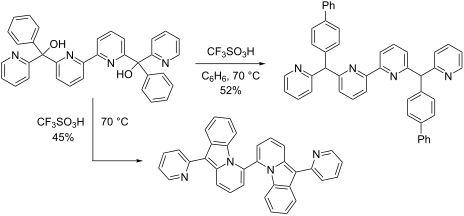
- (pyridinium/benzylic carbocation) for the hexacation 14, while the ratio of charges is 4:1 (pyridinium/benzylic carbocation) for the pentacation 5. Similarly, we previously reported good chemoselectivity for trication 3 – no cyclization product observed in the presence of benzene – but poor chemoselectivity
- arylation product is observed). This is attributed to the presence of two carbocationic sites stabilized by benzylic-type resonance. Thus, molecular structures having a very large overall charge may be viable if stabilizing groups are incorporated into the structure. Experimental General. All reactions were


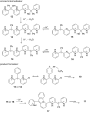


Formation of an unexpected 3,3-diphenyl-3H-indazole through a facile intramolecular [2 + 3] cycloaddition of the diazo intermediate
Beilstein J. Org. Chem. 2019, 15, 1347–1354, doi:10.3762/bjoc.15.134
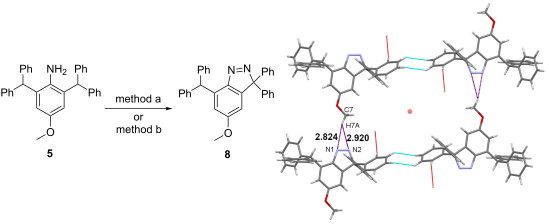
- , the spectrum showed only one benzylic proton, as a singlet at 6.82 ppm. 13C NMR and HSQC showed tertiary and quaternary resonances at 51.3 and 101.5 ppm, respectively. The first resonance is indicative of HC(Ph)2, while the one at 101.5 ppm is more likely to be the 3,3-diphenyl-substituted carbon of
- highly activated benzylic carbon and further expedited by three phenyl groups, to form the resonance stabilisation of 9 [32]. Furthermore, 8 cannot attain planarity of the methylene–benzhydryl fragment due to steric hindrance. These reactions appear to be also encouraged by the reduction of the crowding


Alkylation of lithiated dimethyl tartrate acetonide with unactivated alkyl halides and application to an asymmetric synthesis of the 2,8-dioxabicyclo[3.2.1]octane core of squalestatins/zaragozic acids
Beilstein J. Org. Chem. 2019, 15, 1194–1202, doi:10.3762/bjoc.15.116
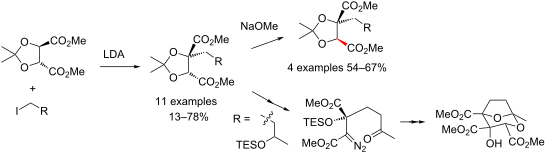
- (e.g., 7, Scheme 2) was originally reported by Seebach and co-workers for ‘activated’ (allylic, benzylic) alkyl halides [17][18][19]. If an alkylated tartrate 9 could be accessed from a silyloxy-substituted alkyl iodide 8 and subsequently oxidised (for example via a second tartrate enolate) with
- work, which concluded that only especially reactive halides (methyl, benzylic, allylic) were feasible electrophiles; with iodoethane, 1-iodo-2-methylpropane and chloromethoxymethane no alkylation products were formed [17][18][19]. Given these rather discouraging observations in the context of our


Molecular recognition using tetralactam macrocycles with parallel aromatic sidewalls
Beilstein J. Org. Chem. 2019, 15, 1086–1095, doi:10.3762/bjoc.15.105
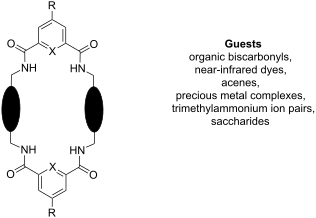
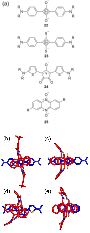
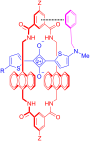
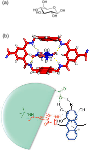
- water is due primarily to a highly favorable enthalpic change [61]. Furthermore, tetralactam threading studies using water-soluble squaraine guests with flanking benzylic groups have produced Ka values that were close to 1011 M−1 [62]. The affinity gain is due to a guest back-folding effect where the
- affinity of the threaded squaraine is enhanced by additional contacts made by the dye’s flanking benzylic groups with the external surface of the surrounding macrocycle (Scheme 4). This type of noncovalent interaction between an encapsulated guest and the external surface of the surrounding tetralactam has


Photochemical generation of the 2,2,6,6-tetramethylpiperidine-1-oxyl (TEMPO) radical from caged nitroxides by near-infrared two-photon irradiation and its cytocidal effect on lung cancer cells
Beilstein J. Org. Chem. 2019, 15, 863–873, doi:10.3762/bjoc.15.84
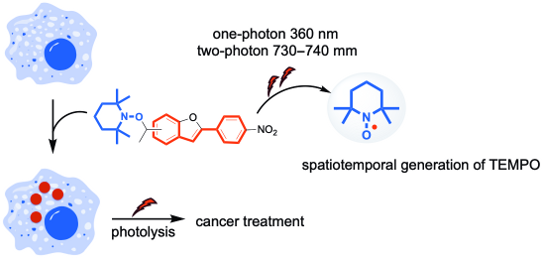
- -iodo-4-nitrobenzene (3) [68]. The TEMPO moiety was introduced at the benzylic position of 5a and 5b using the copper-catalyzed radical reaction in the presence of tert-butyl hydroperoxide (TBHP) to afford 2a and 2b in 38% and 52% yield, respectively [69]. The caged TEMPOs 2a and 2b were thermally
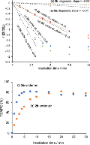
- , the compounds oxidized at the benzylic carbon, 6 and 7, were isolated in 15% (15%) and 56% (42%) yield in the photolysis of 2a and 2b under atmospheric conditions, respectively (Scheme 3), indicating that under degassed conditions, the photochemically generated radical pair returns to the starting




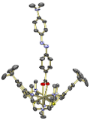
Coordination chemistry and photoswitching of dinuclear macrocyclic cadmium-, nickel-, and zinc complexes containing azobenzene carboxylato co-ligands
Beilstein J. Org. Chem. 2019, 15, 840–851, doi:10.3762/bjoc.15.81
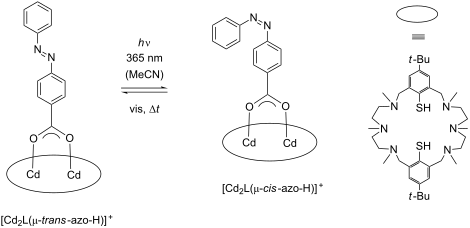
- solution. Thus, the six N-methyl groups give rise to two singlets (one for the methyl protons on the benzylic nitrogen atoms (NBzCH3) and one for the methyl protons on the central amine nitrogen of the linking diethylenetriamine units (NCH3)). Note that the four aromatic protons (ArH) and the tert-butyl
- protons [C(CH3)3] appear as singlets. The remaining six signals can be assigned to the methylene protons of the linking diethylenetriamine chains (two doublets for the benzylic CH2 and four multiplets for linking CH2 groups). The 1H NMR data are indicative of a C2v symmetric structure of the [Cd2L]2





Tuning the stability of alkoxyisopropyl protection groups
Beilstein J. Org. Chem. 2019, 15, 746–751, doi:10.3762/bjoc.15.70
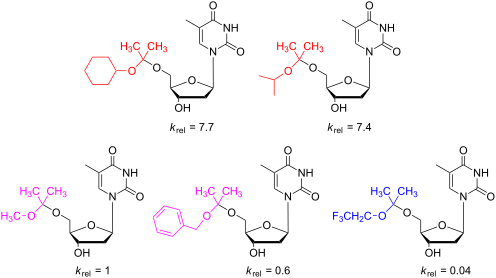
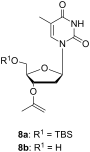
- ., 8a (Figure 2). Recently, the same kind of enol ether formation was considered in connection to an optimization of the conditions for MIP protection on secondary and benzylic hydroxy groups of mandelonitrile derivatives in a flow reactor process [9]. All of the studied acetals are stable toward basic



Selective benzylic C–H monooxygenation mediated by iodine oxides
Beilstein J. Org. Chem. 2019, 15, 602–609, doi:10.3762/bjoc.15.55
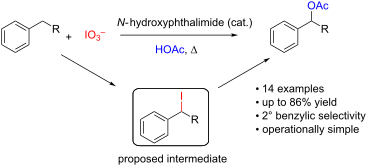
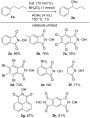
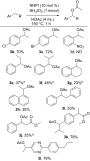
- 08544 USA Permanent address: Department of Chemistry, North Central College, 30 N. Brainard Street, Naperville, IL 60540 USA; phone: +1-630-637-5187. 10.3762/bjoc.15.55 Abstract A method for the selective monooxdiation of secondary benzylic C–H bonds is described using an N-oxyl catalyst and a
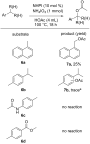
- oxygenation of substrates containing secondary benzylic C–H bonds, yielding the corresponding benzylic acetates in good to moderate yield. Tertiary benzylic C–H bonds were shown to be unreactive under similar conditions, despite the weaker C–H bond. A preliminary mechanistic analysis suggests that this NHPI
- -iodate system is functioning by a radical-based mechanism where iodine generated in situ captures formed benzylic radicals. The benzylic iodide intermediate then solvolyzes to yield the product ester. Keywords: acetoxylation; benzylic; iodate; NHPI; oxidation; radical; Introduction The ability to




Study on the regioselectivity of the N-ethylation reaction of N-benzyl-4-oxo-1,4-dihydroquinoline-3-carboxamide
Beilstein J. Org. Chem. 2019, 15, 388–400, doi:10.3762/bjoc.15.35
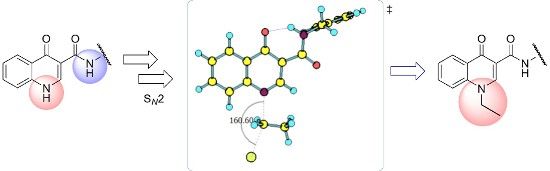
- HMBC spectra. In the COSY spectrum of 7, the correlations between the hydrogen of the amide group (CONH) and of the benzylic hydrogens (CONHCH2Ph) confirm again the occurrence of the alkylation in the nitrogen of the oxoquinoline nucleus (Figure 4). From the HMBC spectrum of 7 it was observed that H-2
- correlated with the carbon resonance for benzylic carbon at δ = 42.06 ppm (2JCH, Figure 5). These data also confirm the regioselectivity of the N-ethylation reaction. Furthermore, adequate crystals of compound 7 were obtained from a mixture of ethanol and DMSO, which allowed the unambiguous resolution of its


Synthesis of 1,2-divinylcyclopropanes by metal-catalyzed cyclopropanation of 1,3-dienes with cyclopropenes as vinyl carbene precursors
Beilstein J. Org. Chem. 2019, 15, 285–290, doi:10.3762/bjoc.15.25

- feasibility of an analogous reaction with 1,3-dienes preparing dienylcyclopropene 4. While treatment of 4 with ZnCl2 led to complex mixtures, likely due to the Lewis acid sensitivity of the benzylic cyclopropenylcarbinol moiety, the use of [Rh2(OAc)4] (1.0 mol %, CH2Cl2, rt) led to the tricyclic compound 5 in




Synthesis and biological activity of methylated derivatives of the Pseudomonas metabolites HHQ, HQNO and PQS
Beilstein J. Org. Chem. 2019, 15, 187–193, doi:10.3762/bjoc.15.18
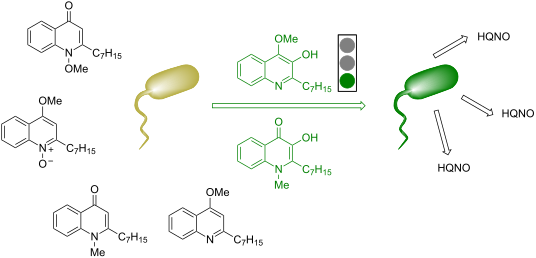
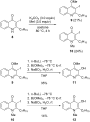
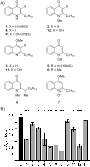
- separated from the N-methylation product by column chromatography and could be isolated in 32% yield. Surprisingly, the N-methylated product under these conditions was not NMe-HHQ (2), but instead a second methylation in the benzylic position had occurred to give N-methyl-2-(1-methylheptyl)-4(1H)-quinolone
- in the benzylic position could be observed. Instead of direct ortho-metalation, a strategy based on halogen–lithium exchange proved to be more suitable. To this end, HHQ (1) was converted into 3I-HHQ (8) following a literature procedure [21]. 3I-HHQ (8) was then methylated using the MeI/K2CO3
- conditions to give a mixture of OMe-3I-HHQ (9, 21%) and NMe-3I-HHQ (10, 24%, Scheme 3). Interestingly, in the case of 3I-HHQ (8) the ratio of N-methylation versus O-methylation was almost 1:1 and no further methylation of 10 in the benzylic position was observed. With the methylated compounds 9 and 10 in