Search results
Search for "chiral" in Full Text gives 1074 result(s) in Beilstein Journal of Organic Chemistry. Showing first 200.
Mechanistic investigations of polyaza[7]helicene in photoredox and energy transfer catalysis
Beilstein J. Org. Chem. 2024, 20, 1236–1245, doi:10.3762/bjoc.20.106
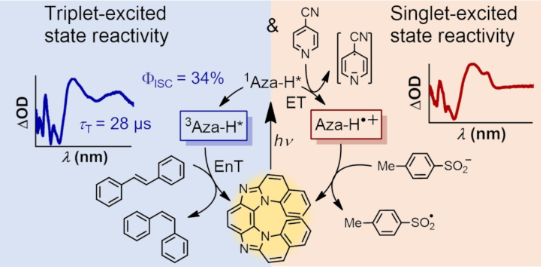
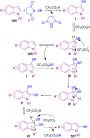
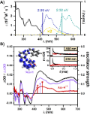
- chloride. We believe that our findings pave the way for a broader usage of the inherently chiral polyazahelicene photocatalyst class, both in photoredox and energy transfer catalysis. A) Room-temperature absorption (black) and emission (yellow) spectra of Aza-H recorded in MeCN/H2O (9:1), and fluorescence




Enantioselective synthesis of β-aryl-γ-lactam derivatives via Heck–Matsuda desymmetrization of N-protected 2,5-dihydro-1H-pyrroles
Beilstein J. Org. Chem. 2024, 20, 940–949, doi:10.3762/bjoc.20.84
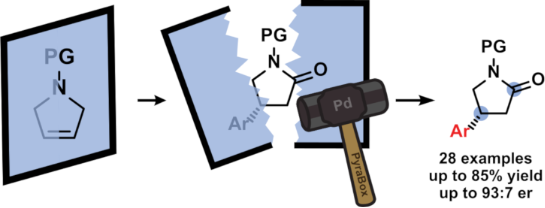
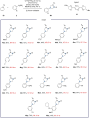
- herein an enantioselective palladium-catalyzed Heck–Matsuda reaction for the desymmetrization of N-protected 2,5-dihydro-1H-pyrroles with aryldiazonium salts, using the chiral N,N-ligand (S)-PyraBox. This strategy has allowed straightforward access to a diversity of 4-aryl-γ-lactams via Heck arylation
- preclude chirality as in the transformation of a prochiral molecular entity into a chiral one [1]. It is a powerful and elegant strategy in asymmetric synthesis [2], which combined with the use of chiral ligands and transition-metal catalysts enabled many valuable transformations to increase molecular
- , key five-membered olefins bearing heteroatoms can provide direct access to chiral sulfones, sulfoxides, phosphine oxides [8], phthalides, isochromanones, and lactones [9] in a very efficient and convenient manner. Despite our previous results in this area, the desymmetrization of 2,5-dihydro-1H




Direct synthesis of acyl fluorides from carboxylic acids using benzothiazolium reagents
Beilstein J. Org. Chem. 2024, 20, 921–930, doi:10.3762/bjoc.20.82
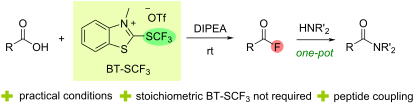
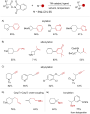
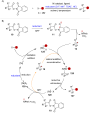
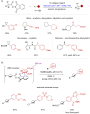
- carboxyl α-position. Finally, to assess the influence of the reaction on the stereochemical integrity of chiral carboxylic acid substrates, the deoxyfluorination was performed on the enantiopure (S)-isomer of ibuprofen (er = 99:1). Pleasingly, efficient conversion to the corresponding amide (S)-5l was
- observed (yield = 72%) with analysis by chiral HPLC revealing no erosion of the enantiomeric ratio (er = 99:1). At this stage, the suitability of BT-SCF3-mediated deoxyfluorination for the one-pot formation of peptide linkages between amino acids was investigated (Scheme 3). Treatment of N-Boc-valine under
- Campbell (Newcastle University) for assistance with chiral HPLC measurements. Funding This work is funded by the Friedrich Ebert Stiftung (scholarship to L.M.M.) and the School of Natural and Environmental Sciences at Newcastle University (studentship to A.H.). Financial support from Deutsche



Skeletal rearrangement of 6,8-dioxabicyclo[3.2.1]octan-4-ols promoted by thionyl chloride or Appel conditions
Beilstein J. Org. Chem. 2024, 20, 823–829, doi:10.3762/bjoc.20.74
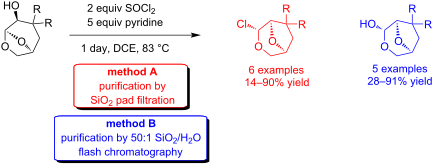
- ) is produced selectively when cellulose-containing materials, including lignocellulosic biomass, are acidified and pyrolysed [1][2]. Lab scale synthesis of this chiral material can be accomplished in a single step without special glassware [3], while large scale production of the reduction product
- cyrene (2) allows for its use as a chiral solvent [4]. This product is emerging as a promising platform chemical for the construction of chiral small molecules for pharmaceuticals [5][6][7][8], as a building block for catalysts and auxiliaries [9][10][11], and in materials applications [12][13][14]. New
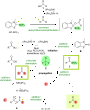
- Diels–Alder adducts of 1, and similar results on the effect of configuration were observed [21]. During some recent attempts at the chlorination of the π-stacking chiral auxiliary 10a using SOCl2 [9], we observed the migration of O8 resulting in the formation of anomeric chlorides analogous to the


Synthesis and characterization of water-soluble C60–peptide conjugates
Beilstein J. Org. Chem. 2024, 20, 777–786, doi:10.3762/bjoc.20.71
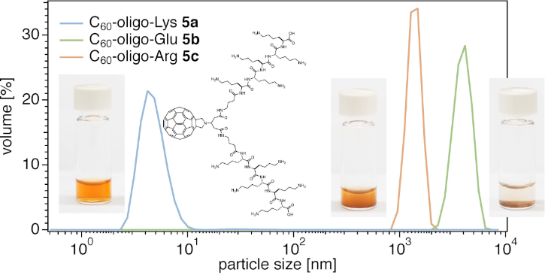
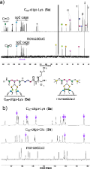
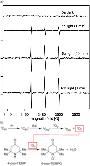
- (highlighted by purple arrows). A similar situation was observed in the expanded spectrum of 5b (Figure 6b, middle, measured in pyridine). This phenomenon suggests a symmetry break in the carbon cage moiety of the C60–peptide conjugate upon the addition of chiral peptide anchors to the C60 core. Together with




Research progress on the pharmacological activity, biosynthetic pathways, and biosynthesis of crocins
Beilstein J. Org. Chem. 2024, 20, 741–752, doi:10.3762/bjoc.20.68
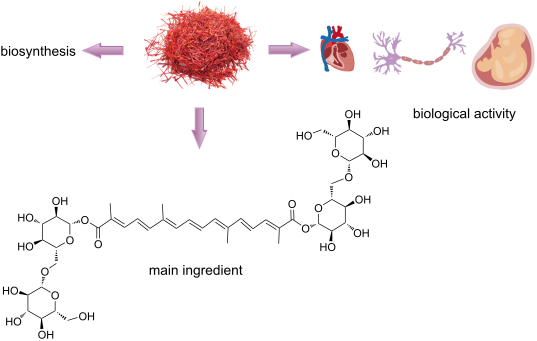
- cell suspension culture, heterologous biosynthesis, and total synthesis [16][17]. Crocins can be obtained from plant cell culture, but the production is prone to epigenetic silencing and toxic intermediates. The chemical synthesis of crocins is challenging due to the presence of numerous chiral centers
- clearance in vivo. Only a few plants can produce crocins, and the content of crocins in these plants is very low. Due to the numerous chiral centers, the total synthesis of crocins is challenging. Therefore, heterologous biosynthesis of crocins utilizing the synthetic biology strategy holds great potential


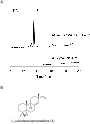
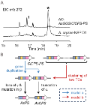
Genome mining of labdane-related diterpenoids: Discovery of the two-enzyme pathway leading to (−)-sandaracopimaradiene in the fungus Arthrinium sacchari
Beilstein J. Org. Chem. 2024, 20, 714–720, doi:10.3762/bjoc.20.65
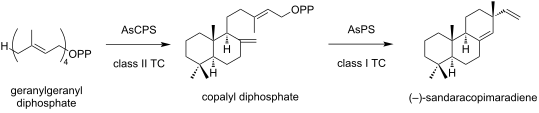
- GGPP, followed by hydrolysis by acid phosphatase. GC–MS analysis revealed that AsCPS synthesizes the same product to ObCPS_11g (see Supporting Information File 1, Figure S4A and B). It should be noted that the stereochemistry of CPP needs further verification due to the lack of chiral resolution of our



Evaluation of the enantioselectivity of new chiral ligands based on imidazolidin-4-one derivatives
Beilstein J. Org. Chem. 2024, 20, 684–691, doi:10.3762/bjoc.20.62
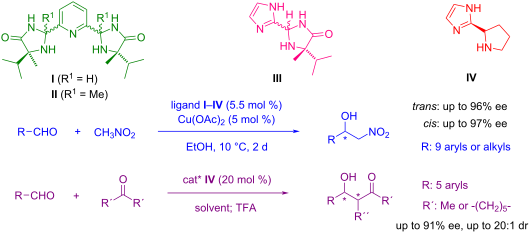
- Jan Bartacek Karel Chlumsky Jan Mrkvicka Lucie Palousova Milos Sedlak Pavel Drabina Institute of Organic Chemistry and Technology, Faculty of Chemical Technology, University of Pardubice, Studentská 573, 532 10 Pardubice, Czech Republic 10.3762/bjoc.20.62 Abstract The new chiral ligands I–III
- also tested in asymmetric aldol reactions. Under the optimised reaction conditions, aldol products with enantioselectivities of up to 91% ee were obtained. Keywords: asymmetric aldol reaction; asymmetric Henry reaction; chiral ligands; enantioselective catalysis; imidazolidine derivatives
- ; Introduction The application of chiral metal complexes as enantioselective catalysts is among the fundamental strategies for preparing compounds in non-racemic forms [1][2][3][4]. These complexes typically comprise a chelating chiral ligand capable of coordinating with a metal ion; otherwise, a metal atom


Palladium-catalyzed three-component radical-polar crossover carboamination of 1,3-dienes or allenes with diazo esters and amines
Beilstein J. Org. Chem. 2024, 20, 661–671, doi:10.3762/bjoc.20.59
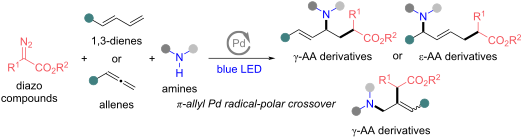
- Geng-Xin Liu Xiao-Ting Jie Ge-Jun Niu Li-Sheng Yang Xing-Lin Li Jian Luo Wen-Hao Hu Guangdong Key Laboratory of Chiral Molecule and Drug Discovery, School of Pharmaceutical Sciences, Sun Yat-sen University, Guangzhou, Guangdong 510006, China 10.3762/bjoc.20.59 Abstract Herein, we report a visible



A laterally-fused N-heterocyclic carbene framework from polysubstituted aminoimidazo[5,1-b]oxazol-6-ium salts
Beilstein J. Org. Chem. 2024, 20, 621–627, doi:10.3762/bjoc.20.54
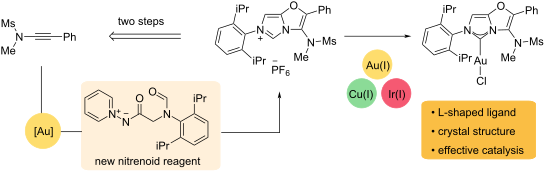
- secondary gold-ligand interactions [8][9][10], chiral environments [11][12][13] including those enabling secondary interactions with substrates for asymmetric catalysis [14], cooperative and bimetallic catalysis [7][15], and redox-enabling function for Au(I)/(III) cycles [16][17]. Such L-shaped ligands


Switchable molecular tweezers: design and applications
Beilstein J. Org. Chem. 2024, 20, 504–539, doi:10.3762/bjoc.20.45
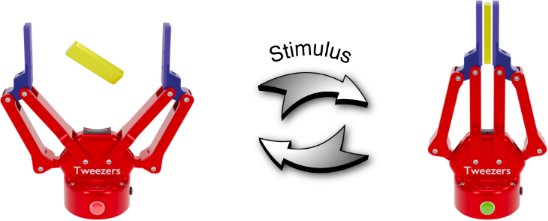
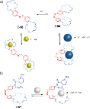
- signals in the low-range visible/NIR region. Upon protonation of the pyridine, the conformation switch leads to a spatial separation of the active Pt moieties and a release of the guest (Figure 4). Also, the same group demonstrated the induction of chirality and fluorescence with chiral guest molecules
- using a similar principle [24]. The protection from the solvent of the intercalated Pt guest enables its fluorescence emission and is accompanied by the induction of chirality in the resulting host–guest complex. A significant enhancement of the circular dichroism response of the chiral guest is
- ) to produce a chiral nematic phase, whose reflected color can change from green to purple under cross-polarized view upon protonation. This system serves as an elegant example of a macroscopic effect induced by a conformational change at the molecular level. In a different approach where the stimuli




A new analog of dihydroxybenzoic acid from Saccharopolyspora sp. KR21-0001
Beilstein J. Org. Chem. 2024, 20, 497–503, doi:10.3762/bjoc.20.44
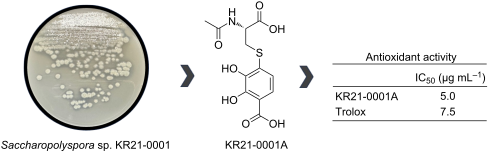
- HCl. The obtained amino acid (alanine) and authentic amino acids were modified using Nα-(5-fluoro-2,4-dinitrophenyl)-ᴅ-leucinamide (ᴅ-FDLA). The LC–MS analysis of ᴅ-FDLA derivatives revealed that the chiral center of the amino acid in 1 had ʟ configuration (Figure S7, Supporting Information File 1



Ligand effects, solvent cooperation, and large kinetic solvent deuterium isotope effects in gold(I)-catalyzed intramolecular alkene hydroamination
Beilstein J. Org. Chem. 2024, 20, 479–496, doi:10.3762/bjoc.20.43
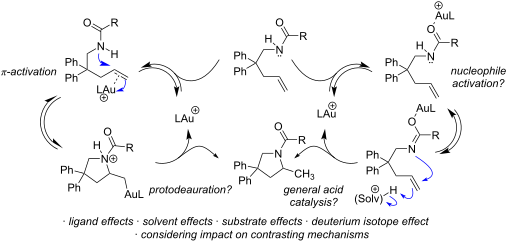
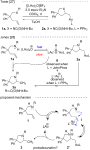
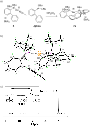
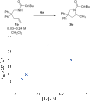
- -workers found a reversal of enantioselectivity that can be controlled by choice of solvent, which they rationalized by invoking a solvent induced change in ion-pairs [6]. In another study by Agbossou-Niedercorn, Michon, and co-workers, they found that chiral alcohols do not impact enantioselectivity [7
- without sacrificing stability, while future design of chiral ligands may depend on a better understanding of the chiral space generated when gold is coordinated to carbonyl functionality, rather than the alkene. Key observations include the following: • Mixed solvent effects support the involvement of







Enhanced host–guest interaction between [10]cycloparaphenylene ([10]CPP) and [5]CPP by cationic charges
Beilstein J. Org. Chem. 2024, 20, 436–444, doi:10.3762/bjoc.20.38
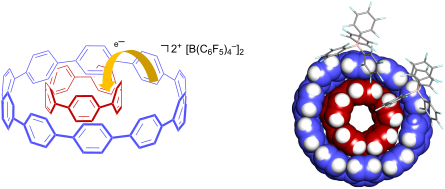
- . Furthermore, Isobe and co-workers also showed that the carbon nanorings with the simplest structural unit of chiral CNTs, such as cyclochrysenylene [34], cyclonaphthylenes [35], and cycloanthanthrenylene [36], are also excellent hosts of fullerenes with exceptionally high binding constants. These results open




Mechanisms for radical reactions initiating from N-hydroxyphthalimide esters
Beilstein J. Org. Chem. 2024, 20, 346–378, doi:10.3762/bjoc.20.35
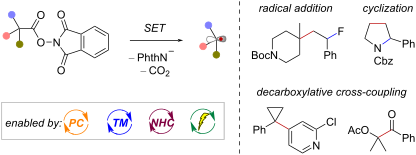
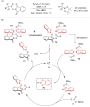
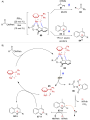
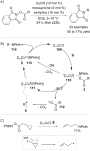
- . With this mechanistic blueprint as a backdrop, Phipps and co-workers developed an enantioselective Minisci-type addition, under dual photoredox and chiral Brønsted acid catalysis [44] (Scheme 5A). In their proposed mechanism, the activation of the NHPI ester radical precursor was proposed to occur via
- the chiral phosphate co-catalyst (Scheme 5B). This event leads to the generation of a potent IrII reductant that begins the photocatalytic cycle by reducing 16 into radical anion 17 while regenerating the ground state of the IrIII photocatalyst. After fragmentation, α-amino radical 18 was proposed to
- undergo addition to the heterocyclic radical acceptor 19 through a ternary transition state 20 involving hydrogen bonding interactions with the chiral phosphate co-catalyst. Notably, a follow-up report revealed that the radical addition is reversible, and that the selectivity determining step involves the








Spatial arrangements of cyclodextrin host–guest complexes in solution studied by 13C NMR and molecular modelling
Beilstein J. Org. Chem. 2024, 20, 331–335, doi:10.3762/bjoc.20.33
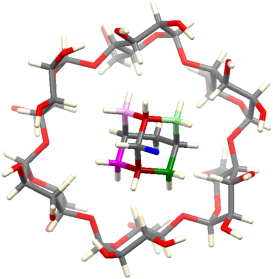
- modelling and solid-state X-ray analysis, provides a detailed description of the spatial arrangement of cyclodextrin host–guest complexes in solution. The chiral cavity of the cyclodextrin molecule creates an anisotropic environment for the guest molecule resulting in a splitting of its prochiral carbon
- dispersion forces and hydrogen bonding between the cyclodextrin (CD) unit and the guest molecule. Determination of the ee of chiral guests was achieved by observing the splitting of 1H NMR signals of the achiral host upon formation of diastereomeric inclusion complexes [18][19]. Shifting the H-3 and H-5
- anisotropy of the chiral cavity is expressed by differences in the magnetic shielding of prochiral atoms, resulting in signal splitting of the prochiral carbons of the guest molecule in 13C NMR spectra. Adamantan-2-amine hydrochloride was used as a model guest molecule containing three sets of prochiral


Catalytic multi-step domino and one-pot reactions
Beilstein J. Org. Chem. 2024, 20, 254–256, doi:10.3762/bjoc.20.25
- stereocenters [7]. In the Review paper by Kisszékelyi and Šebesta, the diverse variety of chiral metal enolates obtained by asymmetric conjugate additions of organometallic reagents and the possibilities to engage metal enolates in tandem reactions with new electrophiles are presented [8]. A Perspective from X

Chiral phosphoric acid-catalyzed transfer hydrogenation of 3,3-difluoro-3H-indoles
Beilstein J. Org. Chem. 2024, 20, 205–211, doi:10.3762/bjoc.20.20
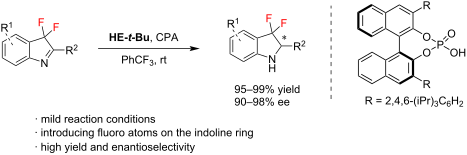
- synthesis of optically active difluoro-substituted indoline derivatives starting from the corresponding 3H-indoles by chiral phosphoric acid-catalyzed transfer hydrogenation was developed. Using Hantzsch ester as the hydrogen source under mild reaction conditions, the target products can be obtained with
- excellent yield and enantioselectivity. Keywords: asymmetric organocatalysis; chiral Brønsted acid; 3,3-difluoroindoline; Hantzsch ester; transfer hydrogenation; Introduction The introduction of fluoro atoms into organic molecules can alter their lipophilicity, solubility, metabolic stability, and
- isostere of polar functional groups [5][6]. Chiral indoline is an important member of the class of nitrogen-containing heterocyclic compounds that often exhibits various pharmaceutical activities and exists in many natural products [7][8]. The enantioselective synthesis of chiral indolines has received


Perspectives on push–pull chromophores derived from click-type [2 + 2] cycloaddition–retroelectrocyclization reactions of electron-rich alkynes and electron-deficient alkenes
Beilstein J. Org. Chem. 2024, 20, 125–154, doi:10.3762/bjoc.20.13
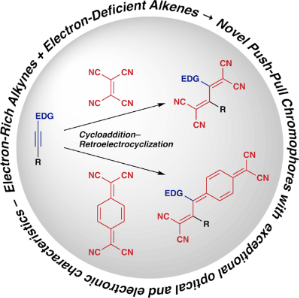
- congestion. In previous studies, chiral induction in TCBD structures was accomplished by introducing chiral allene (51) [124][125] or binaphthyl (52 and 53) [126][127] moieties, as shown in Figure 1. These molecules exhibited Cotton effects related to ICT absorptions, and chiral induction in TCBD moieties
- resulted from optically active constituents. Compound 53, due to its elongated rigid structure, holds potential for use as a chiral dopant in nematic liquid crystals (LCs); however, the helical twisting powers of 53 within nematic LCs are limited. Recently, Alonso-Gómez et al. reported the synthesis and
- optical resolutions of spirobifluorenes featuring two TCBD units located at the 2,2’-positions, designated as 54 [128]. Furthermore, Autschbach et al. prepared chiral carbo[6]helicene–TCBD derivatives 55 and 56 from enantiopure precursors [129]. For such intricate molecular systems, the presence of


Construction of diazepine-containing spiroindolines via annulation reaction of α-halogenated N-acylhydrazones and isatin-derived MBH carbonates
Beilstein J. Org. Chem. 2023, 19, 1923–1932, doi:10.3762/bjoc.19.143
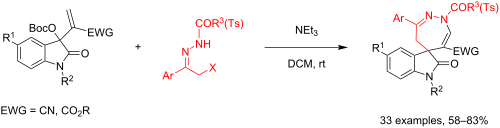
- sequentially underwent a [4 + 3] cycloaddition reaction (reaction 1 in Scheme 1) [54]. Recently, Chen and co-workers reported a chiral tertiary amine-catalyzed asymmetric γ-regioselective [4 + 3] annulation reaction of isatin-derived MBH carbonates and cyclic 2-benzylidenebenzo[b]thiophen-3-ylidene
- )benzenesulfonamides to give chiral azepane spirooxindoles with excellent stereoselectivity (reaction 2 in Scheme 1) [55][56]. Du and co-workers reported a DABCO-mediated [4 + 3] cycloaddition reaction between o-quinone methides and isatin-derived MBH carbonates to give functionalized benzo[b]oxepine derivatives in




Anion–π catalysis on carbon allotropes
Beilstein J. Org. Chem. 2023, 19, 1881–1894, doi:10.3762/bjoc.19.140
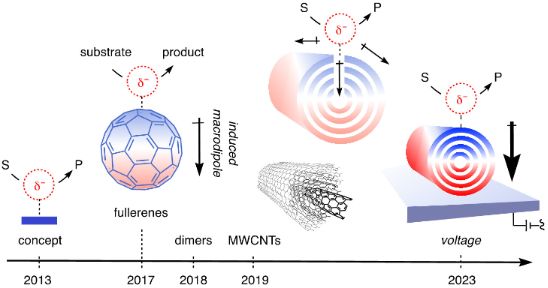
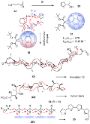
- forward. Decarboxylation of the resulting intermediate IV then affords the chiral addition product 6. This enolate addition is in kinetic competition with simple decarboxylation, yielding thioacetate 7. Under most conditions, this decarboxylation is favored. Anion–π catalysis selectively accelerates the




A novel recyclable organocatalyst for the gram-scale enantioselective synthesis of (S)-baclofen
Beilstein J. Org. Chem. 2023, 19, 1811–1824, doi:10.3762/bjoc.19.133

- organocatalysts has been a major breakthrough in the realization of enantioselective transformations. Stereoselective synthesis is essential in the pharmaceutical industry, as the development of drugs often requires the production of enantiomerically pure chiral compounds [6][7][8]. The application of
- reaction could be used in the synthesis of several drugs to form a carbon–carbon bond in a stereoselective manner [6][35]. Our goal was to synthesize the chiral precursor 17 of baclofen (Scheme 3). To achieve this objective, we first planned to use Meldrum’s acid and 4-chloro-trans-β-nitrostyrene (16
- investigated a new, industry-relevant synthesis route of baclofen in the gram-scale. The chiral precursor 17 of baclofen was obtained with quantitative yield and excellent enantiomeric excess (up to 96%). The catalyst was applied in five consecutive runs without a decrease in catalytic activity, moreover, the


Active-metal template clipping synthesis of novel [2]rotaxanes
Beilstein J. Org. Chem. 2023, 19, 1776–1784, doi:10.3762/bjoc.19.130
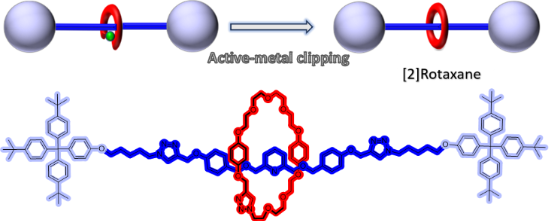
- CuAAC click chemistry [38][39][40]. The choice of CuAAC as key step to accomplish the synthesis of the [2]rotaxanes was motivated by its high efficiency [41]. In addition, this reaction proved its versatility for rotaxanes synthesis [15], including chiral [2]rotaxanes [42]. The macrocycles M1 and M2


Trifluoromethylated hydrazones and acylhydrazones as potent nitrogen-containing fluorinated building blocks
Beilstein J. Org. Chem. 2023, 19, 1741–1754, doi:10.3762/bjoc.19.127
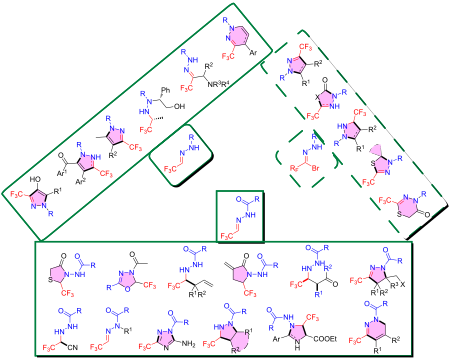
- conditions [38] (Scheme 2). Moreover, a chiral Brønsted acid-catalyzed asymmetric 6π electrocyclization of trifluoroacetaldehyde hydrazones for the synthesis of enantiomerically enriched 3-trifluoromethyl-1,4-dihydropyridazines was first developed by Rueping et al. [39]. The strategy involves chiral ion
- acid-catalyzed hydrocyanation of trifluoromethylated acylhydrazones, in which the product was the precursor for the preparation of chiral fluorinated amino acids [104] (Scheme 17a). Meanwhile, Hu et al. provided a novel and efficient process for the synthesis of polysubstituted 3-trifluoromethyl-1,2,4


N-Sulfenylsuccinimide/phthalimide: an alternative sulfenylating reagent in organic transformations
Beilstein J. Org. Chem. 2023, 19, 1471–1502, doi:10.3762/bjoc.19.106
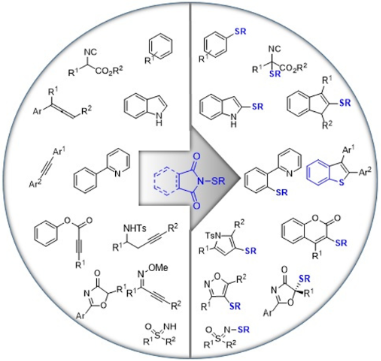
- groups increased, the percentage of enantioselectivity decreased, where in the case of NH-oxindoles, the product was achieved with only 6% ee. Another sulfenylation at the 3-position of unprotected oxindoles with N-(phenylthio)phthalimide was reported by Feng et al. [73]. A chiral N,N′-dioxide-Sc(OTf)3
- with N-(arylthio)phthalimide 14 and N-chlorophthalimide (96) under phase-transfer conditions was developed by Maruoka and co-workers (Scheme 39) [74]. The presence of chiral bifunctional catalysts C and D with the amide, or sulfonamide moieties could improve the enantioselectivity. Also, the
- azepane. A possible mechanism was suggested for this Lewis base catalysis system. Methanesulfonic acid (MsOH) activated reagent 14, which coordinated with the Lewis base (S)-E, to form complex I. Then, the transfer of the sulfenium ion to the alkene resulted in chiral thiiranium ion II. Capture of the