


Search results
Search for "hydride" in Full Text gives 505 result(s) in Beilstein Journal of Organic Chemistry. Showing first 200.
Synthesis and properties of quinazoline-based versatile exciplex-forming compounds
Beilstein J. Org. Chem. 2020, 16, 1142–1153, doi:10.3762/bjoc.16.101
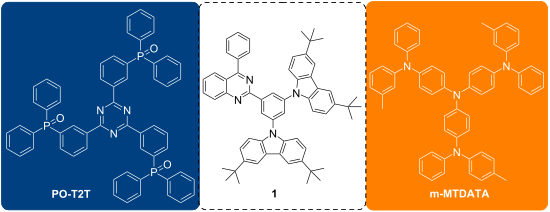
- procedure reported in literature [27]. OLED fabrication and characterization was carried out according to the procedure reported earlier [28]. Materials 2-Aminobenzophenone, 3,5-difluorobenzaldehyde, ammonium acetate, phenothiazine, sodium hydride, sodium sulfate, tert-butyl chloride, zinc chloride
- compounds 1–3 were synthesized through nucleophilic substitution reactions between quinazoline derivative Q1 and the respective donor compound in the presence of sodium hydride in dry dimethylformamide (DMF). The reaction mixtures were refluxed for 24 h. After completion of the reactions, the reaction
- ): Quinazoline derivative (Q1, 0.25 g, 0.79 mmol), 3,6-di-tert-butylcarbazole (0.48 g, 1.7 mmol) and sodium hydride (0.50 g, 1.6 mmol) in dry dimethylformamide (DMF) were used for the nucleophilic substitution reaction. The title compound was obtained as yellowish crystals in a yield of 0.25 g, 37%; Tm = 181 °C


Accelerating fragment-based library generation by coupling high-performance photoreactors with benchtop analysis
Beilstein J. Org. Chem. 2020, 16, 982–988, doi:10.3762/bjoc.16.87
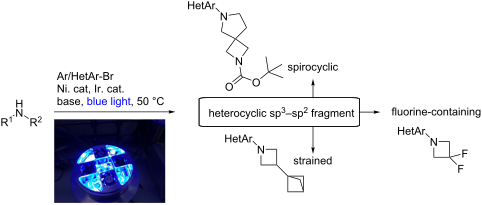
- to nickel(0) is believed to occur by β-hydride elimination on a sacrificial amount of amine [10]. The strained character of azaspiro[3,3]heptane might prevent this event. On the other hand, pyramidalization at nitrogen is much more important in azetidines [16][17][18]. This might lower the oxidation



Combining enyne metathesis with long-established organic transformations: a powerful strategy for the sustainable synthesis of bioactive molecules
Beilstein J. Org. Chem. 2020, 16, 738–755, doi:10.3762/bjoc.16.68
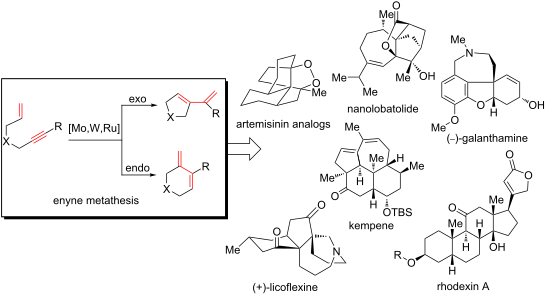
- affording a protected tetracyclic kempane derivative. The latter was further converted into (+)-kempene-2 (14a) in 91% yield by deprotection and acetylation (Scheme 17). A reduction of the intermediate ketone with lithium aluminum hydride followed by an acetylation finally led to (+)-kempene-1 (14b) and




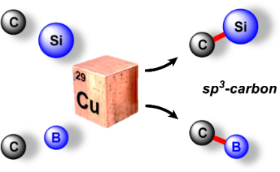
Recent advances in Cu-catalyzed C(sp3)–Si and C(sp3)–B bond formation
Beilstein J. Org. Chem. 2020, 16, 691–737, doi:10.3762/bjoc.16.67
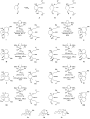
- arylborylation of α-alkylstyrenes 387 has been investigated, delivering 1,1-adducts 389, 390 in the presence of palladacycle PCy3Pd G3, while 1,2-adducts 391–393 result using APhosPd G3. The former reaction proceeds through a second-stage β-hydride elimination/re-insertion pathway, although for the latter set of


Towards the total synthesis of chondrochloren A: synthesis of the (Z)-enamide fragment
Beilstein J. Org. Chem. 2020, 16, 670–673, doi:10.3762/bjoc.16.64
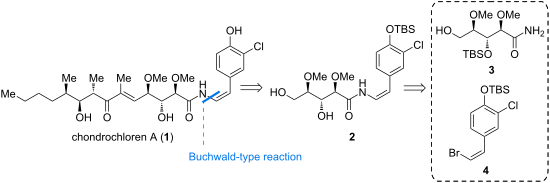
- double bonds into the corresponding (Z)-monohalogenated derivatives using palladium(II) acetate, triphenylphosphine and tributyltin hydride. Following this procedure, we were able to obtain (Z)-bromide 4 in four steps and an overall yield of 39% [21][22][23][24]. Cross coupling of fragments 3 and 4 The


Rhodium-catalyzed reductive carbonylation of aryl iodides to arylaldehydes with syngas
Beilstein J. Org. Chem. 2020, 16, 645–656, doi:10.3762/bjoc.16.61
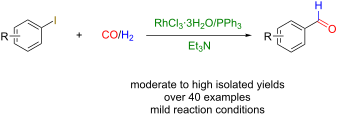
- environmentally friendly than other frequently used hydrogen sources like hydrosilanes [17], tributyltin hydride (Bu3SnH) (often used in natural product syntheses) [18][19][20] and hydroboranes [21][22][23], since the only byproduct is water. The production, storage and use of H2 received much attention and




Synthesis of disparlure and monachalure enantiomers from 2,3-butanediacetals
Beilstein J. Org. Chem. 2020, 16, 616–620, doi:10.3762/bjoc.16.57
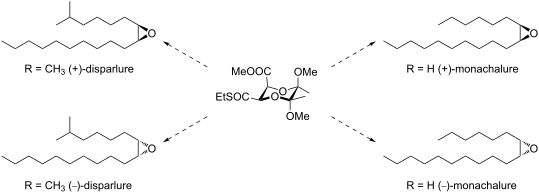
- 19 instead. This compound was obtained from both aldehyde 15 and its precursor ethyl thioester methyl ester 14, respectively (Scheme 3). Both substrates 14 and 15 were reduced to the corresponding diol 17 with lithium aluminum hydride with 73% or 83% yield, respectively. Next, the selective


Copper-catalyzed enantioselective conjugate reduction of α,β-unsaturated esters with chiral phenol–carbene ligands
Beilstein J. Org. Chem. 2020, 16, 537–543, doi:10.3762/bjoc.16.50
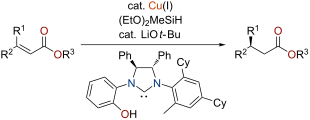
- work of Stryker and co-workers on triphenylphosphine-stabilized copper hydride complexes [1][2], copper hydrides have been widely used for conjugate reductions of α,β-unsaturated carbonyl compounds [3]. Especially a chiral copper catalyst combined with a stoichiometric amount of a silane reagent, which
- generated copper hydride in situ, has successfully been utilized for enantioselective reactions with β,β-disubstituted α,β-unsaturated carbonyl compounds [4][5][6][7][8][9][10][11]. The pioneering work of Buchwald and co-workers on the enantioselective conjugate reduction of α,β-unsaturated esters using a
- plays crucial roles in both the catalytic activity and stereoselectivity [19][20][21]. Notably, these catalyst systems were also applicable for three-component coupling reactions using hydrosilanes as hydride reagents [17]. Based on this knowledge, we decided to investigate the effects of the phenol–NHC


Recent advances in photocatalyzed reactions using well-defined copper(I) complexes
Beilstein J. Org. Chem. 2020, 16, 451–481, doi:10.3762/bjoc.16.42
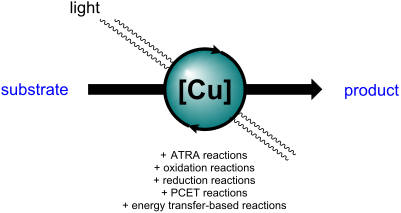
- oxidized copper complex oxidized the glycine ester, regenerating the catalyst, furnishing the N-centered radical cation. Then, the latter underwent a 1,2-hydride shift in the presence of the base (or the phthalimide anion) to form the α-amino radical that recombined with the alkyl radical formed in the








Architecture and synthesis of P,N-heterocyclic phosphine ligands
Beilstein J. Org. Chem. 2020, 16, 362–383, doi:10.3762/bjoc.16.35
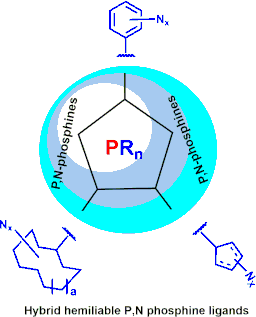
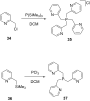
- ] were the phosphine boranes were prepared by reacting phosphines with sodium borohydride. Alternatively, the reduction of phosphine oxide byproducts with lithium tetrahydridoaluminate, calcium aluminum hydride, and hydrosilanes can also be used to regenerate the phosphine ligands. Hydrosilane reagents
- -(diphenylphosphine)ethyl)-4,5-diazafluorene ligand 47 which includes a cyclopropylated intermediate (45, Scheme 8). The ligand was prepared by an initial cyclopropanation of diazafluorene 44. For this, 44 was treated with a dibromomethane solution in THF in the presence of sodium hydride under reflux for four hours




Recent developments in photoredox-catalyzed remote ortho and para C–H bond functionalizations
Beilstein J. Org. Chem. 2020, 16, 248–280, doi:10.3762/bjoc.16.26
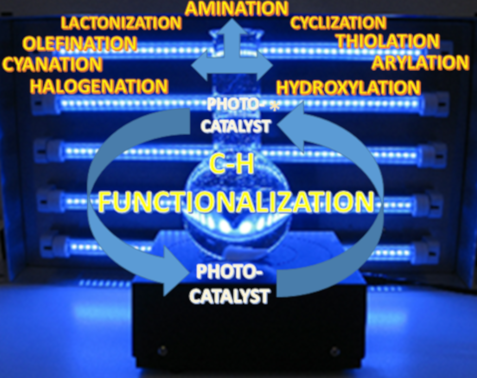
- 22 upon coordination with the carbonyl oxygen atom of the amide group. The complex 22 then coordinated to the acrylate product 23, which rearranged to 24, and the β-hydride elimination of 24 yielded the desired olefinated product 21. C–H olefination of phenolic ethers: Based on Ackermann and co










The reaction of arylmethyl isocyanides and arylmethylamines with xanthate esters: a facile and unexpected synthesis of carbamothioates
Beilstein J. Org. Chem. 2020, 16, 159–167, doi:10.3762/bjoc.16.18
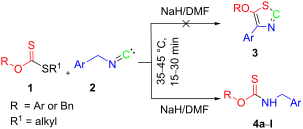
- hydride-mediated reaction of arylmethyl isocyanides with xanthate esters in DMF is reported. The products thus obtained were compared with the carbamothioates obtained by the sodium hydride-mediated condensation of the corresponding benzylamines and xanthate esters in DMF. To account for these unexpected
- reactions, a mechanism is proposed in which the key steps are supported by quantum chemical calculations. Keywords: benzylamines; carbamothioates; density functional theory; intrinsic reaction coordinate analysis; isocyanides; sodium hydride; xanthate esters; Introduction Carbamothioates (thiocarbamates
- reported the synthesis of thiazoles from xanthate esters [31]. In continuation of this ongoing work, we planned to synthesize 5-alkoxy-4-arylthiazoles 3 by the sodium hydride/DMF-mediated reaction of arylmethyl isocyanides 2 with S-alkyl xanthate esters 1 or O-aryl/O-alkyl dithiocarbonates. Unexpectedly


Synthesis of 3-alkenylindoles through regioselective C–H alkenylation of indoles by a ruthenium nanocatalyst
Beilstein J. Org. Chem. 2020, 16, 140–148, doi:10.3762/bjoc.16.16
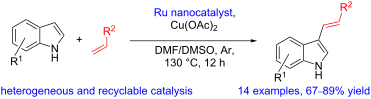
- ones [54][70]. With respect to C–H activation reactions, the presence of surface oxides on our RuNC probably governed its ability to catalyse the C–H alkenylation reaction, in contrast to the role of reduced Ru(0) nanoparticles with hydride/deuteride species on their surface, reported by Pieters et al




Understanding the role of active site residues in CotB2 catalysis using a cluster model
Beilstein J. Org. Chem. 2020, 16, 50–59, doi:10.3762/bjoc.16.7
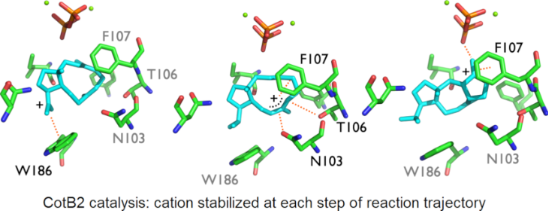
- electrophilic cyclizations to generate intermediate A. Intermediate A undergoes a 1,5-hydride shift, forming intermediate B. A subsequent cyclization forms intermediate C. Intermediate C generates intermediate E via one of two possible pathways: either a direct 1,3-hydride shift or an indirect pathway involving
- two 1,2-hydride shifts. Theoretical investigations by Hong and Tantillo suggested that the indirect transformation from intermediate C to E is energetically favored and might be biosynthetically relevant [38]. This finding is in agreement with the report by Sato and co-workers [39], who performed
- isotope labeling experiments combined with QM calculations. Intermediate G forms via a 1,5-hydride shift from C6 to C10 to generate a homoallylic cation, and the formation of intermediate H occurs due to cyclization to yield a cyclopropyl ring. Intermediate I forms due to isomeric formation of a


Synthesis of C-glycosyl phosphonate derivatives of 4-amino-4-deoxy-α-ʟ-arabinose
Beilstein J. Org. Chem. 2020, 16, 9–14, doi:10.3762/bjoc.16.2
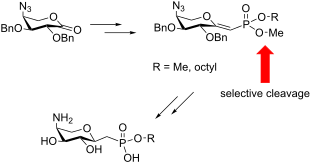
- -arabinopyranoside (1), available in multigram amounts, was benzylated in 79% yield using benzyl bromide and sodium hydride in DMF, followed by hydrolysis of the anomeric aglycon of 2 with 5 M HCl and SrCl2 in acetic acid, which afforded the hemiacetal 3 as a 2:3 α/β anomeric mixture in 60% yield (Scheme 1


Terpenes
Beilstein J. Org. Chem. 2019, 15, 2966–2967, doi:10.3762/bjoc.15.292
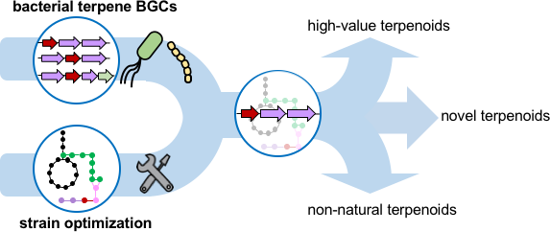
- generate a highly reactive cationic intermediate that can be subject to a cascade reaction through typical carbocation chemistry, including cyclisation reactions, hydride migrations and Wagner–Meerwein rearrangements [1][2]. The cascade is usually terminated by deprotonation or attack of water. The
Why do thioureas and squaramides slow down the Ireland–Claisen rearrangement?
Beilstein J. Org. Chem. 2019, 15, 2948–2957, doi:10.3762/bjoc.15.290
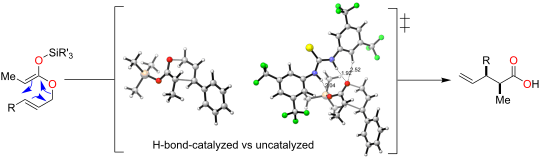
- acid, catalyzed by in situ-generated copper hydride with diethoxymethylsilane as a reductive agent gave the γ,δ-unsaturated acid with good to excellent diastereoselectivities [27]. Various asymmetric organocatalyzed rearrangements are known [28]. However, the catalysis of sigmatropic rearrangements is


Bacterial terpene biosynthesis: challenges and opportunities for pathway engineering
Beilstein J. Org. Chem. 2019, 15, 2889–2906, doi:10.3762/bjoc.15.283
- electrostatic interactions [54]. Moreover, TCs also assist intramolecular atom transfer and rearrangements including hydride or proton transfer and carbon shifts [10]. Eventually, the carbocation is quenched by deprotonation (E1-like) or nucleophilic attack (SN1-like) of water [45]. In contrast to


Photoreversible stretching of a BAPTA chelator marshalling Ca2+-binding in aqueous media
Beilstein J. Org. Chem. 2019, 15, 2801–2811, doi:10.3762/bjoc.15.273
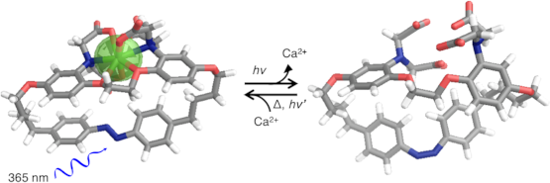
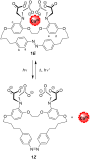
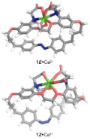
- . Commercially available reagents and solvents were used as received unless otherwise stated. THF and diethyl ether were distilled over sodium/benzophenone. Acetonitrile and dichloromethane were distilled over calcium hydride immediately before use. Compounds 1a and 2 were synthesized according to literature




A review of asymmetric synthetic organic electrochemistry and electrocatalysis: concepts, applications, recent developments and future directions
Beilstein J. Org. Chem. 2019, 15, 2710–2746, doi:10.3762/bjoc.15.264
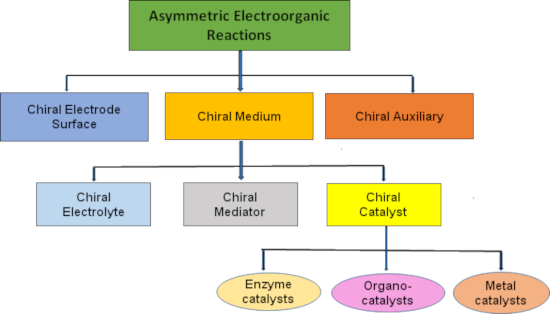
- formation of (S)-63 over (R)-63. Hence, (S)-63 would be converted to ketone 62 via hydride transfer, whereas (R)-63 might be predominantly retained. Very recently, Wirth’s group demonstrated the use of chiral iodoarene 67 as a redox mediator for the electrochemical lactonization of diketo acid derivatives


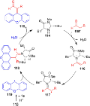


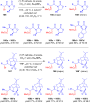


Unexpected one-pot formation of the 1H-6a,8a-epiminotricyclopenta[a,c,e][8]annulene system from cyclopentanone, ammonia and dimethyl fumarate. Synthesis of highly strained polycyclic nitroxide and EPR study
Beilstein J. Org. Chem. 2019, 15, 2664–2670, doi:10.3762/bjoc.15.259

- in hydride abstraction with the formation of carbocation 9 and subsequent cyclization to the bicyclic alkoxyamine 10. The resulting isoxazolidine ring is then opened with m-CPBA in the usual way, retaining the configuration of the asymmetric center at 3aC-OH [13] (Scheme 4). The steric strain in


Acid-catalyzed rearrangements in arenes: interconversions in the quaterphenyl series
Beilstein J. Org. Chem. 2019, 15, 2655–2663, doi:10.3762/bjoc.15.258
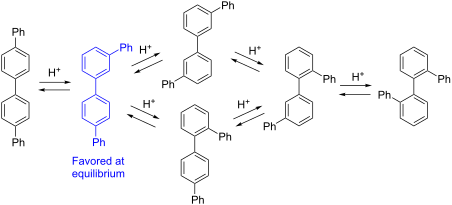
- pirouette rearrangement of the reduced ring through a spirocyclic intermediate and then re-oxidation to phenanthrene. These reactions involve a complex series of proton and hydride transfers. Results and Discussion Beyond terphenyls, acid-catalyzed rearrangements pose limitations in the synthesis of
- difference between ipso cations and their non-ipso counterpart which might be formed rapidly by secondary 1,2-hydride shifts. In principle, the equilibrium product in these complex reactions might correlate with relative energies of the neutral quaterphenyl isomers. Reliable heats of formation for


Current understanding and biotechnological application of the bacterial diterpene synthase CotB2
Beilstein J. Org. Chem. 2019, 15, 2355–2368, doi:10.3762/bjoc.15.228
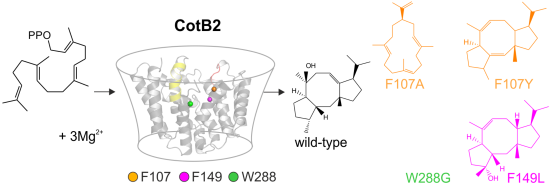
- result of heterolytic cleavage of the pyrophosphate–hydrocarbon bond or protonation of a double bond, (2) propagation of the carbocation along the forming terpene skeleton as a result of ring formations, hydride and/or methyl shifts, de- and reprotonation of intermediates, the creation of a terminal
- lead to different migration of the double bound and different hydroxylation pattern (Table 2 and Scheme 1). An exchange to leucine drastically changes the product to cembrane A (7) and 3,7,18-dolabellatriene 12 (Table 2 and Scheme 1) [36]. The cation migrates via a 1,5 hydride shift, as shown by
- Figure 7). F107 has been targeted by site-directed mutagenesis as well (Table 2 and Scheme 1) [30], leading to compounds R-cembrene A (7) and cyclooctat-1,7-diene (8). Now the cationic intermediate has two possibilities to react to G, either by a 1,3- and 1,5-hydride shift or by two 1,2-hydride shifts


Isolation and biosynthesis of an unsaturated fatty acid with unusual methylation pattern from a coral-associated bacterium Microbulbifer sp.
Beilstein J. Org. Chem. 2019, 15, 2327–2332, doi:10.3762/bjoc.15.225
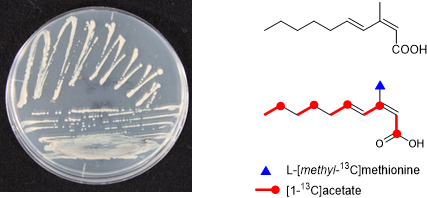
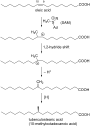
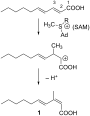
- methyltransferase, followed by 1,2-hydride shift and deprotonation, and a subsequent reduction of the exo-methylene intermediate gives rise to a methyl group (Scheme 2) [18]. The presence of the exo-methylene intermediate was experimentally proved but the enzyme responsible for the double bond reduction has not


Harnessing enzyme plasticity for the synthesis of oxygenated sesquiterpenoids
Beilstein J. Org. Chem. 2019, 15, 2184–2190, doi:10.3762/bjoc.15.215
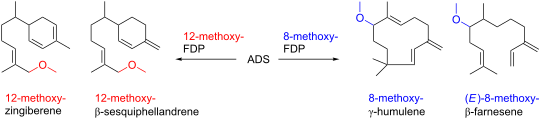
- closure to form the bisabolyl cation (6). A [1,3]-hydride shift to form carbocation 7 and 1,10-ring closure yield the amorphyl cation (8). Finally, deprotonation generates amorpha-4,11-diene (3) [8][9]. Several sesquiterpene synthases including ADS accept FDP analogues containing a variety of heteroatoms
- bisabolyl cation and the amorphane skeleton. Rather the active site conformations of 11 and cation 22 appear to enable a 1,11-cyclisation to 23. A subsequent [1,3]-hydride shift to cation 24 and deprotonation from C15 lead to 8-methoxy-γ-humulene (20, Scheme 3A). Alternatively, the nucleophilic 8-methoxy
- group could react at C10 to induce a fast 1,11-cyclisation, forming cation 25, which effectively competes with the isomerization of 11 to 8-methoxy-NDP. A subsequent [1,3]-hydride shift leads to 24 (Scheme 3A). Direct deprotonation of 22 at C15 forms the minor reaction product (E)-8-methoxy-β-farnesene





