Search results
Search for "ketone" in Full Text gives 711 result(s) in Beilstein Journal of Organic Chemistry. Showing first 200.
A one-pot electrochemical synthesis of 2-aminothiazoles from active methylene ketones and thioureas mediated by NH4I
Beilstein J. Org. Chem. 2022, 18, 1249–1255, doi:10.3762/bjoc.18.130
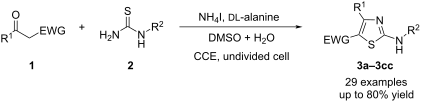
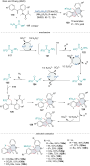
- can act as a bi-functional organocatalyst due to the existence of both Lewis base (NH2) and Brønsted acidic (COOH) sites. In the suggested mechanism, the carboxy group may polarize the carbonyl group of the active methylene ketone and the amino group as a Lewis base serves the formation of enolate to
- produce α-iodo ketone with the molecular I2 produced by anodic oxidation. Subsequently, the nucleophilic substitution between intermediate 4 and thiourea tautomer gives α-sulfur substituted ketone 5. Intermediate 5 undergoes intramolecular nucleophilic addition to the carbonyl group and followed by




Vicinal ketoesters – key intermediates in the total synthesis of natural products
Beilstein J. Org. Chem. 2022, 18, 1236–1248, doi:10.3762/bjoc.18.129
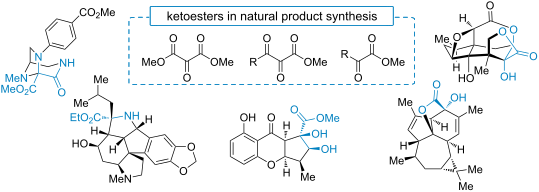
- , Scheme 6) [15]. Through a series of finely tuned CH oxidations, cedrol (31) was converted to the lactone 32. In a single step, using Riley oxidation conditions, the methyl ketone moiety was transferred to the α-ketoester 33. Reduction, lactonization, and elimination gave the ketoesters-derived enol 34


Lewis acid-catalyzed Pudovik reaction–phospha-Brook rearrangement sequence to access phosphoric esters
Beilstein J. Org. Chem. 2022, 18, 1188–1194, doi:10.3762/bjoc.18.123
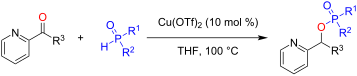
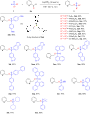
- in moderate to good yield. Delightfully, in addition to aldehydes, a ketone was also applicable under standard conditions, albeit affording the product in a comparably lower yield, probably due to the lower reactivity and steric hindrance of the substrate (see 3bl). Moreover, pyridine bearing two
- formaldehyde or ketone groups could also be transformed into the desired diphosphination products 3bm and 3bn in moderate to good yield. The generality of the system was further showcased by tolerating quinoline and isoquinoline groups, and the desired products 3bp and 3bq were afforded in a high yield




Electrochemical formal homocoupling of sec-alcohols
Beilstein J. Org. Chem. 2022, 18, 1062–1069, doi:10.3762/bjoc.18.108
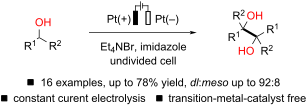
- (Scheme 5a). The dl:meso ratio of 2a was identical compared with that observed in the reaction using 1a as the starting material. This observation indicated that ketone 3a would be the intermediate in the present transformation. The reaction in the absence of imidazole also proceeded to afford 2a in a
- somewhat lower yield with a high diastereoselectivity. In both cases, the reaction proceeded with the good mass balance of 2a and 3a. On the other hand, the reaction without adding water resulted in a decrease in the dl:meso ratio of 2a, and ketone 3a was transformed into unidentified byproducts. When dl
- -2a was subjected to the present reaction conditions, oxidative C–C bond cleavage of dl-2a proceeded to give the corresponding ketone 3a (Scheme 5b) [48]. Recovered 2a was found to be a mixture of dl and meso isomers, indicating that homocoupling of in situ-generated ketone 3a occurred under the




Electrochemical hydrogenation of enones using a proton-exchange membrane reactor: selectivity and utility
Beilstein J. Org. Chem. 2022, 18, 1055–1061, doi:10.3762/bjoc.18.107
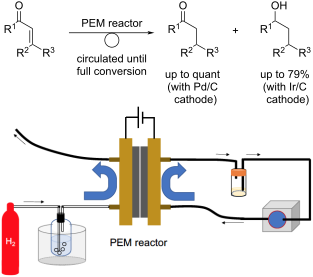
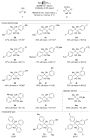
- 2b). As mentioned above, ketone 2a was obtained selectively with the use of a Pd/C catalyst for the cathode (Table 3, entry 1). To clarify the scope of the reaction, we carried out the electrochemical reduction of several enones 1 using Pd/C cathode catalyst (Scheme 2). After current was passed to
- the circulating system until 1a was consumed, the ketone 2a, obtained by the exclusive reduction of the C=C moiety, was obtained in 81% yield with a chemoselectivity of 92%. Similarly, cyclopentanone 2b was obtained from the corresponding enone 1b in 74% yield (88% selectivity). Substituted
- cyclohexanone such as 3-methylcyclohex-2-en-1-one (1c) gave the desired product 2c selectively in 89% yield (100% selectivity). A benzene-conjugated ketone 1d and an ester 1e could also be subjected to electroreduction to afford the corresponding ketones 2d and 2e in 63% and quantitative yield, respectively





Electroreductive coupling of 2-acylbenzoates with α,β-unsaturated carbonyl compounds: density functional theory study on product selectivity
Beilstein J. Org. Chem. 2022, 18, 956–962, doi:10.3762/bjoc.18.95

- and successive treatment with 1 M HCl gave 2-cyanonaphthalen-1-ols or 3-(3-cyanoethyl)phthalides. On the other hand, the reaction of 2-acylbenzoates with methyl vinyl ketone under the same conditions produced 3-(3-oxobutyl)phthalides as the sole products. What determines the product selectivity was
- substituents on the aromatic ring in substrate 1. On the other hand, 3-(3-oxobutyl)phthalides 5 are obtained by the reaction of compound 1 with methyl vinyl ketone (2b) as the sole products (Scheme 3). The synthesis of naththalene-1-ols [7][8][9] and 3-substituted phthalides [10][11][12][13][14][15][16] is
- vinyl ketone (2b) and subsequent treatment with 1 M HCl afforded phthalides 5a–h in moderate to good yields and naphthalene-1-ols 3’ corresponding to cyclized products 3 were not formed at all (Table 2). The Ep values of substrates 1a–h were observed to be in the range from −1.74 to −1.96 V versus SCE


Anti-inflammatory aromadendrane- and cadinane-type sesquiterpenoids from the South China Sea sponge Acanthella cavernosa
Beilstein J. Org. Chem. 2022, 18, 916–925, doi:10.3762/bjoc.18.91
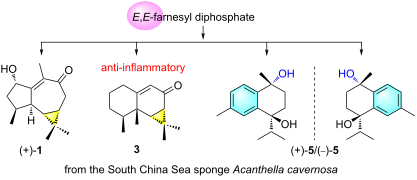
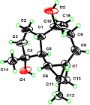
- -unsaturated ketone group (1644 cm−1), as additionally supported by the UV absorption at λmax 245 nm (log ε 3.8). Careful analysis of the NMR spectra of (+)-1 (Table 1 and Figures S8–S13 in Supporting Information File 1) showed a close similarity with those of co-occurring 2 [12][13][14], indicating compound
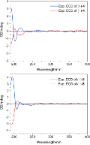
- configuration determination of natural products with stereogenic centers near the chromophore groups [20], was applied, since there is an α,β-unsaturated ketone chromophore nearby C-5 and C-2 in compound (+)-1. Thus, the theoretical ECD spectrum of (+)-1 was calculated by the DFT calculation method at the b3lyp






Synthesis of α-(perfluoroalkylsulfonyl)propiophenones: a new set of reagents for the light-mediated perfluoroalkylation of aromatics
Beilstein J. Org. Chem. 2022, 18, 788–795, doi:10.3762/bjoc.18.79
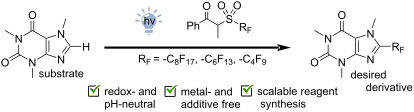
- of aromatics, for which trifluoromethylation was also possible in good to high yields for electron-rich aromatic rings [10]. In this protocol, inspired by Norrish type I reactions and the elimination of β-substituents after ketone photoexcitation [11][12][13], a series of reagents containing an α


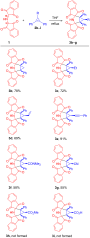
Synthesis of bis-spirocyclic derivatives of 3-azabicyclo[3.1.0]hexane via cyclopropene cycloadditions to the stable azomethine ylide derived from Ruhemann's purple
Beilstein J. Org. Chem. 2022, 18, 769–780, doi:10.3762/bjoc.18.77
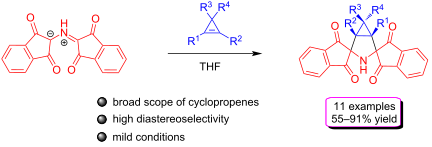
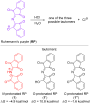
- betaine form 1 is the most thermodynamically stable of all tautomers (ΔG = −4.9 kcal/mol). It is also not surprising that the O-protonated form 1', which is both a ketone and an enol, is found to be the most unfavorable (ΔG = 10.8 kcal/mol). In contrast to the O-protonated tautomer 1', both the N






Synthesis of odorants in flow and their applications in perfumery
Beilstein J. Org. Chem. 2022, 18, 754–768, doi:10.3762/bjoc.18.76
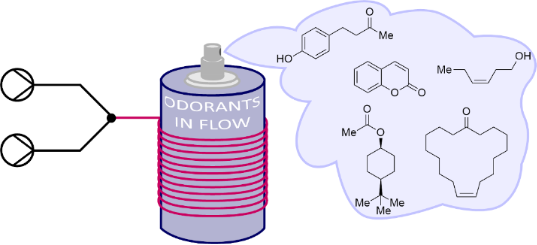
- fixatives but also enhancing the perceptibility of a perfume [23]. Fruity odorants One of the most important odorants giving raspberries their characteristic scent is the so-called “raspberry ketone” (5) having a “sweet, fruity, and warm odor” which is frequently used for fruity perfumes and as a flavor [9
- ]. It is prominently used in, e.g., Tom Ford: Tuscan Leather along with notes of leather, muguet, and thyme, defining the character of this scent. The related methyl ether 6 (“raspberry ketone methyl ether”) is also used as odorant but is, in contrast to raspberry ketone (5), “intensely sweet, floral
- of up to 0.35 kg/h for enone 4. In the second step, the obtained 4-aryl-3-buten-2-ones 3 and 4 are selectively hydrogenated in flow using a packed-bed reactor with Raney nickel as catalyst affording raspberry ketone (5) in 91% yield and raspberry ketone methyl ether (6) in 94% yield, respectively


Inductive heating and flow chemistry – a perfect synergy of emerging enabling technologies
Beilstein J. Org. Chem. 2022, 18, 688–706, doi:10.3762/bjoc.18.70
- included a carboxylation and a Parham cyclization and hence a Grignard alkylation of ketone 82 using reagent 81. The resulting alcohol 83 was subjected to thermolysis that led to water elimination. This step proceeded in just 30 s by employing the inductive heating technique. The crude elimination product
- catalyst and consequently to inactivation. The polymerization could be suppressed by preloading the reactor with the vinyl methyl ketone 86 before starting the process. Nevertheless, it could not be sustained over a longer period of time. By splitting the process into two independent operations, a yield of
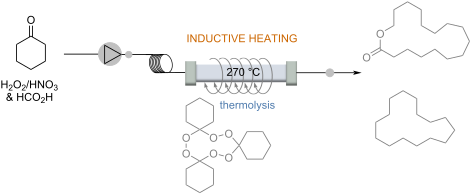
- heating and the residence time was only 12 minutes. The Macrolide® 89 was obtained in 14% together with the aliphatic macrocyclic 90, the latter can be oxidatively converted into the corresponding ketone, which is of practical importance in the fragrance industry. It is clear that this process could not




Tosylhydrazine-promoted self-conjugate reduction–Michael/aldol reaction of 3-phenacylideneoxindoles towards dispirocyclopentanebisoxindole derivatives
Beilstein J. Org. Chem. 2022, 18, 469–478, doi:10.3762/bjoc.18.49
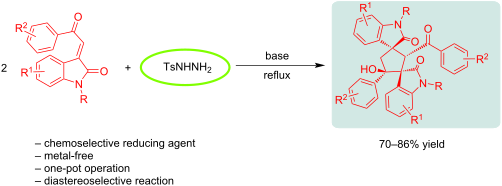
- -phenylethylidene)indolin-2-one (1j) in acetonitrile with Et3N catalyst under refluxing conditions, and isolated the corresponding saturated ketone 1-methyl-3-(2-oxo-2-phenylethyl)indolin-2-one (4j) in 60% yield, which results from reduction of the double bond of α,β-unsaturated ketone (Scheme 5). The structure of
- compound 4j was determined by NMR spectral data. After that we conducted another reaction between saturated ketone 4j with unsaturated ketone (E)-1-methyl-3-(2-oxo-2-phenylethylidene)indolin-2-one (1j) under base-catalyzed conditions, gratifyingly we obtained our desired product


Synthesis of 3,4,5-trisubstituted isoxazoles in water via a [3 + 2]-cycloaddition of nitrile oxides and 1,3-diketones, β-ketoesters, or β-ketoamides
Beilstein J. Org. Chem. 2022, 18, 446–458, doi:10.3762/bjoc.18.47

- corresponding ketone (10 mmol) in ethyl acetate (20 mL). The reaction mixture was stirred at rt for 12 h. After the reaction was complete, as indicated by TLC, the mixture was carefully treated with 10% aqueous NH4Cl (30 mL) and the pH adjusted to 5 with a solution of hydrochloric acid (3 M). The aqueous phase



Cs2CO3-Promoted reaction of tertiary bromopropargylic alcohols and phenols in DMF: a novel approach to α-phenoxyketones
Beilstein J. Org. Chem. 2022, 18, 420–428, doi:10.3762/bjoc.18.44
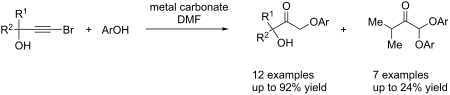
- after Cs2CO3 convertion to CsBr (because of the very poor solubility of CsBr in DMF) has an influence on the rate of diphenoxyketone formation. In addition, the suppression of the di(nitrophenoxy)ketone formation can be due to the lower basicity of a reaction mixture since nitrophenols 2d,e are more


Four bioactive new steroids from the soft coral Lobophytum pauciflorum collected in South China Sea
Beilstein J. Org. Chem. 2022, 18, 374–380, doi:10.3762/bjoc.18.42
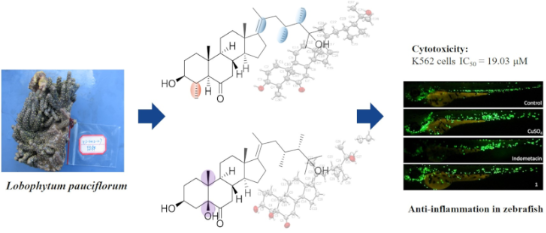
- ketone carbonyl at C-6 and the double bond at C-17, respectively. Thus, the planar structure of 2 was established as shown in Figure 1. The relative configuration of 2 was deduced by the cross-peaks shown by a 2D NOESY spectrum (Figure 3). The NOE correlations of H-8 with H3-18 and H3-19, and H-9 (δH


A resorcin[4]arene hexameric capsule as a supramolecular catalyst in elimination and isomerization reactions
Beilstein J. Org. Chem. 2022, 18, 337–349, doi:10.3762/bjoc.18.38
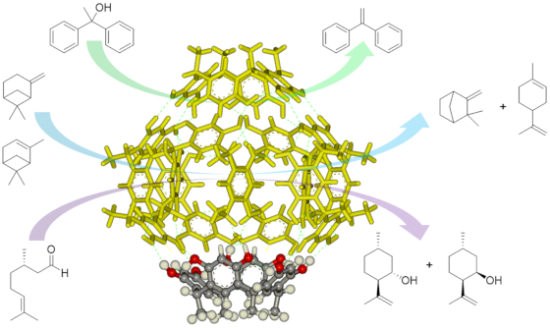
- and efficient organocatalyst. Recent promoted reactions by the resorcin[4]arene capsule include the intramolecular ether cyclization [34], the synthesis of bis(heteroaryl)methanes [35], the imine formation [36], the Michael addition reactions of N-methylpyrrole on methyl vinyl ketone [37], the


A Se···O bonding catalysis approach to the synthesis of calix[4]pyrroles
Beilstein J. Org. Chem. 2022, 18, 325–330, doi:10.3762/bjoc.18.36
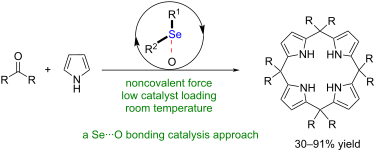
- investigation on using an asymmetric ketone such as pentan-2-one as a reactant showed that the reaction gave an inseparable mixture of diastereomers. Meanwhile, upon using benzaldehyde as a reactant, the reaction system was complex and there was no major product. Proposed activation mode The chalcogen bonding



Iridium-catalyzed hydroacylation reactions of C1-substituted oxabenzonorbornadienes with salicylaldehyde: an experimental and computational study
Beilstein J. Org. Chem. 2022, 18, 251–261, doi:10.3762/bjoc.18.30
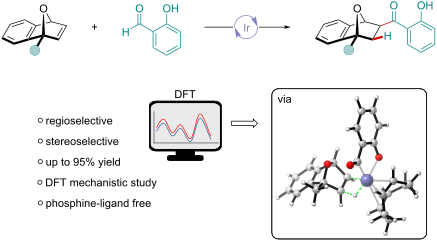
- a 61%, 52%, and 76% yield, respectively. A significant decrease in the yield was observed for electron-withdrawing C1-substituted OBDs with ketone- (15i) and ester- (15j) substituted adducts only being produced in a 5% and 9% yield, respectively; however, unreacted starting material was recovered
- determine the effect of the electron-withdrawing group on the efficacy of the reaction. Interested if the C1-substituted ketone OBD 13i was merely unreactive, we subjected it to a competition reaction against C1-substituted methyl OBD 13b (Scheme 3). In the presence of 13i, the C1-substituted methyl OBD 13b
- last key step in the catalytic cycle involves the C–C bond-forming reductive elimination to form the final ketone intermediate IN3a or IN3b (Figure 1). Two possible transition states, 2aTS3a and 2bTS3b, can be located. The concerning free energy barrier about IN2a to IN3a, via 2aTS3a is 10.8 kcal/mol


Regioselective synthesis of methyl 5-(N-Boc-cycloaminyl)-1,2-oxazole-4-carboxylates as new amino acid-like building blocks
Beilstein J. Org. Chem. 2022, 18, 102–109, doi:10.3762/bjoc.18.11
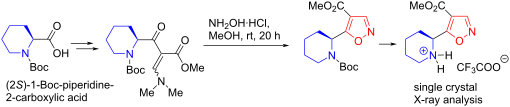
- -oxazoles are: the 1,3-dipolar cycloaddition of alkenes and alkynes with nitrile oxides, and the reaction of a three-carbon atom component, such as a α,β-unsaturated ketone or a 1,3-diketone with hydroxylamine hydrochloride [33]. Recently, Rosa et al. reported a useful procedure for the synthesis of various
- -HMBC spectra. The aforementioned enamine proton and protons 2’(4’)-H (δ 4.00-4.09 ppm) from the azetidine ring system shared the HMBC cross-peak with the ketone carbonyl carbon (δ 195.4 ppm). Finally, in the 1H,15N-HMBC spectrum of 3a, an expected long-range correlation between the enamine proton (δ


Efficient synthesis of ethyl 2-(oxazolin-2-yl)alkanoates via ethoxycarbonylketene-induced electrophilic ring expansion of aziridines
Beilstein J. Org. Chem. 2022, 18, 70–76, doi:10.3762/bjoc.18.6
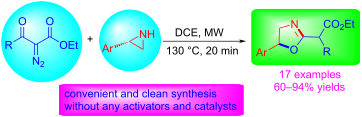
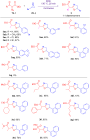
- different chemoselectivities. 2-Alkylideneoxazolidines and 2-alkyloxazolines are structural isomers and can possibly tautomerize each other. As a more electron-withdrawing group with more electron density on the carbonyl group, a ketone favors the conjugation of the double bond as well as the intramolecular




DABCO-promoted photocatalytic C–H functionalization of aldehydes
Beilstein J. Org. Chem. 2021, 17, 2959–2967, doi:10.3762/bjoc.17.205
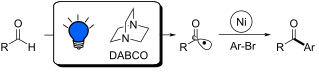
- ). Surprisingly, decent amounts of product were observed when the reaction was performed without the use of DABCO (Table 1, entry 9). This result indicates an alternative mechanism can be possible for aryl ketone formation when there are no bicyclic amines in the reaction media. Recent works indicate a bromine
- aldehydes to generate acyl radicals. The coupling of this radical to the Ni(0) complex furnishes the acyl−Ni(I) complex, which then proceeds oxidative addition to aryl bromide to generate the pentavalent Ni(III) complex. Lastly, reductive elimination affords the desired ketone and the Ni(I) complex, which


A two-phase bromination process using tetraalkylammonium hydroxide for the practical synthesis of α-bromolactones from lactones
Beilstein J. Org. Chem. 2021, 17, 2906–2914, doi:10.3762/bjoc.17.198
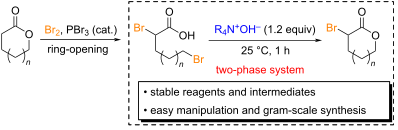
- methyl ethyl ketone (MEK) was as effective. In addition, in situ-generated α-bromo-δ-valerolactone was directly converted into a sulfur-substituted functional lactone without difficulty by reacting it with a sulfur nucleophile in one pot without isolation. This new bromination system is expected to
- is toxic and an environmental pollutant. Therefore, we further optimized the solvent combination to construct an eco-friendlier reaction system (Table 5). Various solvents were used as the organic layer instead of CHCl3, with 3a produced in good yield using methyl ethyl ketone (MEK) as the solvent
- -bromolactones in excellent yields. The use of methyl ethyl ketone (MEK) in the two-phase system led to an eco-friendly system amenable to large-scale synthesis. Furthermore, the α-bromolactones generated in situ by this method were transformed into functional molecules, such as α-thiolated lactones, in good


Iron-catalyzed domino coupling reactions of π-systems
Beilstein J. Org. Chem. 2021, 17, 2848–2893, doi:10.3762/bjoc.17.196
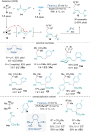
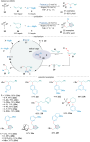
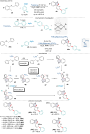
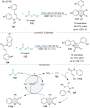
- conditions, both primary and secondary alcohols are oxidized to the corresponding aldehyde/ketone, so the chronology of the addition remains unclear whether the reaction proceeds exclusively via an alkyl radical followed by subsequent oxidation, an acyl radical, or a combination of both. Further, slight













Selective sulfonylation and isonitrilation of para-quinone methides employing TosMIC as a source of sulfonyl group or isonitrile group
Beilstein J. Org. Chem. 2021, 17, 2822–2831, doi:10.3762/bjoc.17.193
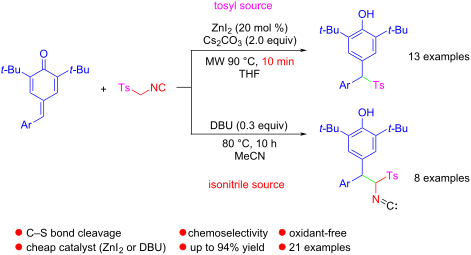
- synthetic utility of this protocol was also demonstrated in the synthesis of difluoroalkylated diarylmethane 5 and diarylmethane ketone derivatives 6 and 7, which are important core structures in natural products and medicines. Keywords: chemoselective reactions; diarylmethyl sulfones; dual role
- acids via a triphenylphosphine-mediated deoxygenation process, followed by reaction with sulfonylated diarylmethane 3b to obtain diarylmethane ketone derivatives 6 and 7 [53]. To gain mechanistic insight into this C–S-bond cleavage sulfonylation reaction, some control experiments were conducted (Scheme


Photophysical, photostability, and ROS generation properties of new trifluoromethylated quinoline-phenol Schiff bases
Beilstein J. Org. Chem. 2021, 17, 2799–2811, doi:10.3762/bjoc.17.191
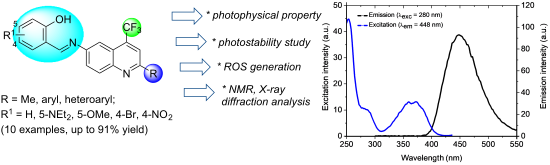
- base; Introduction Schiff bases are an important class of organic compounds first reported by the German chemist Hugo Schiff in 1864 and are formed from the reversible condensation between a primary amine and an aldehyde or a ketone [1]. Also known as azomethines, aldimines, and more commonly as