Search results
Search for "nitro" in Full Text gives 538 result(s) in Beilstein Journal of Organic Chemistry. Showing first 200.
Substituted nitrogen-bridged diazocines
Beilstein J. Org. Chem. 2021, 17, 1503–1508, doi:10.3762/bjoc.17.107
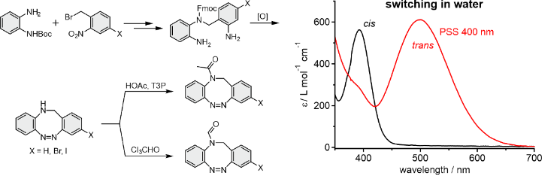
- Fmoc chloride to accomplish an orthogonal protective group strategy. The removal of the Boc groups from compounds 5 with TFA gave the mixed aniline and nitro precursors 6. In previous approaches, the nitro groups were reduced to hydroxylamines with zinc and oxidized to the corresponding nitroso
- compounds with iron(III) to perform an intramolecular Baeyer–Mills reaction [15][21]. We found that a complete reduction of the nitro group to aniline 7 and oxidation with mCPBA is increasing the yield of the intramolecular cyclization from 39% to 62% (over two steps) for the unsubstituted diazocine 8c as


Cascade intramolecular Prins/Friedel–Crafts cyclization for the synthesis of 4-aryltetralin-2-ols and 5-aryltetrahydro-5H-benzo[7]annulen-7-ols
Beilstein J. Org. Chem. 2021, 17, 1481–1489, doi:10.3762/bjoc.17.104
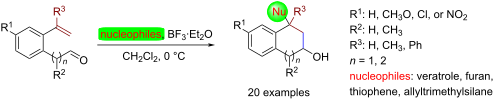
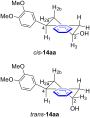
- -vinylnaphthalen-2-yl)acetaldehyde (13h) was prepared from 1-bromo-2-naphthaldehyde in 48% yield over the three steps. It should be noted that the nitro-substituted intermediate 11d was prepared by nitration of 11a with nitric acid under the promotion of acetic anhydride. With the accessibility of the aromatic
- in 38–72% yield. To our gladness, aldehyde 13d, with an electron-deficient nitro group residing on the benzene ring reacted with veratrole under the standard conditions, delivering tetralin 14da in 55% yield. However, using furan as the nucleophile component, the reaction sequence with 13d failed to




Organocatalytic asymmetric Michael/acyl transfer reaction between α-nitroketones and 4-arylidenepyrrolidine-2,3-diones
Beilstein J. Org. Chem. 2021, 17, 1447–1452, doi:10.3762/bjoc.17.100
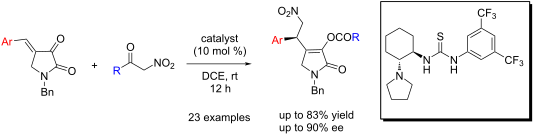
- ]. Herein, we report a better enantioselective version of the reaction between α-nitroketones and 4-arylidenepyrrolidine-2,3-diones (Scheme 1). Results and Discussion Initially a model reaction was examined between N-benzyl-4-benzylidenepyrrolidine-2,3-dione (1a) and 2-nitro-1-phenylethanone (2a) in the


A comprehensive review of flow chemistry techniques tailored to the flavours and fragrances industries
Beilstein J. Org. Chem. 2021, 17, 1181–1312, doi:10.3762/bjoc.17.90
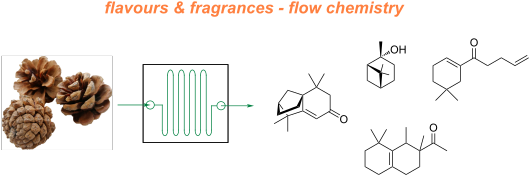
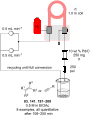
- direct C–C and C=C bond-forming tool which has been widely described in the literature to prepare a range of different valuable intermediates [127][128][129][130][131]. Applications in the F&F industry are sparse which is probably due to the unpredictable nature of some nitro intermediates. However, late
- in 1983, Ballini et al. represented the potentiality of the reaction for the synthesis of dihydrojasmone derivatives (Scheme 20) [132]. Flow chemistry embodies the safest conditions for handling hazardous chemicals, therefore opening new opportunities for nitro compounds to be industrially employed










N-tert-Butanesulfinyl imines in the asymmetric synthesis of nitrogen-containing heterocycles
Beilstein J. Org. Chem. 2021, 17, 1096–1140, doi:10.3762/bjoc.17.86



Nitroalkene reduction in deep eutectic solvents promoted by BH3NH3
Beilstein J. Org. Chem. 2021, 17, 1041–1047, doi:10.3762/bjoc.17.83
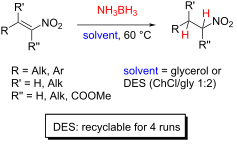
- reproducible protocol to isolate the product without the use of any organic solvent was established, and the recyclability of the DES mixture was successfully investigated. Keywords: alternative solvents; atom economy; DES; nitro derivatives; reduction; Introduction The search for alternative solvents, not
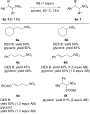
- , nitrocyclohexene was reduced in 60% yield in a ChCl/glycerol mixture, while 6c was obtained in similar yields in glycerol or DES B. Noteworthy, the reduction of nitrobutadiene 5d produced nitro derivative 6d in 63% yield in glycerol and 44% in DES B, with complete control of the chemoselectivity. Remarkably, the
- reduction of nitrodiene 5e, featuring an ester group, was also accomplished with complete chemoselectivity in 50% yield in DES B and in 60% yield in glycerol. The reduction of the nitro group to an amine, followed by cyclization would afford the unsaturated δ-lactam, a valuable precursor for further



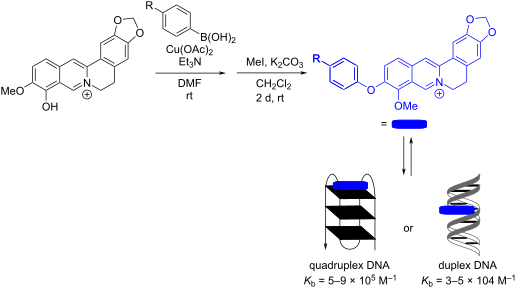
Synthesis of 10-O-aryl-substituted berberine derivatives by Chan–Evans–Lam coupling and investigation of their DNA-binding properties
Beilstein J. Org. Chem. 2021, 17, 991–1000, doi:10.3762/bjoc.17.81
- , presumably caused by the nitro group that is known to be an efficient emission quencher. It was demonstrated with experiments in glycerol solution that the emission of 5a–d increases also upon suppression of conformational freedom of the molecule in media with high viscosity and limited free volume (Figure 2


Application of the Meerwein reaction of 1,4-benzoquinone to a metal-free synthesis of benzofuropyridine analogues
Beilstein J. Org. Chem. 2021, 17, 977–982, doi:10.3762/bjoc.17.79
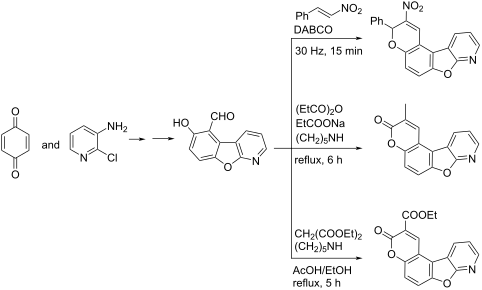
- unknown compounds 14–16 opens many synthetic possibilities for the preparation of novel fused derivatives of 1-aza-9-oxafluorene. The nitro compounds 14 and 15 were reduced to the corresponding aniline derivatives using hydrogen and Pd/C as a catalyst. The resulting aminophenols 17 and 18 were further


Prins cyclization-mediated stereoselective synthesis of tetrahydropyrans and dihydropyrans: an inspection of twenty years
Beilstein J. Org. Chem. 2021, 17, 932–963, doi:10.3762/bjoc.17.77
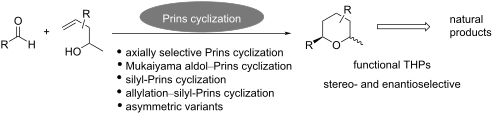
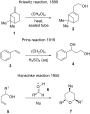
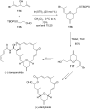
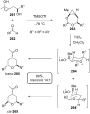
- with alcohol 307 to obtain 309 (Scheme 71) [113]. The introduction of electron-withdrawing nitro groups on the BINOL backbone in the catalysts significantly enhanced the reactivity and enantioselectivity. Zhou et al. reported an asymmetric Prins cyclization of in situ-generated quinone methides from








Effective microwave-assisted approach to 1,2,3-triazolobenzodiazepinones via tandem Ugi reaction/catalyst-free intramolecular azide–alkyne cycloaddition
Beilstein J. Org. Chem. 2021, 17, 678–687, doi:10.3762/bjoc.17.57
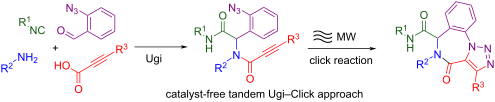
- be prepared via two similar procedures previously described in the literature [17][18]. Our synthetic route is based on the protocol offered in T. Pelkey’s publication [18] using DMF as a solvent for the nucleophilic aromatic substitution of the nitro group in 2-nitrobenzaldehyde (1) instead of the


Synthesis of (Z)-3-[amino(phenyl)methylidene]-1,3-dihydro-2H-indol-2-ones using an Eschenmoser coupling reaction
Beilstein J. Org. Chem. 2021, 17, 527–539, doi:10.3762/bjoc.17.47
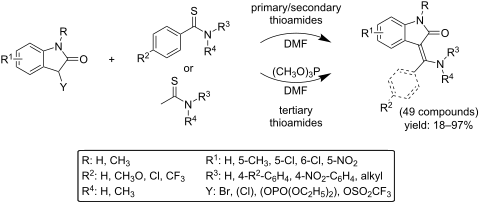
- 5.7–6.4 (series 5), 5.3–5.9 (series 6), and 5.0–5.5 ppm (series 7), except for the nitro derivatives (R1: 5-NO2) where the nitro group always enhances the Ar–H4 chemical shift by about 0.7 ppm. Therefore, a 2D-NOESY experiment was performed for some representative 5-NO2 derivatives (5eb–ed) confirming


Regioselective chemoenzymatic syntheses of ferulate conjugates as chromogenic substrates for feruloyl esterases
Beilstein J. Org. Chem. 2021, 17, 325–333, doi:10.3762/bjoc.17.30
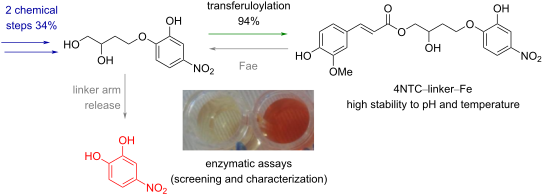
- for esterases [23][38]. The alkylation of 4NTC with homoallylic bromide under basic conditions gave a mixture of mono- and dialkylated 4NTC derivatives, with 10 (38%) predominating because of the preferential formation of the phenolate at the para-position (relative to the nitro group) [39]. Osmium


Diels–Alder reaction of β-fluoro-β-nitrostyrenes with cyclic dienes
Beilstein J. Org. Chem. 2021, 17, 283–292, doi:10.3762/bjoc.17.27

- , and gives the target structures solely in the Z-isomeric form in high yields (up to 92%). These fluorine-containing olefins activated by a nitro group proved to be the appealing building blocks for the construction of numerous monofluorinated compounds [51][52][53][54][55][56]. This paper is devoted
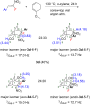
- indicate an isomer as exo or endo according to the stereo-position of the fluorine atom. Thus exo-2 and endo-2 means 5-exo-fluoro-5-endo-nitro-6-exo-arylnorbornene and 5-endo-fluoro-5-exo-nitro-6-endo-arylnorbornene, respectively (Figure 1). Both diastereomers are formed in a nearly 1:1 ratio for the
- majority of the substituents on the aryl group of the nitrostyrenes 1. However, a higher diastereoselectivity towards the endo-isomer was observed when strong electron-withdrawing groups (EWGs) were present in the dienophile. For example, in the case of the 4-cyano and the 3-nitro-substituted derivative



Tuning the solid-state emission of liquid crystalline nitro-cyanostilbene by halogen bonding
Beilstein J. Org. Chem. 2021, 17, 124–131, doi:10.3762/bjoc.17.13
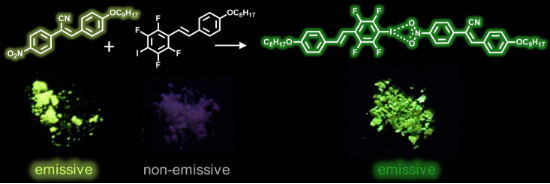
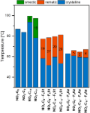
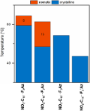
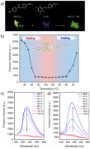
- of iodofluorobenzene derivatives with nitro-cyanostilbenes is reported. The systematic variation of the fluorination degree and pattern indicates the relevance of the halogen bond strength for the induction of liquid crystalline properties. The modular self-assembly approach enables the efficient
- behaviour of halogen-bonded liquid crystals has been reported. In 2014, Tothadi and Desiraju reported on a new supramolecular synthon based on the non-covalent interaction between 1,4-dinitrobenzene and iodobenzene [13]. Their structural analysis of a series of ternary cocrystals revealed that the nitro
- entities [14][15][16][17]. However, no examples for supramolecular materials employing this complementary interaction have been reported so far. In the present study we report the first halogen-bonded liquid crystal based on the complementary binding of nitro-cyanostilbene and tetrafluoroiodobenzene






An atom-economical addition of methyl azaarenes with aromatic aldehydes via benzylic C(sp3)–H bond functionalization under solvent- and catalyst-free conditions
Beilstein J. Org. Chem. 2020, 16, 3093–3103, doi:10.3762/bjoc.16.259
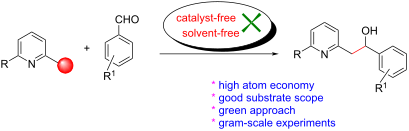
- reacted with 2,6-dimethylpyridine (1a) to obtain the corresponding products 3a–r with a moderate to excellent yield (Table 2). The substrates 2a–d with nitro substituents were well reacted to achieve the desired products 3a–d in 68–95% yield (Table 2, entries 1–4). Distinctly, 2-nitrobenzaldehyde (2c


Chiral anion recognition using calix[4]arene-based ureido receptors in a 1,3-alternate conformation
Beilstein J. Org. Chem. 2020, 16, 2999–3007, doi:10.3762/bjoc.16.249
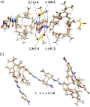
- being slightly tilted out of the cavity. The corresponding interplanar angles Φ with the aromatic subunits are 81.55°, 80.78°, 77.08°, and 80.57°, respectively, starting counterclockwise from the upper subunit bearing a nitro group (Figure 2a). The 1,3-alternate isomer 4a represents quite an interesting
- the nitro groups or (ii) concomitant reduction of the nitro groups and the allyl moieties. Thus, the reaction of 4a with SnCl2∙2H2O in ethanol gave the corresponding amine 5 in 57% yield after column chromatography on alumina. On the other hand, the four-day stirring of 4a with Pd/C under a H2
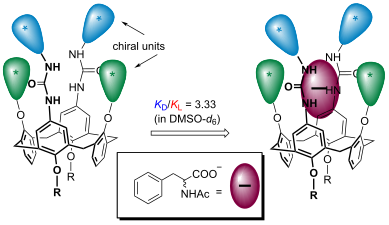
- calixarene. Comparing the complexation constants for the otherwise identical receptors (7a vs 8a or 7b vs 8b), it is obvious that the presence of allyl vs propyl substituents does not impose much difference in terms of absolute K values and selectivity. As expected, the nitro-substituted receptors 7a and 8a




Ultrasound-assisted Strecker synthesis of novel 2-(hetero)aryl-2-(arylamino)acetonitrile derivatives
Beilstein J. Org. Chem. 2020, 16, 2929–2936, doi:10.3762/bjoc.16.242
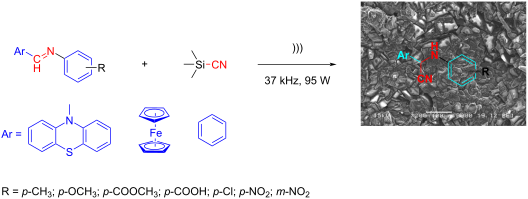
- (hetero)aromatic units and either electron-donating (methyl, methoxy) or electron-withdrawing groups (carboxy, nitro, etc.) pending on the imine substrate. The molecular structures of all synthesized α-(arylamino)acetonitriles 2a–j were fully characterized by spectroscopic methods. The MS spectra


Synthesis of imidazo[1,5-a]pyridines via cyclocondensation of 2-(aminomethyl)pyridines with electrophilically activated nitroalkanes
Beilstein J. Org. Chem. 2020, 16, 2903–2910, doi:10.3762/bjoc.16.239
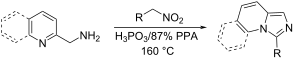
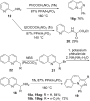
- superior electrophile in comparison to the ester function. Indeed, this bielectrophilic reagent reacted only at the nitro group, providing the amide 20 as the sole product. The yield was quite marginal, primarily due to decomposition of the fragile ester functionality under the harsh reaction conditions
- bar was charged with 2-nitro-1-phenylethan-1-one (1h, 330 mg, 2.00 mmol), 2-picolylamine (12, 108 mg, 1.00 mmol), 87% polyphosphoric acid (500 mg), and phosphorous acid (500 mg). The flask was capped with a septum, placed into an oil bath preheated to 160 °C, and stirred for 2 h. Upon reaction


Selective and reversible 1,3-dipolar cycloaddition of 6-aryl-1,5-diazabicyclo[3.1.0]hexanes with 1,3-diphenylprop-2-en-1-ones under microwave irradiation
Beilstein J. Org. Chem. 2020, 16, 2679–2686, doi:10.3762/bjoc.16.218
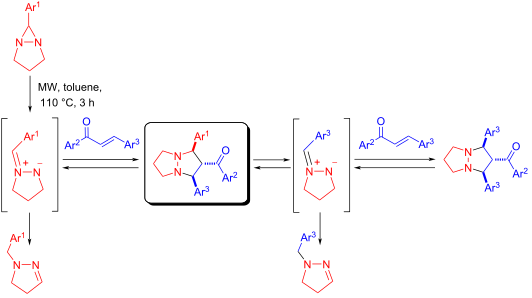
- with carbon disulfide [26], diphenylketene [27], β-nitrostyrenes [28][29], if ionic liquids (IL) were used as reaction media. The reaction of β-nitrostyrenes with azomethine imines proceeds giving mixtures of Michael and anti-Michael-type adducts, containing a nitro group at the C2- or C1-position of




Synthesis and characterization of S,N-heterotetracenes
Beilstein J. Org. Chem. 2020, 16, 2636–2644, doi:10.3762/bjoc.16.214

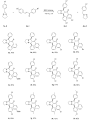
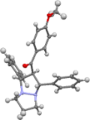
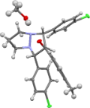
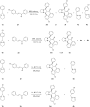
- nitrogen heteroatoms were synthesized in multistep synthetic routes. A Buchwald–Hartwig amination of brominated precursors, thermolysis of azide precursors, and a Cadogan reaction of nitro-substituted precursors were successfully applied to eventually build-up pyrrole rings to stable and soluble fused
- of azide precursors, and a Cadogan cyclization of nitro-substituted precursors were applied to prepare various unknown derivatives. These represent novel core molecules, which by further derivatisation, for example with terminal acceptor groups, would lead to interesting π-conjugated materials for
- derivatives by Cadogan reaction of nitro-substituted precursors. Another possibility for the preparation of fused pyrrole rings is established by the Cadogan reaction [40]. Well-known examples are the reductive cyclization of 2-nitro-1,1’-biphenyls with triethyl phosphite or phosphanes as reducing agent to


Palladium nanoparticles supported on chitin-based nanomaterials as heterogeneous catalysts for the Heck coupling reaction
Beilstein J. Org. Chem. 2020, 16, 2477–2483, doi:10.3762/bjoc.16.201
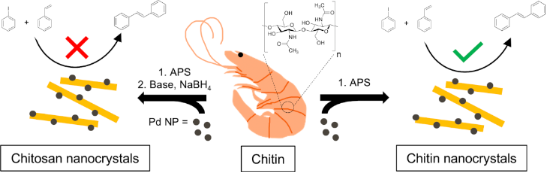
- stabilizing dispersed metal nanoparticle catalysts, along with increased solubility in aqueous media. Very recently, we have shown that these bio-based nanomaterials could stabilize highly disperse Au species on the surface of these nanocrystals to create a highly active catalyst for aromatic nitro reduction


Hierarchically assembled helicates as reaction platform – from stoichiometric Diels–Alder reactions to enamine catalysis
Beilstein J. Org. Chem. 2020, 16, 2338–2345, doi:10.3762/bjoc.16.195
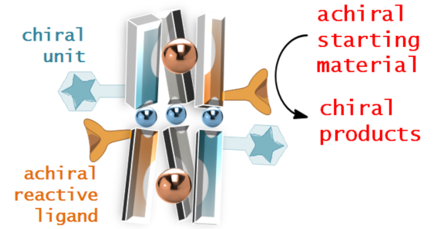
- on the results of the stoichiometric reaction, a secondary amine-catalyzed nitro-Michael reaction is performed as well which afforded reasonable diastereoselectivities. Keywords: Diels–Alder reaction; enamine catalysis; hierarchical helicates; remote-control; stereoselectivity; Introduction Carbon
- stereocontrol and achiral catalytically active ligands. Enamine-catalyzed nitro-Michael reactions The nitro-Michael reaction [37][38][39][40] seemed to be suitable to be performed at hierarchically assembled helicates due to the reaction’s “benchmark character” [41]. Therefore, ligands bearing secondary amine
- measurement of the yield and the diastereoselectivity was possible by NMR spectroscopy. The nitro-Michael reaction of 3 equivalents propanal (14) and β-nitrostyrene (15) with 25 mol % of 13a-H2 after 2 days at room temperature resulted in 45% yield of product 16 and a nearly 1:1 diastereomeric ratio (Table 2


Synthesis of 1,4-benzothiazinones from acylpyruvic acids or furan-2,3-diones and o-aminothiophenol
Beilstein J. Org. Chem. 2020, 16, 2322–2331, doi:10.3762/bjoc.16.193
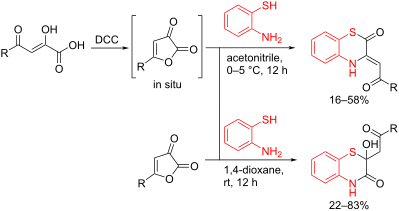
- the catalyst SiO2@H3PW12O40 [21], the reaction of tetracarbonyl compounds with o-aminothiophenol (1a) [22][23], the reaction of copper(II) chelate of ethyl pentafluorobenzoylpyruvate with o-aminothiophenol (1a, one example) [24] and the reaction of DMAD with 6-nitro-1,3-benzothiazole (one example) [25



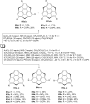
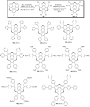
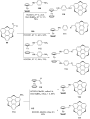
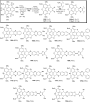
Synthetic approaches to bowl-shaped π-conjugated sumanene and its congeners
Beilstein J. Org. Chem. 2020, 16, 2212–2259, doi:10.3762/bjoc.16.186

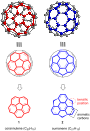
- reaction followed by the reduction of the nitro functionality into the amine group and subsequently performing a Sandmeyer reaction as shown in Scheme 20 [14]. Additionally, they have reported the hydrogenation of sumanene to generate compound 89 having one benzene ring intact in the framework using Pd/C
- Ullmann coupling reaction of 200 to produce the C3-symmetric trinitrotriphenylene 201. Having compound 201 in hand, the nitro groups were further converted into the corresponding amino groups via reduction in the presence of Pd/C under hydrogen gas atmosphere to furnish compound 202 in almost quantitative











Photosensitized direct C–H fluorination and trifluoromethylation in organic synthesis
Beilstein J. Org. Chem. 2020, 16, 2151–2192, doi:10.3762/bjoc.16.183
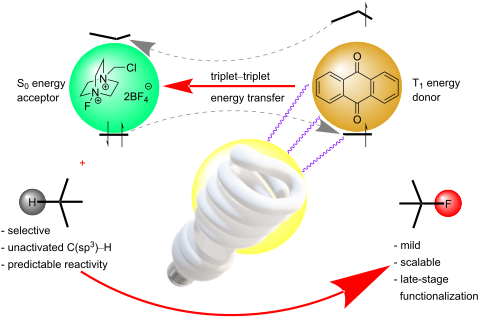
- = 1.20 Å) [9][14], the fluorine atom is often used as a bioisostere for the hydrogen atom. Furthermore, the trifluoromethyl group was recently identified as a bioisostere for the nitro (NO2) group, which is important due to the strong binding ability of the nitro group and the high reactivity, which is
- and co-workers first synthesized the NFPYs [186]. Further synthesis of similar compounds resulted in the synthesis of N-fluorobis(phenyl)sulfonimide (NFSI) [187], N-fluorobis[(trifluoromethyl)sulfonyl]imide [188][189], N-fluoropyridinium salts [186], N-fluorosaccharinsultam and 4-nitro-substituted N