Search for "electron-deficient" in Full Text gives 492 result(s) in Beilstein Journal of Organic Chemistry. Showing first 200.
Beilstein J. Org. Chem. 2020, 16, 2363–2441, doi:10.3762/bjoc.16.197
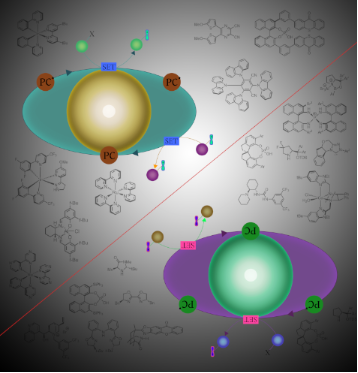
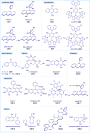
Graphical Abstract
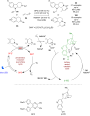
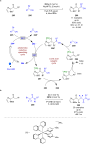
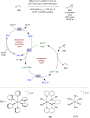
Scheme 1: Amine/photoredox-catalysed α-alkylation of aldehydes with alkyl bromides bearing electron-withdrawi...
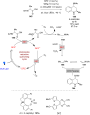
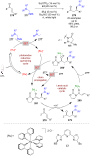
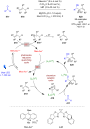
Scheme 2: Amine/HAT/photoredox-catalysed α-functionalisation of aldehydes using alkenes.
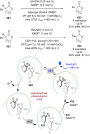
Scheme 3: Amine/cobalt/photoredox-catalysed α-functionalisation of ketones and THIQs.
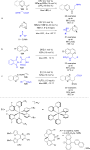
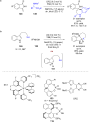
Scheme 4: Amine/photoredox-catalysed α-functionalisation of aldehydes or ketones with imines. (a) Using keton...
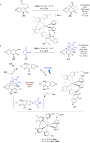
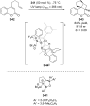
Scheme 5: Bifunctional amine/photoredox-catalysed enantioselective α-functionalisation of aldehydes.
Scheme 6: Bifunctional amine/photoredox-catalysed α-functionalisation of aldehydes using amine catalysts via ...
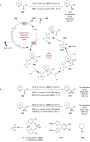
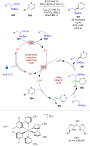
Scheme 7: Amine/photoredox-catalysed RCA of iminium ion intermediates. (a) Synthesis of quaternary stereocent...
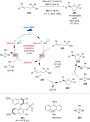
Scheme 8: Bifunctional amine/photoredox-catalysed RCA of enones in a radical chain reaction initiated by an i...
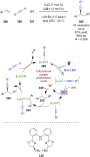
Scheme 9: Bifunctional amine/photoredox-catalysed RCA reactions of iminium ions with different radical precur...
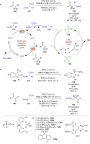
Scheme 10: Bifunctional amine/photoredox-catalysed radical cascade reactions between enones and alkenes with a...
Scheme 11: Amine/photocatalysed photocycloadditions of iminium ion intermediates. (a) External photocatalyst u...
Scheme 12: Amine/photoredox-catalysed addition of acrolein (94) to iminium ions.
Scheme 13: Dual NHC/photoredox-catalysed acylation of THIQs.
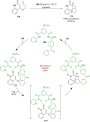
Scheme 14: NHC/photocatalysed spirocyclisation via photoisomerisation of an extended Breslow intermediate.
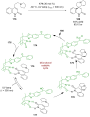
Scheme 15: CPA/photoredox-catalysed aza-pinacol cyclisation.
Scheme 16: CPA/photoredox-catalysed Minisci-type reaction between azaarenes and α-amino radicals.
Scheme 17: CPA/photoredox-catalysed radical additions to azaarenes. (a) α-Amino radical or ketyl radical addit...
Scheme 18: CPA/photoredox-catalysed reduction of azaarene-derived substrates. (a) Reduction of ketones. (b) Ex...
Scheme 19: CPA/photoredox-catalysed radical coupling reactions of α-amino radicals with α-carbonyl radicals. (...
Scheme 20: CPA/photoredox-catalysed Povarov reaction.
Scheme 21: CPA/photoredox-catalysed reactions with imines. (a) Decarboxylative imine generation followed by Po...
Scheme 22: Bifunctional CPA/photocatalysed [2 + 2] photocycloadditions.
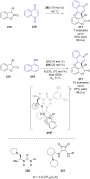
Scheme 23: PTC/photocatalysed oxygenation of 1-indanone-derived β-keto esters.
Scheme 24: PTC/photoredox-catalysed perfluoroalkylation of 1-indanone-derived β-keto esters via a radical chai...
Scheme 25: Bifunctional hydrogen bonding/photocatalysed intramolecular [2 + 2] photocycloadditions of quinolon...
Scheme 26: Bifunctional hydrogen bonding/photocatalysed intramolecular RCA cyclisation of a quinolone.
Scheme 27: Bifunctional hydrogen bonding/photocatalysed intramolecular [2 + 2] photocycloadditions of quinolon...
Scheme 28: Bifunctional hydrogen bonding/photocatalysed [2 + 2] photocycloaddition reactions. (a) First use of...
Scheme 29: Bifunctional hydrogen bonding/photocatalysed deracemisation of allenes.
Scheme 30: Bifunctional hydrogen bonding/photocatalysed deracemisation reactions. (a) Deracemisation of sulfox...
Scheme 31: Bifunctional hydrogen bonding/photocatalysed intramolecular [2 + 2] photocycloaddition of coumarins....
Scheme 32: Bifunctional hydrogen bonding/photocatalysed [2 + 2] photocycloadditions of quinolones. (a) Intramo...
Scheme 33: Hydrogen bonding/photocatalysed formal arylation of benzofuranones.
Scheme 34: Hydrogen bonding/photoredox-catalysed dehalogenative protonation of α,α-chlorofluoro ketones.
Scheme 35: Hydrogen bonding/photoredox-catalysed reductions. (a) Reduction of 1,2-diketones. (b) Reduction of ...
Scheme 36: Hydrogen bonding/HAT/photocatalysed deracemisation of cyclic ureas.
Scheme 37: Hydrogen bonding/HAT/photoredox-catalysed synthesis of cyclic sulfonamides.
Scheme 38: Hydrogen bonding/photoredox-catalysed reaction between imines and indoles.
Scheme 39: Chiral cation/photoredox-catalysed radical coupling of two α-amino radicals.
Scheme 40: Chiral phosphate/photoredox-catalysed hydroetherfication of alkenols.
Scheme 41: Chiral phosphate/photoredox-catalysed synthesis of pyrroloindolines.
Scheme 42: Chiral anion/photoredox-catalysed radical cation Diels–Alder reaction.
Scheme 43: Lewis acid/photoredox-catalysed cycloadditions of carbonyls. (a) Formal [2 + 2] cycloaddition of en...
Scheme 44: Lewis acid/photoredox-catalysed RCA reaction using a scandium Lewis acid between α-amino radicals a...
Scheme 45: Lewis acid/photoredox-catalysed RCA reaction using a copper Lewis acid between α-amino radicals and...
Scheme 46: Lewis acid/photoredox-catalysed synthesis of 1,2-amino alcohols from aldehydes and nitrones using a...
Scheme 47: Lewis acid/photocatalysed [2 + 2] photocycloadditions of enones and alkenes.
Scheme 48: Meggers’s chiral-at-metal catalysts.
Scheme 49: Lewis acid/photoredox-catalysed α-functionalisation of ketones with alkyl bromides bearing electron...
Scheme 50: Bifunctional Lewis acid/photoredox-catalysed radical coupling reaction using α-chloroketones and α-...
Scheme 51: Lewis acid/photocatalysed RCA of enones. (a) Using aldehydes as acyl radical precursors. (b) Other ...
Scheme 52: Bifunctional Lewis acid/photocatalysis for a photocycloaddition of enones.
Scheme 53: Lewis acid/photoredox-catalysed RCA reactions of enones using DHPs as radical precursors.
Scheme 54: Lewis acid/photoredox-catalysed functionalisation of β-ketoesters. (a) Hydroxylation reaction catal...
Scheme 55: Bifunctional copper-photocatalysed alkylation of imines.
Scheme 56: Copper/photocatalysed alkylation of imines. (a) Bifunctional copper catalysis using α-silyl amines....
Scheme 57: Bifunctional Lewis acid/photocatalysed intramolecular [2 + 2] photocycloaddition.
Scheme 58: Bifunctional Lewis acid/photocatalysed [2 + 2] photocycloadditions (a) Intramolecular cycloaddition...
Scheme 59: Bifunctional Lewis acid/photocatalysed rearrangement of 2,4-dieneones.
Scheme 60: Lewis acid/photocatalysed [2 + 2] cycloadditions of cinnamate esters and styrenes.
Scheme 61: Nickel/photoredox-catalysed arylation of α-amino acids using aryl bromides.
Scheme 62: Nickel/photoredox catalysis. (a) Desymmetrisation of cyclic meso-anhydrides using benzyl trifluorob...
Scheme 63: Nickel/photoredox catalysis for the acyl-carbamoylation of alkenes with aldehydes using TBADT as a ...
Scheme 64: Bifunctional copper/photoredox-catalysed C–N coupling between α-chloro amides and carbazoles or ind...
Scheme 65: Bifunctional copper/photoredox-catalysed difunctionalisation of alkenes with alkynes and alkyl or a...
Scheme 66: Copper/photoredox-catalysed decarboxylative cyanation of benzyl phthalimide esters.
Scheme 67: Copper/photoredox-catalysed cyanation reactions using TMSCN. (a) Propargylic cyanation (b) Ring ope...
Scheme 68: Palladium/photoredox-catalysed allylic alkylation reactions. (a) Using alkyl DHPs as radical precur...
Scheme 69: Manganese/photoredox-catalysed epoxidation of terminal alkenes.
Scheme 70: Chromium/photoredox-catalysed allylation of aldehydes.
Scheme 71: Enzyme/photoredox-catalysed dehalogenation of halolactones.
Scheme 72: Enzyme/photoredox-catalysed dehalogenative cyclisation.
Scheme 73: Enzyme/photoredox-catalysed reduction of cyclic imines.
Scheme 74: Enzyme/photocatalysed enantioselective reduction of electron-deficient alkenes as mixtures of (E)/(Z...
Scheme 75: Enzyme/photoredox catalysis. (a) Deacetoxylation of cyclic ketones. (b) Reduction of heteroaromatic...
Scheme 76: Enzyme/photoredox-catalysed synthesis of indole-3-ones from 2-arylindoles.
Scheme 77: Enzyme/HAT/photoredox catalysis for the DKR of primary amines.
Scheme 78: Bifunctional enzyme/photoredox-catalysed benzylic C–H hydroxylation of trifluoromethylated arenes.
Beilstein J. Org. Chem. 2020, 16, 2314–2321, doi:10.3762/bjoc.16.192
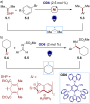
Graphical Abstract
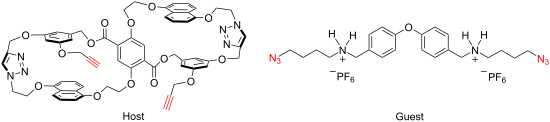
Figure 1: Structures of electron-rich bis-macrocyclic host 1, and electron-poor guests bis(ammonium) 2, and b...
Figure 2: (a) Hunter’s 77 backbone-atom trefoil knot–metal complex [9]. (b) The world’s smallest knot: Leigh’s 7...
Figure 3: Schematic representation of the second-generation TLC approach to a 73 backbone atom trefoil knot.
Scheme 1: Two routes to azidobromide 6.
Scheme 2: Initial route to core diester 13. aLigand = tris(2-benzimidazolylmethyl)amine.
Scheme 3: Better yielding route to core diester 13. aLigand = tris(2-benzimidazolylmethyl)amine.
Scheme 4: Saponification of 13 and bis-macrocyclization to form host 1.
Scheme 5: Synthesis of 23 backbone-atom bis(ammonium) guest 2.
Scheme 6: Synthesis of 25 backbone-atom bis(pyridinium) guest 3.
Beilstein J. Org. Chem. 2020, 16, 2304–2313, doi:10.3762/bjoc.16.191
Graphical Abstract
Figure 1: Summary of the previous and present studies.
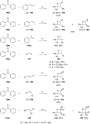
Scheme 1: Chan–Evans–Lam reaction of 4-trifluoromethylpyrimidin-2(1H)-one 1а with (het)aryl boronic acid 2b–w...
Scheme 2: Chan–Evans–Lam reaction of 4-trifluoromethylpyrimidin-2(1H)-one (1а) with (het)aryl- and alkenylbor...
Scheme 3: Chan–Evans–Lam reaction of pyrimidin-2(1H)-ones 1b–h with phenylboronic acid (2a).
Beilstein J. Org. Chem. 2020, 16, 2297–2303, doi:10.3762/bjoc.16.190
Graphical Abstract
Figure 1: Model mixed enones.
Scheme 1: Quantitative photoisomerization of 1 to 2 in all types of solvents.
Scheme 2: Accepted mechanistic pathway for the photochemical transformations of 1.
Scheme 3: Photochemical reactions of 3a–g. Irradiation using a Hanovia medium pressure 450 W lamp with a pyre...
Figure 2: Enones used for this work.
Scheme 4: Synthesis of 7a,b.
Scheme 5: Photochemical reaction of 7a,b; a) solvent and conditions are given in Table 2.
Figure 3: Time-dependent absorption spectra of 10a,b in acetonitrile at rt.
Scheme 6: Conversion of ketene 10a to its methyl esters 11a,b.
Beilstein J. Org. Chem. 2020, 16, 2193–2200, doi:10.3762/bjoc.16.184
Graphical Abstract
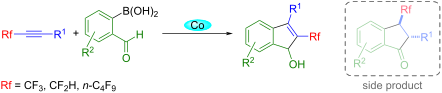
Figure 1: Indenol skeleton.
Scheme 1: Synthesis of 2,3-disubstituted indene derivatives.
Scheme 2: Cobalt-catalyzed [2 + 3] cycloaddition reaction of the fluorinated alkynes 1 with various 2-formylp...
Scheme 3: Synthesis of the fluoroalkylated indenone 6 and the indanone 7 from the indenol 3aA. The yields wer...
Scheme 4: Stereochemical assignment of 5aA and 7 based on NMR techniques. The cross-peaks were observed throu...
Scheme 5: Proposed reaction mechanism.
Beilstein J. Org. Chem. 2020, 16, 2080–2086, doi:10.3762/bjoc.16.175
Graphical Abstract
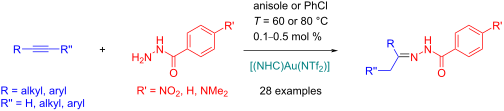
Scheme 1: Simplified mechanism of the hydrohydrazidation (NuH= ArCONHNH2) of alkynes.
Scheme 2: [(NHC)Au(NTf2)] complexes tested in hydrohydrazidation reactions of phenylacetylene.
Scheme 3: Hydrohydrazidation of terminal alkynes in chlorobenzene and anisole using complex 1 (first line sol...
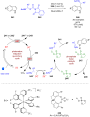
Scheme 4: Hydrohydrazidation of internal alkynes in chlorobenzene and anisole using complex 1. Reaction tempe...
Beilstein J. Org. Chem. 2020, 16, 1881–1900, doi:10.3762/bjoc.16.156
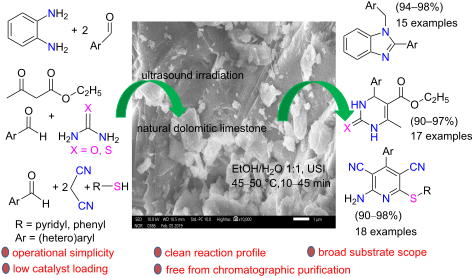
Graphical Abstract
Figure 1: The benzimidazoles I–IV, dihydropyrimidinones/-thiones V–VIII, and 2-amino-4-aryl-3,5-dicarbonitril...
Scheme 1: NDL-catalyzed synthesis of i) 1,2-disubstituted benzimidazoles 3, ii) dihydropyrimidinones/-thiones ...
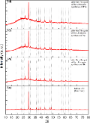
Figure 2: XRD pattern of the NDL catalyst.
Figure 3: FTIR spectrum of the NDL catalyst.
Figure 4: Raman spectrum of the NDL catalyst.
Figure 5: SEM images of the NDL catalyst.
Figure 6: EDAX analysis of the NDL catalyst.
Scheme 2: Unexpected formation of the bisimine I, 3h, from o-phenylenediamine (1) and salicylaldehyde (2h).
Figure 7: 1H NMR spectrum of 2,2'-((1E,1'E)-(1,2-phenylenebis(azanylylidene))bis (methanylylidene))diphenol (...
Figure 8: XRD pattern of a) the fresh NDL catalyst; b) the recovered NDL catalyst after the 7th cycle of the ...
Beilstein J. Org. Chem. 2020, 16, 1830–1836, doi:10.3762/bjoc.16.150
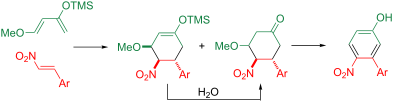
Graphical Abstract
Scheme 1: Synthetic scheme of the 3-arylated-4-nitrophenols 5.
Figure 1: X-ray crystallography of the major isomer of 4a. The thermal ellipsoids indicate 50% probability.
Scheme 2: Conversion from 3a to 4a and one-pot synthesis of 4a.
Scheme 3: Deuteration of cyclohexanone 4a.
Scheme 4: A plausible mechanism for the formation of 5a.
Figure 2: Resonance structure of nitroalkenes 1b and 1d.
Beilstein J. Org. Chem. 2020, 16, 1754–1804, doi:10.3762/bjoc.16.147
Graphical Abstract
Figure 1: Concept of dual synergistic catalysis.
Figure 2: Classification of catalytic systems involving two catalysts.
Figure 3: General mechanism for the dual nickel/photoredox catalytic system.
Figure 4: General mechanisms for C–H activation catalysis involving different reoxidation strategies.
Figure 5: Indole synthesis via dual C–H activation/photoredox catalysis.
Figure 6: Proposed mechanism for the indole synthesis via dual catalysis.
Figure 7: Oxidative Heck reaction on arenes via the dual catalysis.
Figure 8: Proposed mechanism for the Heck reaction on arenes via dual catalysis.
Figure 9: Oxidative Heck reaction on phenols via the dual catalysis.
Figure 10: Proposed mechanism for the Heck reaction on phenols via dual catalysis.
Figure 11: Carbazole synthesis via dual C–H activation/photoredox catalysis.
Figure 12: Proposed mechanism for the carbazole synthesis via dual catalysis.
Figure 13: Carbonylation of enamides via the dual C–H activation/photoredox catalysis.
Figure 14: Proposed mechanism for carbonylation of enamides via dual catalysis.
Figure 15: Annulation of benzamides via the dual C–H activation/photoredox catalysis.
Figure 16: Proposed mechanism for the annulation of benzamides via dual catalysis.
Figure 17: Synthesis of indoles via the dual C–H activation/photoredox catalysis.
Figure 18: Proposed mechanism for the indole synthesis via dual catalysis.
Figure 19: General concept of dual catalysis merging C–H activation and photoredox catalysis.
Figure 20: The first example of dual catalysis merging C–H activation and photoredox catalysis.
Figure 21: Proposed mechanism for the C–H arylation with diazonium salts via dual catalysis.
Figure 22: Dual catalysis merging C–H activation/photoredox using diaryliodonium salts.
Figure 23: Direct arylation via the dual catalytic system reported by Xu.
Figure 24: Direct arylation via dual catalytic system reported by Balaraman.
Figure 25: Direct arylation via dual catalytic system reported by Guo.
Figure 26: C(sp3)–H bond arylation via the dual Pd/photoredox catalytic system.
Figure 27: Acetanilide derivatives acylation via the dual C–H activation/photoredox catalysis.
Figure 28: Proposed mechanism for the C–H acylation with α-ketoacids via dual catalysis.
Figure 29: Acylation of azobenzenes via the dual catalysis C–H activation/photoredox.
Figure 30: C2-acylation of indoles via the dual C–H activation/photoredox catalysis.
Figure 31: Proposed mechanism for the C2-acylation of indoles with aldehydes via dual catalysis.
Figure 32: C2-acylation of indoles via the dual C–H activation/photoredox catalysis.
Figure 33: Perfluoroalkylation of arenes via the dual C–H activation/photoredox catalysis.
Figure 34: Proposed mechanism for perfluoroalkylation of arenes via dual catalysis.
Figure 35: Sulfonylation of 1-naphthylamides via the dual C–H activation/photoredox catalysis.
Figure 36: Proposed mechanism for sulfonylation of 1-naphthylamides via dual catalysis.
Figure 37: meta-C–H Alkylation of arenes via visible-light metallaphotocatalysis.
Figure 38: Alternative procedure for meta-C–H alkylation of arenes via metallaphotocatalysis.
Figure 39: Proposed mechanism for meta-C–H alkylation of arenes via metallaphotocatalysis.
Figure 40: C–H borylation of arenes via visible-light metallaphotocatalysis.
Figure 41: Proposed mechanism for C–H borylation of arenes via visible-light metallaphotocatalysis.
Figure 42: Undirected C–H aryl–aryl cross coupling via dual gold/photoredox catalysis.
Figure 43: Proposed mechanism for the undirected C–H aryl–aryl cross-coupling via dual catalysis.
Figure 44: Undirected C–H arylation of (hetero)arenes via dual manganese/photoredox catalysis.
Figure 45: Proposed mechanism for the undirected arylation of (hetero)arenes via dual catalysis.
Figure 46: Photoinduced C–H arylation of azoles via copper catalysis.
Figure 47: Photo-induced C–H chalcogenation of azoles via copper catalysis.
Figure 48: Decarboxylative C–H adamantylation of azoles via dual cobalt/photoredox catalysis.
Figure 49: Proposed mechanism for the C–H adamantylation of azoles via dual catalysis.
Figure 50: General mechanisms for the “classical” (left) and Cu-free variant (right) Sonogoshira reaction.
Figure 51: First example of a dual palladium/photoredox catalysis for Sonogashira-type couplings.
Figure 52: Arylation of terminal alkynes with diazonium salts via dual gold/photoredox catalysis.
Figure 53: Proposed mechanism for the arylation of terminal alkynes via dual catalysis.
Figure 54: C–H Alkylation of alcohols promoted by H-atom transfer (HAT).
Figure 55: Proposed mechanism for the C–H alkylation of alcohols promoted by HAT.
Figure 56: C(sp3)–H arylation of latent nucleophiles promoted by H-atom transfer.
Figure 57: Proposed mechanism for the C(sp3)–H arylation of latent nucleophiles promoted by HAT.
Figure 58: Direct α-arylation of alcohols promoted by H-atom transfer.
Figure 59: Proposed mechanism for the direct α-arylation of alcohols promoted by HAT.
Figure 60: C–H arylation of amines via dual Ni/photoredox catalysis.
Figure 61: Proposed mechanism for the C–H arylation of amines via dual Ni/photoredox catalysis.
Figure 62: C–H functionalization of nucleophiles via excited ketone/nickel dual catalysis.
Figure 63: Proposed mechanism for the C–H functionalization enabled by excited ketones.
Figure 64: Selective sp3–sp3 cross-coupling promoted by H-atom transfer.
Figure 65: Proposed mechanism for the selective sp3–sp3 cross-coupling promoted by HAT.
Figure 66: Direct C(sp3)–H acylation of amines via dual Ni/photoredox catalysis.
Figure 67: Proposed mechanism for the C–H acylation of amines via dual Ni/photoredox catalysis.
Figure 68: C–H hydroalkylation of internal alkynes via dual Ni/photoredox catalysis.
Figure 69: Proposed mechanism for the C–H hydroalkylation of internal alkynes.
Figure 70: Alternative procedure for the C–H hydroalkylation of ynones, ynoates, and ynamides.
Figure 71: Allylic C(sp3)–H activation via dual Ni/photoredox catalysis.
Figure 72: Proposed mechanism for the allylic C(sp3)–H activation via dual Ni/photoredox catalysis.
Figure 73: Asymmetric allylation of aldehydes via dual Cr/photoredox catalysis.
Figure 74: Proposed mechanism for the asymmetric allylation of aldehydes via dual catalysis.
Figure 75: Aldehyde C–H functionalization promoted by H-atom transfer.
Figure 76: Proposed mechanism for the C–H functionalization of aldehydes promoted by HAT.
Figure 77: Direct C–H arylation of strong aliphatic bonds promoted by HAT.
Figure 78: Proposed mechanism for the C–H arylation of strong aliphatic bonds promoted by HAT.
Figure 79: Direct C–H trifluoromethylation of strong aliphatic bonds promoted by HAT.
Figure 80: Proposed mechanism for the C–H trifluoromethylation of strong aliphatic bonds.
Beilstein J. Org. Chem. 2020, 16, 1662–1682, doi:10.3762/bjoc.16.138
Graphical Abstract
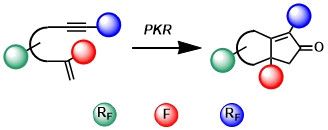
Scheme 1: Schematic representation of the Pauson–Khand reaction.
Scheme 2: Substrates included in this review.
Scheme 3: Commonly accepted mechanism for the Pauson–Khand reaction.
Scheme 4: Regioselectivity of the PKR.
Scheme 5: Variability at the acetylenic and olefinic counterpart.
Scheme 6: Pauson–Khand reaction of fluoroolefinic enynes reported by the group of Ishizaki [46].
Scheme 7: PKR of enynes bearing fluorinated groups on the alkynyl moiety, reported by the group of Ishizaki [46]....
Scheme 8: Intramolecular PKR of 1,7-enynes reported by the group of Billard [47].
Scheme 9: Intramolecular PKR of 1,7-enynes reported by the group of Billard [48].
Scheme 10: Intramolecular PKR of 1,7-enynes by the group of Bonnet-Delpon [49]. Reaction conditions: i) Co(CO)8 (1...
Scheme 11: Intramolecular PKR of 1,6-enynes reported by the group of Ichikawa [50].
Scheme 12: Intramolecular Rh(I)-catalyzed PKR reported by the group of Hammond [52].
Scheme 13: Intramolecular PKR of allenynes reported by the group of Osipov [53].
Scheme 14: Intramolecular PKR of 1,7-enynes reported by the group of Osipov [53].
Scheme 15: Intramolecular PKR of fluorine-containing 1,6-enynes reported by the Konno group [54].
Scheme 16: Diastereoselective PKR with enantioenriched fluorinated enynes 34 [55].
Scheme 17: Intramolecular PKR reported by the group of Martinez-Solorio [56].
Scheme 18: Fluorine substitution at the olefinic counterpart.
Scheme 19: Synthesis of fluorinated enynes 37 [59].
Scheme 20: Fluorine-containing substrates in PKR [59].
Scheme 21: Pauson Khand reaction for fluorinated enynes by the Fustero group: scope and limitations [59].
Scheme 22: Synthesis of chloro and bromo analogues [59].
Scheme 23: Dimerization pathway [59].
Scheme 24: Synthesis of fluorine-containing N-tethered 1,7-enynes [61].
Scheme 25: Intramolecular PKR of chiral N-tethered fluorinated 1,7-enynes [61].
Scheme 26: Examples of further modifications to the Pauson−Khand adducts [61].
Scheme 27: Asymmetric synthesis the fluorinated enynes 53.
Scheme 28: Intramolecular PKR of chiral N-tethered 1,7-enynes 53 [64].
Scheme 29: Intramolecular PKR of chiral N-tethered 1,7-enyne bearing a vinyl fluoride [64].
Scheme 30: Catalytic intramolecular PKR of chiral N-tethered 1,7-enynes [64].
Scheme 31: Model fluorinated alkynes used by Riera and Fustero [70].
Scheme 32: PKR with norbornadiene and fluorinated alkynes 58 [71].
Scheme 33: Nucleophilic addition/detrifluoromethylation and retro Diels-Alder reactions [70].
Scheme 34: Tentative mechanism for the nucleophilic addition/retro-aldol reaction sequence.
Scheme 35: Catalytic PKR with norbornadiene [70].
Scheme 36: Scope of the PKR of trifluoromethylalkynes with norbornadiene [72].
Scheme 37: DBU-mediated detrifluoromethylation [72].
Scheme 38: A simple route to enone 67, a common intermediate in the total synthesis of α-cuparenone.
Scheme 39: Effect of the olefin partner in the regioselectivity of the PKR with trifluoromethyl alkynes [79].
Scheme 40: Intermolecular PKR of trifluoromethylalkynes with 2-norbornene reported by the group of Konno [54].
Scheme 41: Intermolecular PKR of diarylalkynes with 2-norbornene reported by the group of Helaja [80].
Scheme 42: Intermolecular PKR reported by León and Fernández [81].
Scheme 43: PKR reported with cyclopropene 73 [82].
Beilstein J. Org. Chem. 2020, 16, 1550–1553, doi:10.3762/bjoc.16.126
Graphical Abstract
Scheme 1: Reactions of (bromodifluoromethyl)trimethylsilane (1).
Scheme 2: Optimization studies. Yield determined by 19F NMR spectroscopy using an internal standard.
Figure 1: Reaction of silyl enol ethers. Yields refer to isolated yields. aReaction time 24 h; b1.0 equiv of ...
Scheme 3: Proposed mechanism of the fluoroalkylation reaction.
Beilstein J. Org. Chem. 2020, 16, 1447–1455, doi:10.3762/bjoc.16.120
Graphical Abstract
Figure 1: Selected examples of triazinethione-containing bioactive compounds.
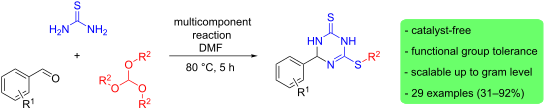
Scheme 1: Strategies for the synthesis of triazinethiones.
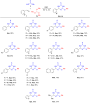
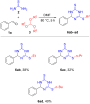
Scheme 2: Aldehyde substrate scope of three-component reaction of aldehydes, thiourea and trimethyl orthoform...
Scheme 3: Orthoformate substrate scope of the three component reaction of benzaldehyde, thiourea, and orthofo...
Scheme 4: Gram-scale synthesis of 6aa.
Figure 2: X-ray structure of 6-(methylthio)-4-phenyl-3,4-dihydro-1,3,5-triazine-2(1H)-thione (6aa) with therm...
Scheme 5: Control experiments for investigation of the mechanism.
Scheme 6: Plausible mechanism.
Beilstein J. Org. Chem. 2020, 16, 1357–1410, doi:10.3762/bjoc.16.116
Graphical Abstract
Figure 1: Examples of biologically active thietane-containing molecules.
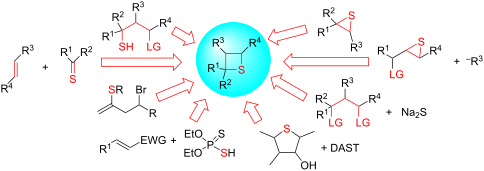
Figure 2: The diverse methods for the synthesis of thietanes.
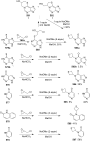
Scheme 1: Synthesis of 1-(thietan-2-yl)ethan-1-ol (10) from 3,5-dichloropentan-2-ol (9).
Scheme 2: Synthesis of thietanose nucleosides 2,14 from 2,2-bis(bromomethyl)propane-1,3-diol (11).
Scheme 3: Synthesis of methyl 3-vinylthietane-3-carboxylate (19).
Scheme 4: Synthesis of 1,6-thiazaspiro[3.3]heptane (24).
Scheme 5: Synthesis of 6-amino-2-thiaspiro[3.3]heptane hydrochloride (28).
Scheme 6: Synthesis of optically active thietane 31 from vitamin C.
Scheme 7: Synthesis of an optically active thietane nucleoside from diethyl L-tartrate (32).
Scheme 8: Synthesis of thietane-containing spironucleoside 40 from 5-aldo-3-O-benzyl-1,2-O-isopropylidene-α-D...
Scheme 9: Synthesis of optically active 2-methylthietane-containing spironucleoside 43.
Scheme 10: Synthesis of a double-linked thietane-containing spironucleoside 48.
Scheme 11: Synthesis of two diastereomeric thietanose nucleosides via 2,4-di(benzyloxymethyl)thietane (49).
Scheme 12: Synthesis of the thietane-containing PI3k inhibitor candidate 54.
Scheme 13: Synthesis of the spirothietane 57 as the key intermediate to Nuphar sesquiterpene thioalkaloids.
Scheme 14: Synthesis of spirothietane 61 through a direct cyclic thioetherification of 3-mercaptopropan-1-ol.
Scheme 15: Synthesis of thietanes 66 from 1,3-diols 62.
Scheme 16: Synthesis of thietanylbenzimidazolone 75 from (iodomethyl)thiazolobenzimidazole 70.
Scheme 17: Synthesis of 2-oxa-6-thiaspiro[3.3]heptane (80) from bis(chloromethyl)oxetane 76 and thiourea.
Scheme 18: Synthesis of the thietane-containing glycoside, 2-O-p-toluenesulfonyl-4,6-thioanhydro-α-D-gulopyran...
Scheme 19: Synthesis of methyl 4,6-thioanhydro-α-D-glucopyranoside (89).
Scheme 20: Synthesis of thietane-fused α-D-galactopyranoside 93.
Scheme 21: Synthesis of thietane-fused α-D-gulopyranoside 100.
Scheme 22: Synthesis of 3,5-anhydro-3-thiopentofuranosides 104.
Scheme 23: Synthesis of anhydro-thiohexofuranosides 110, 112 and 113 from from 1,2:4,5-di-O-isopropylidene D-f...
Scheme 24: Synthesis of optically active thietanose nucleosides from D- and L-xyloses.
Scheme 25: Synthesis of thietane-fused nucleosides.
Scheme 26: Synthesis of 3,5-anhydro-3-thiopentofuranosides.
Scheme 27: Synthesis of 2-amino-3,5-anhydro-3-thiofuranoside 141.
Scheme 28: Synthesis of thietane-3-ols 145 from (1-chloromethyl)oxiranes 142 and hydrogen sulfide.
Scheme 29: Synthesis of thietane-3-ol 145a from chloromethyloxirane (142a).
Scheme 30: Synthesis of thietane-3-ols 145 from 2-(1-haloalkyl)oxiranes 142 and 147 with ammonium monothiocarb...
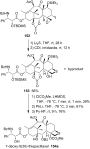
Scheme 31: Synthesis of 7-deoxy-5(20)thiapaclitaxel 154a, a thietane derivative of taxoids.
Scheme 32: Synthesis of 5(20)-thiadocetaxel 158 from 10-deacetylbaccatin III (155).
Scheme 33: Synthesis of thietane derivatives 162 as precursors for deoxythiataxoid synthesis through oxiraneme...
Scheme 34: Synthesis of 7-deoxy 5(20)-thiadocetaxel 154b.
Scheme 35: Mechanism for the formation of the thietane ring in 171 from oxiranes with vicinal leaving groups 1...
Scheme 36: Synthesis of cis-2,3-disubstituted thietane 175 from thiirane-2-methanol 172.
Scheme 37: Synthesis of a bridged thietane 183 from aziridine cyclohexyl tosylate 179 and ammonium tetrathiomo...
Scheme 38: Synthesis of thietanes via the photochemical [2 + 2] cycloaddition of thiobenzophenone 184a with va...
Scheme 39: Synthesis of spirothietanes through the photo [2 + 2] cycloaddition of cyclic thiocarbonyls with ol...
Scheme 40: Photochemical synthesis of spirothietane-thioxanthenes 210 from thioxanthenethione (208) and butatr...
Scheme 41: Synthesis of thietanes 213 from 2,4,6-tri(tert-butyl)thiobenzaldehyde (211) with substituted allene...
Scheme 42: Photochemical synthesis of spirothietanes 216 and 217 from N-methylthiophthalimide (214) with olefi...
Scheme 43: Synthesis of fused thietanes from quadricyclane with thiocarbonyl derivatives 219.
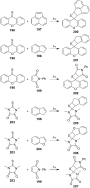
Scheme 44: Synthesis of tricyclic thietanes via the photo [2 + 2] cycloaddition of N-methyldithiosuccinimides ...
Scheme 45: Synthesis of tricyclic thietanes via the photo [2 + 2] cycloaddition of N-methylthiosuccinimide/thi...
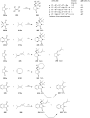
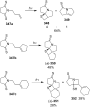
Scheme 46: Synthesis of tricyclic thietanes via the photo [2 + 2] cycloaddition of N-alkylmonothiophthalimides...
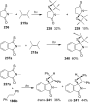
Scheme 47: Synthesis of spirothietanes from dithiosuccinimides 223 with 2,3-dimethyl-2-butene (215a).
Scheme 48: Synthesis of thietanes 248a,b from diaryl thione 184b and ketene acetals 247a,b.
Scheme 49: Photocycloadditions of acridine-9-thiones 249 and pyridine-4(1H)-thione (250) with 2-methylacrynitr...
Scheme 50: Synthesis of thietanes via the photo [2 + 2] cycloaddition of mono-, di-, and trithiobarbiturates 2...
Scheme 51: Synthesis of spirothietanes via the photo [2 + 2] cycloaddition of 1,1,3-trimethyl-2-thioxo-1,2-dih...
Scheme 52: Synthesis of spirothietanes via the photo [2 + 2] cycloaddition of thiocoumarin 286 with olefins.
Scheme 53: Photochemical synthesis of thietanes 296–299 from semicyclic and acyclic thioimides 292–295 and 2,3...
Scheme 54: Photochemical synthesis of spirothietane 301 from 1,3,3-trimethylindoline-2-thione (300) and isobut...
Scheme 55: Synthesis of spirobenzoxazolethietanes 303 via the photo [2 + 2] cycloaddition of alkyl and aryl 2-...
Scheme 56: Synthesis of spirothietanes from tetrahydrothioxoisoquinolines 306 and 307 with olefins.
Scheme 57: Synthesis of spirothietanes from 1,3-dihydroisobenzofuran-1-thiones 311 and benzothiophene-1-thione...
Scheme 58: Synthesis of 2-triphenylsilylthietanes from phenyl triphenylsilyl thioketone (316) with electron-po...
Scheme 59: Diastereoselective synthesis of spiropyrrolidinonethietanes 320 via the photo [2 + 2] cycloaddition...
Scheme 60: Synthesis of bicyclic thietane 323 via the photo [2 + 2] cycloaddition of 2,4-dioxo-3,4-dihydropyri...
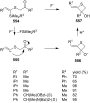
Scheme 61: Photo-induced synthesis of fused thietane-2-thiones 325 and 326 from silacyclopentadiene 324 and ca...
Scheme 62: Synthesis of highly strained tricyclic thietanes 328 via the intramolecular photo [2 + 2] cycloaddi...
Scheme 63: Synthesis of tri- and pentacyclic thietanes 330 and 332, respectively, through the intramolecular p...
Scheme 64: Synthesis of tricyclic thietanes 334 via the intramolecular photo [2 + 2] cycloaddition of N-vinylt...
Scheme 65: Synthesis of tricyclic thietanes 336 via the intramolecular photo [2 + 2] cycloaddition of N-but-3-...
Scheme 66: Synthesis of tricyclic thietanes via the intramolecular photo [2 + 2] cycloaddition of N-but-3-enyl...
Scheme 67: Synthesis of tetracyclic thietane 344 through the intramolecular photo [2 + 2] cycloaddition of N-[...
Scheme 68: Synthesis of tri- and tetracyclic thietanes 348, 350, and 351, through the intramolecular photo [2 ...
Scheme 69: Synthesis of tetracyclic fused thietane 354 via the photo [2 + 2] cycloaddition of vinyl 2-thioxo-3H...
Scheme 70: Synthesis of highly rigid thietane-fused β-lactams via the intramolecular photo [2 + 2] cycloadditi...
Scheme 71: Asymmetric synthesis of a highly rigid thietane-fused β-lactam 356a via the intramolecular photo [2...
Scheme 72: Diastereoselective synthesis of the thietane-fused β-lactams via the intramolecular photo [2 + 2] c...
Scheme 73: Asymmetric synthesis of thietane-fused β-lactams 356 via the intramolecular photo [2 + 2] cycloaddi...
Scheme 74: Synthesis of the bridged bis(trifluoromethyl)thietane from 2,2,4,4-tetrakis(trifluoromethyl)-1,3-di...
Scheme 75: Synthesis of the bridged-difluorothietane 368 from 2,2,4,4-tetrafluoro-1,3-dithietane (367) and qua...
Scheme 76: Synthesis of bis(trifluoromethyl)thietanes from 2,2,4,4-tetrakis(trifluoromethyl)-1,3-dithietane (3...
Scheme 77: Synthesis of 2,2-dimethylthio-4,4-di(trifluoromethyl)thietane (378) from 2,2,4,4-tetrakis(trifluoro...
Scheme 78: Formation of bis(trifluoromethyl)thioacetone (381) through nucleophilic attack of dithietane 363 by...
Scheme 79: Synthesis of 2,2-bis(trifluoromethyl)thietanes from 2,2,4,4-tetrakis(trifluoromethyl)-1,3-dithietan...
Scheme 80: Synthesis of the bridged bis(trifluoromethyl)thietane 364 from of 2,2,4,4-tetrakis(trifluoromethyl)...
Scheme 81: Synthesis of 2,4-diiminothietanes 390 from alkenimines and 4-methylbenzenesulfonyl isothiocyanate (...
Scheme 82: Synthesis of arylidene 2,4-diiminothietanes 393 starting from phosphonium ylides 391 and isothiocya...
Scheme 83: Synthesis of thietane-2-ylideneacetates 397 through a DABCO-catalyzed formal [2 + 2] cycloaddition ...
Scheme 84: Synthesis of 3-substituted thietanes 400 from (1-chloroalkyl)thiiranes 398.
Scheme 85: Synthesis of N-(thietane-3-yl)azaheterocycles 403 and 404 through reaction of chloromethylthiirane (...
Scheme 86: Synthesis of 3-sulfonamidothietanes 406 from sulfonamides and chloromethylthiirane (398a).
Scheme 87: Synthesis of N-(thietane-3-yl)isatins 408 from chloromethylthiirane (398a) and isatins 407.
Scheme 88: Synthesis of 3-(nitrophenyloxy)thietanes 410 from nitrophenols 409 and chloromethylthiirane (398a).
Scheme 89: Synthesis of N-aryl-N-(thietane-3-yl)cyanamides 412 from N-arylcyanamides 411 and chloromethylthiir...
Scheme 90: Synthesis of 1-(thietane-3-yl)pyrimidin-2,4(1H,3H)-diones 414 from chloromethylthiirane (398a) and ...
Scheme 91: Synthesis of 2,4-diiminothietanes 418 from 2-iminothiiranes 416 and isocyanoalkanes 415.
Scheme 92: Synthesis of 2-vinylthietanes 421 from thiiranes 419 and 3-chloroallyl lithium (420).
Scheme 93: Synthesis of thietanes from thiiranes 419 and trimethyloxosulfonium iodide 424.
Scheme 94: Mechanism for synthesis of thietanes 425 from thiiranes 419 and trimethyloxosulfonium iodide 424.
Scheme 95: Synthesis of functionalized thietanes from thiiranes and dimethylsulfonium acylmethylides.
Scheme 96: Mechanism for the rhodium-catalyzed synthesis of functionalized thietanes 429 from thiiranes 419 an...
Scheme 97: Synthesis of 3-iminothietanes 440 through thermal isomerization from 4,5-dihydro-1,3-oxazole-4-spir...
Scheme 98: Synthesis of thietanes 443 from 3-chloro-2-methylthiolane (441) through ring contraction.
Scheme 99: Synthesis of an optically active thietanose 447 from D-xylose involving a ring contraction.
Scheme 100: Synthesis of optically thietane 447 via the DAST-mediated ring contraction of 448.
Scheme 101: Synthesis of the optically thietane nucleoside 451 via the ring contraction of thiopentose in 450.
Scheme 102: Synthesis of spirothietane 456 from 3,3,5,5-tetramethylthiolane-2,4-dithione (452) and benzyne (453...
Scheme 103: Synthesis of thietanes 461 via photoisomerization of 2H,6H-thiin-3-ones 459.
Scheme 104: Phosphorodithioate-mediated synthesis of 1,4-diarylthietanes 465.
Scheme 105: Mechanism of the phosphorodithioate-mediated synthesis of 1,4-diarylthietanes 465.
Scheme 106: Phosphorodithioate-mediated synthesis of trisubstituted thietanes (±)-470.
Scheme 107: Mechanism on the phosphorodithioate-mediated synthesis of trisubstituted thietanes.
Scheme 108: Phosphorodithioate-mediated synthesis of thietanes (±)-475.
Scheme 109: Phosphorodithioate-mediated synthesis of 1,2-disubstituted thietanes from aldehydes 476 and acrylon...
Scheme 110: Phosphorodithioate-mediated synthesis of 1,2-disubstituted thietanes via a one-pot three-component ...
Scheme 111: Mechanism for the phosphorodithioate-mediated synthesis of 1,2-disubstituted thietanes via three-co...
Scheme 112: Phosphorodithioate-mediated synthesis of substituted 3-nitrothietanes.
Scheme 113: Mechanism on the phosphorodithioate-mediated synthesis of 1,2-disubstituted thietanes (±)-486.
Scheme 114: Asymmetric synthesis of (S)-2-phenylthietane (497).
Scheme 115: Asymmetric synthesis of optically active 2,4-diarylthietanes.
Scheme 116: Synthesis of 3-acetamidothietan-2-one 503 via the intramolecular thioesterification of 3-mercaptoal...
Scheme 117: Synthesis of 4-substituted thietan-2-one via the intramolecular thioesterification of 3-mercaptoalk...
Scheme 118: Synthesis of 4,4-disubstituted thietan-2-one 511 via the intramolecular thioesterification of the 3...
Scheme 119: Synthesis of a spirothietan-2-one 514 via the intramolecular thioesterification of 3-mercaptoalkano...
Scheme 120: Synthesis of thiatetrahydrolipstatin starting from (S)-(−)-epichlorohydrin ((S)-142a).
Scheme 121: Synthesis of 2-phenethyl-4-(propan-2-ylidene)thietane (520) from 5-bromo-6-methyl-1-phenylhept-5-en...
Scheme 122: Synthesis of 2-phenethyl-4-(propan-2-ylidene)thietane (520) directly from S-(5-bromo-6-methyl-1-phe...
Scheme 123: Synthesis of 2-alkylidenethietanes from S-(2-bromoalk-1-en-4-yl)thioacetates.
Scheme 124: Synthesis of 2-alkylidenethietanes from S-(2-bromo/chloroalk-1-en-4-yl)thiols.
Scheme 125: Synthesis of spirothietan-3-ol 548 from enone 545 and ammonium hydrosulfide.
Scheme 126: Asymmetric synthesis of the optically active thietanoside from cis-but-2-ene-1,4-diol (47).
Scheme 127: Synthesis of 2-alkylidenethietan-3-ols 557 via the fluoride-mediated cyclization of thioacylsilanes ...
Scheme 128: Synthesis of 2-iminothietanes via the reaction of propargylbenzene (558) and isothiocyanates 560 in...
Scheme 129: Synthesis of 2-benzylidenethietane 567 via the nickel complex-catalyzed electroreductive cyclizatio...
Scheme 130: Synthesis of 2-iminothietanes 569 via the photo-assisted electrocyclic reaction of N-monosubstitute...
Scheme 131: Synthesis of ethyl 3,4-diiminothietane-2-carboxylates from ethyl thioglycolate (570) and bis(imidoy...
Scheme 132: Synthesis of N-(thietan-3-yl)-α-oxoazaheterocycles from azaheterocyclethiones and chloromethyloxira...
Scheme 133: Synthesis of thietan-3-yl benzoate (590) via the nickel-catalyzed intramolecular reductive thiolati...
Scheme 134: Synthesis of 2,2-bis(trifluoromethyl)thietane from 3,3-bis(trifluoromethyl)-1,2-dithiolane.
Scheme 135: Synthesis of thietanes from enamines and sulfonyl chlorides.
Scheme 136: Synthesis of spirothietane 603 via the [2 + 3] cycloaddition of 2,2,4,4-tetramethylcyclobutane-1,3-...
Scheme 137: Synthesis of thietane (605) from 1-bromo-3-chloropropane and sulfur.
Beilstein J. Org. Chem. 2020, 16, 1288–1295, doi:10.3762/bjoc.16.109
Graphical Abstract
Scheme 1: Synthesis of spirotetrahydrothiophenes 3 via non-concerted [3 + 2]-cycloadditions of thiocarbonyl y...
Scheme 2: Formal [3 + 2]-cycloadditions of thioketones and [4 + 3]-cycloadditions of thiochalcones with donor...
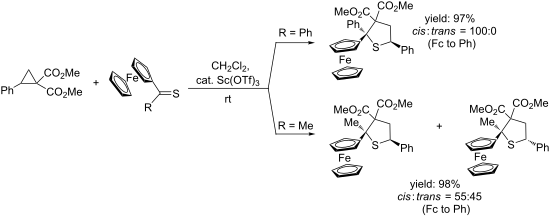
Scheme 3: Formal [3 + 2]-cycloadditions of dimethyl 2-substituted cyclopropane-1,1-dicarboxylates 5a–g with f...
Figure 1: Thermal ellipsoid plots of the molecular structures of cis-9c and trans-9d drawn using 50% probabil...
Scheme 4: Plausible mechanism for the formal [3 + 2]-cycloadditions of ferrocenyl thioketones 8 with D–A cycl...
Beilstein J. Org. Chem. 2020, 16, 1163–1187, doi:10.3762/bjoc.16.103
Graphical Abstract
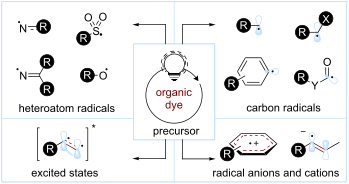
Figure 1: Selected examples of organic dyes. Mes-Acr+: 9-mesityl-10-methylacridinium, DCA: 9,10-dicyanoanthra...
Scheme 1: Activation modes in photocatalysis.
Scheme 2: Main strategies for the formation of C(sp3) radicals used in organophotocatalysis.
Scheme 3: Illustrative example for the photocatalytic oxidative generation of radicals from carboxylic acids:...
Scheme 4: Illustrative example for the photocatalytic reductive generation of C(sp3) radicals from redoxactiv...
Figure 2: Common substrates for the photocatalytic oxidative generation of C(sp3) radicals.
Scheme 5: Illustrative example for the photocatalytic oxidative generation of radicals from dihydropyridines ...
Scheme 6: Illustrative example for the photocatalytic oxidative generation of C(sp3) radicals from trifluorob...
Scheme 7: Illustrative example for the photocatalytic reductive generation of C(sp3) radicals from benzylic h...
Scheme 8: Illustrative example for the photocatalytic generation of C(sp3) radicals via direct HAT: the cross...
Scheme 9: Illustrative example for the photocatalytic generation of C(sp3) radicals via indirect HAT: the deu...
Scheme 10: Selected precursors for the generation of aryl radicals using organophotocatalysis.
Scheme 11: Illustrative example for the photocatalytic reductive generation of aryl radicals from aryl diazoni...
Scheme 12: Illustrative examples for the photocatalytic reductive generation of aryl radicals from haloarenes:...
Scheme 13: Illustrative example for the photocatalytic reductive generation of aryl radicals from aryl halides...
Scheme 14: Illustrative example for the photocatalytic reductive generation of aryl radicals from arylsulfonyl...
Scheme 15: Illustrative example for the reductive photocatalytic generation of aryl radicals from triaryl sulf...
Scheme 16: Main strategies towards acyl radicals used in organophotocatalysis.
Scheme 17: Illustrative example for the decarboxylative photocatalytic generation of acyl radicals from α-keto...
Scheme 18: Illustrative example for the oxidative photocatalytic generation of acyl radicals from acyl silanes...
Scheme 19: Illustrative example for the oxidative photocatalytic generation of carbamoyl radicals from 4-carba...
Scheme 20: Illustrative example of the photocatalytic HAT approach for the generation of acyl radicals from al...
Scheme 21: General reactivity of a) radical cations; b) radical anions; c) the main strategies towards aryl an...
Scheme 22: Illustrative example for the oxidative photocatalytic generation of alkene radical cations from alk...
Scheme 23: Illustrative example for the reductive photocatalytic generation of an alkene radical anion from al...
Figure 3: Structure of C–X radical anions and their neutral derivatives.
Scheme 24: Illustrative example for the photocatalytic reduction of imines and the generation of an α-amino C(...
Scheme 25: Illustrative example for the oxidative photocatalytic generation of aryl radical cations from arene...
Scheme 26: NCR classifications and generation.
Scheme 27: Illustrative example for the photocatalytic reductive generation of iminyl radicals from O-aryl oxi...
Scheme 28: Illustrative example for the photocatalytic oxidative generation of iminyl radicals from α-N-oxy ac...
Scheme 29: Illustrative example for the photocatalytic oxidative generation of iminyl radicals via an N–H bond...
Scheme 30: Illustrative example for the photocatalytic oxidative generation of amidyl radicals from Weinreb am...
Scheme 31: Illustrative example for the photocatalytic reductive generation of amidyl radicals from hydroxylam...
Scheme 32: Illustrative example for the photocatalytic reductive generation of amidyl radicals from N-aminopyr...
Scheme 33: Illustrative example for the photocatalytic oxidative generation of amidyl radicals from α-amido-ox...
Scheme 34: Illustrative example for the photocatalytic oxidative generation of aminium radicals: the N-aryltet...
Scheme 35: Illustrative example for the photocatalytic oxidative generation of nitrogen-centered radical catio...
Scheme 36: Illustrative example for the photocatalytic oxidative generation of nitrogen-centered radical catio...
Scheme 37: Illustrative example for the photocatalytic oxidative generation of hydrazonyl radical from hydrazo...
Scheme 38: Generation of O-radicals.
Scheme 39: Illustrative examples for the photocatalytic generation of O-radicals from N-alkoxypyridinium salts...
Scheme 40: Illustrative examples for the photocatalytic generation of O-radicals from alkyl hydroperoxides: th...
Scheme 41: Illustrative example for the oxidative photocatalytic generation of thiyl radicals from thiols: the...
Scheme 42: Main strategies and reagents for the generation of sulfonyl radicals used in organophotocatalysis.
Scheme 43: Illustrative example for the reductive photocatalytic generation of sulfonyl radicals from arylsulf...
Scheme 44: Illustrative example of a Cl atom abstraction strategy for the photocatalytic generation of sulfamo...
Scheme 45: Illustrative example for the oxidative photocatalytic generation of sulfonyl radicals from sulfinic...
Scheme 46: Illustrative example for the photocatalytic generation of electronically excited triplet states: th...
Scheme 47: Illustrative example for the photocatalytic generation of electronically excited triplet states: th...
Beilstein J. Org. Chem. 2020, 16, 1154–1162, doi:10.3762/bjoc.16.102
Graphical Abstract
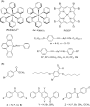
Figure 1: (A) Transition-metal-containing and (B) pure organic phosphorescent materials reported thus far (bp...
Figure 2: (A) Chemical structures of fluorescent bistolane derivatives previously developed by our group and ...
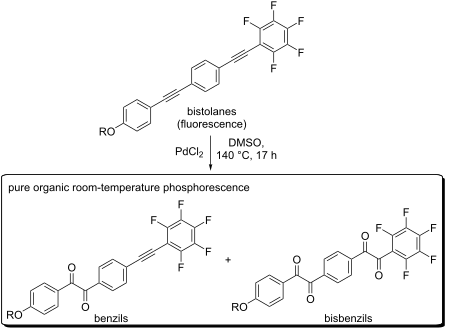
Scheme 1: Synthetic pathway for fluorinated benzil (2) and bisbenzil (3) derivatives.
Scheme 2: Proposed mechanism of Pd(II)-catalyzed alkyne oxidation by dimethyl sulfoxide (DMSO).
Figure 3: Mulliken charge distributions of fluorinated 1a and nonfluorinated 1c obtained from density functio...
Figure 4: Absorption and photoluminescence (PL) spectra of (A) 2a, (B) 2b, (C) 3a, (D) 3b, and (E) 3c in tolu...
Figure 5: Distributions of molecular orbitals (isosurface value: 0.04 a.u.) involved in vertical electronic t...
Beilstein J. Org. Chem. 2020, 16, 982–988, doi:10.3762/bjoc.16.87
Graphical Abstract
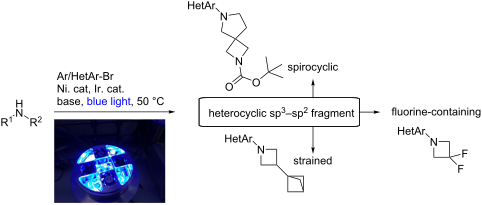
Scheme 1: One-day workflow for fragment-based library generation. QC: Quality control. MPLC: Medium-pressure ...
Figure 1: Top: high-power blue LED photoreactors. Bottom, from left to right: photoreactor OFF, ON, and ON th...
Figure 2: TLC–MS equipment: analysis of 5 reactions in 5 minutes.
Figure 3: Pre-QC validation by 60 MHz benchtop NMR.
Scheme 2: Scope of the fragment-based library generation: BCP-amines and azetidines. See Supporting Information File 1 for experimental de...
Scheme 3: Scope of the fragment-based library generation: pyrrolidines, piperidines and morpholines. See Supporting Information File 1 for...
Beilstein J. Org. Chem. 2020, 16, 966–973, doi:10.3762/bjoc.16.85
Graphical Abstract
Figure 1: (R)-MeO-MOP and our ligands.
Scheme 1: Asymmetric Suzuki–Miyaura coupling. Reaction conditions: 1 equiv N-aryl-bromoaryl compounds, 2 equi...
Scheme 2: Asymmetric Suzuki–Miyaura coupling. Reaction conditions: 1 equiv of bromoaryl compounds, 2 equiv of...
Scheme 3: Gram-scale reaction.
Scheme 4: Based on our analysis and speculation, a possible intermediate structure is proposed [65,66].
Scheme 5: Method A for the synthesis of amide substrates.
Scheme 6: Method B for the synthesis of amide substrates.
Beilstein J. Org. Chem. 2020, 16, 917–955, doi:10.3762/bjoc.16.83
Graphical Abstract
Figure 1: Chemical structures of the porphyrinoids and their absorption spectra: in bold are highlighted the ...
Figure 2: Photophysical and photochemical processes (Por = porphyrin). Adapted from [12,18].
Figure 3: Main dual photocatalysts and their oxidative/reductive excited state potentials, including porphyri...
Scheme 1: Photoredox alkylation of aldehydes with diazo acetates using porphyrins and a Ru complex. aUsing a ...
Scheme 2: Proposed mechanism for the alkylation of aldehydes with diazo acetates in the presence of TPP.
Scheme 3: Arylation of heteroarenes with aryldiazonium salts using TPFPP as photocatalyst, and corresponding ...
Scheme 4: A) Scope with different aryldiazonium salts and enol acetates. B) Photocatalytic cycles and compari...
Scheme 5: Photoarylation of isopropenyl acetate A) Comparison between batch and continuous-flow approaches an...
Scheme 6: Dehalogenation induced by red light using thiaporphyrin (STPP).
Scheme 7: Applications of NiTPP as both photoreductant and photooxidant.
Scheme 8: Proposed mechanism for obtaining tetrahydroquinolines by reductive quenching.
Scheme 9: Selenylation and thiolation of anilines.
Scheme 10: NiTPP as photoredox catalyst in oxidative and reductive quenching, in comparison with other photoca...
Scheme 11: C–O bond cleavage of 1-phenylethanol using a cobalt porphyrin (CoTMPP) under visible light.
Scheme 12: Hydration of terminal alkynes by RhIII(TSPP) under visible light irradiation.
Scheme 13: Regioselective photocatalytic hydro-defluorination of perfluoroarenes by RhIII(TSPP).
Scheme 14: Formation of 2-methyl-2,3-dihydrobenzofuran by intramolecular hydro-functionalization of allylpheno...
Scheme 15: Photocatalytic oxidative hydroxylation of arylboronic acids using UNLPF-12 as heterogeneous photoca...
Scheme 16: Photocatalytic oxidative hydroxylation of arylboronic acids using MOF-525 as heterogeneous photocat...
Scheme 17: Preparation of the heterogeneous photocatalyst CNH.
Scheme 18: Photoinduced sulfonation of alkenes with sulfinic acid using CNH as photocatalyst.
Scheme 19: Sulfonic acid scope of the sulfonation reactions.
Scheme 20: Regioselective sulfonation reaction of arimistane.
Scheme 21: Synthesis of quinazolin-4-(3H)-ones.
Scheme 22: Selective photooxidation of aromatic benzyl alcohols to benzaldehydes using Pt/PCN-224(Zn).
Scheme 23: Photooxidation of benzaldehydes to benzoic acids using Pt or Pd porphyrins.
Scheme 24: Photocatalytic reduction of various nitroaromatics using a Ni-MOF.
Scheme 25: Photoinduced cycloadditions of CO2 with epoxides by MOF1.
Figure 4: Electronic configurations of the species of oxygen. Adapted from [66].
Scheme 26: TPP-photocatalyzed generation of 1O2 and its application in organic synthesis. Adapted from [67-69].
Scheme 27: Pericyclic reactions involving singlet oxygen and their mechanisms. Adapted from [67].
Scheme 28: First scaled up ascaridole preparation from α-terpinene.
Scheme 29: Antimalarial drug synthesis using an endoperoxidation approach.
Scheme 30: Photooxygenation of colchicine.
Scheme 31: Synthesis of (−)-pinocarvone from abundant (+)-α-pinene.
Scheme 32: Seeberger’s semi-synthesis of artemisinin.
Scheme 33: Synthesis of artemisinin using TPP and supercritical CO2.
Scheme 34: Synthesis of artemisinin using chlorophyll a.
Scheme 35: Quercitol stereoisomer preparation.
Scheme 36: Photocatalyzed preparation of naphthoquinones.
Scheme 37: Continuous endoperoxidation of conjugated dienes and subsequent rearrangements leading to oxidized ...
Scheme 38: The Opatz group total synthesis of (–)-oxycodone.
Scheme 39: Biomimetic syntheses of rhodonoids A, B, E, and F.
Scheme 40: α-Photooxygenation of chiral aldehydes.
Scheme 41: Asymmetric photooxidation of indanone β-keto esters by singlet oxygen using PTC as a chiral inducer...
Scheme 42: Asymmetric photooxidation of both β-keto esters and β-keto amides by singlet oxygen using PTC-2 as ...
Scheme 43: Bifunctional photo-organocatalyst used for the asymmetric oxidation of β-keto esters and β-keto ami...
Scheme 44: Mechanism of singlet oxygen oxidation of sulfides to sulfoxides.
Scheme 45: Controlled oxidation of sulfides to sulfoxides using protonated porphyrins as photocatalysts. aIsol...
Scheme 46: Photochemical oxidation of sulfides to sulfoxides using PdTPFPP as photocatalyst.
Scheme 47: Controlled oxidation of sulfides to sulfoxides using SnPor@PAF as a photosensitizer.
Scheme 48: Syntheses of 2D-PdPor-COF and 3D-Pd-COF.
Scheme 49: Photocatalytic oxidation of A) thioanisole to methyl phenyl sulfoxide and B) various aryl sulfides,...
Scheme 50: General mechanism for oxidation of amines to imines.
Scheme 51: Oxidation of secondary amines to imines.
Scheme 52: Oxidation of secondary amines using Pd-TPFPP as photocatalyst.
Scheme 53: Oxidative amine coupling using UNLPF-12 as heterogeneous photocatalyst.
Scheme 54: Synthesis of Por-COF-1 and Por-COF-2.
Scheme 55: Photocatalytic oxidation of amines to imines by Por-COF-2.
Scheme 56: Photocyanation of primary amines.
Scheme 57: Synthesis of ᴅ,ʟ-tert-leucine hydrochloride.
Scheme 58: Photocyanation of catharanthine and 16-O-acetylvindoline using TPP.
Scheme 59: Photochemical α-functionalization of N-aryltetrahydroisoquinolines using Pd-TPFPP as photocatalyst.
Scheme 60: Ugi-type reaction with 1,2,3,4-tetrahydroisoquinoline using molecular oxygen and TPP.
Scheme 61: Ugi-type reaction with dibenzylamines using molecular oxygen and TPP.
Scheme 62: Mannich-type reaction of tertiary amines using PdTPFPP as photocatalyst.
Scheme 63: Oxidative Mannich reaction using UNLPF-12 as heterogeneous photocatalyst.
Scheme 64: Transformation of amines to α-cyanoepoxides and the proposed mechanism.
Beilstein J. Org. Chem. 2020, 16, 895–903, doi:10.3762/bjoc.16.81
Graphical Abstract
Scheme 1: The previously reported family of the boomerang bipyrroles obtained by Pd-induced double C–H bond a...
Scheme 2: Synthesis and structures of α-free and α-oxygenated bipyrrole boomerangs. Reagents and conditions: ...
Figure 1: DFT-Optimized structures (B3LYP/6-31G(d,p)) of cNDA2O and cNMI3H.
Figure 2: Absorption and emission spectra of cNMI2H (top) and cNMI3H (bottom) measured in toluene, dichlorome...
Beilstein J. Org. Chem. 2020, 16, 763–777, doi:10.3762/bjoc.16.70
Graphical Abstract
Figure 1: Triptycene as a scaffold and selected porphyrin and BODIPY arrays.
Scheme 1: Sonogashira cross-coupling reactions to form symmetric porphyrin and BODIPY triptycene-linked dyads....
Scheme 2: Sonogashira cross-coupling reactions to form a triptycene-substituted porphyrin monomer and an unsy...
Scheme 3: Synthesis of the triptycene-porphyrin-triptycene complex 18.
Figure 2: Single crystal X-ray structure of triptycene 5. (a) Molecular structure of 5 in the crystal with hy...
Figure 3: Single crystal X-ray structure of triptycene-linked zinc-nickel porphyrin dimer 16 showing the conf...
Figure 4: Views of the single crystal X-ray structure of triptycene-linked zinc-nickel porphyrin dimer 16 sho...
Figure 5: Expanded structure view of the triptycene-linked zinc-nickel porphyrin dimer 16 showing the repeati...
Figure 6: UV–vis of symmetric and unsymmetric triptycene porphyrin dimers 9 and 16, and the triptycene porphy...
Figure 7: Emission spectrum of symmetric and unsymmetric triptycene-linked porphyrin dimers 9 and 16, and a t...
Figure 8: Compounds used for spectroscopic comparisons.
Figure 9: UV–vis spectra of various porphyrin/BODIPY dimers with different linker groups in CHCl3.
Figure 10: Fluorescence emission spectrum of various porphyrin/BODIPY dimers with different linker groups in C...
Beilstein J. Org. Chem. 2020, 16, 657–662, doi:10.3762/bjoc.16.62
Graphical Abstract
Figure 1: Representative examples of biologically active pyrrolo[1,2-a]indol-3-one derivatives.
Scheme 1: Radical cascade trifluoromethylthiolation and cyclization reactions.
Scheme 2: Cascade bis(trifluoromethylthiolation) and cyclization of N-[(3-aryl)propioloyl]indoles 1. Reaction...
Scheme 3: Cascade trifluoromethylthiolation and cyclization of N-[(3-aryl)propioloyl]indoles 3. Reaction cond...
Scheme 4: Proposed reaction mechanism.
Beilstein J. Org. Chem. 2020, 16, 587–595, doi:10.3762/bjoc.16.53
Graphical Abstract
Figure 1: (a) Chemical structures of BODIPY (1) and dipyrromethane (2). (b) C–C bond forming alkynylations of...
Scheme 1: Synthesis of α-ethynyl-substituted BODIPY derivatives 3a and 4a.
Scheme 2: Synthesis of β-ethynyl-substituted BODIPY derivatives 5a and 5b and β,β'-diethynyl-substituted comp...
Figure 2: Top and front views of the crystal structures of (a) 4a and (b) 6b with 50% thermal ellipsoid proba...
Figure 3: Partial 1H NMR spectra of (a) 1a, (b) 3a, (c) 4a, (d) 5a, and (e) 6a recorded in CDCl3 at 298 K. As...
Figure 4: UV–vis absorption spectra of the BODIPY derivatives, (a) 1a (green), 3a (blue), 4a (red), and (b) 1a...
Figure 5: Fluorescence spectra of BODIPY derivatives. (a) 1a (green), 3a (blue), 4a (red) and (b) 1a (green), ...
Beilstein J. Org. Chem. 2020, 16, 551–586, doi:10.3762/bjoc.16.52
Graphical Abstract
Scheme 1: Chemical structure of the catalysts 1a and 1b and their catalytic application in CuAAC reactions.
Scheme 2: Synthetic route to the catalyst 11 and its catalytic application in CuAAC reactions.
Scheme 3: Synthetic route of dendrons, illustrated using G2-AMP 23.
Scheme 4: The catalytic application of CuYAu–Gx-AAA–SBA-15 in a CuAAC reaction.
Scheme 5: Synthetic route to the catalyst 36.
Scheme 6: Application of the catalyst 36 in CuAAC reactions.
Scheme 7: The synthetic route to the catalyst 45 and catalytic application of 45 in “click” reactions.
Scheme 8: Synthetic route to the catalyst 48 and catalytic application of 48 in “click” reactions.
Scheme 9: Synthetic route to the catalyst 58 and catalytic application of 58 in “click” reactions.
Scheme 10: Synthetic route to the catalyst 64 and catalytic application of 64 in “click” reactions.
Scheme 11: Chemical structure of the catalyst 68 and catalytic application of 68 in “click” reactions.
Scheme 12: Chemical structure of the catalyst 69 and catalytic application of 69 in “click” reactions.
Scheme 13: Synthetic route to, and chemical structure of the catalyst 74.
Scheme 14: Application of the cayalyst 74 in “click” reactions.
Scheme 15: Synthetic route to, and chemical structure of the catalyst 78 and catalytic application of 78 in “c...
Scheme 16: Synthetic route to the catalyst 85.
Scheme 17: Application of the catalyst 85 in “click” reactions.
Scheme 18: Synthetic route to the catalyst 87 and catalytic application of 87 in “click” reactions.
Scheme 19: Chemical structure of the catalyst 88 and catalytic application of 88 in “click” reactions.
Scheme 20: Synthetic route to the catalyst 90 and catalytic application of 90 in “click” reactions.
Scheme 21: Synthetic route to the catalyst 96 and catalytic application of 96 in “click” reactions.
Scheme 22: Synthetic route to the catalyst 100 and catalytic application of 100 in “click” reactions.
Scheme 23: Synthetic route to the catalyst 102 and catalytic application of 23 in “click” reactions.
Scheme 24: Synthetic route to the catalysts 108–111.
Scheme 25: Catalytic application of 108–111 in “click” reactions.
Scheme 26: Synthetic route to the catalyst 121 and catalytic application of 121 in “click” reactions.
Scheme 27: Synthetic route to 125 and application of 125 in “click” reactions.
Scheme 28: Synthetic route to the catalyst 131 and catalytic application of 131 in “click” reactions.
Scheme 29: Synthetic route to the catalyst 136.
Scheme 30: Application of the catalyst 136 in “click” reactions.
Scheme 31: Synthetic route to the catalyst 141 and catalytic application of 141 in “click” reactions.
Scheme 32: Synthetic route to the catalyst 144 and catalytic application of 144 in “click” reactions.
Scheme 33: Synthetic route to the catalyst 149 and catalytic application of 149 in “click” reactions.
Scheme 34: Synthetic route to the catalyst 153 and catalytic application of 153 in “click” reactions.
Scheme 35: Synthetic route to the catalyst 155 and catalytic application of 155 in “click” reactions.
Scheme 36: Synthetic route to the catalyst 157 and catalytic application of 157 in “click” reactions.
Scheme 37: Synthetic route to the catalyst 162.
Scheme 38: Application of the catalyst 162 in “click” reactions.
Scheme 39: Synthetic route to the catalyst 167 and catalytic application of 167 in “click” reactions.
Scheme 40: Synthetic route to the catalyst 169 and catalytic application of 169 in “click” reactions.
Scheme 41: Synthetic route to the catalyst 172.
Scheme 42: Application of the catalyst 172 in “click” reactions.
Beilstein J. Org. Chem. 2020, 16, 502–508, doi:10.3762/bjoc.16.45
Graphical Abstract
Scheme 1: Reaction modes of alkyne.
Figure 1: Substrate scope of 1 and 2. aConducted at 80 °C for 24 h in MeCN with CuBr (10 mol %), 1,10-Phen (2...
Scheme 2: Proposed mechanism.
Scheme 3: Control experiment.
Scheme 4: Reaction of 2a and 4a.
Figure 2: Substrate scope of 2 and 4. aConducted at 100 °C for 20 h in 1,4-dioxane with CuI (10 mol %), 1,10-...