


Search results
Search for "photophysical" in Full Text gives 270 result(s) in Beilstein Journal of Organic Chemistry. Showing first 200.
Naphthalimide-phenothiazine dyads: effect of conformational flexibility and matching of the energy of the charge-transfer state and the localized triplet excited state on the thermally activated delayed fluorescence
Beilstein J. Org. Chem. 2022, 18, 1435–1453, doi:10.3762/bjoc.18.149
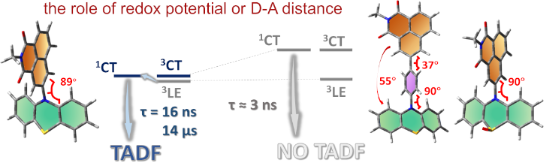
- -PTZ) [36]. The electronic coupling between the NI and PTZ units differ these two dyads. Finally, in NI-PhMe2-PTZ with methyl substituents, the phenyl linker adopts an orthogonal geometry with respect to the NI moiety, inducing a weaker coupling than that in NI-Ph-PTZ. The photophysical properties of
- from that of NI-PTZ, and the CT absorption band centered at 423 nm is much more intense than that of NI-PTZ, indicating that the electronic effect of the substituents does not have a simple additive effect on the photophysical properties [42]. The CT absorption band of NI-PTZ-O is much weaker
- characteristic TADF lifetimes (Figure 4b and 4e). Clearly, besides the conformational flexibility, other factors do play a role in the photophysical properties of the dyad, i.e., the magnitudes of CT/3LE energy gap, and related spin–vibronic couplings. Increasing the CT state energy either through oxidation of
Computational model predicts protein binding sites of a luminescent ligand equipped with guanidiniocarbonyl-pyrrole groups
Beilstein J. Org. Chem. 2022, 18, 1322–1331, doi:10.3762/bjoc.18.137
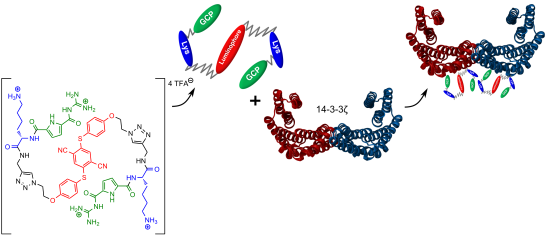
- potential supramolecular ligand for 14-3-3ζ. We synthesized a GCP-Lys dimer coupled via Cu(I)-catalyzed click reaction to the chosen emitter equipped with two azide functions (Figure 1 and Supporting Information File 1) and investigated the photophysical properties in detail (Supporting Information File 1





Ionic multiresonant thermally activated delayed fluorescence emitters for light emitting electrochemical cells
Beilstein J. Org. Chem. 2022, 18, 1311–1321, doi:10.3762/bjoc.18.136
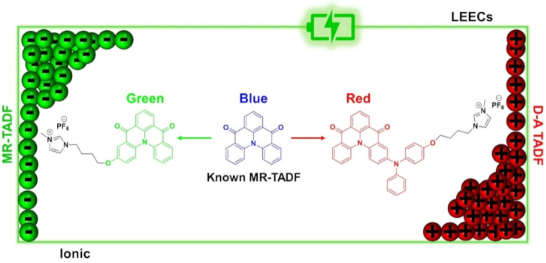
- line with the DFT calculations. Figure 3b shows the solution-state photophysical properties of DiKTa-OBuIm and DiKTa-DPA-OBuIm in acetonitrile and the data are compiled in Table 1. The lowest energy absorption band for DiKTa-OBuIm at 453 nm (ε = 17 × 103 M−1 cm−1) is red-shifted and slightly more
- both emitters was then assessed in 1 wt % doped film in 1,3-di-9-carbazolylbenzene (mCP) (Figure 4). At this doping concentration, the photophysical properties should reflect monomolecular entities. Emission was observed at 500 nm (FWHM = 66 nm) and 578 nm (FWHM = 95 nm) for DiKTa-OBuIm and DiKTa-DPA
- ]. Scan rate = 100 mV s−1; (b) solution-state photophysical measurements: absorption and steady-state emission spectra at 300 K measured in MeCN. λexc = 453 nm for DiKTa-OBuIm and λexc = 488 nm for DiKTa-DPA-OBuIm. (a) Steady-state emission spectra of DiKTa-OBuIm and DiKTa-DPA-OBuIm in 1 wt % doped mCP



Thermally activated delayed fluorescence (TADF) emitters: sensing and boosting spin-flipping by aggregation
Beilstein J. Org. Chem. 2022, 18, 1177–1187, doi:10.3762/bjoc.18.122
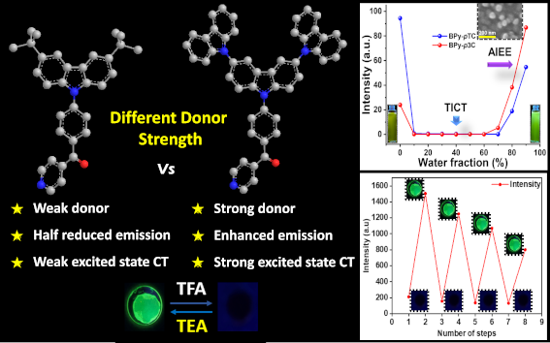
- developed mainly by focusing on photophysical processes, such as photoinduced electron transfer (PET), excited-state intramolecular proton transfer (ESIPT), fluorescence resonance energy transfer (FRET), etc. [21][22][24][25]. Several literature reports have also demonstrated the switching of fluorescence
- 'H-[9,3':6',9''-tercarbazol]-9'-yl)phenyl)(pyridin-4-yl)methanone (BPy-p3C) were synthesized via Ullmann coupling following the reported protocol [28]. These two TADF emitters have already been synthesized and device fabrication had been demonstrated. However, detailed photophysical investigations in
- Supporting Information File 1. Both compounds were further purified by temperature-gradient vacuum sublimation and characterized by 1H and 13C NMR spectroscopy (Figures S9–S12, Supporting Information File 1) as well as high-resolution mass spectrometry. Photophysical studies and DFT calculations The UV–vis


Post-synthesis from Lewis acid–base interaction: an alternative way to generate light and harvest triplet excitons
Beilstein J. Org. Chem. 2022, 18, 825–836, doi:10.3762/bjoc.18.83
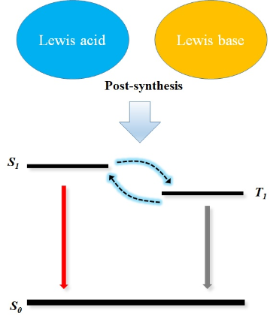
- photophysical changes, have some common structural characteristics. For instance, heterocyclic units containing a nitrogen atom such as pyridine and thiazole, are one of the key structural features either in small molecules or polymers. Thus, the introduction of nitrogen with lone pairs of electrons in


Syntheses of novel pyridine-based low-molecular-weight luminogens possessing aggregation-induced emission enhancement (AIEE) properties
Beilstein J. Org. Chem. 2022, 18, 580–587, doi:10.3762/bjoc.18.60
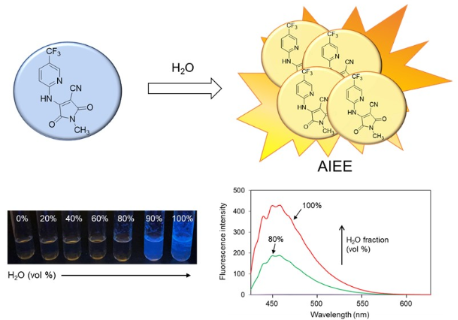
- photophysically and computationally. The photophysical studies revealed that all the synthesized compounds exhibited fluorescence in organic solvents, while N-methyl-4-((pyridin-2-yl)amino)-substituted maleimide derivatives 4a–e, which are based on an acceptor–donor–acceptor (A–D–A) system, exhibited aggregation
- aminopyridines based on the acceptor–donor–acceptor (A–D–A) system exhibit AIEE properties in aqueous media, which may be novel candidate molecules for AIEE. Herein, we report the synthesis, photophysical properties, and computational studies of pyrido[1,2-a]pyrrolo[3,4-d]pyrimidines and N-methyl-4-((pyridin-2


Substituent effect on TADF properties of 2-modified 4,6-bis(3,6-di-tert-butyl-9-carbazolyl)-5-methylpyrimidines
Beilstein J. Org. Chem. 2022, 18, 497–507, doi:10.3762/bjoc.18.52
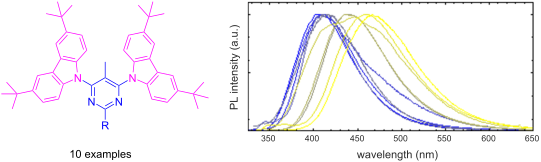
- of TADF compounds through the selection of different electron-donating or accepting fragments opens great possibilities to tune the emission properties and rates. Here we present the synthesis of a series of novel pyrimidine–carbazole emitters and their photophysical characterization in view of
- nucleophilic substitution of the methylsulfonyl group with sodium cyanide and 4-(tert-butyl)thiophenol. The thorough photophysical analysis was carried out to assess the impact of different substituents in position 2 of the pyrimidine ring. It was shown that HOMO–LUMO overlap and the resulting ΔEST can be
- and 100 MHz for 1H and 13C, respectively). 1H NMR and 13C NMR spectra were referenced to residual solvent peaks. High-resolution mass spectrometry (HRMS) analyses were carried out on a Dual-ESI Q-TOF 6520 (Agilent Technologies) mass spectrometer. Photophysical properties were analyzed in 10−5 M




Comparative study of thermally activated delayed fluorescent properties of donor–acceptor and donor–acceptor–donor architectures based on phenoxazine and dibenzo[a,j]phenazine
Beilstein J. Org. Chem. 2022, 18, 459–468, doi:10.3762/bjoc.18.48
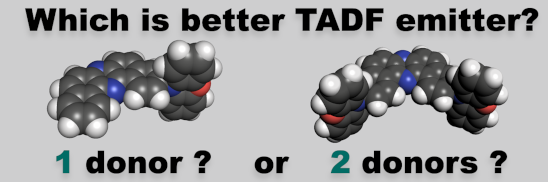
- ) compound based on a donor–acceptor (D–A) architecture (D = phenoxazine; A = dibenzo[a,j]phenazine) has been developed, and its photophysical properties were characterized. The D–A compound is applicable as an emitting material for efficient organic light-emitting diodes (OLEDs), and its external quantum
- ], is a fundamental photophysical phenomenon that refers to delayed fluorescence radiated from the singlet excited state (S1) as a consequence of a brief detour to a triplet excited state (Tn) [i.e., intersystem crossing (ISC) and reverse intersystem crossing (rISC)]. Since the revisit of TADF in
- compound 1 was fully characterized by 1H and 13C NMR and IR spectroscopy, MS spectrometry as well as elemental analysis (for the detailed data, see Supporting Information File 1). Steady-state PL spectra To reveal the photophysical properties of diluted solutions of compound 1, UV–vis absorption and steady


Synthesis of novel [1,2,4]triazolo[1,5-b][1,2,4,5]tetrazines and investigation of their fungistatic activity
Beilstein J. Org. Chem. 2022, 18, 243–250, doi:10.3762/bjoc.18.29
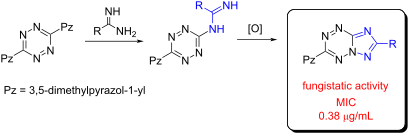
- as high-energy materials [23][24][25], molecules with promising photophysical, electrochemical and coordination properties for use in sensors, OLEDs, semiconductor materials, etc. [26][27][28]. The most important biomedical application of 1,2,4,5-tetrazines are bioorthogonal reactions that allow


1,2-Naphthoquinone-4-sulfonic acid salts in organic synthesis
Beilstein J. Org. Chem. 2022, 18, 53–69, doi:10.3762/bjoc.18.5
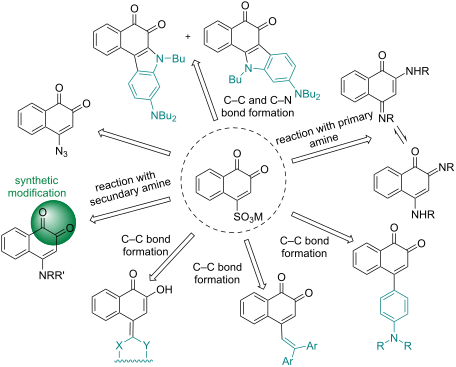
- quinoid type to study their photophysical properties in solution and in the solid-state, Ooyama and co-workers [106] studied a synthetic route for the preparation of compounds with the tricyclic benzo[c]carbazol-6-one skeleton. The strategy used was through the reaction to β-NQS 18 with a bifunctional


Effect of a twin-emitter design strategy on a previously reported thermally activated delayed fluorescence organic light-emitting diode
Beilstein J. Org. Chem. 2021, 17, 2894–2905, doi:10.3762/bjoc.17.197
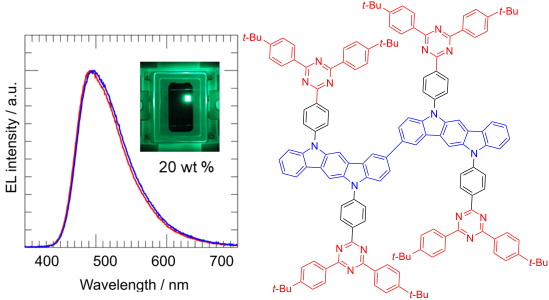
- incorporating DICzTRZ as the emitter in a solution-processed OLED, we next investigated the photophysical behavior of this compound in solid host matrices. We began with 10 wt % doped film of DICzTRZ in PMMA as the polarity of PMMA emulates well that of toluene [36]. The emission maximum in PMMA is 514 nm
- lifetimes are of a similar magnitude to that of ICzTRZ (τp = 11.5 ns) [14] while the average delayed fluorescence decays much faster for DICzTRZ (τd = 252.8 µs for ICzTRZ) [14]. We next focused on the photophysical study in a suitably high triplet energy small molecule host material, CzSi (9-(4-tert
- mA cm−2. The 20 wt % ICzTRZ-based OLEDs exhibited a slightly higher EQEmax of 11.6% and blue-shifted emission with λEL of 485 nm. This result is consistent with that of the photophysical measurements for 20 wt % TADF emitter:CzSi films (ΦPL = 57% and λPL = 488 nm for DICzTRZ, ΦPL = 63% and λPL = 475


Photophysical, photostability, and ROS generation properties of new trifluoromethylated quinoline-phenol Schiff bases
Beilstein J. Org. Chem. 2021, 17, 2799–2811, doi:10.3762/bjoc.17.191
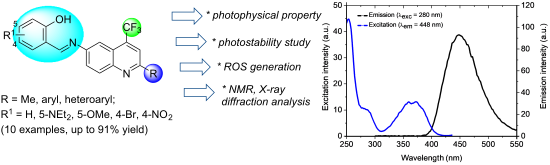
- more polar solvents (DMSO; 65–150 nm and MeOH; 65–130 nm) than in CHCl3 (59–85 nm). Compounds 3 presented good stability under white-LED irradiation conditions and moderate ROS generation properties were observed. Keywords: photophysical properties; photostability; quinoline; ROS generation; Schiff
- 4-substituted 4-methoxy-1,1,1-trifluoroalk-3-en-2-ones in a two-step reaction procedure and with satisfactory yields of up to 87%. The prepared 6-aminoquinolines presented promising photophysical properties and high thermal stability [14]. In this sense, the present study aimed to synthesize a novel
- trifluoromethylated hybrid system comprising the Schiff base scaffolds from some 6-aminoquinolines and salicylaldehyde derivatives in order to analyze and evaluate their photophysical, photostability, and antioxidant properties for possible future applications in the pharmacological areas or materials sciences




Visible-light-mediated copper photocatalysis for organic syntheses
Beilstein J. Org. Chem. 2021, 17, 2520–2542, doi:10.3762/bjoc.17.169
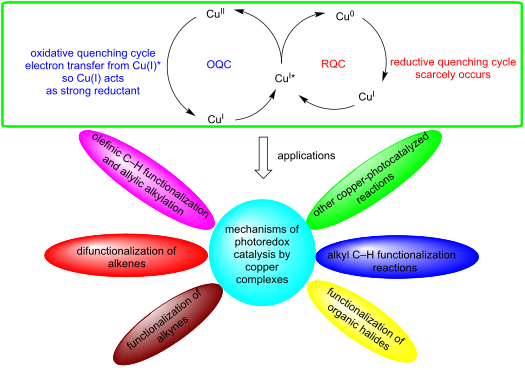
- cooperative steric hindrance based on bulky substituents at the 2,9-position of the phenanthroline moiety [32][33]. Alternatively, heteroleptic CuI complexes with phenanthroline and bulky chelating phosphine ligands were also synthesized [30][34][35]. The photophysical properties are dramatically modified by
- photophysical properties (Scheme 16). In 2019, Vlla’s group [76] explored the copper-catalyzed alkynylation of dihydroquinoxalin-2-ones 34 with terminal alkynes under irradiation. 4-Benzyl-3,4-dihydroquinoxalin-2(1H)-one 35 was subjected to an oxidation process with a CuII salt to generate a nitrogen radical
- by ligand modification. Although remarkable efforts have been made to elucidate and modify Cu complexes as photoredox catalysts for organic synthesis, the design of these complexes has not received much attention. If new complexes with improved redox and photophysical performances are designed, then






Synthesis and investigation on optical and electrochemical properties of 2,4-diaryl-9-chloro-5,6,7,8-tetrahydroacridines
Beilstein J. Org. Chem. 2021, 17, 2450–2461, doi:10.3762/bjoc.17.162
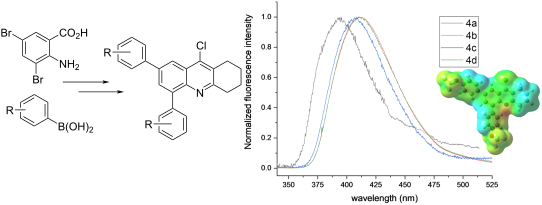
- optoelectronic properties [32][35][36][37]. Acridines, as aza-analogues of anthracene have obtained much attention in the field of organic light emitting diodes [38][39][40][41]. While considerable attention has been devoted to the photophysical properties of acridines, not much work has been reported related to
- trifluoromethoxy group (OCF3), a longer reaction time of 6 hours was required to obtain the product 4c in decreased yield (57%). Photophysical properties. We studied the steady-state absorption and emission of selected tetrahydroacridines 4a–d to gain insights into their photophysical properties. The UV–vis
- -positions, the dihedral angles were larger with values of −45.66 and −58.22 degrees, presumably due to steric reasons. These geometries may affect the electronic parameters of tetrahydroacridines 4a–d and particularly their band gap energies. On the other hand, the photophysical properties of products 4e–g




A visible-light-induced, metal-free bis-arylation of 2,5-dichlorobenzoquinone
Beilstein J. Org. Chem. 2021, 17, 2315–2320, doi:10.3762/bjoc.17.149
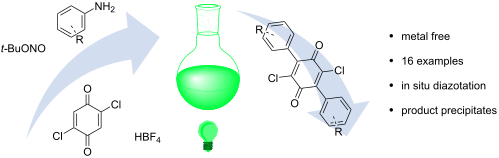
- nature makes them crucial players in both the regulation of reactive oxygen species and biological stress levels in human tissue [9], as well as in the photosynthesis of plants and bacteria [10]. Aside from their use in therapeutics, quinones possess unique photophysical and electronic properties


Transition-metal-free intramolecular Friedel–Crafts reaction by alkene activation: A method for the synthesis of some novel xanthene derivatives
Beilstein J. Org. Chem. 2021, 17, 2203–2208, doi:10.3762/bjoc.17.142
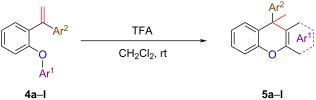
- anticarcinogenic [1][2], antiviral [3], antibacterial [4][5], and anti-inflammatory [6]. Because of their pharmaceutical activity, they are used in photodynamic therapy [7][8][9]. In addition, they have an important place in the dye industry due to their photochemical and photophysical properties. They are also


Chemical syntheses and salient features of azulene-containing homo- and copolymers
Beilstein J. Org. Chem. 2021, 17, 2164–2185, doi:10.3762/bjoc.17.139
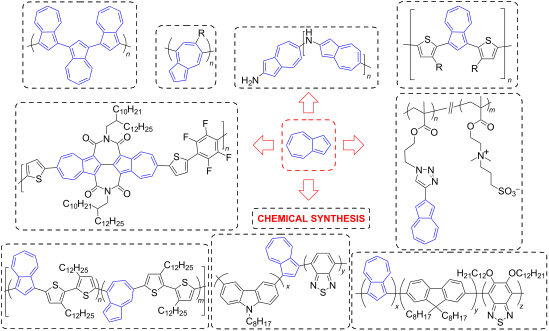
- , whereas the polymers 157 and 158 were containing 25–75 mol % azulene. The photophysical studies carried out on the neutral/protonated polymer series 155 and 158 were supportive of the fact that the optoelectronic property, electronic interactions, and exciton migration can be tuned by varying the density




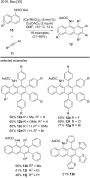
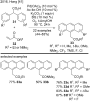
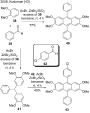
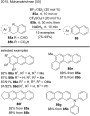
Recent advances in the syntheses of anthracene derivatives
Beilstein J. Org. Chem. 2021, 17, 2028–2050, doi:10.3762/bjoc.17.131
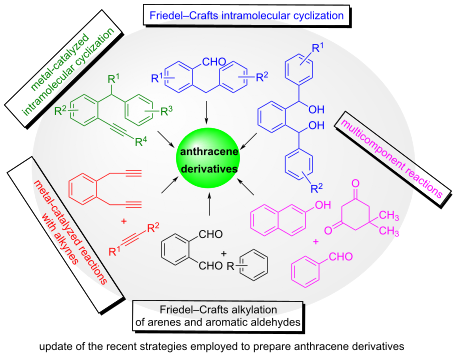
- years because of their interesting photophysical, photochemical, and biological properties. They are currently the subject of research in several areas, which investigate their use in the biological field and their application in OLEDs, OFETs, polymeric materials, solar cells, and many other organic
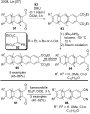
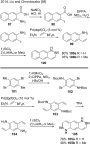
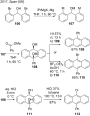
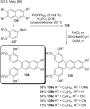
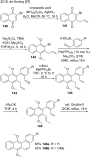
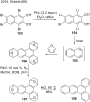
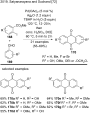
- three linearly fused benzene rings. Because of their extended aromatic and conjugated π-system, anthracene derivatives possess interesting photochemical and photophysical properties [1][2][3], as well as gelling ability [4]. These important properties make them relevant for the development and















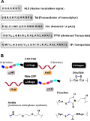
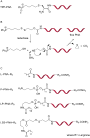
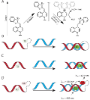
Chemical approaches to discover the full potential of peptide nucleic acids in biomedical applications
Beilstein J. Org. Chem. 2021, 17, 1641–1688, doi:10.3762/bjoc.17.116








2,4-Bis(arylethynyl)-9-chloro-5,6,7,8-tetrahydroacridines: synthesis and photophysical properties
Beilstein J. Org. Chem. 2021, 17, 1629–1640, doi:10.3762/bjoc.17.115
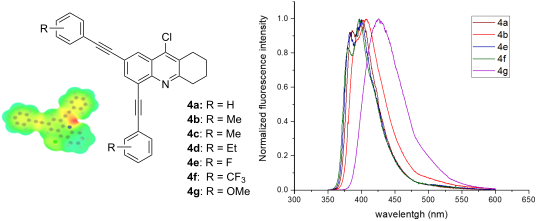
- several types of tumors [21][22][23][24][25][26][27][28][29][30][31]. In recent years, much attention has been devoted to acridines in materials science due to their attractive photophysical and electrochemical properties [32][33][34][35]. They have been investigated in organic electronic devices [36][37
- ring, is another privileged scaffold which showed interesting biological activities [48][49][50][51][52][53][54]. As a typical example, 9-amino-1,2,3,4-tetrahydroacridine or tacrine was the first drug approved for the treatment of Alzheimer's disease [55][56][57]. Surprisingly, photophysical properties
- studies and as a part of our interest in discovering new organic materials applications [61][62][63], we herein report the synthesis of new 2,4-bis(arylethynyl)-9-chloro-5,6,7,8-tetrahydroacridine derivatives. The investigation of their photophysical properties and theoretical DFT studies were achieved


Recent advances in the application of isoindigo derivatives in materials chemistry
Beilstein J. Org. Chem. 2021, 17, 1533–1564, doi:10.3762/bjoc.17.111
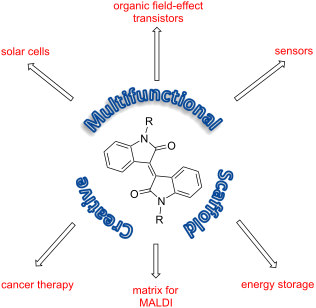
- properties [6][7][8][9][10][11][12]. The main photophysical characteristics that determine the effectiveness of OSCs are open circuit voltage (VOC), short-circuit current (JSC) and fill factor (FF). In addition, the solubility of isoindigo derivatives in organic solvents is very important since this affects
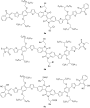
- platform (in position 1 and in the aromatic ring) and in the side chain. In the overwhelming majority of works, studies on the photophysical properties of isoindigo derivatives containing a thiophene fragment in position 6 are described. Thus, the authors of References [14][15] obtained a small number of
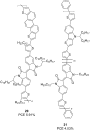
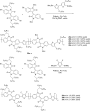
- accordingly improves the morphological and photophysical characteristics of the OSC [50]. For comparison, it should be noted that the OSC based on phenanthroquinoxaline derivative 33d showed an efficiency of only 0.3%. The study of composites based on mixtures of compounds 34 with PC71BM demonstrated the














Substituted nitrogen-bridged diazocines
Beilstein J. Org. Chem. 2021, 17, 1503–1508, doi:10.3762/bjoc.17.107
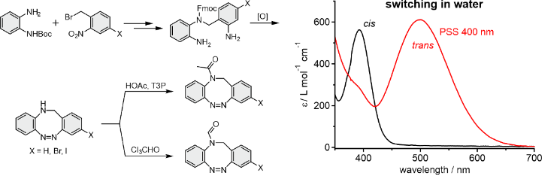
- acetyl group at the CH2NR-bridge and bromo- or iodo-substituents at the distant phenyl ring. The photophysical properties were investigated in acetonitrile and water. As compared to previous approaches the yields of the intramolecular azo cyclizations were increased (from ≈40 to 60%) using an oxidative
- Diazocines (bridged azobenzenes) are frequently used photoswitches with outstanding photophysical properties. Parent diazocine (CH2–CH2-bridged) exhibits well-separated n–π* transitions, which allow excellent photoconversion between the Z and E configurations ((Z→E)385 nm = 92%, (E→Z)525 nm > 99% in n-hexane
- anhydride of acetic acid and T3P (propanephosphonic acid anhydride). The formylation of NH-diazocines 9a–c was accomplished with chloral [23] under non-acidic conditions. Investigation of the photophysical properties The UV–vis spectra of diazocines 10a–c, and 11a–c were recorded in acetonitrile at 25 °C


Free-radical cyclization approach to polyheterocycles containing pyrrole and pyridine rings
Beilstein J. Org. Chem. 2021, 17, 1490–1498, doi:10.3762/bjoc.17.105
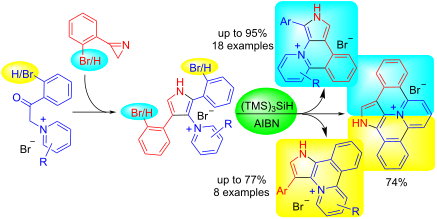
- complexes, Au(I) [20], Ir(III) [21] and Eu(III) [22] (Scheme 1). According to the calculations, the isomeric pyrido[2,1-a]pyrrolo[3,4-c]isoquinoline system B (Scheme 1) should have no less interesting photophysical properties [17], than skeleton A but its synthesis is still a challenge. In particular
- °C (Scheme 7). A study of photophysical and electrochemical properties of compounds 3 is in progress and will be published elsewhere. Conclusion A wide range of derivatives with new pyrido[2,1-a]pyrrolo[3,4-c]isoquinoline skeleton was synthesized by free-radical intramolecular cyclization of o


Synthesis of 1-indolyl-3,5,8-substituted γ-carbolines: one-pot solvent-free protocol and biological evaluation
Beilstein J. Org. Chem. 2021, 17, 1453–1463, doi:10.3762/bjoc.17.101
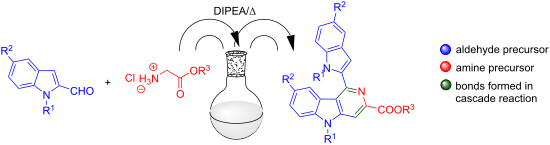
- -free method provides direct access to complex molecular structures in good yield from inexpensive substrates. The optical and biological evaluations carried out for representative γ-carbolines revealed promising photophysical and anticancer properties of the core framework for developing novel






Design, synthesis and photophysical properties of novel star-shaped truxene-based heterocycles utilizing ring-closing metathesis, Clauson–Kaas, Van Leusen and Ullmann-type reactions as key tools
Beilstein J. Org. Chem. 2021, 17, 1374–1384, doi:10.3762/bjoc.17.96
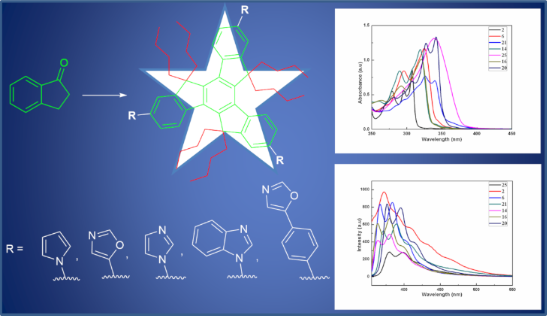
- -closing metathesis (RCM), Clauson–Kaas and Ullmann-type coupling reactions as key steps. Moreover, we have also assembled some other interesting heterocyclic systems possessing oxazole, imidazole, benzimidazole, and benzoxazole in the framework of truxene. Additionally, the preliminary photophysical
- functional materials and the opportunities are now open. Herein, we have assembled diverse truxene scaffolds containing heterocyclic systems involving trimerization, ring-closing metathesis, Clauson–Kaas and Van Leusen reactions as vital steps. Moreover, we have revealed the preliminary photophysical





