Search results
Search for "metal-catalyzed" in Full Text gives 434 result(s) in Beilstein Journal of Organic Chemistry. Showing first 200.
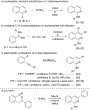
Two-step continuous-flow synthesis of 6-membered cyclic iodonium salts via anodic oxidation
Beilstein J. Org. Chem. 2023, 19, 27–32, doi:10.3762/bjoc.19.2
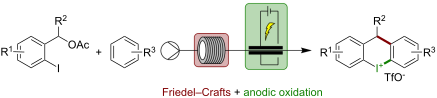
- blocks for the synthesis of natural products [16][17][18][19][20][21]. One subclass of HVIs is diaryliodonium salts (DIS), which have been used as versatile electrophilic arylation reagents in metal-catalyzed and metal-free reactions [22][23]. The corresponding cyclic diaryliodonium salts (CDIS) have


Combining the best of both worlds: radical-based divergent total synthesis
Beilstein J. Org. Chem. 2023, 19, 1–26, doi:10.3762/bjoc.19.1
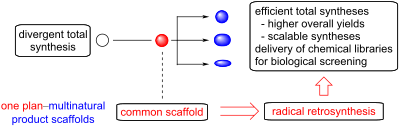
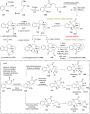
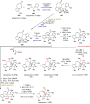
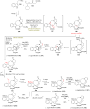
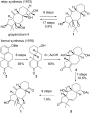
- groups developed an approach using an unprecedented ring distortion. Their strategy consisted of a metal-catalyzed HAT to the exo-Δ-alkene of the 5/5/6/5 tetracycle 109, so as to subsequently favor a Dowd–Beckwith rearrangement [58] towards the tetraquinane skeleton of 112 (Scheme 9). The synthesis








Total synthesis of grayanane natural products
Beilstein J. Org. Chem. 2022, 18, 1707–1719, doi:10.3762/bjoc.18.181
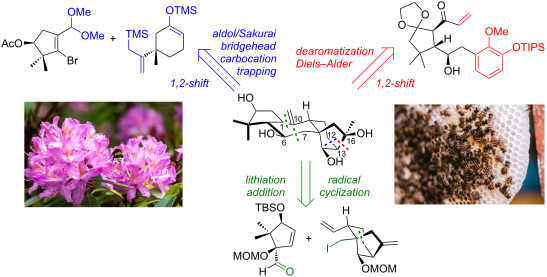
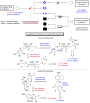
- promoted by EtAlCl2. Two separable alkene regioisomers 54 and 55 were obtained in 19% and 50% yield, respectively. A metal-catalyzed hydrogen atom transfer (MHAT) allowed 54 to be partially converted to 55 via Shenvi’s isomerization [37]. Selective TBS protection on the bicyclo[3.2.1]octane moiety and




An alternative C–P cross-coupling route for the synthesis of novel V-shaped aryldiphosphonic acids
Beilstein J. Org. Chem. 2022, 18, 1518–1523, doi:10.3762/bjoc.18.160
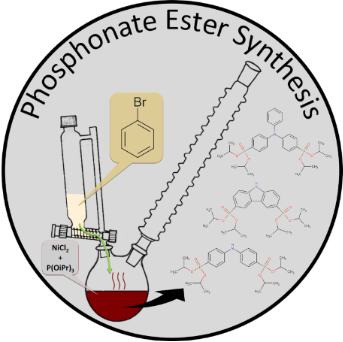
- order of addition of reactants to perform the transition-metal-catalyzed C–P cross-coupling reaction, often referred to as the Tavs reaction, employing NiCl2 as a pre-catalyst in the phosphonylation of aryl bromide substrates using triisopropyl phosphite. This new method was employed in the synthesis of
- often either non-porous or have low porosity and have little to no long-range order. The idea here was that the V-shaped linkers, as well as different substituents attached to nitrogen, could potentially force a non-layered porous structure. Conventionally, the transition-metal-catalyzed C–P cross


Design, synthesis, and evaluation of chiral thiophosphorus acids as organocatalysts
Beilstein J. Org. Chem. 2022, 18, 1471–1478, doi:10.3762/bjoc.18.154
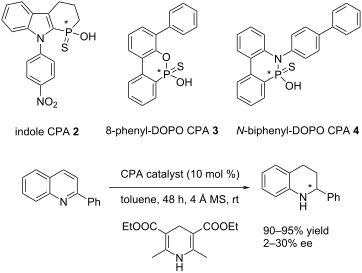
- later to make the synthesis more modular, and the resolution is straightforward late in the synthesis. Additionally, the presence of the nitro group in CPA 2 was chosen for two reasons: 1) the possibility to further functionalize at this position through reduction, diazotization, and metal-catalyzed


On drug discovery against infectious diseases and academic medicinal chemistry contributions
Beilstein J. Org. Chem. 2022, 18, 1355–1378, doi:10.3762/bjoc.18.141

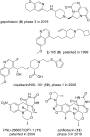
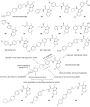
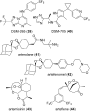
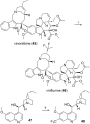
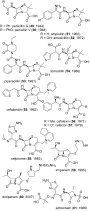
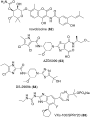
- , parallel/combinatorial synthesis, multicomponent chemistry, metal-catalyzed coupling reactions as well as NMR, preparative/analytical liquid chromatography and mass spectrometry). – An improved understanding of molecular pharmacology along with in vitro or in vivo assays to detect various aspects of drug







Synthesis and electrochemical properties of 3,4,5-tris(chlorophenyl)-1,2-diphosphaferrocenes
Beilstein J. Org. Chem. 2022, 18, 1338–1345, doi:10.3762/bjoc.18.139
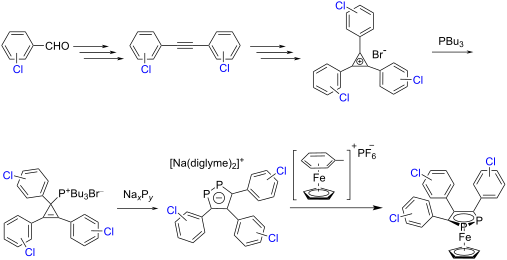
- transition metal-catalyzed cross-coupling reactions broadly used for the preparation of different diarylacetylenes and, rarely, bis(chlorophenyl)acetylenes. Next, starting substituted benzaldehydes were treated with an excess of SOCl2 for 24 h at 25 °C. Corresponding substituted benzal chlorides 4 were




Synthesis of N-phenyl- and N-thiazolyl-1H-indazoles by copper-catalyzed intramolecular N-arylation of ortho-chlorinated arylhydrazones
Beilstein J. Org. Chem. 2022, 18, 1079–1087, doi:10.3762/bjoc.18.110
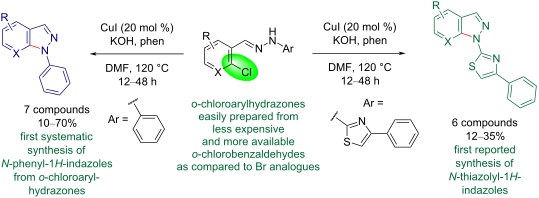
- reaction of hydrazones and p-benzoquinones [16], and Co3+/Cu2+-catalyzed C−N/N−N coupling of imidates with anthranils as both aminating reagents and organic oxidants [17]. Additional established routes to 1H-indazoles comprise transition metal‐catalyzed [18][19][20] and metal-free [21][22] intramolecular


Automated grindstone chemistry: a simple and facile way for PEG-assisted stoichiometry-controlled halogenation of phenols and anilines using N-halosuccinimides
Beilstein J. Org. Chem. 2022, 18, 999–1008, doi:10.3762/bjoc.18.100
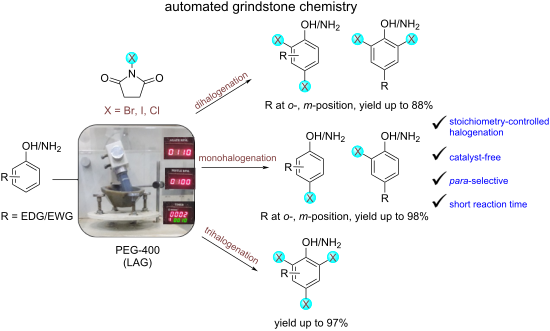
- halides are valuable compounds with potent bioactivities [1][2][3][4][5] (Figure 1) and are utilized as crucial precursors for various metal-catalyzed cross-coupling reactions [6][7][8][9]. They are frequently used as synthetic intermediates in several value-added syntheses of natural products




Synthesis of novel alkynyl imidazopyridinyl selenides: copper-catalyzed tandem selenation of selenium with 2-arylimidazo[1,2-a]pyridines and terminal alkynes
Beilstein J. Org. Chem. 2022, 18, 863–871, doi:10.3762/bjoc.18.87
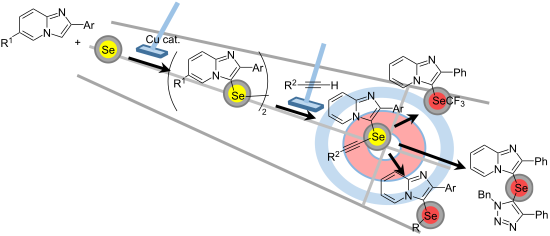
- attention [15][19][20][21][22][23][24][25][26]. This method involves a transition-metal-catalyzed one-pot, three-component reaction in which two functional groups are simultaneously introduced on the Se atom via double selenation. As examples, the following Cu-catalyzed one-pot reactions have been reported


Copper-catalyzed multicomponent reactions for the efficient synthesis of diverse spirotetrahydrocarbazoles
Beilstein J. Org. Chem. 2022, 18, 796–808, doi:10.3762/bjoc.18.80
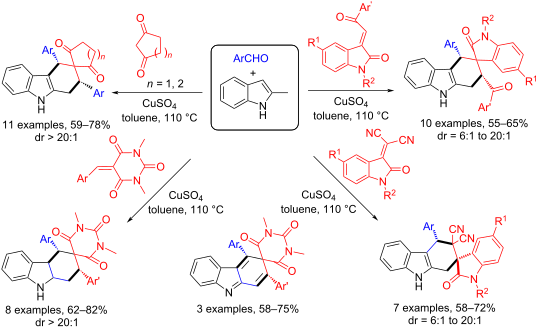
- underwent a [4 + 2] cycloaddition reaction (reaction 1 in Scheme 1) [69][70][71][72][73][74]. This metal-catalyzed one-pot reaction not only combined the advantages of a traditional Diels–Alder reaction and the recently developed multicomponent reactions, but also meets the goal of green and sustainable





Mechanochemical halogenation of unsymmetrically substituted azobenzenes
Beilstein J. Org. Chem. 2022, 18, 680–687, doi:10.3762/bjoc.18.69
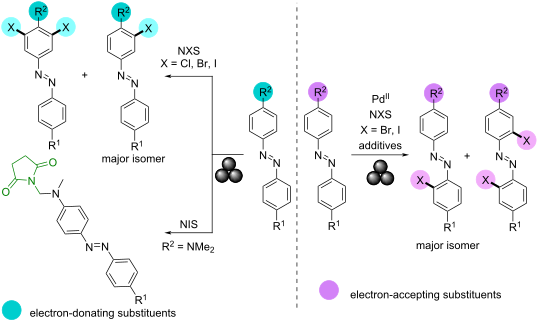
- ; N-halosuccinimide; palladium(II); Introduction Electrophilic aromatic substitution [1][2][3] and ligand-directed transition-metal-catalyzed reactions [4][5][6][7][8] are among the most widely used synthetic approaches for the preparation of halogenated arenes. They are important precursors in cross





Tosylhydrazine-promoted self-conjugate reduction–Michael/aldol reaction of 3-phenacylideneoxindoles towards dispirocyclopentanebisoxindole derivatives
Beilstein J. Org. Chem. 2022, 18, 469–478, doi:10.3762/bjoc.18.49
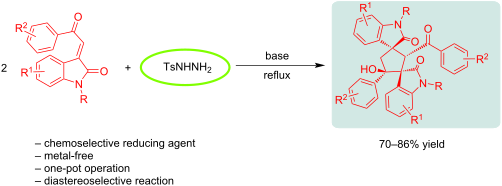
- , 3o, 3q, 3s, 3t and 3x) gave a good yield of the corresponding product, respectively. Here also, the halo-substituted aryl ring on 1 can be further used for transition-metal-catalyzed cross coupling reactions, thus providing a very good application. Then the effect of N-protecting groups on the


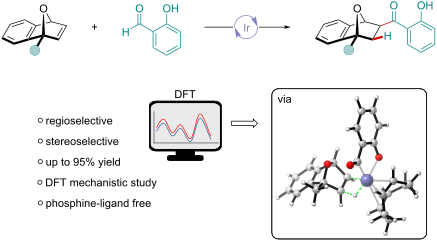
Iridium-catalyzed hydroacylation reactions of C1-substituted oxabenzonorbornadienes with salicylaldehyde: an experimental and computational study
Beilstein J. Org. Chem. 2022, 18, 251–261, doi:10.3762/bjoc.18.30
- the art and science of selective molecular engineering [1]. To date, organic synthesis has largely been governed by the interconversion of pre-existing functional groups through the use of more traditional transition-metal-catalyzed cross-coupling reactions [2][3][4][5]. Although these reactions have
- attractive. Transition-metal-catalyzed reactions of strained bicyclic derivatives have been an intense area of research in the last 20 years (Scheme 1) [14][15][16][17]. Of particular interest is oxabenzonorbornadiene (OBD, 1), as it bears multiple points of reactivity that allow for diverse
- reported metal-catalyzed reactions of heterobicyclic alkenes and applications towards the synthesis of biologically active compounds (top). Representative examples of regioselectivity in different metal-catalyzed ring-opening reactions of C1-substituted oxabenzonorbornadiene derivatives (bottom left


Organocatalytic asymmetric nitroso aldol reaction of α-substituted malonamates
Beilstein J. Org. Chem. 2022, 18, 217–224, doi:10.3762/bjoc.18.25

- using a silver-BINAP catalyst combination [25]. Later, the same group could successfully tune the catalytic system to control the regioselectivity in the addition of metal enolate to nitrosoarenes to achieve an α-hydroxyamination [26]. Since then, several groups have shown the use of metal-catalyzed
- metal-catalyzed reactions [31][32][33][34][35][36]. The most successful among them are the ʟ-proline-catalyzed reactions of enolizable aldehydes with nitrosoarenes [37][38][39][40][41][42][43]. Besides ʟ-proline and its derivatives, various secondary amines derived from BINOL and cinchona alkaloids were




Earth-abundant 3d transition metals on the rise in catalysis
Beilstein J. Org. Chem. 2022, 18, 86–88, doi:10.3762/bjoc.18.8
- alternatives. Furthermore, metal-catalyzed cross-couplings do require prefunctionalizations on both substrates and generate stoichiometric quantities of undesired chemical waste, thus reducing the sustainability of these catalytic transformations. To address these major limitations, the past decades have
- witnessed major momentum in metal-catalyzed C–H activation [4][5] as a more resource-economical strategy. This approach involves the efficient and selective cleavage of otherwise inert, yet omnipresent C–H bonds. This strategy avoids a variety of steps and reduces the amount of chemical waste. Very recently
- laboratories calls for a critical analysis of these methods to enable an efficient transition of these methods. Hence, manganese-catalyzed C–H functionalization for late-stage functionalizations of biomolecules and drug-like scaffolds are summarized [8]. Likewise, 3d transition metal-catalyzed C–H
Recent advances and perspectives in ruthenium-catalyzed cyanation reactions
Beilstein J. Org. Chem. 2022, 18, 37–52, doi:10.3762/bjoc.18.4
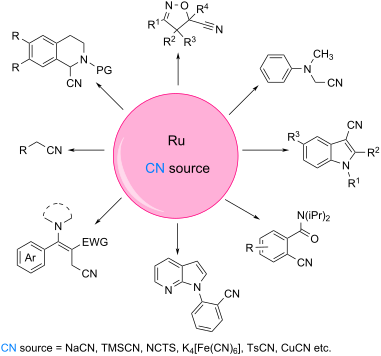
- demanded the need of an alternative method for the synthesis of nitriles. Nowadays transition-metal-catalyzed reactions have received tremendous interest. Various transition metals such as Fe [15], Co [16], Ni [17], Pd [18], Cu [19], Rh [20] etc. were well explored in cyanation owing to its cost-effective
- achieved significant progress in recent times. Transition-metal-catalyzed cyanation reactions have emerged as an alternative approach to conventional cyanation strategies. Nowadays ruthenium has gained much acceptance owing to its wide range of oxidation states and ability to form a large number of


Bifunctional thiourea-catalyzed asymmetric [3 + 2] annulation reactions of 2-isothiocyanato-1-indanones with barbiturate-based olefins
Beilstein J. Org. Chem. 2022, 18, 25–36, doi:10.3762/bjoc.18.3
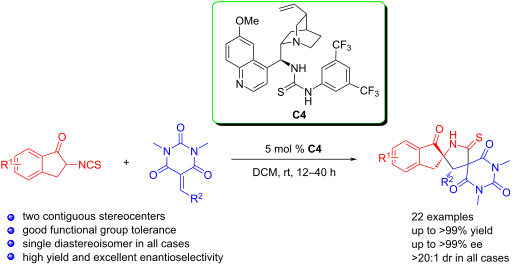
- conveniently and comprehensively. However, as we know, the construction of these compounds is mostly carried out through transition-metal-catalyzed cyclization reactions [11][12][13][14], whereas strategies using bifunctional chiral thiourea catalysts are rarely reported. In 2018, Du's group reported a novel




Iron-catalyzed domino coupling reactions of π-systems
Beilstein J. Org. Chem. 2021, 17, 2848–2893, doi:10.3762/bjoc.17.196
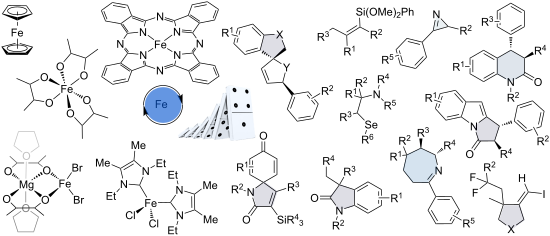
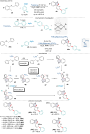
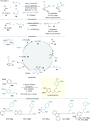
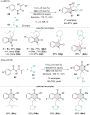
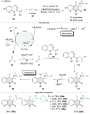
- the design of novel domino reactions. Keywords: cascade; catalysis; coupling; earth-abundant; iron; Introduction Over the past couple decades, the use of transition-metal-catalyzed cross-coupling reactions have become a staple within the organic chemist’s arsenal of carbon–carbon and carbon
- reasons of clarity, newly formed bonds are sketched in red, with newly formed cyclic structures being highlighted. Review Iron-catalyzed cross-coupling Metal-catalyzed cross-coupling reactions have become a staple for carbon–carbon bond formation. The late TMs that have dominated the field of cross
- . Iron-catalyzed cross dehydrogenative coupling Transition-metal-catalyzed carbon–carbon (C–C) or carbon–heteroatom (C–X) bond formation involving two different C–H bonds or one C–H and one X–H bond is formally known as cross dehydrogenative coupling (CDC) and is quite attractive to synthetic organic













Selective sulfonylation and isonitrilation of para-quinone methides employing TosMIC as a source of sulfonyl group or isonitrile group
Beilstein J. Org. Chem. 2021, 17, 2822–2831, doi:10.3762/bjoc.17.193
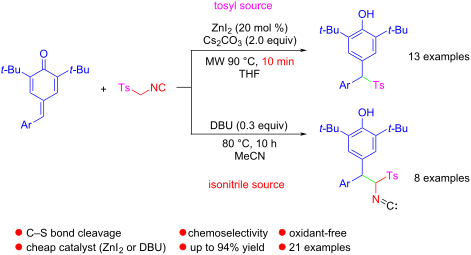
- sulfones is a valuable and appealing task in synthetic chemistry. Traditionally, diarylmethyl sulfones are synthesized by transition-metal-catalyzed deoxy C–S bond-coupling reaction of sodium arylsulfinates with diarylmethanols [11], C–H functionalization of alkyl sulfones with aryl halides [12], and via a


Me3Al-mediated domino nucleophilic addition/intramolecular cyclisation of 2-(2-oxo-2-phenylethyl)benzonitriles with amines; a convenient approach for the synthesis of substituted 1-aminoisoquinolines
Beilstein J. Org. Chem. 2021, 17, 2765–2772, doi:10.3762/bjoc.17.186
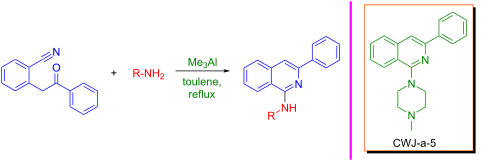
- amidines with alkynes catalyzed by either rhodium or ruthenium [55][56][57], or a metal-catalyzed aminative cyclization of 2-alkynylbenzonitriles with secondary amines [58]. Despite the advantages associated with the aforementioned protocols such as the functional group tolerance and huge substrate scope




Recent advances in the asymmetric phosphoric acid-catalyzed synthesis of axially chiral compounds
Beilstein J. Org. Chem. 2021, 17, 2729–2764, doi:10.3762/bjoc.17.185
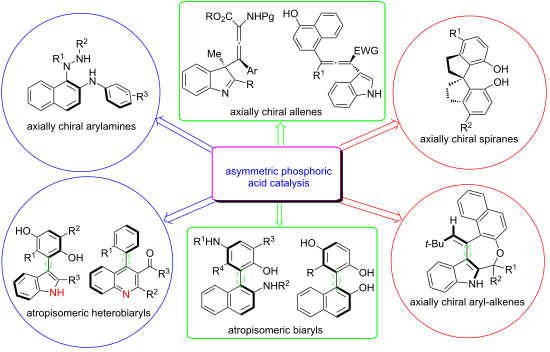
- be prepared by asymmetric C–H activation. The C–H activation or functionalization can be achieved by a metal-catalyzed chiral phosphoric acid ligand-assisted method, which offers distinct possibilities to provide various chiral biaryl compounds by changing different directing groups (DGs) [46]. Since
- ]. Organocatalytic aryl C–H activation via a nonradical process represents an enormous challenge in organic synthesis, although the nucleophilic aromatic substitution with cleavage of the electrophilic aryl C–H bond has only recently been developed by transition-metal-catalyzed aryl C–H activation [57]. In the
- ][21] (Figure 2), and chiral building blocks in modern organic synthesis [5]. During the past decades, both C2 and non-C2 symmetric axially chiral biaryl compounds such as BINAP, BINAM, NOBIN and their derivatives BINOL have played a crucial role as ligands in the development of transition-metal




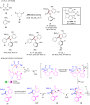


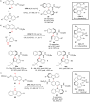


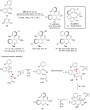


Synthetic strategies toward 1,3-oxathiolane nucleoside analogues
Beilstein J. Org. Chem. 2021, 17, 2680–2715, doi:10.3762/bjoc.17.182
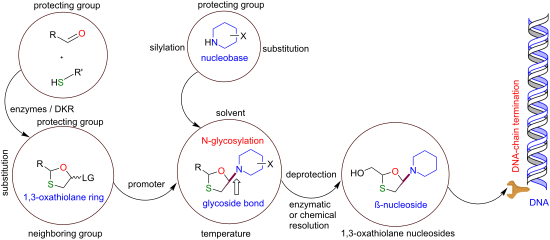
- introduction on important classical approaches and older yet creative methods to provide the reader with a historical context. For comparison, this will be followed by a discussion of more modern techniques, including chiral auxiliaries for neighboring group participation and transition metal-catalyzed


Synthesis of highly substituted fluorenones via metal-free TBHP-promoted oxidative cyclization of 2-(aminomethyl)biphenyls. Application to the total synthesis of nobilone
Beilstein J. Org. Chem. 2021, 17, 2668–2679, doi:10.3762/bjoc.17.181
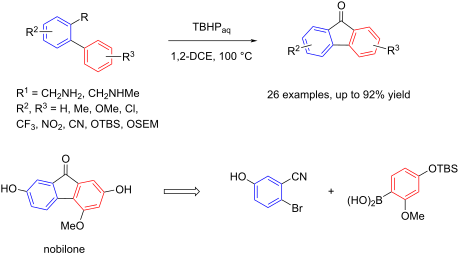
- radical cyclizations [22], Pschorr reactions [23], and diverse cycloaddition protocols [24][25]. Especially transition-metal-catalyzed cross-coupling reactions starting from benzophenones, benzoic acids, dihalogenated benzene building blocks and others have emerged as new approaches in recent years [26
- ][27][28]. Various approaches starting from functionalized biaryls have hereby attracted considerable interest, since the precursors are readily available by established cross-coupling reactions. Beyond transition-metal-catalyzed reactions, acid-mediated cyclizations of biphenylcarboxylic acids and


Solvent-free synthesis of enantioenriched β-silyl nitroalkanes under organocatalytic conditions
Beilstein J. Org. Chem. 2021, 17, 2642–2649, doi:10.3762/bjoc.17.177
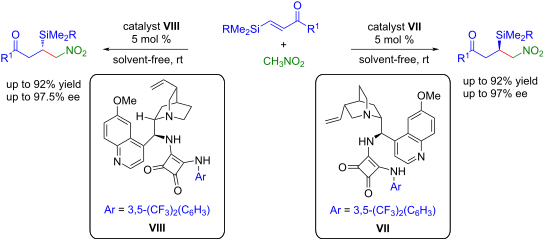
- -silylmethylene malonates (Scheme 1b) [29]. As the catalytic enantioselective route is limited to accessible β-nitrosilanes, there is an urgent need to develop efficient catalytic protocols to deliver enantioenriched β-nitrosilanes from easily available starting materials. Metal-catalyzed reaction of various
- the best of our knowledge, organocatalyzed or metal-catalyzed enantioselective conjugate additions of nitroalkanes to β-silyl enones are not yet known. Results and Discussion The optimization study began with the conjugate addition reaction between β-TMS enone 1a and nitromethane (2) as the model