


Search results
Search for "protonation" in Full Text gives 478 result(s) in Beilstein Journal of Organic Chemistry. Showing first 200.
Aromatic C–H bond functionalization through organocatalyzed asymmetric intermolecular aza-Friedel–Crafts reaction: a recent update
Beilstein J. Org. Chem. 2023, 19, 956–981, doi:10.3762/bjoc.19.72

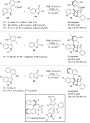
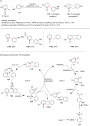
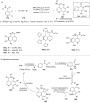
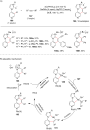
- reactivity of catalyst P5 initiated with the protonation of amidates 42 to generate intermediate 44 through ring cleavage. Then, the intermediate 44 was paired with the anionic conjugate base of catalyst P5 and acts as electrophile to facilitate the conjugate Friedel–Crafts reaction involving C3 of indole 4
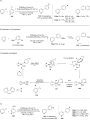
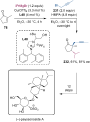
- pyrroles/indoles 4/9 allowing access to 2,3-dihydroisoxazoles 77/78 bearing an all-substituted stereocenter at the C3 position. A dual catalytic activity of the Brønsted acid catalyst was illustrated by the authors which was initiated with a smooth protonation of the OH group in 76 with a subsequnte




Clauson–Kaas pyrrole synthesis using diverse catalysts: a transition from conventional to greener approach
Beilstein J. Org. Chem. 2023, 19, 928–955, doi:10.3762/bjoc.19.71
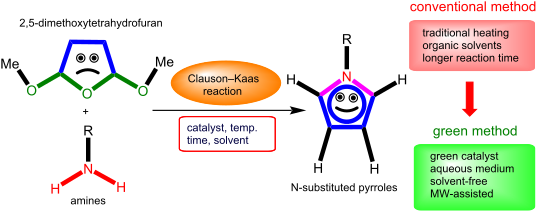
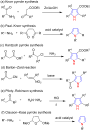
- by a water molecule to form intermediate B. Further, dehydration and protonation leads to the formation of intermediate E. Nucleophilic attack of amine 36 on E then affords intermediate F. Finally, protonation, cyclization, and dehydration afford N-substituted pyrrole 37. The authors also
- carbonyl carbon to form the 5-membered ring E bearing the iminium ion. Finally, N-substituted amines 67 were obtained after deprotonation/protonation, dehydration, and aromatization steps as shown in Scheme 32b. In another report, Ozaki et al. [87] used the Clauson–Kaas approach to synthesize sulfonic




Photoredox catalysis enabling decarboxylative radical cyclization of γ,γ-dimethylallyltryptophan (DMAT) derivatives: formal synthesis of 6,7-secoagroclavine
Beilstein J. Org. Chem. 2023, 19, 918–927, doi:10.3762/bjoc.19.70
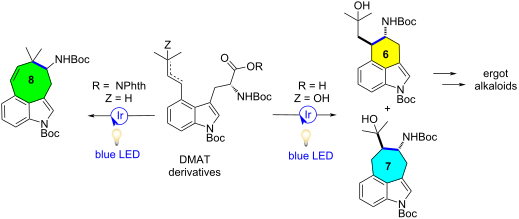
- intramolecularly with the C4-pendant prenyl side-chain previously oxidized [76]. Closure of the photoredox catalytic cycle would then involve SET reduction, and protonation would deliver the desired carbocyclic ring (Figure 1c). If this cyclization reaction could be realized in either way, it would shorten the
- to forge the desired six-membered ring through a key C–C bond formation while furnishing secondary radical VI and the undesired seven-membered-ring compound VII. Closure of the photoredox catalytic cycle would then involve either SET reduction of the radical VI and VII (which upon protonation would


Pyridine C(sp2)–H bond functionalization under transition-metal and rare earth metal catalysis
Beilstein J. Org. Chem. 2023, 19, 820–863, doi:10.3762/bjoc.19.62
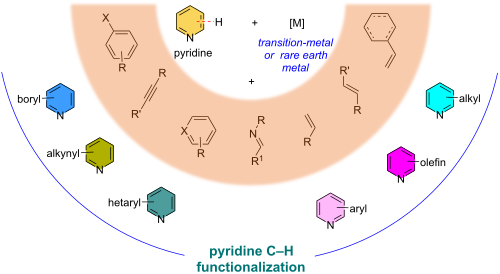
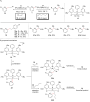
- insertion giving intermediate 16’, which upon protonation gives the desired alkylated product 14. Later, in the year 2018, Yao and co-workers [53] developed the first example of a group 4 metal-based catalyst protocol for the C–H alkylation of pyridine 1 with alkenes 18 and 20 as coupling partners. They
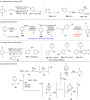
- involves the formation of (dibenzylamido)yttrium complex 28 by the reaction of yttrium complex 26 with HNBn2. Then σ-bond metathesis between the Y–N bond of 28 and the ortho-C–H bond of pyridine gives η2-pyridyl species 29 which on imine insertion produces species 30. Subsequent protonation then provides
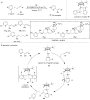
- bond of 105 provides a seven-membered rhodacyclic intermediate 106. The protonation at the Rh–C bond of intermediate 106 in the presence of RCOOH furnishes hydroarylation product 104. Nitrogen heterocyclic carbenes (NHCs) are of central importance in organometallic chemistry and in organic synthesis














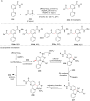


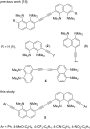
Synthesis, structure, and properties of switchable cross-conjugated 1,4-diaryl-1,3-butadiynes based on 1,8-bis(dimethylamino)naphthalene
Beilstein J. Org. Chem. 2023, 19, 674–686, doi:10.3762/bjoc.19.49
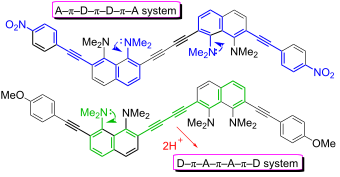
- -conjugation of 1,8-bis(dimethylamino)naphthalene (DMAN) fragments through a butadiyne linker and a donor–acceptor aryl–C≡C–DMAN conjugation path. The conjugation path can be “switched” simply by protonation of DMAN fragments. X-ray diffraction, UV–vis spectroscopy and cyclic voltammetry are applied to analyze
- counterpart with an electron-donating methoxy group can be converted into a D–π–A–π–A–π–D system by protonation of the proton sponge fragments (Figure 2). Moreover, oligomers 5 are cross-conjugated π-systems. “A cross-conjugated compound may be defined as a compound possessing three unsaturated groups, two of
- planarization of the naphthalene backbone due to the disappearance of steric and electrostatic stress between the NMe2 groups. The nitrogen atoms in the DMAN fragments strongly approach during protonation and practically do not deviate from the average naphthalene ring plane. The dimethylamino groups naturally



pH-Responsive fluorescent supramolecular nanoparticles based on tetraphenylethylene-labelled chitosan and a six-fold carboxylated tribenzotriquinacene
Beilstein J. Org. Chem. 2023, 19, 635–645, doi:10.3762/bjoc.19.45
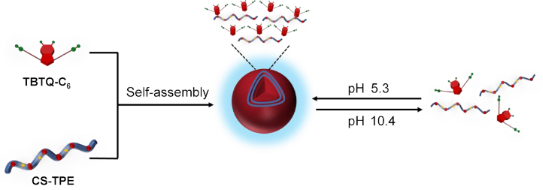
- composed of TBTQ-C6, as illustrated in Scheme 1. Due to the electrostatic interaction between the host and guest molecules, pH is considered an influential control factor in regulating the assembly and disassembly of supramolecular nanoparticles, as changes in pH affect the protonation degree of the



Enolates ambushed – asymmetric tandem conjugate addition and subsequent enolate trapping with conventional and less traditional electrophiles
Beilstein J. Org. Chem. 2023, 19, 593–634, doi:10.3762/bjoc.19.44
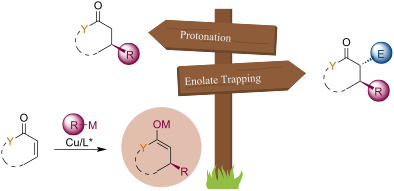
- 44B). In the end, protonation of the Li enolate affords the spiroindane boronate. Due to their paramount role in the fields of bioactive natural products and medicinal chemistry, there is a growing interest in enantioenriched cyclobutanes. Recently, the group of Hall was engaged in developing
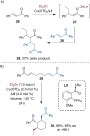
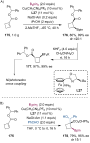
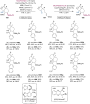
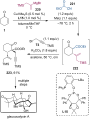
- highly beneficial scaffold which was successfully involved in diastereoselective Ni/photoredox dual-catalyzed cross-coupling reactions. Furthermore, rather than the stereoselective protonation, they have also demonstrated the successful trapping of the Cu enolate with benzaldehyde (Scheme 45B). This








A new oxidatively stable ligand for the chiral functionalization of amino acids in Ni(II)–Schiff base complexes
Beilstein J. Org. Chem. 2023, 19, 566–574, doi:10.3762/bjoc.19.41
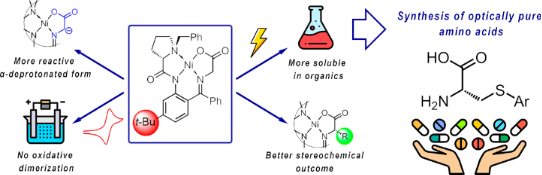
- (established via the α-protonation/deprotonation in the intermediate α-carbanion in the amino acid moiety) and concomitant epimerization of the final product [41]. The results of the thiolation of complex (ΔAlaNi)L7 are given in Table 1. The corresponding ʟ-cysteine derivatives (RCysNi)L7 were isolated in high



Phenanthridine–pyrene conjugates as fluorescent probes for DNA/RNA and an inactive mutant of dipeptidyl peptidase enzyme
Beilstein J. Org. Chem. 2023, 19, 550–565, doi:10.3762/bjoc.19.40
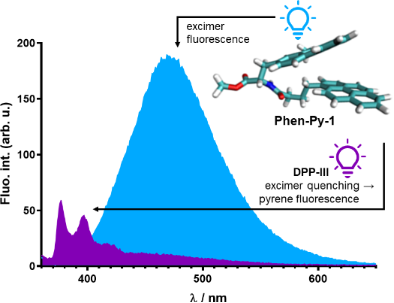
- molecular dynamics (MD) simulations of different protonation forms of Phen-Py-1 and Phen-Py-2 placed in explicit water solvation, and analyzed structural preferences in the obtained trajectories. In setting up our simulations, we prepared the geometries of unionized Phen-Py-1 and Phen-Py-2 and their
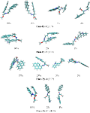
- representative geometries that account for most of the population of each system are presented in Figure 2. The results showed that both conjugates, irrespective of their protonation state, prefer stacked conformations, with favorable π–π interactions among aromatic fragments. Interestingly, this also holds even




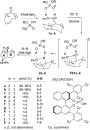
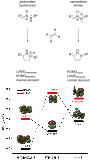
Computational studies of Brønsted acid-catalyzed transannular cycloadditions of cycloalkenone hydrazones
Beilstein J. Org. Chem. 2023, 19, 477–486, doi:10.3762/bjoc.19.37
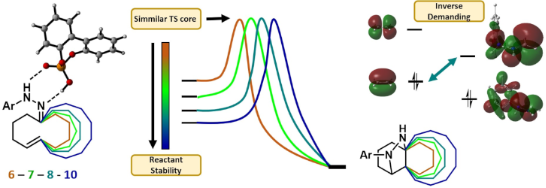
- , no significant variations are observed for the bonds N11–N12 and N11–H14, confirming that protonation of N11 is maintained during all the process. In summary, we can define the whole situation as a concerted process taking place in two stages, i.e.: (i) the first one comprises a series of concomitant




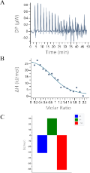
Recommendations for performing measurements of apparent equilibrium constants of enzyme-catalyzed reactions and for reporting the results of these measurements
Beilstein J. Org. Chem. 2023, 19, 303–316, doi:10.3762/bjoc.19.26
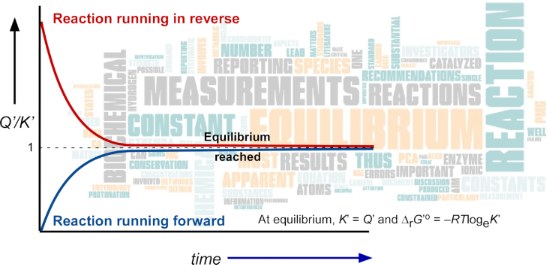
- constants K and apparent equilibrium constants K′ as well as between “chemical” and ”biochemical” reactions. Both chemical and biochemical reactions are carried out at fixed temperature T and pressure p. A chemical reaction involves species (often ionic) in specific protonation states and keeps track of the
- (overall) biochemical reaction involves sums of species that differ only in protonation and, if present, Mg2+ and Ca2+ binding states. It has an equilibrium constant K’, which is referred to as an “apparent equilibrium constant” [10]. A biochemical reaction should be carried out at essentially a constant
- equilibrium. The total ATP concentration is the sum of the concentrations of the individual ionic species formed by the protonation or metal ion binding reactions of the ATP species Additional metal ion complexes (e.g., involving Ca2+, K+, and Na+) can also be included in Equation 4. Similar expressions can

An accelerated Rauhut–Currier dimerization enabled the synthesis of (±)-incarvilleatone and anticancer studies
Beilstein J. Org. Chem. 2023, 19, 204–211, doi:10.3762/bjoc.19.19
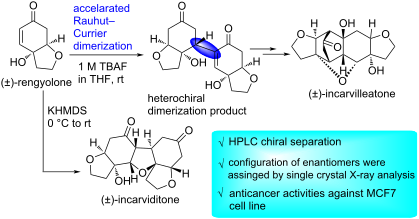
- intermediate A tetrahydrofuran intermediate B with cis-fused ring systems is formed as seen in the existing literature [7]. A proton transfer of enolate moiety B yields another enolate C followed by the β-alkoxy elimination [17] of intermediate C to form intermediate D. The intermediate D on protonation leads


Germacrene B – a central intermediate in sesquiterpene biosynthesis
Beilstein J. Org. Chem. 2023, 19, 186–203, doi:10.3762/bjoc.19.18

- -selinene (10) (Scheme 4A) [43]. Interestingly, while racemic juniper camphor (11) is formed from 1 upon acid treatment [50], this reaction with diluted sulfuric acid in acetone results in (rac)-11 quantitatively. This observation is explained by a protonation-induced cyclisation, successive addition of






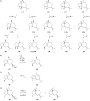
1,4-Dithianes: attractive C2-building blocks for the synthesis of complex molecular architectures
Beilstein J. Org. Chem. 2023, 19, 115–132, doi:10.3762/bjoc.19.12
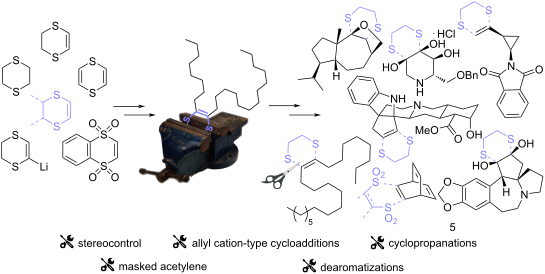
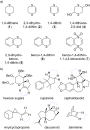
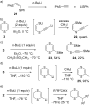
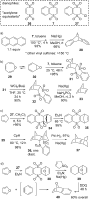
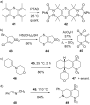
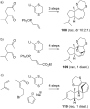
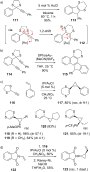
- . This protonation effectively prevents any possible side reactions of the dearomatized products with electrophiles. A remarkably wide substrate scope was observed for this dearomative indole cyclopentannulation reaction, as demonstrated by the smooth ring expansion of the natural alkaloid drug yohimbine










Practical synthesis of isocoumarins via Rh(III)-catalyzed C–H activation/annulation cascade
Beilstein J. Org. Chem. 2023, 19, 100–106, doi:10.3762/bjoc.19.10
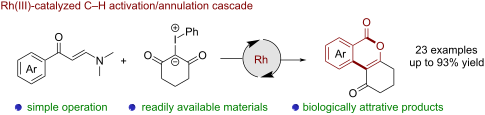
- , which undergoes a rapid migratory insertion to give intermediate 1-C. The protonation of 1-C produces the intermediate 1-D with the regeneration of the active Rh catalyst for the next catalytic cycle. Under acidic conditions, the further protonation of compound 1-D delivers an imine intermediate 1-E


Synthetic study toward tridachiapyrone B
Beilstein J. Org. Chem. 2022, 18, 1741–1748, doi:10.3762/bjoc.18.183
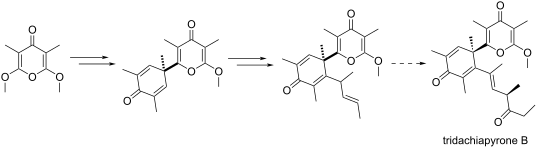
- Discussion At first glance, the structure of 2,5-cyclohexadienone 5 suggests a disconnection involving the dearomative addition of 2,4,6-trimethylphenol to α,α’-dimethoxy-γ-pyrone 2 that we eagerly sought to establish under basic activation of the nucleophile or by protonation of 2 (Scheme 2a). This


Characterization of a new fusicoccane-type diterpene synthase and an associated P450 enzyme
Beilstein J. Org. Chem. 2022, 18, 1396–1402, doi:10.3762/bjoc.18.144
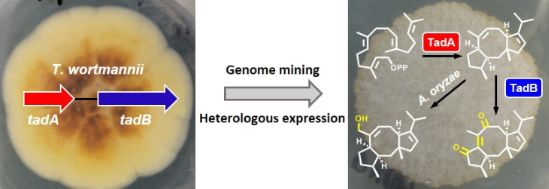
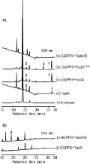
- employs an intramolecular proton transfer. We recently showed that a water-mediated concerted deprotonation–protonation is required for the MgMS-mediated cyclization [20]. In order to probe the mechanism underlying the cyclization of 1, we used His6-tagged TadA to carry out in vitro enzymatic reactions
- might adopt a similar strategy as MgMS to initiate C2,6 cyclization though protonation at C2 by bulky water. To obtain further insights into the C2,6-cyclization process of TadA, its three-dimensional (3D) protein structure was constructed with SWISS-MODEL using PaFS (PDB entry 5er8) as the template
- , and the proposed bicyclic neutral intermediate was docked into the active pocket of TadA (Supporting Information File 1, Figure S20). We searched for the amino acid residues surrounding C2 or C3, which might be involved in the C2 protonation, and found the candidate residue Tyr91. In the corresponding



Synthesis of C6-modified mannose 1-phosphates and evaluation of derived sugar nucleotides against GDP-mannose dehydrogenase
Beilstein J. Org. Chem. 2022, 18, 1379–1384, doi:10.3762/bjoc.18.142
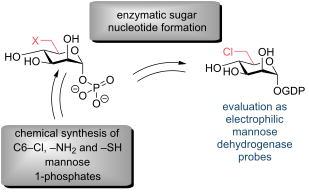
- pyrophosphorylation had no positive effect. In the case of no observable reactivity for substrate 13, likely protonation of the amine would result in unfavourable positive charge within the active site and the absence of vital H-bond contacts. X-ray crystallographic data of a related Man-PP from T. maritima show


Cytochrome P450 monooxygenase-mediated tailoring of triterpenoids and steroids in plants
Beilstein J. Org. Chem. 2022, 18, 1289–1310, doi:10.3762/bjoc.18.135
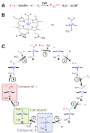
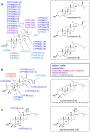
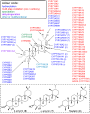
- charge, can then efficiently bind molecular oxygen (step 3), leading to dioxygen adduct D. Transfer of an additional electron from a reducing partner such as cytochrome P450 reductase (step 4) generates peroxo intermediate E, which upon protonation (step 5) gives hydroperoxo intermediate F, also called




Thermally activated delayed fluorescence (TADF) emitters: sensing and boosting spin-flipping by aggregation
Beilstein J. Org. Chem. 2022, 18, 1177–1187, doi:10.3762/bjoc.18.122
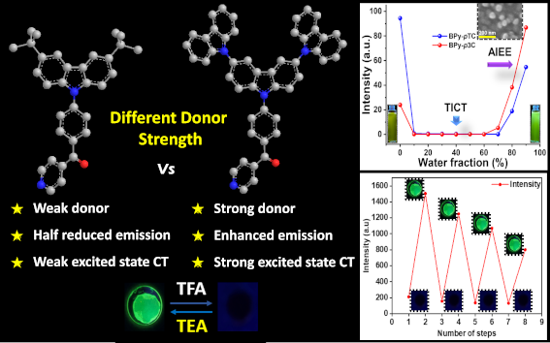
- disruption of the molecular conjugation or ICT interactions upon protonation or deprotonation would lead to switching of the optical properties. While there are many reports on acid–based sensors, TADF emitter-based sensors are rare in the literature. In this context, we chose the D–A molecular design to
- acidic solution on the optical properties, we carried out the same experiment in toluene solution (Figure 6b and Figure 6d). The protonation of the pyridinyl nitrogen atom upon addition of TFA quenched the fluorescence of both compounds (Figure 6b and Figure 6d). In turn, neutralization of the toluene
- quenching and recovery were obtained for both compounds upon addition of acid and base. Thereby, the protonation–deprotonation events were confirmed using absorption spectroscopy (Figure S6, Supporting Information File 1). The new peak at λabs = 425 nm in the absorption spectrum of BPy-pTC upon adding TFA


Reductive opening of a cyclopropane ring in the Ni(II) coordination environment: a route to functionalized dehydroalanine and cysteine derivatives
Beilstein J. Org. Chem. 2022, 18, 1166–1176, doi:10.3762/bjoc.18.121
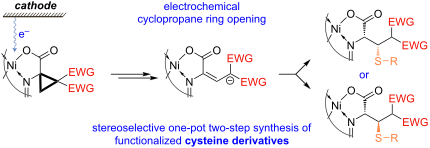
- thermodynamic stability (1.3:1, see Supporting Information File 1). Notably, the coordination to the Lewis acid increases the regioselectivity of protonation in the allylic anions formed in the electrolysis. Thus, using LiCl as a supporting electrolyte increases the ratio to 5:1. An even more pronounced effect
- nucleophilic functionalization of the double bond of the dehydroalanine derivatives formed after the reductive ring opening and subsequent protonation. Such an approach opens a route to double functionalization of the amino acids side chain. Insertion of the sulfur-containing fragments is of special interest
- as described above (two-compartment cell, DMF, Bu4NBF4, a glassy carbon WE, an iron wire as a CE). After 2 F/mol amount of electricity passed and subsequent protonation with PhNEt2·HCl, aryl- or benzylthiol was added. The reaction mixture was kept overnight and then the products were isolated using



Facile and diastereoselective arylation of the privileged 1,4-dihydroisoquinolin-3(2H)-one scaffold
Beilstein J. Org. Chem. 2022, 18, 1070–1078, doi:10.3762/bjoc.18.109
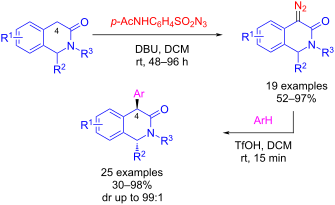
- ). Mechanistically, the arylation of diazo substrates 10 likely proceeds via the protonation of the diazo moiety and elimination of a nitrogen molecule, whereby carbocation 17 is generated. The latter can either be deprotonated to give byproduct 15 or be intercepted by an arene molecule in SEAr fashion to give


Electrochemical formal homocoupling of sec-alcohols
Beilstein J. Org. Chem. 2022, 18, 1062–1069, doi:10.3762/bjoc.18.108
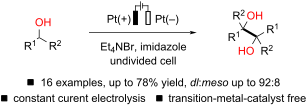
- from the corresponding vic-1,2-diol. Water may play a role as a proton source to facilitate the formation of the protonated ketyl radical through a concerted proton-electron transfer toward the ketone or smooth protonation of the radical anion species, which readily dimerize to vic-1,2-diol 2a [46][49




Molecular diversity of the base-promoted reaction of phenacylmalononitriles with dialkyl but-2-ynedioates
Beilstein J. Org. Chem. 2022, 18, 991–998, doi:10.3762/bjoc.18.99

- -deficient alkyne resulted in adduct B. Thirdly, the intramolecular addition of the carbanion to the carbonyl group afforded species C, which in turn converted to the final product 3 by the protonation of the species C. The protonated species 5 could be successfully isolated in 12% yield after six hours when


First example of organocatalysis by cathodic N-heterocyclic carbene generation and accumulation using a divided electrochemical flow cell
Beilstein J. Org. Chem. 2022, 18, 979–990, doi:10.3762/bjoc.18.98
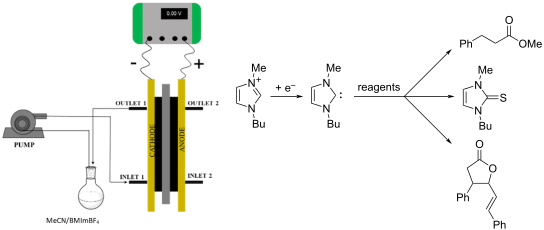
- (Table 1, entry 4). However, using a silver electrode the corresponding thione was not observed (Table 1, entry 3) [37]. In view of the acidic character of the perfluorosulfonic acid Nafion® membrane, and possible NHC protonation to form the imidazolium cation, the Nafion® membrane was pretreated with an





