


Search results
Search for "coupling reaction" in Full Text gives 547 result(s) in Beilstein Journal of Organic Chemistry. Showing first 200.
DDQ in mechanochemical C–N coupling reactions
Beilstein J. Org. Chem. 2022, 18, 639–646, doi:10.3762/bjoc.18.64
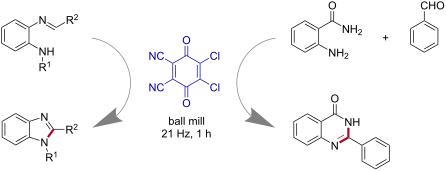
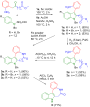
- -Dichloro-5,6-dicyano-1,4-benzoquinone (DDQ) is a commonly known oxidant. Herein, we report that DDQ can be used to synthesize 1,2-disubstituted benzimidazoles and quinazolin-4(3H)-ones via the intra- and intermolecular C–N coupling reaction under solvent-free mechanochemical (ball milling) conditions. In
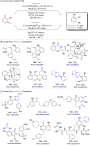
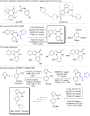
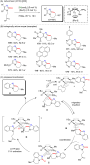
- , followed by hydride abstraction to generate the desired product 2a. On the other hand, the formation of quinazolin-4(3H)-ones starts with the formation of an imine intermediate and then it will follow the similar mechanistic pathway. To explore the synthetic utility of the oxidative C–N cross-coupling
- reaction, we have performed the large-scale synthesis under the solvent-free (ball milling) conditions as shown in Figure 6. In this context, milling of the substrate (E)-N-(2-((4-bromobenzylidene)amino)phenyl)-4-methylbenzenesulfonamide (1c, 2.795 mmol) in the presence of 1.2 equiv of DDQ delivered 1.098


Substituent effect on TADF properties of 2-modified 4,6-bis(3,6-di-tert-butyl-9-carbazolyl)-5-methylpyrimidines
Beilstein J. Org. Chem. 2022, 18, 497–507, doi:10.3762/bjoc.18.52
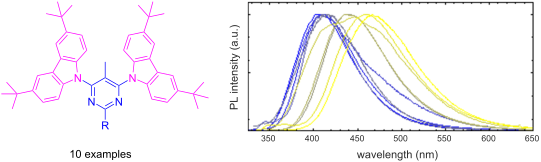
- of aryl moieties into methylthio-substituted nitrogen heterocycles such as tCBz-mPYR are a Ni(0)-catalyzed cross-coupling reaction with Grignard reagents [34][36] or the Liebeskind–Srogl reaction employing arylboronic acids [37][38][39]. Taking into account a large assortment of arylboronic acids and
- the simplicity of the method, we chose the Liebeskind–Srogl cross-coupling reaction for the synthesis of the target 2-arylpyrimidine derivatives. Thus, heating tCbz-mPYR with phenyl-, 4-cyanophenyl-, 3-cyanophenyl-, or 3-bromophenylboronic acid at 130 °C in dioxane in the presence of Pd(PPh3)4, copper




Borylated norbornadiene derivatives: Synthesis and application in Pd-catalyzed Suzuki–Miyaura coupling reactions
Beilstein J. Org. Chem. 2022, 18, 368–373, doi:10.3762/bjoc.18.41
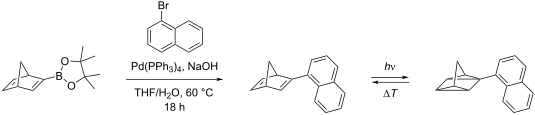
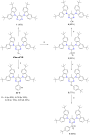
- derivatives may be metalated in a Li–halogen exchange reaction [27]. In another versatile approach, arylation and alkenylation reactions of the norbornadiene may be accomplished with a Suzuki–Miyaura coupling reaction. In this case, halogenated norbornadienes react with arylboronic acids or their esters to
- (HRMS). To assess the suitability of the boronic esters 2a and 2b to be used as building blocks in Suzuki–Miyaura reactions, the Pd-catalyzed cross-coupling reaction of norbornadiene 2a and bromobenzene (4a) was examined under different conditions (Table 1, Scheme 2). First experiments were conducted
- coupling reaction of 2a with 4a gave the product 5a in only 37% yield (Table 1, entry 6). The use of PdCl2(dppf)·CH2Cl2 as catalyst with different bases resulted in even lower yields (≤15%; Table 1, entries 2–4). In contrast, the best yield was accomplished with Pd(PPh3)4 as catalyst and NaOH as base in


Synthesis of 5-unsubstituted dihydropyrimidinone-4-carboxylates from deep eutectic mixtures
Beilstein J. Org. Chem. 2022, 18, 331–336, doi:10.3762/bjoc.18.37
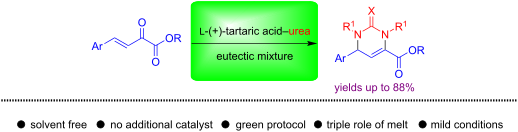
- replacement of organic solvents. The melts are stable against air and have very low vapor pressures resembling the properties of ionic liquids. In addition, the polarity of these melts is very high [33]. Recently, we have explored several organic transformations such as coupling reaction, cycloaddition


Unexpected chiral vicinal tetrasubstituted diamines via borylcopper-mediated homocoupling of isatin imines
Beilstein J. Org. Chem. 2022, 18, 303–308, doi:10.3762/bjoc.18.34
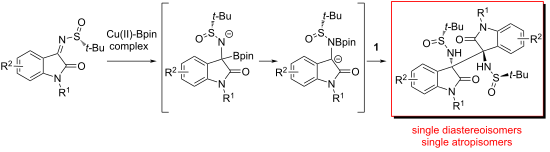
- intermediate spontaneously turns into the carbanion C, thus realizing the imine umpolung and allowing the cross-coupling reaction with the remaining electrophilic ketimine 1. The complete diastereoselectivity would arise from the mutual approach of the two oxindole nuclei from the less hindered side, that is


Recent developments and trends in the iron- and cobalt-catalyzed Sonogashira reactions
Beilstein J. Org. Chem. 2022, 18, 262–285, doi:10.3762/bjoc.18.31
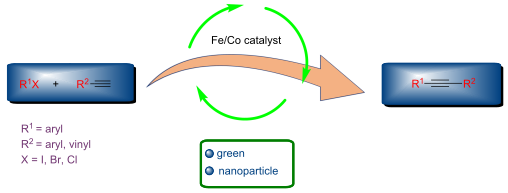
- [2]. Over the past 15 years, there has been a growing interest in the Sonogashira coupling reaction, which is one of the most powerful methods for the formation of Csp2–Csp bonds leading to arylalkynes and conjugated alkenynes, which are often intermediates or precursors in the synthesis of natural
- importance of this coupling reaction [7]. Later, Sonogashira-type reactions requiring only copper as catalyst alone [8] and with other transition metals [9][10][11][12] have been reported. Especially iron has attracted a great deal of attention owing to its low price, easy availability, abundant nature, and
- for the effective Sonogashira coupling under aqueous conditions (Scheme 3) [22]. The coupling reaction was catalyzed by the nanoparticles in water between room temperature and 45 °C. Notably, the amount of Pd was below the detection limit. The reaction done in the presence of 1000 ppm of Pd ligated




Ready access to 7,8-dihydroindolo[2,3-d][1]benzazepine-6(5H)-one scaffold and analogues via early-stage Fischer ring-closure reaction
Beilstein J. Org. Chem. 2022, 18, 143–151, doi:10.3762/bjoc.18.15
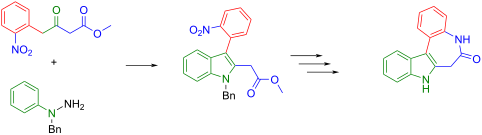
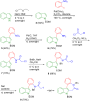
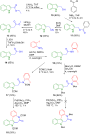
- lithium hydroxide monohydrate [29] to give the desired indole-2-acetic acid (14) in 95% yield. The peptide coupling reaction [30] of indole-2-acetic acid (14) and 2-iodoaniline afforded 15 in 23% yield (Scheme 3). Subsequent protection of both the indole and the amide nitrogen with tert-butyloxycarbonyl






Recent advances and perspectives in ruthenium-catalyzed cyanation reactions
Beilstein J. Org. Chem. 2022, 18, 37–52, doi:10.3762/bjoc.18.4
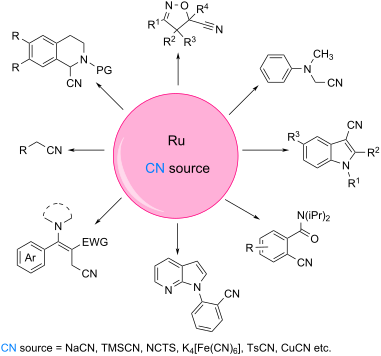
- oxidative cyanation of aza-Baylis–Hillman adducts. Synthesis of 1° alkyl nitriles using [Ru(bpy)3](PF6)2 as the photocatalyst. Synthesis of 2° and 3° alkyl nitriles using [Ru(bpy)3](PF6)2 as the photocatalyst. Photoredox cross coupling reaction. Synthesis of α-amino nitriles from amines via a one-pot


DABCO-promoted photocatalytic C–H functionalization of aldehydes
Beilstein J. Org. Chem. 2021, 17, 2959–2967, doi:10.3762/bjoc.17.205
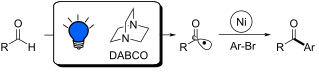
- through this step were used in a well-stablished nickel-catalyzed cross-coupling reaction [19][27][28][29][30] with aryl bromides as a proof of concept, leading to the synthesis of aryl ketones. We also present computational calculations of the HAT reaction step with the DABCO radical cation as the


Iron-catalyzed domino coupling reactions of π-systems
Beilstein J. Org. Chem. 2021, 17, 2848–2893, doi:10.3762/bjoc.17.196
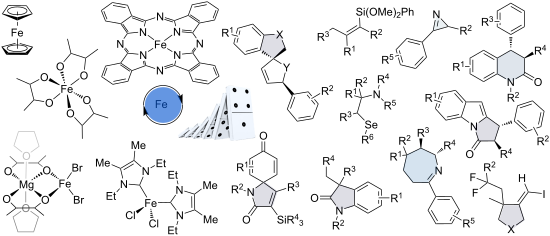
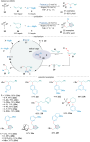
- first Fe-catalyzed cross-coupling reaction between Grignard reagents and vinyl halides [37]. As of late, the development of Fe-catalyzed cross-coupling methodology and mechanistic rationales have burgeoned [38]. Today, the rate of growth within the field of iron catalysis is much greater than that
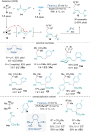
- functionalized compound (Scheme 1b). Lastly, the reaction between two C–H compounds to form a C–C bond, formally eliminating H2, hence the dehydrogenative reference (Scheme 1c). As this coupling reaction does not require functionalization prior to coupling, it shortens the synthetic route, and lowers the
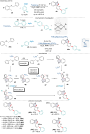
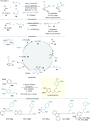
- iron-catalyzed cross-coupling reactions of alkyl halides began in 2004 when Nakamura first reported the TMEDA-mediated Fe-catalyzed cross-coupling reaction between secondary bromides with aryl Grignard reagents [52]. Since then, several reports of alkyl halide cross-coupling reactions have been













Selective sulfonylation and isonitrilation of para-quinone methides employing TosMIC as a source of sulfonyl group or isonitrile group
Beilstein J. Org. Chem. 2021, 17, 2822–2831, doi:10.3762/bjoc.17.193
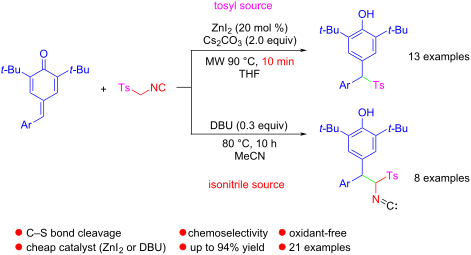
- sulfones is a valuable and appealing task in synthetic chemistry. Traditionally, diarylmethyl sulfones are synthesized by transition-metal-catalyzed deoxy C–S bond-coupling reaction of sodium arylsulfinates with diarylmethanols [11], C–H functionalization of alkyl sulfones with aryl halides [12], and via a


Synthetic strategies toward 1,3-oxathiolane nucleoside analogues
Beilstein J. Org. Chem. 2021, 17, 2680–2715, doi:10.3762/bjoc.17.182
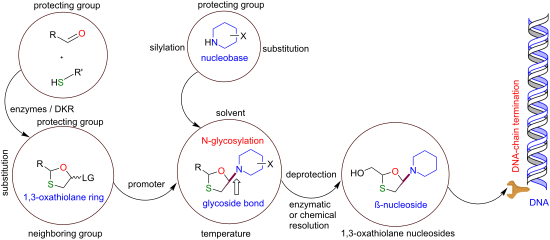
- by Humber et al. [45]. They started with a coupling reaction of (+)-thiolactic acid 3p and 2-benzoyloxyacetaldehyde (3a) using boron trifluoride etherate. A diastereomeric mixture of oxathiolane acids 29 and 30 was prepared in a 1:2 ratio in good yield (Scheme 7). Further separation of the
- ammonolysis in methanol affords compound 1c. The silylation of 1c with TBDPSCl was carried out, and then coupling reaction with tert-Boc-Met-Leu-Phe-OH in the presence of DCC and HOBt provided compound 98. The tert-Boc protecting group was further removed in formic acid, and the resulting nucleoside peptide


Ligand-dependent stereoselective Suzuki–Miyaura cross-coupling reactions of β-enamido triflates
Beilstein J. Org. Chem. 2021, 17, 2657–2662, doi:10.3762/bjoc.17.179
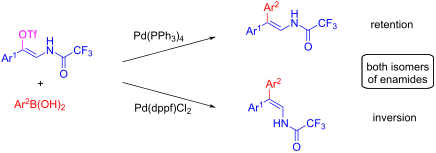
- stereoselective outcome of the Suzuki cross-coupling reaction of various (Z)-β-enamido triflates (Scheme 1B). Results and Discussion We initiated our study by examining the Suzuki cross-coupling of vinyl triflate 1a and 3-nitrophenylboronic acid. First, the influence of the catalyst on the stereoselective outcome



Electrocatalytic C(sp3)–H/C(sp)–H cross-coupling in continuous flow through TEMPO/copper relay catalysis
Beilstein J. Org. Chem. 2021, 17, 2650–2656, doi:10.3762/bjoc.17.178
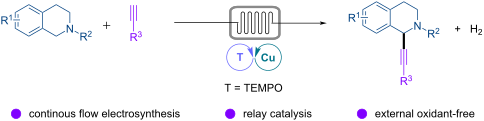
- electrocatalytic dehydrogenative cross-coupling reaction of tetrahydroisoquinolines with terminal alkynes in continuous flow (Scheme 1D). These reactions require low loadings of supporting electrolyte and proceed through Cu/TEMPO relay catalysis without need for additional ligands. Results and Discussion The
- electrochemistry is an ideal tool for promoting dehydrogenative cross-coupling reactions as no external chemical oxidants are needed [11][12][13][14][15][16][17][18][19]. In this context, Mei and co-workers have reported an elegant TEMPO/[L*Cu] co-catalyzed asymmetric electrochemical dehydrogenative cross-coupling
- reaction of tetrahydroisoquinolines with terminal alkynes (Scheme 1C) [10]. The chiral ligand was found to be critical for the stereoinduction as well as product formation for these electrochemical reactions that are conducted in batch. Continuous-flow electrochemical microreactors offer several advantages




Visible-light-mediated copper photocatalysis for organic syntheses
Beilstein J. Org. Chem. 2021, 17, 2520–2542, doi:10.3762/bjoc.17.169
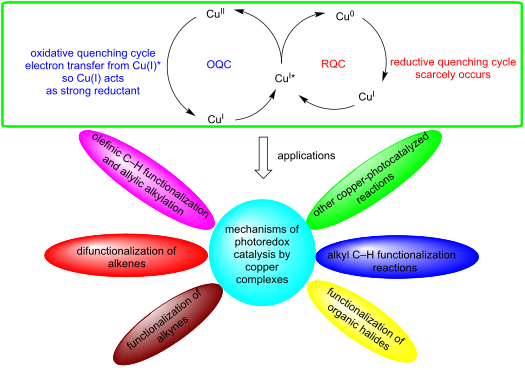
- copper-catalyzed C–O cross-coupling reaction. Results of mechanistic studies indicated that in this case a CuI–phenoxide complex is a competent intermediate in the photoinduced C–O bond formation. In 2020, Nguyen and co-worker [90] reported copper-catalyzed C–O cross-coupling of glycosyl bromides with
- -base photocatalysis. Olefinic C–H functionalization and allylic alkylation. Cross-coupling of unactivated alkenes and CF3SO2Cl. Chlorosulfonylation/cyanofluoroalkylation of alkenes. Hydroamination of alkenes. Cross-coupling reaction of alkenes, alkyl halides with nucleophiles. Cross-coupling of alkenes
- . Aerobic oxidative C(sp)–S coupling reaction. Copper-catalyzed alkylation of carbazoles with alkyl halides. C–N coupling of organic halides with amides and aliphatic amines. Copper-catalyzed C–X (N, S, O) bond formation reactions. Arylation of C(sp2)–H bonds of azoles. C–C cross-coupling of aryl halides




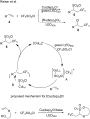


Copper-catalyzed monoselective C–H amination of ferrocenes with alkylamines
Beilstein J. Org. Chem. 2021, 17, 2488–2495, doi:10.3762/bjoc.17.165
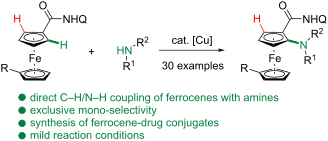
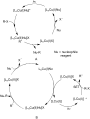
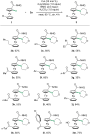
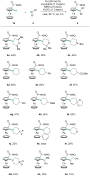
- -determining step. Conclusion To summarize, we have reported a copper-catalyzed direct ortho-C–H/N–H coupling reaction of ferrocenes with alkyl amines directed by 8-aminoquinoline. Fruitful mono-aminated ferrocenes were obtained in moderate to good yields and the mild conditions offered the possibility to the




Recent advances in the tandem annulation of 1,3-enynes to functionalized pyridine and pyrrole derivatives
Beilstein J. Org. Chem. 2021, 17, 2462–2476, doi:10.3762/bjoc.17.163
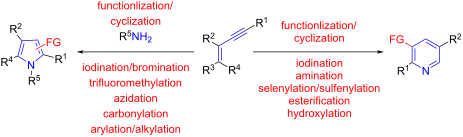
- ]. Then, they also reported another CuH-catalyzed coupling reaction of 1,3-enynes 54 and nitrile to prepare polysubstituted pyrroles 55 (Scheme 21) [66]. The substrates 54 could be easily prepared by Sonogashira coupling of terminal alkynes and vinyl halides. It is worth mentioning that the addition of
- to pyrroles. Au/Ag-catalyzed oxidative aza-annulation of 1,3-enynyl azides. The plausible mechanism of Au/Ag-catalyzed oxidative aza-annulation. Synthesis of 2-tetrazolyl-substituted 3-acylpyrroles from enynals. CuH-catalyzed coupling reaction of 1,3-enynes and nitriles to pyrroles. The mechanism of




Synthesis and investigation on optical and electrochemical properties of 2,4-diaryl-9-chloro-5,6,7,8-tetrahydroacridines
Beilstein J. Org. Chem. 2021, 17, 2450–2461, doi:10.3762/bjoc.17.162
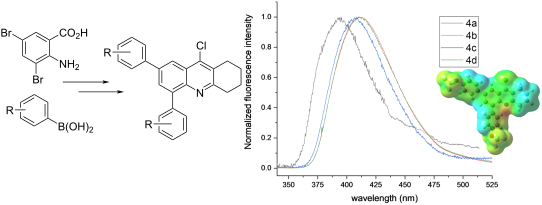
- 3,5-dibromoanthranilic acid (1) [61] with cyclohexanone in POCl3 through an adapted reported procedure [62] (Scheme 1). With precursor 2 in hand, we intended to expand the π-conjugation of the tetrahydroacridine core by adding diversely substituted aryl groups using the Suzuki–Miyaura cross-coupling
- reaction [63][64]. As a model reaction, we studied the coupling between 2,4-dibromo-9-chloro-5,6,7,8-tetrahydroacridine (2) and phenylboronic acid (3a). After a thorough optimization using Pd(PPh3)4 as catalyst, toluene as solvent, and K3PO4 as base, the desired bis-arylated product 4a was isolated in up




Synthesis of phenanthridines via a novel photochemically-mediated cyclization and application to the synthesis of triphaeridine
Beilstein J. Org. Chem. 2021, 17, 2340–2347, doi:10.3762/bjoc.17.152
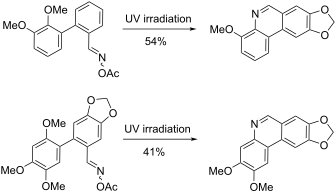
- –Miyaura cross-coupling reaction of a variety of halogenated methoxybenzene-containing compounds with 2-(formylphenyl)boronic acids in generally good yields [15]. As a next step, the biaryl aldehydes 13a–f were converted into their corresponding oximes 14a–f in good yields as a mixture of (E) and (Z
- was demonstrated to be useful for the synthesis of the natural product trisphaeridine (3) [17]. Exposure of 1-bromo-2,4,5-trimethoxybenzene (19) to Suzuki–Miyaura coupling reaction conditions with boronic acid 20 resulted in the formation of aldehyde 21 (Scheme 5). Treatment of 21 with hydroxylamine


Transition-metal-free intramolecular Friedel–Crafts reaction by alkene activation: A method for the synthesis of some novel xanthene derivatives
Beilstein J. Org. Chem. 2021, 17, 2203–2208, doi:10.3762/bjoc.17.142
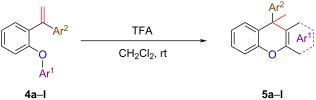
- synthesized the novel unactivated alkenes 4a–l containing three aryl groups as the starting materials. The synthesis of 4a is demonstrated in Scheme 1. First, 2-phenoxybenzaldehyde (1a) was synthesized by coupling reaction of phenol with commercial 2-fluorobenzaldehyde. This reaction was carried out with very


Chemical syntheses and salient features of azulene-containing homo- and copolymers
Beilstein J. Org. Chem. 2021, 17, 2164–2185, doi:10.3762/bjoc.17.139
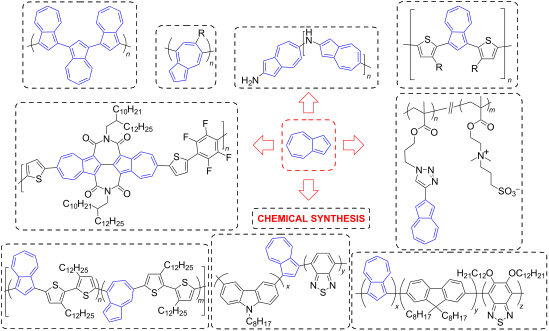
- -(n-dodecyl)azulene (16) is shown in Scheme 5A. The Sonogashira cross-coupling reaction between 4,7-dibromo-6-(n-dodecyl)azulene (13) and 4,7-diethynyl-6-(n-dodecyl)azulene (16) yielded 4,7-polyazulene 17 linked through ethynyl bridges (Scheme 5B). Similarly, the Yamamoto cross-coupling reaction
- synthesized from tropolone (21) in five steps (Scheme 21A). The Suzuki–Miyaura coupling reaction of 2,6-dibromoazulene (125) with 2,2’-(9,9-dioctyl-9H-flourene-2,7-diyl)di(1,3,2-dioxaborolane) (103) furnished the polymer 126 in 31% yield (Scheme 21B). The other polymer 129 was obtained from 2,6-dibromoazulene




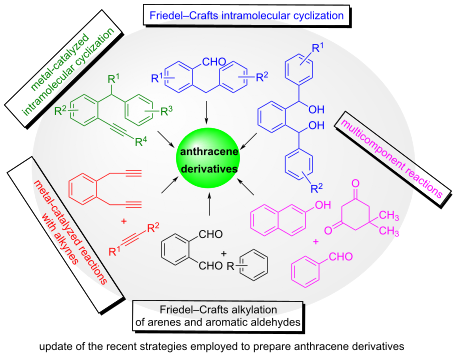
Recent advances in the syntheses of anthracene derivatives
Beilstein J. Org. Chem. 2021, 17, 2028–2050, doi:10.3762/bjoc.17.131
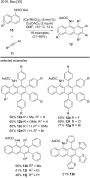
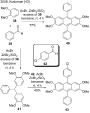
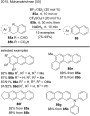
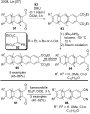
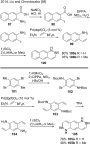
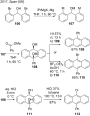
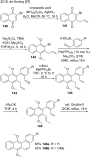
- ). Representative examples included indenoanthracenes 61a–c, bearing aryl groups linked to the alkyne, and indenoanthracenes 61d–f, containing tetramethylsilane groups at the terminal alkyne [46]. From commercially available 1,8-dichloroanthraquinone (62) and by using modified Suzuki–Miyaura coupling reaction
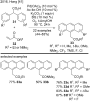
- conditions, Agarwal et al. synthesized a series of 1,8-diarylanthracene derivatives 64 in two steps (Scheme 14) [47]. First, the simple reduction of anthraquinone 62 employing the well-known reductive Zn/NH3 system and HCl provided 1,8-dichloroanthracene (63). A Suzuki–Miyaura coupling reaction in the
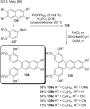
- ]anthracenes 139 bearing H, CN, or OMe groups at positions 11 and 12, to study their liquid crystalline properties (Scheme 32) [66]. Their methodology started with a Suzuki coupling reaction of substituted dibromonaphthalenes 136 and boronate diesters 137, to provide the corresponding 2,3-diphenylnaphthalenes













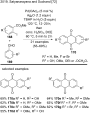


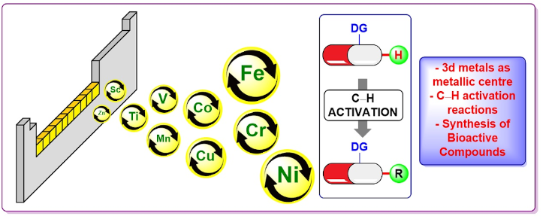
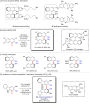
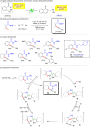
On the application of 3d metals for C–H activation toward bioactive compounds: The key step for the synthesis of silver bullets
Beilstein J. Org. Chem. 2021, 17, 1849–1938, doi:10.3762/bjoc.17.126









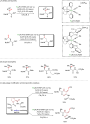
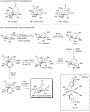


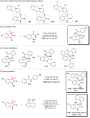
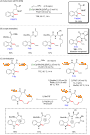










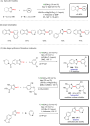
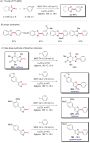
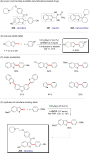
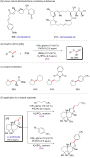
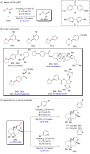


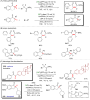


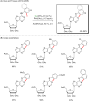

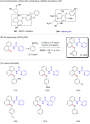

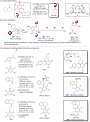

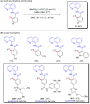
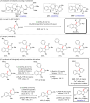
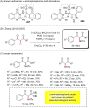
Cationic oligonucleotide derivatives and conjugates: A favorable approach for enhanced DNA and RNA targeting oligonucleotides
Beilstein J. Org. Chem. 2021, 17, 1828–1848, doi:10.3762/bjoc.17.125
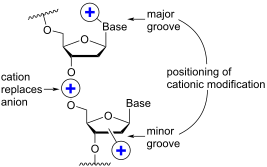
- containing a stretch of four DNA nucleotides in the middle, flanked by the modifications in a ´mixmer´ design, which is important for designing gapmer ASOs [31]. Another well-established method for C-5 pyrimidine modification involves the Sonogashira cross-coupling reaction between an alkyne group and a 5


2,4-Bis(arylethynyl)-9-chloro-5,6,7,8-tetrahydroacridines: synthesis and photophysical properties
Beilstein J. Org. Chem. 2021, 17, 1629–1640, doi:10.3762/bjoc.17.115
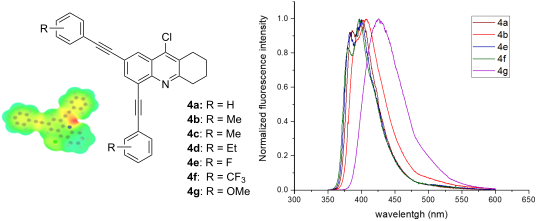
- of the temperature. We found that increasing the temperature to 90 or 100 °C did not lead to any improvement (Table 1, entries 6 and 7). The best result for the Sonogashira coupling reaction between intermediate 2 and phenylacetylene (3a) was obtained using 0.6 mol % of Pd(PPh3)4, 1.2 mol % of CuI in
- DIPEA at 80 °C for three hours. With the optimized conditions in hand, we examined the scope of the coupling reaction of 2 with different phenylacetylenes 3b–g. As shown in Table 2, tetrahydroacridine derivatives 4a–g were obtained in moderate to good yields. The yields were better for acetylenes





