


Search results
Search for "fluorine" in Full Text gives 446 result(s) in Beilstein Journal of Organic Chemistry. Showing first 200.
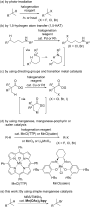
Manganese/bipyridine-catalyzed non-directed C(sp3)–H bromination using NBS and TMSN3
Beilstein J. Org. Chem. 2021, 17, 885–890, doi:10.3762/bjoc.17.74

- gram scale. The introduced bromine atom can be converted into fluorine and allyl groups. Keywords: bromination; C–H transformation; hydrogen abstraction; manganese; radical; Introduction Organic halides are versatile precursors for various synthetic protocols and are frequently used to introduce a
- reaction proceeded regioselectively at the methine C(sp3)–H bond of isoamyl benzoate (1b) to give 2b in 64% yield. Isoamyl benzoates bearing halogen atoms, such as fluorine, chlorine, or bromine, on the phenyl ring were also suitable substrates and gave C(sp3)–H brominated products 2c–e in 49–60% yields
- functionalized upon the introduction of other functional groups, such as fluorine and allyl groups. We hope that this C(sp3)–H bromination reaction will become a useful method to synthesize organic compounds with bromine atom(s). Several examples of C(sp3)–H halogenation. Substrate scope. a80 °C. b45 min. c4 h



Organo-fluorine chemistry V
Beilstein J. Org. Chem. 2021, 17, 737–738, doi:10.3762/bjoc.17.63

- David O'Hagan School of Chemistry, Biomedical Sciences Research Complex, University of St Andrews, North Haugh, St Andrews, Fife KY16 9ST, United Kingdom 10.3762/bjoc.17.63 Keywords: Organo-fluorine chemistry; This is the fifth thematic issue on organo-fluorine chemistry in the Beilstein Journal
- Beilstein Journal of Organic Chemistry has become a settled home for papers in contemporary organo-fluorine chemistry. Authors have presented their recent findings or, in some cases, reviewed important areas, from bioactives to materials, and collectively the papers highlight the vibrancy and range of
- activity associated with this theme. Organo-fluorine chemistry merits our attention as an important discipline within contemporary organic chemistry contributing in a unique way to innovation and performance in the development of functional molecules. This issue will be historically memorable as all of the
Metal-free visible-light-enabled vicinal trifluoromethyl dithiolation of unactivated alkenes
Beilstein J. Org. Chem. 2021, 17, 551–557, doi:10.3762/bjoc.17.49
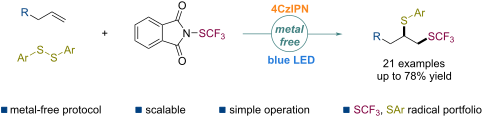
- . Keywords: alkenes; difunctionalization; metal-free; photoredox; trifluoromethylthiolation; Introduction The incorporation of fluorine atoms into drug molecules will significantly enhance the physical, chemical, and biological properties of the pharmaceuticals [1][2][3][4][5][6]. Modifying drug candidates
- by introducing fluorine-containing (such as -CF3, -CF2H, -C2F5, -SCF3, -OCF3) moieties has become a substantial strategy for medicinal research [2][7][8]. Among the fluorinated functionalities, the trifluoromethylthio group (SCF3) has strong electron-withdrawing properties and a higher lipophilicity


Synthesis and physicochemical evaluation of fluorinated lipopeptide precursors of ligands for microbubble targeting
Beilstein J. Org. Chem. 2021, 17, 511–518, doi:10.3762/bjoc.17.45
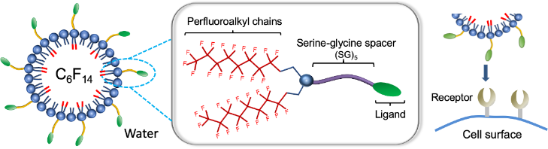
- -surfactants to the phospholipid molecules of the MB shell and strongly reduce its interfacial tension [35][36]. Recent studies have reported that the fluorine–fluorine interactions that develop between the FC and the MB shell component (e.g., fluorinated biomarkers [37] and fluorinated nanoparticles
- fluorine–fluorine interactions. Experimental Materials. We purchased Fmoc-protected amino acids, N,N-dimethylformamide (DMF), dichloromethane (DCM), methanol, 1-hydroxybenzotriazole (HOBT), 2-(1H-benzotriazole-1-yl)-1,1,3,3-tetramethyluronium hexafluorophosphate (HBTU), N,N-diisopropylethylamine (DIPEA


Synthesis of N-perfluoroalkyl-3,4-disubstituted pyrroles by rhodium-catalyzed transannulation of N-fluoroalkyl-1,2,3-triazoles with terminal alkynes
Beilstein J. Org. Chem. 2021, 17, 504–510, doi:10.3762/bjoc.17.44
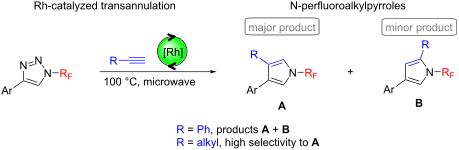
- ][22], and pyrroles [19]. The use of fluorine atoms and fluoro groups (including the trifluoromethyl group) is a widely used strategy to improve the properties of drug candidates or agrochemicals [23][24][25][26][27][28]. The development of new methods for the synthesis of selectively fluorinated and


Biochemistry of fluoroprolines: the prospect of making fluorine a bioelement
Beilstein J. Org. Chem. 2021, 17, 439–460, doi:10.3762/bjoc.17.40
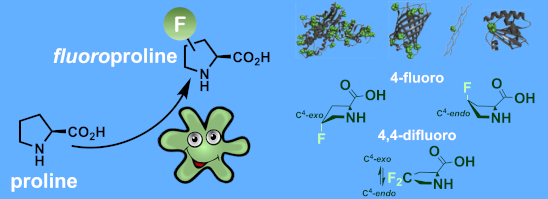
- proline-to-fluoroproline substitutions could be possible. We suggest a hypothetical scenario for the use of laboratory evolutionary methods with fluoroprolines as a suitable vehicle to introduce fluorine into living cells. This approach may enable creation of synthetic cells endowed with artificial
- biodiversity, containing fluorine as a bioelement. Keywords: amino acids; evolution; fluorine; proline; proteins; Introduction Nature employs a rather small set of chemical elements for constructing the core biochemical makeup. Most elements of the periodic table are excluded from the biochemical world. Not
- surprisingly, researches have been intrigued by an idea to introduce certain elements into biochemical schemes artificially. Of the many possible elements to introduce, fluorine is arguably the most suited for being used as an artificial bioelement [1]. Organofluorine chemistry is very diverse, and many


Synthesis of trifluoromethyl ketones by nucleophilic trifluoromethylation of esters under a fluoroform/KHMDS/triglyme system
Beilstein J. Org. Chem. 2021, 17, 431–438, doi:10.3762/bjoc.17.39
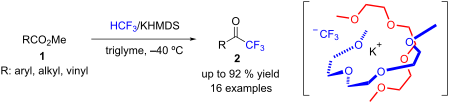
- , Nagoya 466-5888, Japan Tosoh Finechem Corporation, 4988, Kaiseicho, Shunan, 746-0006, Japan Institute of Advanced Fluorine-Containing Materials, Zhejiang Normal University, 688 Yingbin Avenue, 321004 Jinhua, China 10.3762/bjoc.17.39 Abstract A straightforward method that enables the formation of
- of fluorine(s) into organic molecules usually leads to significant changes in the chemical and physicochemical properties of the original compounds [5][6]. Hence, the fluorination and related fluoro-functionalization of drug candidates are powerful strategies in drug design to appropriately bias
- examined [46]. Trifluoromethyl ketones (TFMKs) are valuable fluorine-containing synthetic targets of bioactive compounds [55][56] that behave as mimics of the tetrahedral transition-state intermediate of enzymatic hydrolysis of esters and amides by stabilizing their hydrates (Figure 1a) [57]. In fact, the


Unexpected rearrangements and a novel synthesis of 1,1-dichloro-1-alkenones from 1,1,1-trifluoroalkanones with aluminium trichloride
Beilstein J. Org. Chem. 2021, 17, 404–409, doi:10.3762/bjoc.17.36
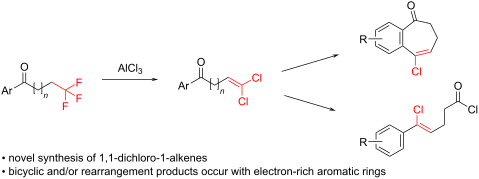
- 5m compared to the longer chain substrates (e.g., 5c and 5l) could be explained mechanistically by the formation of a terminal carbocation upon the extraction of a fluorine atom by the aluminium species (Scheme 3). This carbocation could be stabilised to varying degrees by the ketone moiety




Helicene synthesis by Brønsted acid-catalyzed cycloaromatization in HFIP [(CF3)2CHOH]
Beilstein J. Org. Chem. 2021, 17, 396–403, doi:10.3762/bjoc.17.35
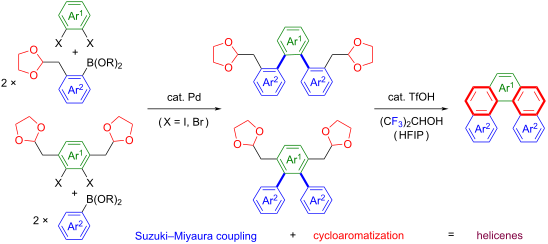
- fluorine, which helps to generate cations but does not affect cationic reactions [23][24][25][26][27]. Thus, HFIP greatly facilitates reactions via cationic intermediates [28]. In the presence of a catalytic amount of trifluoromethanesulfonic acid in HFIP, (biaryl-2-yl)acetoaldehydes or their acetal


CF3-substituted carbocations: underexploited intermediates with great potential in modern synthetic chemistry
Beilstein J. Org. Chem. 2021, 17, 343–378, doi:10.3762/bjoc.17.32
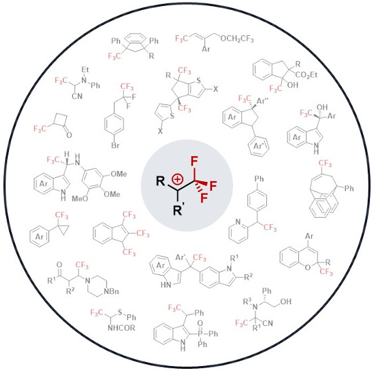
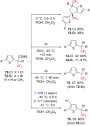
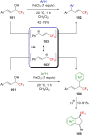
- cations is probably the α-(trifluoromethyl) carbocation. Many efforts are currently devoted to develop methods allowing the efficient insertion of fluorine atoms or fluorinated groups into organic molecules [7][8][9][10][11][12]. The increasing demand for fluorinated scaffolds, due to the striking
- beneficial effects generally resulting from the introduction of these fluorinated motifs [13], also participated in this development. These fluorine effects are nowadays remarkably established in many domains, including medicinal, organic, and organometallic chemistry, catalysis, chemical biology, and
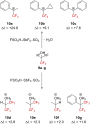
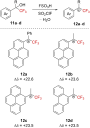
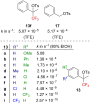
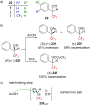
- optimization of the geometry for CF3CH2+ at the STO-3G level led to an energy minimum, in which one of the fluorine atoms is significantly closer to the positive carbon center (Figure 1, top, θ = 101°) [24]. However, exactly the same structural distortion was calculated for the ethyl cation. Furthermore, the

















19F NMR as a tool in chemical biology
Beilstein J. Org. Chem. 2021, 17, 293–318, doi:10.3762/bjoc.17.28
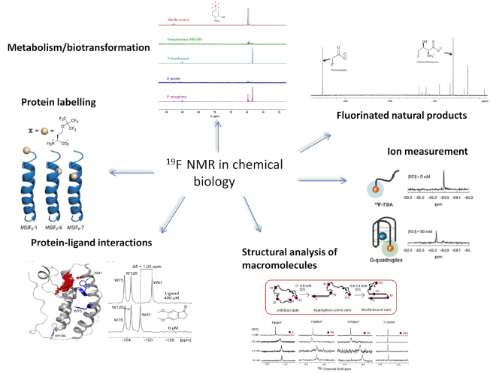
- use of 19F NMR in the broad field of chemical biology [Cobb, S. L.; Murphy, C. D. J. Fluorine Chem. 2009, 130, 132–140] and present here a summary of the literature from the last decade that has the technique as the central method of analysis. The topics covered include the synthesis of new
- biosynthesis and biodegradation of fluorinated organic compounds is also described. Keywords: biotransformation; chemical biology; fluorine; 19F NMR; probes; protein structure; Introduction Although fluorine is abundant in the environment, it is not a nutrient nor is it a feature of biochemistry for most
- ]. Furthermore, owing to the lack of naturally-occurring fluorinated compounds, fluorine is a useful probe to investigate structure and mechanism of biological molecules. Central to these studies is fluorine-19 nuclear magnetic resonance spectroscopy (19F NMR), which allows the user to readily visualize changes


Diels–Alder reaction of β-fluoro-β-nitrostyrenes with cyclic dienes
Beilstein J. Org. Chem. 2021, 17, 283–292, doi:10.3762/bjoc.17.27

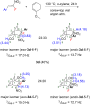
- activation parameters. Furthermore, the synthetic utility of the cycloadducts obtained was demonstrated. Keywords: Diels–Alder reaction; fluorine; nitrostyrene; norbornene; stereochemistry; Introduction Organofluorine compounds play an exceptionally important role in various fields of science and
- technology. The incorporation of fluorine into molecules can significantly influence their pharmacokinetic and physicochemical properties and enhance their metabolic and chemical stability [1][2][3][4][5]. For instance, nearly a quarter of the currently manufactured agrochemical and pharmaceutical products
- contains at least one fluorine atom [6][7][8]. Fluorinated functional materials have also found wide application as durable ion exchange membranes, e.g., in fuel cells [9][10][11], as thermoplastic polymers [12][13][14], in electronic and optoelectronic technologies [15], and in liquid crystal display



The preparation and properties of 1,1-difluorocyclopropane derivatives
Beilstein J. Org. Chem. 2021, 17, 245–272, doi:10.3762/bjoc.17.25
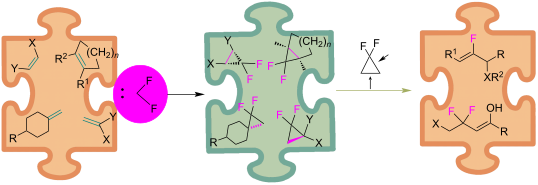
- .17.25 Abstract Recently, the functionalization of organic molecules with fluorine substituents has grown rapidly due to its applications in such fields as medicine, agriculture or materials sciences. The aim of this article is to review the importance of 1,1-difluorocyclopropane derivatives in synthesis
- . It will examine the role of the fluorine substituents in both ring-forming and ring-opening reactions, as well as methods for obtaining difluorocyclopropanes as single enantiomers. Several examples are provided to highlight the biological importance of this class of compounds. Keywords: biological
- the gem-dihalomethylene fragment. Thus, they are of interest not only for the direct application as biologically active substances and functional materials but also as precursors to other fluorine-containing compounds [1][2]. Fluorine forms stable bonds to carbon and due to its high electronegativity




Decarboxylative trifluoromethylthiolation of pyridylacetates
Beilstein J. Org. Chem. 2021, 17, 229–233, doi:10.3762/bjoc.17.23
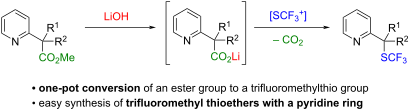
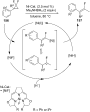
- synthesizing substituted pyridines are in high demand in pharmaceutical and agricultural chemistry [1][2]. Because of the unique features of fluorine atoms, fluorinated functional groups have also been recognized as important substructures in the design of medicinally relevant compounds [3][4][5][6


Exploring the possibility of using fluorine-involved non-conjugated electron-withdrawing groups for thermally activated delayed fluorescence emitters by TD-DFT calculation
Beilstein J. Org. Chem. 2021, 17, 210–223, doi:10.3762/bjoc.17.21
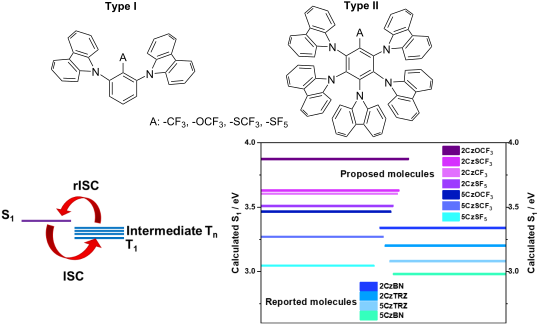
- thermally activated delayed fluorescence (TADF) emitters. In the present study, we investigate computationally the potential of other fluorine-containing acceptors, trifluoromethoxy (OCF3), trifluoromethylthio (SCF3), and pentafluorosulfanyl (SF5), within two families of donor–acceptor TADF emitters. Time
- within TADF emitter design (Figure 1) [25][26][27]. In the present study, we report on the impact of incorporating other fluorine-containing electron-withdrawing groups beyond trifluoromethyl (CF3), including trifluoromethoxy (OCF3), trifluoromethylthio (SCF3), and pentafluorosulfanyl (SF5) groups, and
- , and 2CzBP of −1.70 eV, −1.63 eV, and −1.67 eV, respectively, are much deeper those of the fluorine-containing emitters in Figure 3, which is a reflection of the greater conjugation length present in compounds with an extended π-accepting framework. The corresponding ΔEg of 2CzBN (4.19 eV), 2CzTRZ


A sustainable strategy for the straightforward preparation of 2H-azirines and highly functionalized NH-aziridines from vinyl azides using a single solvent flow-batch approach
Beilstein J. Org. Chem. 2021, 17, 203–209, doi:10.3762/bjoc.17.20

- was found to be efficient with vinyl azides carrying aryls substituted with chlorine (2b), fluorine (2c), and bromide (2e–g). In details, ortho-, meta-, and para-bromophenyl derivatives were quantitatively transformed into the corresponding 2H-azirines 2e–g without substantial differences. Similarly


Facile preparation and conversion of 4,4,4-trifluorobut-2-yn-1-ones to aromatic and heteroaromatic compounds
Beilstein J. Org. Chem. 2021, 17, 132–138, doi:10.3762/bjoc.17.14
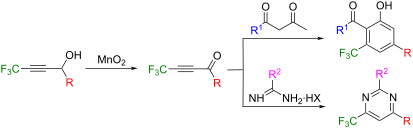
- ; salicylate derivatives; Introduction It is well known that the incorporation of a fluorine atom or a fluorine-containing group into organic compounds sometimes affects their original biological activities [1][2][3], and thus the development of methods for the construction of such molecules with this atom or
- group is an important task. During our research in the field of fluorine chemistry, we have previously developed methods to get convenient access to CF3-containing propargylic alcohols 1 using 2-bromo-3,3,3-trifluoropropene [4][5] as well as 1-chloro-3,3,3-trifluoropropene [6] as a substrate and to


Tuning the solid-state emission of liquid crystalline nitro-cyanostilbene by halogen bonding
Beilstein J. Org. Chem. 2021, 17, 124–131, doi:10.3762/bjoc.17.13
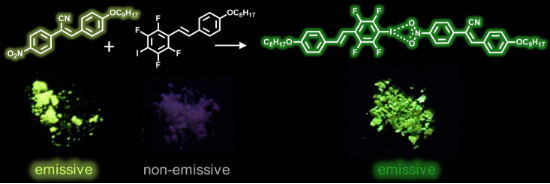
- fluorine substitution of the aromatic halogen bond donor on the liquid crystallinity and the photo-response of halogen-bonded liquid crystals [12]. However, all reported halogen-bonded liquid crystals rely on the halogen-bond-acceptor capability of pyridyl units and so far, no study on the fluorescence
- induction of liquid crystallinity in our assemblies, we synthesised a series of azo compounds with decreasing fluorination degree at the halogen bond donating iodobenzene [12]. Reducing the number of the fluorine atoms at the halogen bond donating moiety lowers the polarisation of the iodine atom and thus
- temperature, which indicates that the strength of the halogen bond is not the only contributor to the mesomorphic behaviour of the halogen-bonded materials. The change in the electronic anisotropy by unsymmetrical substitution with fluorine as present in F3Az will also have an impact on the dispersion






Synthesis of aryl 2-bromo-2-chloro-1,1-difluoroethyl ethers through the base-mediated reaction between phenols and halothane
Beilstein J. Org. Chem. 2021, 17, 89–96, doi:10.3762/bjoc.17.9

- utility of halothane for the synthesis of aryl gem-difluoroalkyl ethers containing the bromochloromethyl group. Keywords: aryl 1,1-difluoroethyl ether; 1,1-difluoroethene; fluorine compound; halothane; phenol; Introduction Molecules containing fluoroalkyl groups are of interest in pharmaceutical and
- agrochemical sciences because deliberately incorporated fluorine atoms often change the chemical properties of the parent molecules by improving the absorption, resistance to metabolism, and pharmacological activities. To date, difluoromethyl or difluoromethylene compounds have been studied extensively as well
- carbon that was explained by an orbital interaction between the n orbital (fluorine) and the π orbital [44]. A literature survey revealed that Yagupol’skii et al. have achieved the first synthesis of aryl or alkyl 2-bromo-2-chloro-1,1-difluoroethyl ethers by the reaction of alcohols with halothane as


Benzothiazolium salts as reagents for the deoxygenative perfluoroalkylthiolation of alcohols
Beilstein J. Org. Chem. 2021, 17, 83–88, doi:10.3762/bjoc.17.8

- directly from readily available alcohols. Keywords: alcohols; benzothiazolium salts; deoxygenative reactions; fluorine; perfluoroalkylthiolation; thioethers; Introduction The incorporation of fluorine-containing groups into organic molecules to modulate their biological or physical properties is nowadays
- a common strategy employed in the development of pharmaceuticals [1][2][3][4], agrochemicals [5] and materials [6]. Recent years have seen a surge in interest in emerging fluorinated motifs, which can offer improved performance over single fluorine atoms or perfluoroalkyl substituents. The


Synthesis of tetrafluorinated piperidines from nitrones via a visible-light-promoted annelation reaction
Beilstein J. Org. Chem. 2020, 16, 3104–3108, doi:10.3762/bjoc.16.260
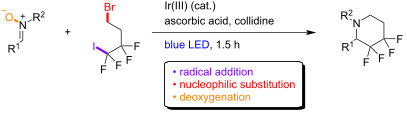
- heterocyclic compounds play an important role in pharmaceutical industry and related areas [1][2]. Among the variety of aromatic and saturated structures, the piperidine ring has a special role, as it is the most widely occurring form of nitrogen in FDA-approved drugs [3]. The ability of fluorine atoms to
- modify basicity, lipophilicity, as well as the hydrogen-bonding properties of amines [4][5] makes fluorinated piperidines [6][7] attractive targets in medicinal chemistry [8][9]. Previous efforts were mainly focused on the synthesis of mono- and difluorinated compounds. A single fluorine atom is


An atom-economical addition of methyl azaarenes with aromatic aldehydes via benzylic C(sp3)–H bond functionalization under solvent- and catalyst-free conditions
Beilstein J. Org. Chem. 2020, 16, 3093–3103, doi:10.3762/bjoc.16.259
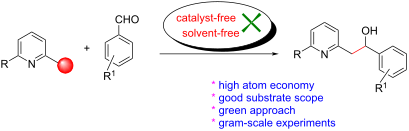
- ) gave the expected product 3c along with the dehydrated product 4c (Table 2, entry 3). Substrates containing a halogen, such as fluorine, chlorine, and bromine, were efficiently reacted to afford the products 3e–h in successively moderate yields (Table 2, entries 5–8). Notably, 3-fluorobenzaldehyde (2e


Silver-catalyzed synthesis of β-fluorovinylphosphonates by phosphonofluorination of aromatic alkynes
Beilstein J. Org. Chem. 2020, 16, 3086–3092, doi:10.3762/bjoc.16.258
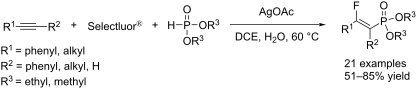
- subsequent fluorine atom transfer. Keywords: β-fluorovinylphosphonates; fluorine atom transfer; P-centered radical; silver catalysis; three-component reaction; Introduction As one of the most important topics in organic chemistry, the introduction of fluorine and phosphorus atoms into double bonds is an
- attractive approach for the synthesis of a variety of valuable organic compounds [1][2][3][4][5][6][7]. Although progress has been achieved in the formation of C(sp2)–F bonds from various substrates [8][9][10][11][12][13], new catalytic reactions to introduce fluorine and phosphorus are seldom reported
- is the most rapid and convenient one (Scheme 1). Although studies on alkyne difunctionalization are ongoing [23], the successful attachment of a fluorine atom to the resulting alkene through transition metal catalysis remains a challenge. In particular, the phosphonofluorination of alkynes for the



Deoxyfluorination of acyl fluorides to trifluoromethyl compounds by FLUOLEAD®/Olah’s reagent under solvent-free conditions
Beilstein J. Org. Chem. 2020, 16, 3052–3058, doi:10.3762/bjoc.16.254
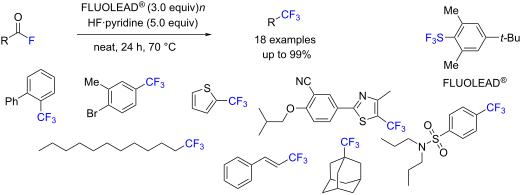
- -5888, Japan Pharmaceutical Division, Ube Industries, Ltd., Seavans North Bldg, 1-2-1 Shibaura, Minato-ku, Tokyo 105-8449, Japan Institute of Advanced Fluorine-Containing Materials, Zhejiang Normal University, 688 Yingbin Avenue, 321004 Jinhua, China 10.3762/bjoc.16.254 Abstract A new protocol enabling
- trifluoromethyl compounds under the same reaction conditions. A reaction mechanism is proposed. Keywords: acyl fluorides; deoxyfluorination; fluorine; solvent-free; trifluoromethyl group; Introduction Due to an impressively wide effect of fluorine on the biological activity, the insertion of fluorine atoms or
- fluorine-containing functional groups into organic molecules has become a common strategy in pharmaceutical and agrochemical industries [1][2][3][4][5]. Among various fluorine-containing functional groups, the trifluoromethyl (CF3) group has received countless attention in the design of novel drugs [6][7


Metal-free nucleophilic trifluoromethylselenolation via an iodide-mediated umpolung reactivity of trifluoromethylselenotoluenesulfonate
Beilstein J. Org. Chem. 2020, 16, 3032–3037, doi:10.3762/bjoc.16.252
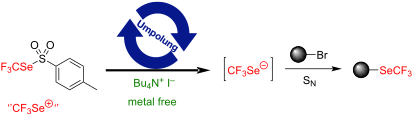
- . Metal-free nucleophilic trifluoromethylselenolations have been then performed with this in situ-generated anion. Perfluoroalkylselenolations have also been described. Keywords: fluorine; nucleophilic substitution; perfluoroalkylselenolation; selenium; trifluoromethylselenolation; Introduction Because
- of the peculiar properties of the fluorine atom, fluorinated compounds gained a growing interest over the last decades and found applications in a large panel of fields from materials to life sciences [1][2][3][4][5][6][7][8][9][10][11][12][13][14][15]. Fluorinated motifs bring to molecules specific
- grateful to the CNRS and the French Ministry of Research for financial support. The French Fluorine Network is also acknowledged for its support.





