Search results
Search for "one-pot" in Full Text gives 871 result(s) in Beilstein Journal of Organic Chemistry. Showing first 200.
(E,Z)-1,1,1,4,4,4-Hexafluorobut-2-enes: hydrofluoroolefins halogenation/dehydrohalogenation cascade to reach new fluorinated allene
Beilstein J. Org. Chem. 2024, 20, 452–459, doi:10.3762/bjoc.20.40
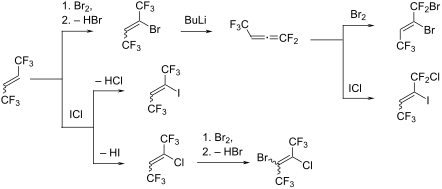
- -1,1,1,4,4,4-hexafluorobut-2-enes have been investigated. A simple, one-pot procedure for the preparation of a new allene (1,1,4,4,4-pentafluorobuta-1,2-diene) and some of its transformations is presented. Keywords: allenes; dehydrohalogenation; halogenation; 1,1,1,4,4,4-hexafluorobut-2-enes; isomerization


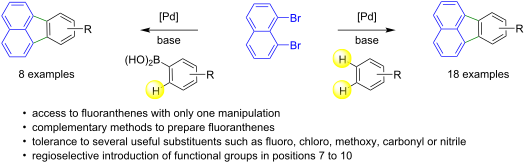
Mono or double Pd-catalyzed C–H bond functionalization for the annulative π-extension of 1,8-dibromonaphthalene: a one pot access to fluoranthene derivatives
Beilstein J. Org. Chem. 2024, 20, 427–435, doi:10.3762/bjoc.20.37


Green and sustainable approaches for the Friedel–Crafts reaction between aldehydes and indoles
Beilstein J. Org. Chem. 2024, 20, 379–426, doi:10.3762/bjoc.20.36
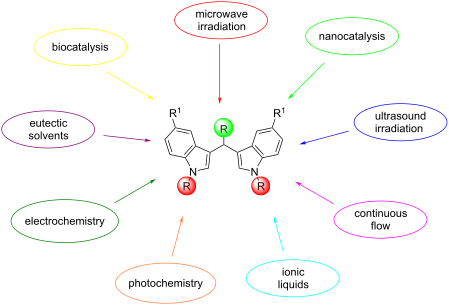
- his research group developed a novel sulfonic graphitic carbon nitride (g-C3N4-SO3H) as a nanosheet ionic liquid for the one-pot synthesis of BIMs [125]. Graphitic carbon nitride is a non-metal and non-toxic chemically stable nanostructure, which is obtained through a facile pyrolysis process that has




Facile approach to N,O,S-heteropentacycles via condensation of sterically crowded 3H-phenoxazin-3-one with ortho-substituted anilines
Beilstein J. Org. Chem. 2024, 20, 336–345, doi:10.3762/bjoc.20.34
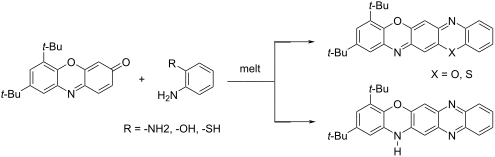
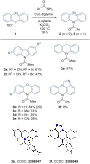
- -di-tert-butyl-2-(arylamino)-3H-phenoxazin-3-ones 4. 6,8-Di-tert-butyl-2-(arylamino)-3H-phenoxazin-3-ones 4 prepared by the one-pot reaction between 6,8-di-tert-butyl-3H-phenoxazin-3-one (1) and aromatic amines 2b (the yield is given in parentheses). Synthesis of 14H-quinoxaline[2,3-b]phenoxazines 5


Catalytic multi-step domino and one-pot reactions
Beilstein J. Org. Chem. 2024, 20, 254–256, doi:10.3762/bjoc.20.25
- ; multi-step reactions; multicomponent reactions; one-pot synthesis; organocatalysis; tandem reactions; transition-metal-catalysis; The synthesis of pharmaceutical ingredients, natural products, agrochemicals, ligand systems, and building blocks for materials science has reached a high level of
- atom efficiency, step and pot economies, decreased number of purification steps, or protecting-group-free synthesis. Multi-step domino [1][2] and one-pot [3] reactions represent a new powerful toolbox in organic synthesis to install molecular complexity economically and sustainably, starting from
- simple compounds. In particular, catalytic domino reactions and one-pot processes with excellent selectivity and functional-group tolerance are of significant interest to industrial and academic research. In the so-called domino reactions, all of the required reagents, the catalyst, and a solvent are

Optimizations of lipid II synthesis: an essential glycolipid precursor in bacterial cell wall synthesis and a validated antibiotic target
Beilstein J. Org. Chem. 2024, 20, 220–227, doi:10.3762/bjoc.20.22
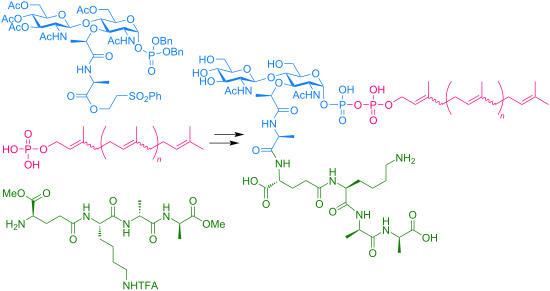
- disaccharide synthesis alongside C6-protected acceptors (2a or 2b in Figure 2) [10][11][14][15][37][38]. More recently, an innovative one-pot glycosylation approach using a (2,6-dichloro-4-methoxyphenyl)(2,4-dichlorophenyl)-protected glycosyl acceptor has been developed, demonstrating satisfactory stability
- , followed by in situ re-acetylation of the C2-amino group and C6-alcohol with acetic anhydride, resulting in the formation of disaccharide 4 in a one-pot fashion. The anomeric benzyl protecting group in disaccharide 4 was then removed via a Pd/C-catalyzed hydrogenation reaction, producing a mixture of α/β


Metal-catalyzed coupling/carbonylative cyclizations for accessing dibenzodiazepinones: an expedient route to clozapine and other drugs
Beilstein J. Org. Chem. 2024, 20, 193–204, doi:10.3762/bjoc.20.19
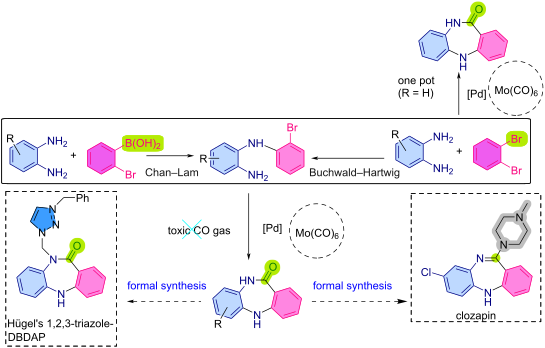
- ; carbonylative cyclization; Chan–Lam; nitrogen heterocycle; one-pot; Introduction Dibenzodiazepine units are without doubt highly privileged structures, endowed with numerous medicinally relevant properties, and notably include anti-anxiolytic and antidepressant activities. These scaffolds have received much
- occurs first at the amide position. This approach enabled the successful synthesis of a broad spectrum of dibenzodiazepinone units in a one-pot fashion. The synthetic utility of Laha’s approach was highlighted by preparing the corresponding dibenzodiazepinone which was further reacted with N
- driving forces for the development of the work discussed in this report. Results and Discussion Synthesis of o-(2-bromophenyl)aminoaniline via Buchwald–Hartwig C–N coupling One-pot synthesis of dibenzodiazepinones Our preliminary attempt to synthesize DBDAPs via B–H amination and carbonylation was carried


Synthesis of the 3’-O-sulfated TF antigen with a TEG-N3 linker for glycodendrimersomes preparation to study lectin binding
Beilstein J. Org. Chem. 2024, 20, 173–180, doi:10.3762/bjoc.20.17
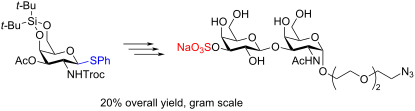
- [24][25]. Interestingly, Jacquemard et al. outlined a useful, mild method for removing a range of carbamates using Bu4NF in an article from 2004 [26]. As 7 contained a DTBS group, the possibility of removing both Troc and DTBS groups in a one-pot procedure was tested. Disaccharide 7 was therefore


Tandem Hock and Friedel–Crafts reactions allowing an expedient synthesis of a cyclolignan-type scaffold
Beilstein J. Org. Chem. 2024, 20, 162–169, doi:10.3762/bjoc.20.15
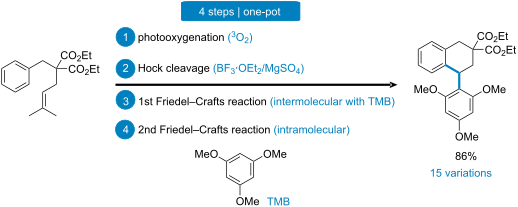
- one-pot transformation from readily available benzyl(prenyl)malonate substrates. After the photooxygenation of the prenyl moiety, the resulting hydroperoxide was directly engaged in a Hock cleavage by adding a Lewis acid. The presence of an aromatic nucleophile in the reaction mixture and that of a
- surrogate readilly unmasked under Hock cleavage conditions. The oxidative cleavage of this alkene would not only release the aldehyde group, but also volatile acetone originated from the traceless isopropylidene motif. Overall, a three-reaction process will thus be performed in one pot (Scheme 1c
- substrates to be submitted to the one-pot tandem transformation (Scheme 5). With only a few exceptions, the presence of ortho (R1), meta (R2), or para (R3) substituents on the benzyl moiety generally allowed the intramolecular Friedel–Crafts reaction, after the first intermolecular one in the presence of




Copper-promoted C5-selective bromination of 8-aminoquinoline amides with alkyl bromides
Beilstein J. Org. Chem. 2024, 20, 155–161, doi:10.3762/bjoc.20.14
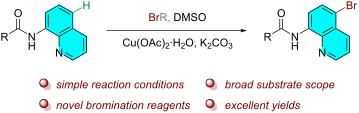
- , and aryl bromides as bromination reagents are limited. Wan and Li, respectively, demonstrated a few examples of a one-pot N-acylation and C5–H bromination of 8‑aminoquinolines using acyl bromines acting as both acyl and halide donors [25][26]. The groups of Lei and Fang independently realized the


Perspectives on push–pull chromophores derived from click-type [2 + 2] cycloaddition–retroelectrocyclization reactions of electron-rich alkynes and electron-deficient alkenes
Beilstein J. Org. Chem. 2024, 20, 125–154, doi:10.3762/bjoc.20.13
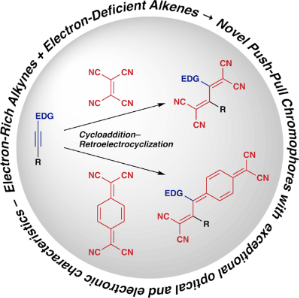
- cyclopentadiene moieties. TCBD 4, obtained through the [2 + 2] CA–RE reaction, continues to function as an electron-accepting alkene, as shown in Scheme 4. Subsequent [2 + 2] CA–RE reactions involving electron-rich alkynes yield tetracyano-1,3,5-hexatrienes (TCHTs). These reactions occur seamlessly in a one-pot
- one-pot reaction involving TCNE and one equivalent of 3-(4-(dimethylamino)phenyl)propionitrile in toluene at 90 °C for 24 h. Subsequently, one equivalent of 1 was added at 90 °C for 24 h (Scheme 6) [101]. While the separation of the isomers was not achieved, the structure of the 3Z,5E isomer was


Synthesis of N-acyl carbazoles, phenoxazines and acridines from cyclic diaryliodonium salts
Beilstein J. Org. Chem. 2024, 20, 12–16, doi:10.3762/bjoc.20.2
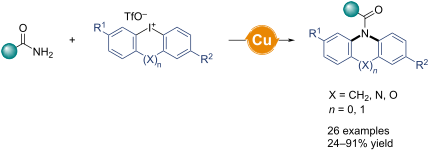
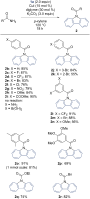
- , this new method creates two C–N bonds simultaneously based on a mono-halogenated starting material, thus allowing heterocycle formation with diminished halogen waste. Keywords: carbazoles; heteroaromatics; iodanes; metal-catalyzed; one-pot reaction; Introduction N-Acyl carbazoles are effective
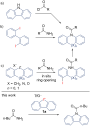
- followed by a ring-closure starting from 2,2'-diiodo-1,1'-biphenyls [15][16][17]. Related one-pot procedures are also described (Scheme 1b) [18][19]. Such 2,2´-dihalobiphenyls are established starting materials for synthesizing a variety of heterocycles. Usually, their utilization leads to the production

Long oligodeoxynucleotides: chemical synthesis, isolation via catching-by-polymerization, verification via sequencing, and gene expression demonstration
Beilstein J. Org. Chem. 2023, 19, 1957–1965, doi:10.3762/bjoc.19.146

- the PCR assembly step. Because of this, misalignments may occur, and errors may be introduced. (2) PCR assembly of multiple short ODNs in one pot requires similar melting points of the multiple overlapping regions of the short ODNs. Therefore, the sequences of the short ODNs must be carefully chosen


Aldiminium and 1,2,3-triazolium dithiocarboxylate zwitterions derived from cyclic (alkyl)(amino) and mesoionic carbenes
Beilstein J. Org. Chem. 2023, 19, 1947–1956, doi:10.3762/bjoc.19.145
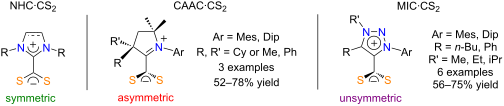
- NHC·CS2 zwitterions relies on the deprotonation of an azolium salt with a strong base, typically potassium tert-butoxide or potassium bis(trimethylsilyl)amide (also known as potassium hexamethyldisilazide, KHMDS) followed by the addition of carbon disulfide either in one pot or after the isolation of the


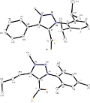
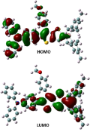
Thienothiophene-based organic light-emitting diode: synthesis, photophysical properties and application
Beilstein J. Org. Chem. 2023, 19, 1849–1857, doi:10.3762/bjoc.19.137
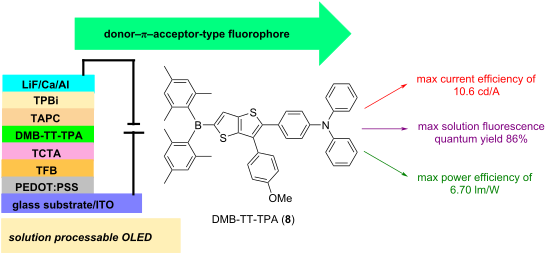
- polyphosphoric acid (PPA) in refluxing chlorobenzene to give 3 (TT) in 86% yield. The brominated TT 4 was obtained through selective monobromination of compound 3 using NBS at −10 °C in DMF in 88% yield. The boronated triphenylamine 6 was constructed in a one-pot two-step reaction in 77% yield, by lithiation of


Recent advancements in iodide/phosphine-mediated photoredox radical reactions
Beilstein J. Org. Chem. 2023, 19, 1785–1803, doi:10.3762/bjoc.19.131
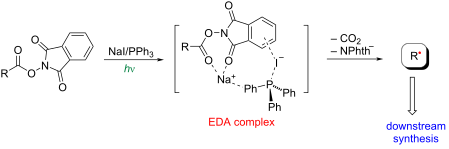
- the construction of various nitrogen-containing polycyclic frameworks (36, 38, 39, 41) (Scheme 17) [32][33][34]. These protocols offered a wide range of substrate compatibility in a one-pot reaction, significantly enhancing synthetic efficiency. Nitrogen-containing heterocycles are abundantly found in


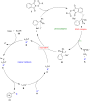


Decarboxylative 1,3-dipolar cycloaddition of amino acids for the synthesis of heterocyclic compounds
Beilstein J. Org. Chem. 2023, 19, 1677–1693, doi:10.3762/bjoc.19.123
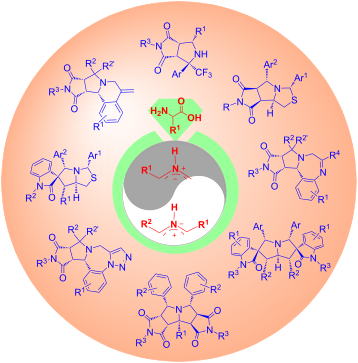
- -type AMYs in multicomponent, one-pot, and stepwise reactions for the synthesis of diverse heterocycles related to some bioactive compounds and natural products. Keywords: [3 + 2] cycloaddition; decarboxylation; 1,3-dipolar; double cycloaddition; one-pot synthesis; multicomponent reaction; semi
- aldehydes and alkenes. The first cycloaddition products 3c or 3d can also be used as intermediates for other transformations to synthesize novel heterocyclic rings via multicomponent, one-pot, and stepwise synthesis [63][64]. Presented in the following sections is our work on the development of amino acid
- -based decarboxylative [3 + 2] cycloadditions of N–H-type AMYs B3 and B4 for double cycloadditions. The stereochemistry of the cycloadditions and the combination of the cycloaddition with other transformations to be one-pot or stepwise reactions are also presented. Perspective One-step synthesis of




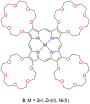
Tying a knot between crown ethers and porphyrins
Beilstein J. Org. Chem. 2023, 19, 1630–1650, doi:10.3762/bjoc.19.120
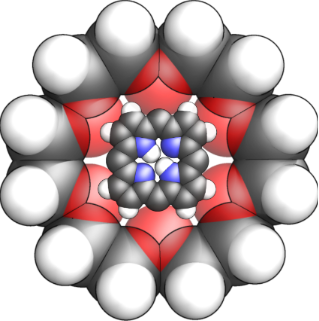
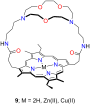
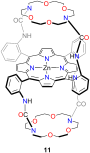
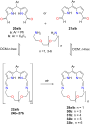
- notable distinction as they could readily undergo oxidation to yield the corresponding crownphyrins 28–33, incorporating a dipyrrin unit. The synthetic pathway towards crownphyrins is straightforward and relies on a one-pot reaction between diformyldipyrromethane 20a/b and a diamine which introduces the







Synthesis of 7-azabicyclo[4.3.1]decane ring systems from tricarbonyl(tropone)iron via intramolecular Heck reactions
Beilstein J. Org. Chem. 2023, 19, 1615–1619, doi:10.3762/bjoc.19.118
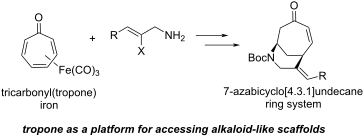
- amine protection – can potentially take place in one pot). We have shown that this protocol can be applied to the synthesis of several analogs bearing different substitution patterns on the alkene. The structural diversity that can be readily obtained utilizing this chemistry underscores the versatility


Lewis acid-promoted direct synthesis of isoxazole derivatives
Beilstein J. Org. Chem. 2023, 19, 1562–1567, doi:10.3762/bjoc.19.113

- Dengxu Qiu Chenhui Jiang Pan Gao Yu Yuan College of Chemistry and Chemical Engineering, Yangzhou University, Yangzhou 225002, China 10.3762/bjoc.19.113 Abstract Isoxazole derivatives were synthesized via a one-pot method utilizing 2-methylquinoline derivatives as template substrates, sodium


Synthesis and biological evaluation of Argemone mexicana-inspired antimicrobials
Beilstein J. Org. Chem. 2023, 19, 1511–1524, doi:10.3762/bjoc.19.108
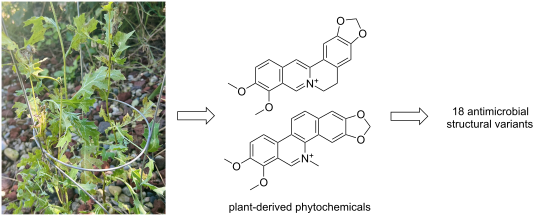
- previously been shown in the literature that the first two steps of this Smiles-rearrangement approach can be effectively performed in one pot [49]. Therefore, after allowing the O-alkylation to proceed at room temperature in dimethylethyleneurea (DMEU), we proceeded directly to the hydroxyamides 7 and 8
- through the use of additional NaOH and refluxing the crude alkylation mixture. After heating for 3 h, the desired intermediates were recovered in acceptable yields over this two-step one-pot sequence. The amide hydrolysis of 7 and 8 to the desired free naphthylamines 9 and 10 proved challenging, but was


N-Sulfenylsuccinimide/phthalimide: an alternative sulfenylating reagent in organic transformations
Beilstein J. Org. Chem. 2023, 19, 1471–1502, doi:10.3762/bjoc.19.106
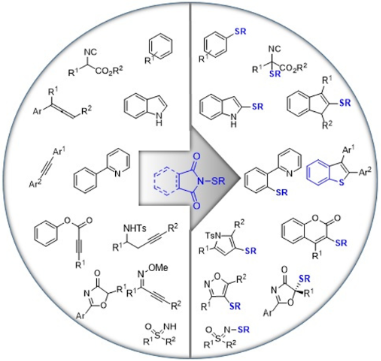
- the presence of N-(2-bromophenylthio)succinimide 1’ and copper catalyst led to intermolecular sulfenoamination of alkenes and subsequent C–N coupling to produce dihydrobenzothiazine structures 27 in a one-pot manner. Furthermore, deprotection of the amine unit by K2CO3 and Na metal was performed in




Application of N-heterocyclic carbene–Cu(I) complexes as catalysts in organic synthesis: a review
Beilstein J. Org. Chem. 2023, 19, 1408–1442, doi:10.3762/bjoc.19.102
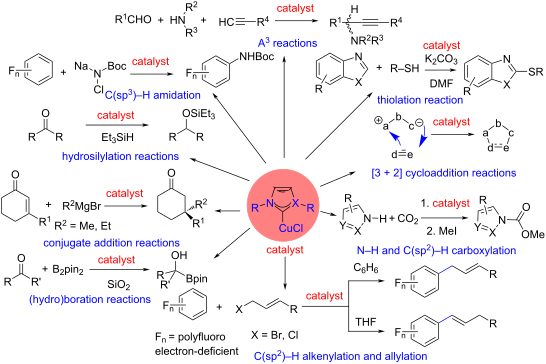
- multifunctional catalytic system 142 incorporating ruthenium nanoparticles (RuNPS) and an NHC–Cu–Cl complex supported on silica (Scheme 56). The catalyst, Ru@SiO2–[Cu(NHC)] was successfully applied to a one-pot tandem A3 reaction of an aldehyde, alkyne, and secondary amine followed by hydrogenation of the








One-pot nucleophilic substitution–double click reactions of biazides leading to functionalized bis(1,2,3-triazole) derivatives
Beilstein J. Org. Chem. 2023, 19, 1399–1407, doi:10.3762/bjoc.19.101
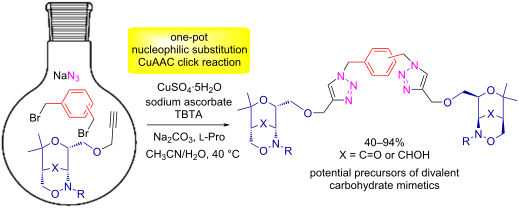
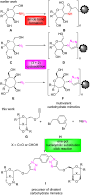
- azide was combined with a subsequent copper-catalyzed (3 + 2) cycloaddition with terminal alkynes. This one-pot process was developed with a simple model alkyne, but then applied to more complex alkynes bearing enantiopure 1,2-oxazinyl substituents. Hence, the precursor compounds 1,2-, 1,3- or 1,4-bis
- the Nobel Prize in 2022 to M. Meldal, K. B. Sharpless and C. R. Bertozzi did not come as a surprise. In most cases the (3 + 2) cycloadditions were performed with isolated (and purified) organic azides, but it was early found that one-pot processes generating the potentially hazardous azides [22] in
- was also discussed in a review article [57] dealing with the various types of bis(1,2,3-triazoles). Since we were not interested in compounds such as 4 we did not further investigate details in order to optimize this process. Instead, we looked at the one-pot nucleophilic substitution to generate



Consecutive four-component synthesis of trisubstituted 3-iodoindoles by an alkynylation–cyclization–iodination–alkylation sequence
Beilstein J. Org. Chem. 2023, 19, 1379–1385, doi:10.3762/bjoc.19.99
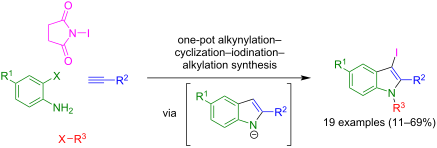
- electrophilic trapping of the intermediary indole anion with alkyl halides provides a concise one-pot synthesis of 3-iodoindoles. The latter are valuable substrates for Suzuki arylations, which are exemplified with the syntheses of four derivatives, some of them are blue emitters in solution and in the solid
- increasingly interesting [26][27]. In addition, as one-pot processes with a huge exploratory potential and diversity-oriented character, syntheses of indoles by multicomponent reactions have aroused considerable interest [28][29][30]. As part of our program to develop heterocycle syntheses based upon
- Discussion In our previous studies on the alkynylation–cyclization synthesis of 2-substituted (aza)indoles [32][33][34], we could show that the copper-free Pd-catalyzed alkynylation of 2-aminobromopyridines or 2-bromoanilines and the subsequent base-catalyzed anellation in a one-pot fashion proceeds without