Search results
Search for "toluene" in Full Text gives 1213 result(s) in Beilstein Journal of Organic Chemistry. Showing first 200.
Unveiling the regioselectivity of rhodium(I)-catalyzed [2 + 2 + 2] cycloaddition reactions for open-cage C70 production
Beilstein J. Org. Chem. 2024, 20, 272–279, doi:10.3762/bjoc.20.28
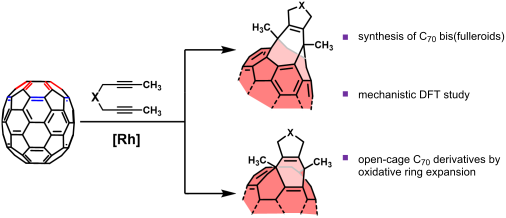
- heating at 90 °C for 4 hours. The crude reaction mass obtained with these conditions was then purified by column chromatography (toluene). After eluting unreacted pristine C70, a dark reddish fraction was isolated and analyzed by HPLC. A major peak was observed at a retention time of 17.5 minutes, which
- were run using other solvents such as toluene and chlorobenzene, increasing the C70 concentration from 1.2 M to 2.4 M, and decreasing the catalytic load to 5 mol % (Table S1 in Supporting Information File 1). However, none of these trials improved the yield of bis(fulleroid) 2a. The same reaction was
- (BIPHEP)]+. 1H NMR (CS2/CDCl3, 400 MHz) spectrum of compound 3a as a mixture of three isomers. X = residual toluene. Rhodium(I)-catalyzed cycloaddition of C60 with diynes to afford bis(fulleroid) derivatives [33]. Rhodium-catalyzed cycloaddition of C70 with diynes 1a and 1b. Oxidative cleavage of bis


Substitution reactions in the acenaphthene analog of quino[7,8-h]quinoline and an unusual synthesis of the corresponding acenaphthylenes by tele-elimination
Beilstein J. Org. Chem. 2024, 20, 243–253, doi:10.3762/bjoc.20.24
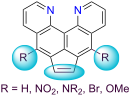
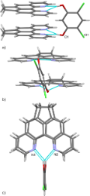
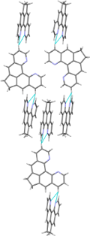
- activity/inactivity in amination reactions. It is known that acenaphthylenes are usually readily formed from acenaphthenes by dehydrogenation with chloranil, dichlorodicyanobenzoquinone (DDQ) or active MnO2 on reflux in toluene/xylene and other inert solvents. However, attempts to obtain acenaphthylene 8
- nitrobenzene. For example, quinoquinoline 5 reacts with chloranil upon heating in toluene to give a dark brown, high-melting product, in which, however, the methylene bridge remains unchanged. According to 1H NMR spectroscopy and combustion analysis data, this is complex 9 with a composition close to the ratio




Photochromic derivatives of indigo: historical overview of development, challenges and applications
Beilstein J. Org. Chem. 2024, 20, 228–242, doi:10.3762/bjoc.20.23
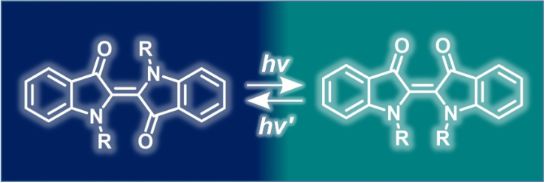
- to the presence of the electron-withdrawing ester groups. Importantly, only the Z-form of 18c was found to be stable enough with a half-life of 2.8 min at room temperature in acetonitrile (77% of Z-isomer in PSS) and 4.1 minutes in toluene (91% of Z-isomer in PSS) after irradiation with red light
- forward and backward isomerization of N,N'-diacetylindigo (9a) in toluene without isolation of the Z-form [49]. The Fischer method remains relevant up to date and is frequently used for the characterization of the photoinduced forms of various indigoid photoswitches [50][51][52][53][54]. To assess an
- , depending on the solvent, the thermal half-lives varied within a wide range from seconds to days. For example, for compound 17e, the half-lives changed from 8 s (in MeOH) to 11 h (in toluene). In addition, the Z-form of compound 17d was unusually stable in 1,4-dioxane, lasting for almost 6 days. The 2021





Chiral phosphoric acid-catalyzed transfer hydrogenation of 3,3-difluoro-3H-indoles
Beilstein J. Org. Chem. 2024, 20, 205–211, doi:10.3762/bjoc.20.20
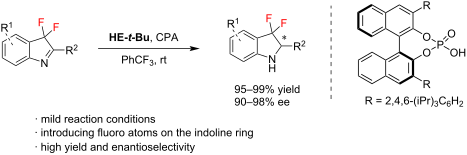
- achieving high selectivity. Also, an obvious solvent effect on the enantioselectivity was observed (Table 1, entries 7–10). Very low ee values of product 2a were detected when the reaction was performed in DMSO or MeOH (Table 1, entries 7 and 8), while using DCE or toluene as the solvent the


Metal-catalyzed coupling/carbonylative cyclizations for accessing dibenzodiazepinones: an expedient route to clozapine and other drugs
Beilstein J. Org. Chem. 2024, 20, 193–204, doi:10.3762/bjoc.20.19
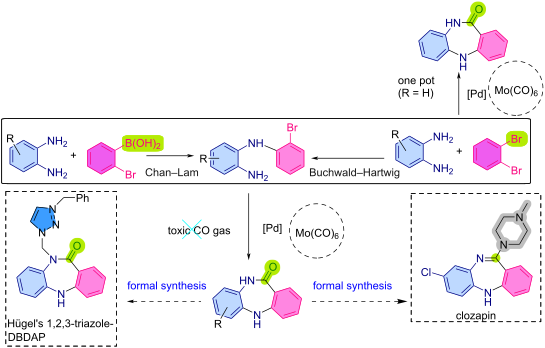
- , we screened other ligands such as XPhos and DPEPhos in the presence of Cs2CO3 as base in dioxane, however, the undesired phenazine product 6 was still obtained in moderate yield under these conditions (entries 12 and 13, Table 2). In the presence of SPhos as ligand, Cs2CO3, and toluene as solvent
- , the desired intermediate 3a was obtained in 20% yield along with 55% of the phenazine 6 (entry 14, Table 2). Although toluene was shown to be a good solvent for this B–H coupling reaction, we were unable to prevent the double B–H reaction from occurring leading to the phenazine 6, even when shortening


Comparison of glycosyl donors: a supramer approach
Beilstein J. Org. Chem. 2024, 20, 181–192, doi:10.3762/bjoc.20.18
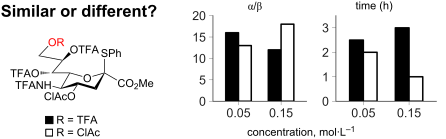
- permeation chromatography was performed in toluene on a column (400 × 20 mm) packed with Bio-Beads S-X3 gel (200–400 mesh, Bio-Rad) using a differential refractive index detector (Knauer). TLC was carried out on Silica Gel 60 F254 plates (Merck), spots were visualized under UV light and by heating plates
- solution of 8,9-O-isopropylidene derivative 6 (871 mg, 1.4 mmol) in CH2Cl2 (60 mL), 90% aq CF3CO2H (6 mL, freshly prepared) was added at 0 °C (ice–water bath). The reaction mixture was stirred at 0 °C for 25 min. The mixture was allowed to warm to ≈20 °C, toluene (20 mL) was added, and then concentrated
- was filtered off and washed with t-BuOMe/petroleum ether 1:1 (v/v) mixture to give 7 as white crystals (576 mg, 70%). [α]D27 −116.0 (c 2.9, acetone); Rf 0.21 (toluene/acetone 5:1); 1H NMR (600 MHz, acetone-d6, δ, ppm, J, Hz) 2.20 (dd, J3a,3e = 13.6, J3a,4 = 11.9, 1H, H-3a), 2.83 (dd, J3e,3a = 13.6



Synthesis of the 3’-O-sulfated TF antigen with a TEG-N3 linker for glycodendrimersomes preparation to study lectin binding
Beilstein J. Org. Chem. 2024, 20, 173–180, doi:10.3762/bjoc.20.17
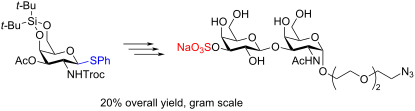
- Celite® and concentrated in vacuo. The resulting residue was taken up in EtOAc (700 mL) and washed with 10% aq Na2S2O3 (700 mL), water (700 mL) and brine (700 mL). The organic phase was then dried over MgSO4, filtered and reduced to dryness. Flash chromatography on silica gel (toluene→toluene/EtOAc, 3:2
- ) yielded 4 as an orange syrup (8.74 g, 85%). Rf = 0.4 (toluene/EtOAc, 7:3); [α]D +92 (c 1.0, CHCl3); 1H NMR (500 MHz, CDCl3) δ 5.44 (d, J = 10.2 Hz, 1H, NH), 4.98 (dd, J = 11.1, 2.9 Hz, 1H, H-3), 4.95 (d, J = 3.6 Hz, 1H, H-1), 4.87 (d, J = 12.1 Hz, 1H, CH2(A)Troc), 4.69–4.58 (m, 2H, H-4, CH2(B)Troc), 4.49
- concentrated under reduced pressure. Flash chromatography on silica gel (toluene→toluene/acetone, 7:3) yielded 5 as a gold-coloured syrup (7.83 g, 96%). Rf = 0.4 (toluene/EtOAc, 3:2); [α]D +67 (c 1.0, CHCl3); 1H NMR (500 MHz, CDCl3) δ 5.58 (d, J = 9.8 Hz, 1H, NH), 4.93 (d, J = 3.6 Hz, 1H, H-1), 4.77 (d, J


Perspectives on push–pull chromophores derived from click-type [2 + 2] cycloaddition–retroelectrocyclization reactions of electron-rich alkynes and electron-deficient alkenes
Beilstein J. Org. Chem. 2024, 20, 125–154, doi:10.3762/bjoc.20.13
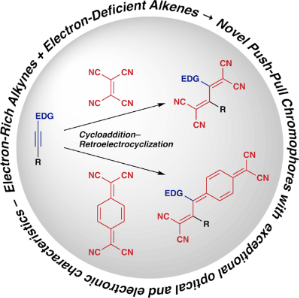
- conditions, particularly the solvent employed. For instance, when toluene is used as the reaction solvent, a reaction at 100 °C for 15 h affords an E/Z mixture of 7 (E/Z ≈ 1:1) with 90% yield, 8 with 10% yield, and 9 with 0% yield. In contrast, a reaction at 25 °C for 15 h in N,N-dimethylformamide (DMF
- imperative to suppress the generation of 8 and 9, as well as the conversion reaction of 7 into 10. Therefore, it is important to use toluene as the solvent. Accordingly, pentacyanoocta-1,3,5,7-tetraene (PCOT) 12 was synthesized with 75% yield as a mixture of 3Z,5E/3E,5E isomers in the ratio of 71:29 via a
- one-pot reaction involving TCNE and one equivalent of 3-(4-(dimethylamino)phenyl)propionitrile in toluene at 90 °C for 24 h. Subsequently, one equivalent of 1 was added at 90 °C for 24 h (Scheme 6) [101]. While the separation of the isomers was not achieved, the structure of the 3Z,5E isomer was


Multi-redox indenofluorene chromophores incorporating dithiafulvene donor and ene/enediyne acceptor units
Beilstein J. Org. Chem. 2024, 20, 59–73, doi:10.3762/bjoc.20.8
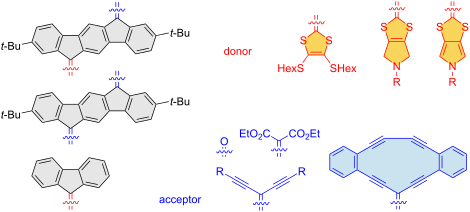
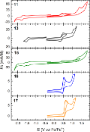
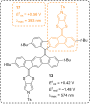
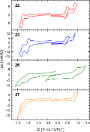
- Cary 50 UV–vis spectrophotometer scanning between 800 and 200 nm. All spectra were recorded with baseline correction in CH2Cl2 or toluene (HPLC grades) at 25 °C in a quartz cuvette with a 10 mm path length. Electrochemistry Cyclic voltammograms (CV) and differential pulse voltammograms (DPV) were
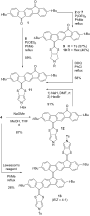
- ) and 2 (176 mg, 534 μmol) in anhydrous toluene (5 mL) and P(OEt)3 (10 mL) was heated to reflux for 5 h, resulting in a color change from orange to dark red. The reaction mixture was then allowed to cool to rt before it was concentrated under reduced pressure. The resulting dark red solid was purified
- ) and Lawesson’s reagent (23.1 mg, 57.0 μmol) in anhydrous, N2-degassed toluene (20 mL) was heated to reflux for 21 h. The reaction mixture was then allowed to cool to rt, diluted with toluene (50 mL), washed with 1 M NaOH (3 × 50 mL), and then with H2O (3 × 50 mL). The organic phase was dried over

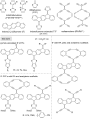
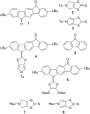




Using the phospha-Michael reaction for making phosphonium phenolate zwitterions
Beilstein J. Org. Chem. 2024, 20, 41–51, doi:10.3762/bjoc.20.6
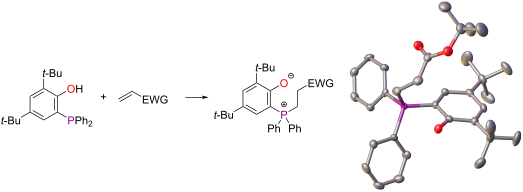
- in these cases (Supporting Information File 1, Figures S54 and S74). Crystal structures The solid-state structures of 2a and 2f were determined by single-crystal X-ray diffraction. The crystals were grown from concentrated solutions in toluene. A representation of the molecular structure of 2a is
- room temperature for 24 h and the solvent evaporated. The product was recrystallized from a hot toluene/THF mixture. Yield: 38.8 mg (42%) off-white solid. 1H NMR (δ in ppm, 300 MHz, CDCl3, 298 K) 1.07 (s, 9H, CH3), 1.40 (s, 9H, CH3), 2.66–2.81 (m, 2H, CH2), 3.30–3.46 (m, 2H, CH2), 5.21 (br, 1H, NH2


Construction of diazepine-containing spiroindolines via annulation reaction of α-halogenated N-acylhydrazones and isatin-derived MBH carbonates
Beilstein J. Org. Chem. 2023, 19, 1923–1932, doi:10.3762/bjoc.19.143
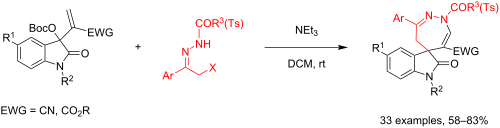
- triethylamine, the reaction in other solvents such as DCE, THF, and CHCl3 gave the product 3a in 61%, 46% and 56% yields, respectively (Table 1, entries 12–14). However, the reaction did not proceed in toluene and acetonitrile (Table 1, entries 15 and 16). When lowering the amount of triethylamine to one




Beyond n-dopants for organic semiconductors: use of bibenzo[d]imidazoles in UV-promoted dehalogenation reactions of organic halides
Beilstein J. Org. Chem. 2023, 19, 1912–1922, doi:10.3762/bjoc.19.142
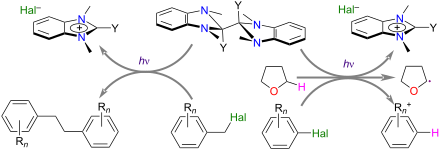
- toluene and bibenzyl, i.e., RH and R2 products, which were identified by the masses observed through GC–MS and through comparison of the GC–MS retention times with authentic samples. Higher concentrations and reaction times (entries 7–9 in Tabe 1) lead to larger extents of conversion (up to 61% at 18 h
- ) and favor formation of bibenzyl over toluene (up to 52% yield at 18 h). [BnBr]•– presumably cleaves to afford Bn•, which can react further to form Bn2 (see following section) or can form toluene through reaction with THF, which is known to have a reasonably weak α-CH bond and act as a H• donor towards
- lower for a given reaction time (compare entries 12 and 15 to 11 and 14 in Table 1) and the sole detected product is toluene rather than bibenzyl. Furthermore, in one of the cases of complete conversion (Table 1, entry 14), 1H NMR spectroscopy indicated that the reductant-based side product is a salt of


Aromatic systems with two and three pyridine-2,6-dicarbazolyl-3,5-dicarbonitrile fragments as electron-transporting organic semiconductors exhibiting long-lived emissions
Beilstein J. Org. Chem. 2023, 19, 1867–1880, doi:10.3762/bjoc.19.139
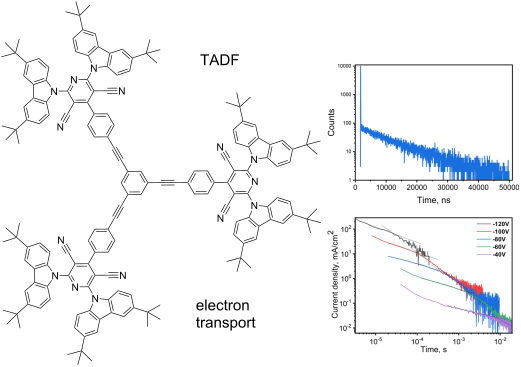
- groups to achieve optimal charge-transporting and fluorescent properties within one TADF compound (Figure 1) [5]. The obtained TADF emitters (453 to 550 nm) show photoluminescence quantum yields of up to 98% in oxygen-free toluene solutions. These TADF emitters are suitable for OLEDs with brightness of
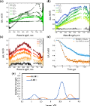
- -carbonitrile (REF) [5]. Absorption spectra of dilute toluene, tetrahydrofuran (THF), and chloroform solutions as well as of the films of compounds 6–9 are shown in Figure 2a,b. The nonstructured low-energy bands at wavelengths of 350–450 nm are well seen in the absorption spectra of 6–9. The wavelengths of
- compound 8 had a slight impact on its red-shifted absorption spectra in comparison to that of other compounds (Figure 2a,b and Table 1). The photoluminescence spectra of toluene solutions of the compounds are characterized by non-structured shapes typical for ICT emissions (Figure 2c and Figure S1 in


Controlling the reactivity of La@C82 by reduction: reaction of the La@C82 anion with alkyl halide with high regioselectivity
Beilstein J. Org. Chem. 2023, 19, 1858–1866, doi:10.3762/bjoc.19.138

- more localized on the inside of the cluster for [Sc3N@Ih-C80]2−. A previous study reported that thermal treatment of La@C2v-C82 in the presence of 3-triphenylmethyl-5-oxazolidinone in toluene afforded four different benzylated La@C2v-C82 isomers [19]. Benzyl radicals may have been generated due to the
- otherwise stated. ODCB was distilled over P2O5 under vacuum prior to use. HPLC was performed on an LC-9201 instrument (Japan Analytical Industry Co., Ltd.) by monitoring the UV absorption at 330 nm with toluene as the eluent. Mass spectrometry was performed using a Bruker AUTOFLEX III smart beam with
- the HPLC instrument to separate the endohedral metallofullerenes using a PBB column (⌀ 20 mm × 250 mm; Cosmoses, Nacalai Tesque Inc.) with chlorobenzene as the mobile phase in the first step and a Buckyprep column (⌀ 20 mm × 250 mm × 2; Cosmoses, Nacalai Tesque Inc.) with toluene as the mobile phase


A novel recyclable organocatalyst for the gram-scale enantioselective synthesis of (S)-baclofen
Beilstein J. Org. Chem. 2023, 19, 1811–1824, doi:10.3762/bjoc.19.133

- the other components of the reaction mixture. The lipophilic O-alkylated gallic acid unit increases the solubility of the organocatalyst in less polar solvents, such as DCM or toluene but leads to the precipitation of the organocatalyst in polar solvents, including MeOH or MeCN. As a result, the
- reaction in which acetylacetone (13) did not only act as a reactant but also as a solvent was examined (Table 2). The highest yields and enantiomeric excess values were reached in CPME, toluene, and dichloromethane (Table 2, entries 1–3). When acetylacetone was used as solvent, the enantiomeric excess was
- (Figure 2). Considering the three factors mentioned above (yield, enantiomeric excess, and green chemistry), toluene was chosen as a solvent for the recycling reactions. The schematic for the recycling by solvent replacement is shown in Figure 3. After the stereoselective Michael addition was completed in


Active-metal template clipping synthesis of novel [2]rotaxanes
Beilstein J. Org. Chem. 2023, 19, 1776–1784, doi:10.3762/bjoc.19.130
- after filtration and solvent evaporation. The compound was purified by column chromatography (silica, toluene/petroleum ether = 1:4) to afford a white solid (1.44 g, 73%); mp 222–225 °C, Rf = 0.44 (silica, toluene/petroleum ether = 1:4). 1H NMR (CDCl3, 600 MHz) δ 7.23 (d, 3J = 8.6 Hz, 6H, HAr), 7.10
- NaN3 (1.40 g, 21.56 mmol, 6 equiv) were dissolved in MeCN (100 mL) and toluene (50 mL) in a round-bottom flask. The mixture was refluxed until reaction completion as monitored by TLC. Upon cooling, water was added (100 mL) and the compound was extracted with DCM (3 × 75 mL). The combined organic phases
- , OCH2), 3.30 (t, 3J = 6.8 Hz, 2H, CH2N3), 1.80 (qv, 3J = 6.5 Hz, 2H, CH2), 1.68 (qv, 3J = 7.0 Hz, 2H, CH2), 1.59–1.55 (m, 2H, CH2), 1.30 (s, 27H, C(CH3)3) ppm. Compound 5: Compound 4 (0.76 g, 4.69 mmol, 2.2 equiv) was dissolved in toluene (50 mL) and the solution was cooled at 0 °C on an ice bath. NaOH


A deep-red fluorophore based on naphthothiadiazole as emitter with hybridized local and charge transfer and ambipolar transporting properties for electroluminescent devices
Beilstein J. Org. Chem. 2023, 19, 1664–1676, doi:10.3762/bjoc.19.122
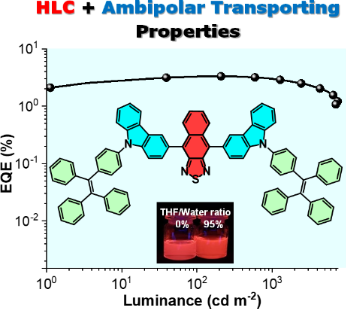
- , thin film, and solid powder. As shown in Figure 2a, the UV–vis absorption spectrum in diluted toluene solution displays intense absorption peaks in the high energy region (<380 nm) and a much weaker absorption peak at 508 nm attributed to the π–π* transition of the conjugated aromatic backbone and
- , 4.86 mmol), carbazole (2.44 g, 14.58 mmol), K3PO4 (5.17 g, 24.313 mmol), ±-trans-1,2-diaminocyclohexane (1.46 mL, 12.17 mmol) and CuI (1.85 g, 9.72 mmol) in dry toluene (50 mL) was degassed with N2 for 10 min. The reaction mixture was stirred at reflux under N2 atmosphere for 18 h. After being cooled
- mmol) in dry toluene (50 mL) was degassed with N2 for 10 min. The reaction mixture was stirred at a refluxing temperature under N2 atmosphere for 48 h. After being cooled to room temperature, the mixture was diluted with water (100 mL) and extracted with CH2Cl2 (50 mL × 3). The combined organic layer


A series of perylene diimide cathode interlayer materials for green solvent processing in conventional organic photovoltaics
Beilstein J. Org. Chem. 2023, 19, 1620–1629, doi:10.3762/bjoc.19.119
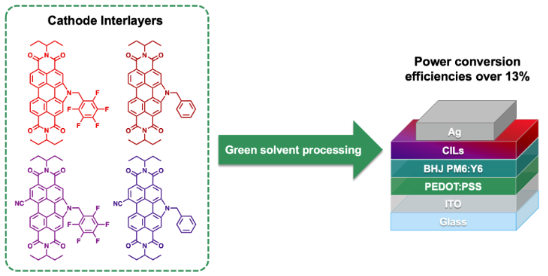
- saturated solution at 19.4 mg/mL, CN-PDIN-FB a saturated solution at 3.2 mg/mL, and CN-PDIN-FB a saturated solution at 1.2 mg/mL. The compounds are also soluble in other organic solvents such as toluene, o-xylenes, and chloroform at concentrations of >100 mg/mL. However, in conventional OPVs, it is critical


Synthesis of 7-azabicyclo[4.3.1]decane ring systems from tricarbonyl(tropone)iron via intramolecular Heck reactions
Beilstein J. Org. Chem. 2023, 19, 1615–1619, doi:10.3762/bjoc.19.118
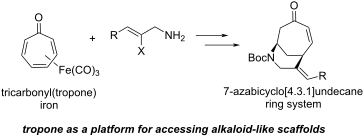
- , entry 2) and Vanderwal [17] (Table 1, entry 3) in the synthesis of other bridged azapolycycles gave poor yields when applied to vinyl bromide 7. The best result was obtained using the combination of Pd(PPh3)4, K2CO3, and proton sponge in refluxing toluene [18][19]. Although this catalyst system proved


Complexes of resorcin[4]arene with secondary amines: synthesis, solvent influence on “in-out” structure, and theoretical calculations of non-covalent interactions
Beilstein J. Org. Chem. 2023, 19, 1525–1536, doi:10.3762/bjoc.19.109
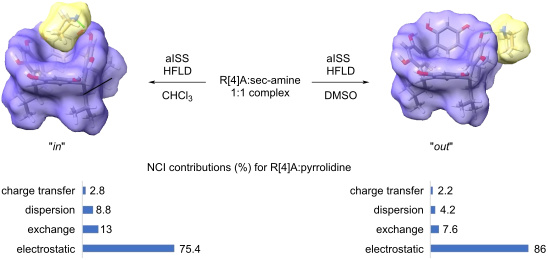
- as chloroform and toluene, in which the forming structures are stabilized by hydrogen bonds. The last few years have seen an increase in works showing the course of various types of reactions in the cavities of hexameric systems (closed spaces) created by R[4]A [8]. Complexes of R[4]A with amines [9




N-Sulfenylsuccinimide/phthalimide: an alternative sulfenylating reagent in organic transformations
Beilstein J. Org. Chem. 2023, 19, 1471–1502, doi:10.3762/bjoc.19.106
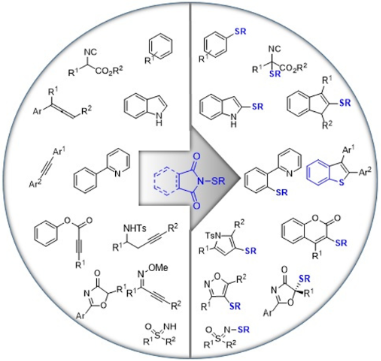
- heterogeneous medium coming from H2O and toluene was beneficial for the progress of the transformation. In 2014, Denmark and Chi successfully synthesized a wide variety of pyrrolidines 99, piperidines 100, and azepanes via intramolecular sulfenoamination of olefins 98 (Scheme 40) [75]. The reduction of endo to
- (Scheme 46) [79]. By testing several alkaloids as organocatalysts for the transformation, cinchonidine G proved to be the best catalyst for C–H sulfenylation and selenenylation of substrates in toluene at −20 or 0 °C. The reaction occurred in shorter times in the presence of N-(arylsulfanyl)succinimide
- , tetrahydrofuran, methanol, toluene, hexane, and n-pentane were employed, in which the products in non-polar hydrocarbon solvents like hexane and n-pentane were obtained in excellent efficiency and enantioselectivity. Song et al. found that the chemoselective α-sulfenylation and β-thiolation of α,β-unsaturated


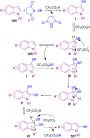


Cyclization of 1-aryl-4,4,4-trichlorobut-2-en-1-ones into 3-trichloromethylindan-1-ones in triflic acid
Beilstein J. Org. Chem. 2023, 19, 1460–1470, doi:10.3762/bjoc.19.105
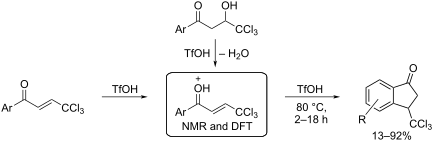
- reflux in toluene [19] (Scheme 4). By this route, mainly E-isomers of compounds 2 were formed except for compounds 2c,i,m which were obtained as mixtures of E,Z-isomers (see Experimental section). However, under the reaction conditions in the presence of TsOH, the hydroxy ketones 1k,p–s bearing strong


α-(Aminomethyl)acrylates as acceptors in radical–polar crossover 1,4-additions of dialkylzincs: insights into enolate formation and trapping
Beilstein J. Org. Chem. 2023, 19, 1443–1451, doi:10.3762/bjoc.19.103
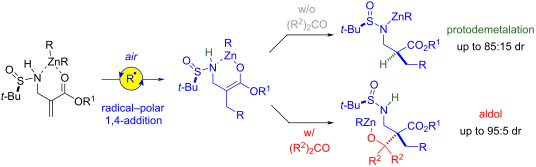
- carbonyl and sulfinyl unit to achieve good levels of selectivity. Hence, to reinforce Lewis pair formation, the reaction was also carried out in apolar solvents such as toluene and hexane (entries 4 and 5 in Table 3). In hexane, an 88% yield with 85:15 dr was obtained, which constituted the best conditions




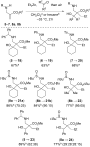


Application of N-heterocyclic carbene–Cu(I) complexes as catalysts in organic synthesis: a review
Beilstein J. Org. Chem. 2023, 19, 1408–1442, doi:10.3762/bjoc.19.102
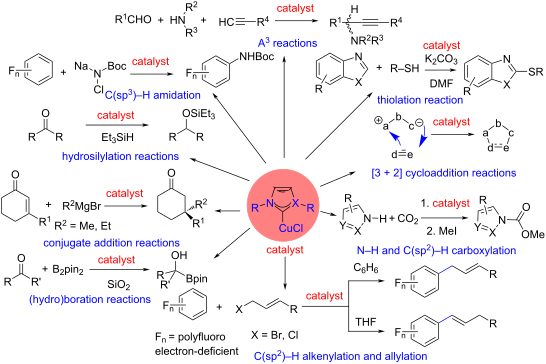
- alkali alkoxide as the base (Scheme 6) [15]. In the case of IPr·HX, it was found that the use of CuI afforded a significant amount of [(IPr)2Cu] complexes even when a large excess of the metal salt was used. Furthermore, the combination of KOMe and toluene afforded a higher yield of [(IPr)CuI] [15]. It
- yields of the products were poor. Then, a non-chlorinated solvent such as toluene was used which furnished the complexes in moderate to excellent yields (Scheme 20). The use of water as solvent was found to be viable in the case of the NHCs bearing aryl substituent groups. However, the reaction of alkyl
- dichloromethane increased the reactivity, resulting in quantitative conversion, but toluene, acetonitrile, and tetrahydrofuran (THF), which had previously been reported to be extremely effective in the presence of copper salts, gave poor yields. In 2013, Navarro and co-worker [78] used [(NHC)Cu(I)]X (X = Cl, NHC


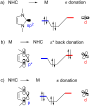






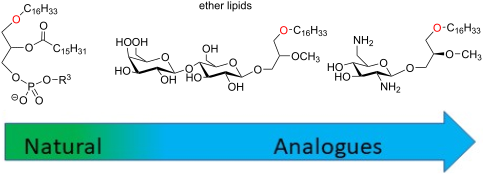
Synthesis of ether lipids: natural compounds and analogues
Beilstein J. Org. Chem. 2023, 19, 1299–1369, doi:10.3762/bjoc.19.96
- also achieved in the last step (Figure 5) [73]. DIBALH (diisobutylaluminium hydride) in toluene was added to hexadecanol in dichloromethane at 0 °C (Figure 5) to form in situ a lithium alcoholate. Then, S-glycidol was added at rt to produce in 50% yield the diol 5.2 after a regioselective opening of
- from racemic solketal which is deprotonated with potassium [74], NaH [75], NaNH2 [76] or KH and by using different solvents including benzene [74], toluene [76][77], THF [78], or DMF [75][79] and then alkylated with bromoalkyl [75][76] or mesylate lipid alcohol [74]. The same protocols (NaH, toluene or