Search results
Search for "in situ" in Full Text gives 1175 result(s) in Beilstein Journal of Organic Chemistry. Showing first 200.
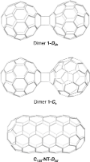
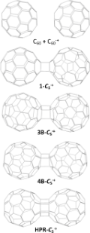
Electron-beam-promoted fullerene dimerization in nanotubes: insights from DFT computations
Beilstein J. Org. Chem. 2024, 20, 92–100, doi:10.3762/bjoc.20.10
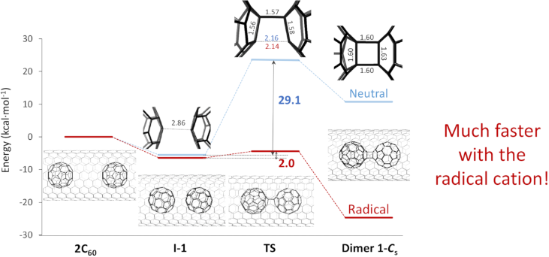
- molecules on surfaces like graphene or carbon nanotubes have allowed the scientific community to visualize at atomic resolution the structural changes of molecules in situ by single-molecule atomic-resolution real-time TEM imaging (SMART-TEM) [1][2][3][4][5]. Since the initial discovery [2], many movies




1-Butyl-3-methylimidazolium tetrafluoroborate as suitable solvent for BF3: the case of alkyne hydration. Chemistry vs electrochemistry
Beilstein J. Org. Chem. 2023, 19, 1966–1981, doi:10.3762/bjoc.19.147
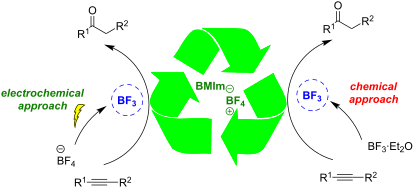
- possibility of obtaining the products of alkyne hydration with analogous or improved yields, using less hazardous precursors to generate the reactive species in situ. In particular, for terminal arylalkynes, the electrochemical route proved to be advantageous, yielding preferentially the hydration products vs
- commercially available BF3 diethyl etherate (BF3·Et2O), commonly used in organic synthesis. Indeed, the main advantages of the developed system are: 1) in situ generation of BF3, which avoids its storage and handling, 2) the possibility to control the amount of electrogenerated BF3 using current by simply


Aldiminium and 1,2,3-triazolium dithiocarboxylate zwitterions derived from cyclic (alkyl)(amino) and mesoionic carbenes
Beilstein J. Org. Chem. 2023, 19, 1947–1956, doi:10.3762/bjoc.19.145
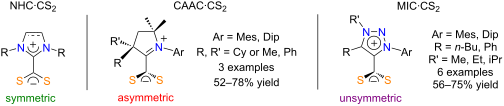
- CACTUS, Campus Vida, 15782 Santiago de Compostela, Spain 10.3762/bjoc.19.145 Abstract The synthesis of zwitterionic dithiocarboxylate adducts was achieved by deprotonating various aldiminium or 1,2,3-triazolium salts with a strong base, followed by the nucleophilic addition of the in situ-generated
- mesitylamine with sodium nitrite and acetic acid followed by a substitution of the intermediate diazonium salt with sodium azide [68]. All our attempts to prepare 2-azido-1,3-diisopropylbenzene along the same lines failed. Nevertheless, its in situ formation in the presence of phenylacetylene led to the
- lack of conjugation between the heterocyclic core of the molecules and their peripherical decorations. Conclusion The synthesis of three CAAC·CS2 and six MIC·CS2 zwitterions derived from aldiminium or 1,2,3-triazolium salts was achieved via a two-step procedure involving the in situ generation of free


Construction of diazepine-containing spiroindolines via annulation reaction of α-halogenated N-acylhydrazones and isatin-derived MBH carbonates
Beilstein J. Org. Chem. 2023, 19, 1923–1932, doi:10.3762/bjoc.19.143
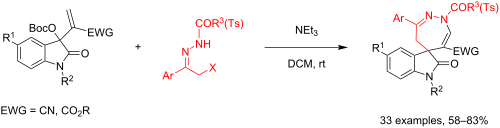
- and proceeds through a by base-promoted annulation reaction of α-halogenated N-acylhydrazones and isatin-derived MBH carbonates. The reaction mechanism of this formal [4 + 3] annulation includes the in situ generated allylic ylide, nucleophilic substitution, Michael additon, and elimination processes
- efficient synthesis of spiro[azepine-4,3'-indoline] derivatives via the [4 + 3] cycloaddition reaction of bromo-substituted isatin-derived MBH adducts and N-(o-chloromethyl)arylamides. In this efficient protocol, the reactive allylic phosphonium ylides and aza-o-quinone methides were generated in situ and
- depicted in Scheme 5. At first, MBH carbonates of isatin 2 is attacked at the α-position by the Lewis base to give the ammonium salt A with elimination of carbon dioxide and a tert-butoxide ion. Secondly, the ammonium salt A is deprotonated by the in situ generated tert-butoxide ion to give the allylic




Beyond n-dopants for organic semiconductors: use of bibenzo[d]imidazoles in UV-promoted dehalogenation reactions of organic halides
Beilstein J. Org. Chem. 2023, 19, 1912–1922, doi:10.3762/bjoc.19.142
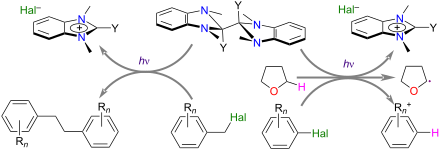
- concert with sacrificial weak reductants (Figure 1b) [8][9][10][11]. Another approach is to add ambient-stable precursors to reaction mixtures: for example, reducing Wanzlick dimers and related species (Figure 1a, ii) have been formed from precursors through in situ decarboxylation [12] or deprotonation
- [4][5], while other reducing species have been formed from in situ reactions of simple diols or diamines [13]. Another approach is to utilize dimers formed by highly reducing radicals, such the bibenzoimidazoles (Y-DMBI)2 (Figure 1c). (Me-DMBI)2 was first reported in 1984 and used as a reductant in


Biphenylene-containing polycyclic conjugated compounds
Beilstein J. Org. Chem. 2023, 19, 1895–1911, doi:10.3762/bjoc.19.141
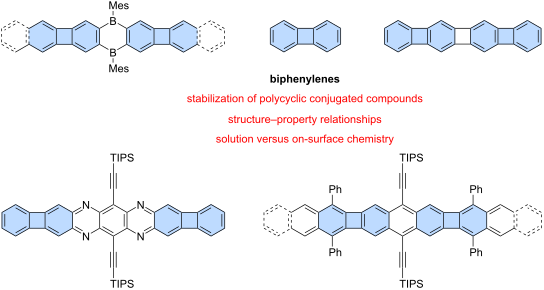
- approaches have gained popularity for synthesizing biphenylene derivatives [23]. The utilization of in-situ aryne synthesis to generate biphenylene through the dimerization of arynes 2 from diverse substrates has gained popularity. However, this approach occasionally gives rise to the production of high
- are in situ formed from 23, resulting in the formation of symmetric polycyclic structures 24a and 24b. These isomers obtained as a mixture are then subjected to treatment with p-TsOH in acetic acid, without the need for further purification, to yield the desired products 25a and 25b in 71 and 42



Trifluoromethylated hydrazones and acylhydrazones as potent nitrogen-containing fluorinated building blocks
Beilstein J. Org. Chem. 2023, 19, 1741–1754, doi:10.3762/bjoc.19.127
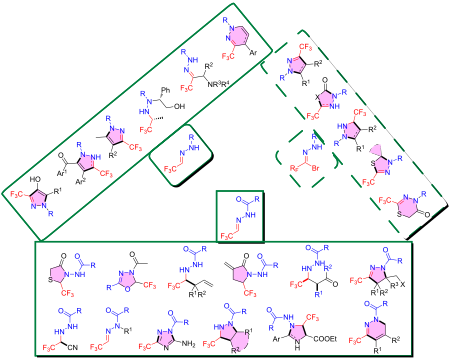
- under basic conditions, and expanded the synthetic method to N-substituted acylhydrazones [106][107] (Scheme 18). In the early development of 1,3-dipolar cycloadditions of azomethine imines, the acyclic azomethine imines were unstable and their in situ preparation required Brønsted acid or thermal


Tying a knot between crown ethers and porphyrins
Beilstein J. Org. Chem. 2023, 19, 1630–1650, doi:10.3762/bjoc.19.120
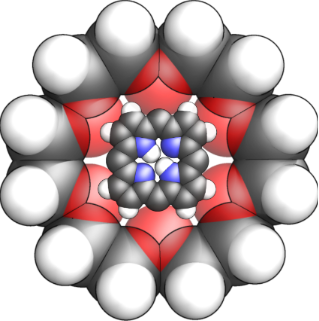
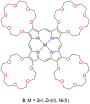
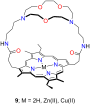
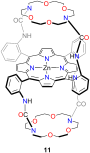
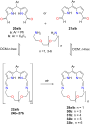
- elimination reactions between in situ generated 16-K2–19-K2 and MCl3(THF)3 yielding 16-Ti, 18a-Ti (structure not shown), 16-V (Scheme 7), 18a-V (structure not shown), and 19-Cr [67]. The Ti(III)-incorporated 16-Ti and 18a-Ti exhibited paramagnetic properties; their identity was confirmed through elemental
- nitrogen in the middle of the ether chain of 19-Cr. The reaction between in situ generated 17-K2 or 19-K2 and CoCl2 produced paramagnetic cobalt(II) complexes 17-Co or 19-Co [67]. The XRD analysis of 17-Co revealed a molecular structure with distorted octahedral Co(II) coordinating water and hydroxide







Radical chemistry in polymer science: an overview and recent advances
Beilstein J. Org. Chem. 2023, 19, 1580–1603, doi:10.3762/bjoc.19.116
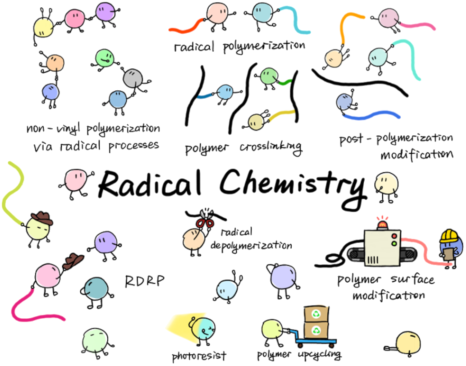
- mostly used for the polymerization of fluorinated olefins. However, the C–I bond of iodoalkyl compounds used as chain-transfer agents is weak and unstable during storage [21]. Therefore, Lacroix-Desmazes et al. [72] used iodine molecules to synthesize iodine chain transfer agents in situ, a process known




N-Sulfenylsuccinimide/phthalimide: an alternative sulfenylating reagent in organic transformations
Beilstein J. Org. Chem. 2023, 19, 1471–1502, doi:10.3762/bjoc.19.106
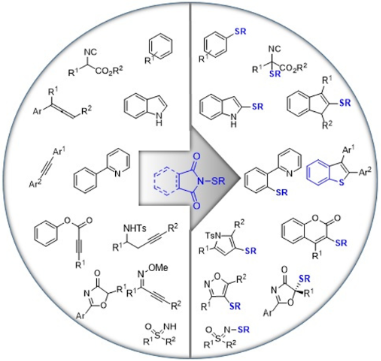
- sulfenylation of yne-tethered ynamide 147 with N-thiosuccinimides 1 was possible in the presence of only methanesulfonic acid in dichloromethane at room temperature (Scheme 63) [93]. The electrophilic activation of propargylalkyne 147 generated in situ a sulfonium cation 1-I. Afterwards, 6-endo-dig cyclization
- of the phthalimide anion to the β-carbon of chalcone, followed by electrophilic sulfur attack and deprotonation. In the thiolation, in situ formation of thiophenol occurred, followed by thio-Michael addition of chalcone with thiophenol. N-Calcogenophthalimide also can be used to prepare


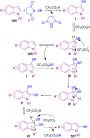


α-(Aminomethyl)acrylates as acceptors in radical–polar crossover 1,4-additions of dialkylzincs: insights into enolate formation and trapping
Beilstein J. Org. Chem. 2023, 19, 1443–1451, doi:10.3762/bjoc.19.103
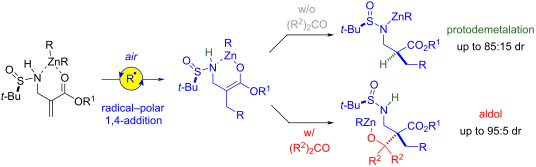
- atom to zinc enables this SH2 process which represents a rare example of alkylzinc-group transfer to a tertiary α-carbonyl radical. The zinc enolate thus formed readily undergoes β-fragmentation unless it is trapped by electrophiles in situ. Enolates of substrates having free N–H bonds undergo
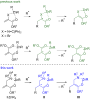
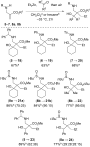
- allylation of lithium (trimethylsilyl)amides prepared in situ from the parent amines by a lithiation/silylation/lithiation sequence (Table 1). Using this protocol, α-(aminomethyl)acrylates 5 and 6 derived from benzhydrylamine and aniline were prepared in high yields (Table 1, entries 1 and 2). The procedure
- is poised to undergo β-fragmentation, but this process can be outcompeted by in situ electrophilic substitution reactions which offer synthetically useful procedures: 1,4-addition (for substrates having N–H bonds) or tandem 1,4-addition–aldol reactions (in the presence of carbonyl electrophiles






Application of N-heterocyclic carbene–Cu(I) complexes as catalysts in organic synthesis: a review
Beilstein J. Org. Chem. 2023, 19, 1408–1442, doi:10.3762/bjoc.19.102
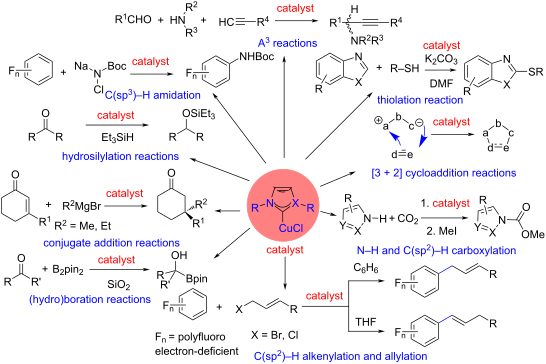
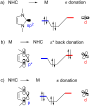
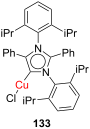
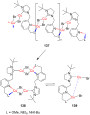
- the synthesis and applications of NHC–Cu(I) complexes only. 1 Synthesis of NHC–Cu(I) complexes 1.1 Deprotonation of NHC precursors (in situ) with a base The N-alkylazolium salts 11 upon treatment with a base generate the corresponding NHCs which react with a Cu(I) salt to afford the corresponding NHC
- the earlier report [15], under these conditions, formation of [(NHC)2Cu]+ complexes was not observed. In the same year, César et al. [26] reported in situ-generated malonate-derived anionic carbenes which reacted with CuCl to afford the anionic [(maloNHC)CuCl]Li complexes. Furthermore, zwitterionic
- having a triisopropoxy(propyl)silyl ((-CH2)3Si(OiPr)3) substituent on the imidazole ring through in situ transmetallation. One of these complexes, 78a, was successfully anchored on mesoporous silica MCM-41 to afford a new heterogeneous catalyst (Scheme 27). Both compounds were subsequently used as








One-pot nucleophilic substitution–double click reactions of biazides leading to functionalized bis(1,2,3-triazole) derivatives
Beilstein J. Org. Chem. 2023, 19, 1399–1407, doi:10.3762/bjoc.19.101
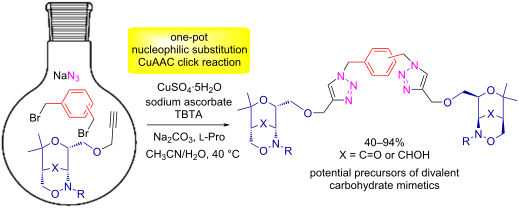
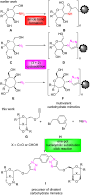
- nucleophilic substitutions employing sodium azide and organic substrates with potential leaving groups have been reported. The resulting organic azides were trapped in situ by a suitable alkyne to give the 1,2,3-triazoles [26][27][28][29][30][31][32][33][34][35][36]. Fairly recent review articles summarize
- aminopyrans [54], should be converted into divalent compounds via coupling of the terminal propynyl group with benzylic biazides. Since biazides are potentially explosive [22] it was very desirable to avoid their isolation and to generate these reactive species in situ from the corresponding benzylic halides
- benzyl azide 3 in situ from benzyl bromide (5) and sodium azide and to directly trap the intermediate with alkyne 2. Under conditions summarized in reaction 3 of Scheme 2 we obtained the desired 1,2,3-triazole derivative 3 in 82% yield. Copper(II) sulfate pentahydrate (0.07 equivalents based on 2) in the



Visible-light-induced nickel-catalyzed α-hydroxytrifluoroethylation of alkyl carboxylic acids: Access to trifluoromethyl alkyl acyloins
Beilstein J. Org. Chem. 2023, 19, 1372–1378, doi:10.3762/bjoc.19.98
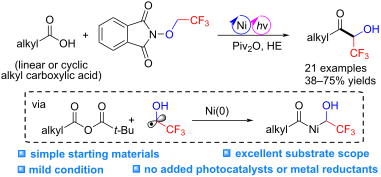
- complex between Hantzsch ester and N-trifluoroethoxyphthalimide was subsequently engaged in a nickel-catalyzed coupling reaction with in situ-activated alkyl carboxylic acids. This convenient protocol does not require photocatalysts and metal reductants, providing a straightforward and efficient access to
- elegant strategies on direct conversion of in situ-activated carboxylic acids for ketone synthesis [27][35][38], we chose dimethyl dicarbonate (DMDC, A1) as the activating reagent. To our delight, the reaction of 1a and 2 in the presence of NiBr2(dtbbpy) (10 mol %), Hantzsch ester (HE) and A1 in DMAc
- light-induced charge transfer event to give trifluoroethoxyl radical B, followed by a 1,2-hydrogen atom transfer (HAT), producing the stable radical C. For the nickel cycle, it is initiated by oxidative addition of Ni(0) catalyst E to acyl electrophile D formed in situ from carboxylic acid 1 with


Synthesis of ether lipids: natural compounds and analogues
Beilstein J. Org. Chem. 2023, 19, 1299–1369, doi:10.3762/bjoc.19.96
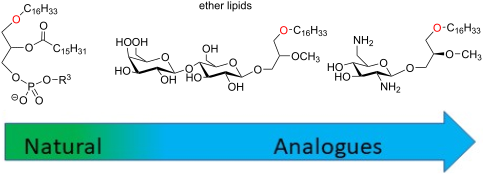
- also achieved in the last step (Figure 5) [73]. DIBALH (diisobutylaluminium hydride) in toluene was added to hexadecanol in dichloromethane at 0 °C (Figure 5) to form in situ a lithium alcoholate. Then, S-glycidol was added at rt to produce in 50% yield the diol 5.2 after a regioselective opening of


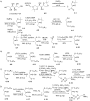


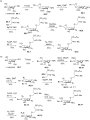


Non-noble metal-catalyzed cross-dehydrogenation coupling (CDC) involving ether α-C(sp3)–H to construct C–C bonds
Beilstein J. Org. Chem. 2023, 19, 1259–1288, doi:10.3762/bjoc.19.94
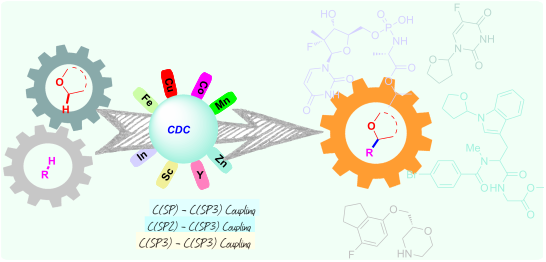
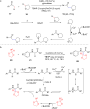
- extract a hydrogen from the ether C (sp3)–H bond to form radicals. Subsequently, a single electron transfer (SET) leads to the oxonium species. Then, the enamine generated in situ from methyl aryl ketone and pyrrolidine undergoes a nucleophilic reaction with the oxonium species followed by hydrolysis to
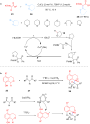
- and stereoselectivity (Scheme 8) [58]. The mechanism of this reaction differs from the previously reported ones and proceeds through the in situ generation of nucleophilic and electrophilic partners which provides new opportunities for enantioselective oxocarbenium ion-driven CDC processes. Due to an
- dihydropyrans (DHPs) and aldehydes in the presence of Zn(II) (Scheme 37) [102]. The method has good enantioselectivity and functional group tolerance and provides a practical and economical route towards a series of enantiopure α-substituted DHPs through CDC, through an in situ NaBH4 reduction two-step sequence










Metal catalyst-free N-allylation/alkylation of imidazole and benzimidazole with Morita–Baylis–Hillman (MBH) alcohols and acetates
Beilstein J. Org. Chem. 2023, 19, 1251–1258, doi:10.3762/bjoc.19.93
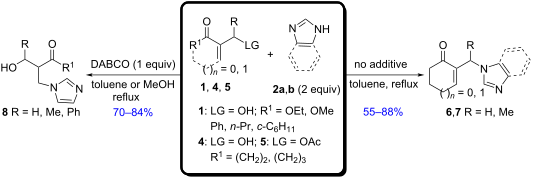
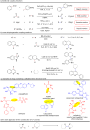
- , such alcohols were in situ converted into the corresponding O-allyl carbamates as leaving groups, followed by their reaction with imidazoles, affording the SN2’ products 3 (Scheme 1, reaction 1, iii). Correlatively, we have previously reported a direct amination of cyclic MBH alcohols 4 with morpholine


Acetaldehyde in the Enders triple cascade reaction via acetaldehyde dimethyl acetal
Beilstein J. Org. Chem. 2023, 19, 1243–1250, doi:10.3762/bjoc.19.92
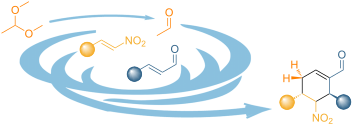
- acetaldehyde have been reported [20][21][22][23][24]. The safety and handling problems associated with acetaldehyde can be solved by synthetic equivalents that can be generated in situ through different paths. Some examples are represented by vinyl acetate [25], silyl vinyl ethers [26], ethanol, pyruvic acid
- acetaldehyde, which is hydrolyzed in situ using Amberlyst-15 as an acid catalyst, instead of directly using acetaldehyde allows for higher yields and fewer byproducts. Using mild reaction conditions, it was possible to obtain a variety of functionalized cyclohexene carbaldehydes in good yields and very high


Selective construction of dispiro[indoline-3,2'-quinoline-3',3''-indoline] and dispiro[indoline-3,2'-pyrrole-3',3''-indoline] via three-component reaction
Beilstein J. Org. Chem. 2023, 19, 1234–1242, doi:10.3762/bjoc.19.91
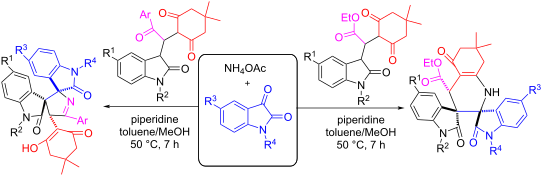
- -promoted three-component reaction of ammonium acetate, isatins and in situ-generated 3-isatyl-1,4-dicarbonyl compounds. The piperidine-promoted three-component reaction of ammonium acetate, isatins and the in situ-generated dimedone adducts of 3-ethoxycarbonylmethyleneoxindoles afforded mutlifunctionalized
- spirooxindoles, in which the in situ-generated Michael adduct of 3-ethoxycarbonylmethyleneoxindole underwent a Mannich reaction and annulation reaction with in situ-generated aldimines (reaction 1 in Scheme 1) [50][51]. Tanaka reported chiral quinidine derivative-catalyzed Michael–Henry cascade reactions of
- ), in which the in situ-generated adduct of thiophenol and 3-phenacylideneoxindole was believed to be the key intermediate [53][54][55]. Inspired by these elegant synthetic protocols and in continuation of our aim to develop convenient reactions for the synthesis of diverse spiro compounds [56][57][58

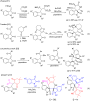


Radical ligand transfer: a general strategy for radical functionalization
Beilstein J. Org. Chem. 2023, 19, 1225–1233, doi:10.3762/bjoc.19.90
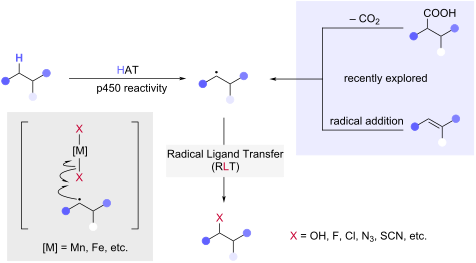
- molecular iron catalyst II and stoichiometric hydroxyiodinane as a terminal oxidant [38]. It is proposed that an azidoiodinane is generated in situ and serves as the radical initiator, generating an azido radical which adds to the less substituted position on the alkene. The resultant transient radical is
- captured via RLT from an in-situ generated iron–azide complex, resulting in net reduction of iron. The competent RLT species can then be regenerated through oxidation by the iodinane species and coordination of another equivalent of azide. This reaction was particularly notable for the wide alkene scope
- diamines with excellent functional group compatibility (Scheme 3) [10][39]. In both reports, it is proposed that photoinduced LMCT of an in-situ generated Fe(III) azide species furnishes an azido radical, compatible with unactivated alkene addition. These steps provide the reactive carbon-centered radical


Unravelling a trichloroacetic acid-catalyzed cascade access to benzo[f]chromeno[2,3-h]quinoxalinoporphyrins
Beilstein J. Org. Chem. 2023, 19, 1216–1224, doi:10.3762/bjoc.19.89
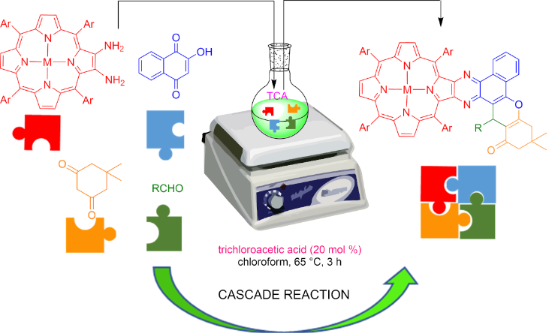
- condensation of intermediate 17 with 2-arylidene-5,5-dimethylcyclohexane-1,3-dione 18 (formed in situ through an Aldol condensation of aldehydes with dimedone), to generate copper(II) benzo[f]chromeno[2,3-h]dihydroquinoxalinoporphyrins which on dehydration produce the desired copper(II) benzo[f]chromeno[2,3-h


Enabling artificial photosynthesis systems with molecular recycling: A review of photo- and electrochemical methods for regenerating organic sacrificial electron donors
Beilstein J. Org. Chem. 2023, 19, 1198–1215, doi:10.3762/bjoc.19.88
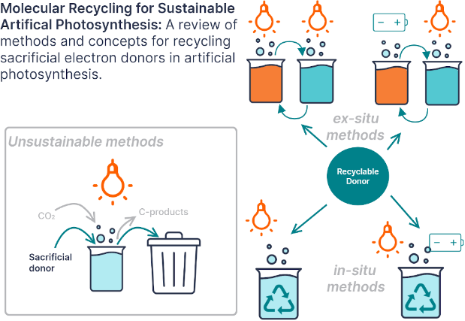
- facilitated the in-situ redox mediator recycling and separation. The authors actually employed this strategy using 3 different reactor configurations (Figure 2). The first and simplest ex-situ photorecycling method involved adding and extracting 2 aqueous phases containing the catalysts and reactant to
- of enzymes [47]. The enzymes reduce carbon dioxide to methanol and consumed NADH which was then recycled at the photoelectrode functionalized with the rhodium complex. The overall electron donor in this work was water which makes it an excellent example of in-situ recycling. Kuk et al. also noted
- -sensitized solar cells [50][51]. As discussed, if a sacrificial donor is recycled in-situ it becomes a redox mediator. In artificial photosynthesis redox mediators are most commonly employed in Z-schemes. A Z-scheme describes the combination of two photocatalytic systems, one for photooxidation and one for


Retraction: One-pot odourless synthesis of thioesters via in situ generation of thiobenzoic acids using benzoic anhydrides and thiourea
Beilstein J. Org. Chem. 2023, 19, 1170–1170, doi:10.3762/bjoc.19.85

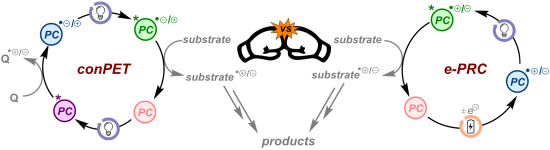
Photoredox catalysis harvesting multiple photon or electrochemical energies
Beilstein J. Org. Chem. 2023, 19, 1055–1145, doi:10.3762/bjoc.19.81
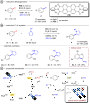
- conditions. In 2020, the Polyzos group also demonstrated the carbonylative amidation of aryl halides in continuous flow with the in situ-generated [Ir2]0 (Figure 19A) [79]. This multi-photon tandem photocatalysis protocol provides an elegant alternative to established classical procedures for condensing
- radical. This is strongly supported by a single turnover experiment, where exclusive excitation of [FeII(btz)3]2+ with 700 nm LEDs after in situ generation and substrate addition in the dark generated 5% of product even with only 0.5 mol % of catalyst present. In its ground state, [FeII(btz)3]2+ is not

























Copper-catalyzed N-arylation of amines with aryliodonium ylides in water
Beilstein J. Org. Chem. 2023, 19, 1008–1014, doi:10.3762/bjoc.19.76
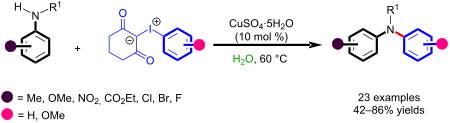
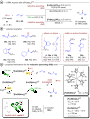
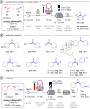
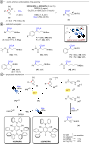
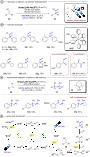
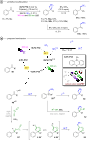
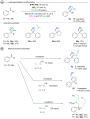
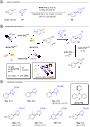
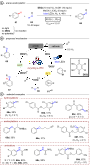
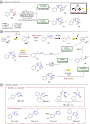
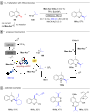
- ]. Further, a few reports are also available for the copper and palladium-catalyzed N-arylation of primary and secondary aliphatic as well as aromatic amines using diaryliodonium salts as aryl sources [33][34][35] (Scheme 1a). Similarly, iodonium ylides undergo a wide range of reactions through in situ