


Search results
Search for "Michael addition" in Full Text gives 327 result(s) in Beilstein Journal of Organic Chemistry. Showing first 200.
The Groebke–Blackburn–Bienaymé reaction in its maturity: innovation and improvements since its 21st birthday (2019–2023)
Beilstein J. Org. Chem. 2024, 20, 1839–1879, doi:10.3762/bjoc.20.162
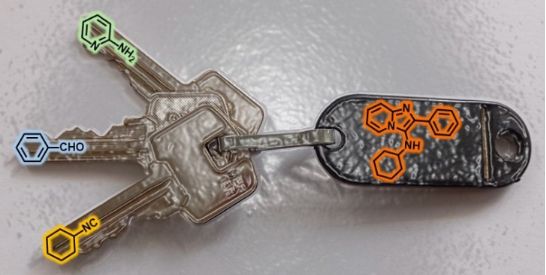
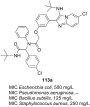
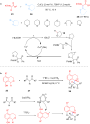
- aza-Michael addition, leading to the benzoxazepinium triflate salt 89. To broaden the scope of the reaction, 2-aminopyrazine and 2-aminoquinoline were also introduced to the one-pot process, furnishing 6-7-5-6 and 6-7-5-6-6 polycycles, respectively (not shown). Chen et al. [63] developed an






Chemo-enzymatic total synthesis: current approaches toward the integration of chemical and enzymatic transformations
Beilstein J. Org. Chem. 2024, 20, 1693–1712, doi:10.3762/bjoc.20.151
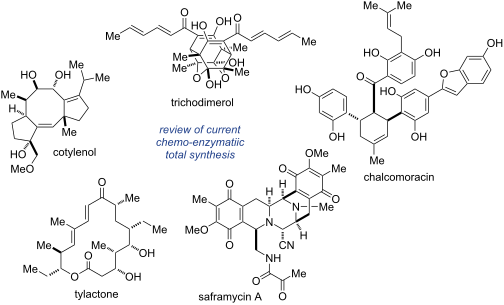
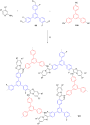
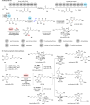
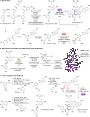
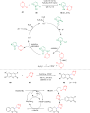
- dearomatization of 33 via enantioselective hydroxylation using molecular oxygen and generates cyclohexadienone 34. As demonstrated by Corey [36] and Nicolaou [37], highly reactive intermediate 34 likely dimerizes non-enzymatically through stepwise reactions involving (1) an initial intermolecular Michael addition
- synthesized 33 generated the highly reactive intermediate 34 in aqueous solvents under mild conditions [37][42]. In this process, the co-solvent (cs) allowed control of the dimerization modes via either Michael addition or Diels–Alder reactions, facilitating the systematic total synthesis of the
- experimental results, Gulder and co-workers devised a strategy to control the dimerization modes by adjusting the polarity of the organic co-solvent to establish the divergent synthesis of dimeric scaffolds. Indeed, with 20% DMF in the SorbC-catalyzed enzymatic oxidative dearomatization, the Michael addition




Primary amine-catalyzed enantioselective 1,4-Michael addition reaction of pyrazolin-5-ones to α,β-unsaturated ketones
Beilstein J. Org. Chem. 2024, 20, 1518–1526, doi:10.3762/bjoc.20.136
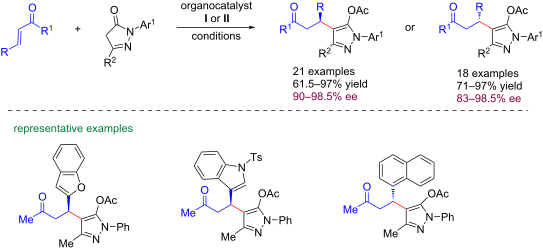
- structurally diverse pyrazole derivatives [4][5][6][7][10][11][12]. 4-Unsubstituted pyrazolin-5-ones are well known precursors for the construction of optically active structurally diverse pyrazoles [10][11][12]. In this context, the organocatalyzed asymmetric Michael addition of 4-unsubstituted pyrazolin-5
- who reported a chiral amine-catalysed aza-Michael addition reaction of pyrazolin-5-ones with α,β-unsaturated ketones to access β-(3-hydroxypyrazol-1-yl)ketones (Scheme 1a) [22]. The developed reaction was restricted to α,β-unsaturated ketones with aliphatic substituents (Scheme 1a) [22]. Ji and Wang
- disclosed organocatalyzed [5 + 1] double Michael additions between pyrazolones and dienones (Scheme 1b) [23]. Very recently, the Chimni group reported a cinchona-derived squaramide-catalyzed 1,4-Michael addition reaction of pyrazolin-5-ones with 2-enoylpyridines (Scheme 1c) [24]. Recently, we developed an


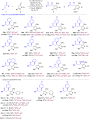


Phenotellurazine redox catalysts: elements of design for radical cross-dehydrogenative coupling reactions
Beilstein J. Org. Chem. 2024, 20, 1292–1297, doi:10.3762/bjoc.20.112
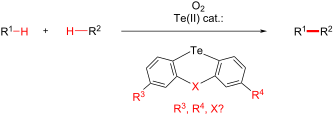
- enabling the activation of small yet highly relevant organic substrates. For example, Huber and co-authors recently designed a Te-based catalyst in an indole Michael addition reaction [1][2][3][4][5]. Pale and Mamane utilized another Te-based catalyst in an electrophilic bromine-mediated cyclization


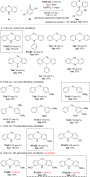

Synthesis of new representatives of A3B-type carboranylporphyrins based on meso-tetra(pentafluorophenyl)porphyrin transformations
Beilstein J. Org. Chem. 2024, 20, 767–776, doi:10.3762/bjoc.20.70
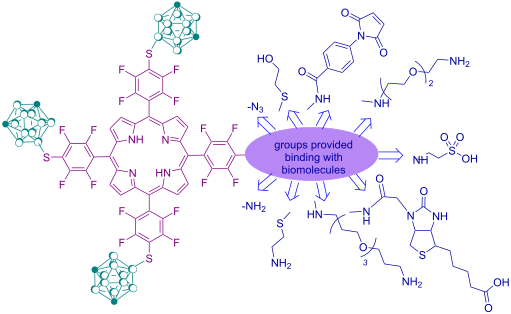
- has become one of the most popular route for the site-selective modification of cysteine residues in bioconjugation technology. We suppose that the maleimide group in porphyrin 11 is a useful target for thiol conjugation via Michael addition reactions [44]. This also concerns biotin-conjugated organic


Entry to new spiroheterocycles via tandem Rh(II)-catalyzed O–H insertion/base-promoted cyclization involving diazoarylidene succinimides
Beilstein J. Org. Chem. 2024, 20, 561–569, doi:10.3762/bjoc.20.48
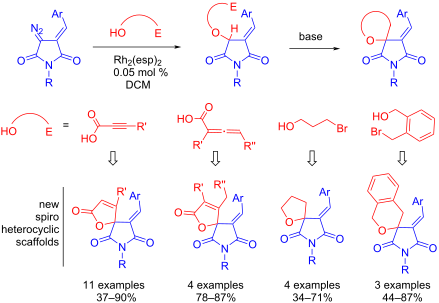
- synthesis of spiro-annulated pyrrolidine-2,5-diones by catalyzed spirocyclizations involving aldehydes [11], tetrahydrofuran [12][13], and in the O–H insertion/Claisen rearrangement/intramolecular oxa-Michael addition cascade [14] (Scheme 1). Herein, we report our findings obtained, while investigating the


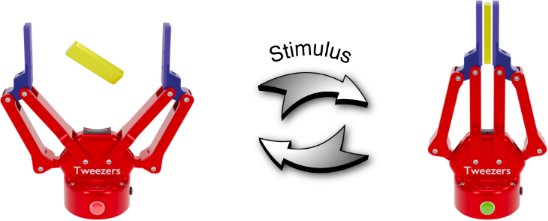
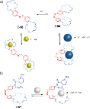
Switchable molecular tweezers: design and applications
Beilstein J. Org. Chem. 2024, 20, 504–539, doi:10.3762/bjoc.20.45




Ligand effects, solvent cooperation, and large kinetic solvent deuterium isotope effects in gold(I)-catalyzed intramolecular alkene hydroamination
Beilstein J. Org. Chem. 2024, 20, 479–496, doi:10.3762/bjoc.20.43
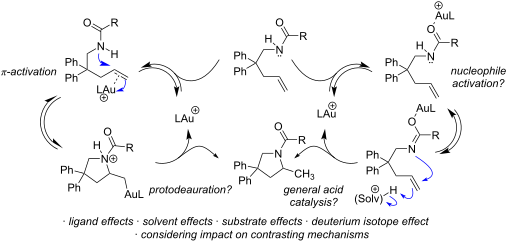
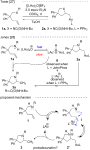
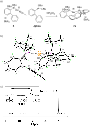
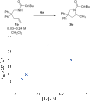
- groups as measured by rates of Michael addition [52]. This suggests that in fact nitrogen nucleophilicity alone is not the most relevant factor since sulfonamides react much slower in hydroamination. Sulfonamide N–H bonds are significantly more acidic than urea, amide and carbamate N–H bonds (16.1 versus







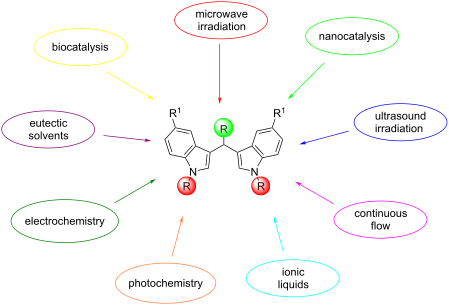
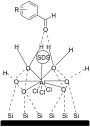
Green and sustainable approaches for the Friedel–Crafts reaction between aldehydes and indoles
Beilstein J. Org. Chem. 2024, 20, 379–426, doi:10.3762/bjoc.20.36




Facile approach to N,O,S-heteropentacycles via condensation of sterically crowded 3H-phenoxazin-3-one with ortho-substituted anilines
Beilstein J. Org. Chem. 2024, 20, 336–345, doi:10.3762/bjoc.20.34
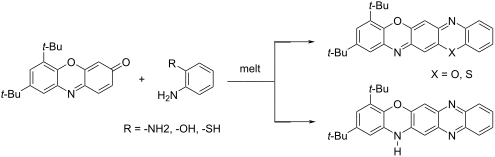
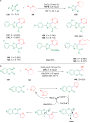
- ][12]. At the first stage, this reaction follows one of three possible reaction pathways, including Schiff base formation (attack at the C(3) center), Michael addition at C(1), or nucleophilic substitution (SNH) at the C(2) center [13][14][15]. Most readily used is the pathway involving carbonyl–amine


Additive-controlled chemoselective inter-/intramolecular hydroamination via electrochemical PCET process
Beilstein J. Org. Chem. 2024, 20, 264–271, doi:10.3762/bjoc.20.27
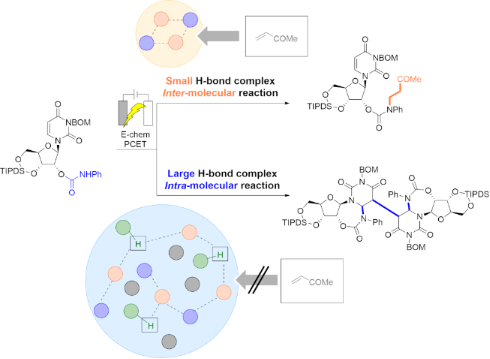
- , entry 3); thus, the phosphate base plays a crucial role in N-alkylation, while its basicity is insufficient to promote aza-Michael addition (pKa of the conjugate acid of the phosphate base is 1.72 in H2O) [12]. Furthermore, N-alkylation proceeded in a divided cell (anodic chamber); thus, the possibility


Long oligodeoxynucleotides: chemical synthesis, isolation via catching-by-polymerization, verification via sequencing, and gene expression demonstration
Beilstein J. Org. Chem. 2023, 19, 1957–1965, doi:10.3762/bjoc.19.146

- methacrylamide group. Detritylation was not carried out in the last synthetic cycle, which would otherwise remove the polymerizable tag. A portion of the CPG was subsequently subjected to deprotection and cleavage. To prevent the potential Michael addition side reaction of acrylonitrile to nucleobases, the 2
- -cyanoethyl groups were removed by flushing the CPG with a solution of DBU in ACN. Under these conditions, the ODN remains on CPG and the nucleobases remain protected, both of which decrease the probability of the Michael addition side reaction. After washing off acrylonitrile, the CPG was subjected to
- failure sequences 4 and other impurities were then washed away using aqueous solutions including mildly basic solutions. These washes might also remove N,N-dimethylacrylamide added to ODNs via Michael addition. The full-length ODN 6 was cleaved from the polyacrylamide gel (5) using 80% acetic acid (Scheme


Construction of diazepine-containing spiroindolines via annulation reaction of α-halogenated N-acylhydrazones and isatin-derived MBH carbonates
Beilstein J. Org. Chem. 2023, 19, 1923–1932, doi:10.3762/bjoc.19.143
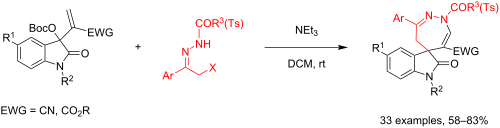
- ylide B. Thirdly, the intermediate C is formed by the nucleophilic substitution of a halide ion in substrate 1 by the allylic ylide B. Then, Michael addition of the amino group to the C=C bond results in the cyclic intermediate D. Finally, the spiro[indoline-3,5'-[1,2]diazepine] 3 is produced by the




A novel recyclable organocatalyst for the gram-scale enantioselective synthesis of (S)-baclofen
Beilstein J. Org. Chem. 2023, 19, 1811–1824, doi:10.3762/bjoc.19.133

- , application, and recycling of a new lipophilic cinchona squaramide organocatalyst. The synthesized lipophilic organocatalyst was applied in Michael additions. The catalyst was utilized to promote the Michael addition of cyclohexyl Meldrum’s acid to 4-chloro-trans-β-nitrostyrene (quantitative yield, up to 96
- lipophilic organocatalyst 2 (Scheme 2). Application and recycling of the lipophilic cinchona-squaramide organocatalyst in the stereoselective Michael addition To prove that the previously applied catalytic unit kept its activity, the lipophilic organocatalyst 2 was applied in the stereoselective Michael
- chosen as a precipitating solvent for the catalyst recycling. To investigate the solvent effect, the stereoselective Michael addition reaction was carried out in those solvents that dissolved the catalyst and from which the catalyst was successfully precipitated by adding methanol. Furthermore, a


Synthesis of 7-azabicyclo[4.3.1]decane ring systems from tricarbonyl(tropone)iron via intramolecular Heck reactions
Beilstein J. Org. Chem. 2023, 19, 1615–1619, doi:10.3762/bjoc.19.118
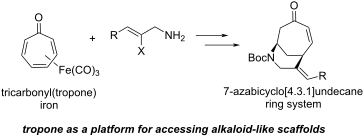
- number of alkaloid natural products can be accessed from commercially available tropone in as little as five steps: 1) formation of tricarbonyl(tropone)iron, 2) aza-Michael addition, 3) amine protection, 4) photodemetallation, and 5) intramolecular Heck reaction (two steps – aza-Michael addition and


N-Sulfenylsuccinimide/phthalimide: an alternative sulfenylating reagent in organic transformations
Beilstein J. Org. Chem. 2023, 19, 1471–1502, doi:10.3762/bjoc.19.106
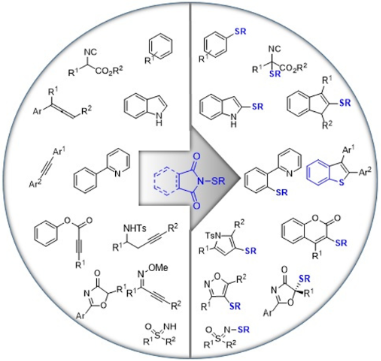
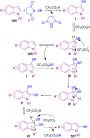
- of the phthalimide anion to the β-carbon of chalcone, followed by electrophilic sulfur attack and deprotonation. In the thiolation, in situ formation of thiophenol occurred, followed by thio-Michael addition of chalcone with thiophenol. N-Calcogenophthalimide also can be used to prepare




Synthesis of ether lipids: natural compounds and analogues
Beilstein J. Org. Chem. 2023, 19, 1299–1369, doi:10.3762/bjoc.19.96






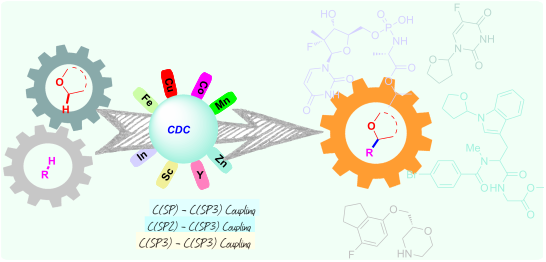
Non-noble metal-catalyzed cross-dehydrogenation coupling (CDC) involving ether α-C(sp3)–H to construct C–C bonds
Beilstein J. Org. Chem. 2023, 19, 1259–1288, doi:10.3762/bjoc.19.94
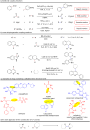
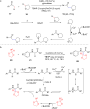
- ketones 94 with ethers [81]. Contrary to what was obtained for the alkylation of coumarin at the carbonyl α-position, vinyl ketone undergoes Michael addition and ether addition at the β-position of the carbonyl (Scheme 20). The reaction delivered various alkylation products in good to excellent yields










Metal catalyst-free N-allylation/alkylation of imidazole and benzimidazole with Morita–Baylis–Hillman (MBH) alcohols and acetates
Beilstein J. Org. Chem. 2023, 19, 1251–1258, doi:10.3762/bjoc.19.93
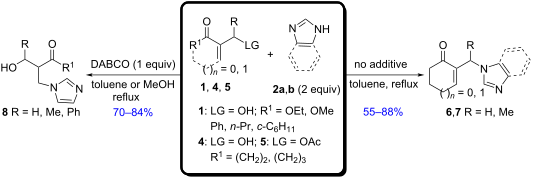
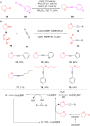
- reflux with an azeotropic distillation, was successfully carried out with no catalysts or additives, affording the corresponding N-substituted imidazole derivatives in good yields. On the other hand, in refluxing toluene or methanol, the aza-Michael addition of imidazole onto acyclic MBH alcohols was
- performed using DABCO as an additive, leading to the corresponding 1,4-adducts in 70–84% yields. Keywords: allylic substitution; aza-Michael addition; imidazole; Morita–Baylis–Hillman; Introduction Morita–Baylis–Hillman (MBH) adducts are multifunctionalized compounds having both a hydroxy moiety and a
- -substituted imidazole derivatives from MBH adducts. Proposed mechanism for the allylation of imidazole with alcohol 4a. Allylation of imidazole derivatives 2a,b with cyclic MBH adducts 4 and 5. Optimization of the reaction conditions of imidazole (2a) with acyclic MBH 1a. Michael addition of imidazole (2a


Acetaldehyde in the Enders triple cascade reaction via acetaldehyde dimethyl acetal
Beilstein J. Org. Chem. 2023, 19, 1243–1250, doi:10.3762/bjoc.19.92
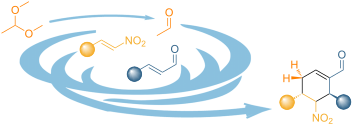
- aldehydes other than acetaldehyde generates higher control [11]. It was previously shown that the first stereogenic center formed in the presented cascade process is formed with high control [17]. Therefore, the second carbon–carbon bond forming step, i.e., the organocatalyzed Michael addition of the
- formation of secondary nitronates. However, it could not be improved to synthetically interesting values. The observed diastereomeric ratio is, therefore, the direct result of the second Michael addition reaction, as previously reported [29], and no post-process epimerization event could be found. With the


Selective construction of dispiro[indoline-3,2'-quinoline-3',3''-indoline] and dispiro[indoline-3,2'-pyrrole-3',3''-indoline] via three-component reaction
Beilstein J. Org. Chem. 2023, 19, 1234–1242, doi:10.3762/bjoc.19.91
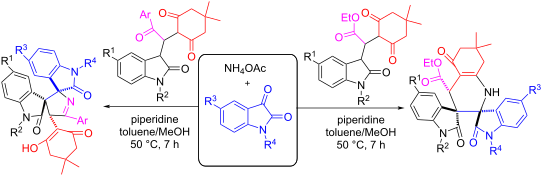
- selectively produced by using differently substituted 3-methyleneoxindoles (reaction 4 in Scheme 1). Herein, we wish to report these interesting results. Results and Discussion At first, 3-isatyl-1,4-dicarbonyl compound 1 was prepared by DBU-catalyzed Michael addition reaction of dimedone and ethyl 2-(2
- meantime, the condensation of isatin 2 with ammonium acetate gave the 3-iminoisatin intermediate A. Secondly, Michael addition of the in situ-generated carbanion of the 3-isatyl-1,4-dicarbonyl compound 1 to 3- iminoisatin A gave intermediate B. In the case of intermediate B1 with an ethoxycarbonyl group



Retraction: One-pot odourless synthesis of thioesters via in situ generation of thiobenzoic acids using benzoic anhydrides and thiourea
Beilstein J. Org. Chem. 2023, 19, 1170–1170, doi:10.3762/bjoc.19.85
- Mohammad Abbasi Reza Khalifeh Chemistry Department, Faculty of Sciences, Persian Gulf University, Bushehr 75169, Iran Department of Chemistry, Shiraz University of Technology, Shiraz, Iran 10.3762/bjoc.19.85 Keywords: benzoic anhydride; Michael addition; nucleophilic displacement; thioester

The unique reactivity of 5,6-unsubstituted 1,4-dihydropyridine in the Huisgen 1,4-diploar cycloaddition and formal [2 + 2] cycloaddition
Beilstein J. Org. Chem. 2023, 19, 982–990, doi:10.3762/bjoc.19.73
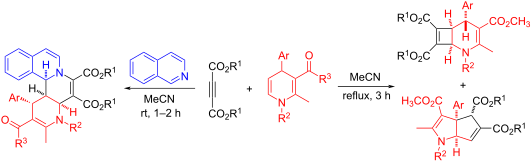
- gives the well-known Huisgen 1,4-dipole A. Secondly, Michael addition of the 1,4-dipole A to 5,6-unsubstituted 1,4-dihydropyridine gives the adduct intermediate B. At last, the intramolecular coupling of the negative and the positive charges in intermediate B directly affords isoquinolino[1,2-f][1,6
- an intramolecular Michael addition process. Conclusion In summary, we have investigated the three-component reaction of isoquinoline, dialkyl acetylenedicarboxylate and 5,6-unsubstituted 1,4-dihydropyridines. This reaction successfully provided an efficient protocol for the synthesis of


Aromatic C–H bond functionalization through organocatalyzed asymmetric intermolecular aza-Friedel–Crafts reaction: a recent update
Beilstein J. Org. Chem. 2023, 19, 956–981, doi:10.3762/bjoc.19.72

- of the Boc-protecting group with the Teoc group then gave phenol 136. Compound 136 was then subjected to a highly diastereoselective oxidative phenolic coupling giving fused tetracyclic architecture 137. Follow-up acid-mediated intramolecular aza-Michael addition and subsequent alkene reduction




First synthesis of acylated nitrocyclopropanes
Beilstein J. Org. Chem. 2023, 19, 892–900, doi:10.3762/bjoc.19.67
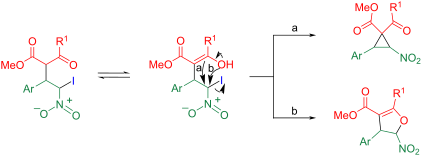
- ). A plausible mechanism for formation of cyclopropane 1 and dihydrofuran 8. Tin(II)-mediated ring expansion of nitrocyclopropane 1e. Michael addition of 1,3-dicarbonyl compounds 3b–g to nitrostyrene 2a. Comparison of the 1H NMR data of ring protons for compounds 1a, 1b’, and product 8b. Cyclization of





