Search results
Search for "nitro" in Full Text gives 538 result(s) in Beilstein Journal of Organic Chemistry. Showing first 200.
Synthesis, structure, and properties of switchable cross-conjugated 1,4-diaryl-1,3-butadiynes based on 1,8-bis(dimethylamino)naphthalene
Beilstein J. Org. Chem. 2023, 19, 674–686, doi:10.3762/bjoc.19.49
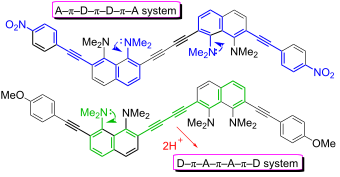
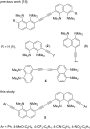
- formally symmetrical structure of diynes 5, naphthalene rings A and B of molecules 5b and 5d differ in their structural parameters. At the same time, the monomer fragments of the nitro derivative 5e are identical. In the case of 5e, the naphthalene rings lie in parallel planes, while in crystals of 5b and
- DMAN fragments do not participate in nonvalent interactions and do not form short contacts. The recurring motif in the crystals is the coordination of the benzene meta proton by the nitrogen atom of the C≡N group. The structural parameters of both monomer fragments of nitro derivative 5e are identical
- nitro group. There are two types of independent non-equivalent dications, marked in blue and green, and two types of BF4− anions, marked in red and yellow, in the crystal structure of salt 11c (Figure S68 in Supporting Information File 1). Monomer fragments in both are identical (Table 2, Figure 5). The



Enolates ambushed – asymmetric tandem conjugate addition and subsequent enolate trapping with conventional and less traditional electrophiles
Beilstein J. Org. Chem. 2023, 19, 593–634, doi:10.3762/bjoc.19.44
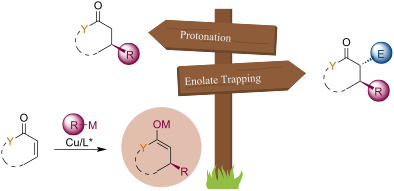
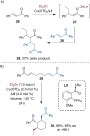
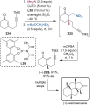
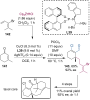
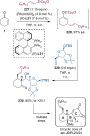
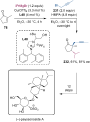
- -methoxyphenyl (PMP)-protected imines 21 (Scheme 6A). By varying the reaction conditions, the syn-anti and the syn-syn diastereomers can be prepared with good yields and excellent stereoselectivity. Using nitroacrylate 23, the authors have also demonstrated a tandem conjugate addition/nitro-Mannich/lactamization








Transition-metal-catalyzed domino reactions of strained bicyclic alkenes
Beilstein J. Org. Chem. 2023, 19, 487–540, doi:10.3762/bjoc.19.38
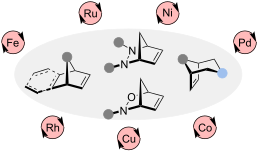
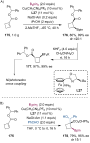
- naphthylation of oxabenzonorbornadienes 30 with N-sulfonyl 2-aminobenzaldehydes 172 (Scheme 30) [76]. This reaction was amenable to a variety of EDG, EWG, as well as a broad scope of sulfonyl groups. Surprisingly, this reaction also proceeded smoothly with nitro substituents on the benzene ring which are











Transition-metal-catalyzed C–H bond activation as a sustainable strategy for the synthesis of fluorinated molecules: an overview
Beilstein J. Org. Chem. 2023, 19, 448–473, doi:10.3762/bjoc.19.35
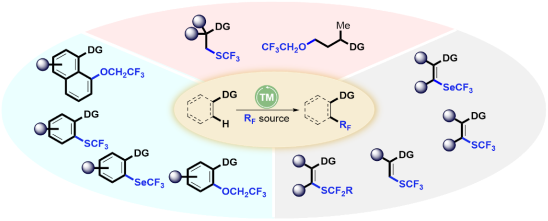
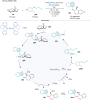
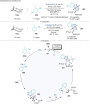
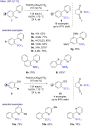
- broad range of functional groups such as halogens, ester, aldehyde, cyano, and nitro (36c–g, 36–74% yield). It is noteworthy that a disubstituted compound 35j and a thiophene derivative 35k were also efficiently difluoromethylthiolated (36j and 36k, 72% and 65%, respectively). α-Substituted








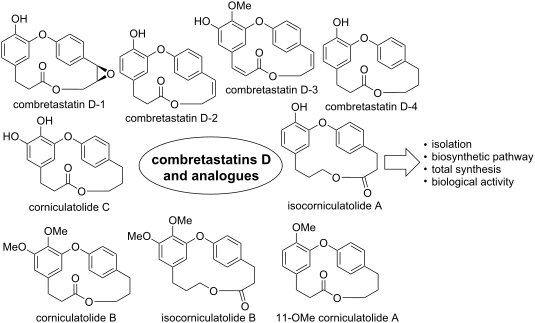
Combretastatins D series and analogues: from isolation, synthetic challenges and biological activities
Beilstein J. Org. Chem. 2023, 19, 399–427, doi:10.3762/bjoc.19.31
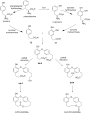
- reaction [33]. Thus, Knoevenagel condensation using the diaryl ether 29 and malonic acid gave the corresponding α,β-unsaturated compound 30, which was submitted to a concomitant hydrogenation of the double bond and the nitro group to give compound 31. Sequential diazotization/halogenation and




An efficient metal-free and catalyst-free C–S/C–O bond-formation strategy: synthesis of pyrazole-conjugated thioamides and amides
Beilstein J. Org. Chem. 2023, 19, 231–244, doi:10.3762/bjoc.19.22
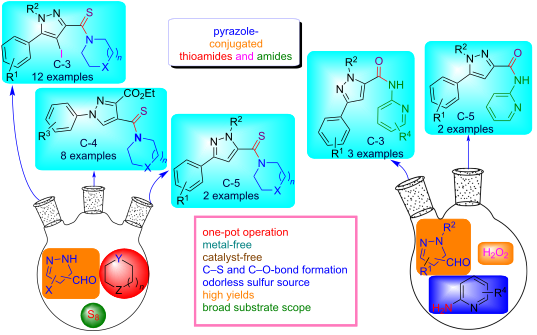
- 4F in good yields (61 and 70%), whereas, in the case of 5-nitro-2-aminopyridine (G), the anticipated product 1G was obtained in low yield (34%). To check the synthetic versatility of this oxidative amidation approach, we tested the scope of the methodology with pyrazole-5-carbaldehydes 9 and 10


Sequential hydrozirconation/Pd-catalyzed cross coupling of acyl chlorides towards conjugated (2E,4E)-dienones
Beilstein J. Org. Chem. 2023, 19, 176–185, doi:10.3762/bjoc.19.17
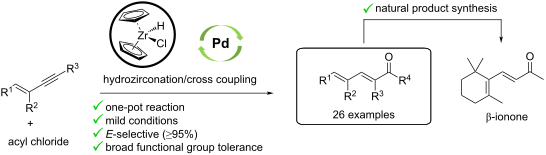
- enynes 25a–e in yields up to 77%. Unfortunately, in the case of nitro-substituted enyne 25d only 4% were isolated due to rapid decomposition and instability issues (Table 1, entry 4). With enynes 25a–e in hand, the influence of solvent, reaction temperature, time, and Pd source on the hydrozirconation



Synthesis and characterisation of new antimalarial fluorinated triazolopyrazine compounds
Beilstein J. Org. Chem. 2023, 19, 107–114, doi:10.3762/bjoc.19.11
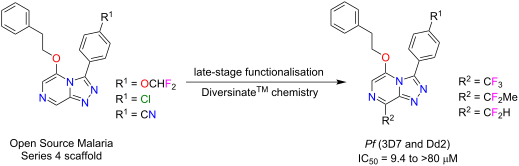
- , cyano, nitro, or halogenated groups at the para-position were crucial for activity [5][16][20]. Thus, compounds 1–3 with a para-phenyl-OCHF2, -Cl or -CN substituent at the C3 position of the triazole were selected as scaffolds in this study. In addition, the reported SAR data also indicated that the use


Practical synthesis of isocoumarins via Rh(III)-catalyzed C–H activation/annulation cascade
Beilstein J. Org. Chem. 2023, 19, 100–106, doi:10.3762/bjoc.19.10
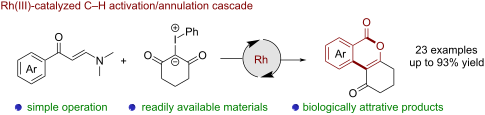
- , trifluoromethyl and nitro substituents, were retained unchanged in the final products (3ja, 3ka, 3ma, and 3na). Also the strongly coordinating thioether substituent proved to be suitable for this protocol, providing the desired product 3ea in 76% yield. Moreover, under the standard conditions, 3-thienyl and 2


Combining the best of both worlds: radical-based divergent total synthesis
Beilstein J. Org. Chem. 2023, 19, 1–26, doi:10.3762/bjoc.19.1
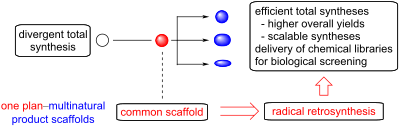
- chiral aldehyde 127 and Boc-protected amine 128, followed by zinc reduction of the nitro group and subsequent protection of the amine by a tosyl group in 27% overall yield. Irradiating 129 with blue light at 30 W in the presence of 1 mol % of [Ir(dtbbpy)(ppy)2]PF6 and 5 equiv of KHCO3 in THF resulted in








Redox-active molecules as organocatalysts for selective oxidative transformations – an unperceived organocatalysis field
Beilstein J. Org. Chem. 2022, 18, 1672–1695, doi:10.3762/bjoc.18.179
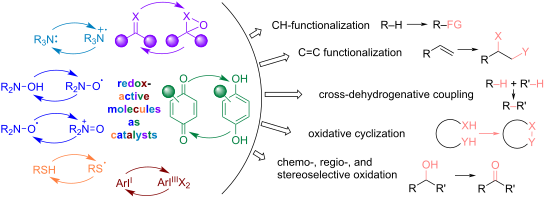
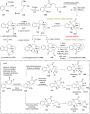
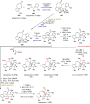
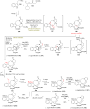
- with amino and nitro groups due to side processes on the electrodes. Cyclic carbamates were oxidized to lactams using ABNO derivatives as electrocatalysts [104] (Scheme 16A). The substrates with easily oxidizable pyrazole and oxazole fragments reacted successfully under these conditions. Under similar









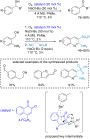


A novel bis-triazole scaffold accessed via two tandem [3 + 2] cycloaddition events including an uncatalyzed, room temperature azide–alkyne click reaction
Beilstein J. Org. Chem. 2022, 18, 1636–1641, doi:10.3762/bjoc.18.175
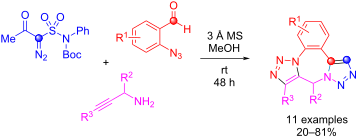
- . Stronger electron-withdrawing cyano group (3i) lowered the product yields to 20% due to low conversion of 3i. Introducing even a stronger electron acceptor, a nitro group (aldehyde 3j), led to only a trace amount of the respective product detected by 1H NMR analysis of the crude reaction mixture. Likewise


A new route for the synthesis of 1-deazaguanine and 1-deazahypoxanthine
Beilstein J. Org. Chem. 2022, 18, 1617–1624, doi:10.3762/bjoc.18.172
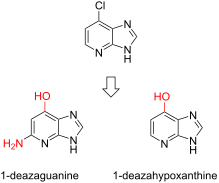
- differed from the above path by leaving the hydroxy group of all intermediate 4-hydroxypyridine derivatives 12–15 unprotected [19]. Moreover, instead of azo coupling or nitroso formation, a simple nitration protocol with nitric acid to give the nitro derivative 13 and subsequent reduction with Raney nickel
- tert-butyloxycarbonyl-protected and deprotected 2-nitro-intermediates 20 and 21, respectively [23][24][25]. The nitro group was then selectively reduced using trichlorosilane and N,N-diisopropylethylamine (DIPEA) to form benzyl-protected 1-deazaguanine 22 [26]. Finally, the O6-benzyl moiety was cleaved
- was purified via silica gel chromatography using 0 to 4% methanol in dichloromethane as gradient. Yield: 395 mg of a mixture containing the 2-nitro-compound 20 and 21 (for NMR spectra see Supporting Information File 1). TLC: (5% acetone in toluene): Rf 0.34 (compound 20), Rf 0.05 (compound 21


New triazole-substituted triterpene derivatives exhibiting anti-RSV activity: synthesis, biological evaluation, and molecular modeling
Beilstein J. Org. Chem. 2022, 18, 1524–1531, doi:10.3762/bjoc.18.161
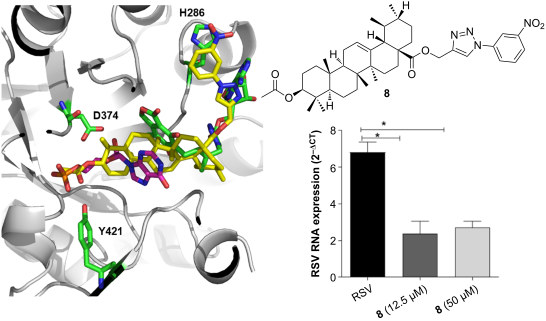
- resulted in the synthesis of derivatives 3 and 4, with 90 and 83% yield, respectively (Scheme 2). The C-28-propargylated triterpene esters (5 and 6, 70% yield for both) of the acetate derivatives (3 and 4) were obtained. Finally, the reaction of derivatives 5 and 6 with meta-nitro-substituted azide (c


Design, synthesis, and evaluation of chiral thiophosphorus acids as organocatalysts
Beilstein J. Org. Chem. 2022, 18, 1471–1478, doi:10.3762/bjoc.18.154
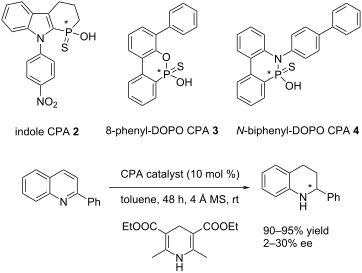
- later to make the synthesis more modular, and the resolution is straightforward late in the synthesis. Additionally, the presence of the nitro group in CPA 2 was chosen for two reasons: 1) the possibility to further functionalize at this position through reduction, diazotization, and metal-catalyzed


On drug discovery against infectious diseases and academic medicinal chemistry contributions
Beilstein J. Org. Chem. 2022, 18, 1355–1378, doi:10.3762/bjoc.18.141
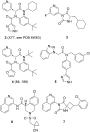
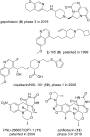
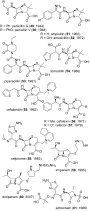
- issue in this regard as a major portion of published data will have to be filtered out before such methods starts to make some tangible headways [57]. For instance, a recent “deep-learning” search for new antibiotics came out with the finding that halicin (1) depicted in Figure 1 was, as many nitro
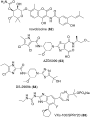
- second original class of bacterial gyrases inhibitors. In 2004, the nitro-bearing derivative 11, resulting from a high-throughput phenotypic-based screening, was patented by Pharmacia/Pfizer for its antibacterial properties [122][123]. Even if this compound was also effective in vivo, many synthesis and







B–N/B–H Transborylation: borane-catalysed nitrile hydroboration
Beilstein J. Org. Chem. 2022, 18, 1332–1337, doi:10.3762/bjoc.18.138
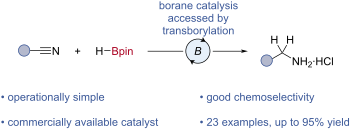
- relies upon stoichiometric reagents or transition-metal catalysis. Herein, a borane-catalysed hydroboration of nitriles to give primary amines is reported. Good yields (48–95%) and chemoselectivity (e.g., ester, nitro, sulfone) were observed. DFT calculations and mechanistic studies support the proposal
- %), nitro (1r, 67%), and sulfone (1s, 48%). The 1H NMR spectra of the crude reaction mixtures displayed no reduction of these functional groups. Such functional group tolerance was not exhibited by the other non-metal and boron-based catalytic nitrile hydroboration systems [22][23][24][27]. It should be


Reductive opening of a cyclopropane ring in the Ni(II) coordination environment: a route to functionalized dehydroalanine and cysteine derivatives
Beilstein J. Org. Chem. 2022, 18, 1166–1176, doi:10.3762/bjoc.18.121
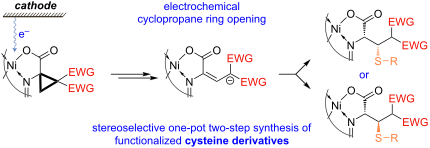
- the reaction scope was mainly limited to rather simple compounds containing methyl and phenyl substituents [32][33][34][35][36][37]. When discussing examples of reductive cyclopropane ring opening, one should refer to early publications concerning the carbonyl- and nitro-substituted compounds [38][39



Synthesis of N-phenyl- and N-thiazolyl-1H-indazoles by copper-catalyzed intramolecular N-arylation of ortho-chlorinated arylhydrazones
Beilstein J. Org. Chem. 2022, 18, 1079–1087, doi:10.3762/bjoc.18.110
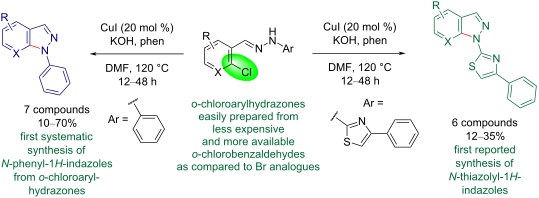
- reaction time was needed in order to increase the rather low yield observed after 24 h. In turn, to obtain the product 2g derived from 5-nitro-substituted arylhydrazone 1g, the reaction time had to be decreased. Aiming to expand the scope of 1H-indazoles synthetized by copper-catalyzed intramolecular N


Molecular diversity of the base-promoted reaction of phenacylmalononitriles with dialkyl but-2-ynedioates
Beilstein J. Org. Chem. 2022, 18, 991–998, doi:10.3762/bjoc.18.99

- functionalized 5-hydroxycyclopentenes 3a–l in good to excellent yields. The phenacylmalononitriles with electron-donating groups usually gave higher yields than that of substrates bearing an electron-donating chloro, bromo and nitro group. Both diethyl and dimethyl but-2-ynedioates can be successfully employed


Continuous flow synthesis of azobenzenes via Baeyer–Mills reaction
Beilstein J. Org. Chem. 2022, 18, 781–787, doi:10.3762/bjoc.18.78
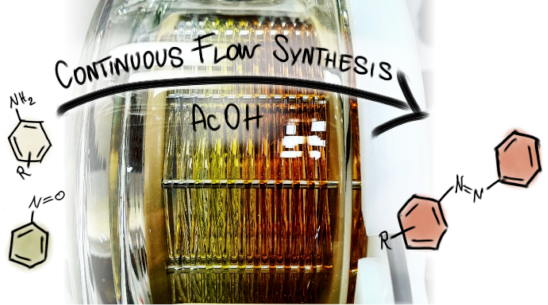
- a nitro-substituent. Moreover, some further cases of ortho-substituted anilines were unsuccessful, for which steric effects could serve as an explanation (see Supporting Information File 1 for details). In comparison with published batch syntheses, the herein reported continuous flow synthesis


DDQ in mechanochemical C–N coupling reactions
Beilstein J. Org. Chem. 2022, 18, 639–646, doi:10.3762/bjoc.18.64
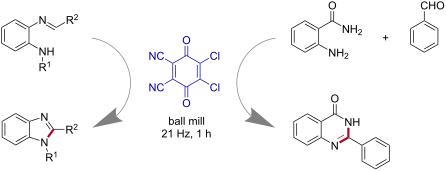
- . Benzimidazoles with a variety of aryl substituents (such as bromo, nitro, chloro, and 2,4,6-trimethyl) in the 2-position of the benzimidazole (2a–d,g) were obtained in good yields. Furthermore, the synthesis of the corresponding benzimidazoles with fused aromatic systems in the 2-position such as anthracenyl (2e
- corresponding products 6n and 6o with 79 and 82% yields, respectively. Nitro and fluoro-substituted aromatic aldehydes efficiently reacted with the chloro and fluoro-substituted anthranilamides and delivered the corresponding products 6q and 6r with good yields. To understand the reaction mechanism, we have


Syntheses of novel pyridine-based low-molecular-weight luminogens possessing aggregation-induced emission enhancement (AIEE) properties
Beilstein J. Org. Chem. 2022, 18, 580–587, doi:10.3762/bjoc.18.60
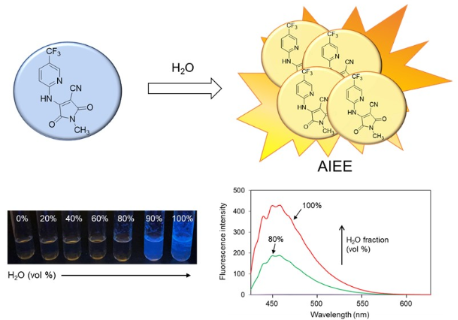
- 13C NMR spectroscopy (Figures S5 and S6 in Supporting Information File 1). Similarly, the reaction of 1 with 2-aminopyridine derivatives 2d–g bearing electron-withdrawing groups, except for the nitro-group containing substrate 2h, at position 5 of the pyridine ring, afforded N-methyl-4-((pyridin-2-yl


Chemistry of polyhalogenated nitrobutadienes, 17: Efficient synthesis of persubstituted chloroquinolinyl-1H-pyrazoles and evaluation of their antimalarial, anti-SARS-CoV-2, antibacterial, and cytotoxic activities
Beilstein J. Org. Chem. 2022, 18, 524–532, doi:10.3762/bjoc.18.54
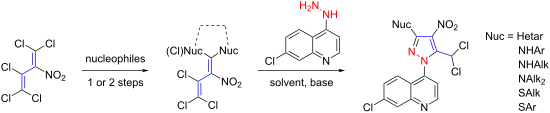
- -nitro-1H-pyrazoles bearing a dichloromethyl and an amino or thio moiety at C3 and C5 has been prepared in yields up to 72% from the reaction of 1,1-bisazolyl-, 1-azolyl-1-amino-, and 1-thioperchloro-2-nitrobuta-1,3-dienes with 7-chloro-4-hydrazinylquinoline. A new way for the formation of a pyrazole
- cycle from 3-methyl-2-(2,3,3-trichloro-1-nitroallylidene)oxazolidine (6) is also described. In addition, the antimalarial activity of the synthesized compounds has been evaluated in vitro against the protozoan malaria parasite Plasmodium falciparum. Notably, the 7-chloro-4-(5-(dichloromethyl)-4-nitro-3
- -(1H-1,2,4-triazol-1-yl)-1H-pyrazol-1-yl)quinoline (3b) and 7-chloro-4-(3-((4-chlorophenyl)thio)-5-(dichloromethyl)-4-nitro-1H-pyrazol-1-yl)quinoline (9e) inhibited the growth of the chloroquine-sensitive Plasmodium falciparum strain 3D7 with EC50 values of 0.2 ± 0.1 µM (85 ng/mL, 200 nM) and 0.2


Bioinspired tetraamino-bisthiourea chiral macrocycles in catalyzing decarboxylative Mannich reactions
Beilstein J. Org. Chem. 2022, 18, 486–496, doi:10.3762/bjoc.18.51
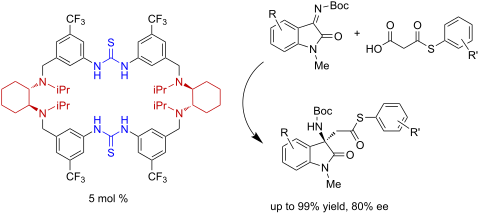
- reacted with two equiv 3-nitro-5-(trifluoromethyl)benzyl bromide (2) in the presence of a base to afford the dinitro compounds 3a–f in moderate to excellent yields (Scheme 1a). The diminished yield for product 3d was probably caused by the large steric hindrance of the 3-pentyl substituent. Reduction of
- the nitro groups by SnCl2 under acidic conditions gave the bisamine fragments 4a–f in 83–98% yields. The bisamine fragments were further converted to the bisisothiocyanates 5a–f by reaction with 1,1'-thiocarbonyldiimidazole in 66–89% yields. Having the bisamine and bisisothiocyanate fragments in hand