


Search results
Search for "heterocyclic" in Full Text gives 992 result(s) in Beilstein Journal of Organic Chemistry. Showing first 200.
HPW-Catalyzed environmentally benign approach to imidazo[1,2-a]pyridines
Beilstein J. Org. Chem. 2024, 20, 628–637, doi:10.3762/bjoc.20.55
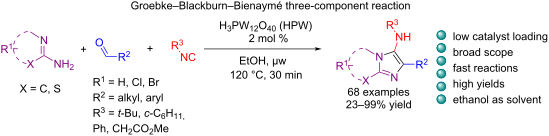
- green catalyst with greater chemical and thermal stability in comparison to other heteropolyacids [43]. HPW has been shown to catalyze MCRs in the synthesis of heterocyclic compounds with high efficiency and chemoselectivity (Figure 2), including functionalized benzo[c]chromeno[2,3-a]phenazine [44
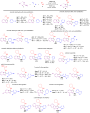
- imidazo[1,2-a]pyridine core [13]. Examples of application of HPW as catalyst in the synthesis of heterocyclic compounds through multicomponent reaction approaches. a) Reported phosphomolybdic acid-catalyzed synthesis of imidazo[1,2-a]pyridines via GBB-3CR. b) Attempts to reproduce the results reported in




A laterally-fused N-heterocyclic carbene framework from polysubstituted aminoimidazo[5,1-b]oxazol-6-ium salts
Beilstein J. Org. Chem. 2024, 20, 621–627, doi:10.3762/bjoc.20.54
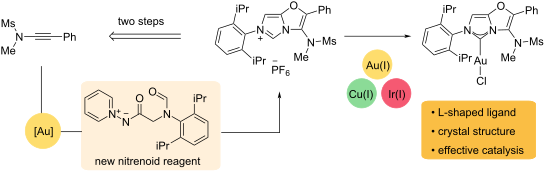
- ; imidazolium; NHC; Introduction Imidazolium-derived nucleophilic heterocyclic carbenes (NHCs) have had a sustained impact across the fields of organometallic and main group chemistry, transition-metal catalysis, materials synthesis and organocatalysis [1]. Laterally annellated polycyclic NHCs offer a useful


Entry to new spiroheterocycles via tandem Rh(II)-catalyzed O–H insertion/base-promoted cyclization involving diazoarylidene succinimides
Beilstein J. Org. Chem. 2024, 20, 561–569, doi:10.3762/bjoc.20.48
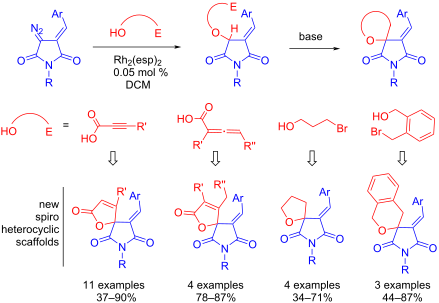
- ., Saint Petersburg 191036, Russian Federation Department of Medicinal Chemistry, Institute of Chemistry, Saint Petersburg State University, 26 Universitetskiy pr., Peterhof 198504, Russian Federation 10.3762/bjoc.20.48 Abstract A facile approach to novel medicinally relevant spiro heterocyclic scaffolds
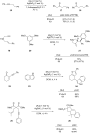
- (namely furan-2(5H)-ones, tetrahydrofurans and pyrans spiro-conjugated with the succinimide ring) has been developed. The protocol consists of Rh(II)-catalyzed insertion of heterocyclic carbenes derived from diazoarylidene succinimides (DAS) into the O–H bond of propiolic/allenic acids or brominated
- . Conclusion We have devised a straightforward access to novel spiro-annulated O-heterocyclic frameworks based on Rh2(esp)2-catalyzed insertion of carbenes derived from diazoarylidene succinimides (DAS) into the O–H bond of propiolic or allenic acids, as well as 3-bromopropan-1-ol and 2-(bromomethyl)benzyl


Synthesis and biological profile of 2,3-dihydro[1,3]thiazolo[4,5-b]pyridines, a novel class of acyl-ACP thioesterase inhibitors
Beilstein J. Org. Chem. 2024, 20, 540–551, doi:10.3762/bjoc.20.46
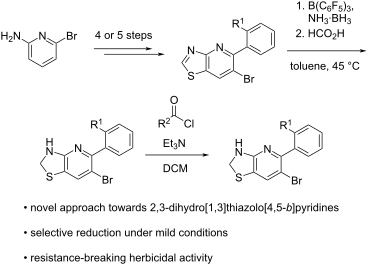
- greenhouse tests in line with competitive application rates and hints for crop selectivity, particularly in wheat and soy. Furthermore, the new heterocyclic lead structures have the potential to mitigate and affect weeds that have become resistant towards commercial herbicides, such as resistant blackgrass


Green and sustainable approaches for the Friedel–Crafts reaction between aldehydes and indoles
Beilstein J. Org. Chem. 2024, 20, 379–426, doi:10.3762/bjoc.20.36
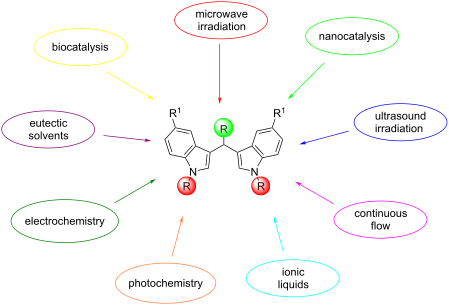
- solvent (Scheme 6) [90]. The scope of this methodology was tested with a variety of substituted aliphatic, aromatic or heterocyclic aldehydes and ketones, affording excellent results. Product conversion rates ranged from 81%, for the less reactive ketones, to 100% for activated aromatic aldehydes bearing
- be addressed. The most recent application of halogen bonding in the synthesis of BIMs was introduced in 2023 by Galathri et al., who employed an N-heterocyclic iod(az)olium salt as the monodentate catalyst [96]. This approach utilized water as the reaction solvent and employed a low catalyst loading




Mechanisms for radical reactions initiating from N-hydroxyphthalimide esters
Beilstein J. Org. Chem. 2024, 20, 346–378, doi:10.3762/bjoc.20.35
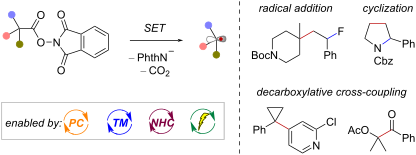
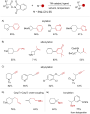
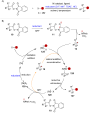
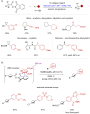
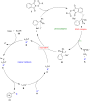
- overview of the diverse mechanisms that have been proposed for radical based transformations initiating from NHPI esters. The discussion is organized into four sections: (i) mechanisms under photochemical conditions, (ii) initiation by metal catalysis and stoichiometric reductants, (iii) N-heterocyclic
- undergo addition to the heterocyclic radical acceptor 19 through a ternary transition state 20 involving hydrogen bonding interactions with the chiral phosphate co-catalyst. Notably, a follow-up report revealed that the radical addition is reversible, and that the selectivity determining step involves the
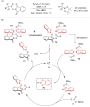
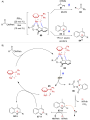
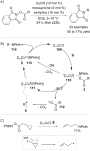
- , accompanied by the formation of cyano-B(pin) 142. Importantly, in the absence of ZnCl2, intermediate 140 could be detected by HRMS and 11B NMR, highlighting the pivotal role of ZnCl2 in promoting rearomatization. N-Heterocyclic carbene (NHC) catalysis In 2019, Nagao and Ohmiya reported the decarboxylative








Facile approach to N,O,S-heteropentacycles via condensation of sterically crowded 3H-phenoxazin-3-one with ortho-substituted anilines
Beilstein J. Org. Chem. 2024, 20, 336–345, doi:10.3762/bjoc.20.34
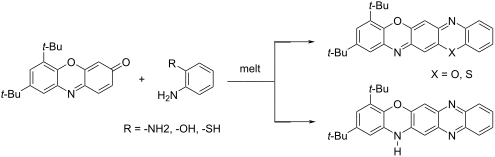
- structure, 3H-phenoxazin-3-ones can easily be accessed through oxidative couplings of o-aminophenols [3][4] or N-aryl-o-benzoquinone imines [5][6]. Further, they can serve as efficient precursors of pentacyclic N,O-heterocyclic compounds that possess promising properties for application in fluorescent


Catalytic multi-step domino and one-pot reactions
Beilstein J. Org. Chem. 2024, 20, 254–256, doi:10.3762/bjoc.20.25

- . Zhang, Ma, and W. Zhang reflects the state of the art in the α-amino acid-based [3 + 2] cycloaddition reactions of N–H-type azomethine ylides in multicomponent, one-pot, and stepwise reactions for the synthesis of diverse bioactive heterocyclic compounds and natural products [9]. Computational studies

Substitution reactions in the acenaphthene analog of quino[7,8-h]quinoline and an unusual synthesis of the corresponding acenaphthylenes by tele-elimination
Beilstein J. Org. Chem. 2024, 20, 243–253, doi:10.3762/bjoc.20.24
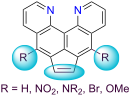
- % yield directly from diamine 4 [15]. This result is contrary to the initial report [16]. Compound 5 still has the properties of a rather strong heterocyclic base, having higher basicity than “proton sponge” (Scheme 1) [15]. Although the physicochemical properties of acenaphthene 5, including structure
- is easily protonated, and its protic salt has been fully characterized as tetrafluoroborate 14H+BF4−. The 1H NMR spectrum of this salt confirmed the symmetrical structure of the heterocyclic cation with a chelated intramolecular [NHN]+ bond, whose proton in CD3CN solution resonates at 17.22 ppm
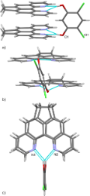
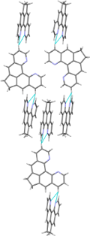
- increase in the series 3 → 5 → 8 (“clothespin” effect) [30]. The crystal packing patterns in salts 5·HBF4 and 8·HBF4 are quite similar. The main factor here continues to be the tendency of almost flat disk-shaped heterocyclic cations to π-stacking, leading to the formation of dense columns with anions in




Photochromic derivatives of indigo: historical overview of development, challenges and applications
Beilstein J. Org. Chem. 2024, 20, 228–242, doi:10.3762/bjoc.20.23
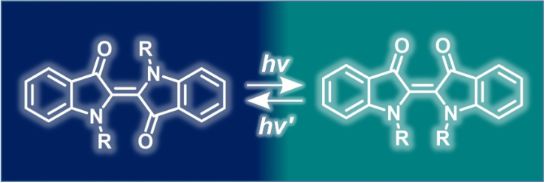
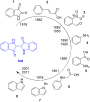
- , the resonance structures II and III with separated charges become predominant, while both benzene rings remain fully aromatic. The indigo dye contains two heterocyclic indole ring systems, which are connected through a double bond and have 22 π-electrons [16][17]. However, only 10 π-electrons are





Chiral phosphoric acid-catalyzed transfer hydrogenation of 3,3-difluoro-3H-indoles
Beilstein J. Org. Chem. 2024, 20, 205–211, doi:10.3762/bjoc.20.20
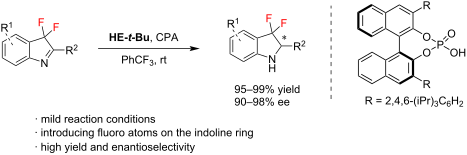
- isostere of polar functional groups [5][6]. Chiral indoline is an important member of the class of nitrogen-containing heterocyclic compounds that often exhibits various pharmaceutical activities and exists in many natural products [7][8]. The enantioselective synthesis of chiral indolines has received


Metal-catalyzed coupling/carbonylative cyclizations for accessing dibenzodiazepinones: an expedient route to clozapine and other drugs
Beilstein J. Org. Chem. 2024, 20, 193–204, doi:10.3762/bjoc.20.19
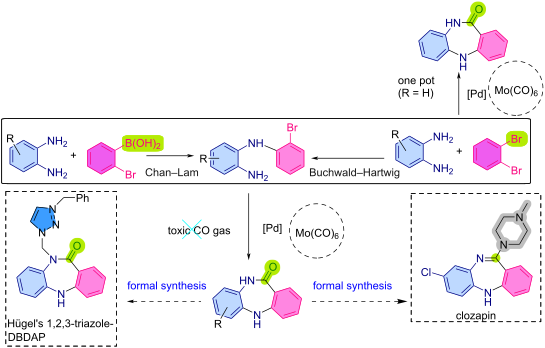
- approaches resulted in shortening the synthetic routes that were widely employed to access these heterocyclic scaffolds. Over the last decades, the Chan–Lam coupling reaction has drawn great attention among the synthetic chemistry community which contributed to the development of various synthetic routes to


Cycloaddition reactions of heterocyclic azides with 2-cyanoacetamidines as a new route to C,N-diheteroarylcarbamidines
Beilstein J. Org. Chem. 2024, 20, 17–24, doi:10.3762/bjoc.20.3
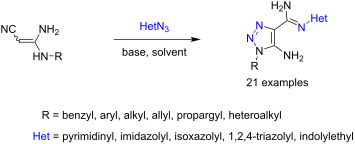
- heterocyclic azides followed by a Cornforth-type rearrangement to the final products. The reaction is tolerant to various N-monosubstituted 3,3-diaminoacrylonitriles and to different heterocyclic azides. The developed method has a broad scope and can be applied to obtain a variety of N-heteroaryl-1,2,3
- -triazole-4-carbimidamides with alkyl, allyl, propargyl, benzyl, cycloalkyl, and indolyl substituents at the N1 position . Keywords: Cornforth rearrangement; cycloaddition reactions; 3,3-diaminoacrylonitriles; heterocyclic azides; 1,2,3-triazole; Introduction Heteroaryl amidines are widely used in the
- synthesis of various nitrogen-containing heterocyclic compounds and have a variety of biological activities [1][2][3][4]. After the discovery of click chemistry [5][6] involving the CuAAC method of 1,2,3-triazole synthesis [7][8], there has been great interest of studing the chemical and biological



1-Butyl-3-methylimidazolium tetrafluoroborate as suitable solvent for BF3: the case of alkyne hydration. Chemistry vs electrochemistry
Beilstein J. Org. Chem. 2023, 19, 1966–1981, doi:10.3762/bjoc.19.147
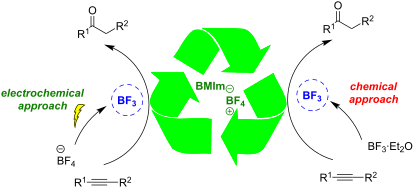
- -heterocyclic carbenes (NHCs), extensively studied as organocatalysts as well as ligands for transition-metal-promoted synthetic methodologies [97][98][99]. Under anodic oxidation, the electrogeneration of boron trifluoride (BF3) from tetrafluoroborate ILs occurs [100][101]. Moreover, we have recently


Aldiminium and 1,2,3-triazolium dithiocarboxylate zwitterions derived from cyclic (alkyl)(amino) and mesoionic carbenes
Beilstein J. Org. Chem. 2023, 19, 1947–1956, doi:10.3762/bjoc.19.145
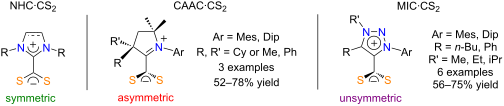
- weaker basicity and greater modularity, the related 1,2,4-triazol-5-ylidene derivatives D have been mainly employed in organocatalysis [6]. Besides these four types of N-heterocyclic carbenes (NHCs), other families of cyclic compounds have been actively pursued to further expand the diversity of singlet
- system (G) was first investigated by Albrecht et al. in 2008 [23]. Because the heterocyclic precursors needed to prepare 1,2,3-triazol-5-ylidenes are readily available through the [3 + 2] cycloaddition of an azide and an alkyne, these compounds are currently the most popular MICs for catalytic and other
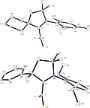
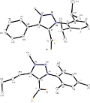
- applications [24][25][26][27][28]. N-Heterocyclic carbenes and their enetetramine dimers readily add to the central carbon atom of allenes and heteroallenes X=C=Y (X, Y = CR2, NR, O, S) to afford zwitterionic adducts [29]. In particular, their reaction with carbon disulfide affords stable azolium-2


Construction of diazepine-containing spiroindolines via annulation reaction of α-halogenated N-acylhydrazones and isatin-derived MBH carbonates
Beilstein J. Org. Chem. 2023, 19, 1923–1932, doi:10.3762/bjoc.19.143
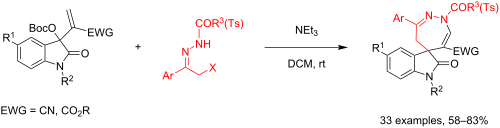
- features a broad substrate scope, simple reaction conditions, and high molecular convergence. Keywords: acylhydrazone; annulation; azepine; MBH carbonate; spirooxindole; Introduction Among the various N-containing heterocyclic compounds, 1,2-diazepine represents one of the important privileged structural
- readily available reagents, mild conditions, satisfactory yields, broad substrate scope, high molecular convergence, and atomic economy. The synthetic applications of this annulation reaction in heterocyclic chemistry might be significant. Experimental General procedure for the preparation of dihydrospiro




Beyond n-dopants for organic semiconductors: use of bibenzo[d]imidazoles in UV-promoted dehalogenation reactions of organic halides
Beilstein J. Org. Chem. 2023, 19, 1912–1922, doi:10.3762/bjoc.19.142
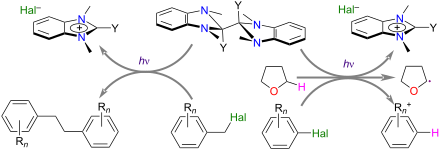
- achieved using highly reducing metals, molecular reductants can potentially enable more selectivity, as required for the use of such reactions in the synthesis of molecules bearing various functional groups. In particular, Wanzlick dimers (C=C-bonded dimers of N-heterocyclic carbenes, Figure 1a, i) have



N-Boc-α-diazo glutarimide as efficient reagent for assembling N-heterocycle-glutarimide diads via Rh(II)-catalyzed N–H insertion reaction
Beilstein J. Org. Chem. 2023, 19, 1841–1848, doi:10.3762/bjoc.19.136
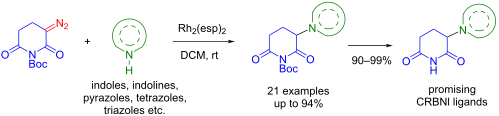
- Phthisiopulmonology, Saint Petersburg, 191036, Russian Federation Department of Medicinal Chemistry, Institute of Chemistry, Saint Petersburg State University, 26 Universitetskiy prospekt, Peterhof 198504, Russian Federation 10.3762/bjoc.19.136 Abstract A technique has been proposed for incorporating a heterocyclic
- molecules and CRBN ligands are being published (over 400K patents in the last 5 years according to SciFinder). Various nitrogen heterocycles were utilized as a heterocyclic moiety linked to a glutarimide core via a nitrogen atom. In addition to the phthalimide fragment, the most commonly studied ones are
- pyrazole derivatives (including indazole), benzimidazole, 1,2,3-triazole, indole, carbazole, indoline, quinazoline, and isoquinoline. Nevertheless, many heterocyclic motifs still remain beyond the attention of researchers. For example, glutarimides that incorporate tetrazole and 1,2,4-triazole substituents


Synthetic approach to 2-alkyl-4-quinolones and 2-alkyl-4-quinolone-3-carboxamides based on common β-keto amide precursors
Beilstein J. Org. Chem. 2023, 19, 1804–1810, doi:10.3762/bjoc.19.132
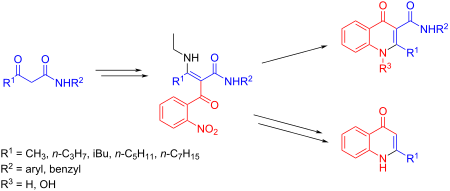
- ]. Despite the variety of synthetic approaches to the construction and functionalization of the 4-quinolone ring system, most of the recent studies related to microbial 2-alkyl-4-quinolones relied on variations of the age-old Conrad–Limpach and Camps methods for the construction of the heterocyclic quinolone


Recent advancements in iodide/phosphine-mediated photoredox radical reactions
Beilstein J. Org. Chem. 2023, 19, 1785–1803, doi:10.3762/bjoc.19.131
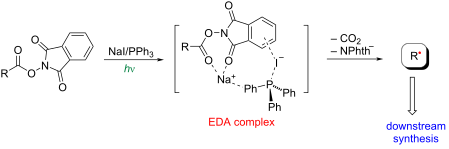
- . PPh3-catalyzed alkylative iododecarboxylation with LiI. Visible-light-triggered iodination facilitated by N-heterocyclic carbenes. Visible-light-induced photolysis of phosphonium iodide salts for monofluoromethylation. Funding This work was financially supported by the Central University Basic




Active-metal template clipping synthesis of novel [2]rotaxanes
Beilstein J. Org. Chem. 2023, 19, 1776–1784, doi:10.3762/bjoc.19.130
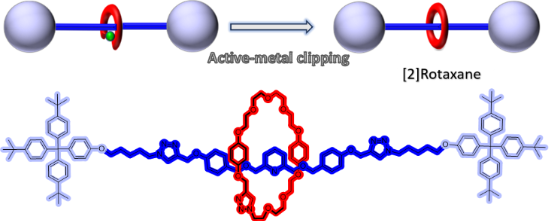
- molecule which catalyzes the macrocyclization reaction around the axle (Figure 1b). Results and Discussion In order to access the target [2]rotaxanes we made use of the CuAAC reaction, performed in the presence of a copper(I) N-heterocyclic carbene, a very stable and efficient class of catalysts used in
- active-metal template and clipping methods to yield the target interlocked molecules via [1 + 1] or intramolecular macrocyclizations, realized through CuAAC reactions catalyzed by axle-copper(I) N-heterocyclic carbene complexes. The [2]rotaxane obtained by [1 + 1] clipping (R1) could be only observed by
- . Our results proved that the CuAAC reaction catalyzed by copper(I) N-heterocyclic carbenes can be successfully used in the synthesis of [2]rotaxanes. This, combined with the fast and simple assembly of [CuCl(SIMes)] [45][46] could lead to the development of a Cu(I) NHC click chemistry in the field of


Unprecedented synthesis of a 14-membered hexaazamacrocycle
Beilstein J. Org. Chem. 2023, 19, 1728–1740, doi:10.3762/bjoc.19.126
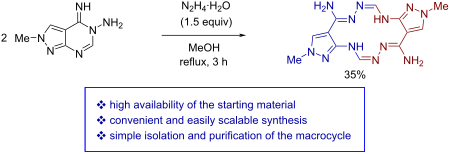
- structure and reactivity of the obtained macrocycle are outlined. Keywords: amidrazones; hexaazamacrocycles; pyrazolo[3,4-d]pyrimidines; ring contraction; self-assembly; Introduction The chemistry of polyazamacrocycles (PAMs) is currently one of the most rapidly developing areas of heterocyclic chemistry
- macrocyclic core [NICS(0) = +2.23 ppm calculated at the HF/6-31+G(d) level]. Since numerous heterocyclic and carbocyclic analogs of 3-amino-1-methyl-1H-pyrazole-4-carbonitrile (3), which is the starting material in the synthesis of macrocycle 5, are readily available, we believe that our results will be


Quinoxaline derivatives as attractive electron-transporting materials
Beilstein J. Org. Chem. 2023, 19, 1694–1712, doi:10.3762/bjoc.19.124
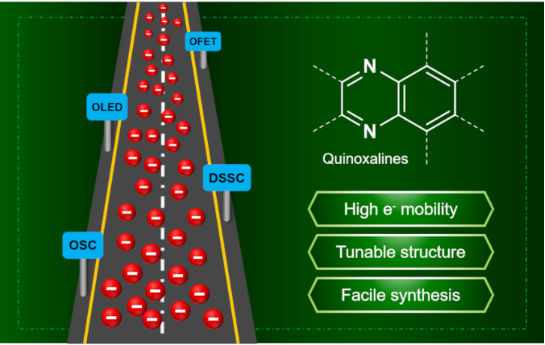
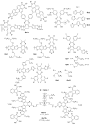
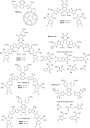
- emerged as a promising class of heterocyclic compounds for charge transport applications, owing to two crucial factors. Firstly, their structural diversity enables precise customization of molecular structures, allowing for fine-tuning of their properties and optimization of performance for specific




Decarboxylative 1,3-dipolar cycloaddition of amino acids for the synthesis of heterocyclic compounds
Beilstein J. Org. Chem. 2023, 19, 1677–1693, doi:10.3762/bjoc.19.123
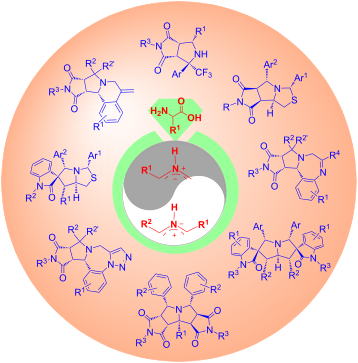
- aldehydes and alkenes. The first cycloaddition products 3c or 3d can also be used as intermediates for other transformations to synthesize novel heterocyclic rings via multicomponent, one-pot, and stepwise synthesis [63][64]. Presented in the following sections is our work on the development of amino acid
- minor diastereomeric product through an exo-cycloaddition. One-pot synthesis of triazolobenzodiazepines Other than the multicomponent double cycloaddition reactions shown in the last section, we also utilized the first cycloaddition products for post-condensation reactions to generate new heterocyclic
- -pot, and multistep reactions in the synthesis of heterocyclic compounds. The methods have advantages of using readily available starting materials, performing streamlined reactions, producing diverse product structures, and having high pot, atom, and step economy (PASE) [79][80][81] for the diversity




Morpholine-mediated defluorinative cycloaddition of gem-difluoroalkenes and organic azides
Beilstein J. Org. Chem. 2023, 19, 1545–1554, doi:10.3762/bjoc.19.111
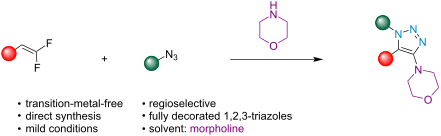
- ][12], inflammation [13], bacterial [14][15], and viral infections [16]. Hence, new ways to rapidly and efficiently access 1,2,3-triazole heterocyclic motifs are still in demand. However, methods for the direct synthesis of 1,4,5-trisubstituted-1,2,3-triazoles are limited [17]. This is highly desirable





