Search results
Search for "bifunctional" in Full Text gives 250 result(s) in Beilstein Journal of Organic Chemistry. Showing first 200.
Application of N-heterocyclic carbene–Cu(I) complexes as catalysts in organic synthesis: a review
Beilstein J. Org. Chem. 2023, 19, 1408–1442, doi:10.3762/bjoc.19.102
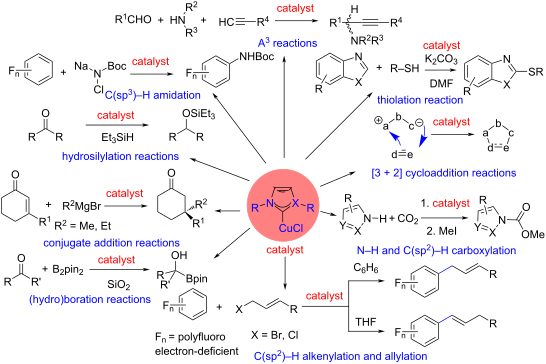
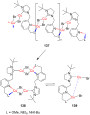
- ) complex, [(IPr)CuCl] (Scheme 69). Hong and co-workers [92] developed diethylene glycol-functionalized imidazo[1,5,a]pyridin-3-ylidenes (DEG-ImPy) as a bifunctional NHC ligand. The Cu catalyst generated in situ with the DEG-ImPy·HCl salt 182 efficiently catalyzed direct C–H carboxylation of various








Functional characterisation of twelve terpene synthases from actinobacteria
Beilstein J. Org. Chem. 2023, 19, 1386–1398, doi:10.3762/bjoc.19.100
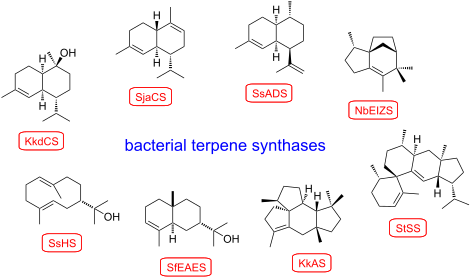
- they may be bifunctional and composed of two domains. In these enzymes a prenyltransferase domain catalyses the formation of an oligoprenyl pyrophosphate precursor from dimethylallyl pyrophosphate (DMAPP) and isopentenyl pyrophosphate (IPP) that is subsequently cyclised by the terpene synthase domain
- . The first discovered example from this class is the fusicoccadiene (4) synthase from Phomopsis amygdali [8], and even triterpenes such as macrophomene (5) can be generated by these bifunctional enzymes [9]. After cloning of the gene for pentalenene (6) synthase from Streptomyces exfoliatus [10], many




Selective construction of dispiro[indoline-3,2'-quinoline-3',3''-indoline] and dispiro[indoline-3,2'-pyrrole-3',3''-indoline] via three-component reaction
Beilstein J. Org. Chem. 2023, 19, 1234–1242, doi:10.3762/bjoc.19.91
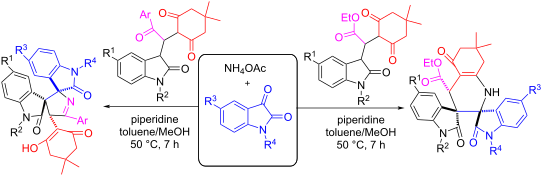
- multicomponent reactions have been successfully developed to construct multifunctionalized or polycyclic spirooxindoles. For example, Zhang successfully developed a recyclable bifunctional cinchona/thiourea-catalyzed four-component Michael/Mannich cyclization sequence for the asymmetric synthesis of

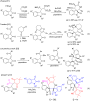


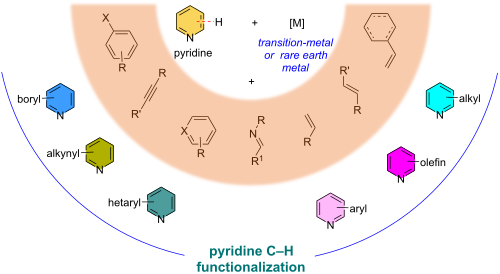
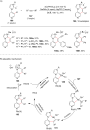
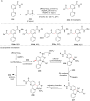
Pyridine C(sp2)–H bond functionalization under transition-metal and rare earth metal catalysis
Beilstein J. Org. Chem. 2023, 19, 820–863, doi:10.3762/bjoc.19.62


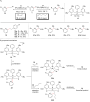


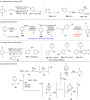


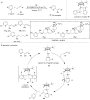


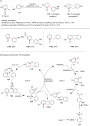


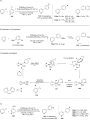


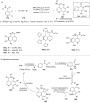




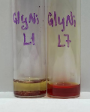
A new oxidatively stable ligand for the chiral functionalization of amino acids in Ni(II)–Schiff base complexes
Beilstein J. Org. Chem. 2023, 19, 566–574, doi:10.3762/bjoc.19.41
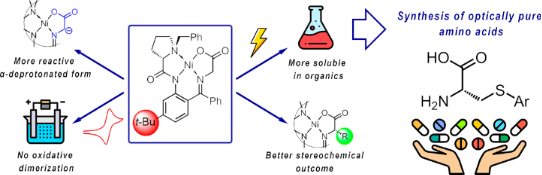
- )) and includes a chiral auxiliary, an amino acid, and a bifunctional linker capable to arrange the components in the Schiff base complex. Such templates provide a significant C–H acidity at the α-amino acid carbon and a possibility for recycling of the chiral auxiliaries (for reviews see [5][14][15][16



Mechanochemical solid state synthesis of copper(I)/NHC complexes with K3PO4
Beilstein J. Org. Chem. 2023, 19, 440–447, doi:10.3762/bjoc.19.34
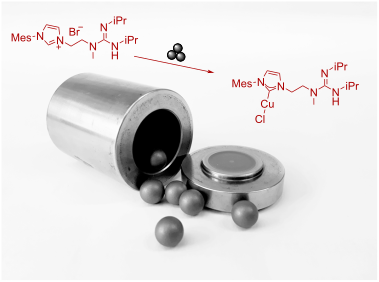
- sophisticated copper(I)/N-heterocyclic carbene complex bearing a guanidine moiety. In this way, the present approach circumvents commonly employed silver(I) complexes which are associated with significant and undesired waste formation and the excessive use of solvents. The resulting bifunctional catalyst has
- been shown to be active in a variety of reduction/hydrogenation transformations employing dihydrogen as terminal reducing agent. Keywords: ball mill; bifunctional catalysis; catalytic hydrogenations; copper; mechanochemical synthesis; N-heterocyclic carbenes; Introduction Prominent goals of green
- an ester reduction with H2 as terminal reducing agent utilizing bifunctional copper(I)/NHC complex 5 bearing a guanidine moiety as additional catalytic unit [48]. This catalyst acts by employing the copper(I)/NHC complex for H2 activation on the one hand and by using the guanidine subunit for


Functionalization of imidazole N-oxide: a recent discovery in organic transformations
Beilstein J. Org. Chem. 2022, 18, 1575–1588, doi:10.3762/bjoc.18.168
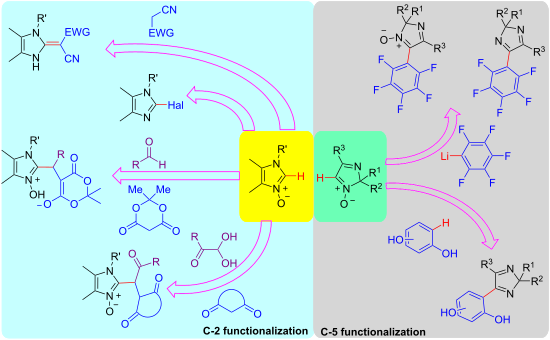
- provide the targeted products 11a–h. In the next year (2021), the same authors suggested another fascinating deoxygenative transition-metal-free SNH coupling reaction procedure of 2H-imidazole 1-oxides with polyphenols [10]. This process is convenient for producing bioactive bifunctional compounds







Design, synthesis, and evaluation of chiral thiophosphorus acids as organocatalysts
Beilstein J. Org. Chem. 2022, 18, 1471–1478, doi:10.3762/bjoc.18.154
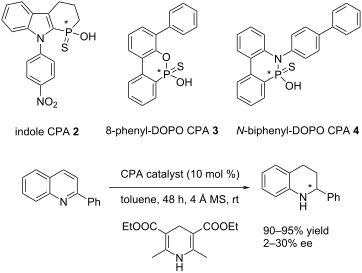
- a chiral pocket or environment for enantioselective transformations within the proximity of the acidic proton and phosphoryl oxygen. Additionally, the choice of phosphoric acid diesters also provides a bifunctional catalyst containing both an acidic and basic site (Figure 1). Despite the proven


Cytochrome P450 monooxygenase-mediated tailoring of triterpenoids and steroids in plants
Beilstein J. Org. Chem. 2022, 18, 1289–1310, doi:10.3762/bjoc.18.135
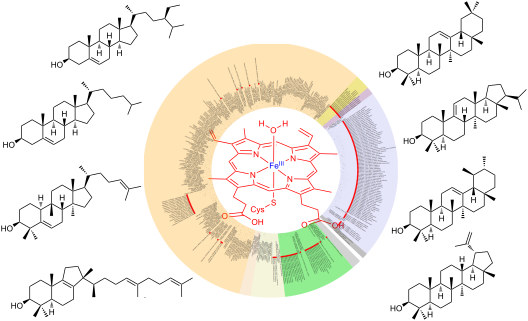
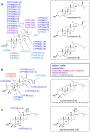
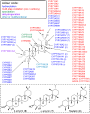
- manner. MaCYP71CD2 is a bifunctional CYP that hydroxylates C23 and additionally introduces a C24–C25 epoxide on the side chain of tirucalla-7,24-dien-3β-ol (19), yielding dihydroniloticin (20). MaCYP71BQ5 then oxidises the methyl group C21 to a formyl group, leading to spontaneous hemiacetal ring




Heterogeneous metallaphotoredox catalysis in a continuous-flow packed-bed reactor
Beilstein J. Org. Chem. 2022, 18, 1123–1130, doi:10.3762/bjoc.18.115
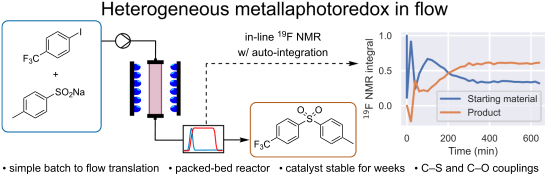
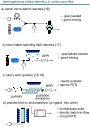
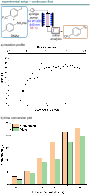
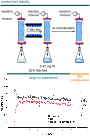
- combination of solid photocatalysts (i.e., semiconductors) and homogeneous nickel complexes are feasible, but the fact that the nickel complex is in solution reduces the benefits of packed-bed reactor types [19][23][24]. Recently, several bifunctional heterogeneous catalysts that combine the photo- and the





Anti-inflammatory aromadendrane- and cadinane-type sesquiterpenoids from the South China Sea sponge Acanthella cavernosa
Beilstein J. Org. Chem. 2022, 18, 916–925, doi:10.3762/bjoc.18.91
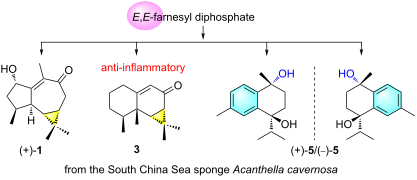
- . Several examples of enantiomers formation catalyzed by different terpene synthases were also reported. Jiang et al. characterized two new fungal bifunctional terpene synthases, FoFS and AtAS (identity 27.8%), that catalyzed the formation of a pair of enantiomeric sesterterpenes [23]. Two groups






Mechanochemical halogenation of unsymmetrically substituted azobenzenes
Beilstein J. Org. Chem. 2022, 18, 680–687, doi:10.3762/bjoc.18.69
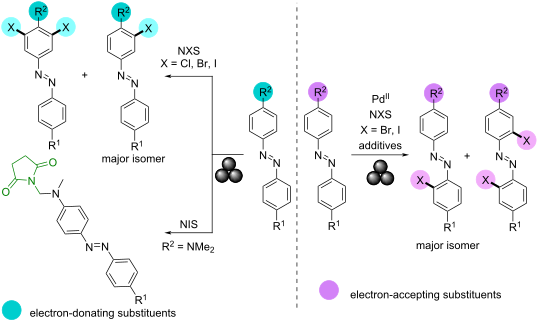
- protocol for the ortho-halogenation of acetanilide with NXS (X = Cl, Br, I) using Pd(OAc)2 as precatalyst in the presence of p-toluenesulfonic acid (TsOH) as an additive under solvent-free conditions [49]. Recently, Mal and Bera reported the utilization of NXS (X = Br, Cl) as bifunctional reagents for the





A study of the photochemical behavior of terarylenes containing allomaltol and pyrazole fragments
Beilstein J. Org. Chem. 2022, 18, 588–596, doi:10.3762/bjoc.18.61
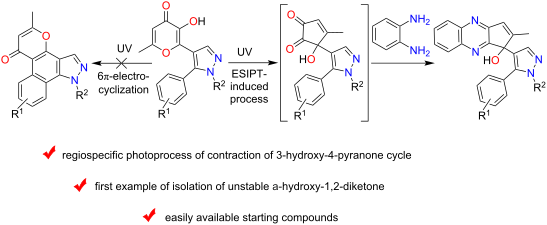
- bifunctional objects provides access to novel UV irradiation-based synthetic methods. Continuing our studies devoted to the photochemistry of terarylenes [27][28][29][30][31][32], in this communication we studied the UV-promoted reaction of pyrazole derivatives 12 containing a 3-hydroxypyran-4-one fragment




BINOL as a chiral element in mechanically interlocked molecules
Beilstein J. Org. Chem. 2022, 18, 508–523, doi:10.3762/bjoc.18.53
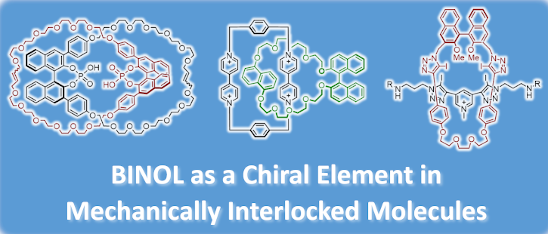
- Figure 11). In 2017, our working group showed that bifunctional catenanes can serve as highly efficient organocatalysts. The chiral homocircuit [2]catenane (S,S)-47, which features two axially chiral 1,1'-binaphthyl phosphoric acids, was synthesized in a passive metal template approach. To this end, two
- catalysts ((S)-48/(S)-49, see Figure 13) for a broad range of substrates. While the bifunctional catenane (S,S)-47 delivers enantioselectivities between 84–98% ee, the monophosphoric acids (S)-48 and (S)-49 gave lower enantiomeric excesses (12–70% ee for (S)-48 and 9–84% ee for (S)-49). Density functional




New advances in asymmetric organocatalysis
Beilstein J. Org. Chem. 2022, 18, 240–242, doi:10.3762/bjoc.18.28
- combination of activation modes in bifunctional or multifunctional catalysis. Important is also a “green” aspect of organocatalysis as well as its fruitful overlap with many sustainability ideas [15]. In 2012, there has been a thematic issue of the Beilstein Journal of Organic Chemistry devoted to asymmetric
- nitromethane to β-silyl α,β-unsaturated carbonyl compounds catalyzed by bifunctional squaramide catalysts are effective under solvent-free conditions [26]. Zhai and Du demonstrated that asymmetric [3 + 2] annulation reactions of 2-isothiocyanato-1-indanones with barbiturate-based olefins are efficiently
Organocatalytic asymmetric nitroso aldol reaction of α-substituted malonamates
Beilstein J. Org. Chem. 2022, 18, 217–224, doi:10.3762/bjoc.18.25

- also found useful in catalyzing the nitroso aldol reaction [44][45][46][47][48]. Surprisingly, the utility of thiourea catalysts in nitroso aldol reactions remains far less developed. The scattered reports where bifunctional thiourea catalysis was found useful for this type of reaction, describe the
- on the screening of various bifunctional H-bonding catalysts, and in this regard, the reaction catalyzed by quinine-derived thiourea catalyst 3b furnished the product 4a in 55% yield and 71% ee (Table 1, entry 5). The other enantiomer was obtained when the reaction was carried out using the




Asymmetric organocatalytic Michael addition of cyclopentane-1,2-dione to alkylidene oxindole
Beilstein J. Org. Chem. 2022, 18, 167–173, doi:10.3762/bjoc.18.18
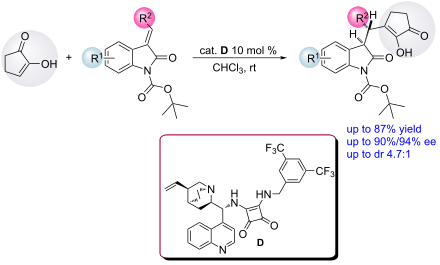
- bifunctional hydrogen-bonding catalyst would activate both CPD via a tertiary amino group of a quinuclidine moiety acting as a base via anion-binding, and an oxindole through the squaramide or thiourea moieties of the catalyst as hydrogen bond donors (Figure 1) [29][30][31][32]. Therefore, squaramide and
- cyclised product was detected. Conclusion In summary, we have developed a new asymmetric organocatalytic Michael addition of cyclopentane-1,2-dione to alkylidene oxindoles catalysed by bifunctional squaramide which leads to products in high enantioselectivities and moderate diastereoselectivities. The


1,2-Naphthoquinone-4-sulfonic acid salts in organic synthesis
Beilstein J. Org. Chem. 2022, 18, 53–69, doi:10.3762/bjoc.18.5
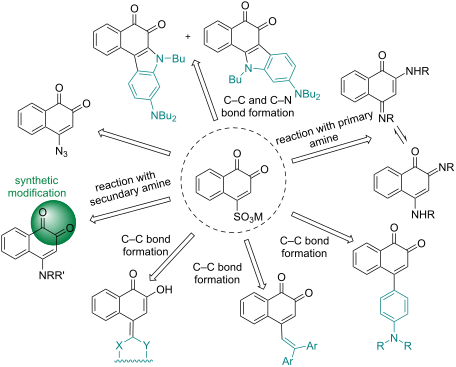
- quinoid type to study their photophysical properties in solution and in the solid-state, Ooyama and co-workers [106] studied a synthetic route for the preparation of compounds with the tricyclic benzo[c]carbazol-6-one skeleton. The strategy used was through the reaction to β-NQS 18 with a bifunctional


Bifunctional thiourea-catalyzed asymmetric [3 + 2] annulation reactions of 2-isothiocyanato-1-indanones with barbiturate-based olefins
Beilstein J. Org. Chem. 2022, 18, 25–36, doi:10.3762/bjoc.18.3
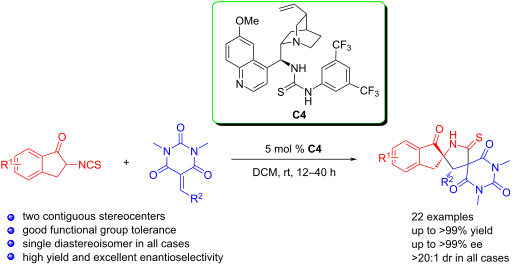
- Jiang-Song Zhai Da-Ming Du School of Chemistry and Chemical Engineering, Beijing Institute of Technology, No.5 Zhongguancun South Street, Beijing 100081, People’s Republic of China 10.3762/bjoc.18.3 Abstract Bifunctional thiourea-catalyzed asymmetric [3 + 2] annulation reactions of 2
- conveniently and comprehensively. However, as we know, the construction of these compounds is mostly carried out through transition-metal-catalyzed cyclization reactions [11][12][13][14], whereas strategies using bifunctional chiral thiourea catalysts are rarely reported. In 2018, Du's group reported a novel
- bifunctional thiourea catalyst, a series of target products in excellent yields with excellent stereoselectivities can be obtained under mild conditions in this reaction. Notably, this protocol provides direct access to indanone-derived spirobarbiturates, which are difficult to access with other methods




Recent advances in the asymmetric phosphoric acid-catalyzed synthesis of axially chiral compounds
Beilstein J. Org. Chem. 2021, 17, 2729–2764, doi:10.3762/bjoc.17.185
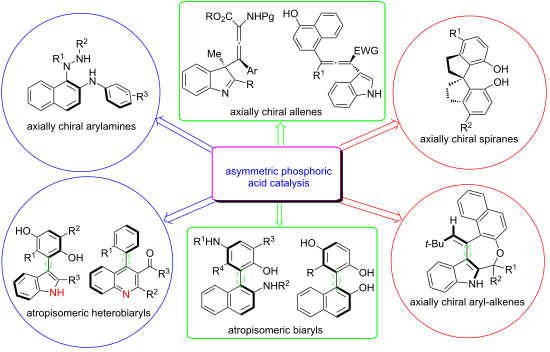
- great potential for catalysis of a wide range of reactions to achieve good to perfect enantioselectivities. This is due to their ability to act as synergistic bifunctional catalysts bearing both Brønsted acidic and Lewis basic sites, with the 3,3′-substituents playing a crucial role in achieving
- ring [36]. Experiments showed that chiral phosphoric acid CPA 2 acted as a bifunctional organocatalyst, that activates 2-naphthols and quinone derivatives via multiple H-bonds and promotes the first step of the enantioselective conjugative addition to generate intermediate I-1 and transfers the its
- 2019, Li and co-workers developed a synthetic strategy for the atroposelective construction of phenylindole 20 by the chiral phosphoric acid-catalyzed cross-coupling of quinones 18 and indoles 19. In this reaction, the chiral phosphoric acid (R)-CPA 6 acts as a bifunctional catalyst to activate indoles










Solvent-free synthesis of enantioenriched β-silyl nitroalkanes under organocatalytic conditions
Beilstein J. Org. Chem. 2021, 17, 2642–2649, doi:10.3762/bjoc.17.177
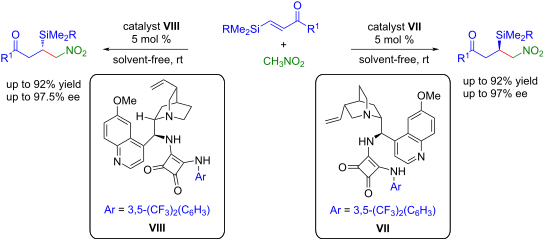
- -unsaturated carbonyl compounds catalyzed by bifunctional squaramide catalysts has been developed. This methodology offers both enantiomers of β-silyl nitroalkanes in good to excellent yields (up to 92%) and enantioselectivities (up to 97.5% ee) under solvent-free conditions at room temperature. Control
- even with better yields while the enantiomeric excess was unperturbed. Conclusion In summary, we have outlined bifunctional squaramide-catalyzed 1,4-conjugate addition reaction of nitromethane to β-silyl α,β-unsaturated carbonyl compounds to access a series of chiral β-silyl nitroalkanes in high yields



N-Sulfinylpyrrolidine-containing ureas and thioureas as bifunctional organocatalysts
Beilstein J. Org. Chem. 2021, 17, 2629–2641, doi:10.3762/bjoc.17.176
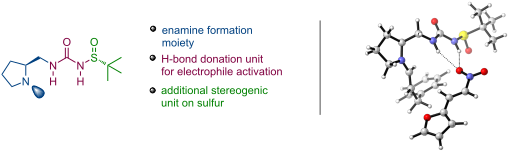
- , Faculty of Natural Sciences, Comenius University in Bratislava, Mlynská dolina, Ilkovičova 6, 842 15 Bratislava, Slovakia 10.3762/bjoc.17.176 Abstract The synthesis of bifunctional N-sulfinylureas and thioureas with an appended pyrrolidine unit is presented. These organocatalysts were evaluated in
- aldehydes and hydrogen-bond activation of nitroalkenes. Keywords: asymmetric organocatalysis; hydrogen bond; Michael addition; pyrrolidine; thiourea; urea; Introduction Asymmetric organocatalysis became one of the strategic ways for the efficient synthesis of chiral compounds [1]. Bifunctional catalysis
- -sulfinylurea as bifunctional organocatalyst [23]. The enantio- and diastereoselective addition of Meldrum’s acids to nitroalkenes via N-sulfinylurea catalysis gave products that were readily converted to pharmaceutically relevant compounds [24][25]. A sulfinylurea organocatalyst catalyzed a highly selective


Recent advances in organocatalytic asymmetric aza-Michael reactions of amines and amides
Beilstein J. Org. Chem. 2021, 17, 2585–2610, doi:10.3762/bjoc.17.173
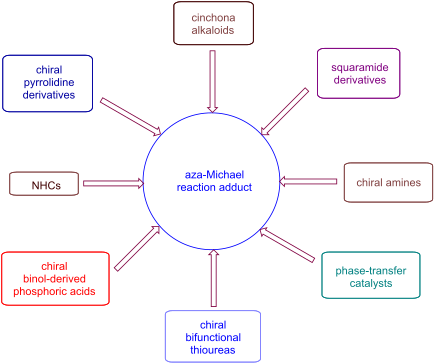
- asymmetric aza-MR. Thus, the review includes the examples wherein cinchona alkaloids, squaramides, chiral amines, phase-transfer catalysts and chiral bifunctional thioureas have been used, which activate the substrates through hydrogen bond formation. Most of these reactions are accompanied by high yields
- derivatives, phase-transfer catalysts and bifunctional thiourea derivatives. 1.1 Reactions catalyzed by chiral cinchona alkaloid derivatives Cai et al. prepared and used a number of organocatalysts from Cinchona alkaloids for the aza-MR of aniline (1) with chalcone (2) to obtain the adducts 4 in poor to very
- reactions [34][35]. In 2015, Zhao et al. synthesized spiro[pyrrolidine-3,3'-oxindoles] 29 in single step by asymmetric cascade aza-Michael/Michael addition reaction between 4-tosylaminobut-2-enoates 27 and 3-ylideneoxindoles 26 catalyzed by a chiral bifunctional tertiary amine, squaramide (cat. 28) which


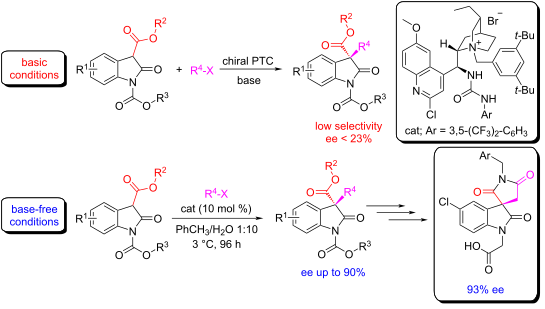
Base-free enantioselective SN2 alkylation of 2-oxindoles via bifunctional phase-transfer catalysis
Beilstein J. Org. Chem. 2021, 17, 2287–2294, doi:10.3762/bjoc.17.146



Halides as versatile anions in asymmetric anion-binding organocatalysis
Beilstein J. Org. Chem. 2021, 17, 2270–2286, doi:10.3762/bjoc.17.145
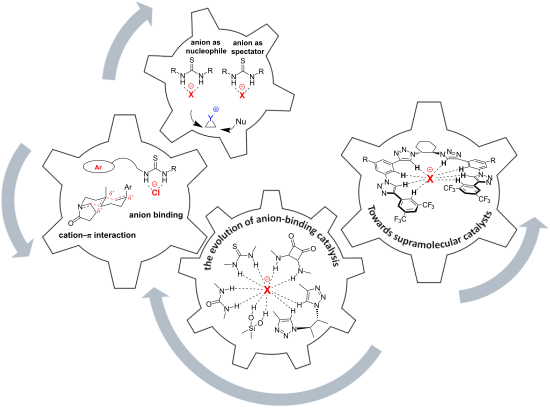
- example utilizing this strategy was provided by Jacobsen and co-workers for the desymmetrization of meso-aziridines 29. In their work, the bifunctional phosphinothiourea catalyst 31 promoted the C–N bond cleavage by hydrochloric acid upon initial protonation (Scheme 7) [55]. Subsequently, the catalyst
- catalysts’ designs Basic/nucleophilic – H-donor bifunctional catalysts: Over the past decades, chiral bifunctional catalysts bearing a thiourea as HB-donor and a basic or nucleophilic group such as an amine have emerged as a powerful tool in organocatalysis by assisting to enhance the catalyst performance
- the previous sections. For example, catalyst 25 bearing a nucleophilic aminoalcohol functionality interacts with the boronic acid reagent in the Reissert-type reaction with acylated quinolines (Scheme 5b) [36], while the phosphine moiety in the bifunctional phosphinothiourea catalyst 31 allows for