Search results
Search for "condensation" in Full Text gives 879 result(s) in Beilstein Journal of Organic Chemistry. Showing first 200.
1-Butyl-3-methylimidazolium tetrafluoroborate as suitable solvent for BF3: the case of alkyne hydration. Chemistry vs electrochemistry
Beilstein J. Org. Chem. 2023, 19, 1966–1981, doi:10.3762/bjoc.19.147
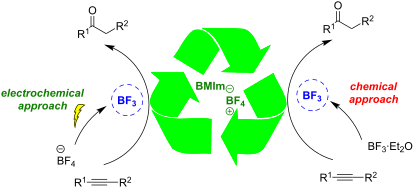
- the aldol condensation products. Importantly, the ability to recycle the ionic liquid in subsequent reactions was successfully demonstrated. Keywords: alkyne hydration; boron trifluoride; electrochemical synthesis; ionic liquids; Introduction Alkynes are fundamental starting materials towards more
- . Hydration of phenylacetylene 1d carried out with 3 equiv of BF3·Et2O for 5 h gave the aldol condensation product 3d (58%) in addition to acetophenone 2d with low yield (32%) (see Table S1, Supporting Information File 1). Assuming that enone 3d is formed from acetophenone, catalysed by the excess Lewis acid
- selectively obtained without the aldol condensation products. Considering 4-methylphenylacetylene (1e), the reaction carried out with 3 equiv of BF3·Et2O for 5 h gave only the condensation product 3e (70%, see Table S1, Supporting Information File 1). Reducing the amount of BF3·Et2O to 1 equiv and the


Biphenylene-containing polycyclic conjugated compounds
Beilstein J. Org. Chem. 2023, 19, 1895–1911, doi:10.3762/bjoc.19.141
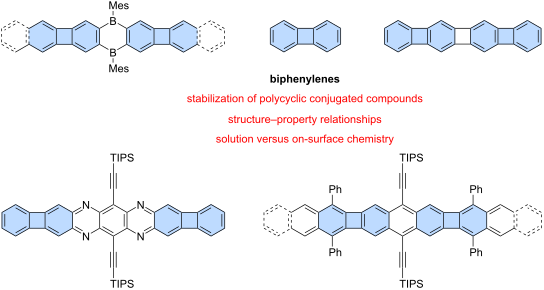
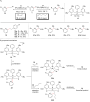
- -containing azaacenes Bunz and co-workers incorporated biphenylene units into azaacene structures to enhance their stability [45]. Initially, their early attempts focused on synthesizing unsymmetrical azaacenes containing biphenylene units. Through the condensation of ortho-diamine compounds 53a–c derived
- ) [46]. This complexity arises from factors such as limited substrate versatility and the difficulty in incorporating solubilizing groups into the symmetric azaacene framework. In the initial stage, the condensation reactions between biphenylene-2,3-dione (52) and diaminothiadiazoles 55a,b resulted in
- the formation of polycyclic structures 56a and 56b containing thiadiazole units, in yields of 57% and 34%, respectively. Subsequently, by selectively cleaving the thiadiazole ring using LiAlH4, followed by further condensation reaction with dione 52, the desired symmetric azaacenes 58a and 58b with R



Substituent-controlled construction of A4B2-hexaphyrins and A3B-porphyrins: a mechanistic evaluation
Beilstein J. Org. Chem. 2023, 19, 1832–1840, doi:10.3762/bjoc.19.135
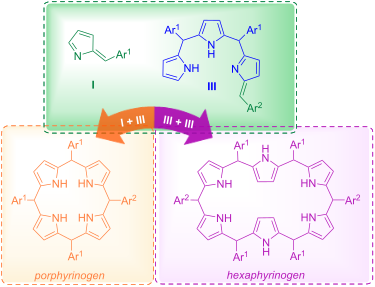
- were between 7–18%. Synthesis of tripyrrane 5 5,10-Bis(4-trifluoromethylphenyl)tripyrromethane (5) was obtained as side product of dipyrromethane synthesis by the condensation of pyrrole and 4-(trifluoromethyl)benzaldehyde. A typical procedure involves 4-(trifluoromethyl)benzaldehyde (28.7 mmol) and



Synthetic approach to 2-alkyl-4-quinolones and 2-alkyl-4-quinolone-3-carboxamides based on common β-keto amide precursors
Beilstein J. Org. Chem. 2023, 19, 1804–1810, doi:10.3762/bjoc.19.132
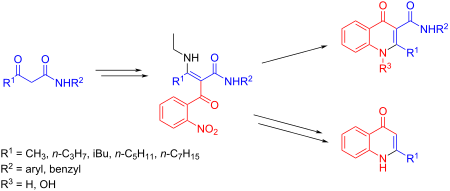
- intermediate β-enamino amides 2 are easily available by condensation of the corresponding β-keto amide 1 and an amine (Scheme 1, conditions i). As the amine here plays only an auxiliary role, for the purpose of this research we opted for inexpensive ethylamine. Compounds 2 were obtained by simply stirring a


Trifluoromethylated hydrazones and acylhydrazones as potent nitrogen-containing fluorinated building blocks
Beilstein J. Org. Chem. 2023, 19, 1741–1754, doi:10.3762/bjoc.19.127
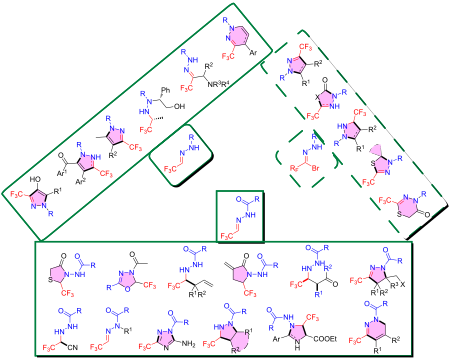
- equivalents to react with various nucleophilic reagents [90]. In 2014, Heimgartner et al. first developed the condensation reaction of a commercially available fluoral hemiacetal with acylhydrazides to yield trifluoromethylated acylhydrazones, and these fluorinated compounds underwent heterocyclization


Effects of the aldehyde-derived ring substituent on the properties of two new bioinspired trimethoxybenzoylhydrazones: methyl vs nitro groups
Beilstein J. Org. Chem. 2023, 19, 1713–1727, doi:10.3762/bjoc.19.125
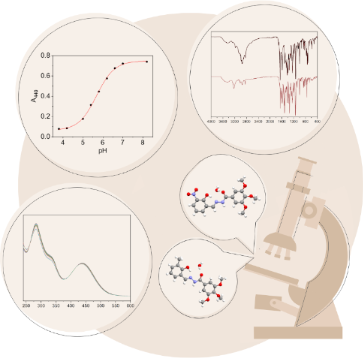
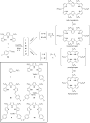
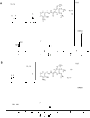
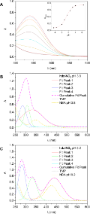
- -Aldrich and Vetec in the highest purity available and used without further purification. Syntheses of the compounds Compounds were synthesized by modifying the existing methodology in the literature [50]. The compounds were prepared by condensation between 3,4,5-trimethoxybenzoic acid hydrazide (TMP, 1.0




Quinoxaline derivatives as attractive electron-transporting materials
Beilstein J. Org. Chem. 2023, 19, 1694–1712, doi:10.3762/bjoc.19.124
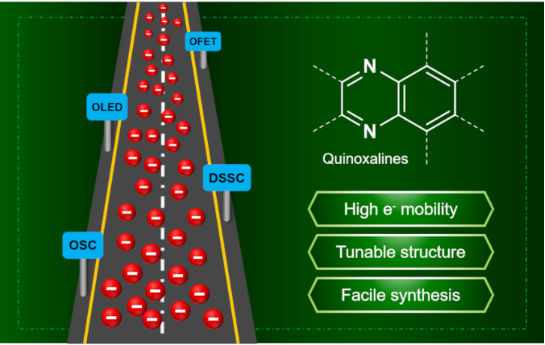
- applications. Secondly, the feasibility of synthesizing quinoxalines contributes immensely to their appeal. Qxs can be readily prepared through simple condensation reactions, enabling convenient experimental studies and cost-effective bulk production [5]. The availability of inexpensive and accessible starting




Decarboxylative 1,3-dipolar cycloaddition of amino acids for the synthesis of heterocyclic compounds
Beilstein J. Org. Chem. 2023, 19, 1677–1693, doi:10.3762/bjoc.19.123
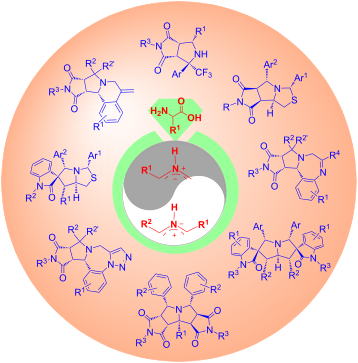
- Pharmacy, Changzhou University, Changzhou 213164, China 10.3762/bjoc.19.123 Abstract The [3 + 2] cycloadditions of stabilized azomethine ylides (AMYs) derived from amino esters are well-established. However, the reactions of semi-stabilized AMYs generated from decarboxylative condensation of α-amino acids
- with arylaldehydes are much less explored. The [3 + 2] adducts of α-amino acids could be used for a second [3 + 2] cycloaddition as well as for other post-condensation modifications. This article highlights our recent work on the development of α-amino acid-based [3 + 2] cycloaddition reactions of N–H
- : A1-type AMYs can be generated from the condensation of aldehydes with α- and N-dialkylglycine esters, A2-type AMYs are derived from α-alkylglycine esters, A3-type AMYs are derived from N-alkylglycine esters, and A4-type AMYs are derived from glycine esters. Stabilized zwitterions A1–A4 have the




Benzoimidazolium-derived dimeric and hydride n-dopants for organic electron-transport materials: impact of substitution on structures, electrochemistry, and reactivity
Beilstein J. Org. Chem. 2023, 19, 1651–1663, doi:10.3762/bjoc.19.121
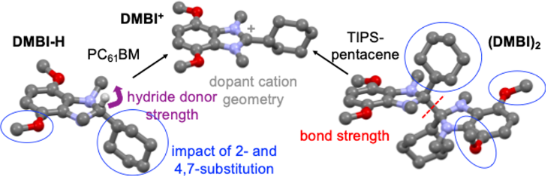
- [12][13][16][19][26]. 1H derivatives can be obtained in a number of ways, including direct condensation of N,N'-dimethylphenylene-1,2-diamine derivatives with the appropriate aldehydes, YCHO [24][27], or borohydride reduction of 1+ salts [24]. The cations conversely can be obtained from 1H derivatives
- , for example through hydride abstraction by Ph3C+ [13]. Alternatively, they can also be obtained by condensation of N,N'-dimethylphenylene-1,2-diamine derivatives with acid chlorides, YCOCl, or through the methylation of 2-substituted benzoimidazoles [24], which in turn can be obtained from
- condensation between phenylene-1,2-diamines and carboxylic acids YCO2H [28], oxidative condensation between YCHO and phenylene-1,2-diamines [29], or reductive condensation between YCHO and 2-nitroanilines [24]. In this work we condensed the appropriate YCHO aldehyde (II) and 1,2-diaminobenzene (I) derivatives


Tying a knot between crown ethers and porphyrins
Beilstein J. Org. Chem. 2023, 19, 1630–1650, doi:10.3762/bjoc.19.120
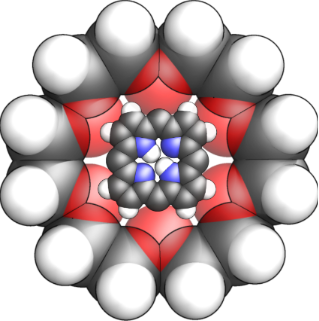
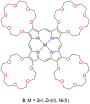
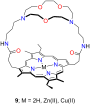
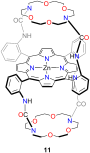
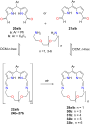
- synthesis of these compounds involved the condensation of a meso-disubstituted dipyrromethane with diamines incorporating the crown ether/azacrown segment in the presence of boron trifluoride diethyl etherate as a catalyst [66]. The treatment of compound 16 with potassium hydride yielded 16-K2, a suitable
- also demonstrated the crowned fused expanded porphyrinoids incorporating a pyridine moiety [135]. Macrocycles 45 were obtained in 5–10% yield from the condensation of 38 with the corresponding pyridine-based dipyrromethane analogue. Compound 45 exhibited a unique structural arrangement, with the







Synthesis of 5-arylidenerhodanines in L-proline-based deep eutectic solvent
Beilstein J. Org. Chem. 2023, 19, 1537–1544, doi:10.3762/bjoc.19.110

- Knoevenagel condensation of rhodanine with different aldehydes [3]. The reactions were performed in ChCl/urea (1:2) at 90 °C, without needing a catalyst and the products were obtained in low to good yields (10–78%). On another hand, ʟ-proline is well known as an organocatalyst and its use in aldol and
- Knoevenagel condensation is well documented [21]. Moreover, the low cost and high availability of ʟ-proline has attracted attention to ʟ-proline-based DES. Especially, in 2022, Detsi [20] has synthesized and characterized three ʟ-proline-based NaDES: proline/oxalic acid (1:1), proline/glycerol (1:2), and
- proline/lactic acid/water (1:2:2.5). The authors studied their use in the synthesis of aurones via a Knoevenagel condensation and compared them to the classical choline-based DES, ChCl/Gly (1:2). They demonstrated that the ʟ-proline-based DES were superior to ChCl/Gly and obtained aurones from the


Cyclization of 1-aryl-4,4,4-trichlorobut-2-en-1-ones into 3-trichloromethylindan-1-ones in triflic acid
Beilstein J. Org. Chem. 2023, 19, 1460–1470, doi:10.3762/bjoc.19.105
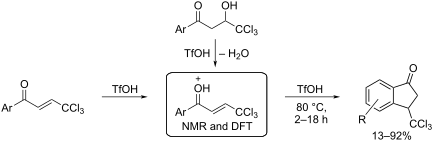
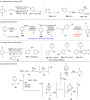
- carried out by condensation of acetophenones with chloral under reflux in acetic acid using the known literature procedure [19] (Scheme 2). Based on another literature approach [20], compounds 1p–v were obtained by acylation of electron-donating arenes with Wynberg lactone [21] (Scheme 3). Additionally
- condensation of acetophenones with chloral in refluxing acetic acid. Synthesis of 1-aryl-4,4,4-trichloro-3-hydroxybutan-1-ones 1p–v by acylation of electron-donating arenes with Wynberg lactone. Synthesis of 1-aryl-4,4,4-trichlorobut-2-en-1-ones 2 by dehydration of hydroxy ketones 1. Cyclization of 1-aryl


α-(Aminomethyl)acrylates as acceptors in radical–polar crossover 1,4-additions of dialkylzincs: insights into enolate formation and trapping
Beilstein J. Org. Chem. 2023, 19, 1443–1451, doi:10.3762/bjoc.19.103
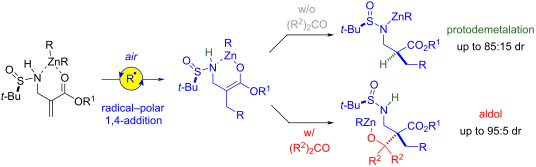
- protodemetalation to provide ultimately the 1,4-addition adduct. In the presence of carbonyl acceptors, aldol condensation occurs providing overall a tandem 1,4-addition–aldol process. When a tert-butanesulfinyl moiety is present on the nitrogen atom, these electrophilic substitution reactions occur with good
- carbonyl compounds to provide the corresponding zinc enolates (Scheme 1) [1][2]. While simple, this reaction offers attractive features: 1) it proceeds under mild conditions in the absence of any transition-metal catalyst; 2) the 1,4-addition step can be combined with condensation reactions of the zinc
- thus the sense of chiral induction for the 1,4-addition reactions reported in Table 2. Tandem 1,4-addition–aldol condensation reactions We then went on to consider tandem 1,4-addition–aldol condensation reactions (Scheme 6), which offer the interesting prospect of generating an all-carbon quaternary




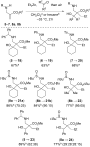


Visible-light-induced nickel-catalyzed α-hydroxytrifluoroethylation of alkyl carboxylic acids: Access to trifluoromethyl alkyl acyloins
Beilstein J. Org. Chem. 2023, 19, 1372–1378, doi:10.3762/bjoc.19.98
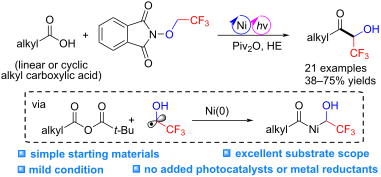
- acyloins (Scheme 1a). Anand’s group [25] demonstrated that a NHC-catalyzed selective acyloin condensation between aromatic aldehydes and trifluoroacetaldehyde ethyl hemiacetal afforded the analogous products (Scheme 1b). In comparison, the synthesis of trifluoromethyl aliphatic acyloins is still


Acetaldehyde in the Enders triple cascade reaction via acetaldehyde dimethyl acetal
Beilstein J. Org. Chem. 2023, 19, 1243–1250, doi:10.3762/bjoc.19.92
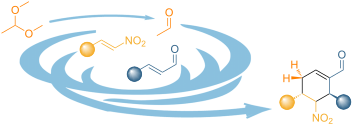
- condensation coproducts, such as water, hydrogen chloride or other small molecules [1][2][3]. MCRs have a great advantage over the classical two-component reactions; they allow the construction of complex molecular motifs in only one synthetic operational step starting from simpler building blocks. For this
- last step involves the enamine intermediate which drives an intramolecular aldol condensation to form the final product 5. In this elegant cascade process, catalyst 1 promotes three consecutive carbon–carbon bond forming steps generating four stereogenic centers with high diastereoselectivity and
- to cyclohexene carbaldehydes bearing a methyl group on the C-6 atom (Figure 1a). On the other hand, these structural motifs can also be synthesized via the condensation of two equivalents of an enal and nitromethane (Figure 1b), although in this case C-4 and C-6 present the same substituent [28


Selective construction of dispiro[indoline-3,2'-quinoline-3',3''-indoline] and dispiro[indoline-3,2'-pyrrole-3',3''-indoline] via three-component reaction
Beilstein J. Org. Chem. 2023, 19, 1234–1242, doi:10.3762/bjoc.19.91
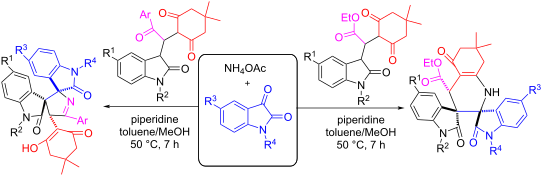
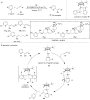
- meantime, the condensation of isatin 2 with ammonium acetate gave the 3-iminoisatin intermediate A. Secondly, Michael addition of the in situ-generated carbanion of the 3-isatyl-1,4-dicarbonyl compound 1 to 3- iminoisatin A gave intermediate B. In the case of intermediate B1 with an ethoxycarbonyl group

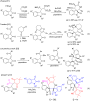


Unravelling a trichloroacetic acid-catalyzed cascade access to benzo[f]chromeno[2,3-h]quinoxalinoporphyrins
Beilstein J. Org. Chem. 2023, 19, 1216–1224, doi:10.3762/bjoc.19.89
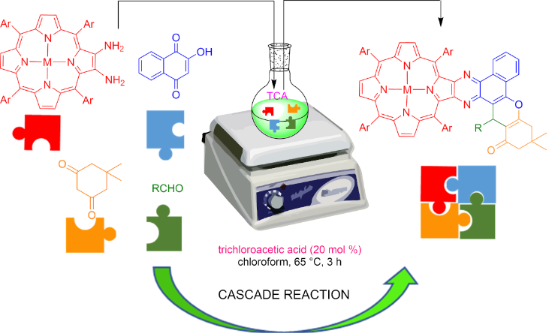
- condensation of intermediate 17 with 2-arylidene-5,5-dimethylcyclohexane-1,3-dione 18 (formed in situ through an Aldol condensation of aldehydes with dimedone), to generate copper(II) benzo[f]chromeno[2,3-h]dihydroquinoxalinoporphyrins which on dehydration produce the desired copper(II) benzo[f]chromeno[2,3-h


New one-pot synthesis of 4-arylpyrazolo[3,4-b]pyridin-6-ones based on 5-aminopyrazoles and azlactones
Beilstein J. Org. Chem. 2023, 19, 1155–1160, doi:10.3762/bjoc.19.83
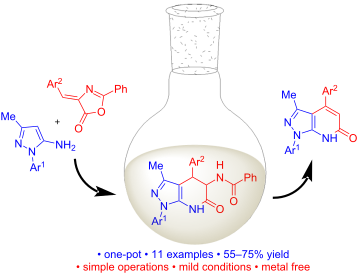
- few (Scheme 1). To obtain 4-arylpyrazolo[3,4-b]pyridin-6-ones, the only known one-step method is most often used, including the acid-catalyzed condensation of aminopyrazoles with ketoesters [1][16][18] (method A). Its significant disadvantage is the low yields of the target products (11–60%). Yields
- are also low in two-stage synthesis methods. The first of them is based on the three-component condensation of aminopyrazoles, Meldrum's acid, and aromatic aldehydes, followed by the oxidation of the intermediate with DDQ [13][16][19] (method B). The second one includes the reaction of an aromatic


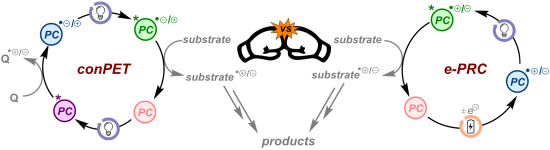
Photoredox catalysis harvesting multiple photon or electrochemical energies
Beilstein J. Org. Chem. 2023, 19, 1055–1145, doi:10.3762/bjoc.19.81




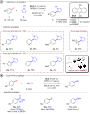
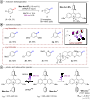
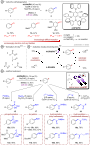
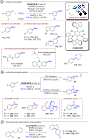



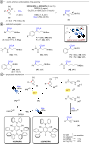
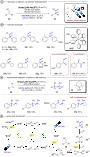
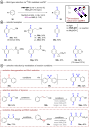


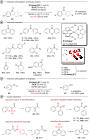
















Synthesis of tetrahydrofuro[3,2-c]pyridines via Pictet–Spengler reaction
Beilstein J. Org. Chem. 2023, 19, 991–997, doi:10.3762/bjoc.19.74
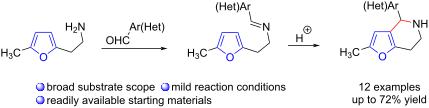
- the condensation of easily accessibly 2-(5-methylfuran-2-yl)ethanamine with commercially available aromatic aldehydes followed by acid-catalyzed Pictet–Spengler cyclization. Using this approach, we synthesized a range of 4-substituted tetrahydrofuro[3,2-c]pyridines in reasonable yields. The reactivity


The unique reactivity of 5,6-unsubstituted 1,4-dihydropyridine in the Huisgen 1,4-diploar cycloaddition and formal [2 + 2] cycloaddition
Beilstein J. Org. Chem. 2023, 19, 982–990, doi:10.3762/bjoc.19.73
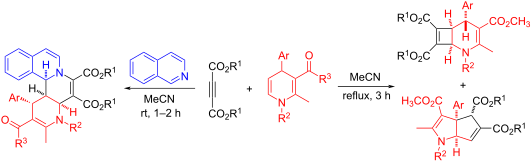
- -dihydropyridines derived from the condensation of acetylacetone also afforded the expected product 4o in 65% yield. The chemical structures of the obtained isoquinoline[2,1-h][1,7]naphthyridines 4a–o were fully characterized by various spectroscopy methods and further confirmed by determination of the single


Aromatic C–H bond functionalization through organocatalyzed asymmetric intermolecular aza-Friedel–Crafts reaction: a recent update
Beilstein J. Org. Chem. 2023, 19, 956–981, doi:10.3762/bjoc.19.72

- 2020, Pedrosa and co-workers devised a chiral heterogenous thiourea catalyst that was applied in an enantioefficient aza-Friedel–Crafts process. A series of heterogenous catalysts were prepared by condensation between alkaloids and polystyrene-derived isothiocyanates. These polymer-supported materials




Clauson–Kaas pyrrole synthesis using diverse catalysts: a transition from conventional to greener approach
Beilstein J. Org. Chem. 2023, 19, 928–955, doi:10.3762/bjoc.19.71
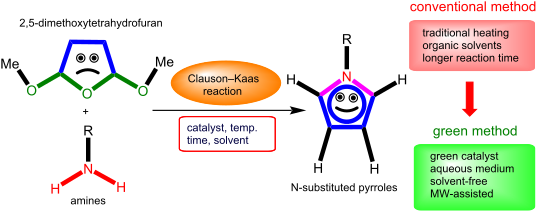
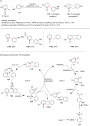
- synthesis of arylpyrrolo- and pyrazolopyrrolizinones, in which the Clauson–Kaas reaction was used as key step for the preparation of pyrrole derivatives 13. The condensation of amines 12 with 2,5-DMTHF (2) was carried out in the presence of p-chloropyridine hydrochloride as catalyst and dioxane as reaction
- 28 with squaric acid afforded anilinium squarate salt A. Further, a catalytic amount of squaric acid hydrolyzes 2,5-dimethoxytetrahydrofuran (2) to give a 1,4-dicarbonyl compound B in water. Finally, N-phenylpyrrole 29 was obtained by condensation of activated 1,4-dicarbonyl compound with aniline. In
- conditions in 90–96% yields (method 2). The optimization of the reaction conditions was performed in search of suitable conditions for this condensation reaction. Various acid catalysts (SiO2, HPA, HPA/SiO2, catalyst loadings (1 mol %, 2 mol %, 2.5 mol %, 0.3 g), solvent-systems (petroleum ether 40/60




Intermediates and shunt products of massiliachelin biosynthesis in Massilia sp. NR 4-1
Beilstein J. Org. Chem. 2023, 19, 909–917, doi:10.3762/bjoc.19.69
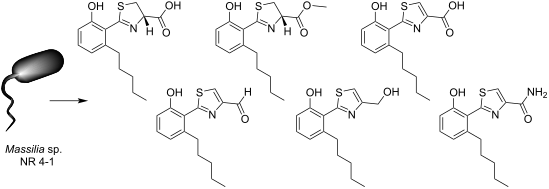
- 4), the biosynthesis starts from hexanoic acid which, upon its thioesterification, is elongated by three decarboxylative Claisen condensations with malonyl-CoA to a 6-pentylsalicyl thioester. A condensation with cysteine and a subsequent cyclization generate a 6-pentylsalicyl-thiazolinyl thioester
- protein RS02200: FAAL: fatty acyl-AMP ligase; ACP: acyl carrier protein; KS: β-ketoacyl synthase; AT: acyltransferase; KR: ketoreductase; C: condensation; A: adenylation; MT: methyltransferase; PCP: peptidyl carrier protein. A discrete enzyme, the thiazolinyl imide reductase RS02195 (Red), catalyzes the


Pyridine C(sp2)–H bond functionalization under transition-metal and rare earth metal catalysis
Beilstein J. Org. Chem. 2023, 19, 820–863, doi:10.3762/bjoc.19.62
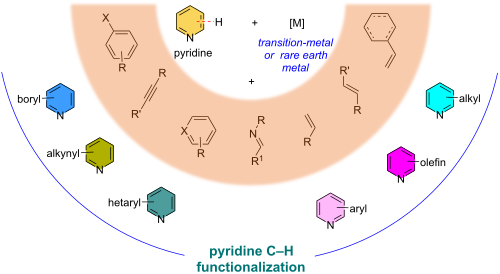
- pyridine syntheses have relied on the condensation of carbonyl compounds and amines for a very long time [11]. The classical methods for the synthesis of functionalized pyridine include the Hantzsch pyridine synthesis and the Bohlmann–Rahtz synthesis (Scheme 1a and b). Furthermore, alternative