


Search results
Search for "trifluoromethyl" in Full Text gives 401 result(s) in Beilstein Journal of Organic Chemistry. Showing first 200.
A straightforward conversion of 1,4-quinones into polycyclic pyrazoles via [3 + 2]-cycloaddition with fluorinated nitrile imines
Beilstein J. Org. Chem. 2021, 17, 1509–1517, doi:10.3762/bjoc.17.108
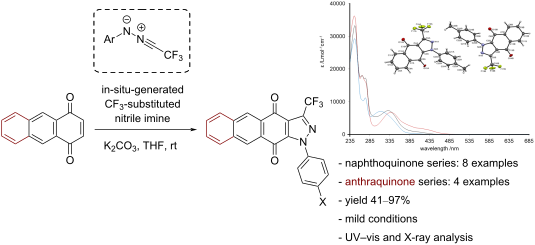
- stationary phase and either petroleum ether (or hexanes)/dichloromethane or petroleum ether/AcOEt mixtures as eluent to give analytically pure products 9a–h and 10c. 1-Phenyl-3-(trifluoromethyl)-1H-benzo[f]indazole-4,9-dione (9a) Reaction time 2 d; CC (SiO2, petroleum ether/CH2Cl2 2:1); 320 mg (93%); yellow
- , 1495, 1331, 1279, 1230, 1133, 1100, 921, 716 cm−1; ESIMS (m/z): 365.1 (100, [M + Na]+), 343.1 (12, [M + H]+); Anal. calcd for C18H9F3N2O2: C, 63.16; H, 2.65; N, 8.18; found: C, 63.34; H, 2.63; N, 8.24 (all values are given as percentages). 3a,5,6,7a-Tetramethyl-1-(p-tolyl)-3-(trifluoromethyl)-3a,7a


Iodine-catalyzed electrophilic substitution of indoles: Synthesis of (un)symmetrical diindolylmethanes with a quaternary carbon center
Beilstein J. Org. Chem. 2021, 17, 1464–1475, doi:10.3762/bjoc.17.102
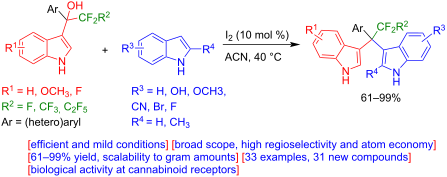
- unsymmetrical 3,3'-diindolylmethanes (DIMs) with a quaternary carbon center has been developed via iodine-catalyzed coupling of trifluoromethyl(indolyl)phenylmethanols with indoles. In contrast to previously reported methods, the new procedure is characterized by chemoselectivity, mild conditions, high yields
- ]. However, synthetic methods for efficient synthesis of unsymmetrical 3,3'-DIMs with a quaternary carbon center, including trifluoromethyl-substituted 3,3'-DIMs, are still rare. Sasaki et al. reported the reaction of trifluoromethyl(indolyl)phenylmethanols with indoles in the presence of trifluoroacetic
- via an iodine-catalyzed coupling reaction of trifluoromethyl(indolyl)phenylmethanol with indole derivatives. This method has also been extended to the synthesis of pentafluoro-ethylated and heptafluoro-propylated DIMs in excellent yields. Selected compounds were evaluated in radioligand binding


N-tert-Butanesulfinyl imines in the asymmetric synthesis of nitrogen-containing heterocycles
Beilstein J. Org. Chem. 2021, 17, 1096–1140, doi:10.3762/bjoc.17.86

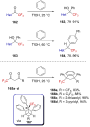
- reaction of N-tert-butanesulfinyl trifluoromethyl ketimines (SS)-37 with dimethylsulfoxonium methylide 38 gave trifluoromethylated aziridines 39 in moderate to excellent yields (45–93%), and good diastereoselectivities (86:14 to >99:1 dr). The absolute configuration of compounds 39 was determined by X-ray
- is present in the reaction medium [74]. The trifluoromethyl group occupies an equatorial position to avoid electrostatic repulsion with the lone pair of electrons of the sulfinyl group. The nucleophilic attack took place to the Si face of the ketimine 37 (Scheme 13). Recently, Yang and co-workers


Synthetic reactions driven by electron-donor–acceptor (EDA) complexes
Beilstein J. Org. Chem. 2021, 17, 771–799, doi:10.3762/bjoc.17.67

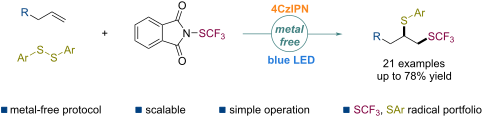
- trifluoromethylation (Scheme 25). A variety of olefins, such as ene carbamates, styrene, aliphatic olefins, vinyl ethers, and acrylates are compatible in this approach, affording corresponding β-(trifluoromethyl)alkynes with good to excellent yield. The bifunctionalization was achieved by an EDA-complex-initiated
- trifluoromethyl alkynylation product 84 with alkynyl sulfone 83, alkene 81, and Togni reagent 82 as substrates catalyzed by 2,4,6-trimethylpyridine (TMP). The EDA complex formed by electron donor TMP and electron acceptor Togni reagent 82 facilitated electron transfer, yielding trifluoromethyl radical to initiate
- of an EDA complex formed by indole derivative 94 and Umemoto reagent 20, which provided the trifluoromethyl-substituted spirocyclic indolene 95 with stereoisomeric center in good yield (up to 90%) under blue-light irradiation (Scheme 33). A variety of groups have been tolerated at the C2 position of


Metal-free visible-light-enabled vicinal trifluoromethyl dithiolation of unactivated alkenes
Beilstein J. Org. Chem. 2021, 17, 551–557, doi:10.3762/bjoc.17.49


Synthesis of N-perfluoroalkyl-3,4-disubstituted pyrroles by rhodium-catalyzed transannulation of N-fluoroalkyl-1,2,3-triazoles with terminal alkynes
Beilstein J. Org. Chem. 2021, 17, 504–510, doi:10.3762/bjoc.17.44
- ][22], and pyrroles [19]. The use of fluorine atoms and fluoro groups (including the trifluoromethyl group) is a widely used strategy to improve the properties of drug candidates or agrochemicals [23][24][25][26][27][28]. The development of new methods for the synthesis of selectively fluorinated and
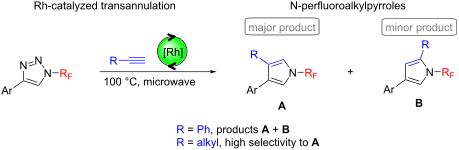
- time were used to ensure a full conversion for all studied substrates. Next, the transannulation reaction was tested using a range of different substituted N-trifluoromethyl- and N-pentafluoroethyl-4-aryl-1,2,3-triazoles 1 with phenylacetylene (Scheme 2). Good to moderate yields of product mixtures 2
- an electrophile, the crude product 2a was treated with butyllithium, followed by the reaction with carbon dioxide to afford pyrrole carboxylic acid 6 in a good overall yield (Scheme 5). The trifluoromethyl group on the nitrogen was not affected by these highly basic reaction conditions. The mechanism


Synthetic strategies of phosphonodepsipeptides
Beilstein J. Org. Chem. 2021, 17, 461–484, doi:10.3762/bjoc.17.41
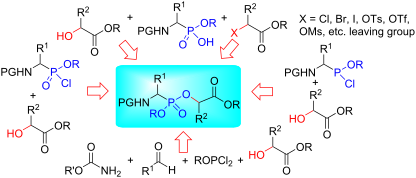
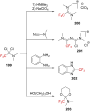
- insertion reactions. The reaction of the N-protected amino acids 209 and 210 with diethyl 1-diazo-2,2,2-trifluoroethylphosphonate (211) gave rise to the trifluoromethyl-containing phosphonodepsipeptides 212 and 213 with C-1-hydroxyalkylphosphonic acids in good yields under the catalysis of dirhodium


Synthesis of trifluoromethyl ketones by nucleophilic trifluoromethylation of esters under a fluoroform/KHMDS/triglyme system
Beilstein J. Org. Chem. 2021, 17, 431–438, doi:10.3762/bjoc.17.39
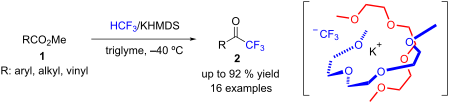
- biologically attractive trifluoromethyl ketones from readily available methyl esters using the potent greenhouse gas fluoroform (HCF3, HFC-23) was developed. The combination of fluoroform and KHMDS in triglyme at −40 °C was effective for this transformation, with good yields as high as 92%. Substrate scope of
- the trifluoromethylation procedure was explored for aromatic, aliphatic, and conjugated methyl esters. This study presents a straightforward trifluoromethylation process of various methyl esters that convert well to the corresponding trifluoromethyl ketones. The tolerance of various pharmacophores
- under the reaction conditions was also explored. Keywords: fluoroform; greenhouse gas; HFC-23; trifluoromethyl ketones; trifluoromethylation; Introduction In recent decades, organofluorine molecules have received widespread attention in the field of medicinal chemistry [1][2][3][4]. The introduction


Unexpected rearrangements and a novel synthesis of 1,1-dichloro-1-alkenones from 1,1,1-trifluoroalkanones with aluminium trichloride
Beilstein J. Org. Chem. 2021, 17, 404–409, doi:10.3762/bjoc.17.36
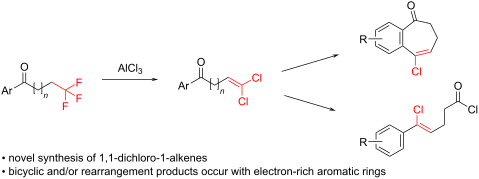
- -dichloro-1-alkenone 6a in 23% yield, without cleavage of the methyl ether [26] (Scheme 1). A similar AlCl3-promoted conversion of vinylic trifluoromethyl groups to 1,1-dichloroalkenes has previously been reported [27][28]. Additionally, 1,1-dichloroalkenes have also been prepared by the elimination of HCl
- trifluoromethyl to a trichloromethyl group with AlCl3 has been previously reported [30][31][32], investigations into the analogous transformation of aliphatic CF3 groups has been limited to adamantly-trifluoromethyl moieties [33][34]. An NMR analysis of the crude product mixture obtained using our original




CF3-substituted carbocations: underexploited intermediates with great potential in modern synthetic chemistry
Beilstein J. Org. Chem. 2021, 17, 343–378, doi:10.3762/bjoc.17.32
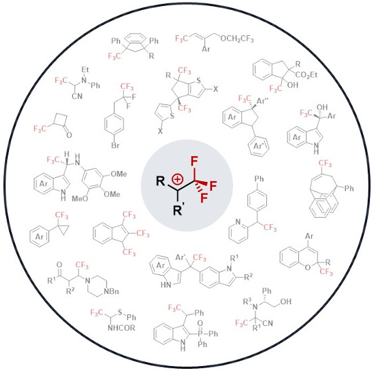
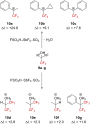
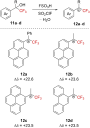
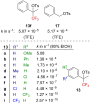
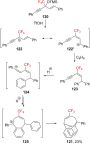
- long been investigated. This review highlights recent and past reports focusing on their study and potential in modern synthetic transformations. Keywords: carbocation; organic synthesis; superelectrophile; trifluoromethyl; Introduction Carbocations are pivotal intermediates in organic chemistry, and
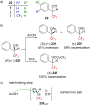
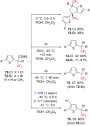
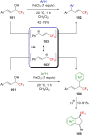
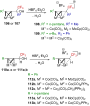
- cations is probably the α-(trifluoromethyl) carbocation. Many efforts are currently devoted to develop methods allowing the efficient insertion of fluorine atoms or fluorinated groups into organic molecules [7][8][9][10][11][12]. The increasing demand for fluorinated scaffolds, due to the striking
- material sciences [14][15][16][17]. In this context, deciphering the impact that can be exerted by the trifluoromethyl group on a cation and the associated consequences when facing the challenge of developing innovative synthetic methods are the subjects of this review. Review Quantitative parameters

















19F NMR as a tool in chemical biology
Beilstein J. Org. Chem. 2021, 17, 293–318, doi:10.3762/bjoc.17.28
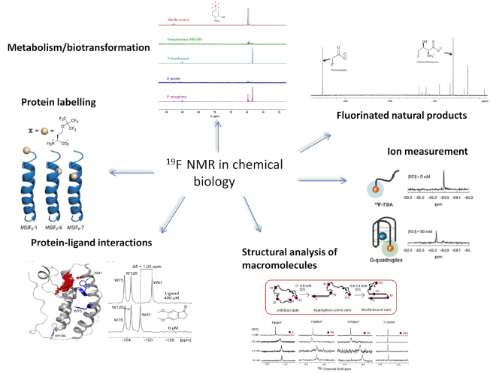
- general, of reactive trifluoromethyl derivatives such as 2,2,2-trifluoroethanethiol (TFET, 17) [23], 3-bromo-1,1,1-trifluoroacetone (BTFA, 18) [24] and fluorinated haloacetamides [25] that can react with nucleophilic side chains on the protein of interest. This approach has been extensively applied to
- study both soluble proteins [26] and membrane proteins [27]. Fluorine tags such at TFET (17) or BFTA (18) offer a good degree of sensitive and narrow 19F NMR line widths due to rapid rotation about the trifluoromethyl symmetry axis. Thus, they are very effective tools when studying small conformational
- include the tags based on fluorinated phenylacetamides, such as the 2-bromo-N-(4-(trifluoromethyl)phenyl)acetamide (BTFMA, 19) and N-(4-bromo-3-(trifluoromethyl)phenyl)acetamide (3-BTFMA, 20) developed by Manglik et al. to study the structural dynamics of the cytoplasmic domain of the β2-adrenergic


The preparation and properties of 1,1-difluorocyclopropane derivatives
Beilstein J. Org. Chem. 2021, 17, 245–272, doi:10.3762/bjoc.17.25
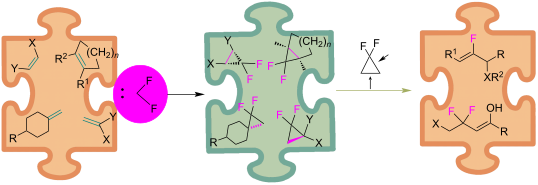
- , preparation, and ease of storage. The generation of difluorocarbene from trimethyl(trifluoromethyl)silane: One more modified method, which also increases the rate of the reaction, is the generation of difluorocarbene from TMSCF3 (31), which is also known as the Ruppert–Prakash reagent [39]. The advantages of
- the avoidance of gaseous byproducts [49]. Other mild sources of difluorocarbene include trifluoro(trifluoromethyl)silane (CF3SiF3 [50]) and difluorotris(trifluoromethyl)phosphorane ((CF3)3PF2 [51]). Difluorocarbene generation through the decomposition of hexafluoropropylene oxide upon heating
- Difluorocarbene methods with organometallic sources Decomposition of phenyl(trifluoromethyl)mercury in the presence of sodium iodide: The preparation of difluorocyclopropanes using phenyl(trifluoromethyl)mercury (PhHgCF3, 45, Seyferth's reagent) as a source of difluorocarbene, results in good yields of the




Decarboxylative trifluoromethylthiolation of pyridylacetates
Beilstein J. Org. Chem. 2021, 17, 229–233, doi:10.3762/bjoc.17.23
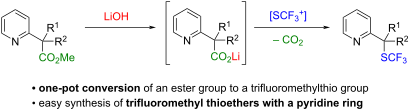
- achieved using N-(trifluoromethylthio)benzenesulfonimide as the electrophilic trifluoromethylthiolation reagent. The reaction afforded the corresponding trifluoromethyl thioethers in good yield. Furthermore, the preparation of lithium pyridylacetates by saponification of the corresponding methyl esters and
- ]. Introducing a trifluoromethylthio group (CF3S–), which has high lipophilicity and strong electron-withdrawing properties, into medicinal compounds can improve their pharmacokinetic properties [7][8][9][10][11]. Hence, the development of a synthetic method for the preparation of trifluoromethyl thioethers has
- trifluoromethyl thioethers would be useful for the preparation of various medicinally relevant compounds. Electrophilic decarboxylative functionalization of 2-pyridylacetates. One-pot procedure for the synthesis of 2a. Substrate scope. aSaponification was carried out with 2.5 equiv of LiOH, and 2.5 equiv of 6 was


Exploring the possibility of using fluorine-involved non-conjugated electron-withdrawing groups for thermally activated delayed fluorescence emitters by TD-DFT calculation
Beilstein J. Org. Chem. 2021, 17, 210–223, doi:10.3762/bjoc.17.21
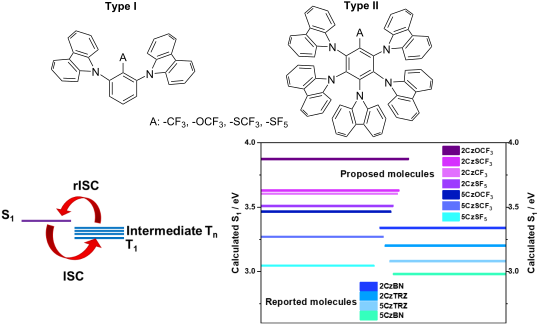
- Dongyang Chen Eli Zysman-Colman Organic Semiconductor Centre, EaStCHEM School of Chemistry, University of St Andrews, St Andrews, Fife, KY16 9ST, UK 10.3762/bjoc.17.21 Abstract The trifluoromethyl group has been previously explored as a non-conjugated electron-withdrawing group in donor–acceptor
- ]. Huang et al. also adopted a multiple donor strategy in concert with the weak trifluoromethyl (CF3) acceptor group in their TADF emitter design. The blue-emitting TADF emitter 5CzCF3 possessed a miniscule measured ΔEST of 0.02 eV and ΦPL of 43% in oxygen-free toluene [25]. The solution-processed device
- within TADF emitter design (Figure 1) [25][26][27]. In the present study, we report on the impact of incorporating other fluorine-containing electron-withdrawing groups beyond trifluoromethyl (CF3), including trifluoromethoxy (OCF3), trifluoromethylthio (SCF3), and pentafluorosulfanyl (SF5) groups, and


Facile preparation and conversion of 4,4,4-trifluorobut-2-yn-1-ones to aromatic and heteroaromatic compounds
Beilstein J. Org. Chem. 2021, 17, 132–138, doi:10.3762/bjoc.17.14
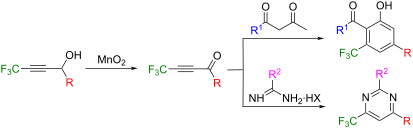
- Sandford group clarified the high potency of these compounds for the conjugate addition of N- as well as O-nucleophiles [21]. On the basis of such an idea, we tried two routes to gain access to 1) 4-substituted 6-(trifluoromethyl)salicylate derivatives (C-nucleophiles) and 2) 6-substituted 4
- -(trifluoromethyl)pyrimidines (N-nucleophiles), both in a concise fashion, with the full details, including the preparation of 2, being reported herein. Results and Discussion Investigations on the reaction conditions were carried out for the oxidation of propargylic alcohols 1, which were readily accessible by our
- obtained in good to excellent yield without contamination by the deacetylated products 5. With the success of the regiospecific formation of 4-substituted 6-(trifluoromethyl)salicylate derivatives 4, as shown in Table 4, the application of ynones 2 was demonstrated at the next stage for the construction of


Synthesis of aryl 2-bromo-2-chloro-1,1-difluoroethyl ethers through the base-mediated reaction between phenols and halothane
Beilstein J. Org. Chem. 2021, 17, 89–96, doi:10.3762/bjoc.17.9

- . Particularly, the latter approach is useful for obtaining liquid crystal materials [35][36][37][38]. In the case of using 2-chloro-3,3,3-trifluoroprop-1-ene (route (c), Scheme 1), the aryl enol ether with a trifluoromethyl group was obtained [39][40]. A further example for the formation of an aryl fluoroalkyl


Benzothiazolium salts as reagents for the deoxygenative perfluoroalkylthiolation of alcohols
Beilstein J. Org. Chem. 2021, 17, 83–88, doi:10.3762/bjoc.17.8

- species with 19F and 1H spectra consistent with the trifluoromethyl thionoester 4a (7% NMR yield, Table 1, entry 1). The formation of both species can be explained by the mechanism shown in Scheme 3 [36]. Nucleophilic attack of the alcohol in the presence of NEt(iPr)2 at the C2-position of the BT reagent


An atom-economical addition of methyl azaarenes with aromatic aldehydes via benzylic C(sp3)–H bond functionalization under solvent- and catalyst-free conditions
Beilstein J. Org. Chem. 2020, 16, 3093–3103, doi:10.3762/bjoc.16.259
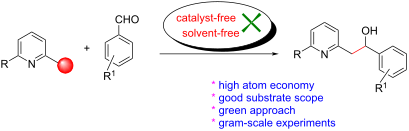
- ) also reacted well and provided the alcohol 3e in 55% yield along with the alkene product 4e in 19% yield (Table 2, entry 5). Exceptionally, substrates with groups such as cyano, trifluoromethyl, and formyl were reacted and provided the respective dehydrated alkenylpyridine compounds 4i–k in 77%, 71


Silver-catalyzed synthesis of β-fluorovinylphosphonates by phosphonofluorination of aromatic alkynes
Beilstein J. Org. Chem. 2020, 16, 3086–3092, doi:10.3762/bjoc.16.258
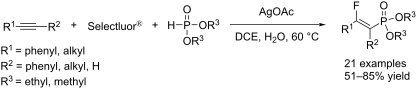
- . Among the strategies for constructing diverse alkenes containing two-heteroatom bonds, such as disulfonylation [14][15][16], heterohalogenation [17][18][19][20], bis(trifluoromethyl)thiolation [21], and phosphorylation [22], the direct heterodifunctionalization of alkynes using three-component reactions



Deoxyfluorination of acyl fluorides to trifluoromethyl compounds by FLUOLEAD®/Olah’s reagent under solvent-free conditions
Beilstein J. Org. Chem. 2020, 16, 3052–3058, doi:10.3762/bjoc.16.254
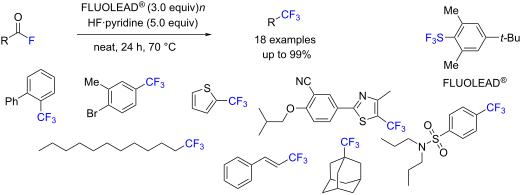
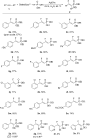
- the formation of trifluoromethyl compounds from acyl fluorides has been developed. The combination of FLUOLEAD® and Olah’s reagent in solvent-free conditions at 70 °C initiated the significant deoxyfluorination of the acyl fluorides and resulted in the corresponding trifluoromethyl products with high
- yields (up to 99%). This strategy showed a great tolerance for various acyl fluorides containing aryloyl, (heteroaryl)oyl, or aliphatic acyl moieties, providing good to excellent yields of the trifluoromethyl products. Synthetic drug-like molecules were also transformed into the corresponding
- trifluoromethyl compounds under the same reaction conditions. A reaction mechanism is proposed. Keywords: acyl fluorides; deoxyfluorination; fluorine; solvent-free; trifluoromethyl group; Introduction Due to an impressively wide effect of fluorine on the biological activity, the insertion of fluorine atoms or


Synthesis of purines and adenines containing the hexafluoroisopropyl group
Beilstein J. Org. Chem. 2020, 16, 2739–2748, doi:10.3762/bjoc.16.224
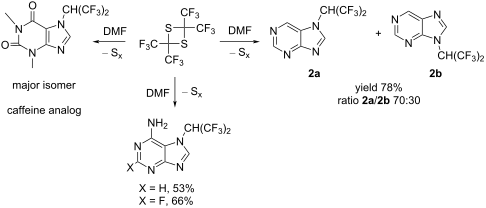
- were prepared by the reaction of 2,2,4,4-tetrakis(trifluoromethyl)-1,3-dithietane (1) with the corresponding substrates, resulting in the selective alkylation of one of the nitrogen atoms of the imidazole ring. The reaction proceeds under mild conditions in a polar solvent, giving the alkylated
- formation of a new derivative of caffeine. Keywords: adenine; caffeine; cyclic dimer of hexafluorothioacetone; hexafluoroisopropyl group; purine; 2,2,4,4-tetrakis(trifluoromethyl)-1,3-dithietane; theophylline; Introduction Despite significant progress in the last 20–30 years, the selective introduction of
- , and the conversion of the ketoester into an amino acid [2]; and the reaction of aldehydes with either Ph3P/(CF3)2CCl2 [3] or 2,2,4,4-tetrakis(trifluoromethyl)-1,3-dithietane [4][5]. The last method was employed in the synthesis of 16,16,16,17,17,17-hexafluororetinal, as reported by the Haas group [5



Activation of pentafluoropropane isomers at a nanoscopic aluminum chlorofluoride: hydrodefluorination versus dehydrofluorination
Beilstein J. Org. Chem. 2020, 16, 2623–2635, doi:10.3762/bjoc.16.213
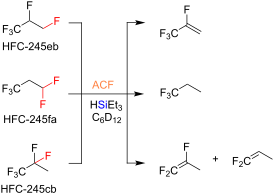
- need the presence of a hydrogen source in order to promote the activation of at least one C–F bond by the formation of the thermodynamically stable Si–F bond. This observation is consistent with a decrease of the bond dissociation energies of C–F bonds from trifluoromethyl via difluoromethyl to


Thermodynamic and electrochemical study of tailor-made crown ethers for redox-switchable (pseudo)rotaxanes
Beilstein J. Org. Chem. 2020, 16, 2576–2588, doi:10.3762/bjoc.16.209

- ion, which resulted in binding constants in the optimal range for ITC titrations [52][53]. The even more weakly coordinating tetrakis(3,5-bis(trifluoromethyl)phenyl)borate (BArF24−) anion exemplarily served for comparison to study the influence of the anion on the binding constant. Two different
- construction of new architectures with emergent properties. Structures of the compounds used in this study: a) crown-8 analogs; b) crown-7 analogs; c) secondary ammonium axles. BArF24− represents tetrakis(3,5-bis(trifluoromethyl)phenyl)borate. Solid-state structures of a) exTTFC7 (CH3CN molecule omitted for




Catalytic trifluoromethylation of iodoarenes by use of 2-trifluoromethylated benzimidazoline as trifluoromethylating reagent
Beilstein J. Org. Chem. 2020, 16, 2442–2447, doi:10.3762/bjoc.16.198
- ; catalysis; copper; fluorine chemistry; trifluoromethylation; Introduction The introduction of a trifluoromethyl group is one of the most attractive reactions in drug discovery [1][2]. In the past decade, trifluoromethylation reactions of aryl halides in the presence of transition-metal complexes were
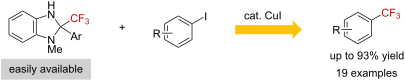
- conditions by use of p-iodonitrobenzene (1a) and 2-phenyl-2-trifluoromethyl-1-methylbenzimidazoline (2) (Table 1). Using 3 equiv of CuI gave 4-trifluoromethyl-1-nitrobenzene (3a) quantitatively, as we had reported previously (Table 1, entry 1) [22]. Decreasing the CuI catalyst loading to 20 mol % lowered the
- , entries 9 and 10). However, we selected the most stable and readily available CuI as the catalyst for further investigations. Thus, the trifluoromethylation of p-iodonitrobenzene proceeded by use of 2-phenyl-2-trifluoromethyl-1-methylbenzimidazoline in the presence of catalytic amounts of CuI and 2,2



Chan–Evans–Lam N1-(het)arylation and N1-alkеnylation of 4-fluoroalkylpyrimidin-2(1H)-ones
Beilstein J. Org. Chem. 2020, 16, 2304–2313, doi:10.3762/bjoc.16.191

- , heterocyclic analogues of activated ketimines (Figure 1), thus offering potential applications in the design of new heterocyclic chemotypes [21][22][23][24][25]. Compounds I are precursors of trifluoromethyl-substituted dihydropyrimidine derivatives which appear as original and potent scaffolds in medicinal
- -deficient pyrimidyl instead of the pyridyl residue was completely unreactive to N1-hetarylation of substrate 1a under the conditions used. Contrary to this case, the method developed allowed electron-rich heterocyclic nuclei including the 3-thienyl (but not isomeric 2-thienyl), 5-trifluoromethyl-3-thienyl
- -arylation process. As evidenced by LCMS analysis, the reaction with 6-methyl-4-(trifluoromethyl)pyrimidin-2(1H)-one provided a mixture of three cross-coupling products (not separated), with a total yield of no more than 18%, which suggests a poor regioselectivity. Conclusion We have optimized the reaction





