Search results
Search for "one-pot reaction" in Full Text gives 183 result(s) in Beilstein Journal of Organic Chemistry.
Hoveyda–Grubbs catalysts with an N→Ru coordinate bond in a six-membered ring. Synthesis of stable, industrially scalable, highly efficient ruthenium metathesis catalysts and 2-vinylbenzylamine ligands as their precursors
Beilstein J. Org. Chem. 2019, 15, 769–779, doi:10.3762/bjoc.15.73
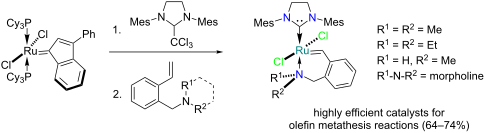
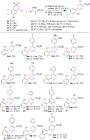
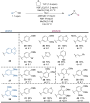
- alkali in the last step, which provides the target high-purity imidazolidine in 85–87% yield. We stress that there is no need for the isolation and purification of intermediate substances. The introduction of Ru-indenylidene complex 8 in one-pot reaction with adduct 9 followed by reaction with styrenes


A novel and efficient synthesis of phenanthrene derivatives via palladium/norbornadiene-catalyzed domino one-pot reaction
Beilstein J. Org. Chem. 2019, 15, 291–298, doi:10.3762/bjoc.15.26
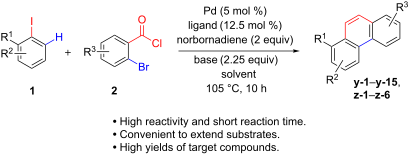
- , which indicated that the reaction was strongly influenced by steric hindrance. It was noteworthy that this sequential one-pot reaction could be carried out on the gram scale (Scheme 4). We selected 2-iodotoluene and 2-bromo-4,5-dimethoxybenzoyl chloride as substrates. When the reaction of 2-iodotoluene




Green synthesis of new chiral 1-(arylamino)imidazo[2,1-a]isoindole-2,5-diones from the corresponding α-amino acid arylhydrazides in aqueous medium
Beilstein J. Org. Chem. 2018, 14, 2923–2930, doi:10.3762/bjoc.14.271
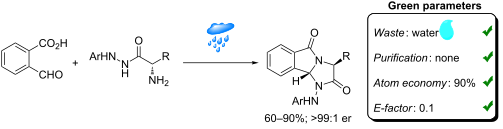
- on the 1H-imidazo[2,1-a]isoindolone skeleton, Hosseini-Zare et al. reported the synthesis of new 2,3-diaryl-5H-imidazo[2,1-a]isoindol-5-ones via the one pot reaction of 1,2-diketones, 2-formylbenzoic acid and ammonium acetate [15]. These methodologies usually use toxic solvents such as benzene [16


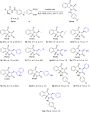

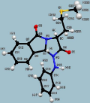

DABCO- and DBU-promoted one-pot reaction of N-sulfonyl ketimines with Morita–Baylis–Hillman carbonates: a sequential approach to (2-hydroxyaryl)nicotinate derivatives
Beilstein J. Org. Chem. 2018, 14, 2771–2778, doi:10.3762/bjoc.14.254
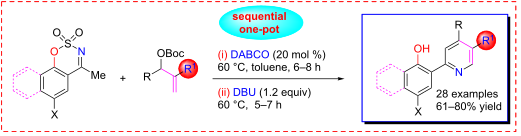



Synthesis of a leopolic acid-inspired tetramic acid with antimicrobial activity against multidrug-resistant bacteria
Beilstein J. Org. Chem. 2018, 14, 2482–2487, doi:10.3762/bjoc.14.224
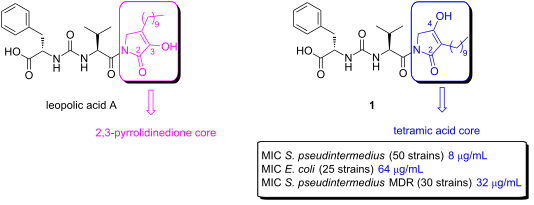
- protect the oxygen at C-4 [15]. We selected a benzyl protecting group, as it could be cleaved by catalytic hydrogenation together with the benzyl ester of L-phenylalanine in the ureidodipeptide fragment (see synthesis of compound 20) by a one-pot reaction. To increase the reaction rate toward O-alkylation


One-pot synthesis of epoxides from benzyl alcohols and aldehydes
Beilstein J. Org. Chem. 2018, 14, 2308–2312, doi:10.3762/bjoc.14.205
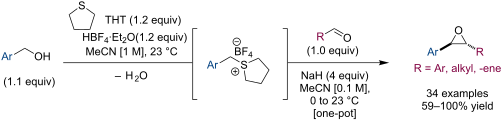
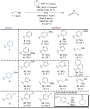
- -epoxide adduct 25 [35]. However, the one-pot reaction was highly successful with three electron-rich benzyl alcohols 26, 27, and 28 all bearing multiple oxygenation and with a large panel of electron-rich aldehydes (Figure 2). The reaction was highly successful even when both partners were poly-oxygenated



Coordination-driven self-assembly of discrete Ru6–Pt6 prismatic cages
Beilstein J. Org. Chem. 2018, 14, 2242–2249, doi:10.3762/bjoc.14.199
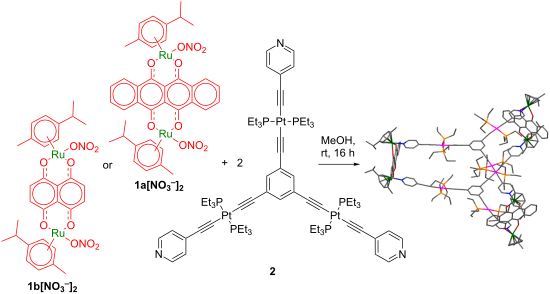
- sophisticated heterobimetallic supramolecular architectures in a one-pot reaction and their functional properties are currently being explored [55][62][63][64][65][66][67][68][69][70]. The incorporation of two different metal centers in a supramolecular architecture can impart different functional properties


Coordination-driven self-assembly vs dynamic covalent chemistry: versatile methods for the synthesis of molecular metallarectangles
Beilstein J. Org. Chem. 2018, 14, 2027–2034, doi:10.3762/bjoc.14.178
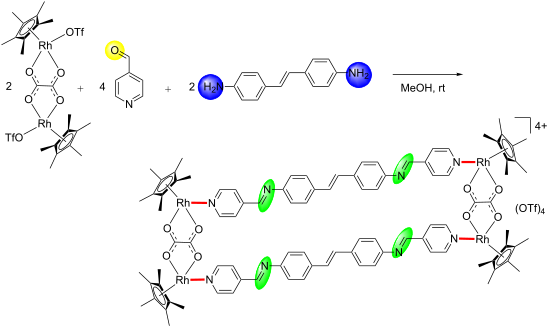
- self-assembly; dynamic covalent chemistry; half-sandwich rhodium complex; metallarectangles; one-pot reaction; supramolecular chemistry; Introduction Over the past two decades, supramolecular structures with organometallic half-sandwich fragments have attracted much attention, including
- an efficient method to form metallarectangles, we sought to test the possibility of forming the desired assemblies in a one-pot reaction, i.e., the combination of coordination-driven and dynamic covalent self-assembly strategies (Scheme 1, method C) [33]. When a mixture of the labile ligand complex 1


Heterogeneous acidic catalysts for the tetrahydropyranylation of alcohols and phenols in green ethereal solvents
Beilstein J. Org. Chem. 2018, 14, 1655–1659, doi:10.3762/bjoc.14.141
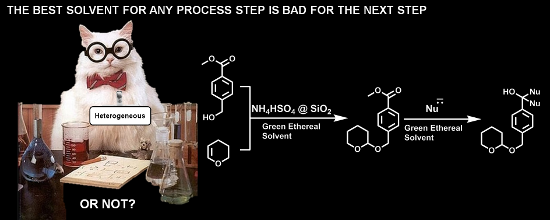
- one-pot reaction conditions. Keywords: green chemistry; green solvents; heterogeneous catalysts; multistep reactions; tetrahydropyranylation; Introduction Due to their general stability to a wide range of reagents and ease of removal, tetrahydropyranyl (THP) ethers are widely employed in multistep


Novel unit B cryptophycin analogues as payloads for targeted therapy
Beilstein J. Org. Chem. 2018, 14, 1281–1286, doi:10.3762/bjoc.14.109
- pseudo-high-dilution conditions to afford 20 and 21 as described previously [16]. Then the diol was transformed into the epoxide following a three-step one-pot reaction as extensively used in the synthesis of cryptophycin analogues [46]. Cryptophycin analogues 22 and 23 were obtained in good purity after


Synthesis of pyrazolopyrimidinones using a “one-pot” approach under microwave irradiation
Beilstein J. Org. Chem. 2018, 14, 1222–1228, doi:10.3762/bjoc.14.104

- substrate scope for the one-pot reaction was then explored, with variations of both R1 and R2 groups at the pyrazolo[1,5-a]pyrimidinone core (Scheme 2). Pyrazolo[1,5-a]pyrimidinones containing aromatic groups with electron-withdrawing and electron-donating substituents at the ortho, meta and para positions


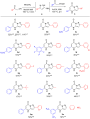

Methyl isocyanide as a convertible functional group for the synthesis of spirocyclic oxindole γ-lactams via post-Ugi-4CR/transamidation/cyclization in a one-pot, three-step sequence
Beilstein J. Org. Chem. 2018, 14, 875–883, doi:10.3762/bjoc.14.74
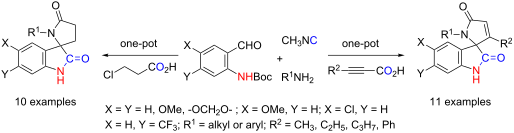
- spiro[indoline-3,2'-pyrrolidine]-2,5'-diones, via a post-Ugi-domino transamidation/cyclization sequential process, has been achieved in three sequential steps utilizing a one-pot reaction protocol. The variation in carboxylic acid substrates allows for the generation of new chiral racemic quaternary
- ) and methyl isocyanide (4) in a one-pot reaction process to generate compound 6b from 5b. In all cases, the Michael acceptor [52] (intermediate II) was generated in situ from 6b, under basic conditions (Table 1, entry 1, K2CO3/MeCN/reflux), followed by the intramolecular cyclization proceeding through


Oxidative cycloaddition of hydroxamic acids with dienes or guaiacols mediated by iodine(III) reagents
Beilstein J. Org. Chem. 2018, 14, 531–536, doi:10.3762/bjoc.14.39
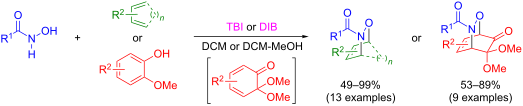
- substituent of isoprene. Conclusion In summary, we demonstrated that BTI and DIB promote the formation of acylnitroso species from hydroxamic acids in the presence of various simple dienes to give the corresponding HDA adducts in moderate to high yields. The present method could be applied to a one-pot
- reaction involving the generation of MOBs by the dearomatization of guaiacols followed by the HDA reactions of acylnitroso species with MOBs as dienes. Our findings provide an extended scope of dienes for the HDA reactions and HDA reactions of acylnitroso species with MOBs using single oxidants. Hetero


One-pot preparation of 4-aryl-3-bromocoumarins from 4-aryl-2-propynoic acids with diaryliodonium salts, TBAB, and Na2S2O8
Beilstein J. Org. Chem. 2018, 14, 345–353, doi:10.3762/bjoc.14.22
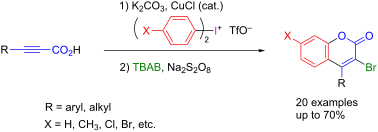
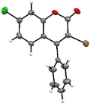
- , respectively, as shown in Scheme 2. As regards the synthetic utilization of the products in the present one-pot reaction, treatment of 3-bromo-4-phenylcoumarin (3Aa) with Zn in ethanol under refluxing conditions gave 4-phenylcoumarin (4Aa) in 81% yield. Treatment of 3-bromo-4-phenylcoumarin (3Aa) with p



Transition-metal-free [3 + 3] annulation of indol-2-ylmethyl carbanions to nitroarenes. A novel synthesis of indolo[3,2-b]quinolines (quindolines)
Beilstein J. Org. Chem. 2018, 14, 194–202, doi:10.3762/bjoc.14.14
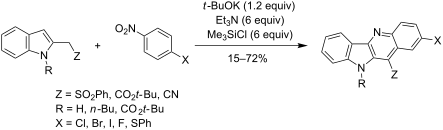
- , we decided to perform a one-pot reaction in which in situ N-silylation furnished the expected carbanion precursor. Thus, when we treated tert-butyl indol-2-ylacetate (1c) and p-chloronitrobenzene (2a) with triethylamine and potassium tert-butoxide and then added trimethylchlorosilane we obtained


One-pot three-component route for the synthesis of S-trifluoromethyl dithiocarbamates using Togni’s reagent
Beilstein J. Org. Chem. 2017, 13, 2502–2508, doi:10.3762/bjoc.13.247
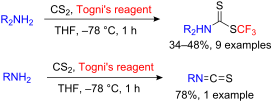
- dithiocarbamates via a one-pot reaction of an amine, CS2 and an electrophile is of great interest due to its simplicity and environmental friendly procedure. Diverse electrophiles including alkyl halides [18], epoxides [19], alkenes [20][21][22], aldehydes [23], and alcohols [24] were applied for the synthesis of
- CF3 group was observed at around 128 ppm as quartet with a coupling constant of ≈308 Hz. In addition, a singlet at −40 ppm in the 19F NMR spectra was assigned to the CF3 group. The one-pot reaction of benzylamine with CS2 and Togni's reagent I under optimal reaction conditions was also investigated


One-pot syntheses of blue-luminescent 4-aryl-1H-benzo[f]isoindole-1,3(2H)-diones by T3P® activation of 3-arylpropiolic acids
Beilstein J. Org. Chem. 2017, 13, 2340–2351, doi:10.3762/bjoc.13.231
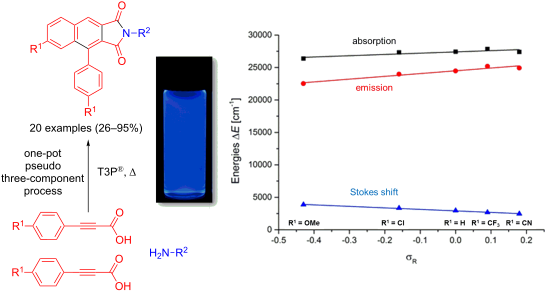
- be readily activated with T3P® (n-propylphosphonic acid anhydride) to initiate a domino reaction furnishing 4-arylnaphtho[2,3-c]furan-1,3-diones in excellent yields. These anhydrides can be considered as reactive intermediates for a subsequent imidation with primary amines and, therefore, a one-pot
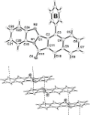
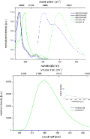
- reaction in the sense of a consecutive pseudo three-component process evolved. The resulting 4-aryl-1H-benzo[f]isoindole-1,3(2H)-diones are interestingly blue to greenish-blue emissive upon excitation of the longest wavelength absorption bands. The photophysical characterization by absorption and emission




Diosgenyl 2-amino-2-deoxy-β-D-galactopyranoside: synthesis, derivatives and antimicrobial activity
Beilstein J. Org. Chem. 2017, 13, 2310–2315, doi:10.3762/bjoc.13.227
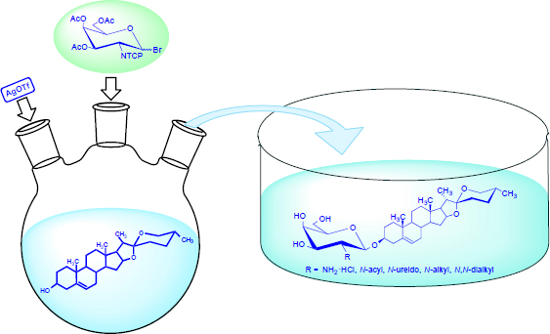
- . This procedure removes the TCP and acetyl protecting groups in a one-pot reaction and yields diosgenyl 2-amino-2-deoxy-β-D-galactopyranoside (4). Saponin 4 treated with the HCl in MeOH was converted into hydrochloride 5. To explore the influence of different modifications of the amino group in 4 on its


Preparation of imidazo[1,2-a]-N-heterocyclic derivatives with gem-difluorinated side chains
Beilstein J. Org. Chem. 2017, 13, 2115–2121, doi:10.3762/bjoc.13.208
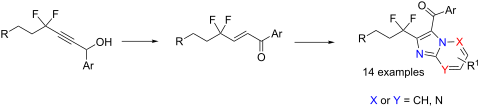
- therefore the corresponding structures 7d and 7g were proposed by analogy. These oxidative coupling conditions appeared compatible with the first isomerization step, therefore, the possibility of a "one-pot" reaction was considered. Indeed, by heating alcohol 5a (Table 1, entry 1) with 2-aminopyridine and


Preactivation-based chemoselective glycosylations: A powerful strategy for oligosaccharide assembly
Beilstein J. Org. Chem. 2017, 13, 2094–2114, doi:10.3762/bjoc.13.207
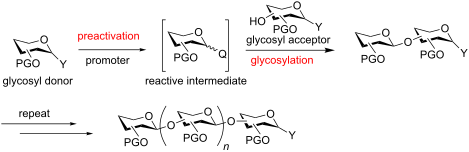
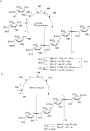
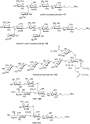
- hexasaccharide 105 was prepared within 7 hours in an excellent overall yield of 47% from the sequential one-pot reaction of 101, 102, 103 and 104. Compared to the automated solid-phase synthesis of Globo-H [61], the solution-based preactivation-based synthesis gave a higher overall yield for glyco-assembly (47







Solvent-free and room temperature synthesis of 3-arylquinolines from different anilines and styrene oxide in the presence of Al2O3/MeSO3H
Beilstein J. Org. Chem. 2017, 13, 1977–1981, doi:10.3762/bjoc.13.193
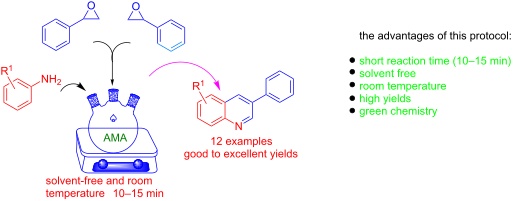
- been developed in the presence of Al2O3/MeSO3H via one-pot reaction of anilines and styrene oxide. This methodology provides very rapid access to 3-arylquinolines in good to excellent yields under solvent-free conditions at room temperature in air. Keywords: 3-arylquinolines; Al2O3; MeSO3H; one-pot
- reaction; solvent-free conditions; Introduction Quinoline derivatives have received considerable interest because they are found in numerous natural products with many biological activities. They have also played an important role in medicinal chemistry due to their pharmacological properties [1][2][3][4


Solid-state mechanochemical ω-functionalization of poly(ethylene glycol)
Beilstein J. Org. Chem. 2017, 13, 1963–1968, doi:10.3762/bjoc.13.191
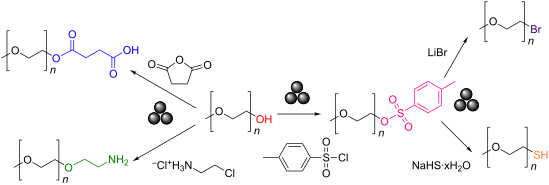
- ball-milling. Namely, the tosyl moieties are known as excellent leaving groups, making tosylated mPEG (mPEGx–OTs) useful synthons for accessing further PEG derivatives. For this, we conducted a two-step one-pot reaction involving milling first the mPEG reactant with a base, followed by addition of p


Accessing simply-substituted 4-hydroxytetrahydroisoquinolines via Pomeranz–Fritsch–Bobbitt reaction with non-activated and moderately-activated systems
Beilstein J. Org. Chem. 2017, 13, 1871–1878, doi:10.3762/bjoc.13.182
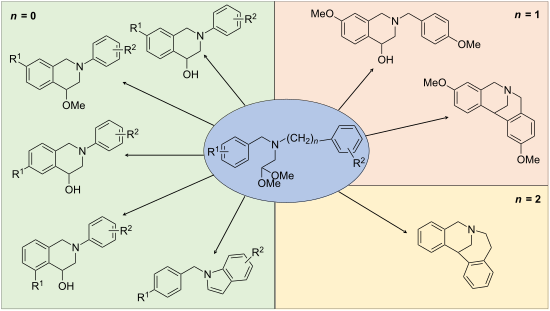
- , is scarcely represented in the literature. Here, the factors controlling the regiochemical outcome of cyclization are evaluated. Results: A double reductive alkylation was telescoped into a one-pot reaction delivering good to excellent yields of desired aminoacetals for cyclization. Cyclization of
- could be telescoped into a one-pot reaction was investigated. This reaction proceeded to deliver good to excellent yields of the desired aminoacetals 9a–g,i–p accompanied by only a small amount of side products (Table 1). As an exception to the above, the acetal 9h did not form, which could be


Oxidative dehydrogenation of C–C and C–N bonds: A convenient approach to access diverse (dihydro)heteroaromatic compounds
Beilstein J. Org. Chem. 2017, 13, 1670–1692, doi:10.3762/bjoc.13.162
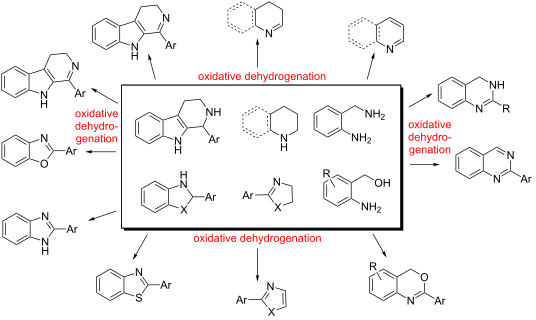
- benzothiazolines 64 to substituted pyridines 65 and benzothiazoles 66, respectively, in moderate to excellent yields (Scheme 18) [82]. The reaction was performed in methanol at ambient temperature. The optimized procedure also generated 65 and 66 from a one-pot reaction of various dicarbonyls, formaldehyde
- the aforementioned heteroaromatic compounds in a one-pot reaction from aldehydes with 2-aminobenzylamines and 2-aminobenzyl alcohols with molecular oxygen as the oxidant (Scheme 22). It is a simple and environmentally benign protocol for the generation of these heterocycles (Scheme 22) in excellent
- was used as a catalyst for the synthesis of 2-arylquinazolines 99 from a one-pot reaction involving arylmethamines with 2-aminophenylketones 98 or aldehydes in the presence of oxygen (Scheme 39) [98]. Diversely substituted 2-arylquinazolines were synthesized in moderate to excellent yields








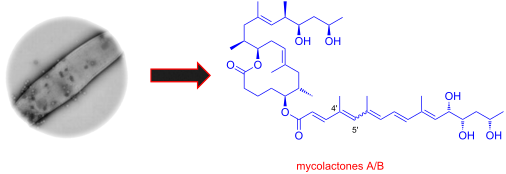
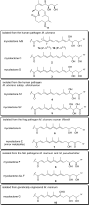
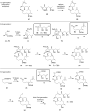
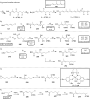
The chemistry and biology of mycolactones
Beilstein J. Org. Chem. 2017, 13, 1596–1660, doi:10.3762/bjoc.13.159