


Search results
Search for "carbene" in Full Text gives 348 result(s) in Beilstein Journal of Organic Chemistry. Showing first 200.
All-carbon [3 + 2] cycloaddition in natural product synthesis
Beilstein J. Org. Chem. 2020, 16, 3015–3031, doi:10.3762/bjoc.16.251
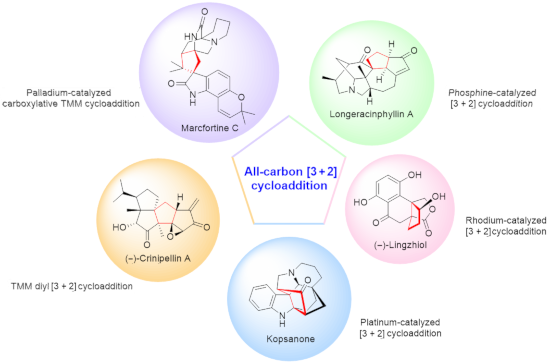
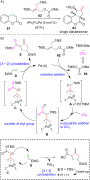
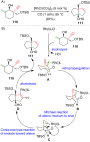
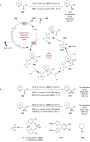
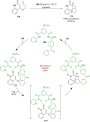
- synthesis of (±)-hirsutene (14) used an alkylidene carbene as source of TMM diyl in the intramolecular [3 + 2] cycloaddition [24] (Scheme 1D). Heating of epoxyaziridinyl imine 32 produced tricyclic compound 36 in 57% yield as a single product. The authors proposed that heating of epoxyaziridinyl imine 32
- generates alkylidene carbene 33. Transformation of 33 to TMM diyl 35 enables an intramolecular [3 + 2] cycloaddition to give the desired tricyclic product 36. Trimethylenemethane (TMM) cycloaddition An intramolecular trimethylenemethane diyl [3 + 2] cycloaddition was reported by Berson [28] and Little [14
- ] independently in the late 1970s, which was used to prepare (±)-hirsutene (14) in 1981 [22] (Scheme 1A). In 2003, Lee and co-workers disclosed an intramolecular trimethylenemethane diyl [3 + 2] cycloaddition with a linear alkylidene carbene as diyl source and was applied in the synthesis of linearly fused







Synthesis of imidazo[1,5-a]pyridines via cyclocondensation of 2-(aminomethyl)pyridines with electrophilically activated nitroalkanes
Beilstein J. Org. Chem. 2020, 16, 2903–2910, doi:10.3762/bjoc.16.239
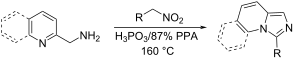
- synthesis inhibitor (Figure 1) [10][11][12]. In addition, compounds with this structure were investigated as photoluminescent sensors [13] and have been employed to generate pincer and heterocyclic carbene ligands for transition metal catalysis [14][15]. A lot of efforts have been dedicated to the


Recent developments in enantioselective photocatalysis
Beilstein J. Org. Chem. 2020, 16, 2363–2441, doi:10.3762/bjoc.16.197
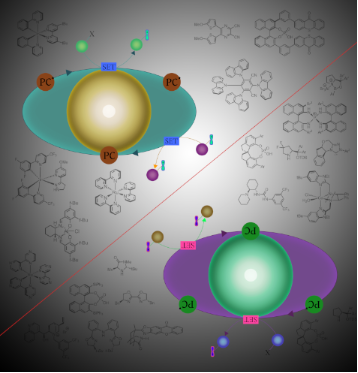
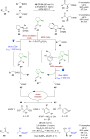
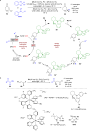
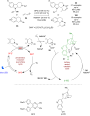
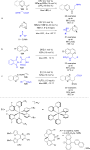
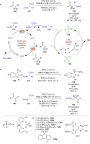
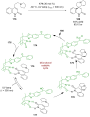
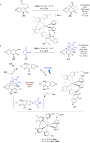
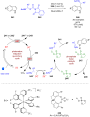
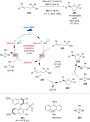
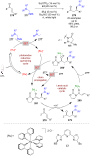
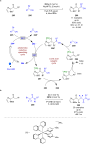
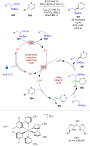
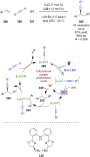
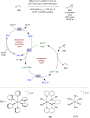
- 100 in good yields and enantioselectivities (21 examples for THCs, up to 98:2 er and 10 examples for THIQs, up to 98:2 er). N-Heterocyclic carbene catalysis N-Heterocyclic carbene (NHC) catalysis was first used in combination with photoredox catalysis by Rovis in 2012. They showed that iminium ions



























Synthetic approaches to bowl-shaped π-conjugated sumanene and its congeners
Beilstein J. Org. Chem. 2020, 16, 2212–2259, doi:10.3762/bjoc.16.186

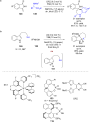
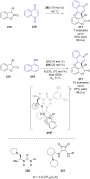
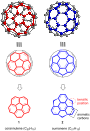
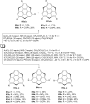
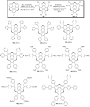
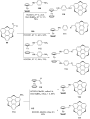
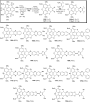
- the chemistry of the sumanene and its congeners, quite recently the same group has also prepared sumanene-based carbene 60 starting from monosumanenone 38 by reacting it with hydrazine hydrate to provide the corresponding hydrazone 58 which on further oxidation with MnO2 followed by irradiation using
- an LED lamp at ca. 365 nm for 1 min in 2-methyltetrahydrofuran (mTHF) at 77 K gave 60 (Scheme 13) [45]. It was noticed from both experimental as well as theoretical studies that the ground state of the prepared carbene 60 is a triplet which was confirmed by ESR as well as density functional theory
- (DFT) calculations. As we are aware that if the carbene formed is a singlet then a C–H bond inserted product is predominating whereas if the dimer is the major product along with the minor C–H bond inserted product then the triplet carbene is generated. During their study, they obtained the C–H











Isolation and structure determination of a tetrameric sulfonyl dilithio methandiide in solution based on crystal structure analysis and 6Li/13C NMR spectroscopic data
Beilstein J. Org. Chem. 2020, 16, 2057–2063, doi:10.3762/bjoc.16.172
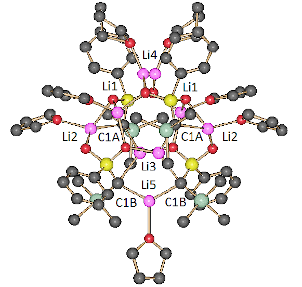
- of 2 with carbon and metal-based electrophiles revealed a high synthetic potential, allowing, for example, the synthesis of carbo- and heterocycles [4][6], and transition-metal carbene complexes [1][2], carrying the synthetically versatile sulfonyl group [7][8]. Dilithio methandiides 2 are accessible


Metal-free synthesis of phosphinoylchroman-4-ones via a radical phosphinoylation–cyclization cascade mediated by K2S2O8
Beilstein J. Org. Chem. 2020, 16, 1974–1982, doi:10.3762/bjoc.16.164

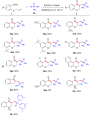
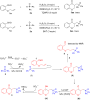
- sciences over the last few years [1][4][5]. In general, chroman-4-one derivatives could be obtained via a polarity reversal strategy enabled by the N-heterocyclic carbene (NHC)-catalyzed intramolecular Stetter reaction [6][7][8]. Besides, chroman-4-one derivatives were also constructed via intramolecular




Synergy between supported ionic liquid-like phases and immobilized palladium N-heterocyclic carbene–phosphine complexes for the Negishi reaction under flow conditions
Beilstein J. Org. Chem. 2020, 16, 1924–1935, doi:10.3762/bjoc.16.159
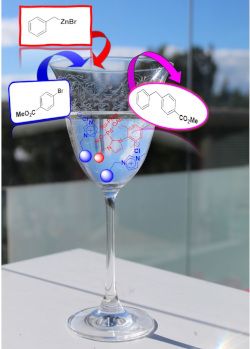
- , the dissociation of the M–NHC produces Pd intermediates from which metal clusters and MNPs can be readily formed while the carbene can react through C−NHC or H−NHC coupling. The presence of onium salts significantly contributes to the stabilization of both Pd clusters and PdNPs [40]. Thus, a




Pauson–Khand reaction of fluorinated compounds
Beilstein J. Org. Chem. 2020, 16, 1662–1682, doi:10.3762/bjoc.16.138
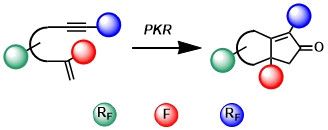
- reaction of internal alkynes with a difluorodiazoethane reagent, offering efficient access to a broad range of enantioenriched difluoromethylated cyclopropenes with almost quantitative yields and up to 97% ee [82]. This asymmetric carbene transfer reaction was performed using chiral RhII complexes, more




Facile synthesis of 7-alkyl-1,2,3,4-tetrahydro-1,8-naphthyridines as arginine mimetics using a Horner–Wadsworth–Emmons-based approach
Beilstein J. Org. Chem. 2020, 16, 1617–1626, doi:10.3762/bjoc.16.134
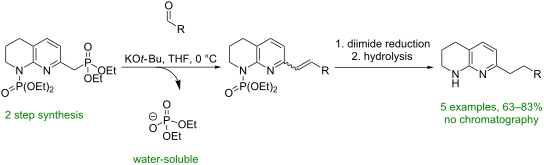
- the exact mechanism is not known, it may involve a reactive carbene intermediate formed by α-elimination of the phosphonate as described in previous reports [23]. Alternatively, a base-promoted autoxidation of phosphonate 7 in the presence of trace amounts of oxygen, followed by olefination may be



NHC-catalyzed enantioselective synthesis of β-trifluoromethyl-β-hydroxyamides
Beilstein J. Org. Chem. 2020, 16, 1572–1578, doi:10.3762/bjoc.16.129
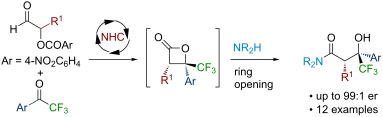
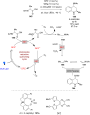
- Alyn T. Davies Mark D. Greenhalgh Alexandra M. Z. Slawin Andrew D. Smith EaStCHEM, School of Chemistry, University of St Andrews, North Haugh, St Andrews, Fife KY16 9ST, United Kingdom 10.3762/bjoc.16.129 Abstract The N-heterocyclic carbene (NHC)-catalyzed formal [2 + 2] cycloaddition between α
- moderate to good yield as a single diastereoisomer. Keywords: enantioselective catalysis; formal [2 + 2] cycloaddition; N-heterocyclic carbene; ring opening; trifluoromethyl group; Introduction The trifluoromethyl unit holds a prominent and privileged position within organic chemistry [1][2][3][4][5][6



Disposable cartridge concept for the on-demand synthesis of turbo Grignards, Knochel–Hauser amides, and magnesium alkoxides
Beilstein J. Org. Chem. 2020, 16, 1343–1356, doi:10.3762/bjoc.16.115
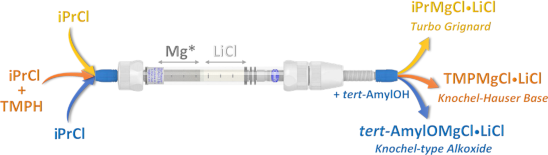
- combined with a solution-phase reagent, including: (1) copper(I) oxide to produce N-heterocyclic carbene–Cu(I) complexes for use as catalysts [13]; (2) proline to perform proline-based catalytic reactions [14]; (3) zinc powder to produce organozinc halides in tandem with Negishi couplings [15]; (4) zinc


Copper catalysis with redox-active ligands
Beilstein J. Org. Chem. 2020, 16, 858–870, doi:10.3762/bjoc.16.77
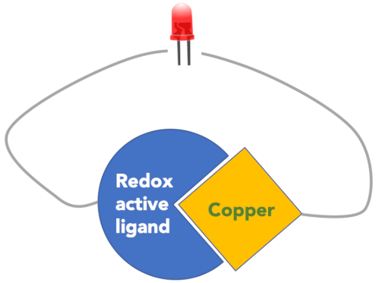
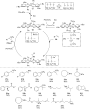
- reminiscent of the entatic state model. The proposed mechanism (Scheme 12) involves the insertion of a nitrene or carbene group to the copper complex 22 to form intermediate 23. Subsequent alkene insertion yields species 25 and the group-transfer product (21a,h–j,n,o, 26a–g and 27a–o) is released upon ring



Combining enyne metathesis with long-established organic transformations: a powerful strategy for the sustainable synthesis of bioactive molecules
Beilstein J. Org. Chem. 2020, 16, 738–755, doi:10.3762/bjoc.16.68
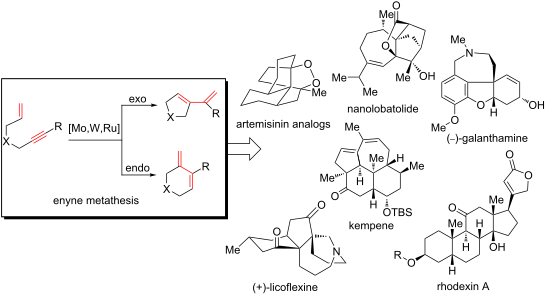
- that enyne metatheses are atom economical processes driven by the enthalpic stability of the conjugated diene products. Depending on the steric requirements of the transition metal carbene and of the starting enyne, the intramolecular reaction can proceed either via ene–yne or yne–ene pathways to yield
- catalyzed by Grubbs 2nd generation Ru-carbene, these intermediates then led to the tricyclic sesquiterpenoid-like scaffolds I–VIII (Scheme 4), as suitable precursors for the synthesis of artemisinin and its analogs (1a–c). After selecting the optimal tricyclic intermediate, the installation of the bridged




Recent advances in Cu-catalyzed C(sp3)–Si and C(sp3)–B bond formation
Beilstein J. Org. Chem. 2020, 16, 691–737, doi:10.3762/bjoc.16.67
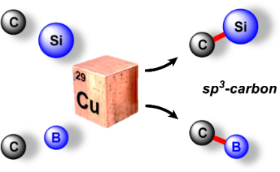
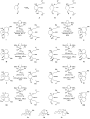
- undergoing proto-demetallation afforded the final product 46 (Scheme 11B). Initially, the reaction was limited to the generation of racemic products. Ultimately, optimization using McQuade’s six membered N-heterocyclic carbene (NHC) L2 [37] in combination with CuCl led to conditions applicable to different
- forming allylic silanes, only Z-isomers were obtained [75]. In furthering Zhou’s initial report [76], Ollevier and co-workers [77] recently described carbene insertions, starting with 229, into Si–H bonds, leading to a wide variety of silylated products [18]. The original work by Zhou included asymmetric
- , including both diazoesters and diazoketones as carbene precursors. After the impressive report from Dow Corning on the hydrosilylation of alkenes in 2013 [78], recently, the Buchwald group extended this chemistry to the asymmetric hydrosilylation of alkenes [79]. They used nonracemic ligand (S,S)-Ph-BPE


Synthesis of organic liquid crystals containing selectively fluorinated cyclopropanes
Beilstein J. Org. Chem. 2020, 16, 674–680, doi:10.3762/bjoc.16.65
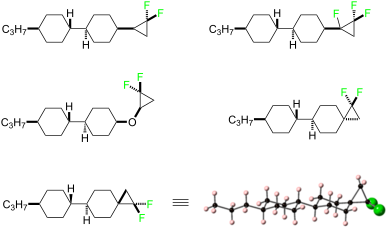
- illustrated in Scheme 1. Difluorocyclopropane 8 can be directly prepared through a [2 + 1] carbene cycloaddition reaction. Thus, treatment of 12 with trimethyl(trifluoromethyl)silane (TMSCF3) and sodium iodide under refluxing conditions [13][14] gave the corresponding product 8 in one step and a 55% yield


Preparation and in situ use of unstable N-alkyl α-diazo-γ-butyrolactams in RhII-catalyzed X–H insertion reactions
Beilstein J. Org. Chem. 2020, 16, 607–610, doi:10.3762/bjoc.16.55
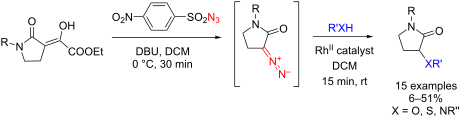
- formation, in various RhII-catalyzed X–H insertion reactions, particularly the recently described rhodium carbene insertion into O–H [1], N–H [2] and S–H [3] bonds of alcohols, aromatic amines, and thiols, respectively. Herein, we report the results of these studies. Results and Discussion Three N-alkyl-α



A systematic review on silica-, carbon-, and magnetic materials-supported copper species as efficient heterogeneous nanocatalysts in “click” reactions
Beilstein J. Org. Chem. 2020, 16, 551–586, doi:10.3762/bjoc.16.52
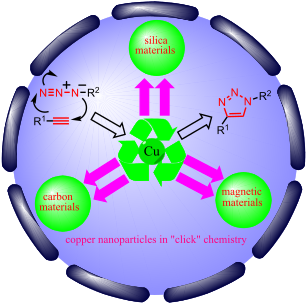
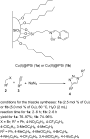
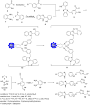
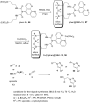
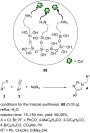
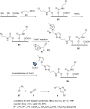
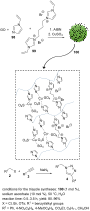
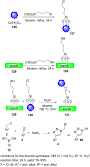
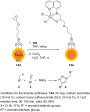
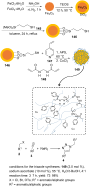
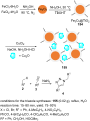
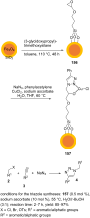
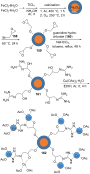
- -heterocyclic carbene) in multiple steps [28]. Initially, imidazole (28) was immobilized on the silica nanomaterial 27 by a nucleophilic attack of 28 on the iodopropylated silica nanomaterial 27 in acetonitrile under reflux for 48 h. The obtained 1-propylimidazole–nanosilica compound ImP–nSiO2 (29) was filtered
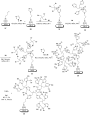
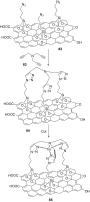
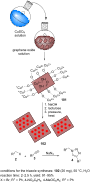
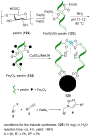
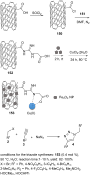
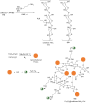
- Cu(I)-catalyzed cyclization between CRGO–N3 (93) and 1-propargyl-3-methylimidazolium bromide (94) was used to attach the imidazolium moiety to the surface of the CRGO. Finally, a graphene-containing copper complex of N-heterocyclic carbene, (NHC)-Cu (96), was produced via proton exchange of the

















Copper-catalyzed enantioselective conjugate reduction of α,β-unsaturated esters with chiral phenol–carbene ligands
Beilstein J. Org. Chem. 2020, 16, 537–543, doi:10.3762/bjoc.16.50


Aerobic synthesis of N-sulfonylamidines mediated by N-heterocyclic carbene copper(I) catalysts
Beilstein J. Org. Chem. 2020, 16, 482–491, doi:10.3762/bjoc.16.43

- : catalysis; copper; copper catalysis; N-heterocyclic carbene; solvent-free; sulfonylamidines; Introduction Amide derivatives represent a ubiquitous molecular construct in chemistry [1][2][3]. This structural motif favours rearrangements that lead to high reactivity and associated bioactivity [4][5]. Indeed
- , NHCs (NHC = N-heterocyclic carbene) have become ligands of choice to permit the stabilisation and formation of highly reactive transition metal species [14]. Thus, significant advances have been achieved using this supporting ligand family [15][16][17][18][19]. Recently, our group contributed to this
- pyridine derivative 4, of the heteroleptic normal/mesoionic carbene complex 5, and of the homoleptic mesoionic triazole derivative 6 (Figure 1). This special class of ligands presents unique electronic and steric properties and lead to unusual reactivity [23][24][25][26][27][28]. [Cu(IPr)(Pyr)]OTf (4) was


Formal preparation of regioregular and alternating thiophene–thiophene copolymers bearing different substituents
Beilstein J. Org. Chem. 2020, 16, 317–324, doi:10.3762/bjoc.16.31
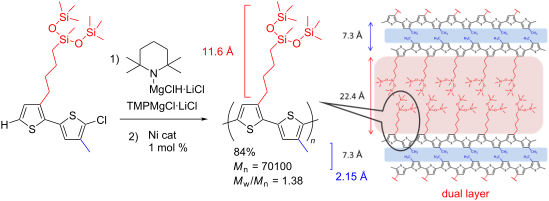
- by polymerization catalyzed by a nickel complex, leading to the regioregular HT polythiophene (Scheme 1) [8][9]. An additional feature of the deprotonative protocol for polythiophene is the possibility to use chlorothiophene 3, in which the use of a nickel N-heterocyclic carbene (NHC) complex was


Copper-promoted/copper-catalyzed trifluoromethylselenolation reactions
Beilstein J. Org. Chem. 2020, 16, 305–316, doi:10.3762/bjoc.16.30

- , which is in line with an SN2 mechanism. The authors proposed a mechanism where difluorocarbene is first generated upon thermal decomposition of the starting difluorophosphobetaine. The carbene then reacts with elemental selenium to yield difluoroselenophosgene, and in the presence of fluoride anions


Allylic cross-coupling using aromatic aldehydes as α-alkoxyalkyl anions
Beilstein J. Org. Chem. 2020, 16, 185–189, doi:10.3762/bjoc.16.21

- electrophile [8][10][11]. This paper describes in full detail the racemic system using allylic carbonates. The allylic cross-coupling of aromatic aldehydes and allylic carbonates with a silylboronate by the merging of a copper–N-heterocyclic carbene catalyst and a palladium–bisphosphine catalyst produced


The reaction of arylmethyl isocyanides and arylmethylamines with xanthate esters: a facile and unexpected synthesis of carbamothioates
Beilstein J. Org. Chem. 2020, 16, 159–167, doi:10.3762/bjoc.16.18
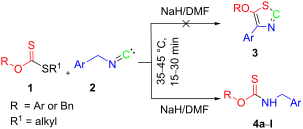
- thiomethyl group via transition state TS3 forms the third intermediate Int3, consisting of a carbene and a thiolate anion. The steps leading to the observed product carbamothioate 4a occur from the final quenching hydrolysis of Int3, which occurs via several energetically favorable steps (e.g., A–C), as has
- been reported for other carbene hydrolyses [37][38][39]. As can be seen from Figure 5, the highest activation energy barrier is 42.2 kJ/mol. We had previously considered an alternative mechanism in which a benzylic proton is instead removed by the base [40]. For the previous mechanism, which we have


Halogen-bonding-induced diverse aggregation of 4,5-diiodo-1,2,3-triazolium salts with different anions
Beilstein J. Org. Chem. 2020, 16, 78–87, doi:10.3762/bjoc.16.10
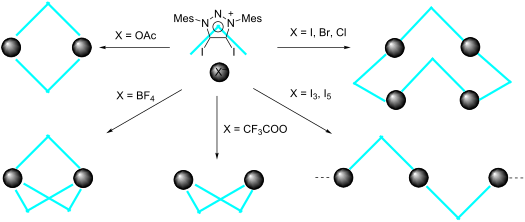
- reported neutral 4-halo-1,2,3-triazolylidenes C [43], which had a carbene character with σ-donation at the carbon and a σ-hole at the halogen atom. XB is observed by single-crystal X-ray diffraction in their coinage metal complexes. Meanwhile, 4-bromo-1,2,3-triazolylidene can catalyze H/D exchange of




AgNTf2-catalyzed formal [3 + 2] cycloaddition of ynamides with unprotected isoxazol-5-amines: efficient access to functionalized 5-amino-1H-pyrrole-3-carboxamide derivatives
Beilstein J. Org. Chem. 2019, 15, 2623–2630, doi:10.3762/bjoc.15.255
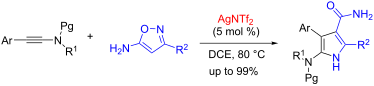
- derivatives can be obtained in up to 99% yield. The reaction mechanism might involve the generation of an unusual α-imino silver carbene intermediate (or a silver-stabilized carbocation) and subsequent cyclization/isomerization to build the significant pyrrole-3-carboxamide motif. The reaction features the
- attacking of nucleophilic partners, followed by a protodemetalation step to form the alkene motif (Scheme 1, path a) [9][10][11]. However, the formation of a silver carbene intermediate, which could be generated usually from relevant diazo precursors [12][13][14], appears to be an unusual event in silver
- -mediated reactions of alkynes (Scheme 1, path b). In 2007, Echavarren and co-workers have developed an intramolecular cyclopropanation reaction of 1,6-enynes by silver catalysis, involving probably the generation of a silver-carbene species [15]. Wang and co-workers reported a range of propargylic esters





