


Search results
Search for "reaction mechanism" in Full Text gives 585 result(s) in Beilstein Journal of Organic Chemistry. Showing first 200.
Visible-light-induced radical cascade cyclization: a catalyst-free synthetic approach to trifluoromethylated heterocycles
Beilstein J. Org. Chem. 2024, 20, 118–124, doi:10.3762/bjoc.20.12
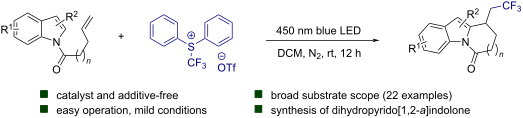
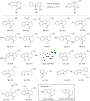
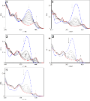
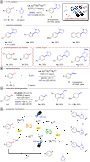
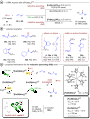
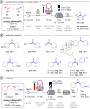
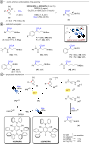
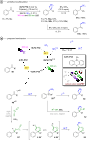
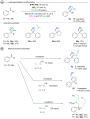
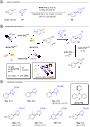
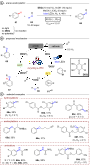
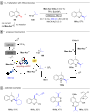
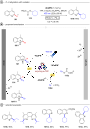
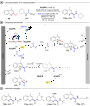
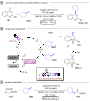
- derivatives. UV–vis spectra of substrates; [1a] 0.33 M, [2a] 0.11 M. Selected works for the construction of dihydropyrido[1,2-a]indolones and current methodology. Substrate scope of the cascade reaction. Radical trapping experiment. Plausible reaction mechanism. Optimization of reaction conditions.a




Photoinduced in situ generation of DNA-targeting ligands: DNA-binding and DNA-photodamaging properties of benzo[c]quinolizinium ions
Beilstein J. Org. Chem. 2024, 20, 101–117, doi:10.3762/bjoc.20.11
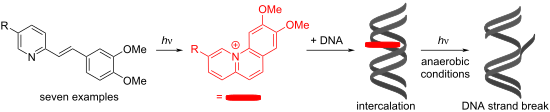
- presence of the corresponding radical scavengers. As there is no obvious reaction mechanism for the direct formation of C-radicals upon irradiation of 3f it is proposed that the reaction of the initially formed hydroxyl radicals with the benzoquinolizinium 3f leads to the formation of the C-centered




Electron-beam-promoted fullerene dimerization in nanotubes: insights from DFT computations
Beilstein J. Org. Chem. 2024, 20, 92–100, doi:10.3762/bjoc.20.10
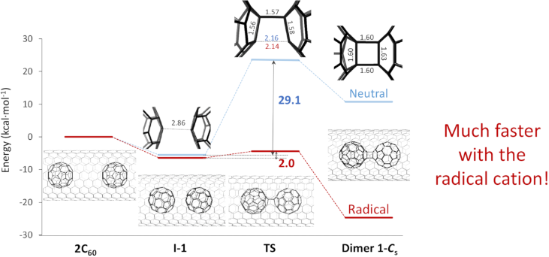
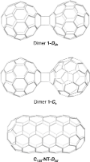
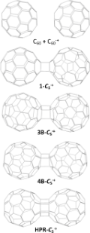
- 20 Å) and a time step of 0.144 fs. We used the metadynamics technique to analyze the dimerization reaction mechanism [28][29][30]. The collective variable (CV) considered for the exploration of the free-energy surface was the coordination number of nine C atoms of one C60 (those that are involved in




Identification of the p-coumaric acid biosynthetic gene cluster in Kutzneria albida: insights into the diazotization-dependent deamination pathway
Beilstein J. Org. Chem. 2024, 20, 1–11, doi:10.3762/bjoc.20.1
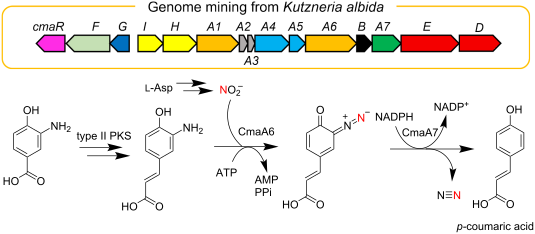
- strongly support our previous observation that AvaA7 showed a preference for NADPH as a cofactor [13][29]. In addition, CmaA6 could be an attractive target for understanding the reaction mechanism of ATP-dependent diazotase. CmaA6 could also be an ancestor for generating useful biocatalysts to synthesize


Construction of diazepine-containing spiroindolines via annulation reaction of α-halogenated N-acylhydrazones and isatin-derived MBH carbonates
Beilstein J. Org. Chem. 2023, 19, 1923–1932, doi:10.3762/bjoc.19.143
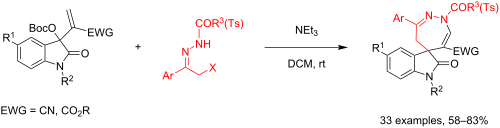
- and proceeds through a by base-promoted annulation reaction of α-halogenated N-acylhydrazones and isatin-derived MBH carbonates. The reaction mechanism of this formal [4 + 3] annulation includes the in situ generated allylic ylide, nucleophilic substitution, Michael additon, and elimination processes
- cyclic 1,2-diazepine ring and the methylene unit is connected to the 3-positon of the oxindole moiety. On the basis of the current results and previous works [54][55][56][57][58][59][60][61], a reaction mechanism for the formation of the spiro[indoline-3,5'-[1,2]diazepines] has been proposed and is
- elimination of a proton and the Lewis base. Obviously, the spiro compounds 5 and 7 are formed by a similar reaction mechanism. Additionally, the method was applied to a gram-scale reaction of α-halogenated p-toluenesulfonylhydrazone 6c and MBH nitrile of isatin 2c under the standard conditions (Scheme 6). The




Controlling the reactivity of La@C82 by reduction: reaction of the La@C82 anion with alkyl halide with high regioselectivity
Beilstein J. Org. Chem. 2023, 19, 1858–1866, doi:10.3762/bjoc.19.138

- 3a was confirmed by the SC-XRD analysis, which showed that the addition site of addendum was indeed at the C10 position of La@C2v-C82 (Figure 5). The La@C2v-C82 anion can act as an electron donor and a nucleophile. To confirm the reaction mechanism, charge density and the p-orbital axis vector (POAV
- , the C10, C14, and C18 atoms have larger spin densities (C10: 0.032, C14: 0.023, C18: 0.030) [34][35] than the C1 and C2 atoms (C1: 0.002, C2: 0.016) in La@C2v-C82 (Figure 6b). These results suggest that the reaction mechanism involving the electron transfer from the La@C2v-C82 anion to benzyl bromide
- derivatives followed by the radical coupling reaction is more plausible for the formation of the corresponding adducts rather than the SN2 reaction mechanism of the La@C2v-C82 anion with benzyl bromide derivatives. Conclusion The reaction of La@C2v-C82 anion with benzyl bromide derivatives 1 at 110 °C


Substituent-controlled construction of A4B2-hexaphyrins and A3B-porphyrins: a mechanistic evaluation
Beilstein J. Org. Chem. 2023, 19, 1832–1840, doi:10.3762/bjoc.19.135
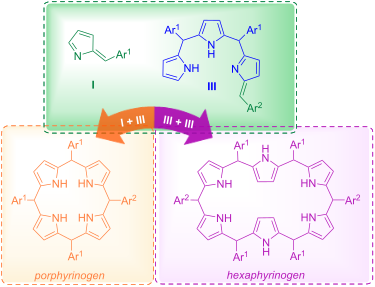
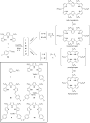
- reaction mechanism of the presented method was studied on model reactions by electrospray-ionization time-of-flight (HRESI–TOF) mass spectral analysis in a timely manner. The analytical results indicated that the observed azafulvene-ended di- and tripyrrolic intermediates are responsible for the formation



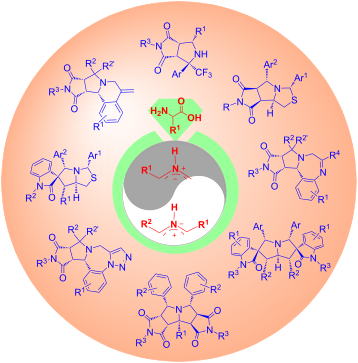
Decarboxylative 1,3-dipolar cycloaddition of amino acids for the synthesis of heterocyclic compounds
Beilstein J. Org. Chem. 2023, 19, 1677–1693, doi:10.3762/bjoc.19.123
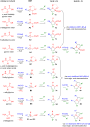
- symmetry. The stereochemistry of the products was confirmed by X-ray crystal structure and NMR analysis. The reaction mechanism shown in Scheme 11 suggests that a semi-stabilized AMY 16 generated from the reaction of glycine and arylaldehydes undergoes a [3 + 2] cycloaddition with 14a via the favorable
- olefinic oxindoles to replace maleimides, the reactions gave spiro[indoline-tetrahydropyrrolothiazole] products 30 in 55–70% with greater than 4:1 dr [76]. The reaction mechanism suggests that the reaction of cysteine with arylaldehydes gives N,S-acetals 27 which convert to AMYs 28 after decarboxlyation
- -oriented synthesis (DOS) [82][83][84][85][86][87][88]. The work presented in this paper may also be helpful to understand the reaction mechanism and stereoselectivity of semi-stabilized N–H-type AMYs. We hope the new development for 1,3-dipolar cycloaddition chemistry can be used for the synthesis of




Lewis acid-promoted direct synthesis of isoxazole derivatives
Beilstein J. Org. Chem. 2023, 19, 1562–1567, doi:10.3762/bjoc.19.113

- . It was found that the desired product could be obtained in 87% yield (Scheme 4). Next, some control experiments were carried out to study the reaction mechanism. We found that the reaction of compound 3a could not be inhibited by TEMPO and BHT under the standard conditions. Therefore, it is assumed
- atmosphere, 90 °C, 24 h. Reaction substrate scope of quinolines. Conditions: 1a (0.1 mmol, 1 equiv), 2 (0.2 mmol, 2 equiv), AlCl3 (0.3 mmol, 3 equiv), NaNO2 (1 mmol, 10.0 equiv), DMAc (1.0 mL), N2 atmosphere, 90 °C, 24 h. Gram scale reaction. Control experiments and possible reaction mechanism. Optimization


Synthesis of 5-arylidenerhodanines in L-proline-based deep eutectic solvent
Beilstein J. Org. Chem. 2023, 19, 1537–1544, doi:10.3762/bjoc.19.110

- 2, entry 5). This observation demonstrates the positive role of proline on the reaction mechanism but clearly indicates that it is not sufficient. In fact, the exact role of DES in this reaction is still not clear as ʟ-proline may act as a catalyst via an iminium pathway as previously described [21


Unraveling the role of prenyl side-chain interactions in stabilizing the secondary carbocation in the biosynthesis of variexenol B
Beilstein J. Org. Chem. 2023, 19, 1503–1510, doi:10.3762/bjoc.19.107
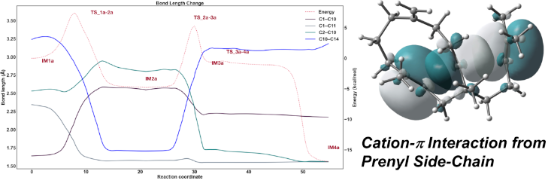
- offer many valuable insights from a fundamental organic chemistry perspective. The terpene cyclization cascade generally involves a multistep domino-type reaction. Therefore, it is challenging to reveal the detailed reaction mechanism solely by an experimental method. To address this issue
- as the C–H–π interaction between the carbocation intermediate and the Phe residue of terpene cyclase in the biosynthesis of sesterfisherol [21], and the intricated rearrangement reaction mechanism promoted by the equilibrium state of the homoallyl cation and the cyclopropylcarbinyl cation in the
- aspects. First, this cyclization cascade involves a prenyl side chain that do not participate in the cyclization cascade. This type of terpene compounds has already been reported, such as santalene, bergamotene, mangicol, etc. The idea that the reaction mechanism changes due to differences in the prenyl


N-Sulfenylsuccinimide/phthalimide: an alternative sulfenylating reagent in organic transformations
Beilstein J. Org. Chem. 2023, 19, 1471–1502, doi:10.3762/bjoc.19.106
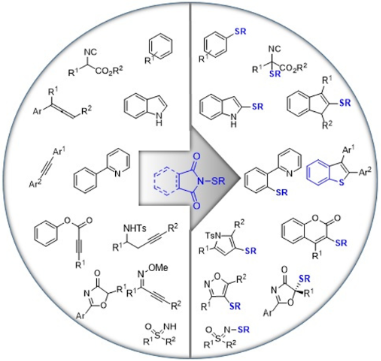
- 102 were obtained in moderate to excellent yields with good to excellent enantioselectivities (Scheme 42) [76]. It should be noted that the authors did not define the exact role of the organocatalyst in the reaction mechanism. Transition-metal-free C–H sulfenylation of electron-rich arenes 103 by N




Visible-light-induced nickel-catalyzed α-hydroxytrifluoroethylation of alkyl carboxylic acids: Access to trifluoromethyl alkyl acyloins
Beilstein J. Org. Chem. 2023, 19, 1372–1378, doi:10.3762/bjoc.19.98
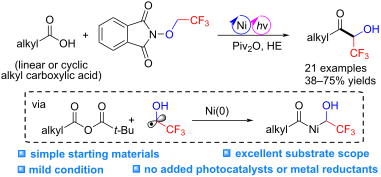
- column chromatography to give the coupling product 3. Selected natural products and pharmaceuticals bearing acyloins. Proposed reaction mechanism. Strategies for the synthesis of α-trifluoromethyl acyloins. Substrate scope. Standard conditions: a solution of alkyl carboxylic acid 1 (0.4 mmol), 2 (0.6


Non-noble metal-catalyzed cross-dehydrogenation coupling (CDC) involving ether α-C(sp3)–H to construct C–C bonds
Beilstein J. Org. Chem. 2023, 19, 1259–1288, doi:10.3762/bjoc.19.94
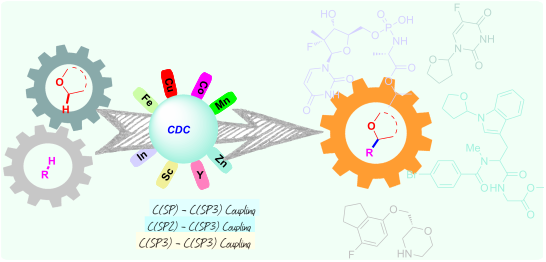
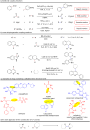
- ether α-C–H bond. In the presence of Cu(II), the C(sp2)–C(sp3) coupling of pyridine N-oxides and coumarins with cyclic ethers could be achieved under mild conditions (Scheme 13) [63][64]. These reactions do not all follow the reaction mechanism of the oxidative olefination of simple ethers. The role of
- terminal alkynyl aldehydes with ethers in the presence of CuCl2 and TBHP (Scheme 15b) [68]. The reaction is compatible with various functional groups including cyclic ethers and open chain ethers. Studies on the reaction mechanism showed that the reaction is a catalytic cycle involving a radical process
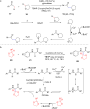
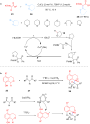
- the reaction mechanism supported by DFT calculations and concluded that FeF2 plays an important redox role in assisting the cleavage of oxidants and the oxidation of carbon radicals to cationic intermediates of oxygen. CDC reactions between C(sp3)–H/C(sp)–H bonds catalyzed by iron have been reported










Metal catalyst-free N-allylation/alkylation of imidazole and benzimidazole with Morita–Baylis–Hillman (MBH) alcohols and acetates
Beilstein J. Org. Chem. 2023, 19, 1251–1258, doi:10.3762/bjoc.19.93
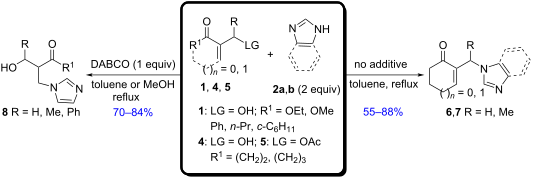
- elimination of imidazole (2a) finally providing the allylated derivative 6a (Scheme 2) [24][25][26][31]. It is notable, that such reaction mechanism involving the intermediate I was previously explored by Smith [32] and supported by studies of Tamura [33]. Next, in order to explore the scope of the above


Selective construction of dispiro[indoline-3,2'-quinoline-3',3''-indoline] and dispiro[indoline-3,2'-pyrrole-3',3''-indoline] via three-component reaction
Beilstein J. Org. Chem. 2023, 19, 1234–1242, doi:10.3762/bjoc.19.91
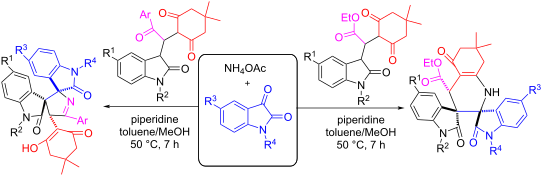
- substituent. A plausible reaction mechanism is proposed to explain the formation of the different spirooxindoles. Keywords: cascade reaction; dimedone; isatin; 3-methyleneoxindole; multicomponent reaction; spirooxindole; Introduction Spirooxindole is one important privileged structural skeleton and is found
- to explain the formation of different cyclic compounds, a plausible reaction mechanism was proposed in Scheme 2 on the basis of the present experiments and the previous works [51][52][53]. Firstly, 3-isatyl-1,4-dicarbonyl compound 1 was converted to a carbanion in the presence of base. In the
- . This reaction provided efficient synthetic protocols for the synthesis of dispiro[indoline-3,2'-quinoline-3',3''-indoline] and dispiro[indoline-3,2'-pyrrole-3',3''-indoline] derivatives. A plausible reaction mechanism was proposed to explain the selective formation of the different polycyclic compounds



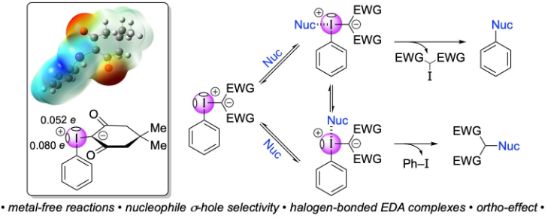
Exploring the role of halogen bonding in iodonium ylides: insights into unexpected reactivity and reaction control
Beilstein J. Org. Chem. 2023, 19, 1171–1190, doi:10.3762/bjoc.19.86
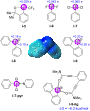
- studies revealed that the C2–H bond of pyrrole did not participate in the rate-determining step. This led the authors to propose a multi-step reaction mechanism, where irradiation of an initial halogen-bonded EDA complex 47 led directly to iodocyclobutane 48 (Figure 10). Reductive elimination of







Selective and scalable oxygenation of heteroatoms using the elements of nature: air, water, and light
Beilstein J. Org. Chem. 2023, 19, 1146–1154, doi:10.3762/bjoc.19.82
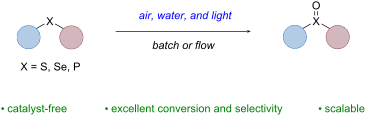
- a study was conducted to explore possible additives that can further enhance the reaction rate (Figure 1) thus increasing the overall productivity. Also, analyzing the effect of the additives on the kinetics might give further clues for the extensive elucidation of the reaction mechanism. For a

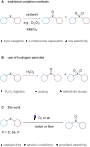


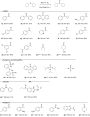


Photoredox catalysis harvesting multiple photon or electrochemical energies
Beilstein J. Org. Chem. 2023, 19, 1055–1145, doi:10.3762/bjoc.19.81
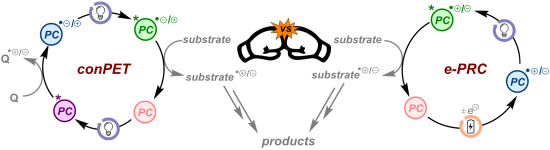


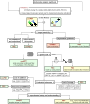





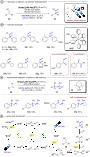
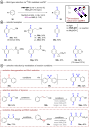


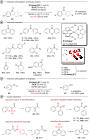

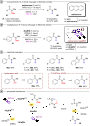















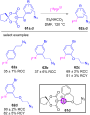
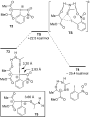
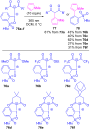
The unique reactivity of 5,6-unsubstituted 1,4-dihydropyridine in the Huisgen 1,4-diploar cycloaddition and formal [2 + 2] cycloaddition
Beilstein J. Org. Chem. 2023, 19, 982–990, doi:10.3762/bjoc.19.73
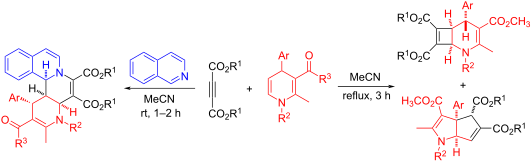
- -configured. For explaining the formation of the various cyclic compounds, a plausible reaction mechanism was proposed on the base of the previously reported works [41][42][43][44] and the present experiments (Scheme 2). Initially, the nucleophilic addition of isoquinoline to dimethyl acetylenedicarboxylate
- -dihydropyridines. Plausible reaction mechanism for the various products 4, 5, and 6. Optimizing the reaction conditions.a Synthesis of isoquinolino[1,2-f][1,6]naphthyridines 4a–o.a Synthesis of the bicyclic compounds 5a–o and 6a–o.a Supporting Information The crystallographic data of compounds 4k (CCDC 2260340


Clauson–Kaas pyrrole synthesis using diverse catalysts: a transition from conventional to greener approach
Beilstein J. Org. Chem. 2023, 19, 928–955, doi:10.3762/bjoc.19.71
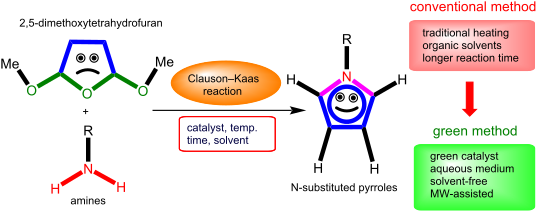
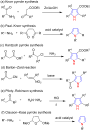
- nanoorganocatalysts. Various solvent systems, such as aqueous conditions, different organic solvents, solvent-free conditions, ionic liquids, and DESs, have been reported in modified Clauson–Kaas reactions at room temperature, under thermal and microwave-assisted conditions. In the Clauson–Kaas reaction mechanism




Photoredox catalysis enabling decarboxylative radical cyclization of γ,γ-dimethylallyltryptophan (DMAT) derivatives: formal synthesis of 6,7-secoagroclavine
Beilstein J. Org. Chem. 2023, 19, 918–927, doi:10.3762/bjoc.19.70
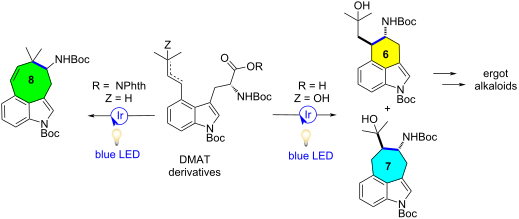
- different classes of ergot alkaloids. (b) and (c) Strategies for the photoredox-catalyzed radical decarboxylative cyclization cascade reaction of DMAT derivatives (this work). Proposed reaction mechanism for photoredox-catalyzed radical decarboxylative cyclization. Proposed reaction mechanism for photoredox


Pyridine C(sp2)–H bond functionalization under transition-metal and rare earth metal catalysis
Beilstein J. Org. Chem. 2023, 19, 820–863, doi:10.3762/bjoc.19.62
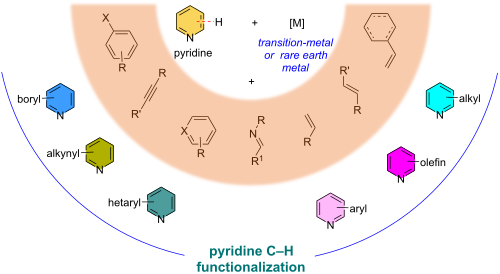
- styrenes 64 using a Ni–Al bimetallic system and NHC ligand 65 through intermolecular hydroarylation with high levels of enantio- and regioselectivity in the alkylated products 66 (Scheme 13). Also, the authors performed DFT studies revealing the reaction mechanism and supported that the interaction of the
- plays a role as an activator and is subsequently eliminated via deoxygenative elimination furnishing the C-2-functionalized pyridines 167. The reaction mechanism (Scheme 32b) involves the initial C–H-cupration of 166 producing an oxazolyl–copper intermediate 168. Nucleophilic addition followed by C–H
















Synthesis of substituted 8H-benzo[h]pyrano[2,3-f]quinazolin-8-ones via photochemical 6π-electrocyclization of pyrimidines containing an allomaltol fragment
Beilstein J. Org. Chem. 2023, 19, 778–788, doi:10.3762/bjoc.19.58
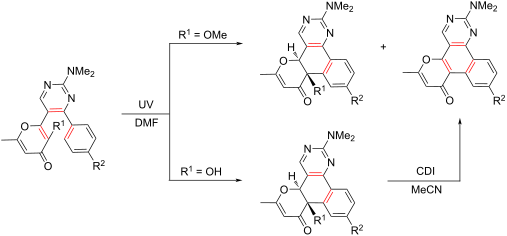
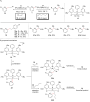
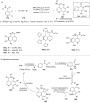
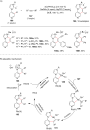
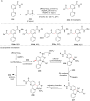
- developed for this reaction, allowing for the synthesis of pyrimidines 9 containing an allomaltol unit in good yields (Scheme 2). The process is of a general nature and is suitable for the synthesis of various target products 9 with electron-rich or deficient substituents. The plausible reaction mechanism


Sulfate radical anion-induced benzylic oxidation of N-(arylsulfonyl)benzylamines to N-arylsulfonylimines
Beilstein J. Org. Chem. 2023, 19, 771–777, doi:10.3762/bjoc.19.57
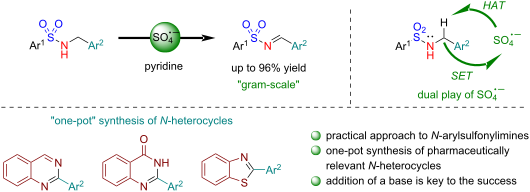
- single electron transfer (SET), is proposed to be involved in the plausible reaction mechanism. Keywords: arylsulfonylimine; benzylic oxidation; benzyl sulfonamide; K2S2O8; sulfate radical anion; Introduction Among various imine compounds [1], N-arylsulfonylimines are perhaps the most prominent due to





