Search results
Search for "X-ray analysis" in Full Text gives 350 result(s) in Beilstein Journal of Organic Chemistry. Showing first 200.
Oxidative cycloaddition of hydroxamic acids with dienes or guaiacols mediated by iodine(III) reagents
Beilstein J. Org. Chem. 2018, 14, 531–536, doi:10.3762/bjoc.14.39
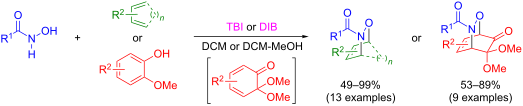
- X-ray analysis [24]. Next, we investigated the oxidative cycloaddition reactions of hydroxamic acids 1a–c with various dienes 2 under the optimal conditions (Table 2). Similarly to the benzoyl derivative 1a, the carbamate analogues 1b (R1 = OBn) and 1c (R1 = Ot-Bu) reacted with 1,3-cyclohexadiene
- -alkylammonium periodates. To our delight, the sole use of DIB in a mixed solvent of DCM and methanol gave the endo-cycloadduct 6aa as a single regioisomer in 84% yield starting from hydroxamic acid 1a and guaiacol (5a, Scheme 2). The structure of 6aa was determined by single crystal X-ray analysis [24]. It


Nucleophilic dearomatization of 4-aza-6-nitrobenzofuroxan by CH acids in the synthesis of pharmacology-oriented compounds
Beilstein J. Org. Chem. 2017, 13, 2854–2861, doi:10.3762/bjoc.13.277
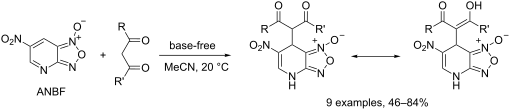
- with β-dicarbonyl compounds. Selected NMR parameters of the ANBF-CH-acid adducts (in DMSO-d6)a. Supporting Information Supporting Information File 426: Experimental section, NMR spectra, HRMS and X-ray analysis data. Acknowledgements This work was supported by the Russian Science Foundation (grant no
- -ray analysis [28] (Figure 3). Compound 15 crystallizes as a solvate with one DMSO molecule connected to the hydrogen atom of the amino fragment by an intermolecular H-bond. Bond lengths and angles in the dearomatized 4-aza-6-nitrobenzofuroxan ring are very similar to those observed in the crystal of
- the chirality of carbon atom C7, the protons HA and HB of the methylene group are diastereotopic and therefore have different chemical shifts (3.34 and 3.74 ppm). The geminal protons and H7 represent a well-resolved AMX system, Figure 2. The structure of compound 15 was additionally studied using X


Ring-size-selective construction of fluorine-containing carbocycles via intramolecular iodoarylation of 1,1-difluoro-1-alkenes
Beilstein J. Org. Chem. 2017, 13, 2682–2689, doi:10.3762/bjoc.13.266
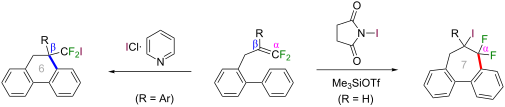
- characterization of 6 was achieved by X-ray analysis using a single crystal of 6a (Figure 2), and it was found that the iodoarylation products 6 have a seven-membered carbocycle bearing adjacent difluoromethylene and iodomethylene units. In addition, a selective HI elimination from 6a could be achieved by the


A Brønsted base-promoted diastereoselective dimerization of azlactones
Beilstein J. Org. Chem. 2017, 13, 2663–2670, doi:10.3762/bjoc.13.264
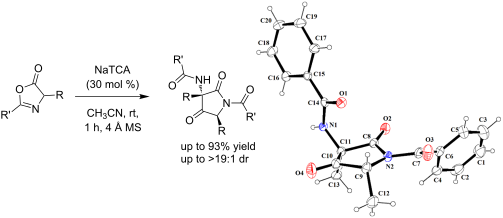
- diastereomer was assigned by X-ray analysis. Finally, one of the products was selectively reduced to provide a functionalized analogue of streptopyrrolidine, a marine natural product isolated from Streptomyces sp. As shown in Table 1, our studies started with the synthesis of dimer 2a using azlactone 1a in the
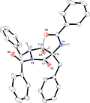
- -position relative to both the benzyl substituents [32]. The relative stereochemistry of 6 was assigned by X-ray analysis (Figure 5). Conclusion In summary, we have demonstrated the first diastereoselective dimerization of azlactones mediated by a combination of acetonitrile and potassium or sodium
- trichloroacetate salts, which provides a straightforward and practical access to azlactone dimers with good to excellent yields and good diastereoselectivities. In addition, the relative stereochemistry of major azlactone dimer was assigned as being trans by X-ray analysis. A plausible mechanism was proposed by 1H




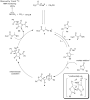

![[Graphic 5]](/bjoc/content/inline/1860-5397-13-264-i10.svg?max-width=637&scale=1.18182) vs time for the dimerization of azlactone 1a.
vs time for the dimerization of azlactone 1a.

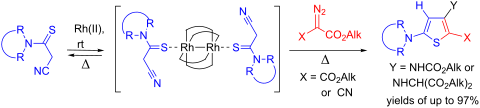
Rh(II)-mediated domino [4 + 1]-annulation of α-cyanothioacetamides using diazoesters: A new entry for the synthesis of multisubstituted thiophenes
Beilstein J. Org. Chem. 2017, 13, 2569–2576, doi:10.3762/bjoc.13.253
- also confirmed by X-ray analysis (Figure 2). In the 1H NMR spectra of these compounds, the characteristic signals of NH protons are observed in the range of 9.84–9.68 and 7.96–7.80 ppm for 3a–e and 4a–e, respectively. The signals of thiophene H-4 and C-4 atoms in the 1H and 13C NMR spectra of compounds
- diazocyanoester 2d with the thioamides 1a–e gave rise to thiophenes 5b–e in the yields of up to 51%. The structure of the isolated thiophenes 5a–e was established by a regular set of spectroscopic data, whereupon the structure of compound 5c was in addition confirmed by X-ray analysis (Figure 3). In the 1H NMR
- )4 and Rh2(Oct)4 was studied (Scheme 3). The reaction was carried out in methylene chloride at room temperature using a 2-fold excess of thioacetamides 1. It produced almost quantitatively dark green adducts 6a–e, 6b’–e’, which structure was confirmed by analytical methods, X-ray analysis for complex


Pyrene–nucleobase conjugates: synthesis, oligonucleotide binding and confocal bioimaging studies
Beilstein J. Org. Chem. 2017, 13, 2521–2534, doi:10.3762/bjoc.13.249
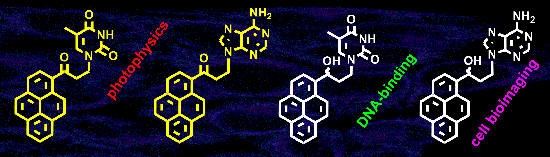
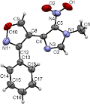
- pyrenyl–thymine 2 was confirmed by single-crystal X-ray analysis. Crystal structure Crystals of 2 suitable for X-ray diffraction analysis were obtained by slow diffusion of pentane into a chloroform solution of 2. The oak ridge thermal-ellipsoid plot (ORTEP) with the atom labelling scheme is shown in




Dialkyl dicyanofumarates and dicyanomaleates as versatile building blocks for synthetic organic chemistry and mechanistic studies
Beilstein J. Org. Chem. 2017, 13, 2235–2251, doi:10.3762/bjoc.13.221
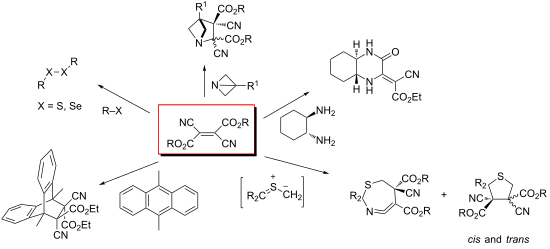
- yields. The X-ray analysis showed that products 53 obtained with primary amines are Z-configured whereas those derived from secondary amines, 54, display E-configuration [58] (Scheme 18). The observed different configurations demonstrate the importance of the intramolecular hydrogen-bond between the NH


A mechanochemical approach to access the proline–proline diketopiperazine framework
Beilstein J. Org. Chem. 2017, 13, 2169–2178, doi:10.3762/bjoc.13.217
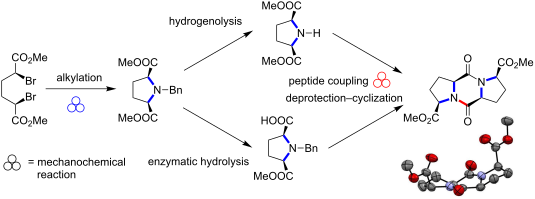
- selective and only one diastereomer was obtained, as supported by analytical data. X-ray analysis of the product confirmed the stereochemistry of the three chiral centres and the structure of 15a. To shed more light on the origin of the selectivity observed in the deprotection–cyclization transformation
- (OH)2/C followed by cyclization provided unprecedented DKP 19 in 52% yield. In this case again, spectral data and X-ray analysis showed the selective formation of diketopiperazine 19 as only one isomer (Scheme 6). Conclusion In summary, we have developed an efficient synthesis of two enantiopure


Preparation of imidazo[1,2-a]-N-heterocyclic derivatives with gem-difluorinated side chains
Beilstein J. Org. Chem. 2017, 13, 2115–2121, doi:10.3762/bjoc.13.208
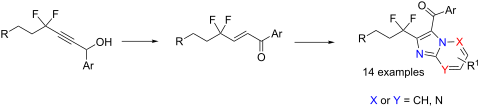
- structure of 7a was confirmed by X-ray analysis (Figure 2) [30] and the other derivatives were proposed by analogy. In the same way as for the imidazopyridazines, the structure of 7e was established by X-ray analysis [30] and this was extended to the other derivatives. These results unambiguously


NHC-catalyzed cleavage of vicinal diketones and triketones followed by insertion of enones and ynones
Beilstein J. Org. Chem. 2017, 13, 1816–1822, doi:10.3762/bjoc.13.176
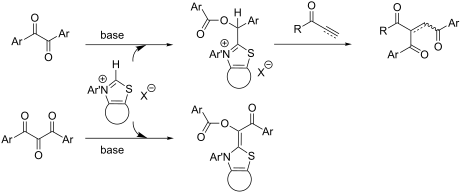
- by NMR. Only the major isomer of 4ai crystallized from the mixture and thus Z-stereochemistry of the two aroyl groups (ClC6H4CO and PhCO) was confirmed by X-ray analysis (Figure 1) [20]. Electron-donating substituents of ynones 2 gave slightly better yields than electron-withdrawing ones. The yields
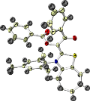
- confirmed by X-ray analysis as shown in Figure 2 [20]. Isolation of 10 prompted us to get the monoacylated Breslow intermediate C also as a stable compound. Treatment of benzil 1d with equimolar amounts of 3 and DIPEA at room temperature, followed by non-aqueous work-up and column chromatography gave
- crystalline product 12 in 92% yield (Scheme 6). Although 12 did not provide single crystals suitable for X-ray analysis, its structure was determined by NMR and elemental analysis. 1H NMR spectra of 12 showed eleven protons in the aromatic region, i.e., two ClC6H4, Me3C6H2, and one particular proton at δ 6.68




Bifunctional organocatalysts for the asymmetric synthesis of axially chiral benzamides
Beilstein J. Org. Chem. 2017, 13, 1518–1523, doi:10.3762/bjoc.13.151
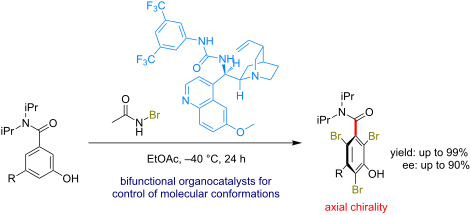
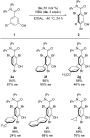
- determined by X-ray analysis (see the Supporting Information File 1 for details), and the configurations of all other examples were assigned analogously. Once the optimal conditions for the transformation were established, we next proceeded to explore the substrate scope (Scheme 2). The substrate bearing a




A speedy route to sterically encumbered, benzene-fused derivatives of privileged, naturally occurring hexahydropyrrolo[1,2-b]isoquinoline
Beilstein J. Org. Chem. 2017, 13, 1413–1424, doi:10.3762/bjoc.13.138
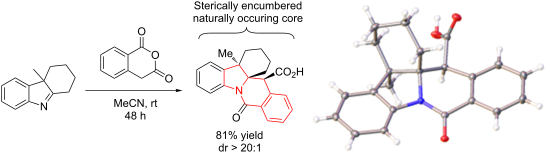
- -diastereoselectivity of the CCR is well documented in the literature [33] and is, therefore, unsurprising. However, the stereocontrol achieved in this reaction over 3 stereocenters present in 10l (obtained in 81% yield as a single diastereomer) is certainly quite noteworthy and was confirmed by X-ray analysis (Figure
- for syn-isomers. According to the X-ray analysis, the dihedral angle values in the C11H–C11aH fragment lie within the 165–170° and 55–58° range for anti- and syn-diastereomers, respectively (Supporting Information File 1, Table S1). Thus, for most of the 2H-indolenine-derived compounds (except for 10d


Construction of highly enantioenriched spirocyclopentaneoxindoles containing four consecutive stereocenters via thiourea-catalyzed asymmetric Michael–Henry cascade reactions
Beilstein J. Org. Chem. 2017, 13, 1342–1349, doi:10.3762/bjoc.13.131
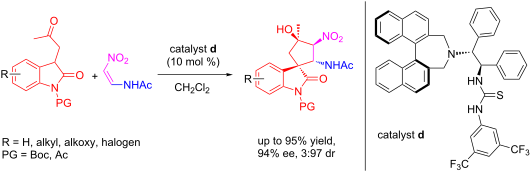
- the catalyst d. The absolute configuration of 3g was determined by X-ray analysis (see Supporting Information File 1, Figure S1). Conclusion We have developed a highly efficient and practical strategy for a single step construction of saturated spirocyclopentaneoxindoles containing four consecutive



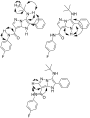
New tricks of well-known aminoazoles in isocyanide-based multicomponent reactions and antibacterial activity of the compounds synthesized
Beilstein J. Org. Chem. 2017, 13, 1050–1063, doi:10.3762/bjoc.13.104
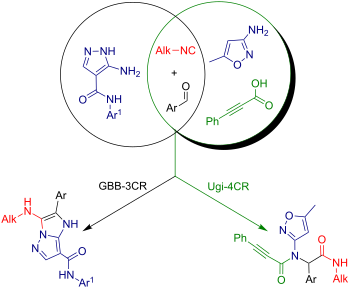
- analysis (Figure 3). In the case of compounds 9 the presence of NOE between the signals of the methyl group and the CH group in the isoxazole moiety allowed to distinguish closely located signals of two CH groups (Figure 4). Ultimately, the structure of compounds 9 was proven by an X-ray analysis of
- correlations between the signals of NH protons and corresponding carbon atoms (through two and three bonds, Figure 2) allowed final distinguishing the shifts of three NH groups signals in 1H NMR spectra. However, the final assignment of the structure A for heterocycles 4 was made with the help of X-ray




Nucleophilic and electrophilic cyclization of N-alkyne-substituted pyrrole derivatives: Synthesis of pyrrolopyrazinone, pyrrolotriazinone, and pyrrolooxazinone moieties
Beilstein J. Org. Chem. 2017, 13, 825–834, doi:10.3762/bjoc.13.83
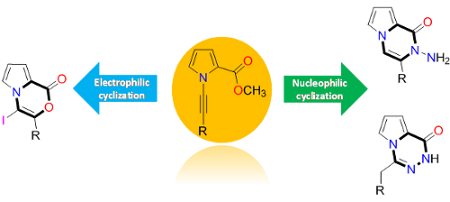
- ) as expected. Finally, the structure of 12c was further confirmed by single-crystal X-ray analysis (Figure 5) [32]. The compound 13c could have the structure 16. However, in a structure like 16 one would expect a correlation between the methylene protons and the pyrrole ring carbon atoms. As we were
- single-crystal X-ray analysis (Figure 7) [32]. The following reaction mechanism was proposed for the formation of 19c (Scheme 6). The reaction starts with the π-activation of the triple bond by iodine to form the intermediate 20, which undergoes an intramolecular addition of the ester oxygen atom to the




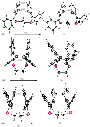
Dimerization reactions of aryl selenophen-2-yl-substituted thiocarbonyl S-methanides as diradical processes: a computational study
Beilstein J. Org. Chem. 2017, 13, 410–416, doi:10.3762/bjoc.13.44

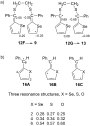
- , substituents located in 4-position of the phenyl ring influence the yield of 9 formed in a competitive reaction with the formal [2 + 3]-cycloaddition of 8 with the starting thioketone 10 leading to the sterically crowded 1,3-dithiolane 11. The structure of the dimer 9, confirmed by an X-ray analysis [13


The synthesis of α-aryl-α-aminophosphonates and α-aryl-α-aminophosphine oxides by the microwave-assisted Pudovik reaction
Beilstein J. Org. Chem. 2017, 13, 76–86, doi:10.3762/bjoc.13.10
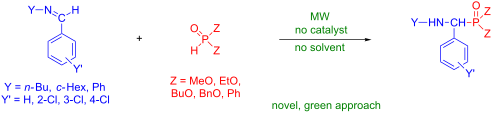
- isolated and characterized. Except six compounds, these were new compounds. Furthermore, the reactivity was mapped, and the mechanism was evaluated by B3LYP/6-31G (d,p) calculations. The crystal structure of two α-aminophosphonates was studied by X-ray analysis suggesting centrosymmetric dimers. IR spectra


Diastereoselective anodic hetero- and homo-coupling of menthol-, 8-methylmenthol- and 8-phenylmenthol-2-alkylmalonates
Beilstein J. Org. Chem. 2017, 13, 33–42, doi:10.3762/bjoc.13.5
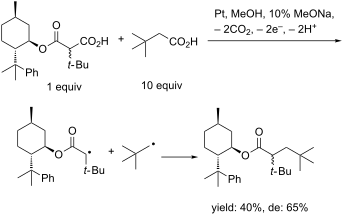
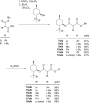
- diastereomers of 23–25 were obtained from crystal structure analyses and the correlation of the 13C NMR data. According to an X-ray analysis the minor diastereomer 23b has the configuration (S) at the new formed stereogenic center (Figure 2) [23]. The configuration of the new stereogenic centers in compounds 24
- diastereomers 28a and 29a was determined by X-ray analysis (Figure 4 [23] and Figure 5 [23], hydrogen atoms are left out, except those formed at the new stereogenic centers). The new stereogenic centers in both cases have (2’R,3’R)-configuration. For the diastereomers 26b, 27b, 28b and 29b a set of 1H and 13C




From betaines to anionic N-heterocyclic carbenes. Borane, gold, rhodium, and nickel complexes starting from an imidazoliumphenolate and its carbene tautomer
Beilstein J. Org. Chem. 2016, 12, 2673–2681, doi:10.3762/bjoc.12.264
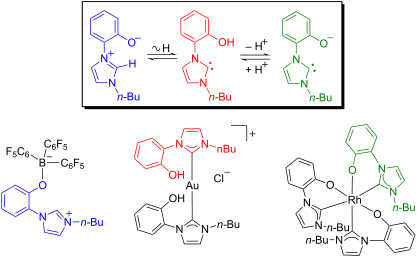
- (crystallographic numbering, cf. Figure 2: C9) is clearly detectable at δ = 9.22 ppm in DMSO-d6, while the boron and fluorine atoms give resonance frequencies at δ = −3.45 ppm, and δ = −133.91, −159.97, −165.18 ppm in the 11B NMR and 19F NMR spectra, respectively. A single crystal X-ray analysis of the borane
- ), 6.72 ppm, and 5.81 ppm, respectively. Single crystals of [Rh(7)3] (11) were obtained by slow evaporation of a concentrated solution of 11 in a mixture of EtOAc and MeOH. The single crystal X-ray analysis proved that three anionic N-heterocyclic carbenes 7 serve as bidentate ligands, respectively
- ) chloride at reflux temperature resulted in the formation of the nickel complex [Ni(7)2] (12, Scheme 2). Single crystals were obtained by slow evaporation of 12 from EtOAc/MeOH. The X-ray analysis shows two independent nickel complexes which are connected via hydrogen bonds to two water molecules (Figure 5




Thiazol-4-one derivatives from the reaction of monosubstituted thioureas with maleimides: structures and factors determining the selectivity and tautomeric equilibrium in solution
Beilstein J. Org. Chem. 2016, 12, 2563–2569, doi:10.3762/bjoc.12.251
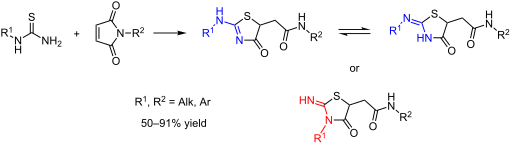
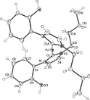
- nitrogen atom at δ ≈ 235 ppm, which is obviously the C=N atom of this form. No correlations were found for the proton signal at δ 11.68 ppm of 3b-I as mentioned for 3a-I. However, X-ray analysis indicated this proton in the crystal structure of 3b (Figure 1) [27] and there are two partially occupied
- Supporting Information File 324: Experimental procedures, characterization data and copies of the 1H, 13C and 2D NMR spectra; X-ray analysis data for thiazolidine 3b. Acknowledgements The work was supported by a grant of the President of Russian Federation (no. MK-5965.2016.3). NMR, HRMS, and XRD analyses


Sydnone C-4 heteroarylation with an indolizine ring via Chichibabin indolizine synthesis
Beilstein J. Org. Chem. 2016, 12, 2503–2510, doi:10.3762/bjoc.12.245
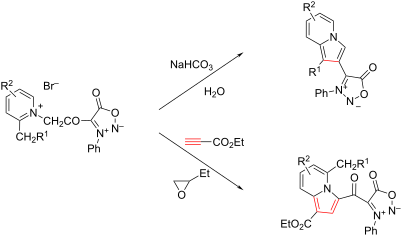
- latter compounds were also transformed to sydnone-indolizines connected through a keto group at the C-4 position by refluxing them in 1,2-epoxybutane with an activated alkyne. The structures of the new compounds were assigned by FTIR, NMR spectroscopy and X-ray analysis. Keywords: biheteroaryl


Radical polymerization by a supramolecular catalyst: cyclodextrin with a RAFT reagent
Beilstein J. Org. Chem. 2016, 12, 2495–2502, doi:10.3762/bjoc.12.244
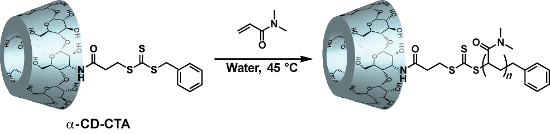
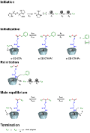
- transfer agent (CTA) that has α-cyclodextrin (α-CD) as a host molecule (α-CD-CTA). Prior to the polymerization of N,N-dimethylacrylamide (DMA), we investigated the complex formation of α-CD with DMA. Single X-ray analysis demonstrated that α-CD includes DMA inside its cavity. When DMA was polymerized in


Construction of bis-, tris- and tetrahydrazones by addition of azoalkenes to amines and ammonia
Beilstein J. Org. Chem. 2016, 12, 2471–2477, doi:10.3762/bjoc.12.241
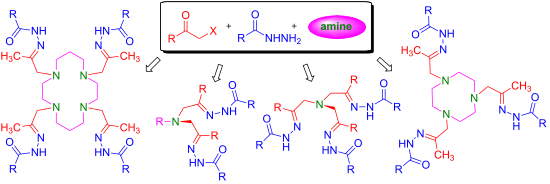
- ]. Tetraazaadamantane with this substitution pattern is a promising platform for the design of supramolecular recognizing systems and for the construction of new molecular cage architectures. The formation of the 1,4,6,10-tetraazaadamantane cage was unambiguously confirmed by X-ray analysis of the crystal solvate of




Combined experimental and theoretical studies of regio- and stereoselectivity in reactions of β-isoxazolyl- and β-imidazolyl enamines with nitrile oxides
Beilstein J. Org. Chem. 2016, 12, 2390–2401, doi:10.3762/bjoc.12.233

- aromatic 4-imidazolylisoxazoles 4b,d,e–g. Probably isoxazolines 3a–c are more stable than other compounds of type 3 under column purification conditions. The 3,4-disubstituted isoxazole structures of compounds 4a–p were confirmed by the combination of mass spectrometry, NMR spectroscopy, and X-ray analysis




High performance p-type molecular electron donors for OPV applications via alkylthiophene catenation chromophore extension
Beilstein J. Org. Chem. 2016, 12, 2298–2314, doi:10.3762/bjoc.12.223
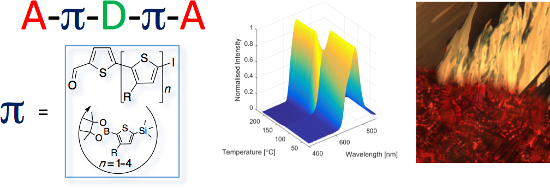
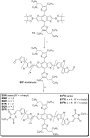
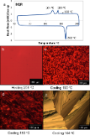
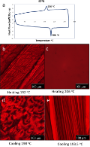
- as-cast film emission. Detailed variable temperature X-ray analysis of BQR thin films is currently underway to better understand these changes. CV and PESA: The electrochemical properties of the BXR series of materials have been examined by cyclic voltammetry (CV), photoelectron spectroscopy in air